A southern home security system is a regionally adapted setup that accounts for Gulf Coast humidity, sprawling ranch layouts, and storm-season reliability rather than just bolting on generic equipment. The catch is that most homeowners stall at the choice between professional monitoring, which dispatches authorities even when your phone is dead, and self-monitoring, which fails the moment you are in a meeting or on a plane. Alarm.com claims over 6 million users on its platform, which suggests the professional route has already won the argument for most southern installs.
1. Alarm Systems
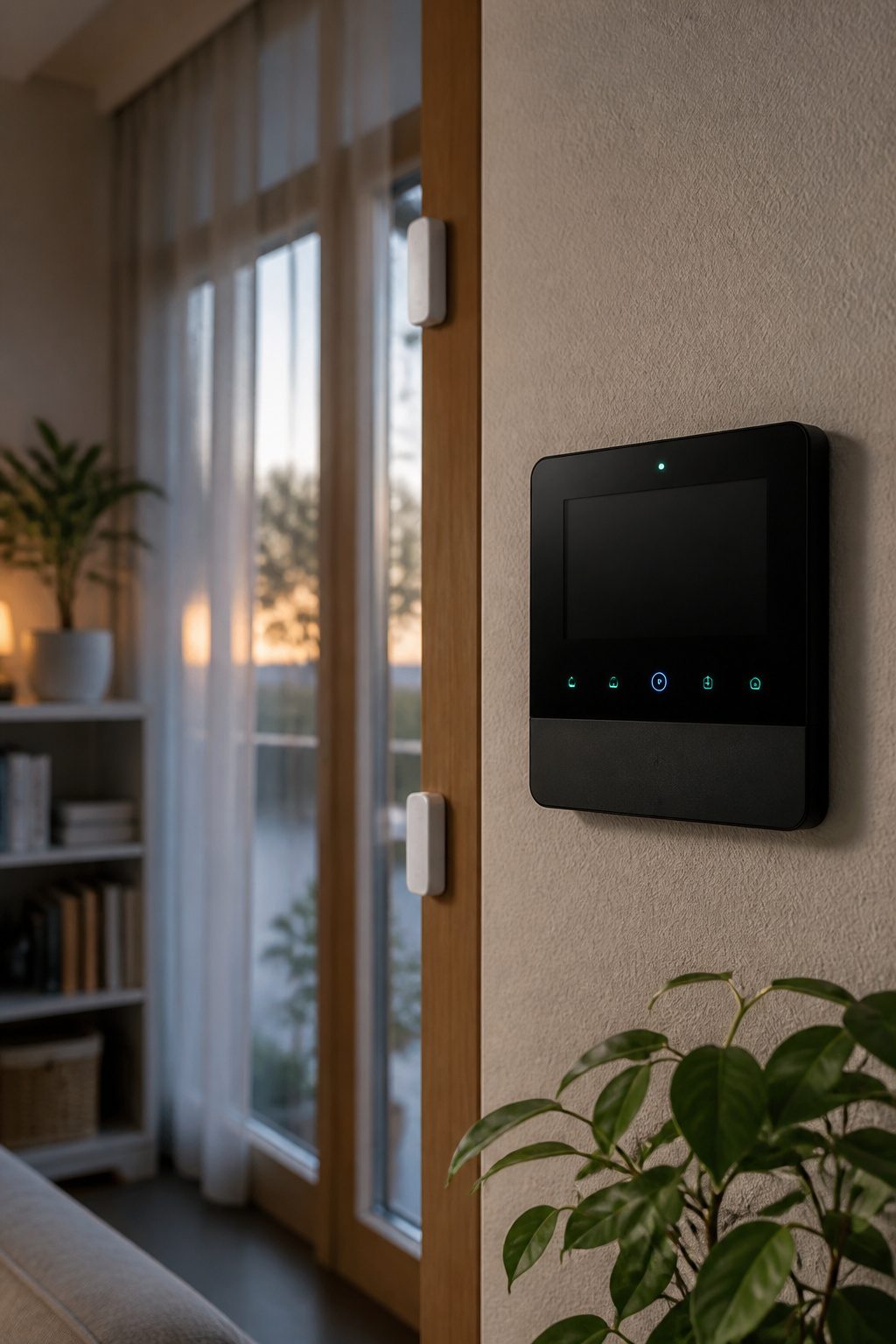
Integrated setups that monitor for intrusions, fire, or other emergencies form the backbone of most southern home security system installations. Sensors trigger alerts through sirens while the panel communicates directly to law enforcement or a monitoring service, depending on how you configure it.
The choice between professional and self-monitoring is where most homeowners stall out. Professional monitoring means a dispatch center fields your alarm and calls the authorities; you pay monthly but the call happens whether your phone is dead or you’re underwater in the pool. Self-monitoring sends alerts straight to your phone, which works fine until you’re in a meeting or on a plane. The platform behind many of these setups, Alarm.com, claims over 6 million users, which suggests the professional route has critical mass.
Fire and carbon monoxide detection should ride on the same system, not a separate box. One panel, one app, one monthly bill. Remote access lets you arm or disarm from a phone, and customizable settings keep the thing from shrieking every time the dog crosses the living room at midnight.
2. Camera Systems
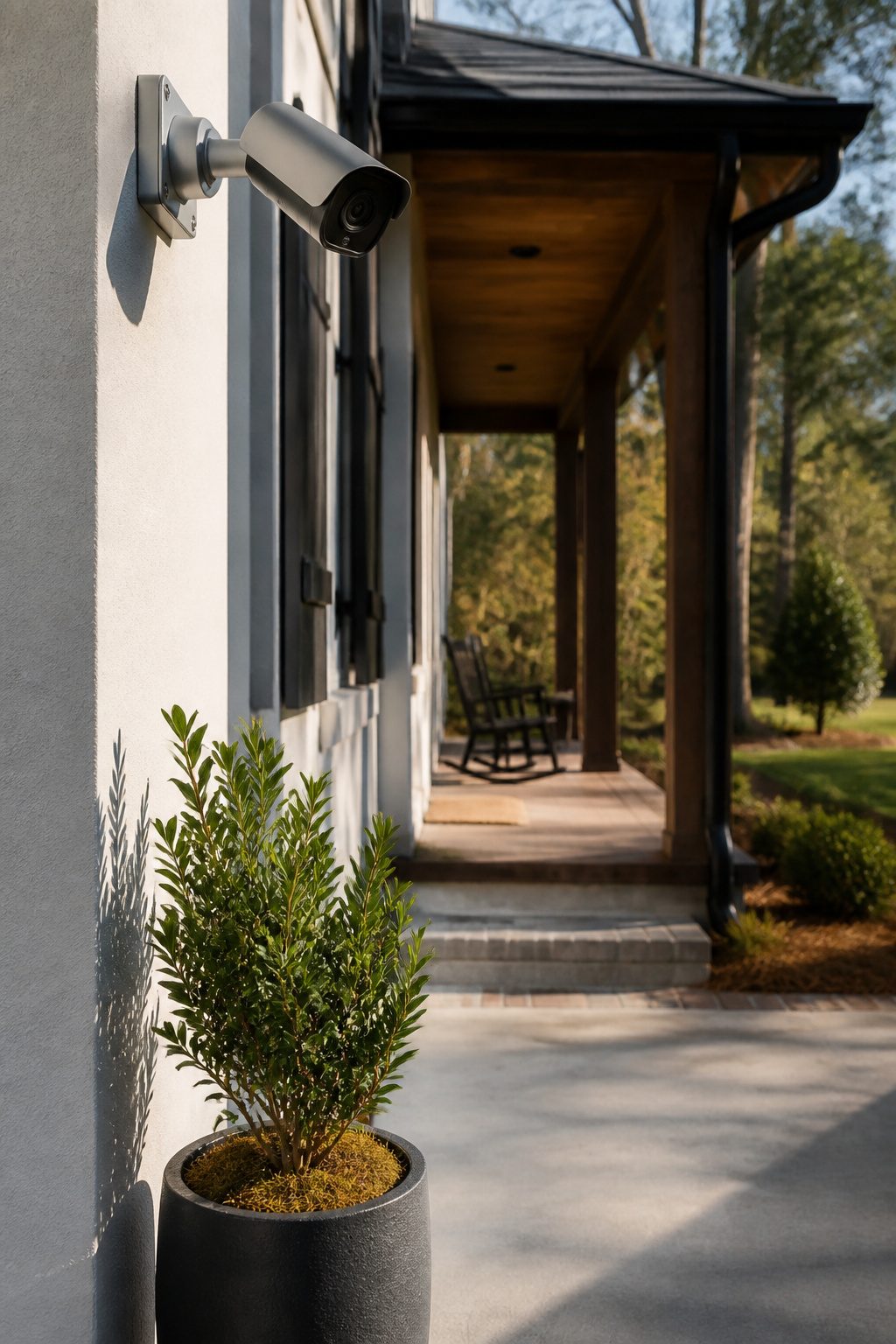
Blurry footage turns a break-in into a guessing game, and guessing does not help police or insurance. Southern Security builds its camera line around 4K resolution with night vision, so the image stays useful after dark and at distance. That clarity matters when you need a face, a plate, or a pattern of movement.
The IP67 weatherproof rating is what sold me on these for southern installs. Dust, driving rain, the humidity that warps lesser housings in July, none of it reaches the sensor. I have watched cheaper cameras fog inside their own domes by August and stay fogged until October. Sealed to that standard, the housing just keeps recording.
Placement still beats specs. A 4K camera aimed at a glare source or hidden behind a shrub might as well be 720p. Mount high enough to stay reachable but low enough to catch facial geometry, and test your night image after install, not before. The sensor sees better than your eyes, but only if the infrared array has a clean line of sight.
3. Access Control
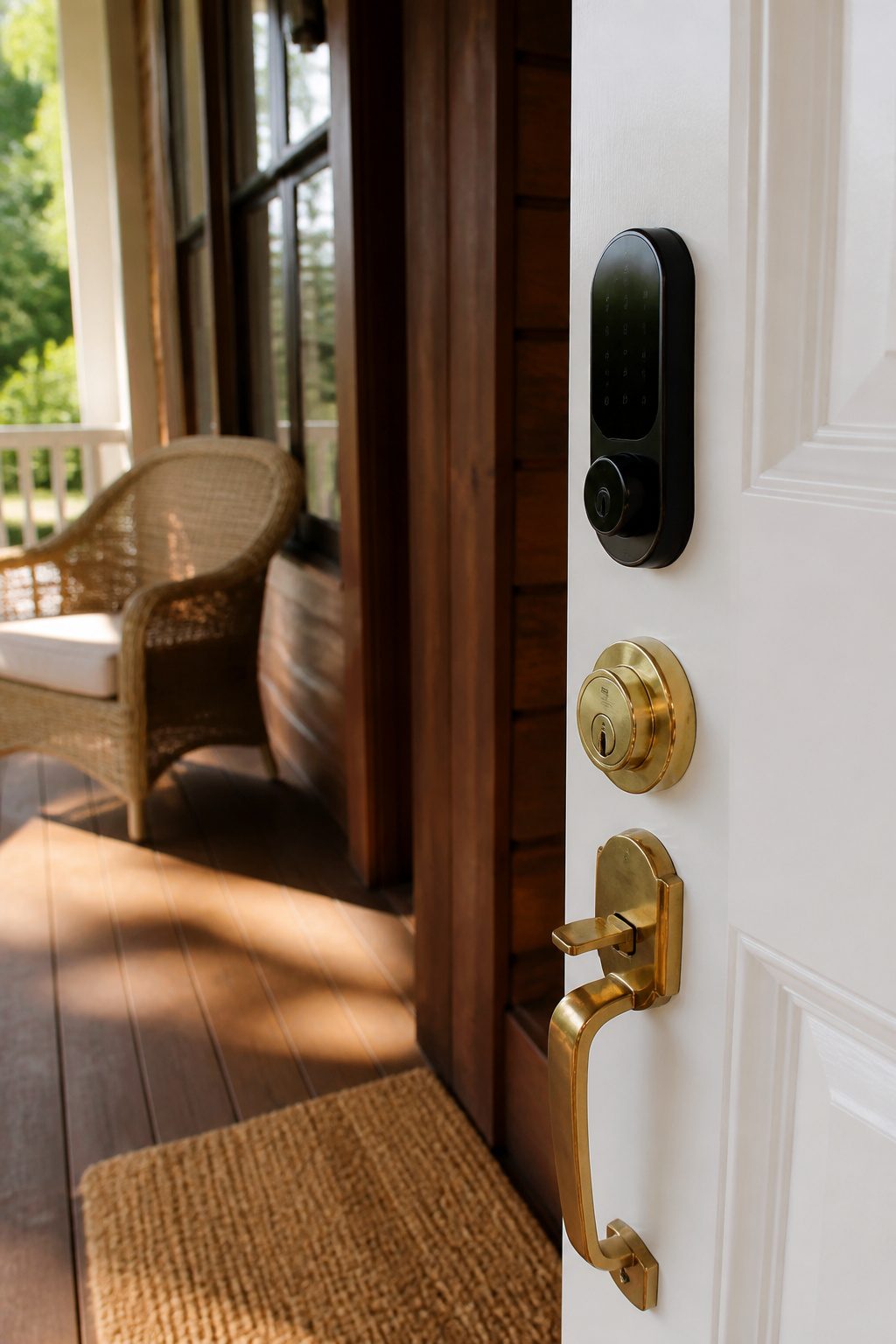
Access control for a southern home security system starts at the obvious spots and works inward. Deadbolts on exterior doors matter, but the real shift in thinking comes when you start treating interior doors the same way. A reinforced strike plate on the door to your garage or utility room buys time if someone makes it past the front threshold.
Keypads and smart locks look clean, though battery life wilts in Gulf Coast humidity faster than you’d expect. My neighbor in Baton Rouge learned that the hard way after his lock died during a July thunderstorm while groceries sat melting on the porch. A keyed override isn’t old-fashioned; it’s a backup that doesn’t need Wi-Fi or charged lithium.
For outbuildings, a shed or workshop with $3,000 in tools justifies its own lock grade. A simple keypad on a steel door frame stops casual theft without running cable from the house. The same logic applies to pool equipment enclosures, where chemical storage meets curious kids.
Biometric readers have dropped in price enough to consider for home offices or gun rooms, but fingerprint sensors struggle with sweaty summer fingers. A four-digit PIN with lockout timing after failed tries beats a scanner that refuses to recognize you after yard work.
4. Smart Home Security
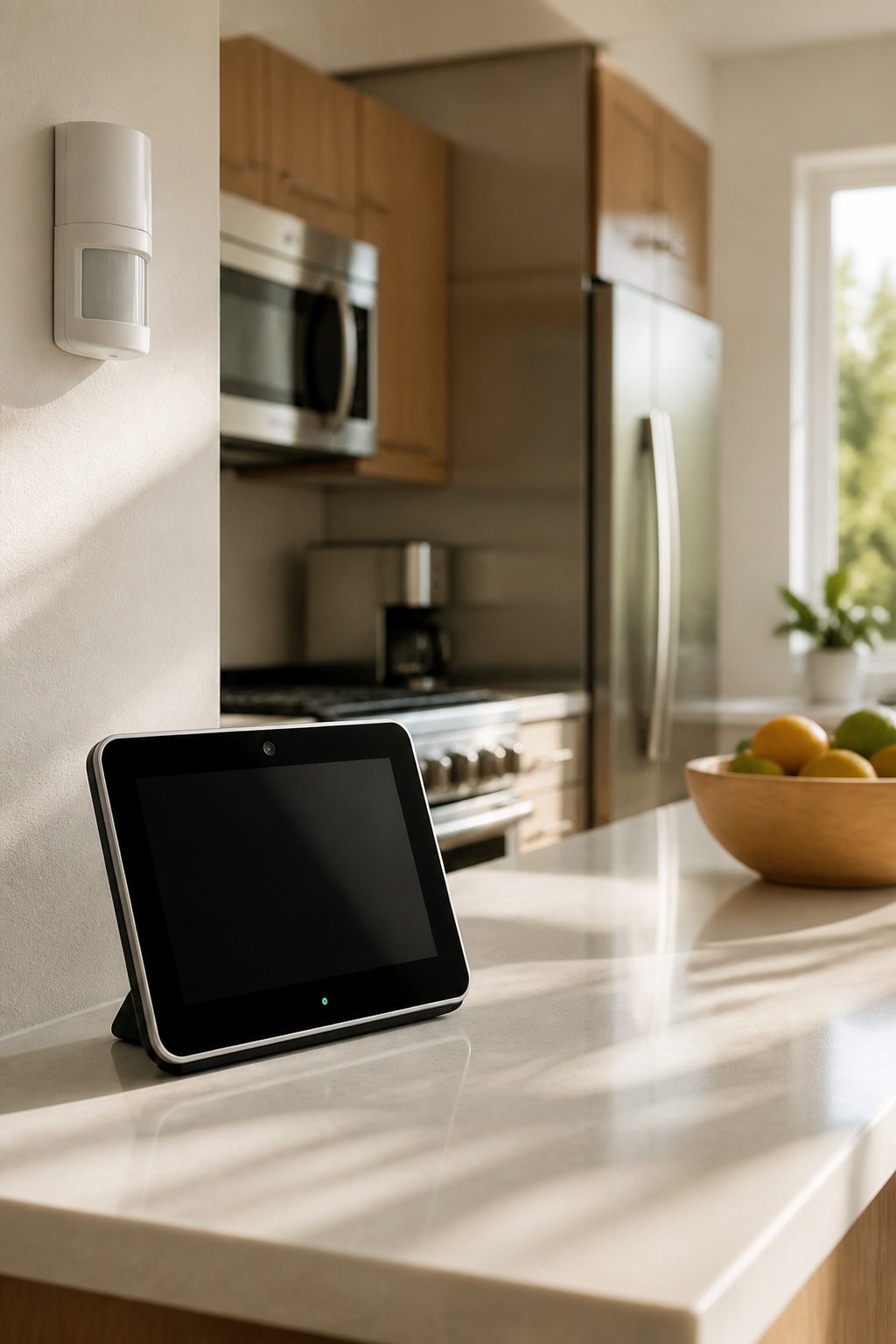
A southern home security system that stops at the front door misses half the story. The smart setup I put together last year starts with a video doorbell that sends motion clips straight to my phone, but the real value came from adding door sensors and a few indoor cameras that all talk to the same app.
Remote monitoring through that single interface changed how I use the system. I can pull up live feeds from work, unlock the smart lock for a contractor, or get an alert when the back door opens after dark. The cameras and sensors also tie into my thermostat and a few smart bulbs, so motion at the side entrance after 10 PM triggers the floodlight and records a clip automatically.
Integration is where most systems either work or frustrate. Mine plays nice with the devices I already owned, which meant no second app to check. If the app cannot control locks, lights, and cameras in one place, the convenience falls apart fast. Cheap sensors that need their own hub usually become the weak link.
5. Commercial Security Systems
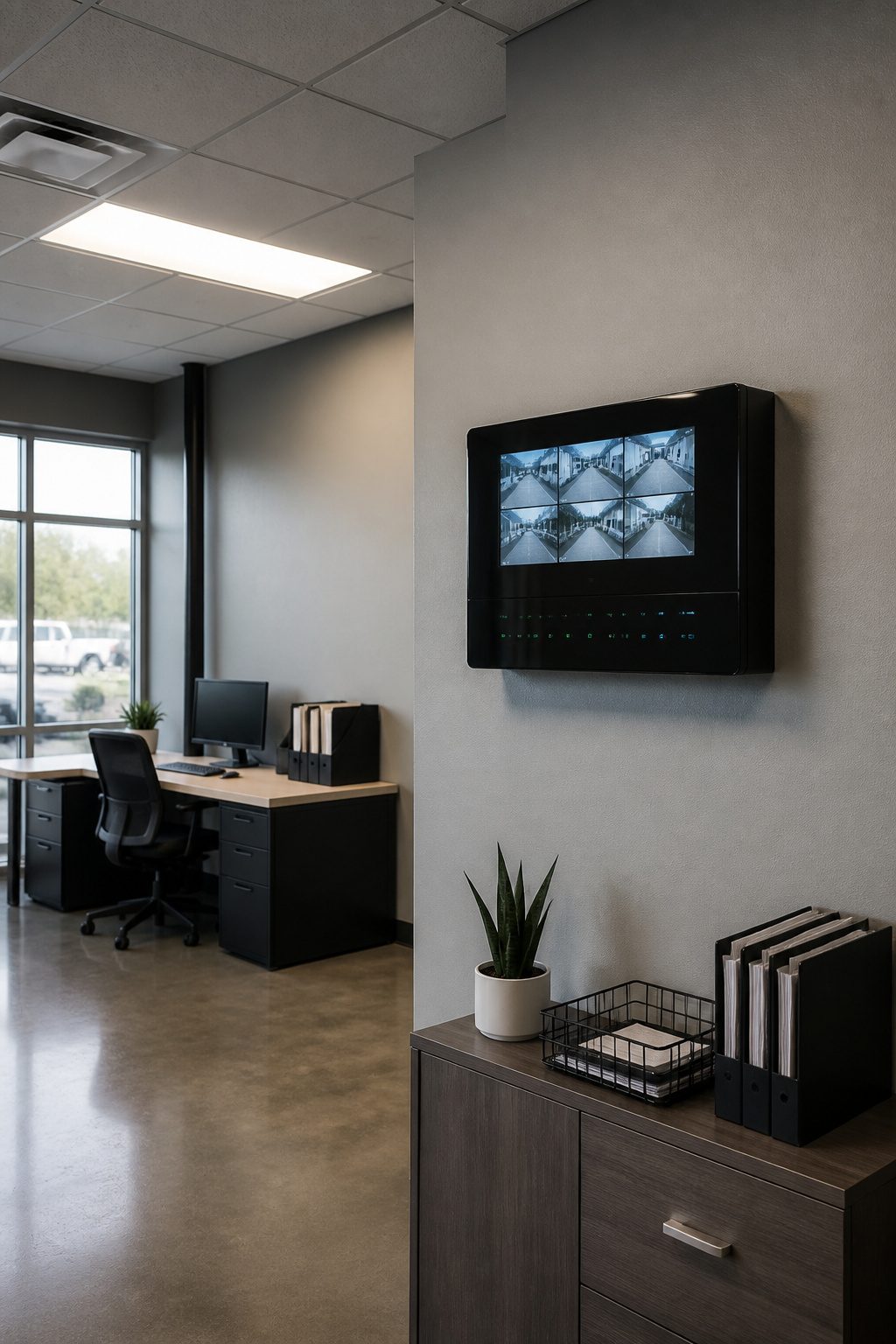
A southern home security system built for a business needs more muscle than the residential kit on the shelf. Surveillance, access control, and live monitoring all have to talk to each other, or you are paying for three separate headaches. Southern Alarm, Inc. runs on the Alarm.com platform, which claims over 6 million people trust for home and business protection. That number matters because it reflects uptime under real load, not just marketing copy.
Alarm.com is trusted by over 5 million people to protect their homes and businesses. We are proud of our A+ rating from the Better Business Bureau and work hard every day to earn that trust.
The A+ rating and 4.4 star online rating tell me the monitoring side holds up when the alarm actually fires. For a business owner in the South, that reliability beats a cheaper panel that drops cellular during a summer storm. Integrated setups that monitor for intrusion, fire, or other emergencies, providing alerts through sensors, sirens, and communication to law enforcement or monitoring services, are what separate a real system from a noise maker.
6. Alarm Monitoring and Sensors
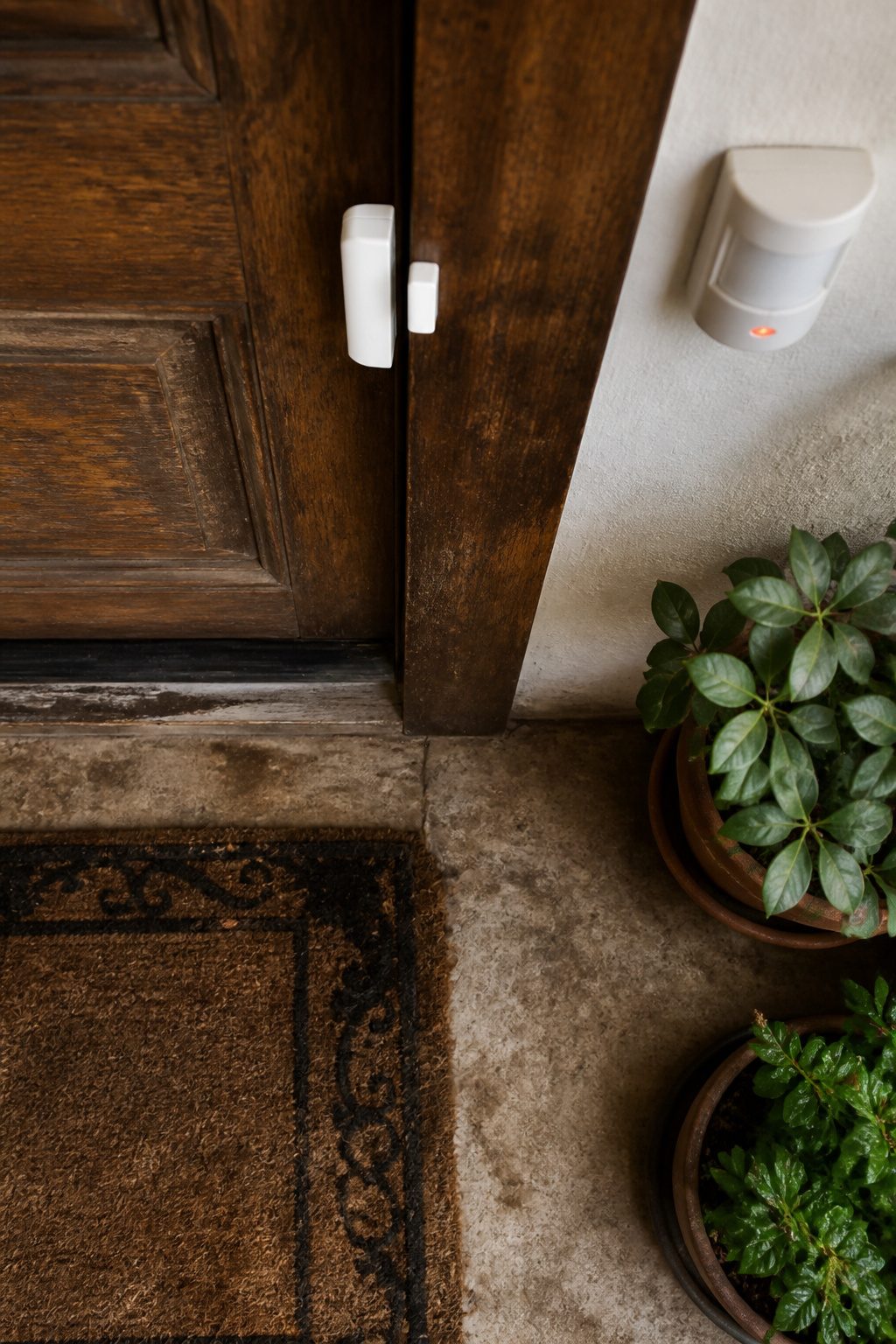
A southern home security system lives or dies at the sensor layer. The door and window contacts are your first line, and the cheap ones fail in ways that cost you sleep. Magnetic reed switches gap out over time, especially on doors that swell in Gulf humidity. I learned to check the gap with a business card; if it slides through easy, the sensor might not trip when it matters.
Motion detection fills the gaps the contacts leave. PIR sensors watch the spaces between entry points, but placement matters more than specs. A sensor aimed at a sunny window in a Texas afternoon throws false alarms from heat shimmer. Pet-immune models exist, but the immunity threshold is a number you need to match to your actual dog, not the breed average.
Integration runs through a central panel that polls each device on a loop. Wireless Z-Wave meshes let sensors talk around dead spots, which matters in sprawling ranch layouts where a single hop to the hub is too far. The panel then routes alarm signals to a monitoring center over cellular backup; cut the phone line and the system keeps talking.
The real test is the lag between sensor trip and human response. A local siren buys minutes. Central station dispatch buys the police, if your municipality still responds to residential alarms. Some southern counties do not, or they charge for false dispatches after the first few. Know your sheriff’s policy before you pay for monitoring you cannot use.
Local Providers
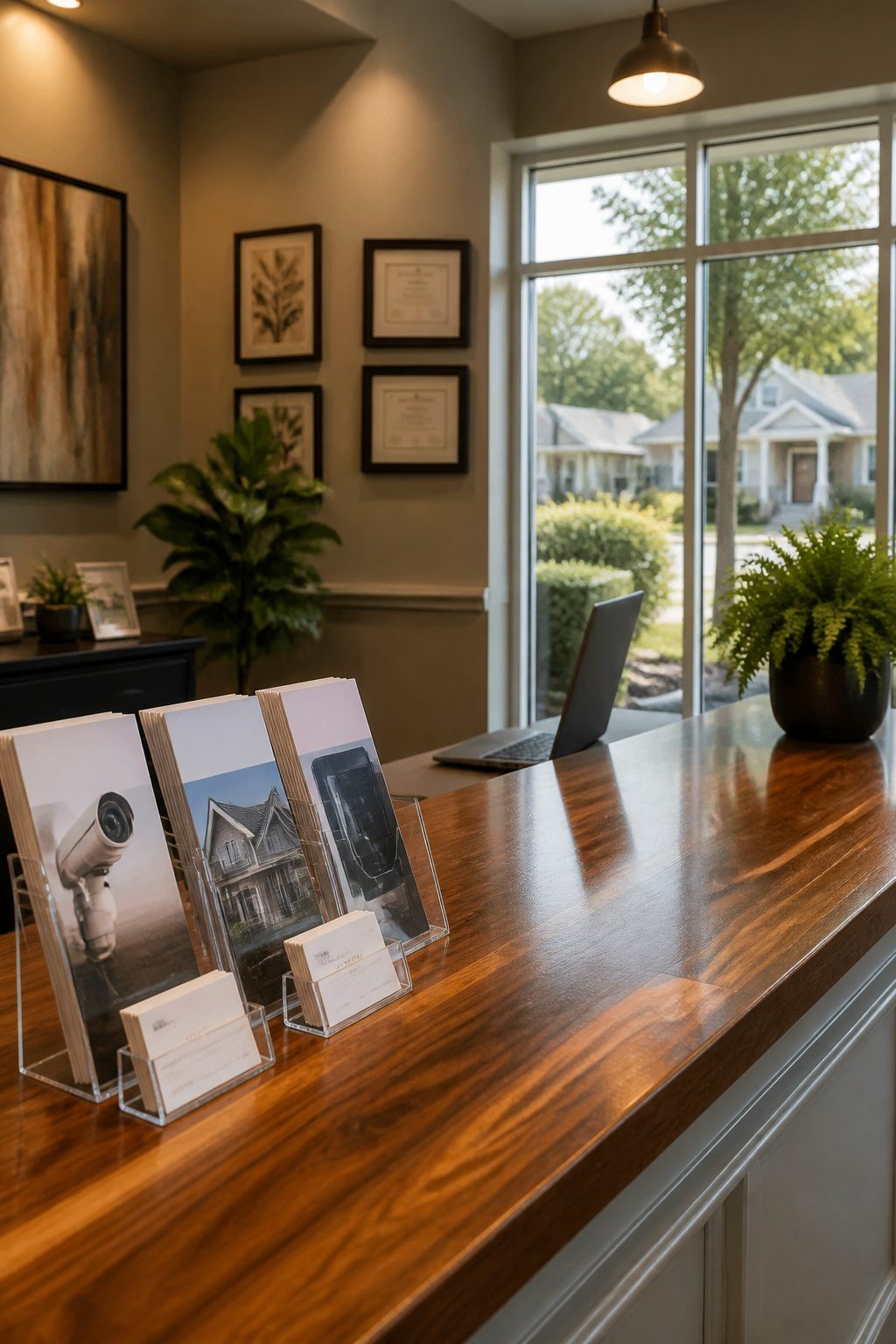
A southern home security system needs a provider who actually knows the house down the road, not a call center three time zones away. Regional humidity, construction styles, and even local break-in patterns change what works.
Southern Security LLC opened in Tupelo, Mississippi in May 2008 and carries over 25 years of combined experience across its team. They have passed 500 customers, which is small enough that you are likely talking to someone who remembers your last service call. Southern Alarm, Inc. covers South Florida with the same premise: 24/7 monitoring and camera packages built for that climate.
The difference shows when a sensor keeps failing in Gulf Coast humidity or when you need someone on-site fast after a storm. A national outfit mails you a replacement part. A local shop drives over.
Customer Reviews
Positive reviews for a southern home security system tend to cluster around three things: whether the installer shows up when they say they will, whether they stay until the job is right, and whether the owner answers the phone six months later when a sensor starts chirping at 2 a.m. Reading through feedback for Southern Security Specialists, the pattern that stood out was customers describing the owner driving to their mother’s house next, or returning to tweak a camera angle that already passed inspection. That kind of follow-through is harder to fake than a star rating.
Southern Security LLC, founded in 2008, now counts over 500 satisfied customers in its history. The number itself matters less than what it implies: in a region where word still travels porch-to-porch, a company does not accumulate that many installations without repeat calls and neighbor referrals. One reviewer noted they sent the same technician to their mother’s house and got the same result, which tells you more about consistency than any marketing claim.
Southern Alarm carries a 4.4-star online rating alongside an A+ from the Better Business Bureau. The combination suggests the reviews hold up under scrutiny, not just volume. For someone comparing providers, the gap between a polished website and a technician who actually returns matters more than equipment specs. The reviews say these companies close that gap.
Smart Technology Integration
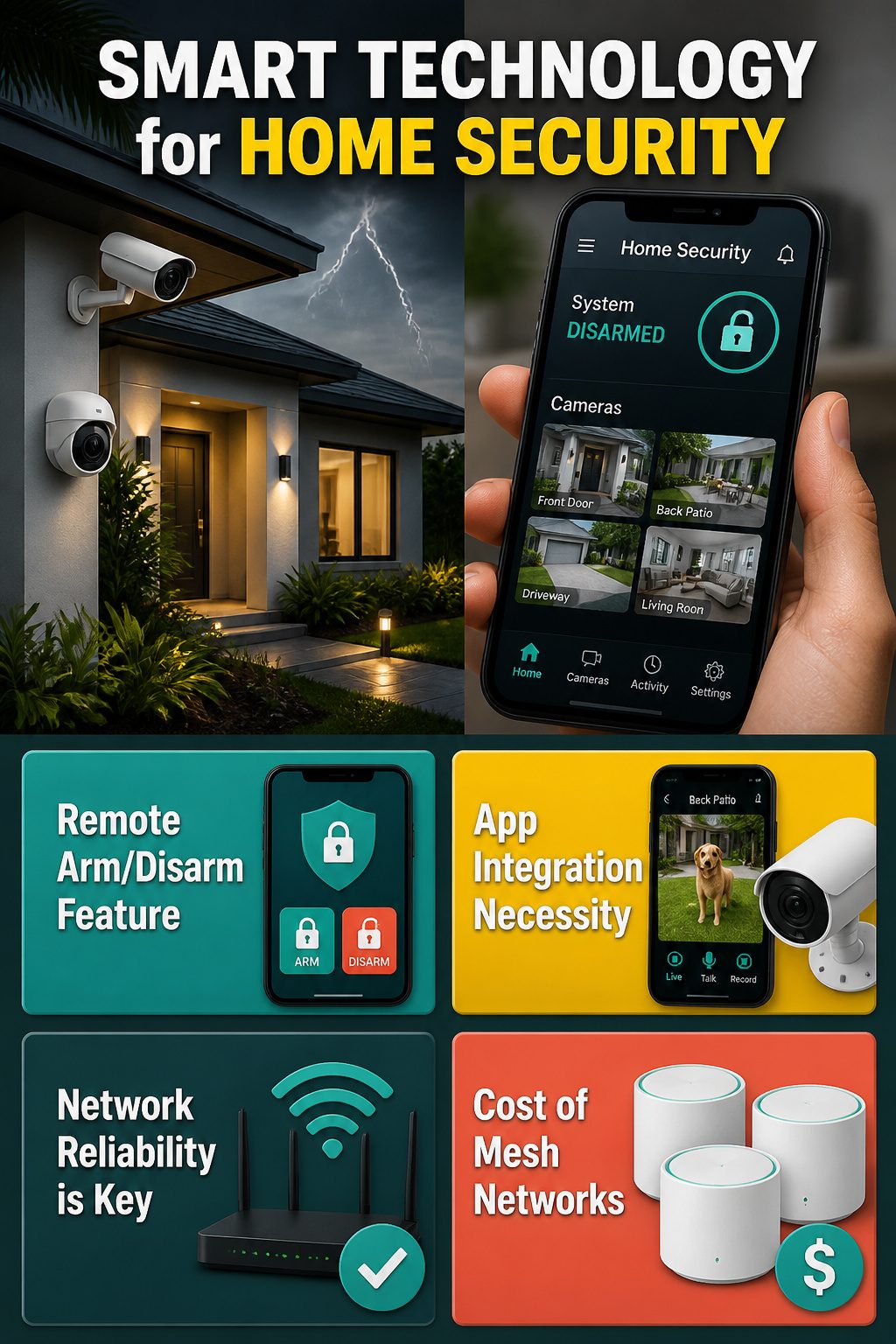
A southern home security system without app control is like a thermostat you have to walk to: it works, but it misses half its purpose. The integration I actually use daily is the remote arm and disarm. Leaving for the airport at 5 AM, phone in hand, checking that the system went on after I pulled out of the driveway. That one function removes the old anxiety of the flashing keypad you second-guessed from the car.
Cameras tied to the same app change how you respond. Motion alert on the back patio while you’re at work; you pull up the feed, see the neighbor’s dog, and you’re done in thirty seconds. Without that loop, you either drive home or you worry. The humidity and sudden storms in southern climates make this more useful, since weather can trigger false alarms and you want to verify without calling the sheriff every time.
The practical limit is your network. A system that drops offline every thunderstorm turns smart features into a frustration. Mesh networks or cellular backup cost more upfront, but the gap between a connected system and a disconnected one is the gap between useful and ignored.
Frequently Asked Questions
What types of home security systems are available?
The main types are alarm systems, camera systems, access control, and smart home security setups. Alarm systems handle intrusion, fire, and carbon monoxide monitoring with sensors and sirens. Camera systems provide surveillance with features like 4K resolution and night vision. Access control covers smart locks, keypads, and reinforced entry points. Smart home security ties these together with remote app control and automated responses.
How do smart home security systems work?
Smart systems connect locks, lights, cameras, and sensors to one app for remote control and monitoring. You can arm or disarm from your phone, pull up live feeds, or get motion alerts while away. Devices can also trigger each other automatically, like a side-entrance motion sensor turning on a floodlight and recording after 10 PM. The value depends on whether everything runs through a single interface or scatters across multiple apps.