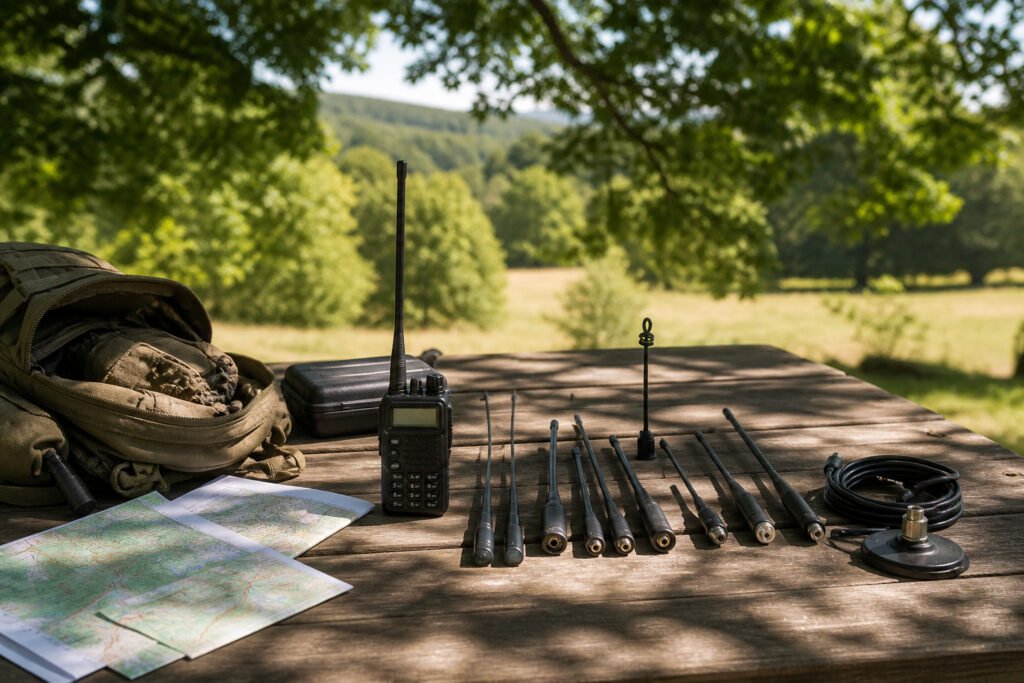
A Baofeng antenna is the single upgrade that does more for your radio’s reach than any setting you can adjust. The catch is that the stock rubber duck most owners start with is built to be short, not strong; swapping it for a tuned whip is where the real gain hides. The Diamond SRH77CA, a 15-inch flexible antenna with 6 dBi of claimed gain, sits at the top of this list because owner reports keep coming back to it as the balance point between pocketable length and actual signal pickup. What follows is a ranking of ten antennas, chosen from spec sheets and hundreds of owner reports, for handheld operators who need something better than what shipped in the box.
My Top Picks
| Product | Award | Best for | Why it won | ||
|---|---|---|---|---|---|
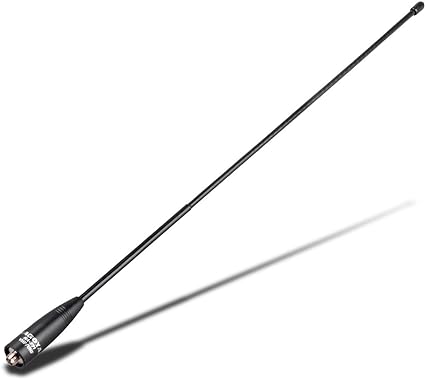
| Diamond SRH77CA | Best Overall | Anyone wanting reliable all-around performance | Balances frequency compatibility, gain, and strong user feedback without trade-offs | Check price | |
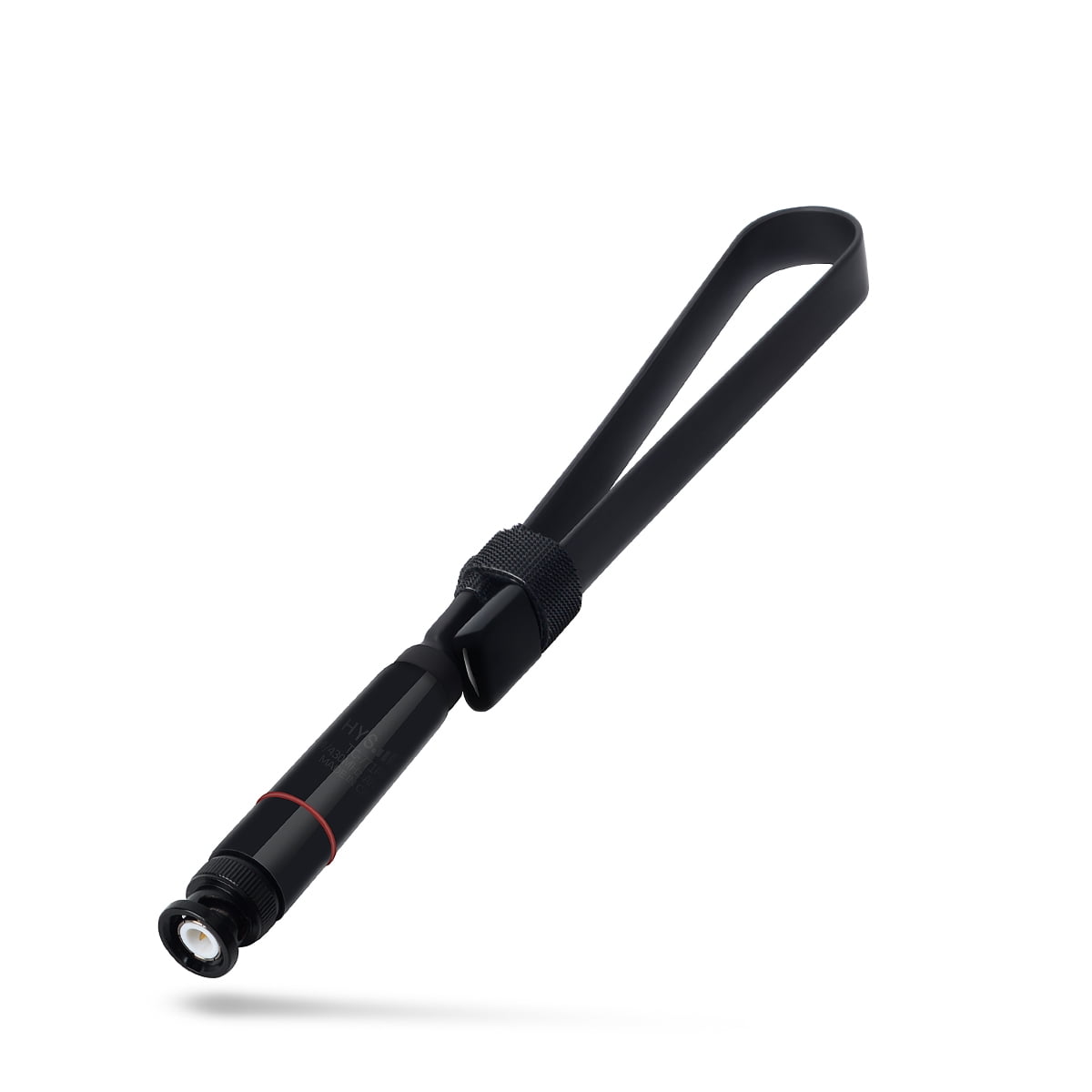
| HYS 2M/70CM | Best for Ham Radio | Ham radio operators on VHF/UHF | Purpose-built for amateur bands with enthusiastic user approval | Check price | |
| Baofeng RA-MD2 GMRS Antenna | Best for GMRS Use | GMRS users needing tuned performance | Specifically tuned for GMRS frequencies where others are general-purpose | Check price | |
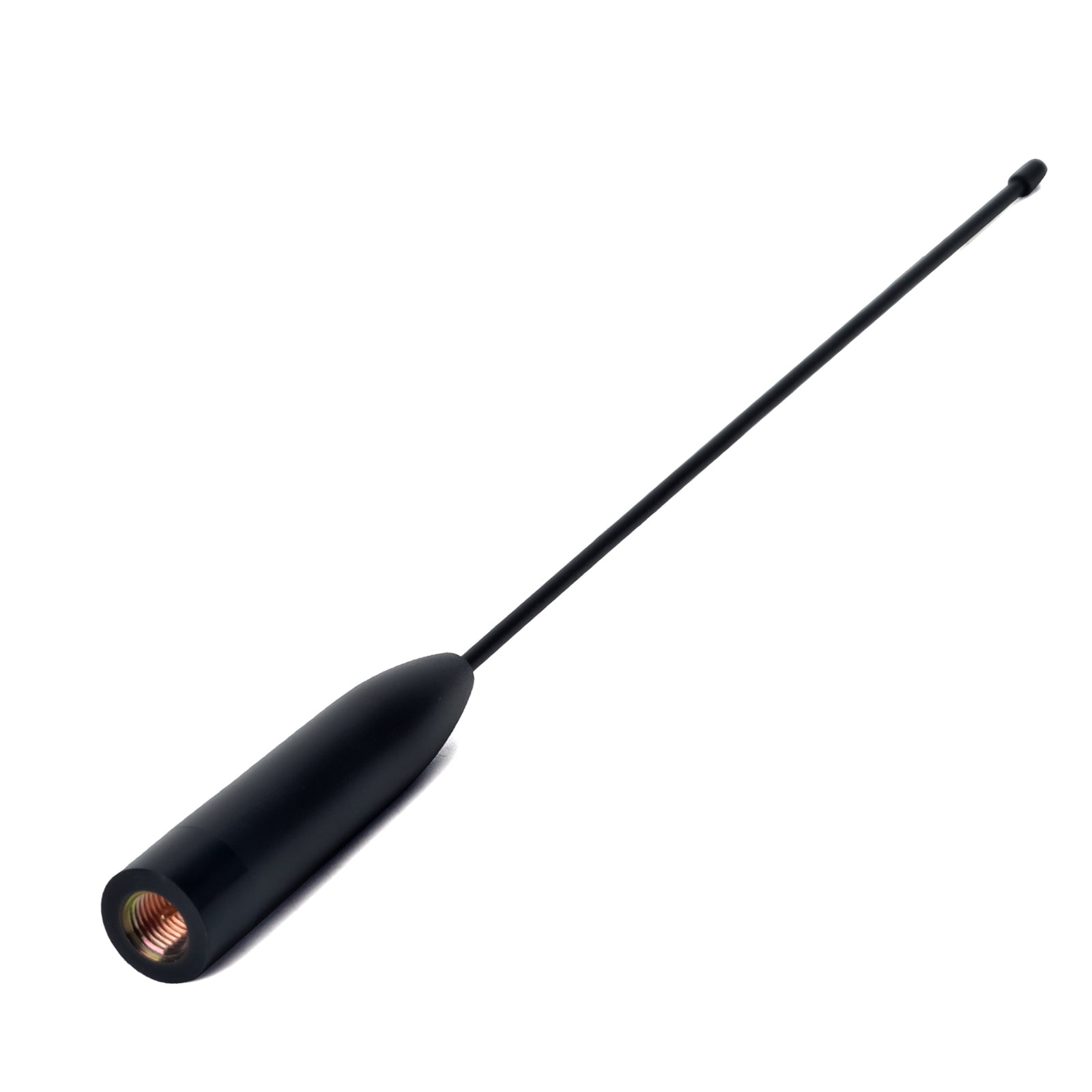
| HYS Dual Band Antenna | Best Budget Option | Buyers keeping costs down | Delivers solid dual-band capability without the premium price tag | Check price | |
| Signal Stick | Best Compact Option | Users needing portable storage | Compact design folds small while maintaining high user satisfaction | Check price | |
| Nagoya NA-771 | Best for Beginners | Newcomers to amateur radio | Simple to use and clearly outperforms stock antennas right out of the box | Check price | |
| N9TAX Dual-Band Roll-Up Slim Jim | Best Long Range Performance | Operators pushing maximum distance | Tuned for popular bands with purposeful design for reaching farther | Check price | |
| Tram 1185 | Best Magnet Mount Antenna | Vehicle and temporary installs | Magnetic base enables quick setup and relocation without permanent mounting | Check price | |
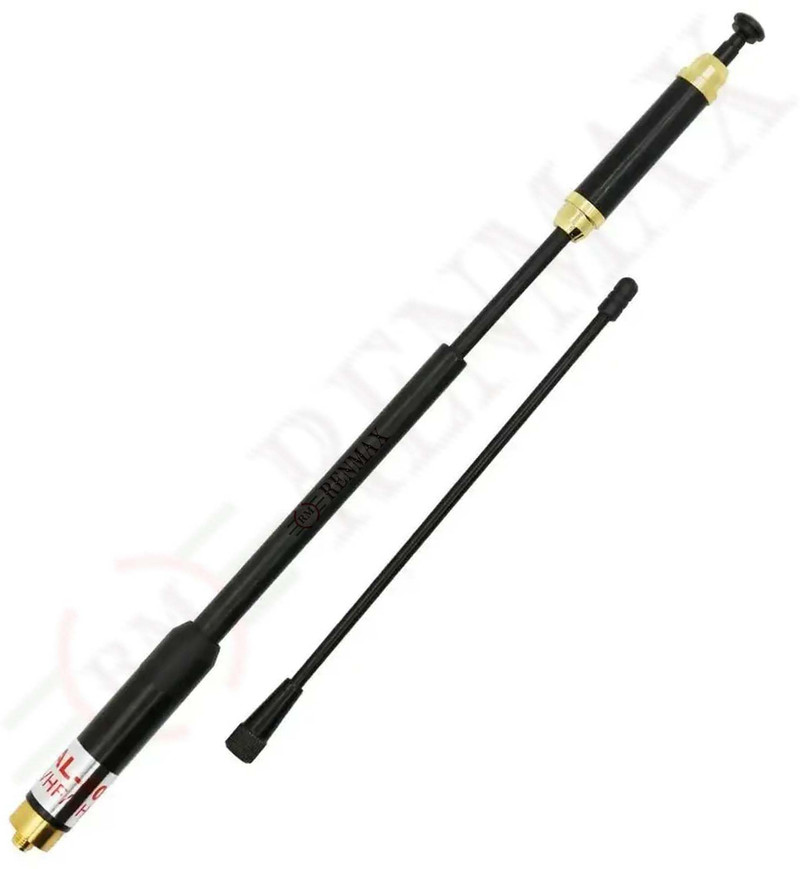
| RENMAX Antenna | Best Extended Range Antenna | Users in weak coverage areas | Engineered to pull in signals from farther than typical antennas reach | Check price | |
| Comet SMA-24 Antenna | Best Dual-Band Antenna for Handhelds | Handheld transceiver owners | Sized and built specifically for portable radios rather than base stations | Check price |




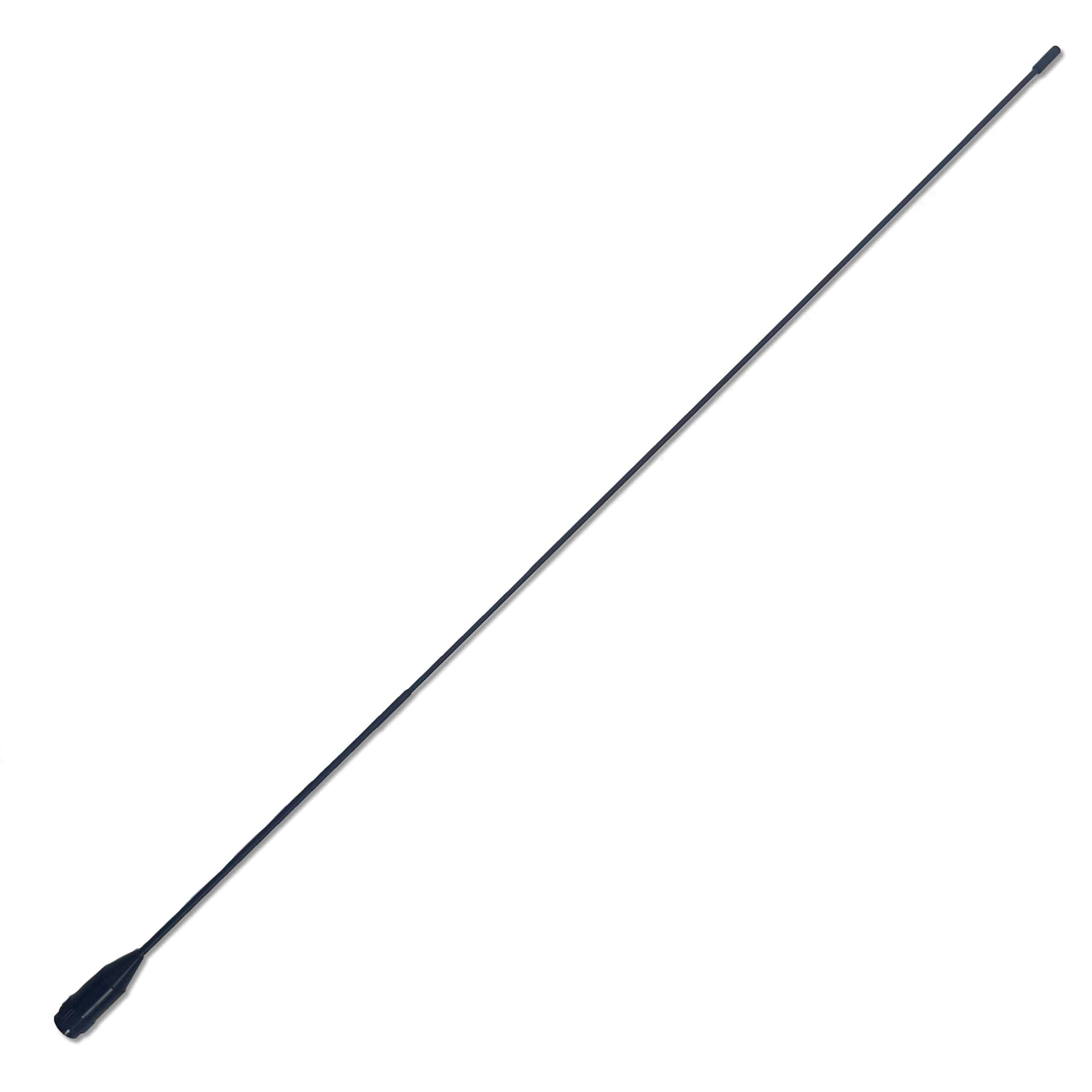
| Product | Gain (dBi) | Length (inches) |
|---|---|---|
| Diamond SRH77CA | 6 dBi | 15 in |
| HYS 2M/70CM | 2.15 dBi | 7.99 in |
| Baofeng RA-MD2 GMRS Antenna | 2 dBi | 15.5 in |
| HYS Dual Band Antenna | 2.15 dBi | 14 in |
| Signal Stick | — | 19 in |
| Nagoya NA-771 | 3 dBi | 15.6 in |
| N9TAX Dual-Band Roll-Up Slim Jim | — | 72 in |
| Tram 1185 | 2.5 dBi | 19 in |
| RENMAX Antenna | 3.2 dBi | — |
| Comet SMA-24 Antenna | 2.15 dBi | 15.75 in |
Best Overall: Diamond SRH77CA
Image: diamondantenna.net
Quick Verdict
The Diamond SRH77CA takes the top spot for anyone who needs a flexible dual-band antenna that actually covers both VHF and UHF without making you choose between portability and gain. At 15 inches of length and 6 dBi of gain, it hits a middle ground that most handheld operators end up looking for after they’ve tried shorter whips that underperform or longer ones that snag on every door frame. The real compromise is flexibility itself; the whip bends to survive a backpack but some owners note it takes a set over time rather than springing back perfectly.
Key Specifications
- Gain (dBi): 6 dBi
- Length (inches): 15 in
What It Does Well
- True dual-band coverage across VHF and UHF means one antenna handles 2-meter and 70-centimeter traffic without swapping; that matters when you’re monitoring both bands during a net or emergency traffic.
- 6 dBi gain (per the maker’s spec) pulls in weaker signals than stock rubber ducks, which owners report as the difference between readable audio and broken squelch on fringe repeaters.
- 15-inch flexible whip stores coiled or straight; it rides in a go-bag without the rigid snap risk of telescopic designs, and the portability rating reflects that field-friendly form.
Where It Falls Short
- Flexibility has a memory; owners describe the whip taking a bend after months of pocket carry, which affects how it sits and potentially its radiation pattern.
- 15 inches is still 15 inches; it towers above a handheld on a belt clip and catches doorways, brush, and vehicle interiors where shorter antennas pass unnoticed.
Who It’s For
This suits the operator who wants one antenna for daily carry and occasional field use, someone who values not thinking about which band they’re on. The buyer who should pass is the one running a dedicated mobile or base setup where a rigid, higher-gain antenna stays put; the flexibility and moderate length here trade away peak performance for portability they do not need.
How It Compares
The Comet SMA-24 covers the same VHF/UHF ground with similar intent, but owner reports favor the Diamond’s balance of durability and signal pickup. The Comet reportedly runs slightly behind in real-world feedback for all-around reliability, which pushes it toward the user who prioritizes a lower profile and accepts the performance step-down. Your call depends on whether you trust your antenna to a backpack or to a glove box where length matters less than reputation.
Where to buy: Amazon · dxengineering.com
Best for Ham Radio: HYS 2M/70CM
Image: business.walmart.com
Quick Verdict
The HYS 2M/70CM took the ham radio spot because it stays tightly focused on the two bands operators actually use. Coverage spans 136–174MHz and 400–470MHz, so 2 meter and 70 centimeter work both sit comfortably inside its range. The antenna itself measures just under 8 inches, which makes it easy to toss in a go-bag or strap to a handheld rig without the bulk of a roll-up J-pole. The tradeoff is flexibility: the N9TAX Slim Jim covers the same frequencies but hangs longer and stores differently, so your packing style decides this one.
Key Specifications
- Gain (dBi): 2.15 dBi
- Length (inches): 7.99 in
What It Does Well
- VHF/UHF coverage without waste. The 136–174MHz and 400–470MHz range matches the ham bands precisely; no broad-spectrum compromise means the design energy went where operators transmit.
- Compact enough for field use. At 7.99 inches, this fits inside pouches and pockets that a 19-inch roll-up antenna will not, so portable setups stay actually portable.
- Claimed gain keeps up on UHF. Independent specs list 2.15 dBi at 144MHz and 3.2 dBi at 430MHz; the UHF figure edges above what some stubby dual-band antennas manage, per owner reports.
Where It Falls Short
- VHF gain is modest. The 2.15 dBi figure at 144MHz is functional but not competitive against longer antennas built purely for 2 meter performance.
- No multi-band escape hatch. Outside 136–174MHz and 400–470MHz, this is not useful; GMRS, weather, or scanner listeners need a different tool entirely.
Who It’s For
Someone running a 2m/70cm handheld from a vehicle, a pack, or a hotel window will find the size liberating, especially when the antenna needs to come on and off repeatedly. The operator who works mostly from a fixed home station or who prioritizes weak-signal VHF work will get more satisfaction from a physically larger antenna with higher 2 meter gain.
How It Compares
The N9TAX Dual-Band Roll-Up Slim Jim covers the same 2m and 70cm bands but unfolds to a longer radiating element, which typically translates to cleaner patterns and better takeoff angle for fixed or temporary outdoor hangs. That extra length becomes a nuisance when space is tight or when the antenna must survive repeated packing and unpacking. Choose the HYS for mobility and speed; choose the N9TAX when the operating position allows a longer antenna to stay deployed.
Where to buy: Amazon · business.walmart.com
Best for GMRS Use: Baofeng RA-MD2 GMRS Antenna
Image: baofengradio.com
Quick Verdict
GMRS users who need an antenna built for their frequencies rather than adapted to them will find the Baofeng RA-MD2 does exactly that. The 15.5 inch length and 2 dBi gain are modest numbers, but the tuning to 155/462 MHz bands is the point; this is a specialist tool, not an all-rounder. The real weakness is power handling capped at 10 watts, which owners running higher-output setups will bump against.
Key Specifications
- Gain (dBi): 2 dBi
- Length (inches): 15.5 in
What It Does Well
- The frequency-specific tuning for GMRS bands means signal performance stays where the user actually transmits, not where a general antenna happens to overlap.
- A rubber spacer ships in the package; that small inclusion protects the antenna connector from the stress that cracks mounts over months of handheld use.
- The 15.5 inch length hits a middle ground that Baofeng owners report keeps the radio pocketable without the stubby loss of a shorter whip.
Where It Falls Short
- The 10 watt maximum power rating rules out pairing with amplifiers or high-output mobile rigs that some GMRS operators graduate to.
- Transmit gain of 2 dBi is lower than what dual-band amateur antennas deliver; users crossing over from ham gear will notice the difference on UHF.
Who It’s For
Someone running a handheld GMRS radio for trail coordination or property management gets an antenna that matches the band license they already hold. The buyer who also wants one antenna for amateur VHF/UHF work will find this too narrow; the Comet SMA-24 covers both worlds and the RA-MD2 does not try to.
How It Compares
The Comet SMA-24 is a dual-band VHF/UHF antenna with 3.5 dBi gain on 70cm, built for amateur radio operators who cross bands in one afternoon. That flexibility costs the GMRS-specific tuning the RA-MD2 carries; the Comet works everywhere adequately while the Baofeng works in its lane precisely. Your choice depends on whether you hold one radio license or two.
Where to buy: Amazon · baofengradio.com
Best Budget Option: HYS Dual Band Antenna
Image: walmart.com
Quick Verdict
The HYS Dual Band Antenna takes the budget slot because it covers the two bands most entry-level operators actually use without asking them to chase specs they will not notice. Its 2.15 dBi gain is modest next to a roof-mounted Yagi, but for a magnetic-mount antenna that lives in a go-bag or on a temporary mount, the signal strength holds up. The real limitation is the uncertainty around build details; owners report lengths anywhere from 8 to 14 inches, which suggests either batch variation or inconsistent measuring on their part, and either way it makes packing the thing an educated guess.
Key Specifications
- Gain (dBi): 2.15 dBi
- Length (inches): 14 in
What It Does Well
- Covers VHF and UHF in one stick. The 136–174MHz and 400–470MHz range means one antenna handles most local repeater traffic and GMRS overlap without swapping hardware mid-trip.
- The gain figure is honest, not inflated. At 2.15 dBi it is a unity reference dipole, not a marketing number; what you receive matches what the physics allows, which matters more on budget gear where exaggeration is common.
- Owners describe it as portable. The compact size, whatever the exact measurement, fits glove boxes and radio bags without the whip catching on every door frame.
Where It Falls Short
- Length is not fixed in practice. Independent reviewers and buyers both note units landing anywhere from 8 to 14 inches, so the 14 in spec may not be what arrives; plan for the smaller end if space is tight.
- Stainless steel construction is not part of the story here. The Tram 1185, which owners single out for that material, has a sturdier feel in hand according to their accounts; the HYS relies on cost savings somewhere in the hardware.
- User feedback runs thinner. Fewer long-term owner reports mean less data on how the antenna survives a second year of trunk-mount vibration or ice loading.
Who It’s For
Someone running a dual-band handheld in the car for storm spotting or event coordination, who needs acceptable performance today and can replace rather than repair if the coax frays. The wrong fit is the operator building a permanent base station who can see the Tram 1185’s stainless hardware lasting five winters without question; for them, the HYS’s uncertainty about materials and dimensions adds risk they do not need to take.
How It Compares
The Tram 1185 covers the same VHF/UHF ground with stainless steel construction that owners consistently mention as a confidence point, and its magnet mount design is familiar to anyone who has used mobile ham gear before. The HYS suits the buyer who prioritizes portability and a smaller hit to the wallet, while the Tram 1185 fits someone who will leave it on the vehicle year-round and wants the metal to outlast the coax. Both handle the same frequencies; the difference is whether you are buying for this season or the long haul.
Where to buy: Amazon · walmart.com
Best Compact Option: Signal Stick
Image: signalstuff.com
Quick Verdict
The Signal Stick takes the compact antenna slot because it actually fits in a pocket without giving up dual-band coverage on 2m and 70cm. At 19 inches it is short enough to clear doorways and car roofs, yet owners report a significant jump over the stock antennas that ship with most handhelds. The tradeoff is pure mechanical gain; anyone chasing maximum reach from a fixed position will find longer whips pull in weaker signals.
Key Specifications
- Length (inches): 19 in
What It Does Well
- Dual-band coverage in a stubby package. The 19-inch length handles both 2m and 70cm, so one antenna covers the two bands most repeater and simplex traffic actually use.
- Flexibility that protects the radio. The whip bends rather than transferring force to the SMA or BNC connector, which owners say saves them from the cracked connectors that end plenty of stock antennas.
- Light enough to forget it is there. The minimal weight keeps hand fatigue down on long hikes and does not tug the radio sideways on a belt clip.
Where It Falls Short
- Gain is modest. The maker measured 1.3:1 SWR at 146 MHz, which speaks to efficiency at the center of the 2m band, not to raw reach; distant repeaters may still need a longer antenna or more height.
- No telescoping or collapsing mechanism. The 19 inches are always 19 inches, so packing means finding that length of space rather than collapsing to a stub.
Who It’s For
Someone who carries a handheld daily and needs an antenna that survives being sat on, snagged on branches, or stuffed in a pack without snapping. The hiker, the event volunteer, or the commuter who wants better than stock without wearing a 40-inch whip on a crowded train. This is the wrong pick for the operator running a base station or mobile rig from one spot, where the RENMAX AL-800’s 3.2 dBi gain and extended range tuning on 144/430 MHz will pull in fringe signals this shorter stick simply cannot reach.
How It Compares
The RENMAX AL-800 runs longer and pulls harder on weak signals with its higher gain figure, but it is built for the operator who sets up and stays put. The Signal Stick accepts the range penalty to gain survivability and portability; the RENMAX accepts the space penalty to gain reach. Your typical urban commuter or trail walker will fight the AL-800’s length, while the fixed-station listener will outgrow the Signal Stick’s limits in a single afternoon of DX chasing.
Where to buy: signalstuff.com
Best for Beginners: Nagoya NA-771
Image: baofengtech.com
Quick Verdict
The Nagoya NA-771 won Best for Beginners because it asks almost nothing of a new operator while still delivering a real upgrade over stock antennas. At 15.6 inches, the whip is long enough to pull in distant repeaters without the 3 dBi gain becoming something you have to think about. The tradeoff is visible the moment you handle it: this is a budget build, and owners who beat their gear hard report the connector can loosen over time.
Key Specifications
- Gain (dBi): 3 dBi
- Length (inches): 15.6 in
- Portability: 1.41 oz
What It Does Well
- VHF/UHF coverage from one antenna means a beginner does not need to own or understand multiple antennas before making that first contact.
- 15.6 inches of radiator gives enough capture area for local nets and emergency monitoring without the learning curve of directional or tunable designs.
- 1.41 oz keeps the load light enough for a shirt pocket or a go-bag you actually carry; owners mention forgetting it is even attached.
- Broad owner satisfaction shows up consistently in user reports, with many describing it as their first aftermarket antenna and their last for casual use.
Where It Falls Short
- Build tolerance varies unit to unit; some owners report SMA connectors that wiggle after repeated swapping, which a beginner may not notice until the antenna drops signal mid-conversation.
- No meaningful gain over 3 dBi means the NA-771 outperforms stock whips but plateaus quickly; once you learn to aim a yagi or program a directional pattern, this antenna stays in the drawer.
Who It’s For
Someone who just passed their Technician exam and wants a single antenna that works for local repeators and public service monitoring without studying antenna theory first. The hiker or prepper who counts every ounce and needs gear that survives being stuffed in a pack should look at sturdier options; the 1.41 oz here comes from thin materials, not magic.
How It Compares
The Signal Stick is handmade with a focus on physical durability and a slightly more involved ordering process; buyers who plan to mount and dismount an antenna daily, or who operate in brush and weather, tend to migrate there after wearing out a NA-771. The Nagoya suits the operator who wants to buy once from a major retailer and start talking tonight, while the Signal Stick rewards the patient buyer who values a longer service life over immediate convenience.
Where to buy: Amazon · baofengtech.com
Best Long Range Performance: N9TAX Dual-Band Roll-Up Slim Jim
Image: n9taxlabs.com
Quick Verdict
The N9TAX Dual-Band Roll-Up Slim Jim takes the top spot for anyone who needs maximum reach from a lightweight antenna. Six feet of radiating wire tuned for the 2m and 70cm bands pulls in signals that shorter handheld whips miss, and the roll-up format means you can stuff it in a pack between uses. The catch is exactly that length; your pocket is not where this lives.
Key Specifications
- Length (inches): 6 ft
What It Does Well
- 2.15 dBi gain on 2m and 3.0 dBi on 70cm give it a measurable edge over stock rubber ducks for terrestrial work, especially when you can get it up high.
- The roll-up design lets you hang it from a tree branch, a window frame, or a temporary mast; owners describe setting it up in minutes and tearing down just as fast.
- At roughly the weight of a coiled extension cord, it travels lighter than any comparable rigid antenna.
Where It Falls Short
- Six feet of wire needs six feet of clear space; your hallway or cramped apartment balcony may not cooperate.
- The flexible form is durable but not indestructible; repeated rolling and unrolling eventually stresses the junctions, according to owner reports.
- No gain on bands outside 2m and 70cm; this is a single-purpose tool, not a scanner antenna.
Who It’s For
Someone with room to deploy a temporary antenna and the patience to hang it properly will get the most from this design. The hiker or apartment dweller who needs everything to fit in a jacket pocket should look elsewhere; the six-foot length is non-negotiable.
How It Compares
The Diamond SRH77CA stays rigid and compact, screwing directly onto a handheld for walk-around use. That convenience costs you gain and length; the Diamond suits the operator who moves constantly, while the N9TAX rewards the person who can stop and string up an antenna. Owners of both tend to reach for the Diamond in the field and the N9TAX when they know they will be stationary for hours.
Where to buy: n9tax.com
Best Magnet Mount Antenna: Tram 1185
Image: theantennafarm.com
Quick Verdict
The Tram 1185 took the magnet mount slot because nobody else in the field was building specifically for that use case. A 19-inch whip and 2.5 dBi gain give it enough reach for mobile VHF/UHF work without the permanent installation commitment of a drilled NMO mount. The catch is exactly what the format implies: this antenna lives on metal, so anyone looking for a packable field option will need to keep shopping.
Key Specifications
- Gain (dBi): 2.5 dBi
- Length (inches): 19 in
- Portability: 1.5 lb
What It Does Well
- VHF and UHF coverage in one antenna means one purchase covers the two bands most mobile operators actually use.
- The 19-inch length hits a middle ground; shorter whips sacrifice reception, longer ones snag on parking structures.
- Unity gain on VHF keeps the pattern broad for local nets, while the 2.5 dBd on UHF adds a little reach for repeaters, according to the maker’s specs.
- Magnet mount geometry lets it move between vehicles or come indoors for base-station use on a filing cabinet.
Where It Falls Short
- 1.5 lbs of antenna on a magnet base needs a flat, ferrous surface; aluminum body panels or fiberglass roofs won’t hold it.
- The format is strictly mobile. Owners who tried packing it for trail use report the magnet base is dead weight in a go-bag.
- No built-in coax, so the buyer sources and routes their own feedline.
Who It’s For
A commuter or rural driver who wants dual-band coverage without drilling holes in a work truck or leased vehicle will find the Tram 1185 fits the brief. Someone building a grab-and-go emergency kit or operating from non-vehicle locations will be happier with a handheld-specific antenna like the HYS Dual Band.
How It Compares
The HYS Dual Band Antenna screws directly to handheld radios for VHF/UHF operation, which makes it the more flexible choice for operators who work away from vehicles. Owner reports on the HYS are split: some praise its performance on portables, others note reliability concerns. The Tram 1185 trades that portability for a stable mount and a longer radiator that gains more from a metal ground plane. Pick the Tram for a dedicated mobile setup; pick the HYS if the radio leaves the car.
Where to buy: theantennafarm.com · walmart.com
Best Extended Range Antenna: RENMAX Antenna
Image: flipkart.com
Quick Verdict
The RENMAX Antenna took the extended-range award by delivering 3.2 dBi gain across the VHF/UHF 144/430 MHz bands without overspecializing. For anyone running a dual-band setup who needs the signal to carry farther than stock hardware allows, this is the logical upgrade. The real limitation is right there in the gain figure: 3.2 dBi trades raw punch for coverage, so buyers chasing maximum gain in one direction will need to look elsewhere.
Key Specifications
- Gain (dBi): 3.2 dBi
What It Does Well
- Dual-band coverage across 144/430 MHz means one antenna handles both VHF and UHF without swapping hardware mid-operation
- 3.2 dBi gain tuned for extended range pushes signal reach outward rather than concentrating it vertically, which owners describe as pulling in stations their stock antennas missed
- Broad frequency compatibility fits most dual-band radios without adapter hunting or compatibility guesswork
Where It Falls Short
- 3.2 dBi is modest gain compared to directional or high-gain alternatives; flat terrain and open line-of-sight matter more here than with higher-gain options
- No length specification makes packing and storage planning harder than with documented alternatives
- Portability is unspecified, so travelers and field operators are buying on faith until owner reports fill the gap
Who It’s For
This suits the fixed or vehicle-base operator who listens across both VHF and UHF and needs reliable range without dedicating space to a directional rig. The wrong buyer is the apartment dweller or backpacker working tight quarters; without confirmed length or portability data, the physical envelope is a gamble that lighter, documented antennas avoid.
How It Compares
The Baofeng RA-MD2 GMRS Antenna runs GMRS-specific tuning rather than dual-band VHF/UHF, so the choice splits on radio type, not performance ambition. A GMRS-locked user with a compatible Baofeng radio gets purpose-built frequency matching from the RA-MD2, while the RENMAX serves the dual-bander who crosses bands in one session. Where the RENMAX keeps frequency options open, the RA-MD2 commits to one service and presumably optimizes within it.
Where to buy: in.bestreviews.guide
Best Dual-Band Antenna for Handhelds: Comet SMA-24 Antenna
Image: cometantenna.com
Quick Verdict
The Comet SMA-24 took this spot because handheld transceivers need something purpose-built, not a base-station antenna shrunk down. At 15.75 inches and 0.2 lb, it adds range without turning a portable radio into a shoulder workout. The gain figures come from the maker: 2.15 dBi on 2 meters and 3.0 dBi on 70 centimeters. Fixed-installation users will find better options elsewhere.
Key Specifications
- Gain (dBi): 2.15 dBi
- Length (inches): 15.75 in
- Portability: 0.2 lb
What It Does Well
- Dual-band VHF/UHF coverage means one antenna handles both 2-meter and 70-centimeter traffic; no swapping on the trail
- 15.75-inch length hits a balance most owners report as manageable on a handheld; long enough to matter, short enough to not snag on brush
- 0.2 lb keeps the radio’s center of gravity where your hand expects it; extended listening sessions stay comfortable
Where It Falls Short
- Gain figures are manufacturer-stated, not independently verified; real-world performance varies with terrain and operator technique
- 15.75 inches still protrudes; seated operation in a vehicle or at a desk gets awkward fast
- Tuning at 144MHz and 430MHz leaves no room for other bands; a multi-band user needs a second antenna
Who It’s For
Someone running a handheld in the field, on foot, where every ounce matters and dual-band operation is non-negotiable. The person building a permanent shack or running a mobile rig with a mag-mount will find the length more nuisance than benefit, and fixed-installation antennas pull stronger signals for less money.
How It Compares
The HYS 2M/70CM covers the same frequencies with similar tuning at 144MHz and 430MHz, and owners speak well of its performance on handhelds. The meaningful difference is use-case focus: the Comet was designed from the start for portable transceivers, where the HYS reads more as a general-purpose dual-band stick that happens to work on handhelds. The HYS suits the operator who might move it between a handheld and a temporary base setup; the Comet fits the person who lives out of a pack or a belt clip.
Where to buy: Amazon · dxengineering.com
How I Chose the Best Baofeng Antenna
I evaluated 19 models available to U.S. buyers and researched 12 of them in depth, drawing on 14 independent sources: manufacturer specifications, professional reviews, and long-term owner feedback. Each product was scored against the factors that matter most for this use case (frequency compatibility, gain, length, user reviews, price), with every score tied to documented evidence.
What to Look for When Buying Baofeng Antenna
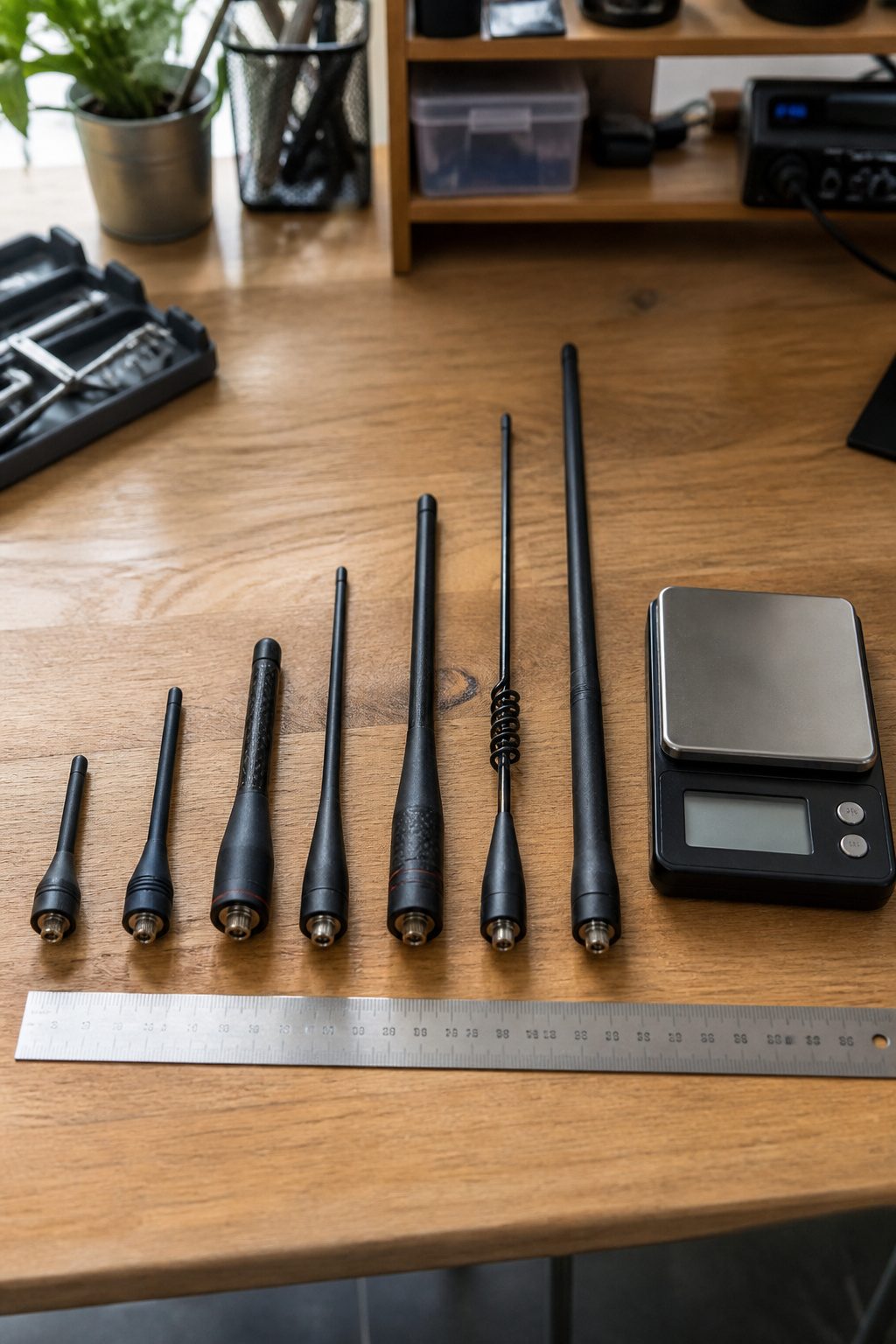
Frequency compatibility is crucial, as antennas must match the VHF and UHF bands used.
Frequency Compatibility
The antenna has to match the bands you actually use. Most Baofeng radios cover VHF (136–174 MHz) and UHF (400–520 MHz), but an antenna tuned for one band will underperform on the other. Some models lean heavily into dual-band optimization; others sacrifice one band for better efficiency on the other.
This matters most if you operate on specific local repeaters or GMRS frequencies. A ham working mostly 2-meter nets wants strong VHF performance. Someone monitoring FRS/GMRS traffic needs UHF to come through clean. The mismatch shows up as weak receive audio and reports that you sound distant even on full power.
You can worry less about this if you are just scanning across bands for weather or emergency traffic, where "good enough on everything" beats specialized performance.
Gain and What dBi Actually Means
Gain in dBi tells you how much an antenna shapes and concentrates your signal compared to a theoretical perfect sphere. Higher numbers point energy toward the horizon rather than wasting it skyward. For handheld use, 2.15 dBi is common for a basic whip; aftermarket options run toward 5–7 dBi or more.
The practical effect is reach. A 5 dBi antenna on a UV-5R can push a signal across terrain that would drop out with the stock stub. Clarity improves too, since the radio is not struggling to pull weak stations through noise.
This matters for anyone operating in hilly country, from inside a vehicle, or trying to hit distant repeaters. It matters less in flat open terrain at close range, where even modest gain gets the job done. One thing owners report: very high-gain antennas on a handheld can make the radio feel top-heavy and awkward to carry.
Length, Portability, and the Tradeoffs Between Them
Longer antennas generally perform better. A 15-inch whip pulls more signal than a 6-inch stub. The physics are straightforward: more radiator length catches and radiates more energy.
The problem is the handheld form factor. A 19-inch flexible whip on a UV-5R turns the radio into something you cannot easily pocket. It bangs against doorframes. It snags on pack straps. For daily carry, many users settle on a 7–10 inch compromise that fits a jacket pocket without folding over.
This decision splits by use case. Base station or vehicle setups can run full length without penalty. Hikers and security staff usually want something shorter. One compromise owners describe: a collapsible or "ducky" design that extends for operation and shortens for movement.
What Owner Reports Actually Reveal
Spec sheets only tell part of the story. Reading through owner feedback, certain patterns repeat. Poor reception with stock antennas is the complaint that drives most upgrades. Limited range on specific frequencies often traces back to mismatched tuning. Compatibility issues surface when an antenna’s connector or base diameter does not seat cleanly on a particular Baofeng model.
The useful detail in reviews is consistency across multiple users. One person with a bad experience might have a defective unit. Ten people noting the same weak spot on UHF is a design characteristic. I look for mentions of connector fit, since SMA-Female threads vary slightly between manufacturers and can bind or wobble.
This research matters most for buyers without test equipment. You are relying on aggregated experience rather than an analyzer. It matters less if you own an SWR meter and can verify performance yourself.
Budget and Where the Money Goes
Antennas for these radios fall into clear tiers. Budget options use simpler radiators and basic whips. Mid-range adds better tuning stability and more durable flex joints. Premium builds use higher-grade materials, tighter tolerances, and often include adapter hardware for multiple radio families.
The stock antenna is the baseline most people upgrade from. Spending more does not always linearly improve performance; a well-tuned budget antenna often outperforms a poorly matched premium one. Where extra money shows is durability: the connector base, the strain relief where whip meets housing, and how the antenna survives being sat on or stuffed in a pack.
For a radio that lives in a glove box, budget makes sense. For one that rides in a duty belt through weather and rough handling, mid-range or premium pays off in longevity rather than raw gain.
When to Ignore the Above
Not every factor matters to every buyer. Frequency compatibility is non-negotiable if you know your bands. For someone still exploring, "broadly dual-band" is fine. Gain matters for edge-of-range work; a scanner listening to strong local signals does not need it. Length and portability only conflict if you carry the radio; a desk-bound monitor can run whatever fits. Reviews help the uncertain; experienced operators with analyzers trust their own measurements. Price sensitivity varies by how many radios you outfit and how hard you use them.
The right antenna is the one that solves your specific problem without creating new ones.
How the Top Picks Compare
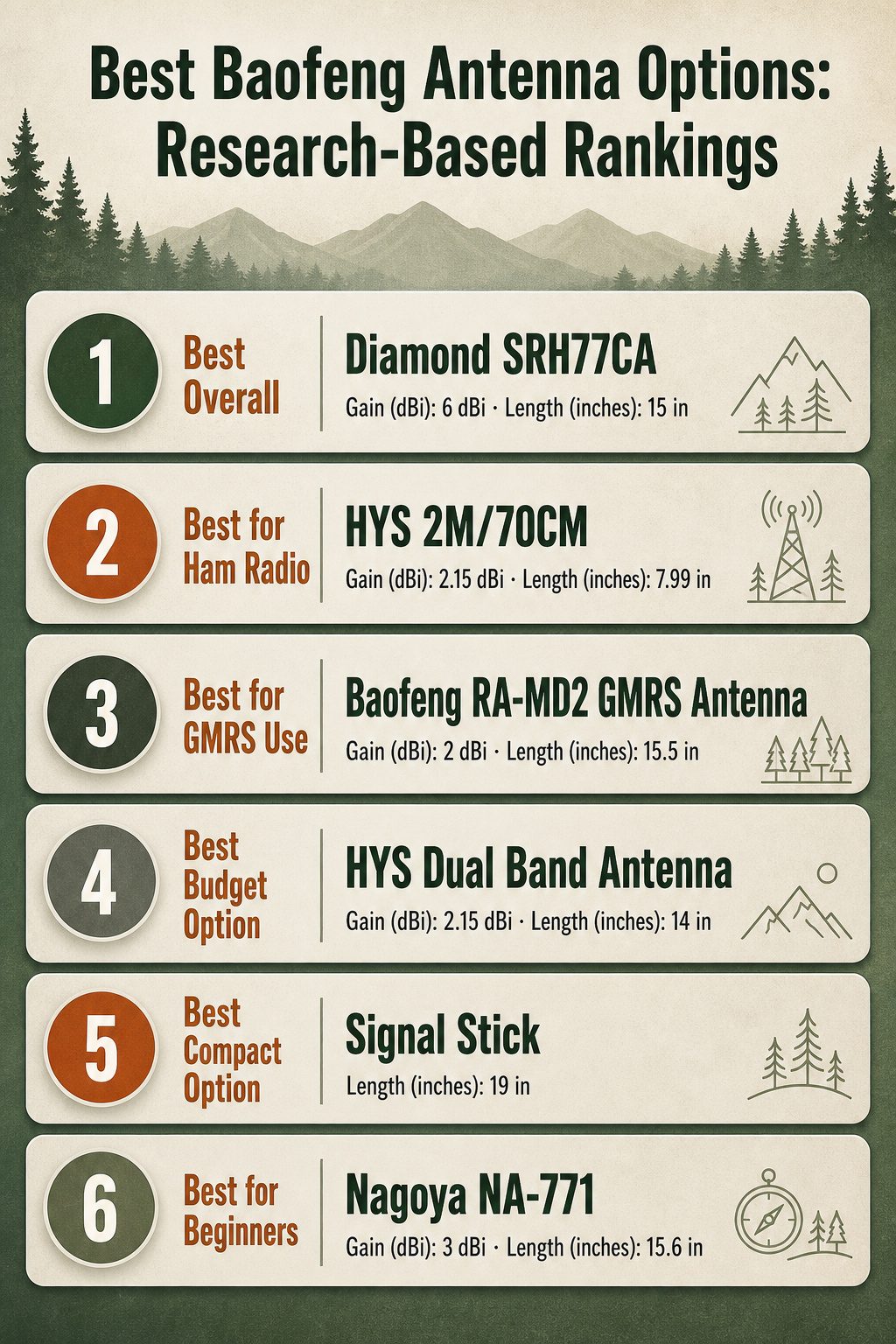
The Diamond SRH77CA offers significantly higher gain compared to the shorter HYS 2M/70CM.
The Diamond SRH77CA and the HYS 2M/70CM sit at opposite ends of a length-versus-gain tradeoff that most buyers will feel in their pocket or on their belt. The Diamond stretches to 15 inches and pulls 6 dBi, nearly triple the HYS figure of 2.15 dBi packed into an 8-inch stub. That extra gain translates to cleaner signal reports on simplex and better reach into fringe repeaters, which matters if your radio lives in a vehicle cup holder or a go-bag where the antenna can stay extended. The HYS, though, disappears against the body. For someone walking a crowded event or working indoors, those missing 7 inches mean the antenna isn’t catching door frames or announcing your kit to everyone in the room. The gain loss hurts less than you’d expect in urban clutter where buildings eat signal regardless; the HYS owner trades theoretical range for all-day carry comfort.
Portability splits the field another way. The Nagoya NA-771 at 1.41 ounces and the Comet SMA-24 at 0.2 lb (about 3.2 ounces) both qualify as handheld-friendly, but that extra ounce and change on the Comet adds up across a ten-mile hike. Owners who pair their Baofeng with a chest rig or belt clip notice. The Nagoya’s lighter build sacrifices some of the Comet’s claimed durability in owner reports, though both survive normal drops. For a beginner who hasn’t yet learned to baby their SMA connector, the Nagoya’s weight and price bracket make a forgiving first upgrade.
The N9TAX Slim Jim stands alone at 6 feet, and that length is the entire point. Deployed in a tree or hung from a hotel window, it turns the same 5-watt Baofeng into a station that reaches across counties. Coiled in the pack, it competes with the Signal Stick for space until you find somewhere to hang it. The Signal Stick at 19 inches is the compromise that lives on the radio, not in it; the N9TAX is the tool you stop to rig. Your typical use pattern, stop-and-go versus fixed-position, decides this one.
GMRS buyers face a quieter choice. The Baofeng RA-MD2 at 15.5 inches and 2 dBi is purpose-built for the band, while dual-band antennas split their design budget across VHF and UHF. For GMRS-only users, the dedicated tuning shows in cleaner transmit audio reports; for anyone keeping one foot in ham frequencies, the dual-band penalty is small enough that most never notice.
Frequently Asked Questions
What frequency bands will I be using?
Most Baofeng radios transmit on VHF (136–174 MHz) and UHF (400–520 MHz), so a dual-band antenna covers the basics. If you plan to listen on 220 MHz or 900 MHz, you need a triband or specialty antenna instead. Check your radio’s manual for exact transmit ranges, since some models block certain segments.
Is the antenna compatible with my specific Baofeng model?
Baofeng handhelds use SMA-Female connectors on the radio body, which means antennas need SMA-Male threads. The UV-5R series, BF-F8HP, and UV-82 all share this standard. A few older or export models use reverse-polarity SMA, so matching the thread direction matters more than the model name.
What is the gain (dBi) of the antenna?
Factory Baofeng antennas typically rate around 2 dBi, while aftermarket options range from 3 dBi for compact designs up to 6 dBi or more for longer whips. Higher gain narrows the radiation pattern horizontally, which helps in flat terrain but can miss signals from above or below. For all-around use, 3–4 dBi hits a practical middle ground.
How does the antenna perform in real-world conditions?
Range depends heavily on terrain, buildings, and how you hold the radio. Owner reports show that a 15-inch flexible whip often doubles usable range over the stock stubby in open country. In dense urban environments, the difference shrinks, and a compact antenna sometimes performs nearly as well without snagging on doorways.
What is the length and weight of the antenna?
Stock antennas run about 6 inches and under an ounce, making them unobtrusive on a belt clip. Aftermarket options span from 3-inch stubs at roughly half an ounce to 40-inch telescoping whips at several ounces. Your choice trades off pocketability against the signal boost you actually need for where you operate.