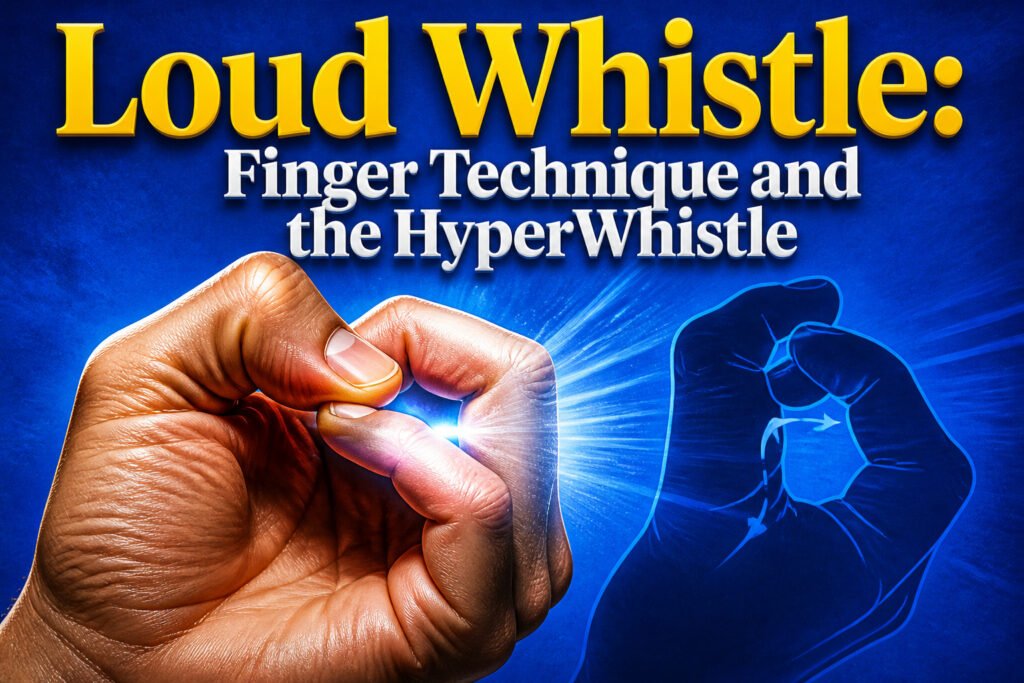
A loud whistle made with your fingers is a folded tongue pinned behind your bottom lip, angled so air splits across it like blowing across a bottle. The trick is that the fold slips: beginners push the tongue back instead of clamping the curled tip, and the sound dies before it starts. The HyperWhistle was built for exactly that failure, a tri-frequency chamber system patented after a US Navy official asked for something that could cut through 125 decibel carrier deck noise.
Choose Your Finger Combination
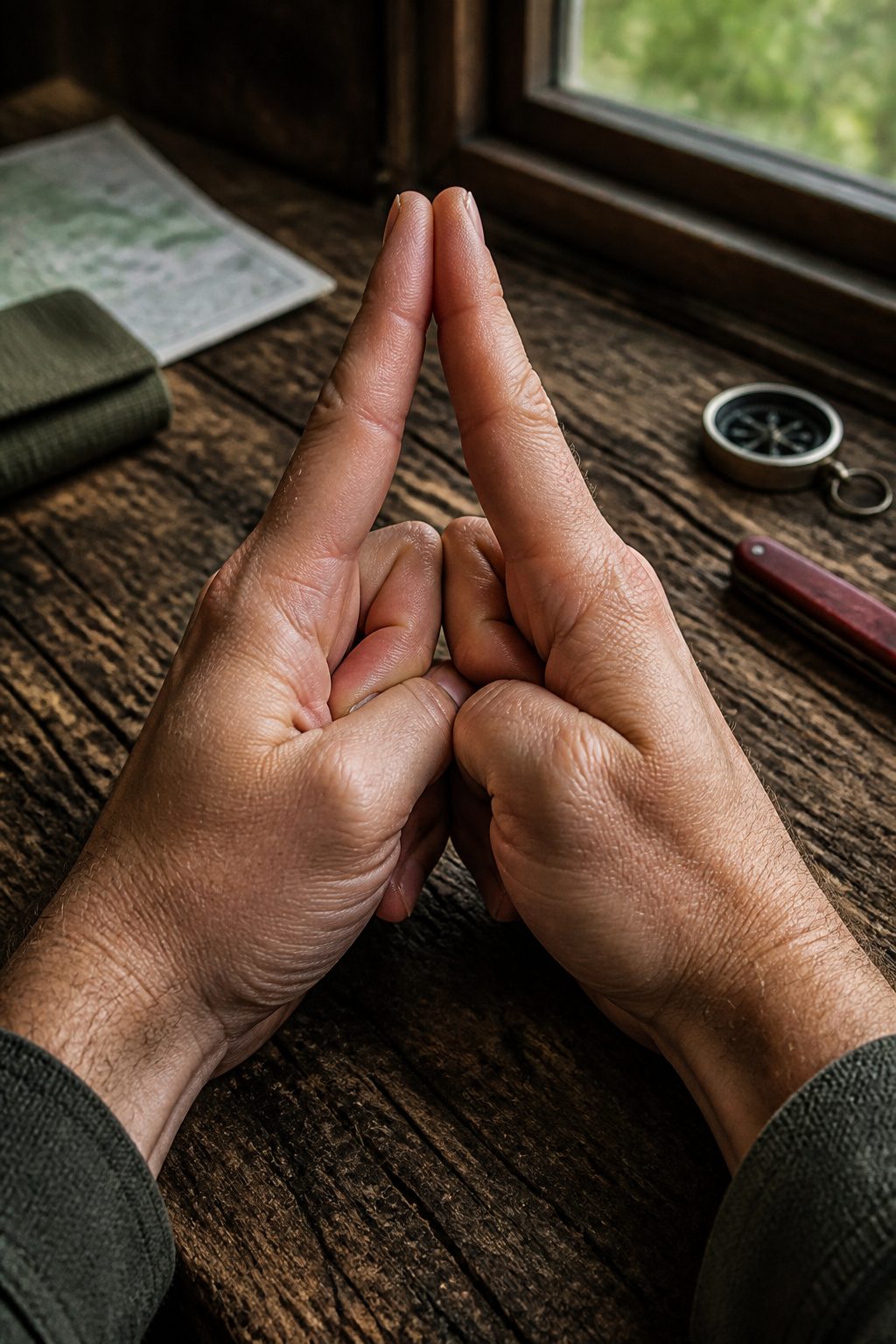
The two-handed method uses your middle and index fingers on both hands, tucked close together with thumbs holding down the ring and pinky, to form an "A" shape with the middle fingers. That geometry keeps the tongue folded back and the lips tucked over the teeth, which builds the bevel that actually produces the tone. Some people get more force and volume out of this combo.
The one-handed "OK" sign works with either thumb-and-index or thumb-and-middle finger. Either pairing leaves your other hand free, which matters more than it sounds if you are carrying something or need to signal while holding gear.
Your mouth size and what feels comfortable in your jaw will settle which method gives you the louder whistle. The sources disagree on which is definitively louder; the "A" shape felt stronger to the person describing it, but that is one mouth and one data point. Try both. The one that lets you fold the first quarter of your tongue back cleanly and push until your knuckle hits the bottom lip is the one that wins.
Wet and Tuck Your Lips

A quick lick across your lips gives the surface the moisture it needs so air won’t catch and flutter where it shouldn’t. After that, tuck your lips back over your teeth the way you might if you were imitating an old man who’s lost his set. The seal this creates is what channels your breath into a narrow, fast stream instead of letting it scatter.
How far back you tuck is personal. Some people need almost a full fold to feel the air bite; others get a cleaner tone with less. The fingers you’ll add later will help hold the bottom lip in place, but the initial seal is what sets up everything. Without it, you’re just blowing.
Push the Tongue Back With Fingers
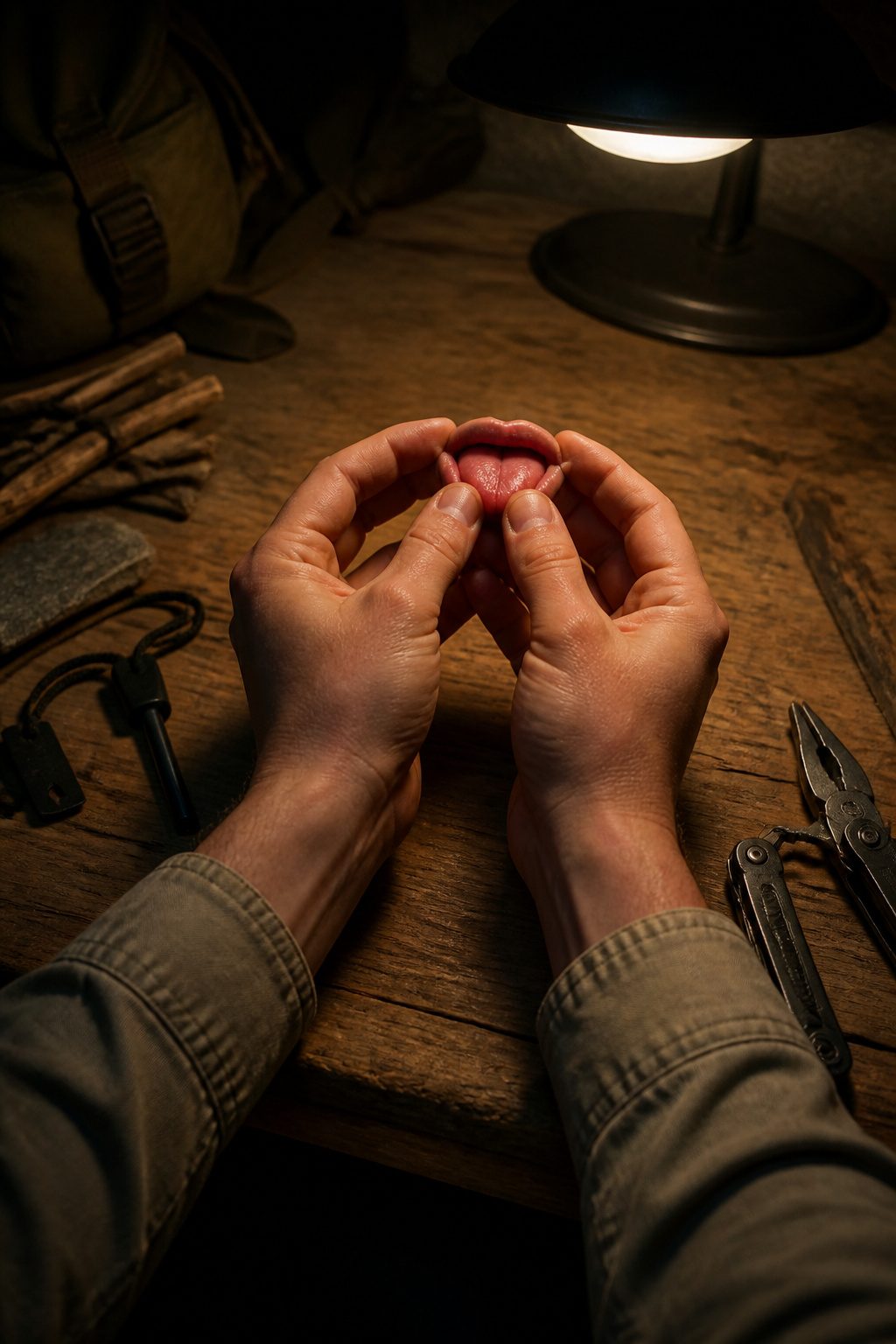
Folding the tongue back is where most beginners lose the whistle before it starts. The tip curls under itself so the first quarter of the tongue doubles back, and your fingers pin that fold in place while pushing everything toward the back of your mouth. Your first knuckle should reach your bottom lip; any shallower and the tongue springs loose, any deeper and you block the airway you need for sound.
The slipping happens because beginners treat this as a push instead of a hold. Your fingers aren’t just shoving the tongue backward; they’re maintaining a clamp on the folded tip so the tongue stays curled when air hits it. The two-handed middle-and-index combo gives more stability here because both hands anchor against your jaw, but the one-handed OK sign works the same way if your thumb and finger grip firmly enough.
Some people skip the fold entirely and just push the tongue flat. That can work, though the folded method gave me a more reliable seal and a sharper tone. Experiment with both, but start with the fold; it solves the slipping problem that kills most first attempts.
Blow and Adjust
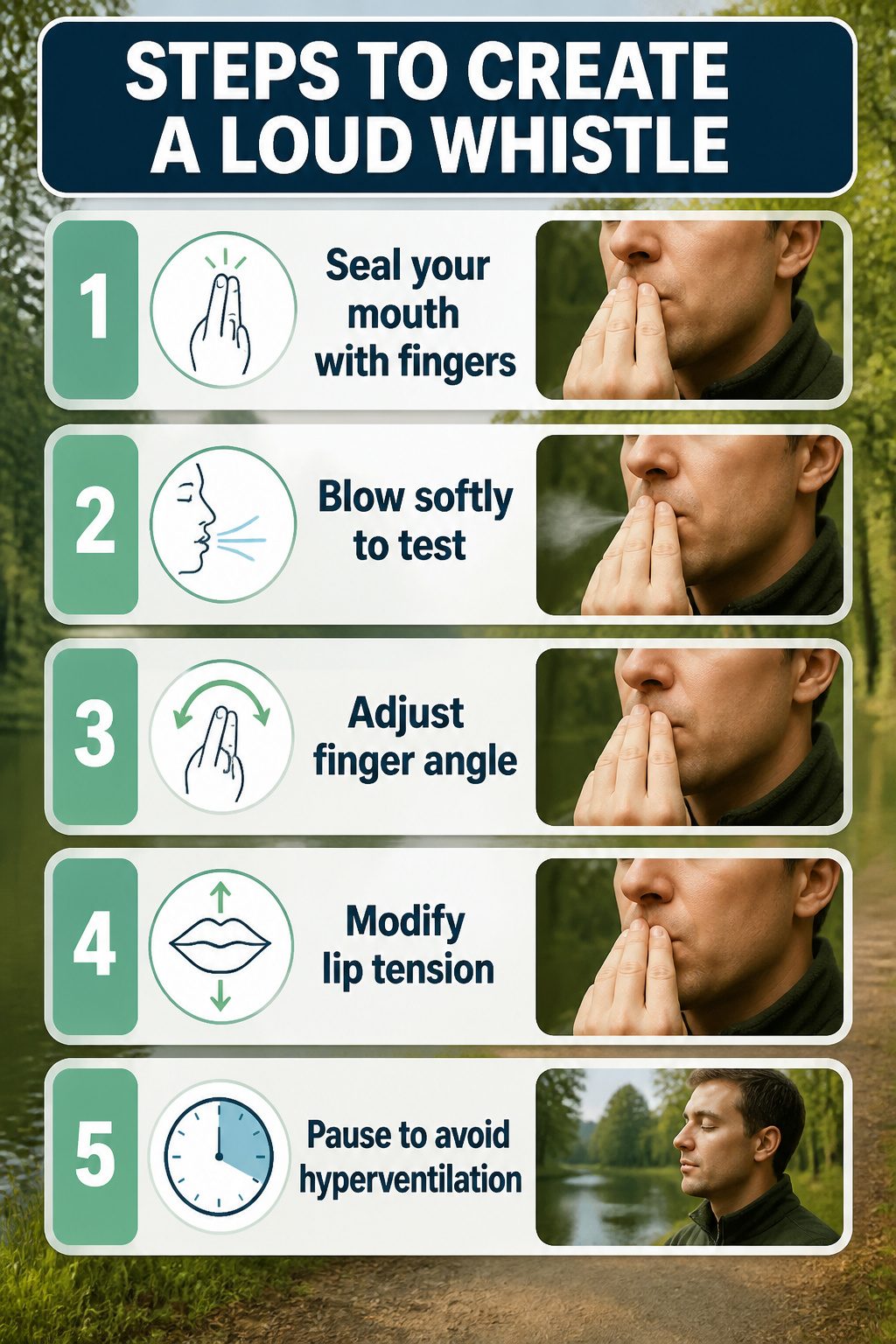
Close your mouth around your fingers until the seal is complete. No air should escape from the sides. A soft blow outward is the right starting point, not a hard blast. The air needs to pass only over your bottom lip, and if your tongue shows in the gap between your fingers, it is blocking the path.
Silence is the normal first result. Small shifts in finger angle, how far the lips tuck back over the teeth, and lip tension turn that silence into sound. The noise you want starts like blowing across a beer bottle, thin and hollow. That is the signal to blow harder. The iterative part is the whole process: move the fingers a millimeter, try again, adjust the lip tuck, try again. Each near-miss teaches the muscles where the sweet spot lives.
Hyperventilation is a real risk at this stage. Blow, pause, blow again. Lightheadedness and headache arrive fast if you ignore the breaks, especially while the placement still needs this much trial and error.
Practice Time

Quitting after ten minutes is common, but premature. Some people lock in the finger whistle after 5–10 minutes of focused tries. Others need 40 minutes spread across two days before the sound finally breaks through. The spread is real, and the learning curve has nothing to do with coordination or lung power. It is mostly about finding the exact tongue position and lip tension that turns rushing air into a sharp tone, which is invisible work until it clicks.
If you live with other people, practice somewhere they cannot hear you. Stopped at a traffic light, alone in the car, works well. Your cheeks will ache. You might feel lightheaded. That is normal feedback, not a signal to stop forever. The ones who get it are the ones who come back to it the next day.
The HyperWhistle
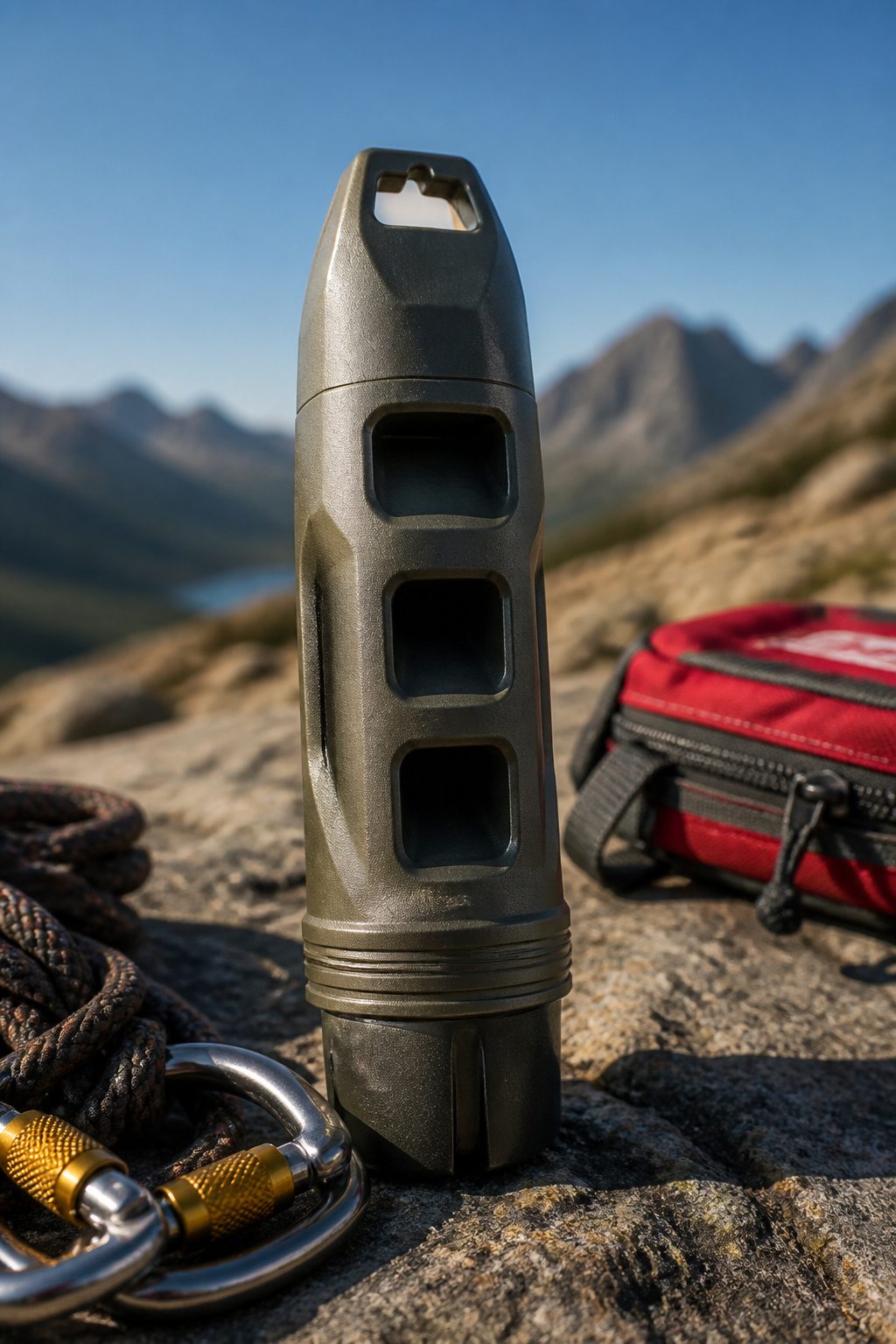
Finger whistling takes time to master, and some situations do not wait. The HyperWhistle was built for exactly that gap. A US Navy Official requested it specifically for flight launch crews on aircraft carriers, where idling jets push ambient noise past 125 decibels and a standard whistle disappears entirely.
The design relies on a tri-frequency chamber system: three separate frequencies, each engineered for its own chamber, all harmonics of the same note. Played together they reinforce rather than compete, and the output runs up to 3x louder than a normal mouth-blown whistle. The company patented the arrangement.
For search-and-rescue, for directing traffic in a storm, for any moment when your signal needs to cut through machinery or wind, this is the alternative to months of practice. The fingers stay in your pocket.
When a Whistle Beats Fingers
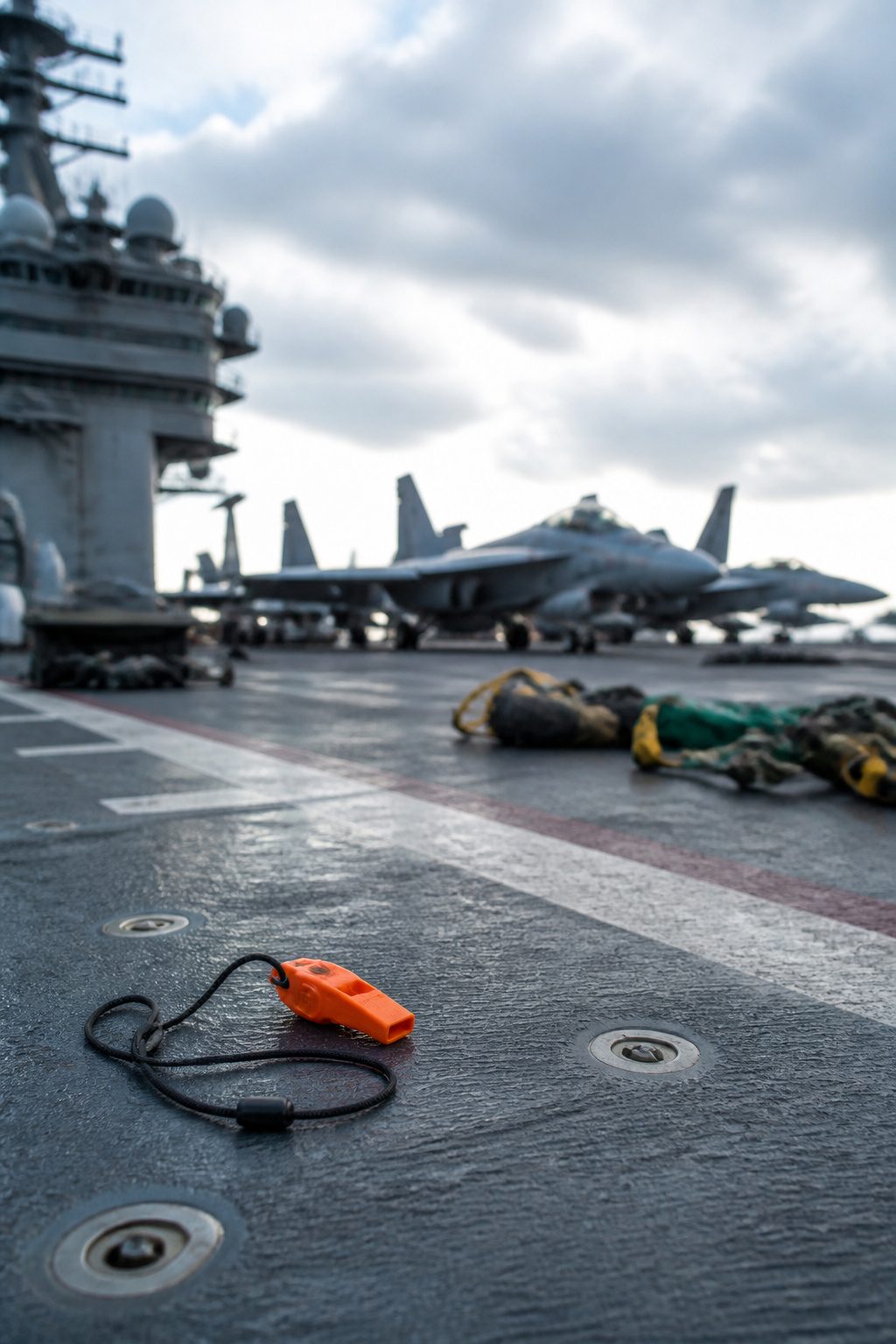
Aircraft carrier decks sit at more than 125 decibels with idling jets, the exact place a US Navy official first asked for something louder than standard issue. Finger whistling stops being a party trick there; it becomes physically impossible to hear yourself, let alone signal a crew member twenty feet away through engine wash and hearing protection.
Rescue contexts run similar math. The HyperWhistle runs a tri-frequency design, three whistles stacked into one unit, and that output multiplication matters when a search team is beating through timber or surf. I have read enough incident reports to notice the pattern: the signal that fails is almost always the one that relied on human technique at the worst moment.
Hands matter too. A broken wrist, rope work, or just carrying gear across a river crossing leaves no fingers free to wet, tuck, and blow. The whistle hangs on a lanyard. One pull of the cord works with gloves, with cold-stiffened joints, with one arm already occupied holding someone up.
Carry the HyperWhistle when the environment does not negotiate. Finger whistling stays in the kit for when you have dry hands, clear air, and no urgency.
What I Got Wrong Learning
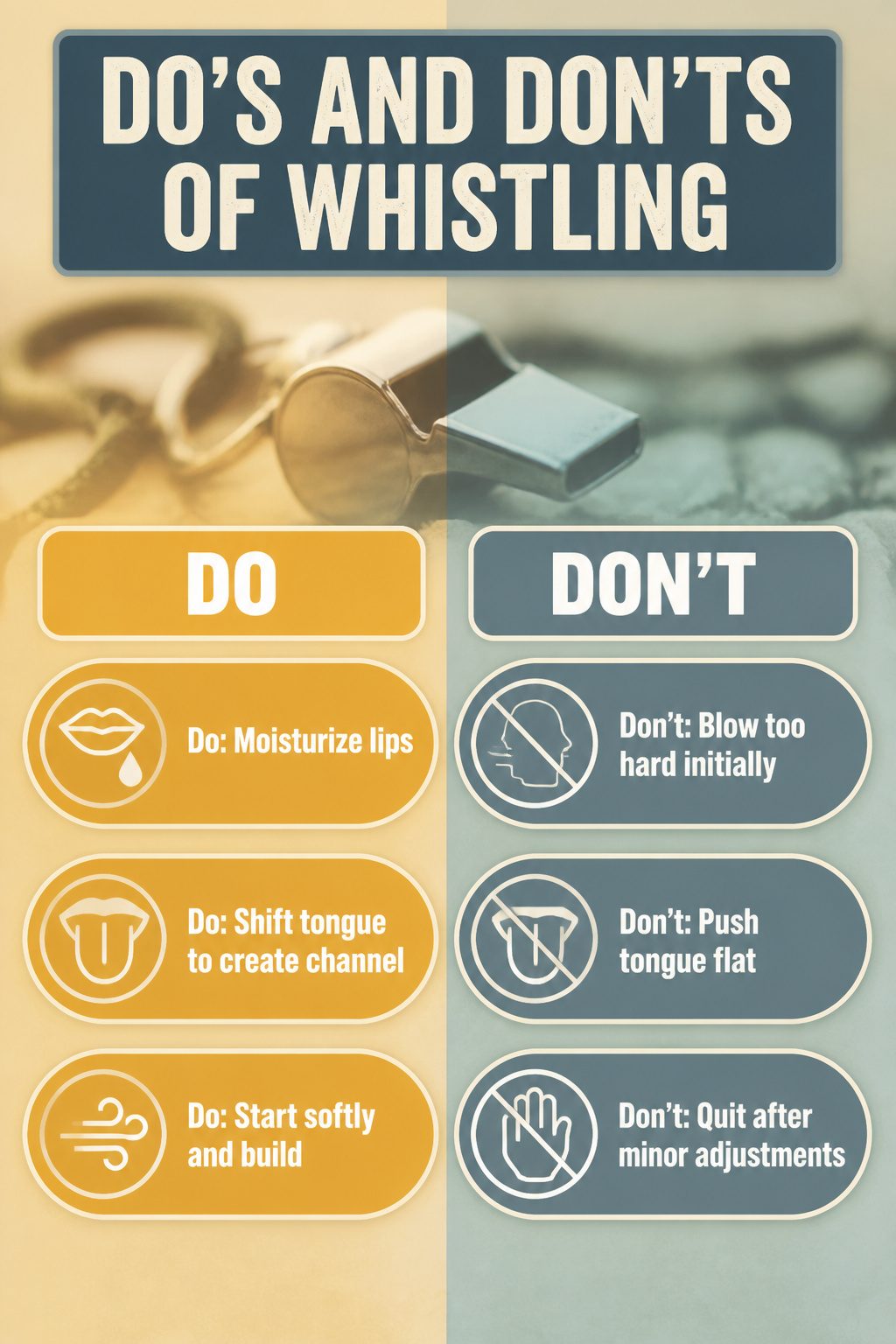
My first attempts at a loud whistle came out as nothing but breathy hisses. Dry lips were the first problem. Once I started running my tongue across them before each try, the seal around my fingers actually held. Without that moisture, air escapes at the corners and the whistle dies before it starts.
Tongue placement took longer to sort out. Some instructions say to push the tongue back, which is true but incomplete. Folding the tip back on itself, not just shoving the whole thing backward, is what creates the channel. My early mistake was pushing too far, jamming the tongue flat against the roof of my mouth. Then I undercorrected and left it too loose. The sweet spot sits about where the first knuckle reaches the bottom lip, though finger angle matters as much as depth.
Blowing hard from the start was another dead end. Soft air over the bottom lip comes first. Once the beer-bottle tone shows up, more force sharpens it into a real whistle. Skip that gradual step and you just hyperventilate. I learned that one the hard way, lightheaded after ten minutes of full-force nothing.
The real trap is quitting during adjustment. Three or four tiny shifts in finger placement, each barely perceptible, separate silence from a whistle that carries across a parking lot. Most people stop one tweak short.
Frequently Asked Questions
How do you whistle really loud with your fingers?
Wet your lips, then tuck them back over your teeth like an old man with no dentures. Fold the first quarter of your tongue back on itself, pin that fold with your fingers, and push until your first knuckle reaches your bottom lip. Blow softly at first until you hear a beer-bottle tone, then add force. The seal around your fingers and the curled tongue create the bevel that turns rushing air into a sharp, carrying whistle.
What is the HyperWhistle?
A tri-frequency whistle built for environments where standard whistles disappear. Three separate chambers each produce a harmonic of the same note, and together they reinforce to roughly triple the output of a normal mouth-blown whistle. A US Navy official originally requested it for aircraft carrier flight decks, where idling jets push past 125 decibels.
How long does it take to learn to whistle with your fingers?
Some people lock it in within 5 to 10 minutes of focused tries. Others need 40 minutes spread across two days before the sound breaks through. The spread has nothing to do with coordination; it is about finding the exact invisible tongue position and lip tension that turns air into tone, which only trial and error can teach.