
The Travel Berkey is a 1.5-gallon gravity-fed water filter built for countertop use in RVs, apartments, and off-grid setups. Its value depends entirely on whether you can accept slow filtration: a full cycle takes several hours, so planning ahead is mandatory. The stainless steel body holds two Black Berkey elements rated for 6,000 gallons, but the $362 upfront cost only pays off if you use it steadily rather than letting it sit idle between occasional trips.
Gravity-Fed Filtration
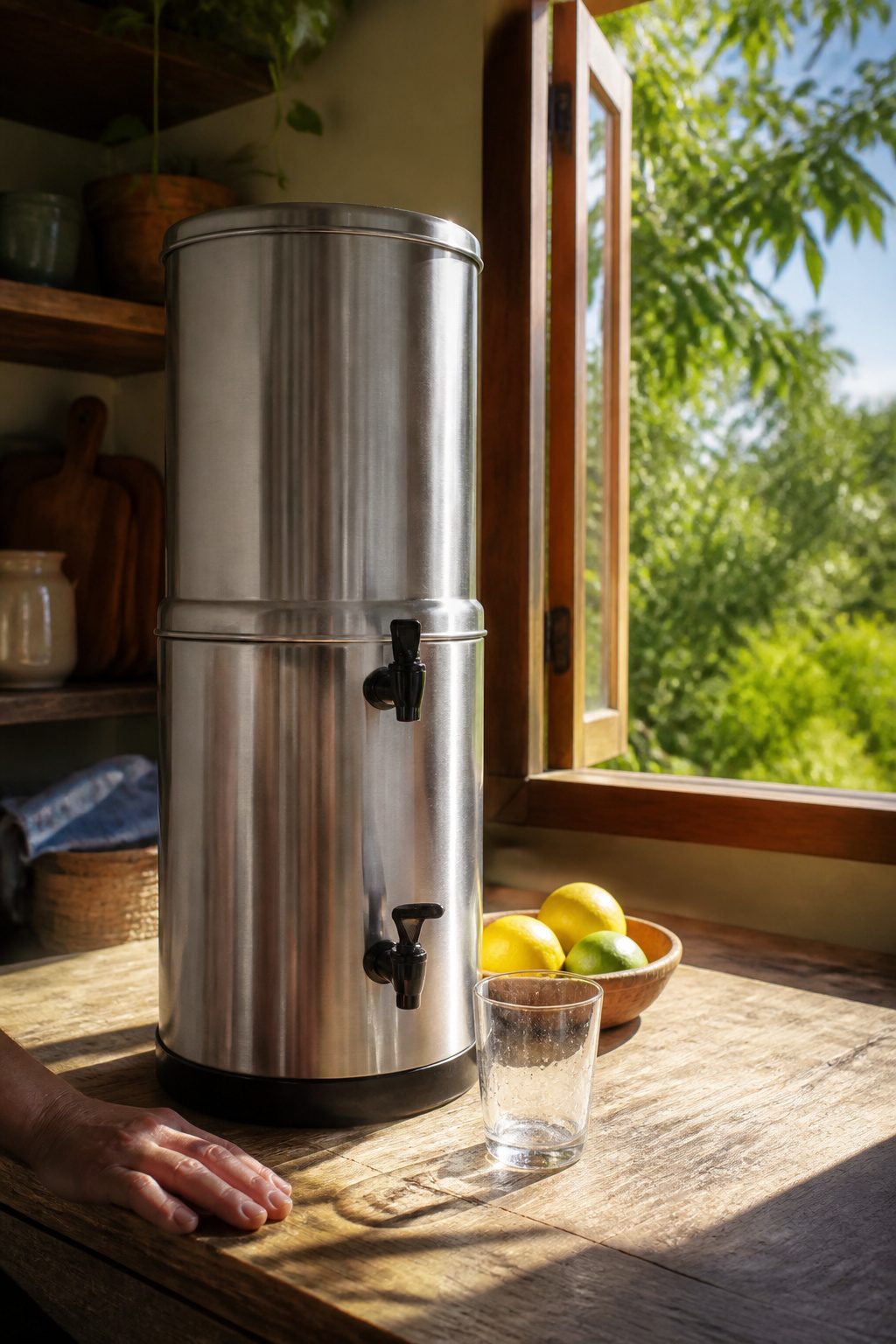
Gravity does the work. Pour tap water into the upper chamber, walk away, and the Black Berkey elements thread through the divider between chambers, letting filtered water collect below. No pump, no line pressure, no plumbing. That independence from power sources is exactly what makes the Travel Berkey practical for RV use or off-grid travel; you are not hunting for an outlet or tapping into vehicle electrics.
The mechanism is deliberate slowness. Each element pairs a dense ceramic-style shell with an interior blend of activated carbon and ion-exchange media, and the low pressure of gravity gives contaminants longer contact time with that media than fast-flow systems manage. A full cycle takes several hours, so filling the upper chamber before bed yields 1.5 gallons of filtered water by morning. For real use, that means planning ahead rather than expecting instant pour. Most two-person households refill a few times daily, and the pace becomes routine once you account for it.
1.5-Gallon Capacity

The 1.5-gallon capacity hits a practical sweet spot for one to three people, which is why the Travel Berkey lands in so many RVs and small apartments rather than just backpacks. At 7.5 inches in diameter and 18 inches tall, the cylinder is slim enough to slide into the corner of a galley counter or tuck beside a microwave cabinet, though that 18-inch height means some overhead shelves are out of the question.
Two people drinking normally will refill it a few times a day. One full upper chamber drains through to fill the lower, so you are not babysitting it. The frustration is the lack of a water level indicator. You lift the lid to check, or you buy a replacement spigot with a sight glass, or you guess and get caught short. For road life, the volume works; for flights, the packed size and weight do not.
Filter Life and Replacement
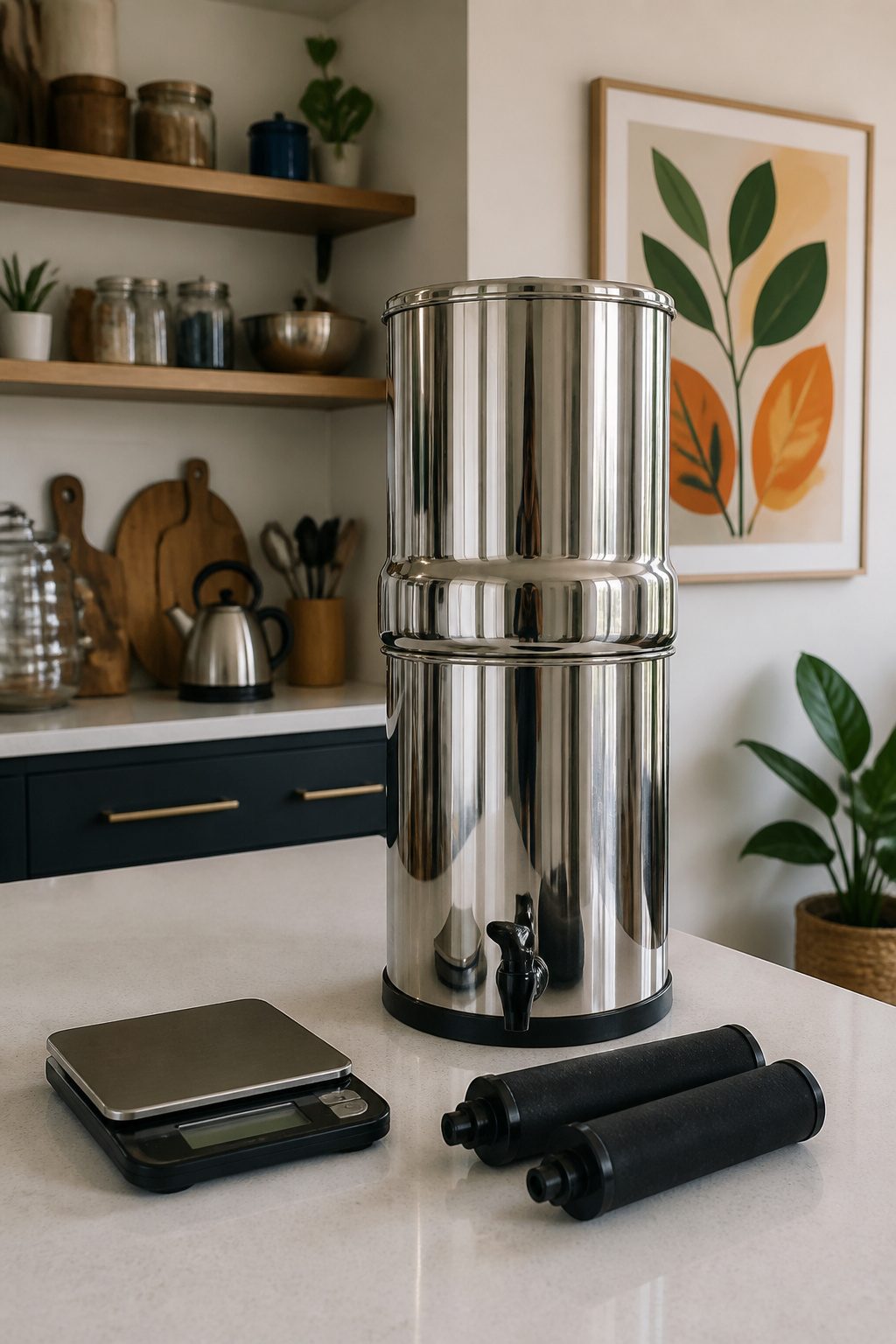
A pair of Black Berkey elements handles roughly 6,000 gallons, which for most households stretches across two to five years before replacement. At $166 for a two-pack, the math lands somewhere around five to ten cents per gallon, depending on how hard your source water is on the elements. That undercuts pitcher filters and countertop RO units by a fair margin, and the gap widens against bottled water the longer you run the system.
The priming process takes about half an hour before first use and again after any long storage. Each element gets flushed under a faucet until water beads evenly across the surface instead of beading up dry, then threads into the upper chamber with long wing nuts that turn far longer than feels necessary. It is tedious, not difficult.
Replacement filters aren’t cheap either, averaging about $140 for a set of two. The upside is that the filters are good up until around 6,000 gallons, which averages anywhere from two to six years, depending on your water consumption.
The real cost relief comes from that span. A family burning through four gallons a day still gets four years; a single user stretching it sees a decade. Either way, the replacement cycle is measured in years, not the six-month swaps common to smaller systems.
Contaminant Removal
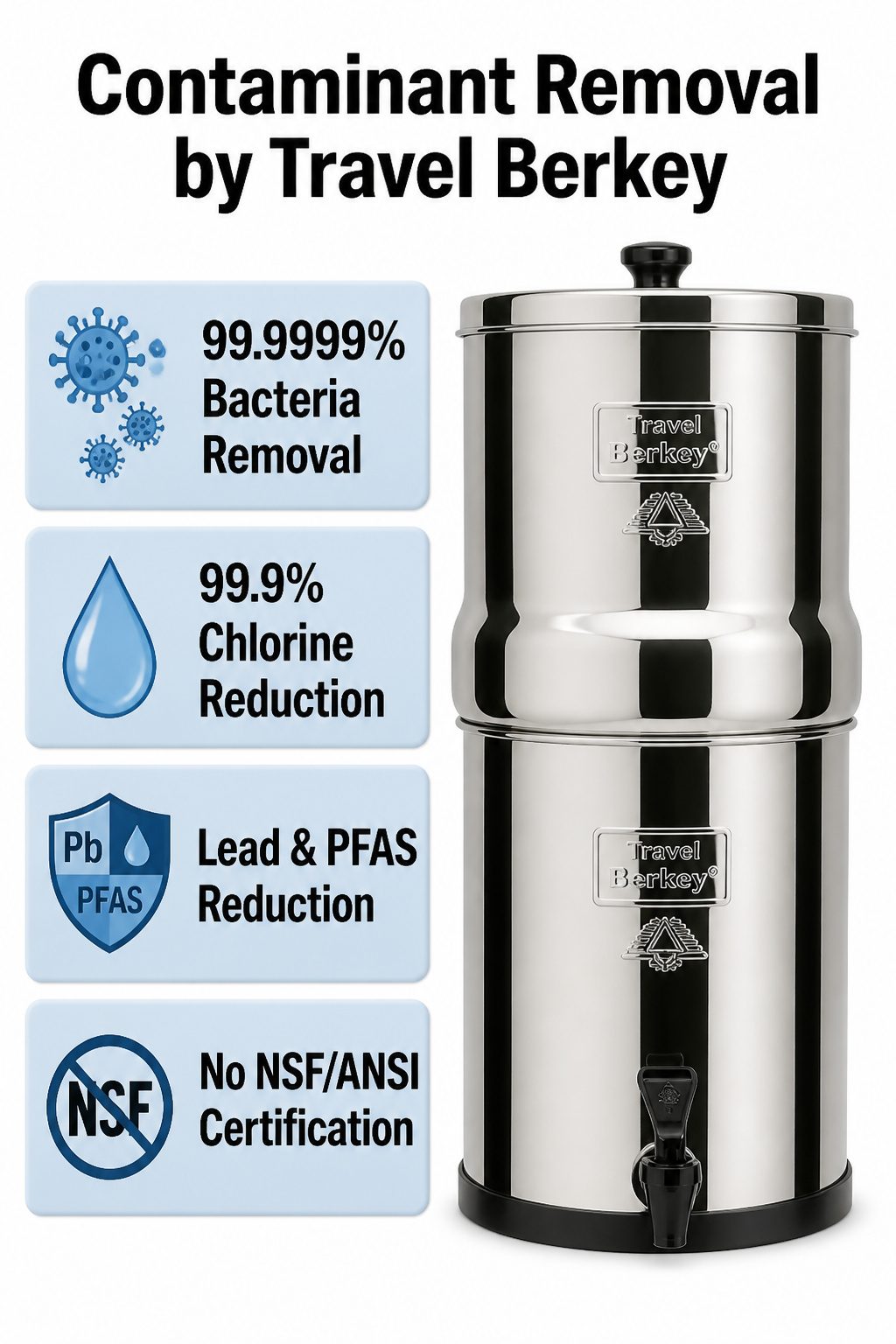
The Travel Berkey’s Black Berkey elements claim 99.9999% removal of bacteria and cysts, greater than 99.9% of chlorine, and reduction of lead and PFAS. Those numbers come from third-party lab testing commissioned by Berkey itself, not from NSF/ANSI certification. That distinction matters to a lot of buyers, and it should.
NSF/ANSI 53 is the health-effects standard that covers lead, cysts, and an expanding list of PFAS compounds. Products like the Clearly Filtered pitcher and AquaTru countertop unit carry it. Berkey does not. The company instead publishes its own lab results and argues they cover more contaminants at higher challenge concentrations than NSF requires. That has technical merit, but it is not the same contractual third-party guarantee an NSF mark provides. The longest Berkey test ran about 200 gallons, roughly 3% of NSF/ANSI 53’s rated-life requirement, so end-of-life performance remains unverified. A 2022 class action alleging overstated marketing claims remains unresolved.
What users consistently report is improved taste. RV travelers describe municipal water that smelled heavily of chlorine coming out clean, with the metallic or chemical aftertaste gone. Rings in glasses disappear. For someone filling from varied city taps, that sensory difference is often the immediate payoff, even if the certification question lingers on paper.
Stainless Steel Build
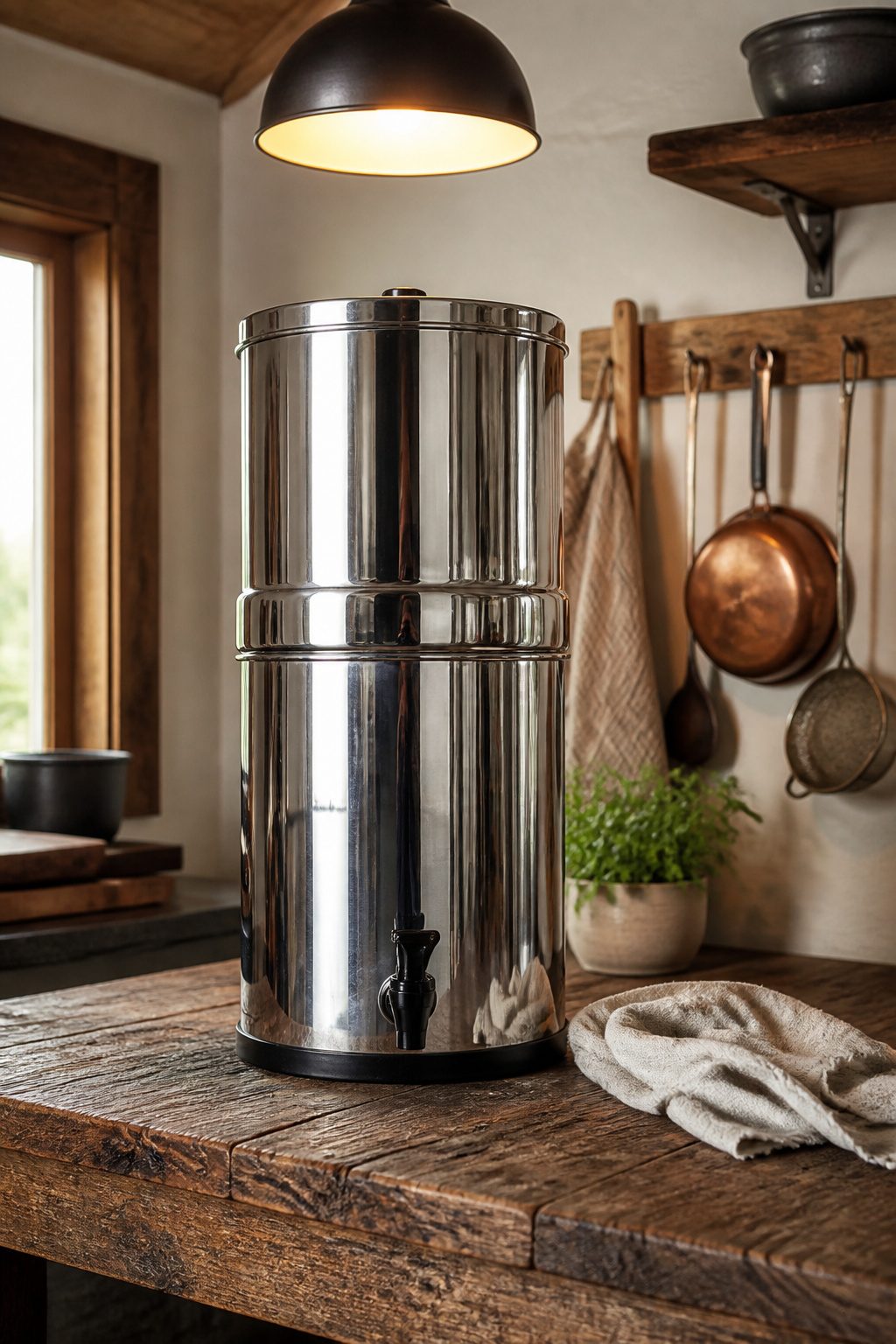
The stainless steel chambers on the Travel Berkey are what sold me over another plastic pitcher sitting on the counter. At 7.5 inches across and 18 inches tall, the unit has enough heft that it does not slide when you push the spigot, but that same weight means it is not something you toss in a backpack for a day hike. The finish has held up through temperature swings in my camper, from morning frost to afternoon sun heating the galley, without the warping or stress cracking I have seen in plastic housings after a season of that abuse.
Dents are the real risk with steel this thin. One bad drop on a gravel pad and the lower chamber can tweak enough that the upper chamber sits crooked, though the seal itself still works. Scratches show on the brushed surface, especially around the rim where the chambers meet, yet they do not rust through because the grade is meant for food contact.
Cleaning takes a soft cloth and ordinary dish soap. The walls are smooth enough that sediment does not cling, but the spigot threads need attention; mineral buildup there will stiffen the handle over time if you let it.
Setup and Priming
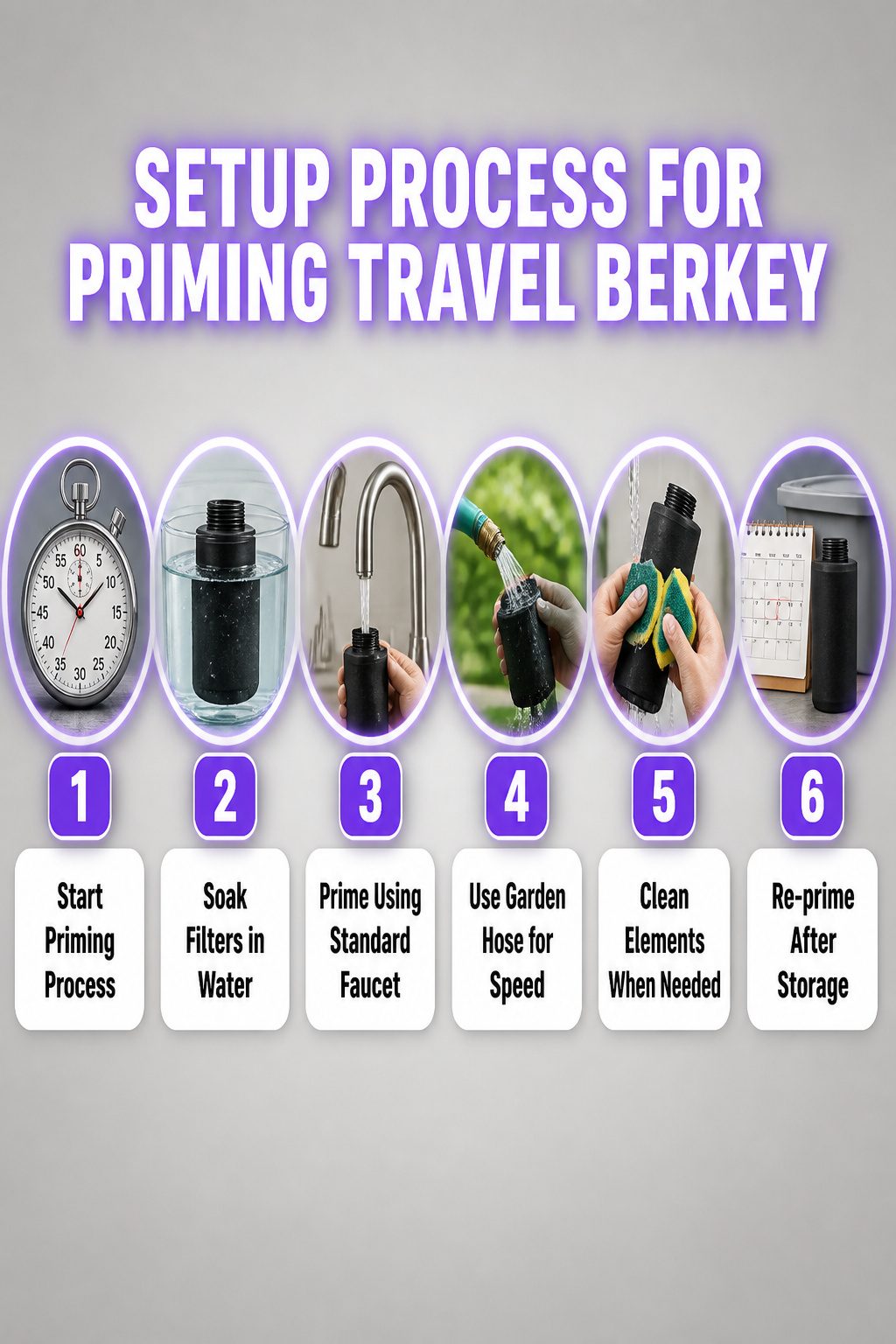
Priming the Black Berkey elements takes about 30 minutes total, and skipping it or rushing through will cost you later. The filters arrive full of air pockets that block water flow; running water backward through the charcoal column forces those pockets out until the element surface starts to "sweat," usually after around five seconds of steady pressure. A rubber priming button seals against the threaded end so the water actually enters the filter channel instead of spraying around it.
The standard faucet method works, though some owners find a garden hose faster when the filter section is held upside-down. Either way, prime at home before a trip so you are not troubleshooting slow flow in a campground. The same air problem returns after several weeks of storage, so re-priming is necessary if the unit sits unused.
Cleaning documented by Berkey is limited. The stainless chambers wipe down, and the plastic spigot is a known failure point long-term, but published step-by-step filter cleaning instructions are thin. Scrubbing the Black Berkey elements under running water with a plain scrub pad can restore flow rate when it drops, though how often this is needed depends on your source water. Beyond that, maintaining the Travel Berkey means staying alert to slower output and handling the elements carefully, since replacements are not cheap and the priming investment repeats with each new set.
Portable Design for Travel

The 18-inch height of the Travel Berkey clears standard RV overhead cabinets with room to spare, and in my reading that dimension turned out to be the make-or-break spec for most rigs. Countertop real estate is what actually limits you; the unit needs a footprint you are willing to sacrifice every day, not just on travel days.
Two methods emerged for securing it on the move. One couple runs a bungee cord to Command hooks mounted on the wall and cabinet base, letting the rubber gasket on the bottom grip the counter. They drain the upper chamber and leave the lower section full so the weight sits low. Another traveler tried this, hit a hard bump, and watched the unit tip anyway, flooding the kitchen and snapping the black filters. No damage to the steel body or spigot, but a mess and a replacement cost.
Their revised method: stop refilling the night before travel, run it lighter, and set the whole unit in the kitchen sink padded with towels. A paper towel under the top chamber stops the rattle. Filters stay installed; no disassembly needed. At the next stop, slides go out, back to the counter it goes.
What nobody publishes is the filled weight. Dry weight is listed, but water adds eight pounds per gallon and the Travel Berkey holds 1.5 gallons in the lower chamber alone. For a rig near its cargo limit, that is a real number you will have to weigh yourself.
How the Travel Berkey Works
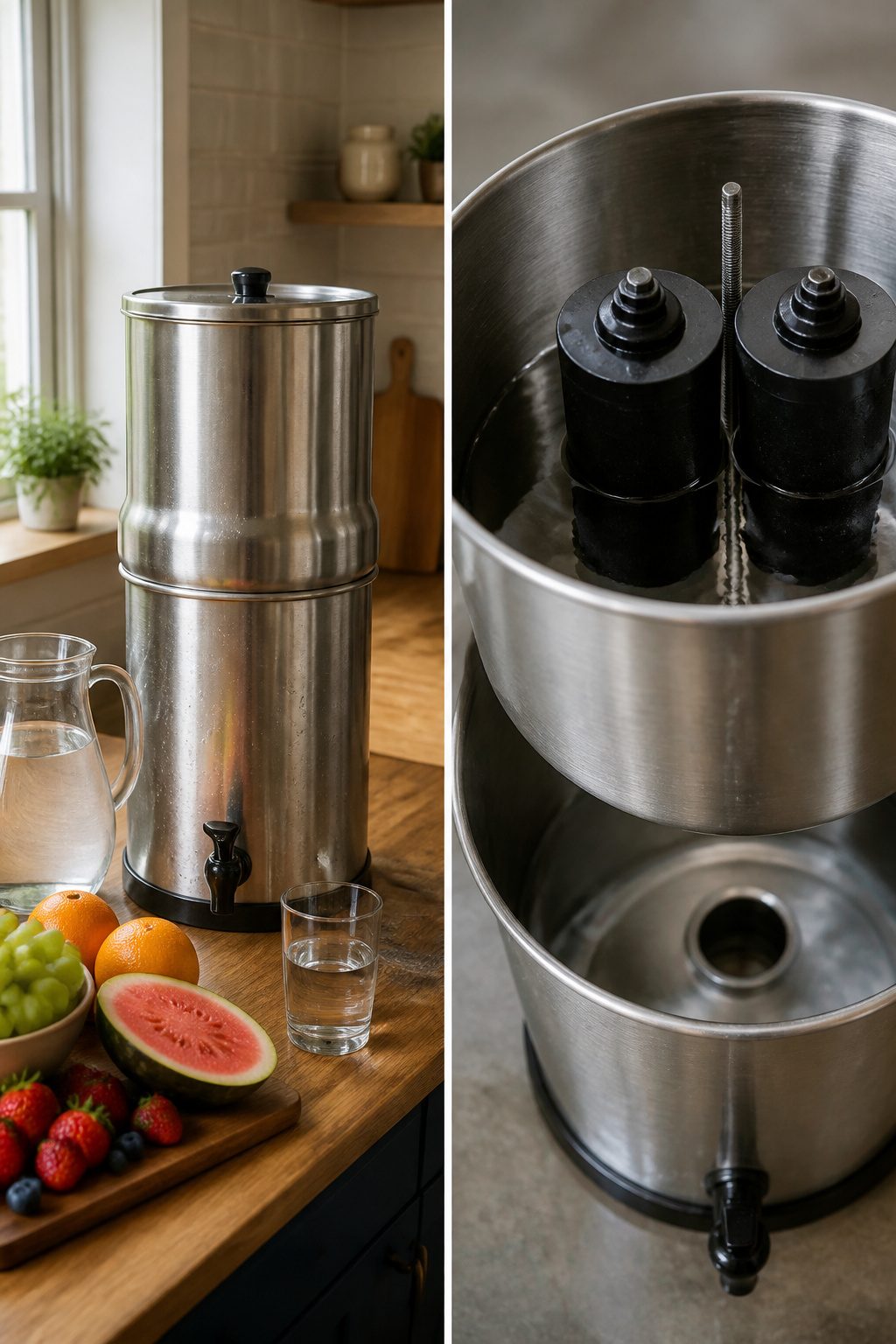
Pour tap water into the upper chamber and walk away. Gravity does the rest: no pump, no plumbing, no electricity. The water sits above two Black Berkey elements that thread through the divider between chambers, and filtered water collects below for dispensing through the front spigot.
Each Black Berkey element is a multi-stage composite. The dense ceramic-style exterior shell and interior blend of activated carbon, ion-exchange media, and other adsorptive materials give contaminants long contact time with the media. Slow, low-pressure filtration favors adsorption-based removal that faster systems sometimes underperform on.
A full cycle takes several hours, so a fully filled Travel Berkey runs unattended overnight and delivers 1.5 gallons by morning. There is no instant-pour use case here.
Over months of use, the flow slows. That slowing is the signal: the filters are loading up with what they have caught. Cleaning and priming them periodically restores performance, but the gradual deceleration is normal and expected. When priming no longer brings the flow back, the elements have reached their limit.
Travel Berkey vs. Big Berkey and Others
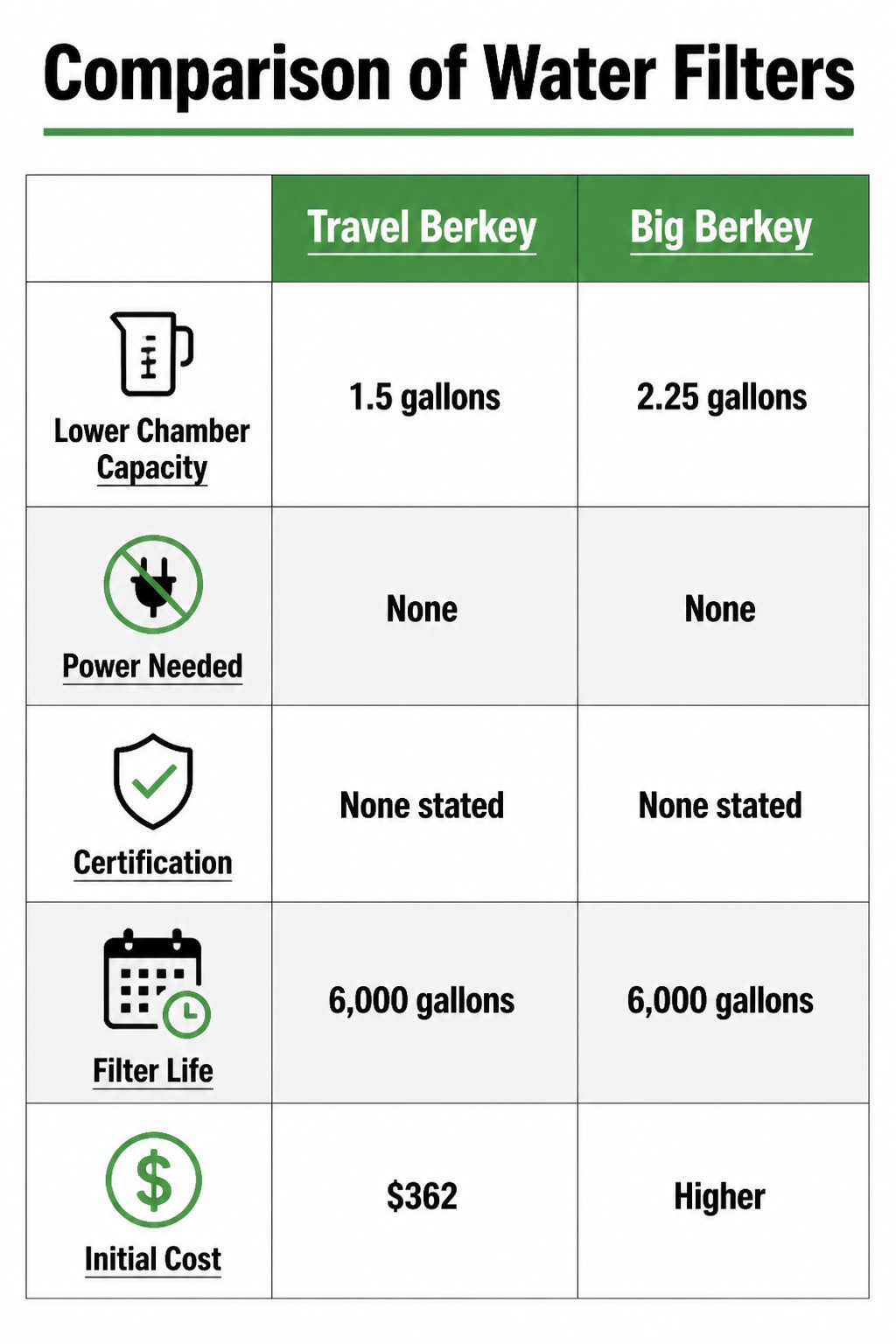
The Travel Berkey sits at a middle weight that only makes sense once you line it up against what else is out there. I spent some time running the numbers on how it compares to the larger Big Berkey, the electric AquaTru, and the Clearly Filtered pitcher.
| Attribute | Travel Berkey | Big Berkey | AquaTru | Clearly Filtered Pitcher |
|---|---|---|---|---|
| Lower chamber capacity | 1.5 gallons | 2.25 gallons | n/a | ~0.5 gallon |
| Power needed | None | None | Yes | None |
| Certification | None stated | None stated | Certified reverse osmosis | NSF/ANSI 42, 53, 244, 401, P473 |
| Filter life (pair/cartridge) | 6,000 gallons | 6,000 gallons | n/a | ~100 gallons |
| Initial cost | $362 | Higher | Higher | Lower |
For one or two people, the Travel is the right call. Step up to the Big Berkey only when you are feeding three to five. The AquaTru wins on certified contaminant removal but ties you to a wall outlet, which rules it out for RVs or blackout scenarios. The Clearly Filtered pitcher fits a fridge and carries real certifications, yet at roughly 100 gallons per cartridge versus 6,000, the per-gallon math collapses if you drink much water at all.
Cost and Long-Term Value
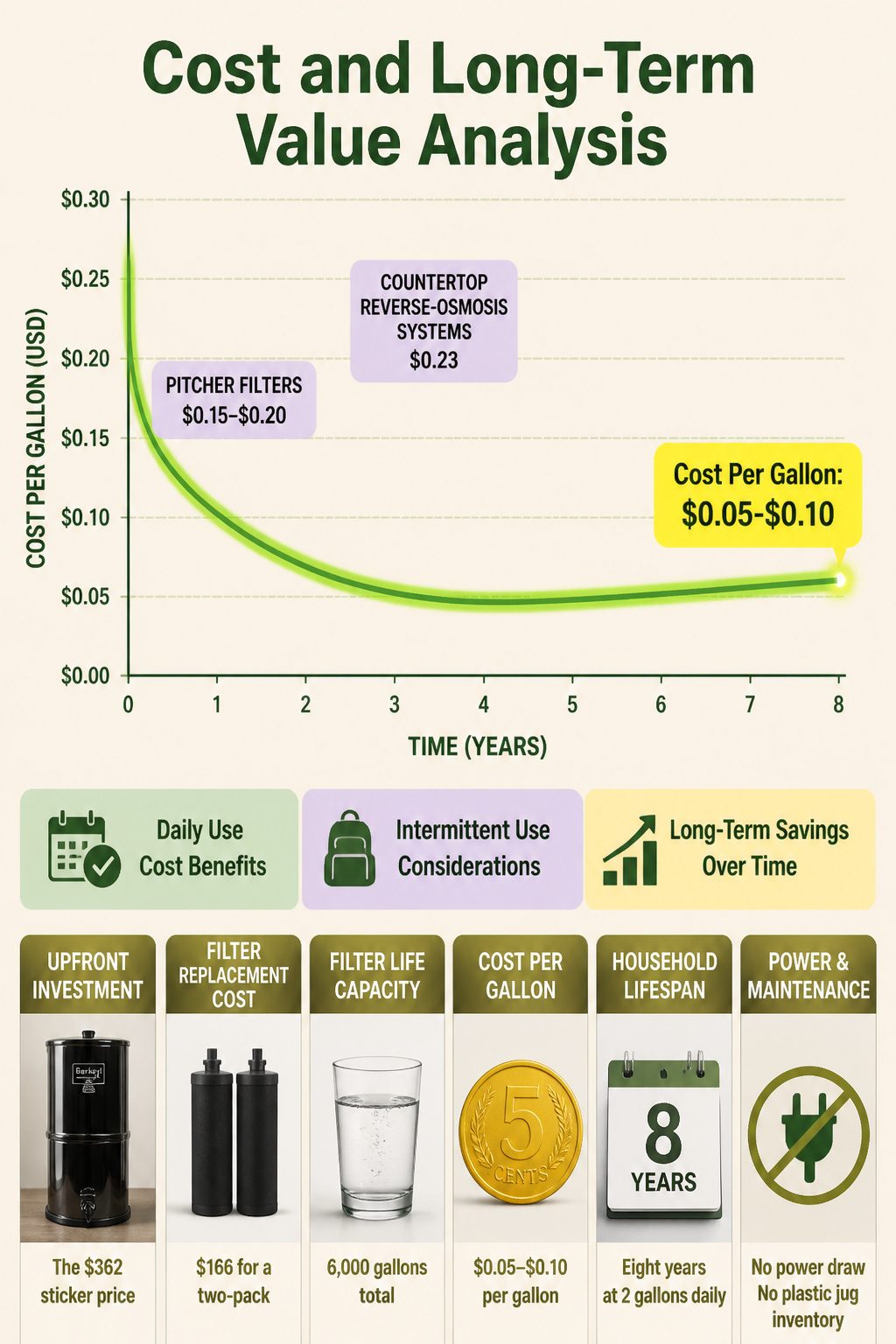
The $362 sticker on the Travel Berkey stings until you run the gallon math. A replacement two-pack of Black Berkey elements runs $166 and is rated for 6,000 gallons total. That works out to roughly $0.05–$0.10 per gallon, sitting well below pitcher filters at $0.15–$0.20 and countertop reverse-osmosis systems around $0.23. For a household pulling two gallons daily, those elements stretch eight years; even halved for rough source water, you are looking at years, not months, between swaps.
Where this lands depends on your rhythm. Daily home use amortizes that upfront cost fast. Intermittent travel or RV duty stretches the payback longer, and the break-even point against bottled water slips toward the horizon. Still, the 1.5-gallon capacity and gravity-fed design mean no power draw and no plastic jug inventory to manage. If the unit sits idle for weeks between trips, the filter life does not tick away in a drawer, which softens the sting of a system that is overbuilt for occasional weekends.
What Users Actually Say
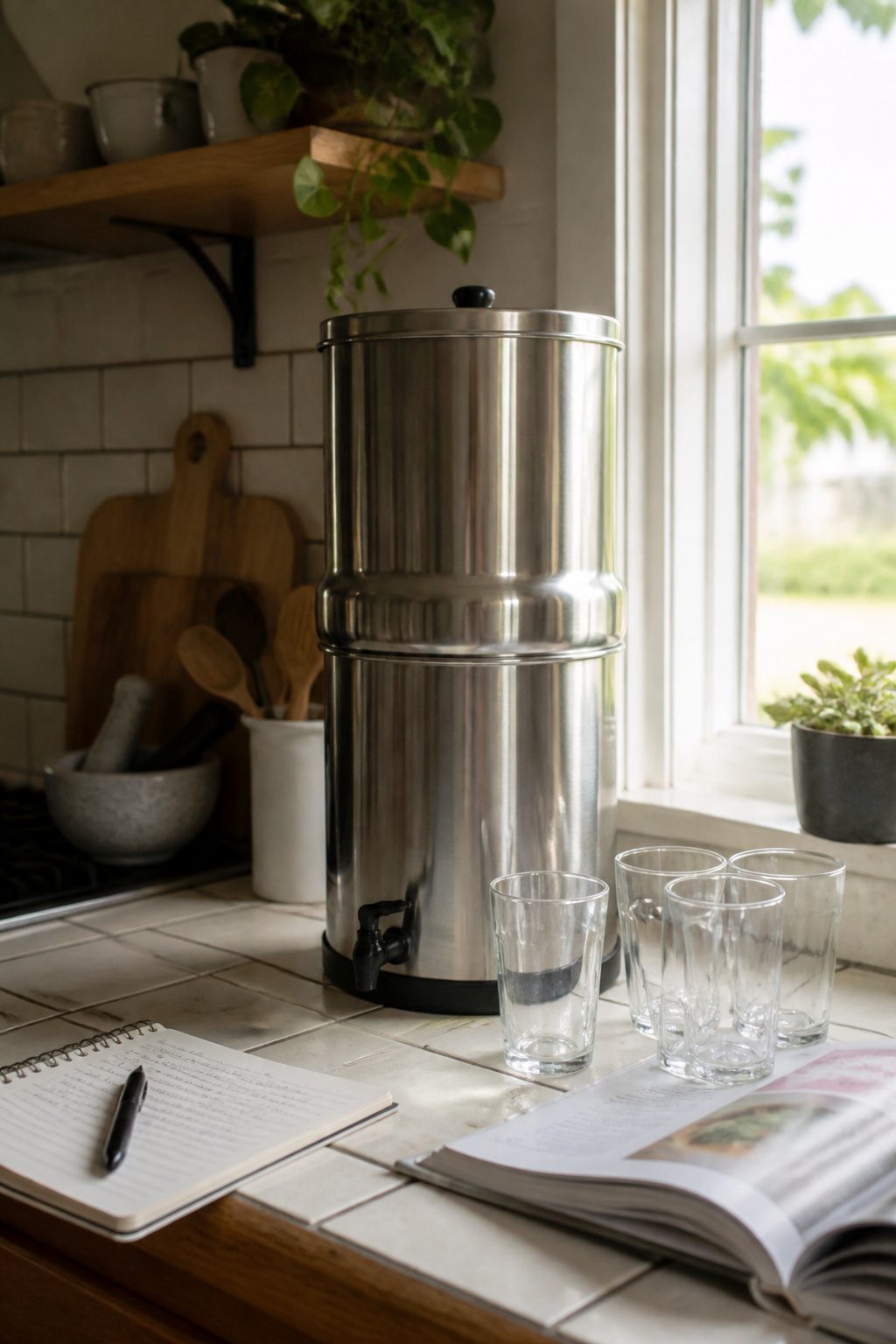
Most people who pick up a Travel Berkey notice the taste difference right away, especially if their tap water runs heavy with chlorine. The charcoal filters strip that out completely, and in blind tests the majority of drinkers prefer the result, though a stubborn minority says the change is subtle or barely there. Where your water starts from matters.
The portability wins praise in RVs and rentals, but two design gripes come up repeatedly. There is no water level indicator, so checking the upper chamber means lifting the lid or swapping in an aftermarket spigot. The stock spigot also sits high enough to leave an inch of filtered water stranded at the bottom, which you pour out through the top or accept as lost.
Filtration runs slow at 2.75 gallons per hour. In practice that means refilling faster than you drain, or waiting. First setup demands priming the charcoal columns, a thirty-minute job that some users find finicky and that has to repeat after long storage.
What surprised me, reading through the available material, was how thin the long-term record is. Plenty of buyers sound happy after weeks or months, but voices going back two, three, six years of steady use are scarce. That gap is worth weighing against the upfront cost when you are deciding whether this fits your travel kit.
Frequently Asked Questions
How does the Travel Berkey work?
You pour water into the upper chamber and gravity pulls it down through two Black Berkey elements that sit in the divider between chambers. Filtered water collects in the lower chamber, ready to dispense through the front spigot. No electricity, pump, or plumbing is involved. A full cycle takes several hours, so most people fill it before bed and have 1.5 gallons by morning.
What contaminants does the Travel Berkey remove?
The Black Berkey elements claim 99.9999% removal of bacteria and cysts, greater than 99.9% of chlorine, and reduction of lead and PFAS. These figures come from third-party lab testing commissioned by Berkey, not from NSF/ANSI certification. Users consistently report improved taste and elimination of chlorine smell and metallic aftertaste.
How often do I need to replace the filters?
A pair of Black Berkey elements handles roughly 6,000 gallons, which typically spans two to five years depending on household size and water quality. At $166 for a replacement two-pack, the cost runs about five to ten cents per gallon. The elements need priming before first use and after any long storage, a roughly 30-minute process of flushing water through each filter until the surface starts to sweat evenly.
Is the Travel Berkey NSF certified?
No. The Black Berkey elements do not hold NSF/ANSI 53 or P473 certification, the nationally recognized health-effects standards that cover lead, cysts, VOCs, and PFAS. Berkey instead publishes its own commissioned lab results and argues they cover more contaminants at higher challenge concentrations than NSF requires. Competitors like the Clearly Filtered pitcher and AquaTru countertop unit do carry NSF certification. A 2022 class action alleging overstated marketing claims remains unresolved.