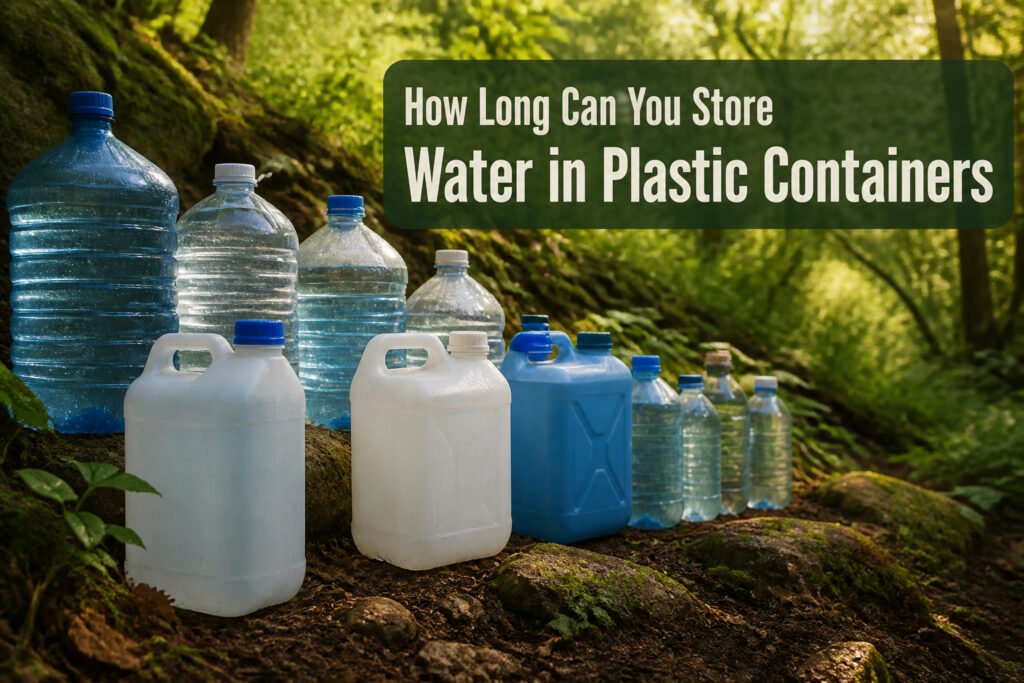
Stored water in plastic containers lasts indefinitely if it stays sealed, cool, and dark. The catch is that most storage conditions are not that clean. A five-gallon jug left in a garage for two years looked fine but tasted like the plastic itself, earning it a new job flushing toilets.
How Long Water Actually Lasts in Plastic
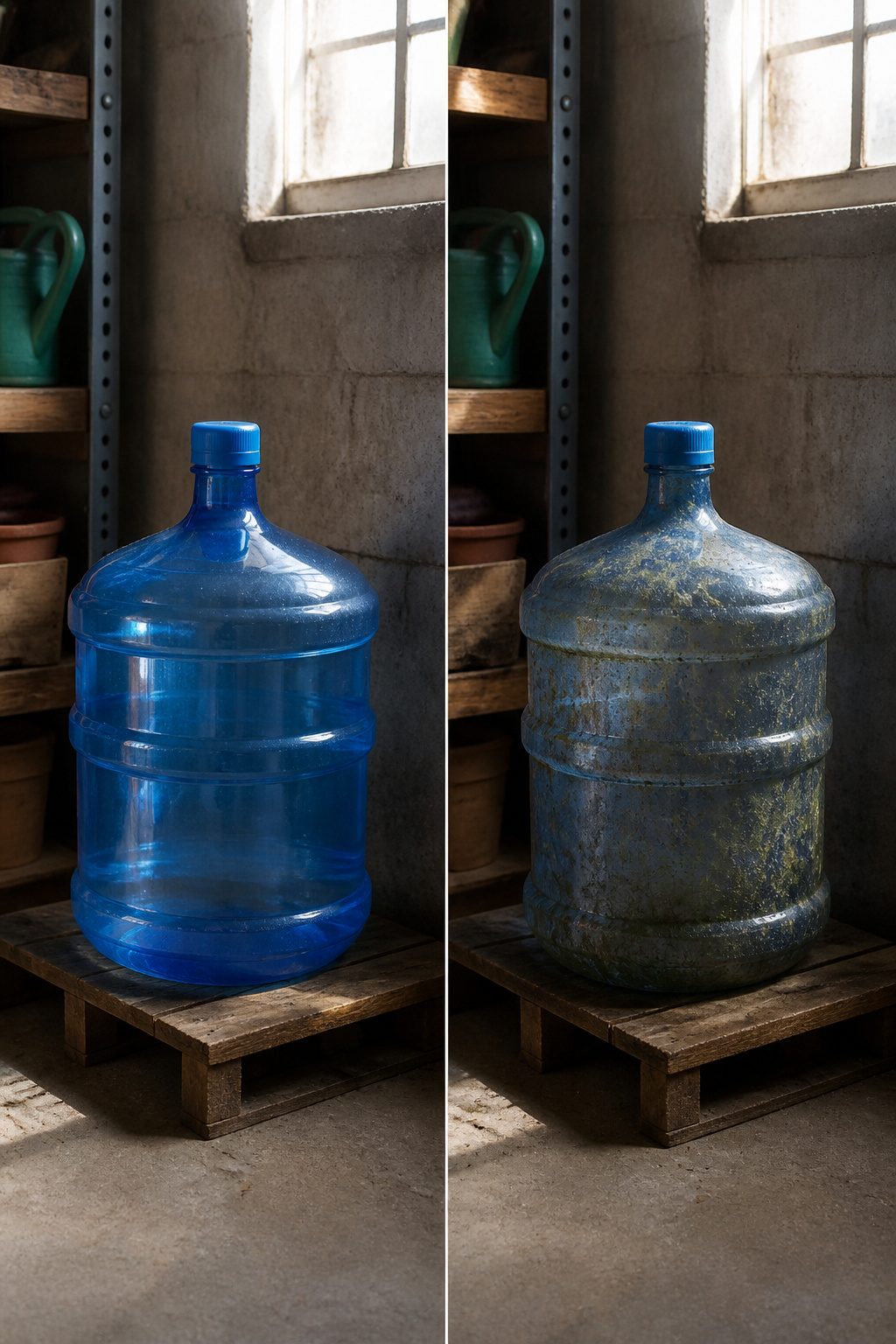
A five-gallon jug in my garage taught me the difference between "safe" and "drinkable." I had filled it from the tap, added nothing, and forgotten it for two years. The water inside looked fine. The first sip tasted like a plastic bucket smells. That jug is now for flushing toilets only.
Water itself does not expire. Stored in a clean, sealed plastic container and kept away from sunlight and chemicals, it lasts indefinitely. The problem is what gets into it, or what leaches out of the container, or what grows if the seal was never perfect.
For treated tap water you bottle yourself, the practical rotation is every 6 months. That interval, pushed by Ready.gov, balances safety against taste. Store-bought bottled water runs longer: up to 5 years unopened if you follow the manufacturer’s date on the cap. The FDA considers bottled water to have an indefinite shelf life technically, but the plastic and the seal have their own clocks.
Filtered water is the outlier. Once the filter has done its work, bacteria have a foothold they did not have in treated tap. At room temperature, drink it within 24 to 48 hours.
The baseline for planning is 1 gallon per person per day, split between drinking and sanitation. A family of four aiming for the CDC’s minimum three-day buffer needs 12 gallons on hand. Two weeks’ worth is better if the space allows, and more still for pets, illness, or desert heat where that gallon figure climbs fast.
Which Plastics Are Safe
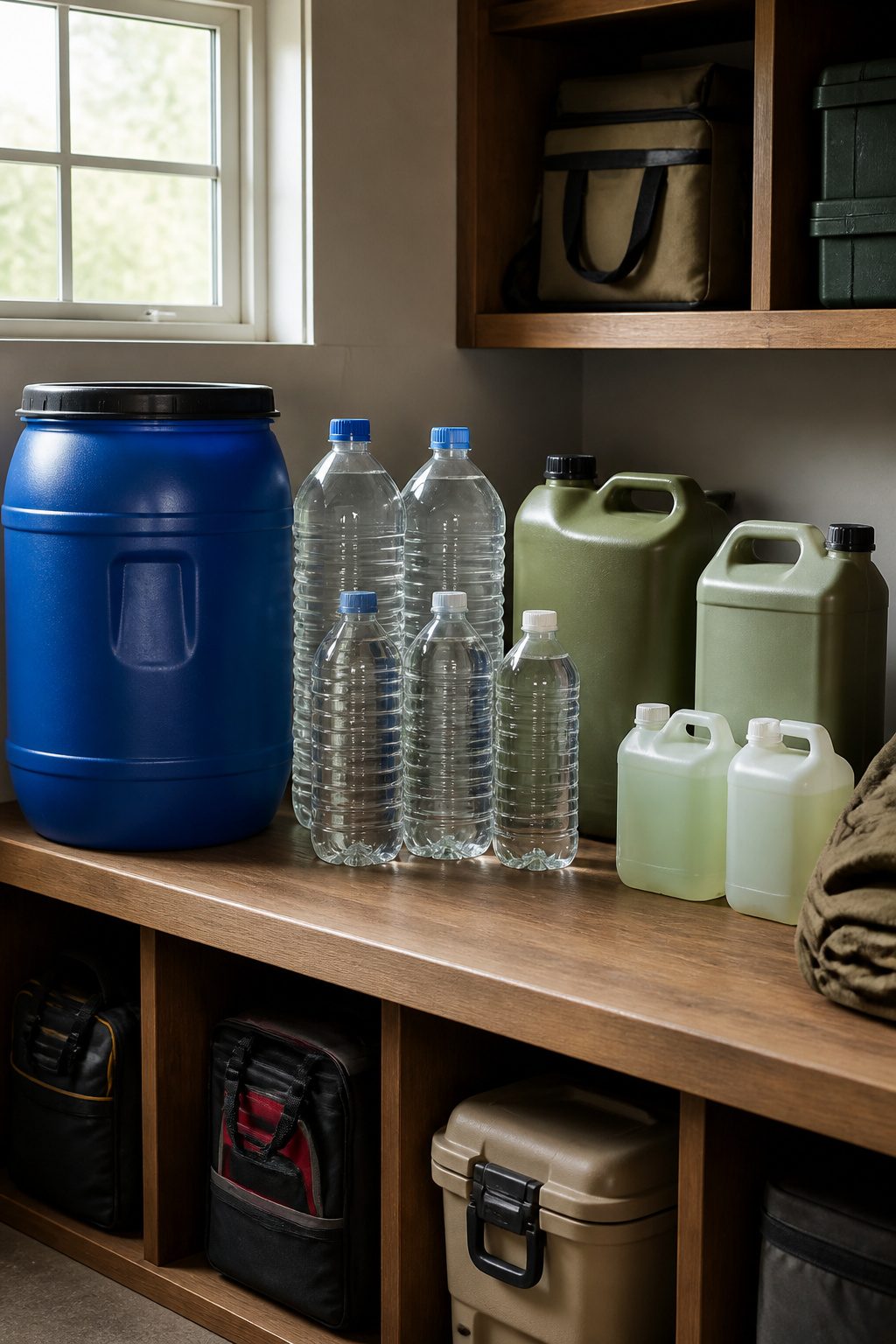
Not every plastic bottle is built for the long haul. The ones that are carry a food-grade label and a BPA-free promise, plus a resin code on the bottom that tells you what you are actually holding. #2 HDPE is the workhorse for water barrels, dark blue by convention, which blocks light and signals drinking water rather than gasoline. #1 PET and #4 LDPE also make the cut for long-term storage, though in thinner forms they let more light through.
Glass works if you prefer zero leaching risk, but the weight piles up fast when you are storing weeks of water.
The container’s past life matters more than people assume. Anything that held chemicals, cleaning supplies, or strong-flavored food can pass traces into water even after scrubbing. Milk jugs are the classic mistake here; the plastic is biodegradable by design, so it breaks down, and any milk protein left behind can spoil what you store. I learned that one early, finding a garage floor damp from a jug that looked fine on the outside.
Soda bottles and sports drink bottles handle long-term storage if you accept the trade: plastic absorbs flavor, so cola or citrus notes may linger in the water. Fine for washing, less ideal for cooking where the taste carries.
Preparing Containers and Treating Water
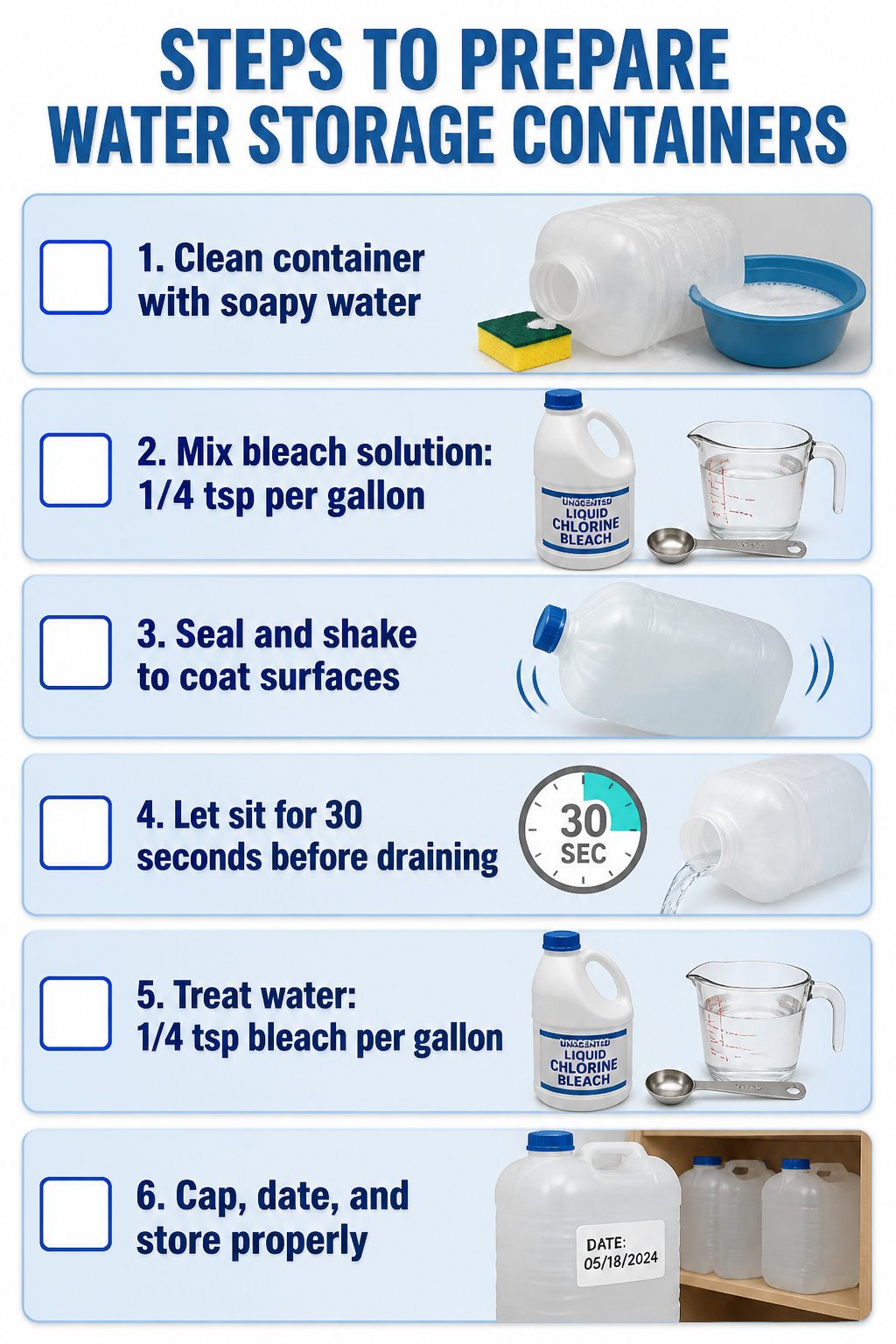
- Clean the container with warm, soapy water and rinse with hot water. Skip this and the bleach never makes full contact with the surface; learned that the hard way with a jug that had held lemonade.
- Mix the sanitizing solution at 1/4 teaspoon of unscented household liquid chlorine bleach per gallon of water. Some guidance calls for stronger ratios, but this concentration handles storage prep without leaving a chemical load you will taste for weeks.
- Pour the solution in, seal the cap, and shake until every interior surface gets coated. Turn it upside down once or twice; the threads and inside of the cap matter as much as the walls.
- Let it sit at least 30 seconds, then pour out and air dry. Rinsing with purified water is optional, though tap water works fine if your supply is already treated.
- Treat the tap water itself at the same ratio before filling: 1/4 teaspoon bleach per gallon. Fresh bleach matters; after six months on the shelf it can lose half its strength, and weak bleach means under-treated water.
- Cap tightly, date the container, and store. The bleach breaks down over time into salt and oxygen, which is why the water still needs rotation even with proper prep.
Where and How to Store It
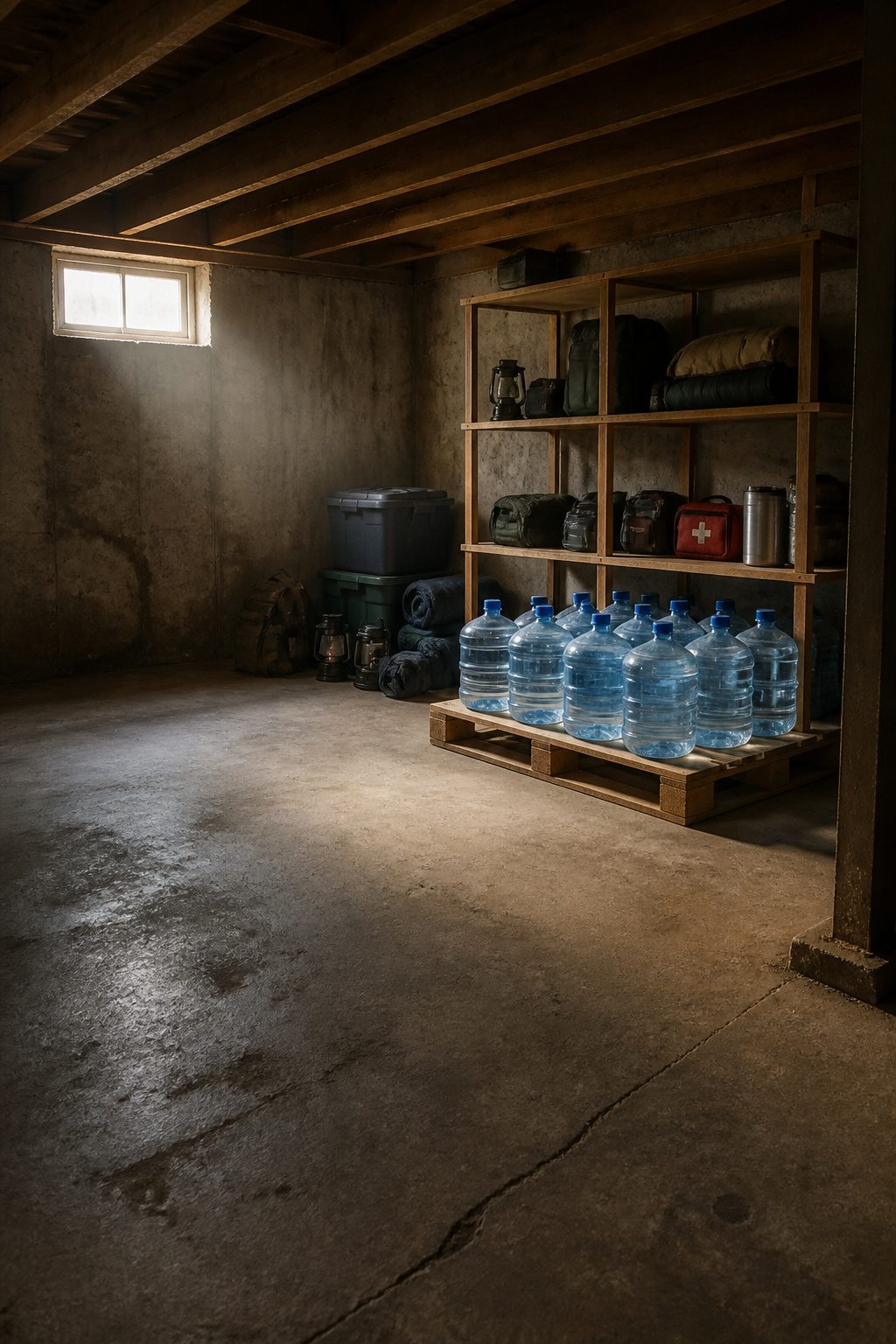
A basement corner or interior closet works best for water storage, keeping the temperature between 50°F and 70°F and well away from windows. Heat weakens the chemical bonds in plastic, and direct sunlight does the same while letting algae grow if any light slips through. Chemical vapors matter too: gasoline, kerosene, and pesticides can pass through plastic walls, so the garage near the lawnmower tank is a worse spot than it looks.
Concrete floors are a problem. The material draws moisture and can leach chemicals upward into containers that sit directly on it. A few two-by-fours or a simple pallet underneath fixes this.
I learned the temperature lesson the hard way with a case of store-bought water left in an uninsulated garage through a July heat wave. The bottles came out warped, the water tasted like the container, and the whole case went to the garden. The basement, meanwhile, has kept identical bottles fine for years. Cool and dark is not just better; it is the difference between storage you trust and storage you replace.
That permanence is possible when conditions hold steady. Utah State University Extension puts the core rule plainly:
When potable water is properly disinfected and stored, it should have an indefinite shelf life.
Indefinite does not mean hands-off. Check the containers every 6 to 12 months for cracks, loose lids, or cloudiness, and keep them off concrete while you are at it.
Rotating What You Have
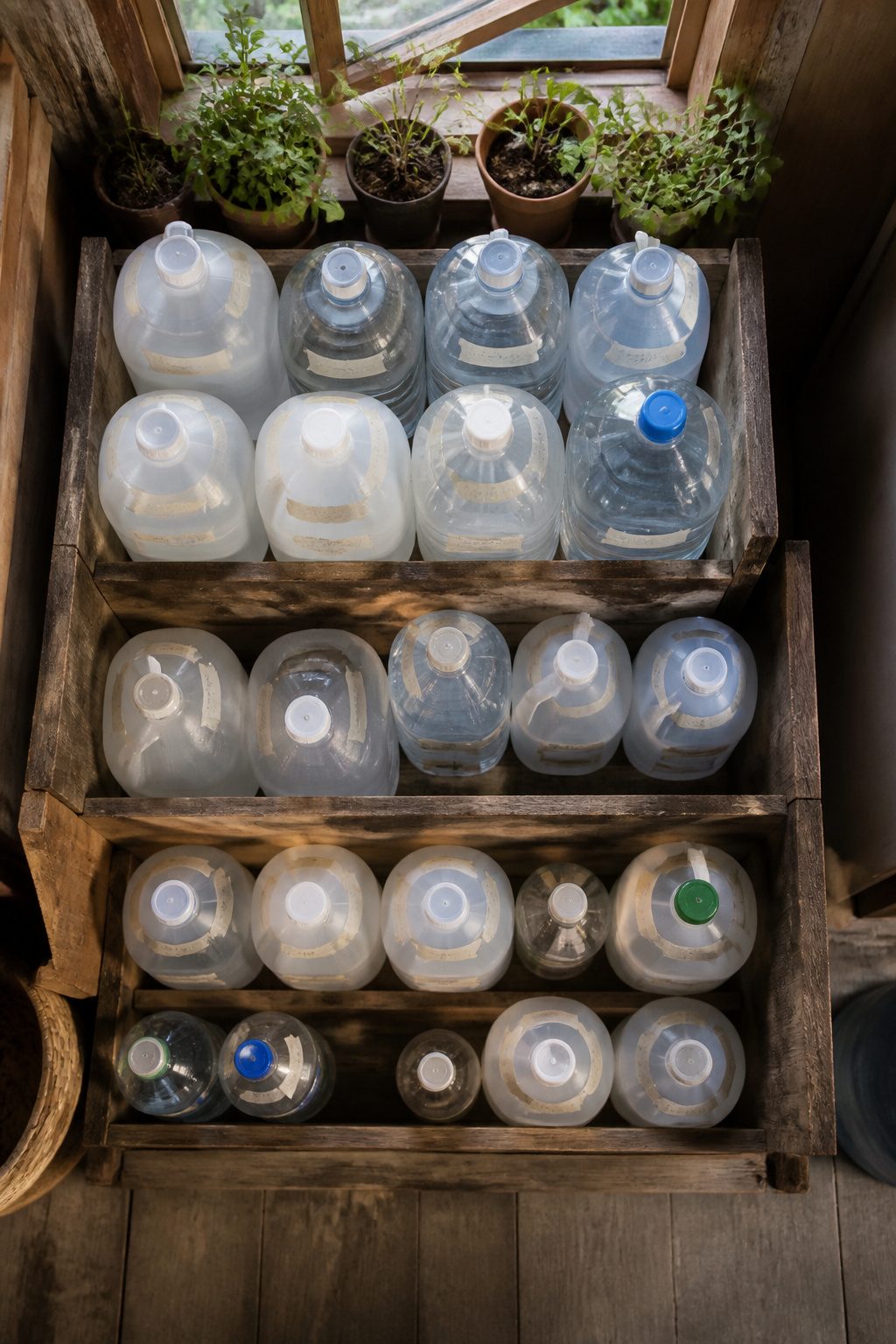
The six-month mark for treated tap water is not a guess about spoilage. Water does not expire; in ideal conditions it stays safe indefinitely. The rotation is for peace of mind and taste. Stale water can be fixed by aerating or purifying it, but six months is the interval that keeps most people from forgetting what they have.
Tracking dates is where my own system failed the first time. I used to trust memory. After finding a container I had filled two years earlier sitting behind a water heater, I switched to masking tape and a Sharpie: month and year in large numbers, nothing else. The tape goes on the side I face when opening the storage area, not the top where dust hides it.
Water coming out of rotation does not need dumping down the drain. It goes to the garden, the dog’s bowl, or the washing machine. The point is using it, not wasting it. A gallon per person per day for three days is the baseline the CDC suggests; two weeks is better if space allows. My own target falls somewhere between, adjusted for pets and summer heat.
This applies to treated tap water filled at home, not sealed bottled water from a store. The FDA considers commercially bottled water to have an indefinite shelf life; the rotation rule is for the containers you fill and seal yourself.
Soda Bottles and Other Everyday Options
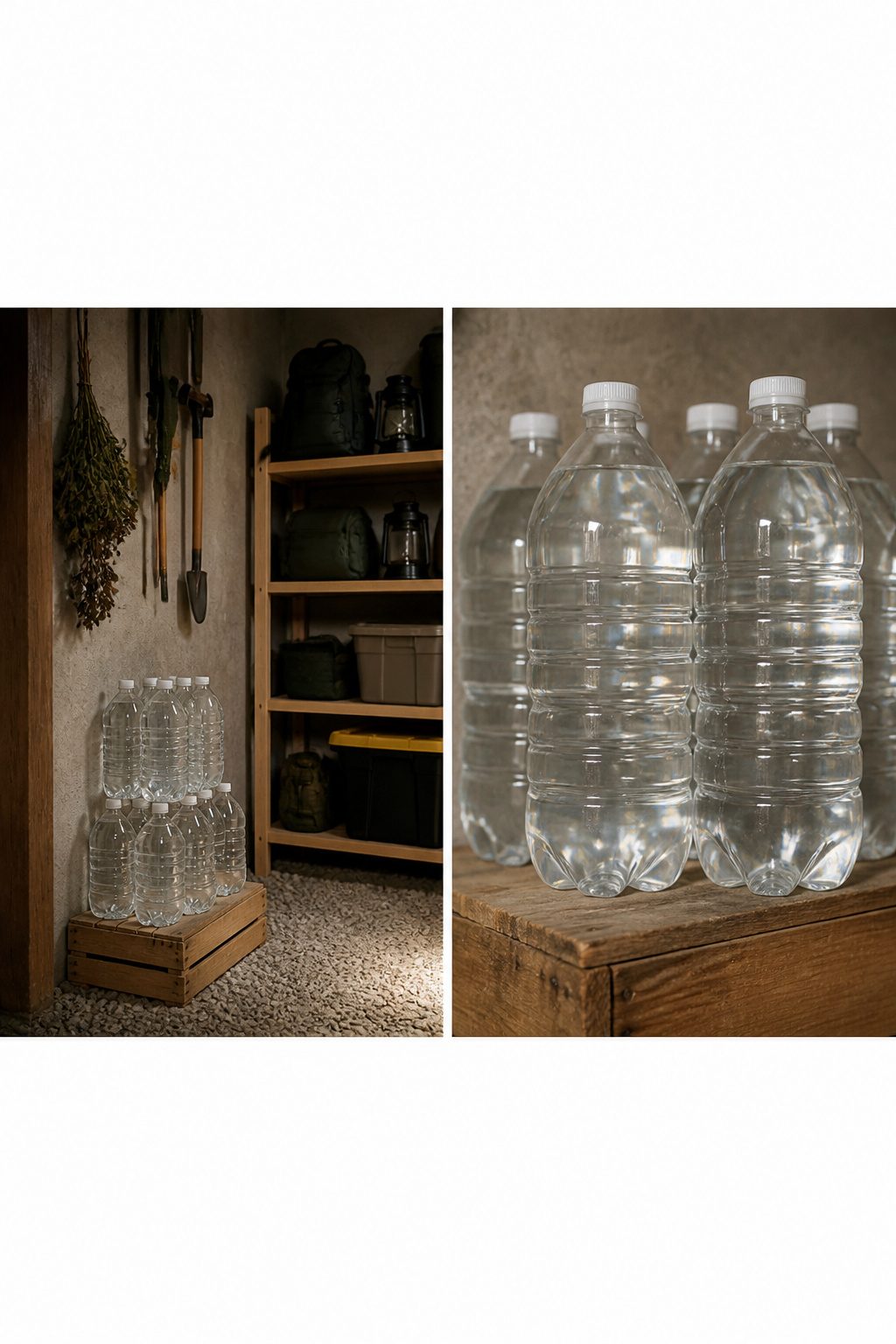
Cleaned 2-liter soda bottles work for water storage if you keep them cool and dark. Heat is the real enemy here: temperatures above 95°F raise the risk of chemical leaching, and while immediate harm is unlikely, those chemicals can build up in the body over time. The same goes for light, which degrades plastic and can affect taste.
I have a small collection of these bottles in my basement, rinsed with soapy water, then sanitized with a bleach solution of one tablespoon per gallon. The cap gets the same treatment; I shake the bottle, turn it upside down once or twice, let it sit for a minute, then air dry. It is not a perfect system. A purpose-bought food-grade container is sturdier, more opaque, and designed for long-term use. Soda bottles are thinner, more prone to scratching, and harder to stack neatly. But they are free, lightweight, and everywhere, which matters when you are building out storage on a budget.
Milk jugs are a different story. The plastic is designed to biodegrade, so leaking becomes a problem, and residual milk proteins can spoil the water. I skip them entirely. The soda bottles have held up fine in my cool basement, though I would not trust them in a hot garage or direct sun. For short-term storage in controlled conditions, they are a practical middle ground. For anything longer or hotter, the leaching risk is not worth the savings.
Emergency Sources You Might Overlook
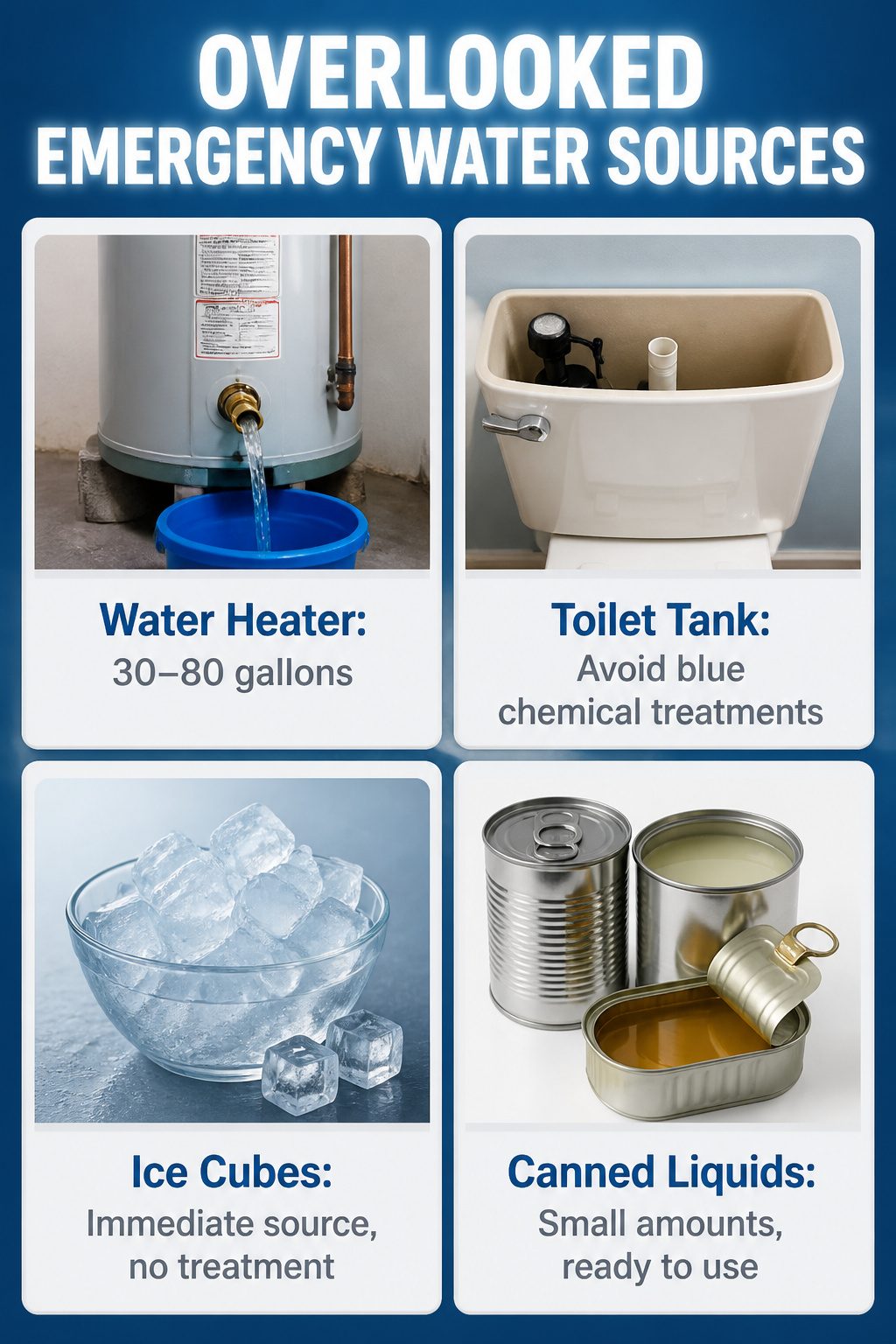
Most households keep more emergency water than they realize, though it needs treatment before it counts as drinking water.
- Water heater drain: A typical tank holds 30–80 gallons. Turn off the heat source first, open the bottom valve, and collect what drains. Add 8 drops of chlorine bleach per gallon, stir, and wait 30 minutes before use. I checked mine last spring after a main-line break on our street; the water ran clear, but the bleach step is non-negotiable.
- Toilet tank, not bowl: The tank behind the seat can yield several gallons. Skip it entirely if you use blue chemical treatments or deodorizing tablets. The bowl itself is never a source.
- Ice cubes and canned liquids melt down to small amounts, but they are immediate and require no treatment.
These are last-resort backups, not replacements for stored water. The heater in particular sits there ignored for years, which is the point: it is already full when the taps go dry.
What Temperature Swings Do to Stored Water
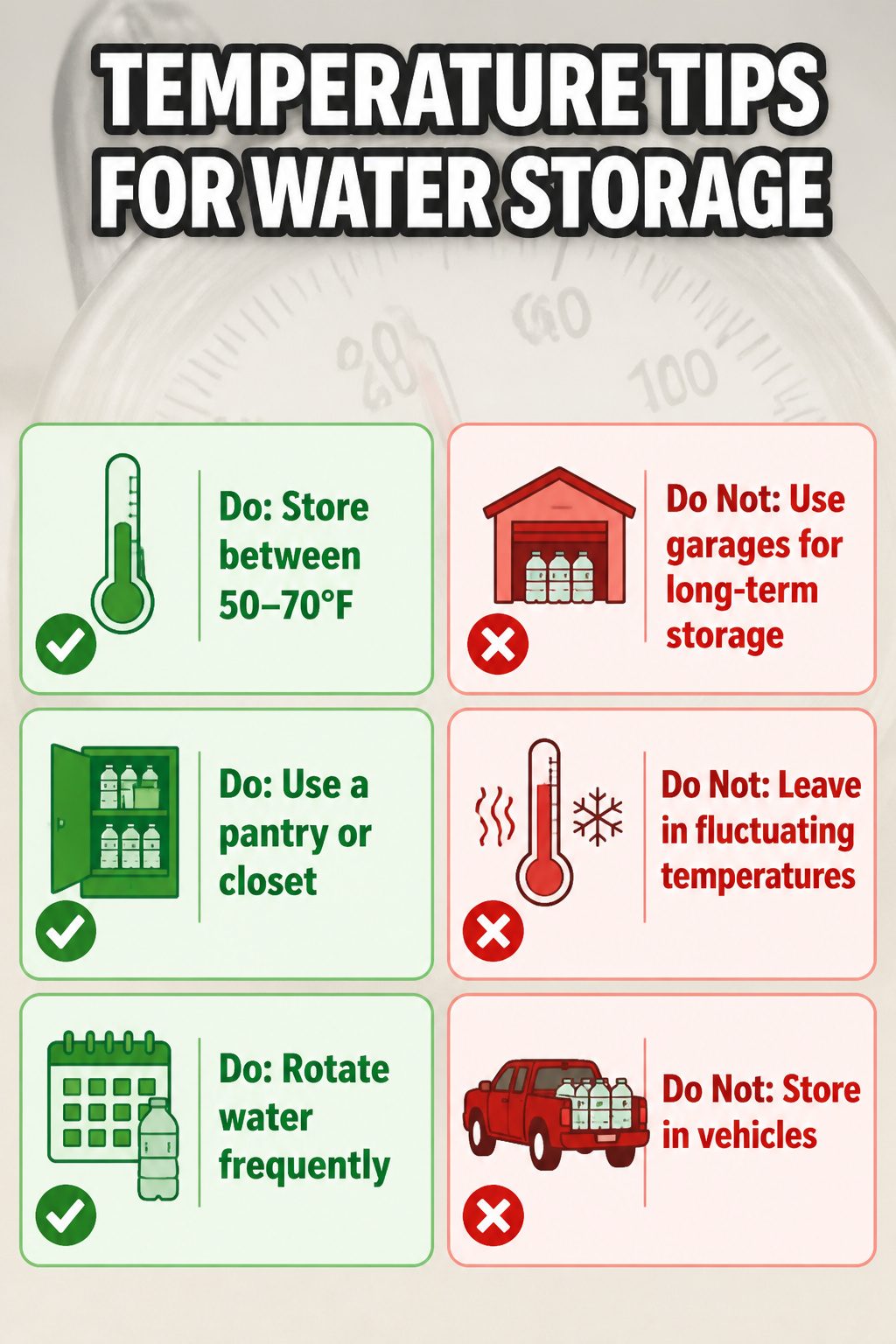
Temperature swings are the storage factor most guides mention in passing but rarely explain in practice. The standard advice puts the ideal range at 50–70°F, which rules out most garages, sheds, and vehicle interiors for anything beyond short-term holding. What convinced me, reading through the guidance, is how much the advice narrows to "cool and steady" without saying what happens when that slips.
My own storage runs warmer in summer. A closet against an exterior wall in a house without central air will drift above that window, and I have pulled bottles from there that tasted flat, with a faint plastic presence that the same cases kept in a basement never showed. Whether that is leaching, off-gassing, or just my perception, I cannot separate out. The industry guidance notes only that heat and light can encourage algae or mold, and that plastic is slightly permeable to ambient vapors. It does not quantify how fast.
What I have started doing is treating temperature as a tiered risk. A pantry or interior closet stays inside the band year-round. A garage in Arizona or Florida is not long-term storage; it is rotation territory, water you plan to move through in weeks, not years. The sources agree on keeping water out of vehicles for emergency kits, and my own experience backs that: a case left in a truck bed toolbox through two summers came out tasting like the container, not like water.
If your only space fluctuates, you are not disqualified. You are just working with shorter horizons, and you should probably taste before you trust.
Frequently Asked Questions
How long can you store water in plastic containers?
Water itself lasts indefinitely if kept clean, sealed, and away from sunlight and chemicals. For treated tap water you bottle yourself, rotate it every 6 months. Store-bought bottled water stays good for up to 5 years unopened if you follow the manufacturer’s date on the cap. The FDA considers bottled water to have an indefinite shelf life technically, but the plastic and the seal have their own limits.
How often should I change my stored water?
Every 6 months for treated tap water you filled and sealed yourself. That interval, pushed by Ready.gov, balances safety against taste. Commercially bottled water can go longer, up to 5 years, though the FDA considers it to have an indefinite shelf life. The rotation is not about spoilage; it is for peace of mind and taste, since the bleach you added breaks down over time and the seal may not stay perfect forever.
What type of container should I use to store water?
Use food-grade, BPA-free plastic with the right resin code. #2 HDPE is the workhorse for water barrels, usually dark blue to block light. #1 PET and #4 LDPE also work for long-term storage. Glass is fine if you accept the weight. Avoid anything that held chemicals or strong-flavored food, and skip milk jugs entirely; the plastic is biodegradable by design and any residual protein can spoil your water.
Can I store water in soda bottles?
Yes, cleaned 2-liter soda bottles work if you keep them cool and dark. Heat above 95°F raises leaching risk, and the chemicals can build up in the body over time. They are thinner and harder to stack than purpose-bought containers, but they are free and lightweight. Rinse with soapy water, sanitize with one tablespoon of bleach per gallon of water, shake thoroughly, let sit, then air dry. Do not trust them in hot garages or direct sun.