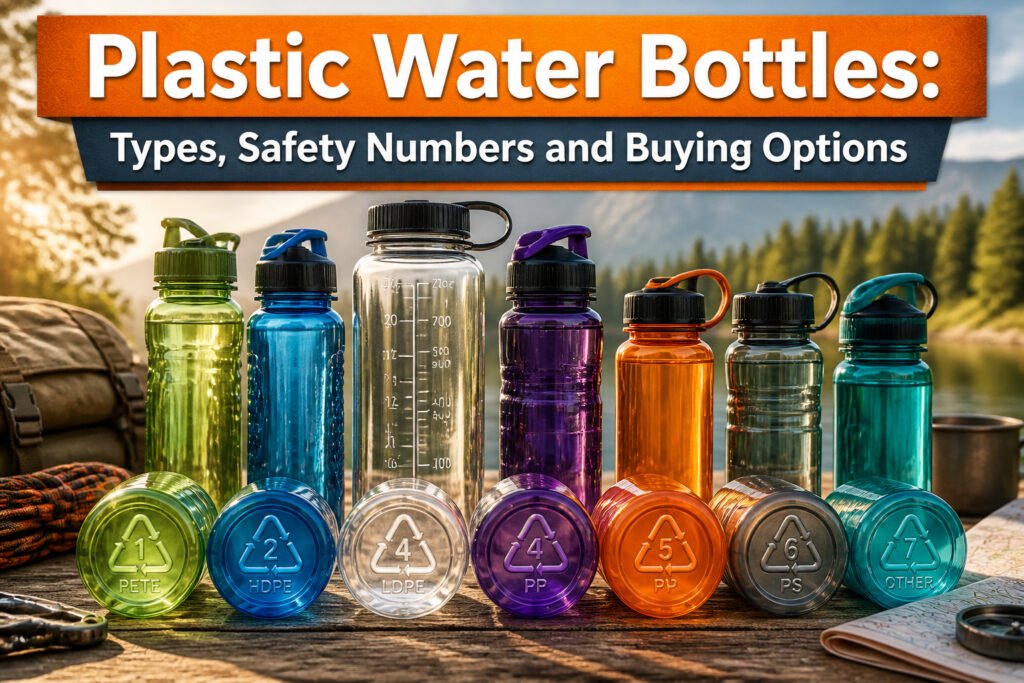
Plastic water bottles are refillable or single-use containers made from numbered resin types that determine whether they are safe for repeated use. The catch is that a "BPA-free" label means almost nothing without checking the triangle on the bottom: only numbers 1, 2, 4, and 5 resist leaching under normal conditions, while 3, 6, and 7 belong in the recycling bin. I learned that the hard way after squinting at too many store aisles, thumb running the ridge of embossed triangles until the digit showed. Tritan copolyester bottles like the 17 oz Curve and 24 oz PolySure Vitalize sit at the higher end of that safe set, with the heft and clarity of glass rather than the clouding you get in cheaper polycarbonate.
BPA-Free Plastic Water Bottles
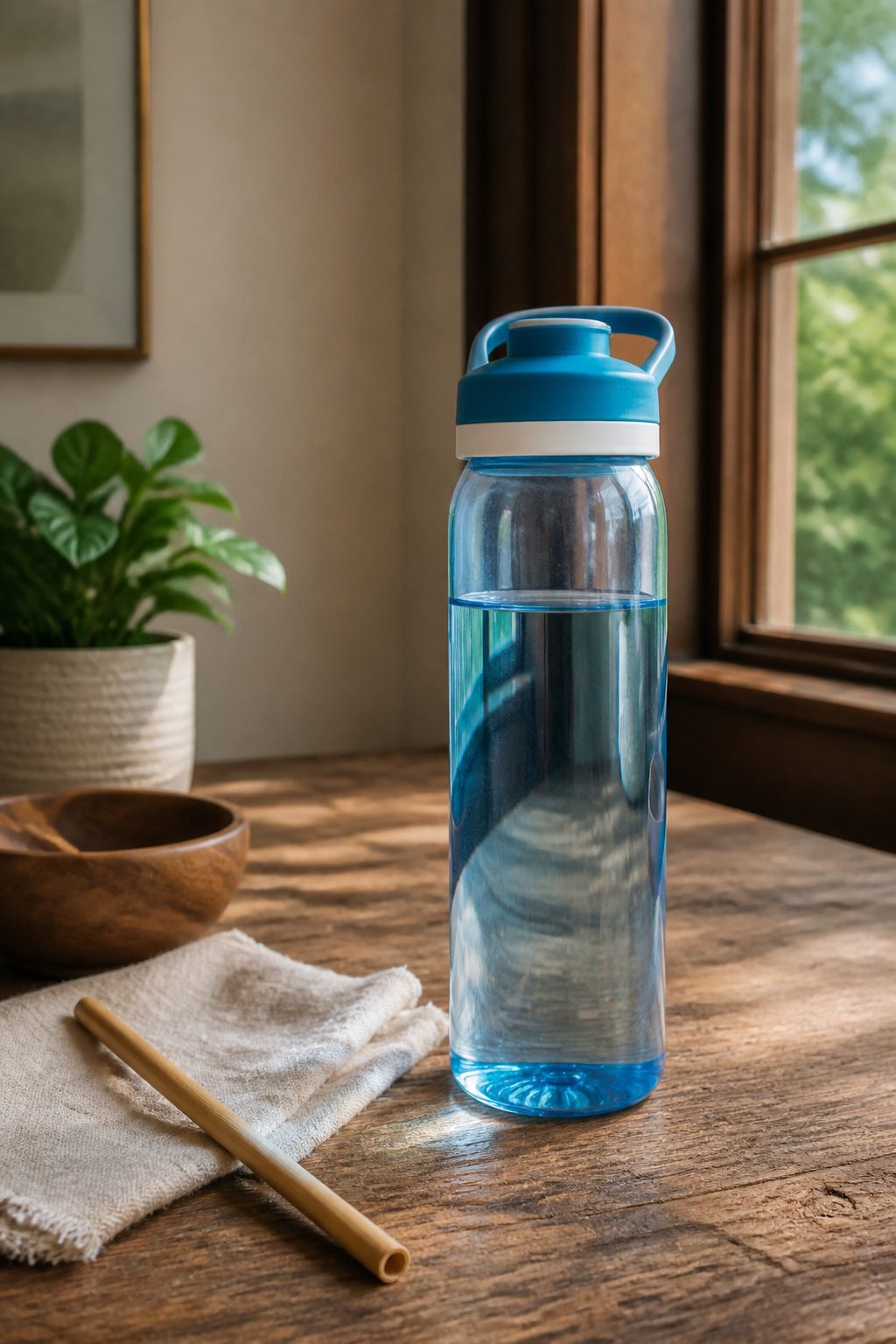
BPA-free labels first caught my attention because the wording alone means almost nothing. A bottle can carry the claim while still leaching other chemicals, or it can be built from genuinely safer material. The distinction matters when you are drinking from the same vessel every day.
The numbers stamped on the bottom tell the real story. Plastics marked 1, 2, 4, or 5 are the ones to look for; these are manufactured without BPA. I spent longer than I care to admit squinting at recycling triangles in store aisles before learning to check that digit first and the marketing claims second.
Tritan has become the common BPA-free material in reusable bottles, including the 17 oz Tritan Curve and the 24 oz PolySure Vitalize. It handles daily drops and dishwasher cycles without the clouding you get in cheaper polycarbonate. Sizes cluster around three practical points: 16 oz fits cup holders and small bags, 24 oz splits the difference for desk-to-gym use, and 32 oz covers full-day hydration without refilling. I started with a 32 oz bottle and downsized after carrying half-empty water around for a month. The 24 oz turned out to be the usable middle ground for my routine.
Types of Plastic Water Bottles
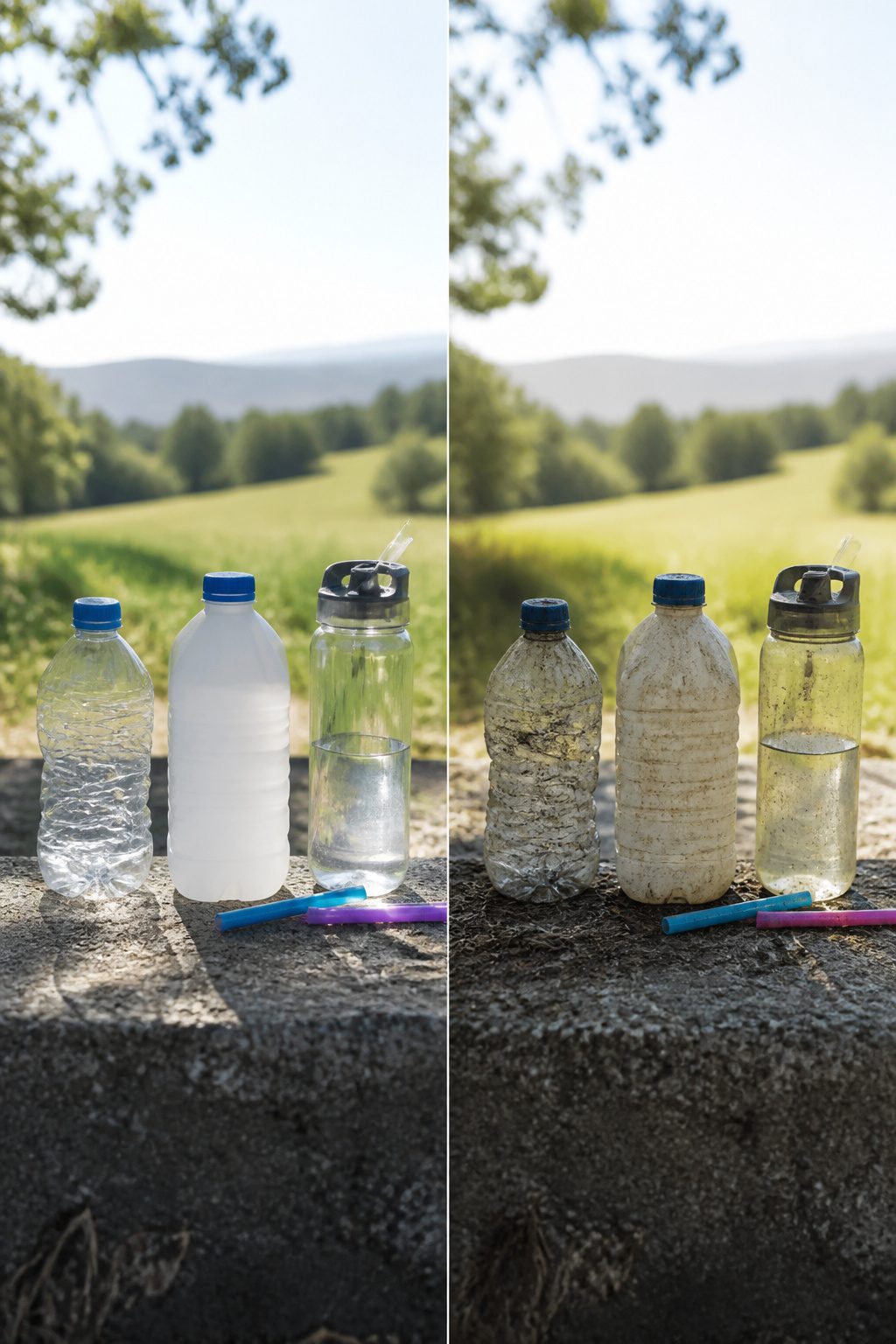
Most plastic water bottles on shelves fall into three materials, and the difference hits your hand before it hits your health.
PET (marked #1) is the thin, slightly flexible stuff of disposable bottles. It dents under pressure and springs back slow, which makes it easy to spot. I keep a few in the trunk for emergencies; they crinkle when half-empty and collapse if you squeeze too hard. That lightness is the tradeoff: cheap, common, not built for daily refilling.
HDPE (#2) steps up the stiffness. Milk jugs and some sturdier reusables use this opaque, waxy plastic. It holds shape better than PET but carries a faint texture, almost grainy, that some people find off-putting against the lip. I reach past it for daily use, though it survives drops that would crack thinner bottles.
Tritan sits in a different class entirely. The 17 oz Tritan Curve Bottle and 24 oz PolySure Vitalize Bottle both use this copolyester, and the feel is closer to glass: smooth, hard, genuinely clear rather than cloudy. You pay for that. The 18 oz Super Sip Water Bottle shows the range of translucent colors Tritan takes well, which matters if you actually want to see your water level or match a bag.
Weight is the honest signal here. PET floats in the hand, HDPE lands medium, Tritan has heft. Picking between them means deciding whether the bottle lives in a backpack for years or gets recycled after one hike.
Safe Plastic Numbers
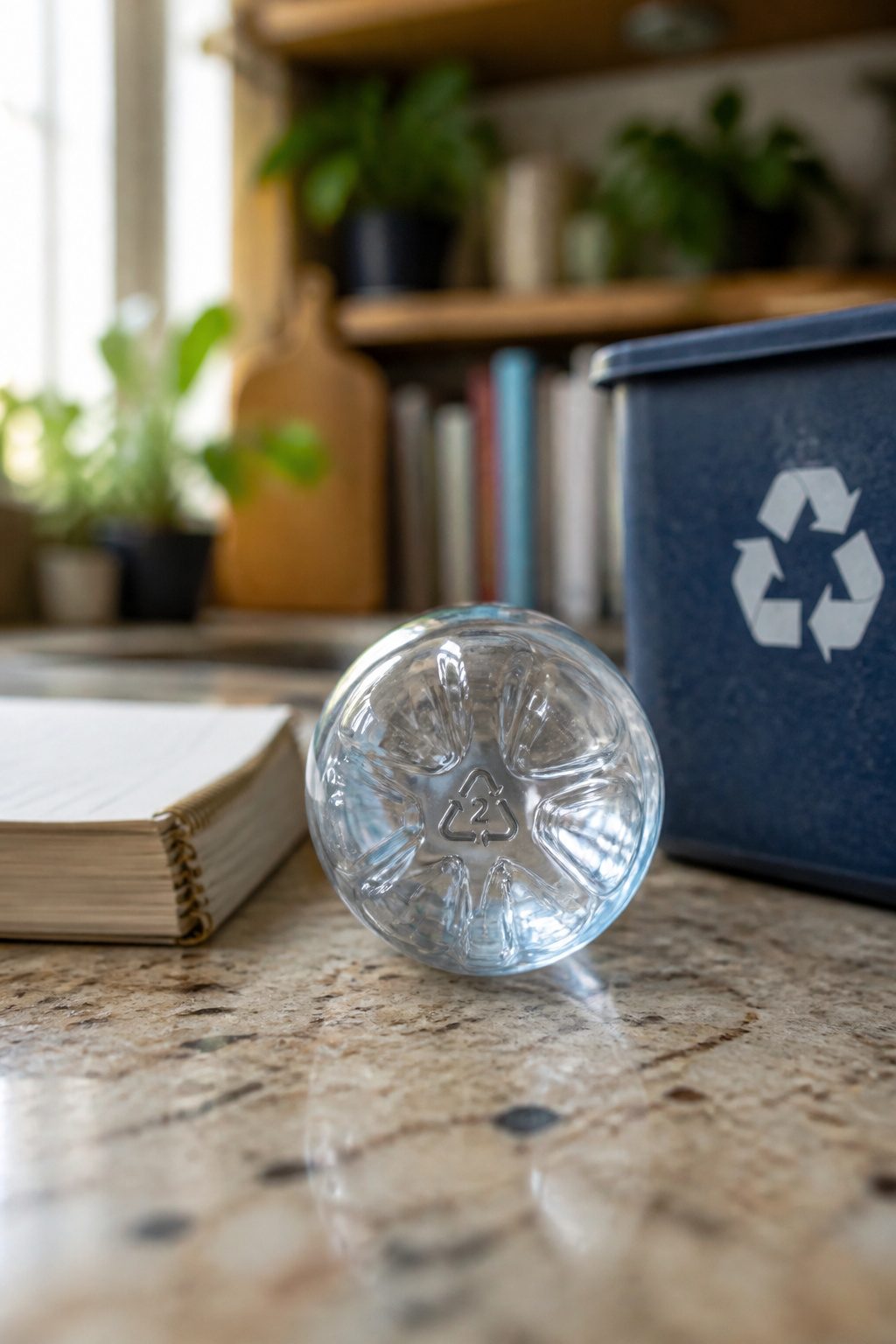
The number stamped inside the triangle on the bottom of a plastic water bottle is the fastest way to know what you are drinking from. 1, 2, 4, and 5 are the only ones I trust for repeated use. PET or HDPE, LDPE, PP. Those four codes mean the plastic resists leaching under normal conditions. Everything else belongs in the recycling bin, not your bag.
3, 6, and 7 are the ones to walk away from. PVC, polystyrene, and the catch-all "other" category that often includes polycarbonate with BPA. I have stood in aisle light bright enough to read the tiny embossed triangles on disposable bottles, thumb running the ridge until the number shows. It is always there, though sometimes worn nearly smooth.
The triangle itself does not mean the item gets recycled. It only identifies the resin. A 1 on a single-use water bottle tells you it is PET, safe enough for the first fill but thin enough to degrade and harbor bacteria if you reuse it. A 5 on a yogurt tub or a sturdy water bottle means polypropylene, which handles heat and repeated washing without the breakdown you see in cheaper plastics.
Checking takes ten seconds. The bottles I keep in rotation all carry 2 or 5. The 1s I buy for convenience get one use, then they go.
Customizable Plastic Water Bottles
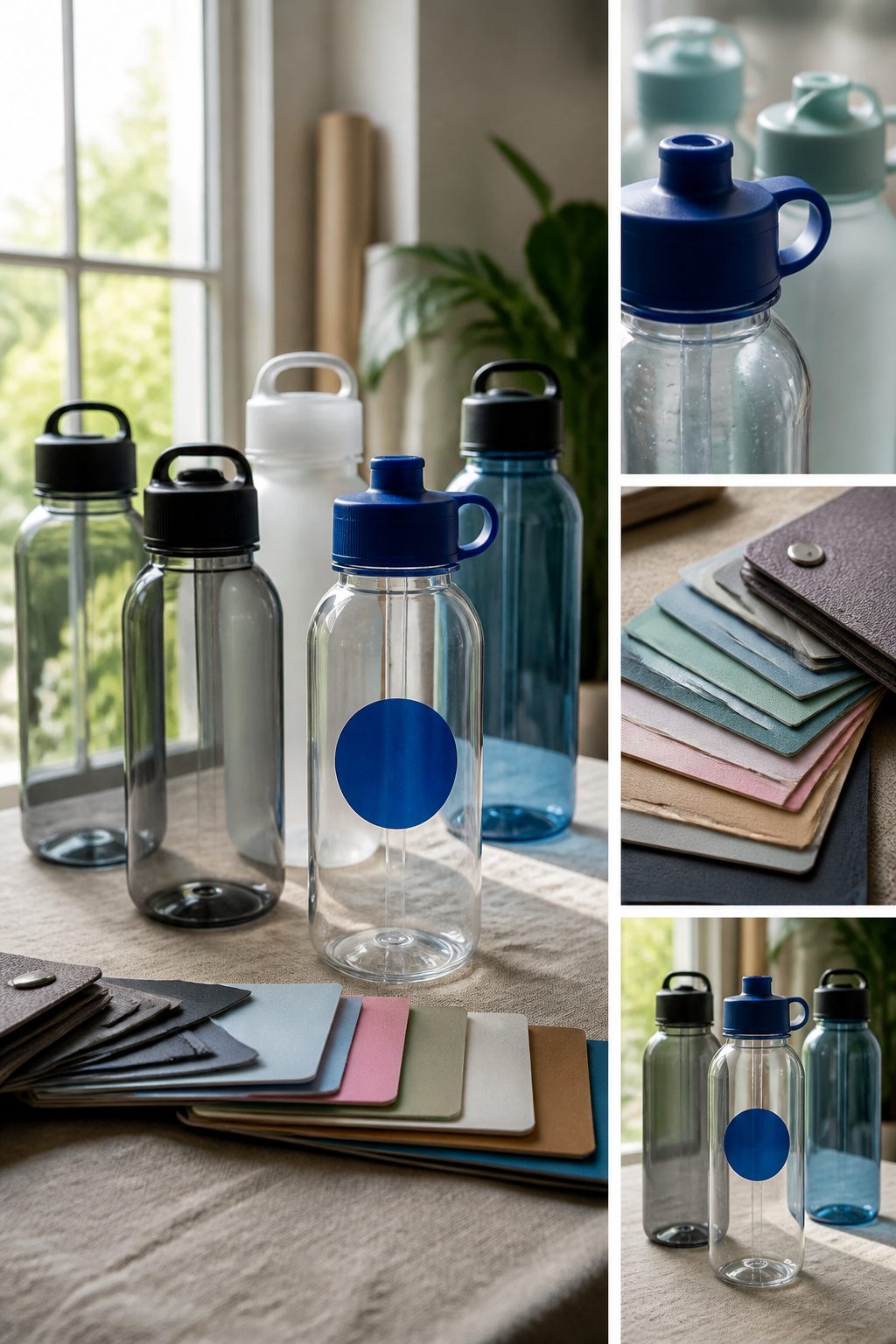
Most custom plastic water bottles start at minimum orders of 12 to 200 pieces, with the exact floor depending on how specialized the decoration gets. A straightforward single-color logo on a standard 20 oz bottle usually clears at the low end, while a full-wrap print or a color-shifting Chameleon Cycle Bottle that reacts to ice-cold liquid pushes you toward the higher minimums.
I looked into ordering bottles for a local running club a few years back and got tripped up by this spread. The 20 oz Nite Glow Cycle Bottle, which glows in the dark, sounded perfect for our evening trail runs, but the supplier required 144 units. We had maybe thirty committed members. The standard sport bottle at 24 pieces won by default, though half the group still asks about glow-in-the-dark gear.
Color and size options run wider than most people expect. Beyond basic solids, you can spec bottles that shift hue in sunlight or react to temperature, which changes both the per-unit cost and the lead time. My advice after that club order: confirm your realistic head count before falling for the specialty finish. A color-changing 20 oz Fun in the Sun Bottle sitting in a box because you missed the 200-unit minimum is not a good look for any treasurer.
Bulk Purchase Options
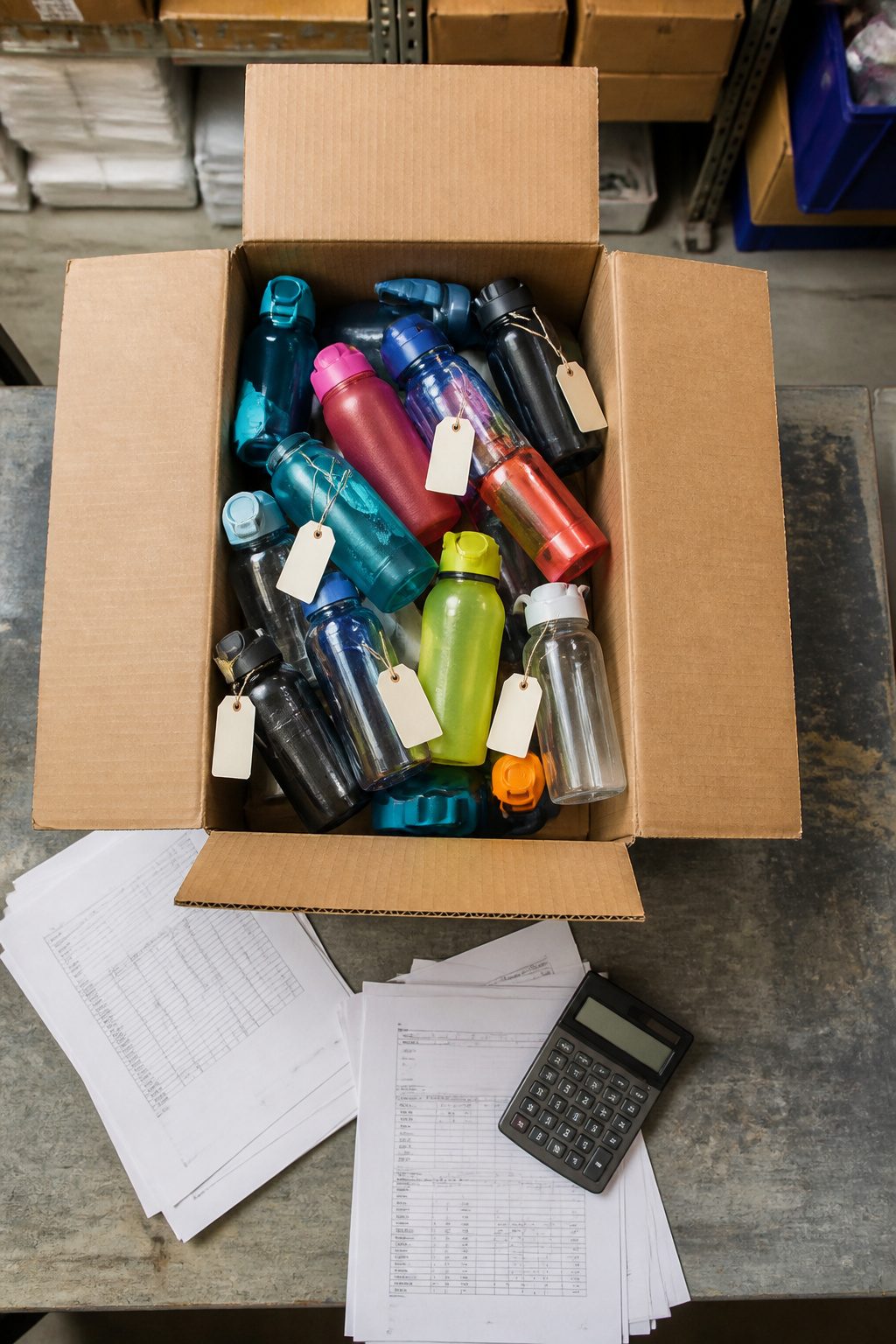
Bulk discounts on plastic water bottles kick in the moment you raise the quantity in your cart, with per-bottle costs typically running from $0.87 for basic stock up to $24 or more for customized orders. The break-even math is straightforward: a single bottle at retail might cost $3–$5, so ordering thirty or more at the bulk tier pays for itself by the tenth bottle if you are outfitting a team, a gym, or a recurring event.
Freight shipping applies once your order hits 150 pounds, which is where the savings can thin out. UPS parcel handles the lighter loads, but crossing that weight threshold shifts you to freight rates that need to be estimated at checkout. For my own calculation, I weigh whether I am buying for a one-off need or a steady drain: a case of twenty-four disposables for a single picnic loses to refilling a permanent bottle, but fifty branded bottles for a quarterly workshop pays back by the second use.
The customization premium is real. Plain bottles in volume stay near that $0.87 floor; adding a logo or color-matched cap pushes the unit price toward the mid-teens and beyond. If your timeline is tight, bulk ordering also keeps production on track, since suppliers prioritize larger runs with set shipping schedules over one-off requests.
Safety of Different Plastic Types
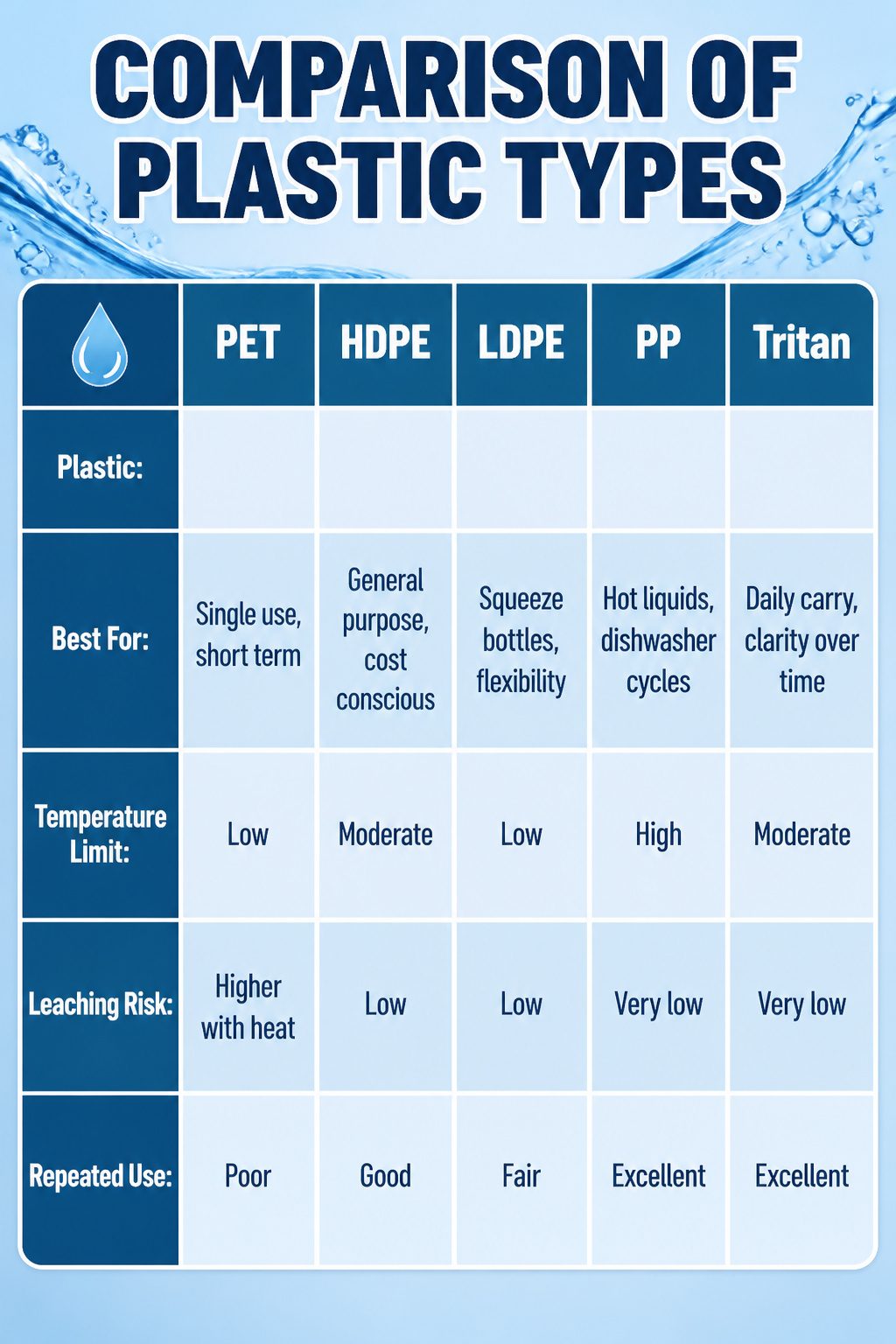
Not all plastics handle daily wear the same way, and the number stamped on the bottom matters more than most people realize. PET, the stuff in standard disposable bottles, softens with heat and is not built for refilling. HDPE holds up better to repeated washing but can pick up odors. LDPE is too flexible for rigid bottles and shows up mainly in squeeze styles. PP takes heat without warping, which is why it is the go-to for dishwasher-safe options. Tritan, a newer copolyester, was developed specifically to resist cracking and clouding after months of use.
My own preference shifted over time from whatever was cheapest to PP for hot drinks and Tritan for daily cold water, after one too many bottles turned cloudy or started tasting like yesterday’s coffee.
| Plastic | Best For | Temperature Limit | Leaching Risk | Repeated Use |
|---|---|---|---|---|
| PET | Single use, short term | Low | Higher with heat | Poor |
| HDPE | General purpose, cost conscious | Moderate | Low | Good |
| LDPE | Squeeze bottles, flexibility | Low | Low | Fair |
| PP | Hot liquids, dishwasher cycles | High | Very low | Excellent |
| Tritan | Daily carry, clarity over time | Moderate | Very low | Excellent |
Price Ranges by Bottle Type
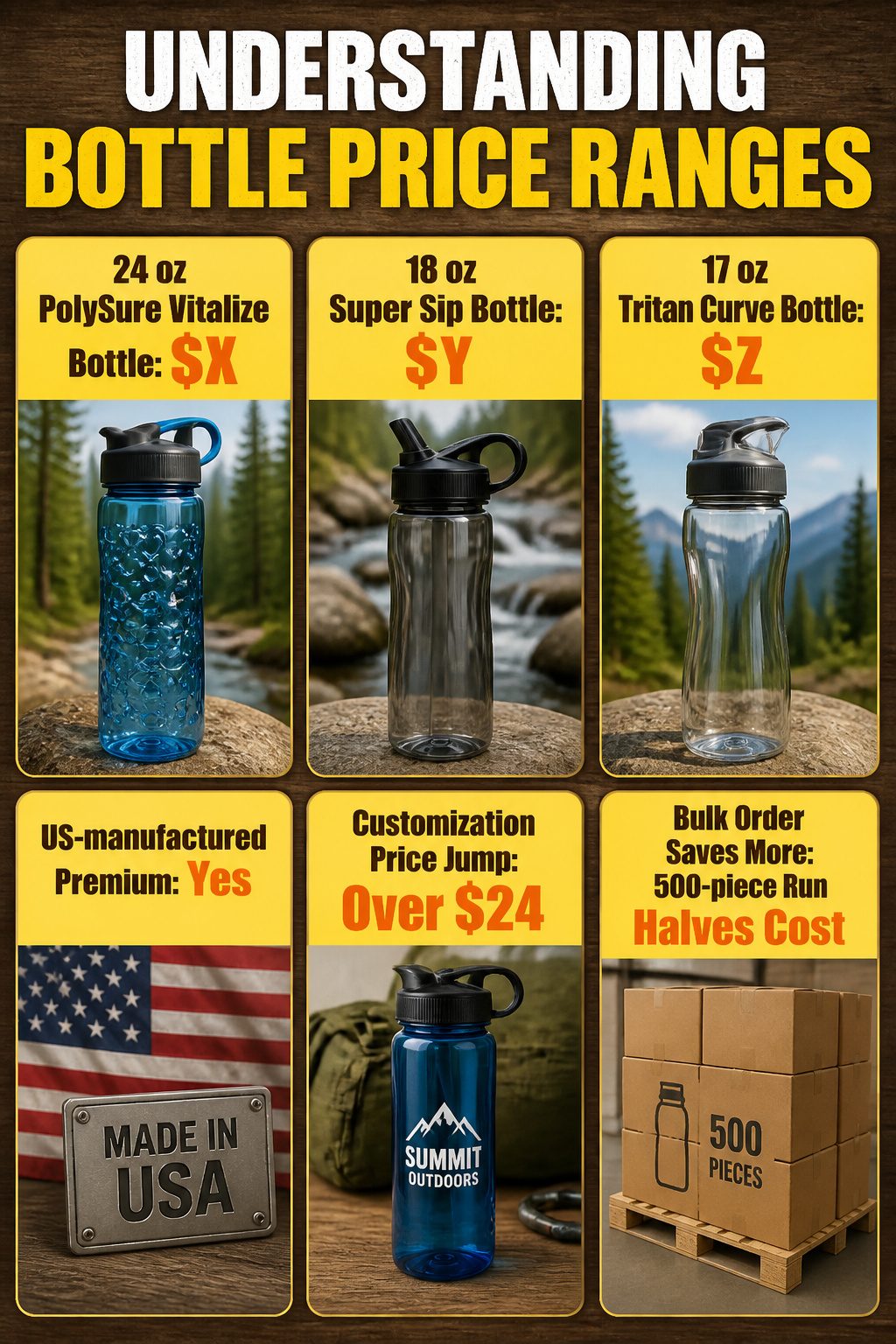
A 24 oz PolySure Vitalize Bottle with its bubble design runs about three times the cost of the 18 oz Super Sip Water Bottle, and the 17 oz Tritan Curve Bottle sits higher still. That gap is mostly material thickness and where the thing was made. U.S.-manufactured bottles carry a premium over imports, and Tritan construction pushes the price above basic polymers.
Brand markup and customization widen the spread even more. The same blank bottle can jump from roughly $0.87 in disposable bulk packs to over $24 once you add a logo and color match. Order size cuts the other way; the per-unit price on a 500-piece run can halve what you’d pay for dozens.
I spent longer than I’d like comparing these tiers last year. The value sits in the middle for most uses: the bubble-design bottle or the Super Sip range gives you a reusable piece that still looks intentional, without paying the Tritan premium for a giveaway that walks away at a conference. The Curve Bottle only earns its price if the recipient keeps it for months and your logo stays in hand that whole time.
What the Recycling Numbers Mean
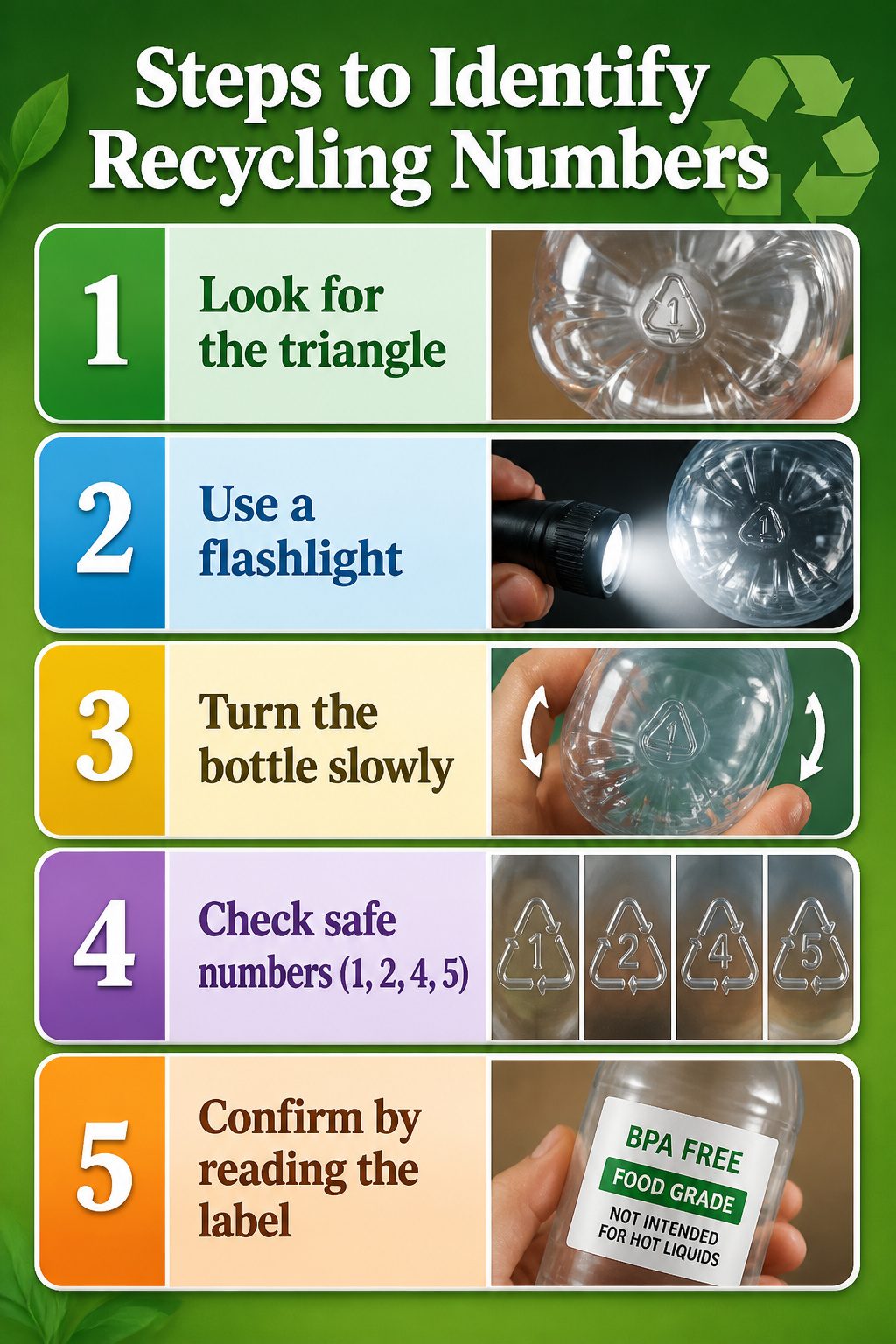
The triangle hides in awkward spots, pressed into the base or tucked along a seam where the light catches it wrong. A flashlight helps, but so does turning the bottle slowly until the embossed number throws a shadow. The safe choices are 1, 2, 4, and 5; anything outside that range means setting the bottle back down.
A 5 and a 6 look nearly identical when the plastic is warped or your thumb is smudging the ridge. I spent months carrying a bottle I thought was PP, number 5, only to spot the actual digit in bright sun and realize it was polystyrene, number 6, the kind that leaches when it heats. The difference is one raised bump, and poor lighting turns that bump into a guess.
Now I check twice: once indoors, once outdoors, and never trust a number read in a hurry. The recycling code tells you what the bottle is made of, not whether it is meant for reuse, so a number in the safe set still means reading the label for its intended use.
Frequently Asked Questions
Are plastic water bottles safe?
Yes, if they are made from safe plastics like PET, HDPE, LDPE, and PP. Plastics marked with recycling numbers 1, 2, 4, and 5 resist leaching under normal conditions and are built for repeated use. Avoid plastics marked 3, 6, and 7, which include PVC, polystyrene, and polycarbonate with BPA.
How do I identify a safe plastic bottle?
Look for recycling numbers 1, 2, 4, and 5 stamped inside the triangle on the bottom of the bottle. The number is often embossed and may need turning toward the light to read clearly. Check twice, once indoors and once outdoors, since poor lighting can make a 5 look nearly identical to a 6.
What types of plastic are used for water bottles?
Common types include PET, HDPE, and Tritan. PET is thin and flexible, best for single use. HDPE is stiffer and more durable for general purpose. Tritan is a newer copolyester that resists cracking and clouding, feels closer to glass, and handles daily drops and dishwasher cycles.