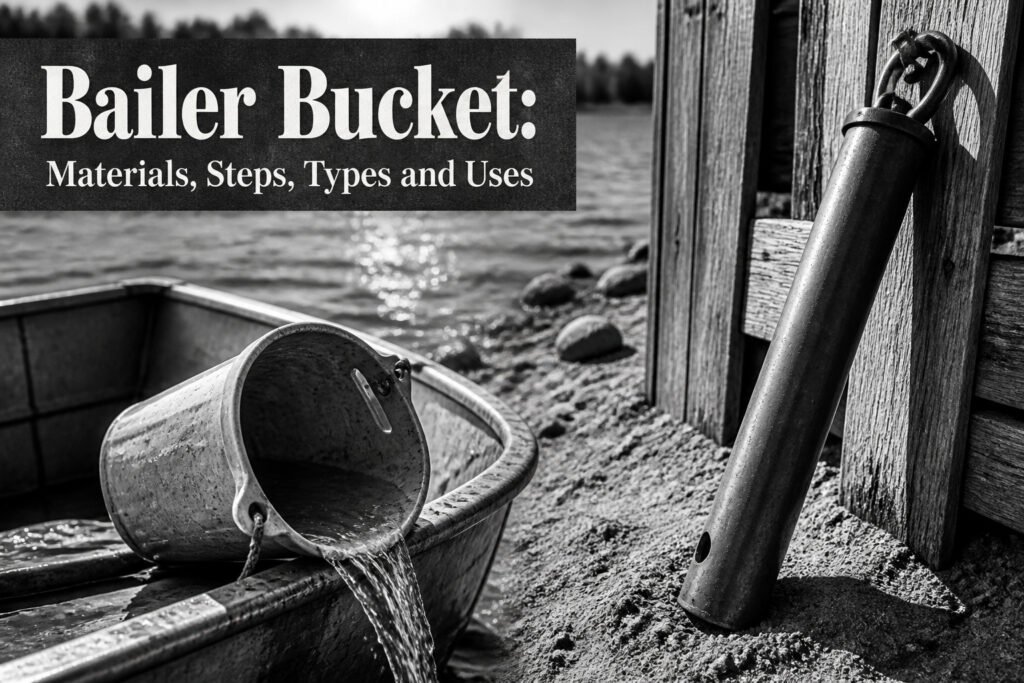
A bailer bucket is a simple tube or container with a valve that lets water or sediment in on the way down and traps it on the way up. The catch is that one name covers two very different tools: a plastic scoop that keeps a boat from sinking, and a weighted pipe that pulls sand from a well bottom. An Ontario cop once let a coffee cup pass as a marine bailer, which tells you the standard is low but the risk is real.
What a Bailer Bucket Is
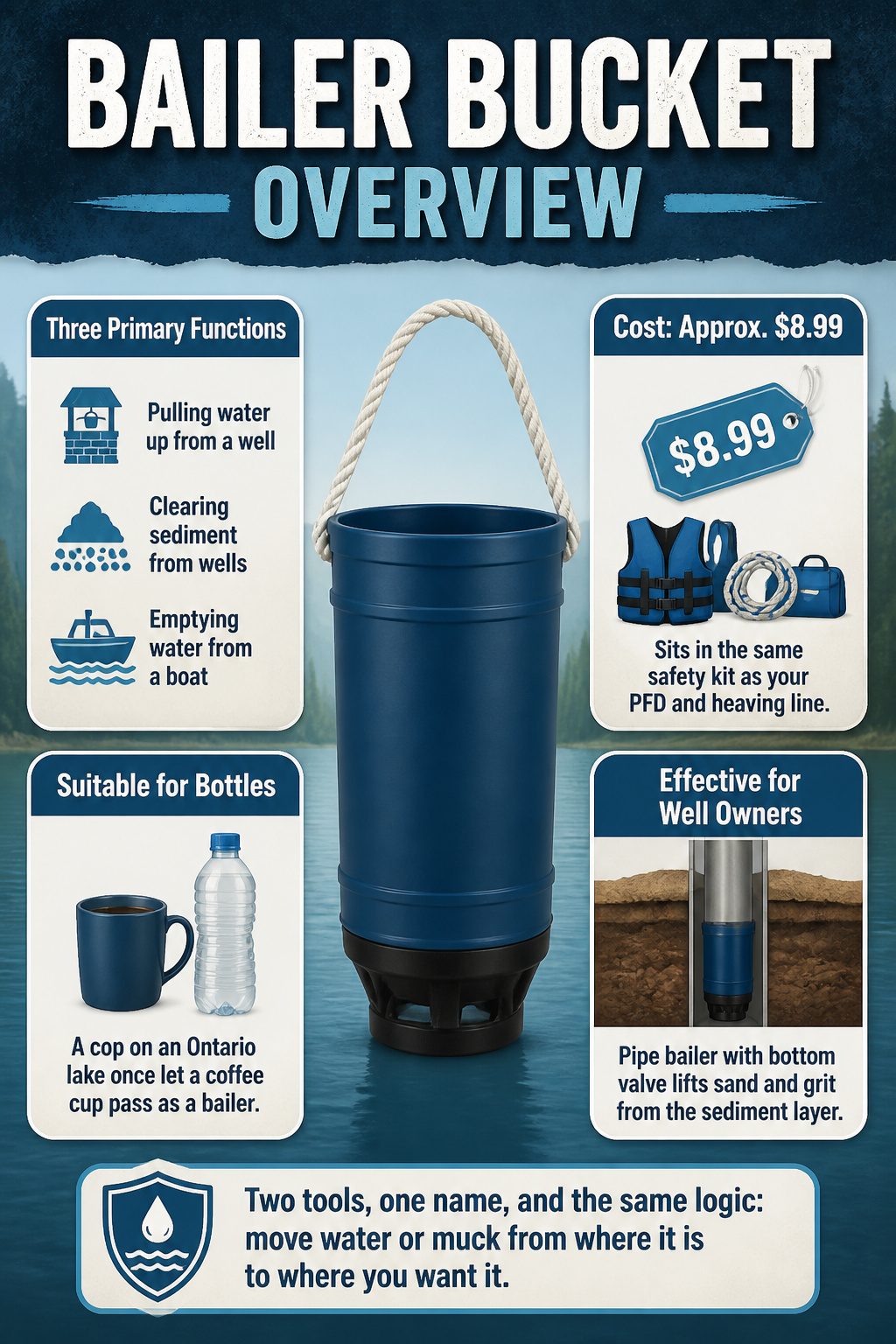
A bailer bucket is a simple tool with three jobs: pulling water up from a well, clearing sediment that settles at the bottom of a well, and emptying water from a boat before it sinks. The design stays basic across all three uses, a tube or bucket shape with a valve or open bottom that lets water in and traps it on the way up.
For boaters, the Attwood Boat Bailer Bucket runs about $8.99 and sits in the same safety kit as your PFD and heaving line. A cop on an Ontario lake once let a coffee cup pass as a bailer, which tells you the standard is low, but the risk is real. A hull leak or a wave over the gunwale, and you are either bailing or swimming.
Well owners use the same principle heavier. A pipe bailer with a bottom valve drops to the sediment layer, opens on contact, and closes to lift sand and grit out. The work is slow and physical, but it beats paying a service crew for something you can finish on a Saturday.
Two tools, one name, and the same logic: move water or muck from where it is to where you want it.
Gather Materials
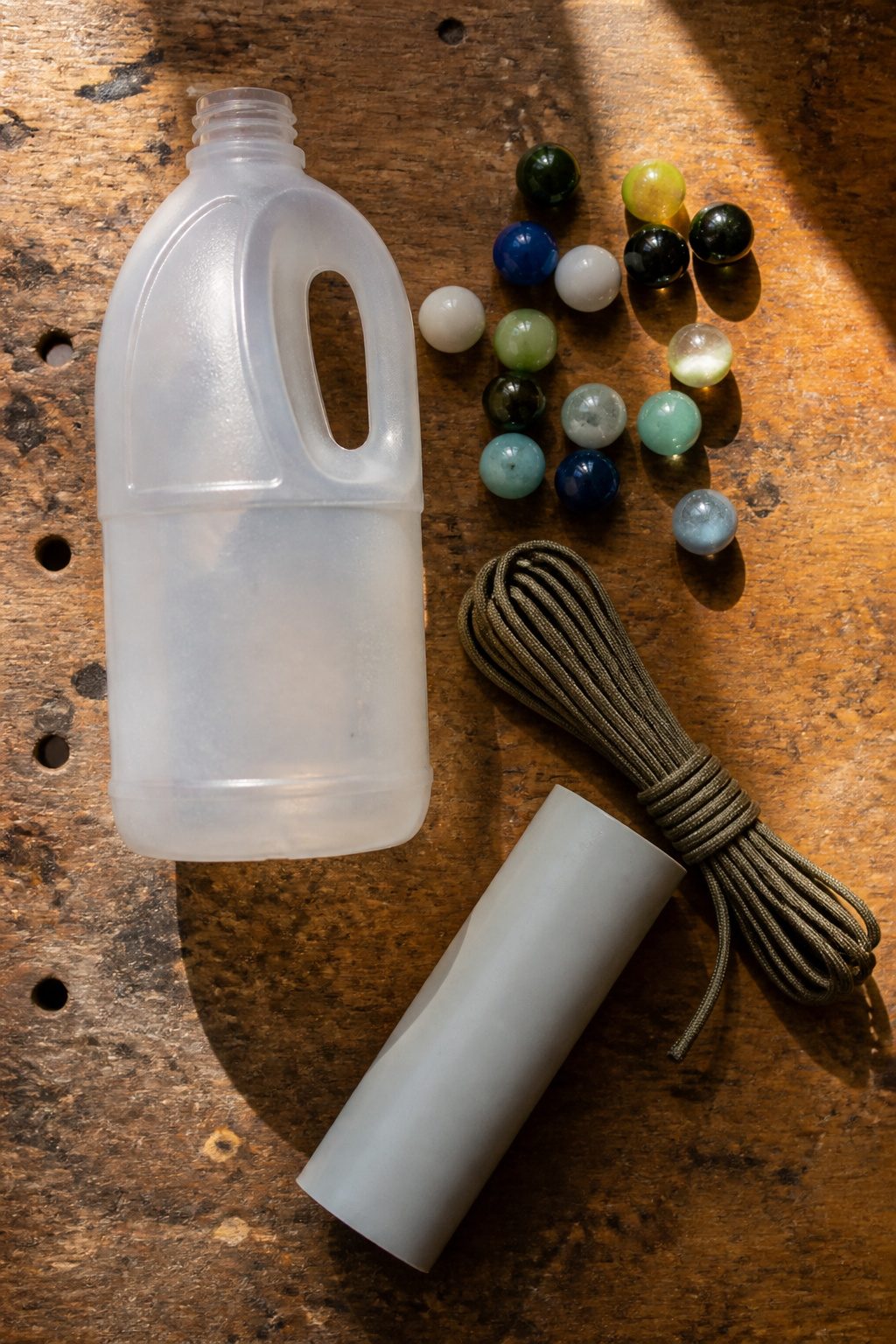
A 2 to 3.57 liter plastic bottle with a handle wide enough for four cold fingers is the standard starting point. Round bleach bottles work, though anything in that range beats the smaller 1.27 liter ones that run out of capacity too fast. The bottom gets cut off at an angle later, so the material itself matters more than the shape right now.
For the valve, a large marble does the job. Shooter or taw, whatever you called it growing up. It sits at the bottom, seals against the neck on the upstroke, lets water flood in on the way down. Not much weight to it, which is why some builds go heavier.
PVC pipe bailers need more heft. A 4-inch diameter section forms the body, and concrete works as the alternative weight. Pour it in, let it set, and the mass helps the valve seat hard enough to lift a full column of water.
Rope is what connects you to the whole thing. Paracord handles the load, and a hundred feet covers most wells. More if you suspect the depth. I keep a working roll on hand, because running short halfway down a casing is a mistake you make once.
Prepare the Bailer
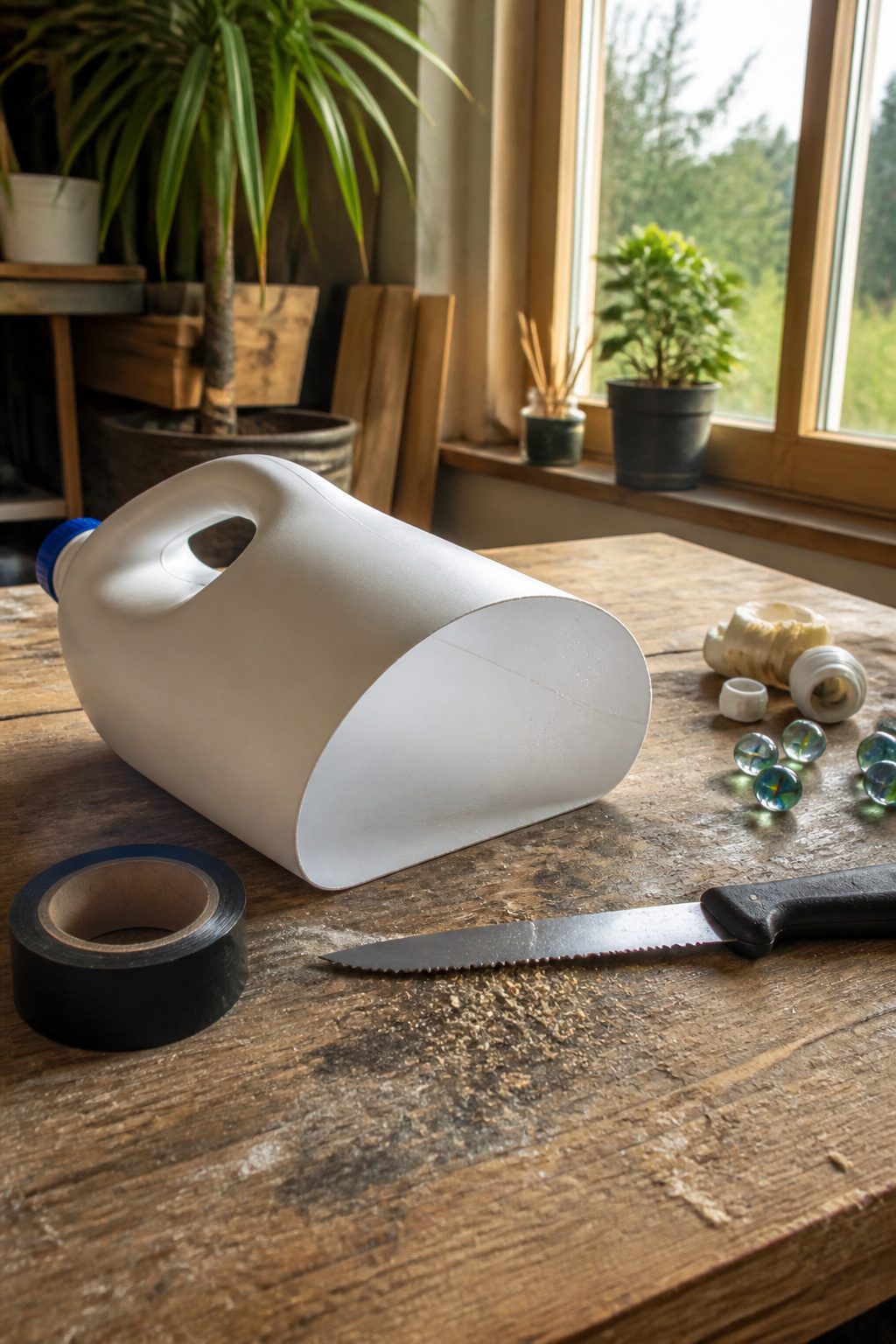
A round bleach bottle in the 2 to 3.57 liter range gives you enough capacity without getting unwieldy. The handle needs to fit four fingers through, or cold hands will struggle with grip when it matters.
The cut is what turns a container into a bailer. Slice the bottom off at an angle, leaving a flexible scoop that can press flat against a curved hull or well wall and pull up the last puddles. For a sturdier build, PVC pipe with a valve at the bottom handles repeated drops better than any plastic bottle. Ball valves seal more reliably than the homemade bolt-and-ellipse setups I have seen fail mid-retrieval, the valve detaching after a few impacts against the casing wall. The one-piece mount, no seams or twists, is what holds together when you are 40 feet down and need to pull the tool back out.
Attach the Weight
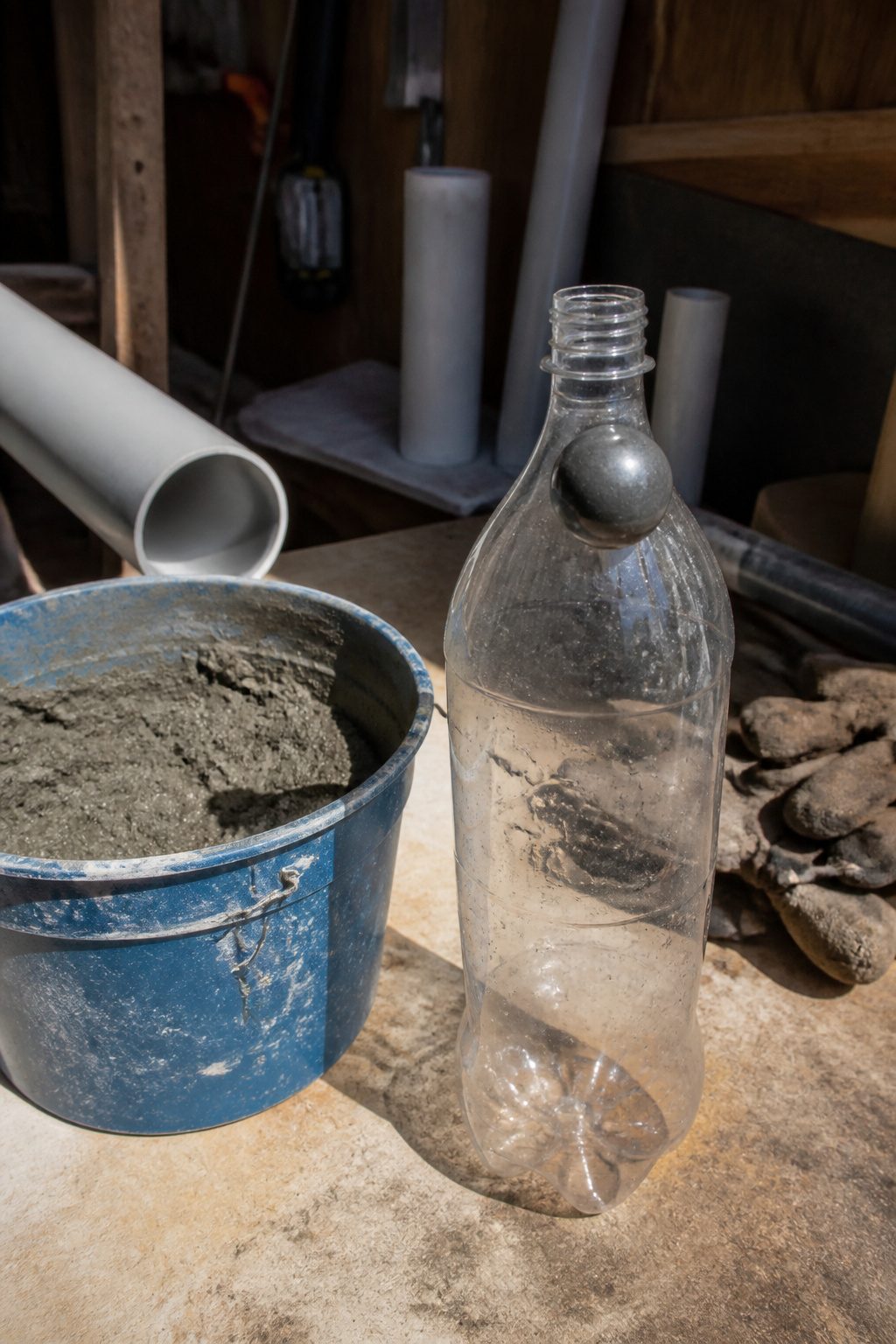
A marble dropped into the neck of a two-liter bottle becomes the valve that makes the whole thing work underwater. Gravity pulls it down, the water pushes in around it, and once the bottle fills, that same marble seals the opening from the inside so nothing leaks on the way up. The first time I read through a build, the step seemed almost too simple to matter, but without that weight the bailer just floats at the surface, useless.
For something sturdier, a length of four-inch PVC pipe can carry concrete poured straight into the top end. That mass is what sends the bailer dropping through thirty, forty, fifty feet of water column until it hits the zone you need to sample. A thick-walled pipe, something up near one centimeter wall thickness, sometimes needs no extra ballast at all; the pipe itself is heavy enough to sink on its own.
The connection holding whatever weight you choose needs to stay strong but flexible when the bailer is swinging at the end of its line.
Lower the Bailer
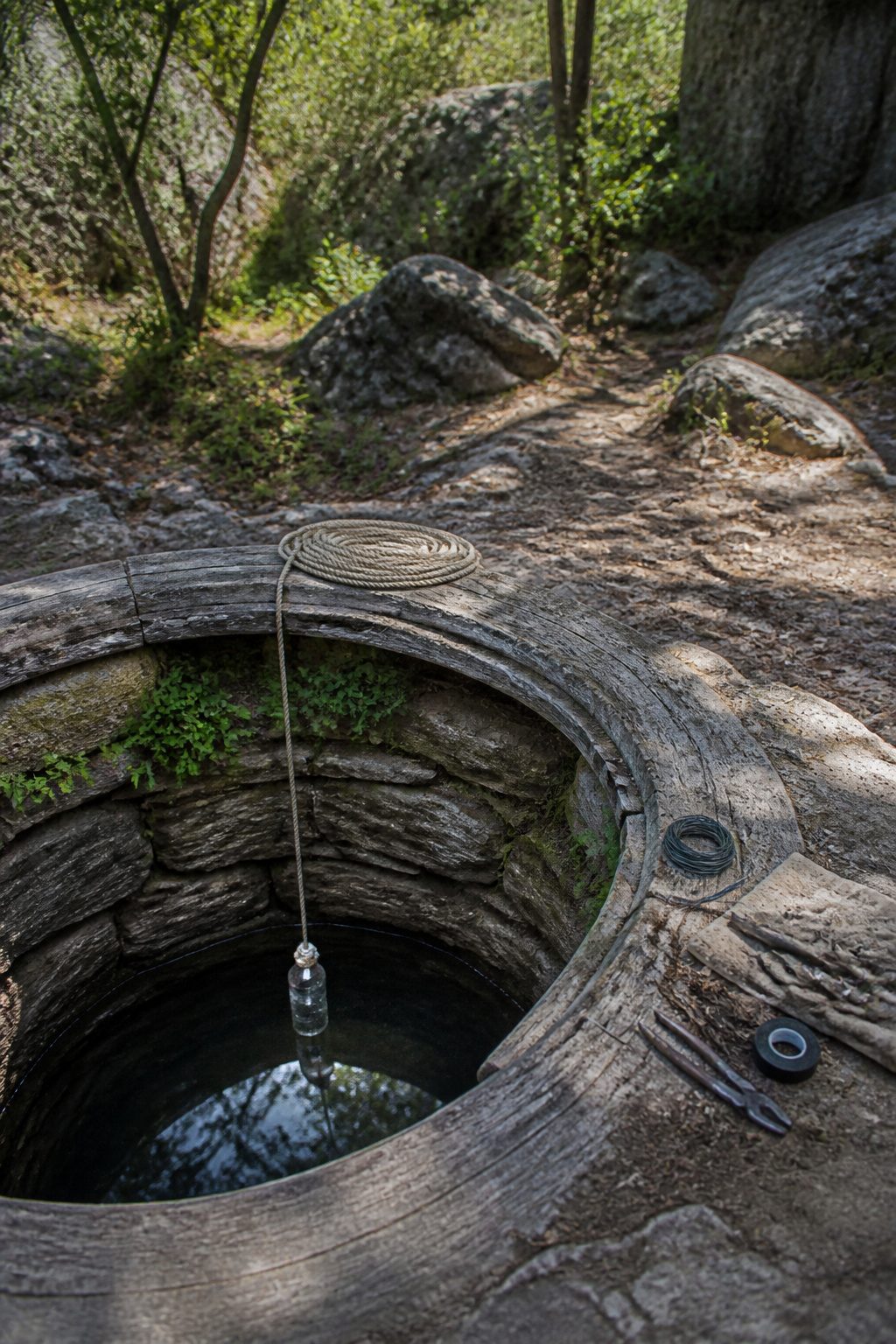
A rope long enough to reach the waterline is the only way to get a bailer down where it needs to go. Tie it off through a hole drilled near the top of the pipe, or loop it around a cross-pin welded across the opening. Either way, the knot sits above the fill window so it does not snag on the way back up.
Gravity does the real work once you let the line run. The bailer falls valve-first, and when the shoe hits bottom the valve seals against the seat. A homemade rig built from standard pipe can run up to 4 meters long for deeper wells, though handling that much steel gets tiring fast. The longer the body, the more weight you are hauling by hand on every cycle.
Give the rope a sharp tug once you feel the slack go out. That sets the valve and tells you the chamber has filled. If the line stays heavy when you pull, you have water. If it comes up light, the valve did not seat and you are hauling air. That happens more often with viscous clay or loam gumming the works, which is why some builders cut the discharge window long and narrow, almost the full length of the pipe. The slurry has to go somewhere, and a small hole turns the whole job into a fight.
Retrieve the Bailer
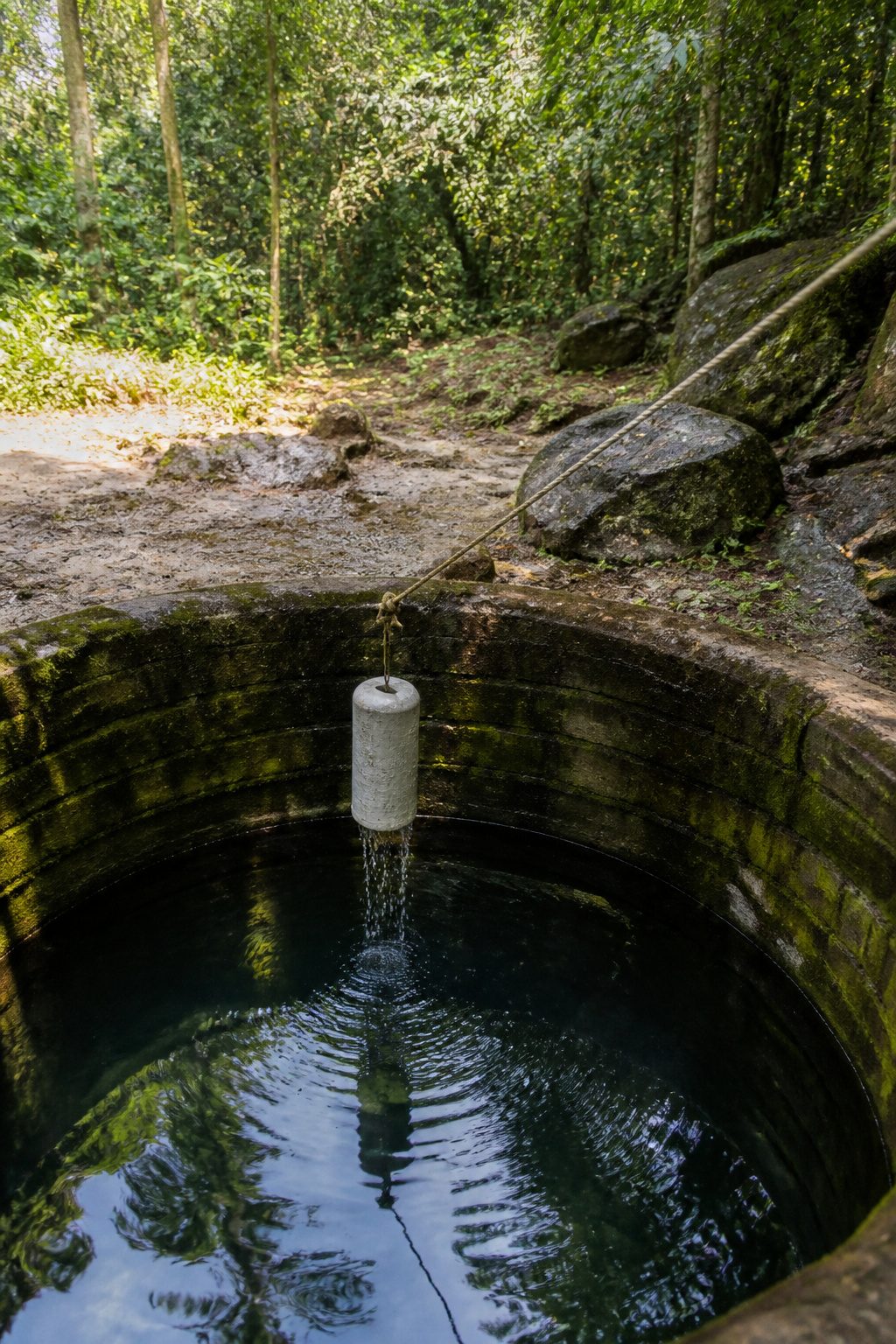
Pulling the bailer back up is where the cycle actually completes, and the weight does the critical work. Gravity keeps that bottom valve open while the tube rises through the water column, so the sample stays inside instead of draining out behind you. The weight has to be heavy enough to hold the valve open against the suction of rising, or you lose everything on the way up.
I have seen the ball-type designs fail here when the limiter inside is set too high, three or four radii above the seat. The ball floats up, the valve starts to close, and half the load spills before you reach the surface. Flat-valve bailers with their leather or rubber seals seem less fussy about this, though they take more work to build.
The window up near the top of the pipe body matters during retrieval too, especially after a cleaning run through clay or loam. Long narrow windows, sometimes running most of the pipe length, let that sticky material clear out once you break the surface. Without enough opening, you are banging the tube against the casing to dislodge a plug of wet clay that refuses to move.
Transfer the Water
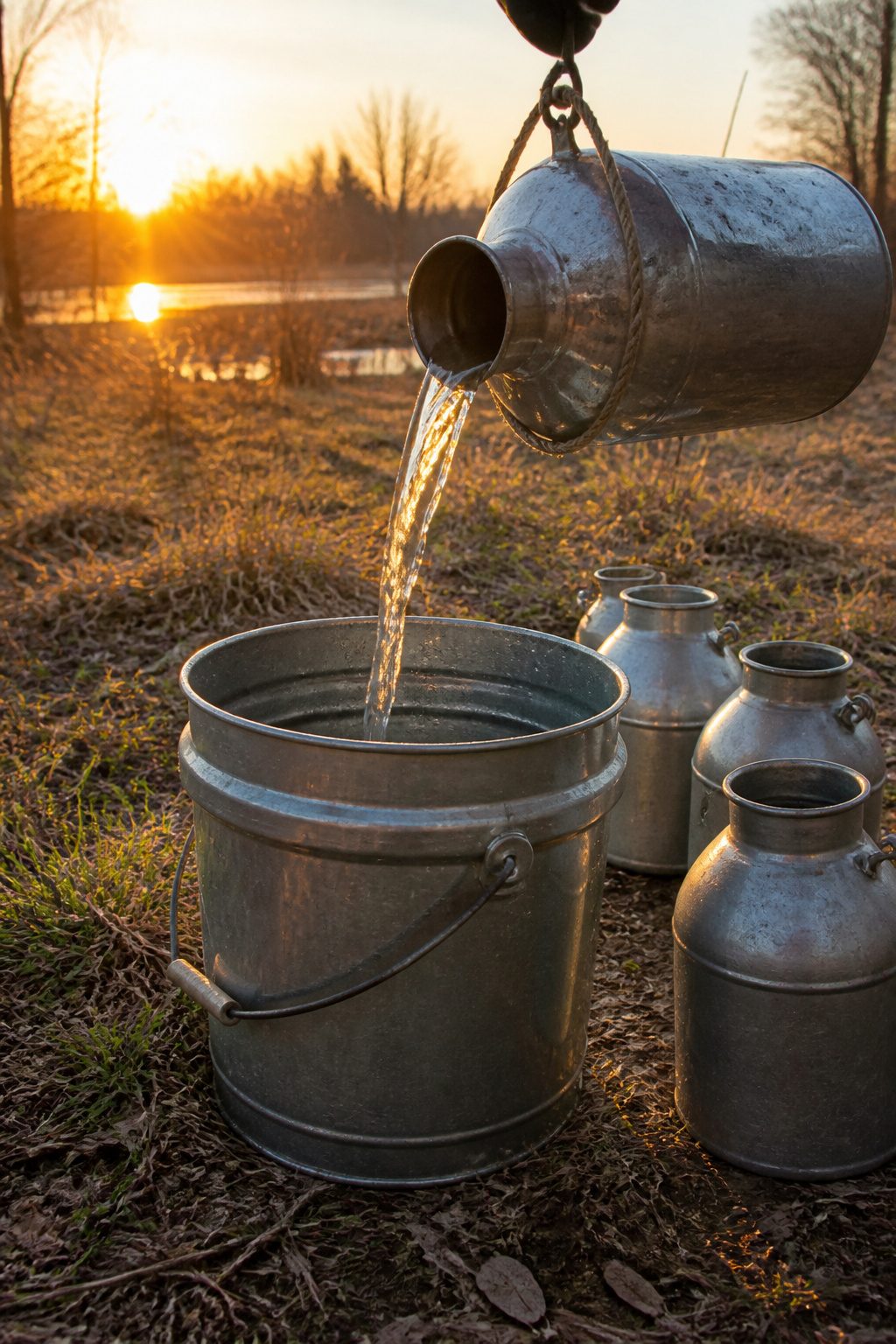
Lifting the bailer out is only half the job. Water that sloshes over the rim on the way to your container is water you carried up for nothing, and a wet boot teaches that lesson fast. I keep the storage jug right at the wellhead or stream edge, set on flat ground where a stumble won’t tip it.
The narrow neck of most bailers, especially the homemade kind, pours slower than you’d expect. Tilting too hard sends a jet against the jug’s mouth and half of it runs down the outside. A steadier hand wins: bring the lip close, pour in one smooth motion, and pause before the bucket is fully empty so the last drips fall inside, not on your wrist. The water itself does the work if you let gravity set the pace.
For larger hauls, two containers beat one. Pouring the first bailer into a five-gallon can already half full raises the level to the neck and splashes start. A pair of two-and-a-half-gallon jugs splits the load and keeps the opening low enough to stay clean. The same logic holds whether you’re filling camp jugs or a cistern; the only difference is how many trips the rope makes.
Plastic Bottle Bailers
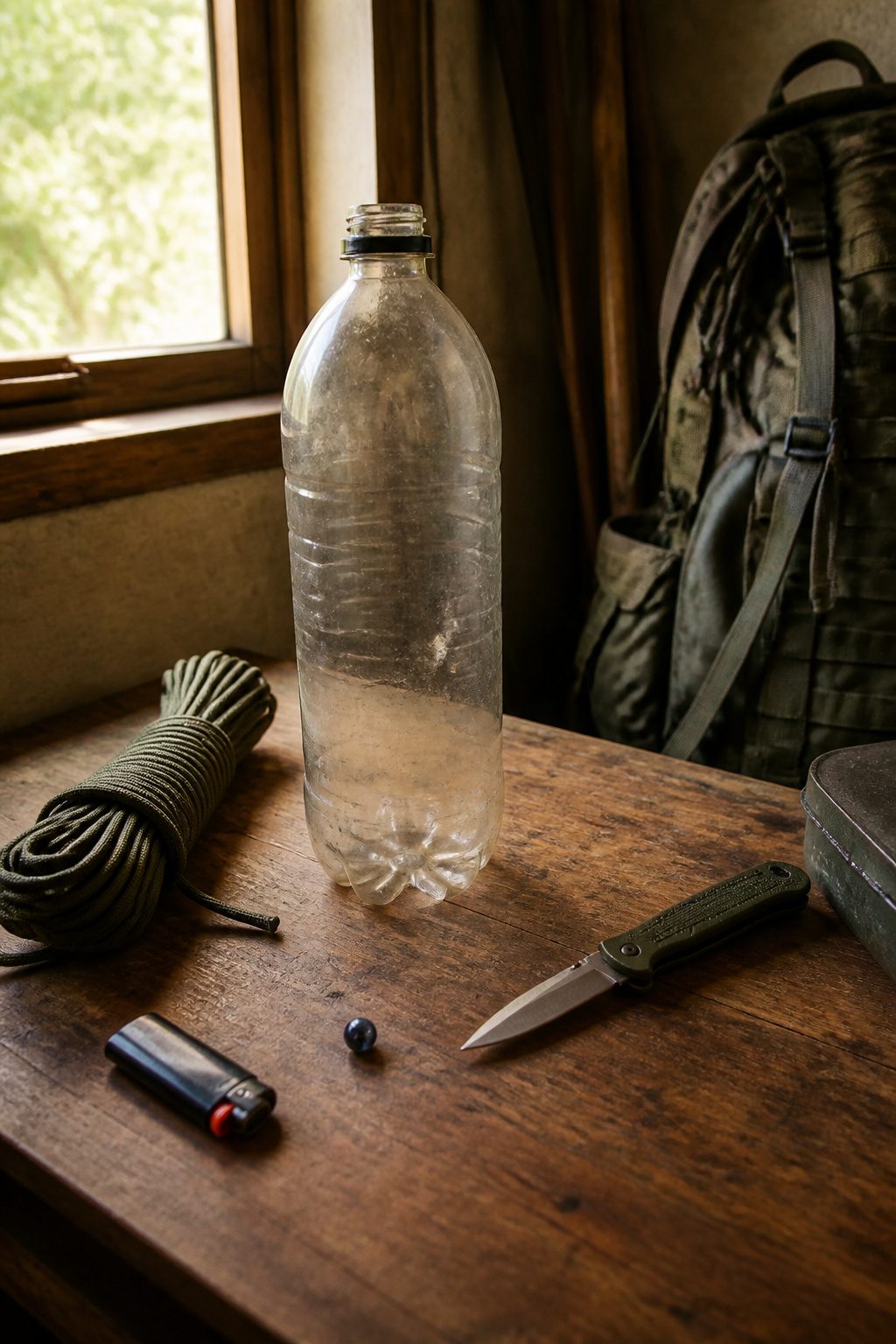
A 2 to 3.57 liter soda bottle is the lightest way to get a bailer working in an emergency. Anything in that range will hold enough water to matter without getting unwieldy on the cord.
The build takes about five minutes. Remove the cap, melt two holes in the bottom, and run a loop of 550 paracord through them with a bowline knot. Drop a shooter marble or any small ball through the neck; if it passes through too easily, find a bigger one. Lower the bottle neck-first down the well. Water pressure pushes the marble aside while the bottle fills, then the marble seals against the opening under the weight of the pull.
This is the first of three designs worth knowing, and it lives in a glove box or daypack without complaint. It will not survive long against rough casing or repeated use. The plastic fatigues, the holes elongate, and eventually the seal fails. For a one-time rescue or a weekend of sketchy water access, though, the tradeoff is hard to beat.
PVC Pipe Bailers
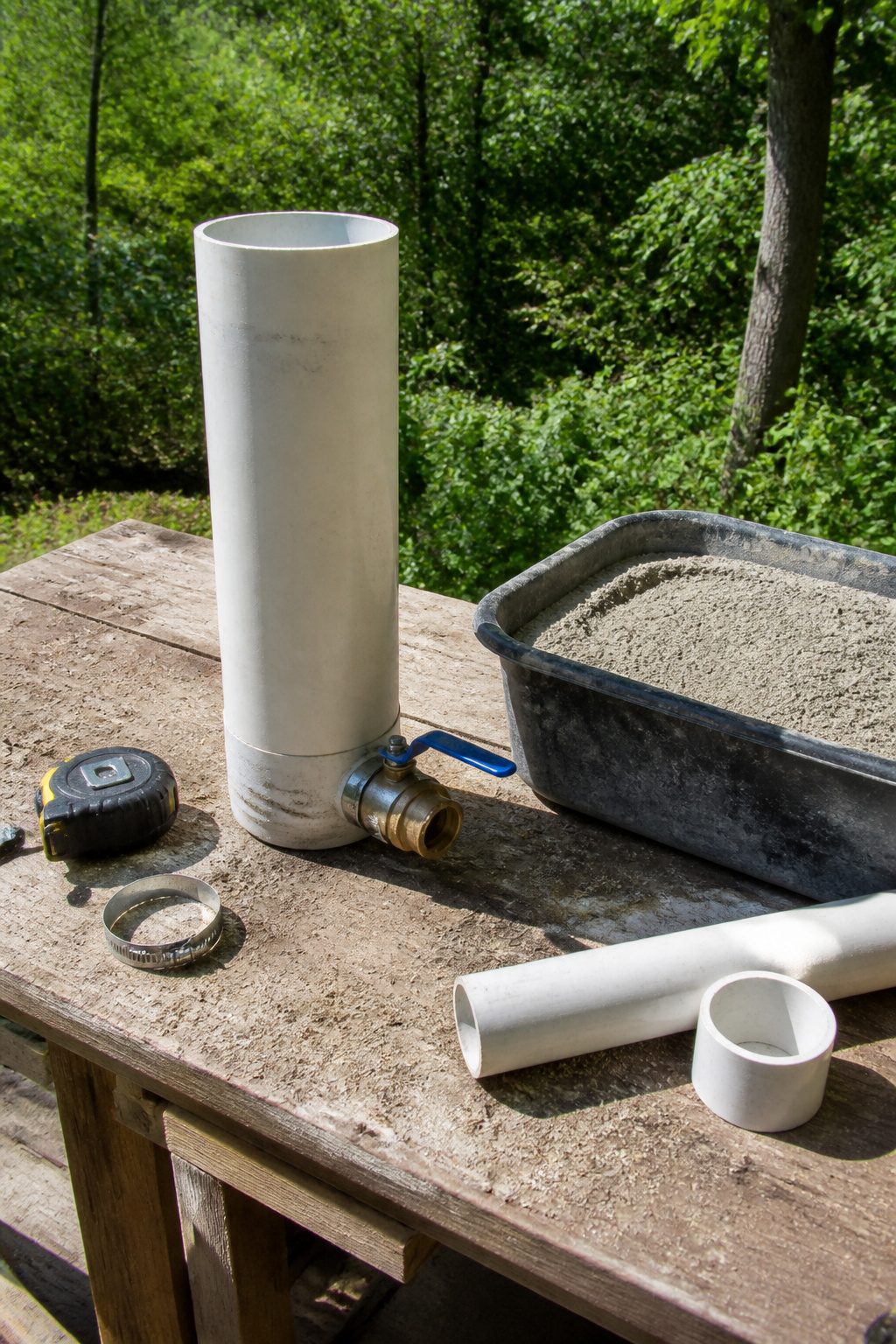
The pipe version is the sturdier step up when a bottle bailer starts to feel flimsy. A 4-inch diameter water pipe gives the wall thickness and heft to survive repeated drops into a well casing, and the round profile lets debris slide past instead of hanging up. What makes this design work is the ball valve at the bottom: a steel ball, roughly half the pipe diameter, seats against a welded washer to seal when you pull upward. One builder used an 89 mm pipe with a 60 mm bearing ball and a concentric adapter sandblasted inside until the fit was tight enough to hold water but free enough to drop open on the next cycle.
The ball needs a limiter welded a few radii above it, or momentum carries it too high on descent and your sample spills back out. Concrete weighting at the top keeps the tube dropping straight and adds the mass to drive through standing water or soft sediment. A window cut higher on the body lets you shovel out clay or packed sand that the valve won’t release on its own; for heavy clay, that window runs almost the full length, because a small port plugs solid and the bailer becomes a battering ram instead of a sampler.
Commercial Bailer Buckets
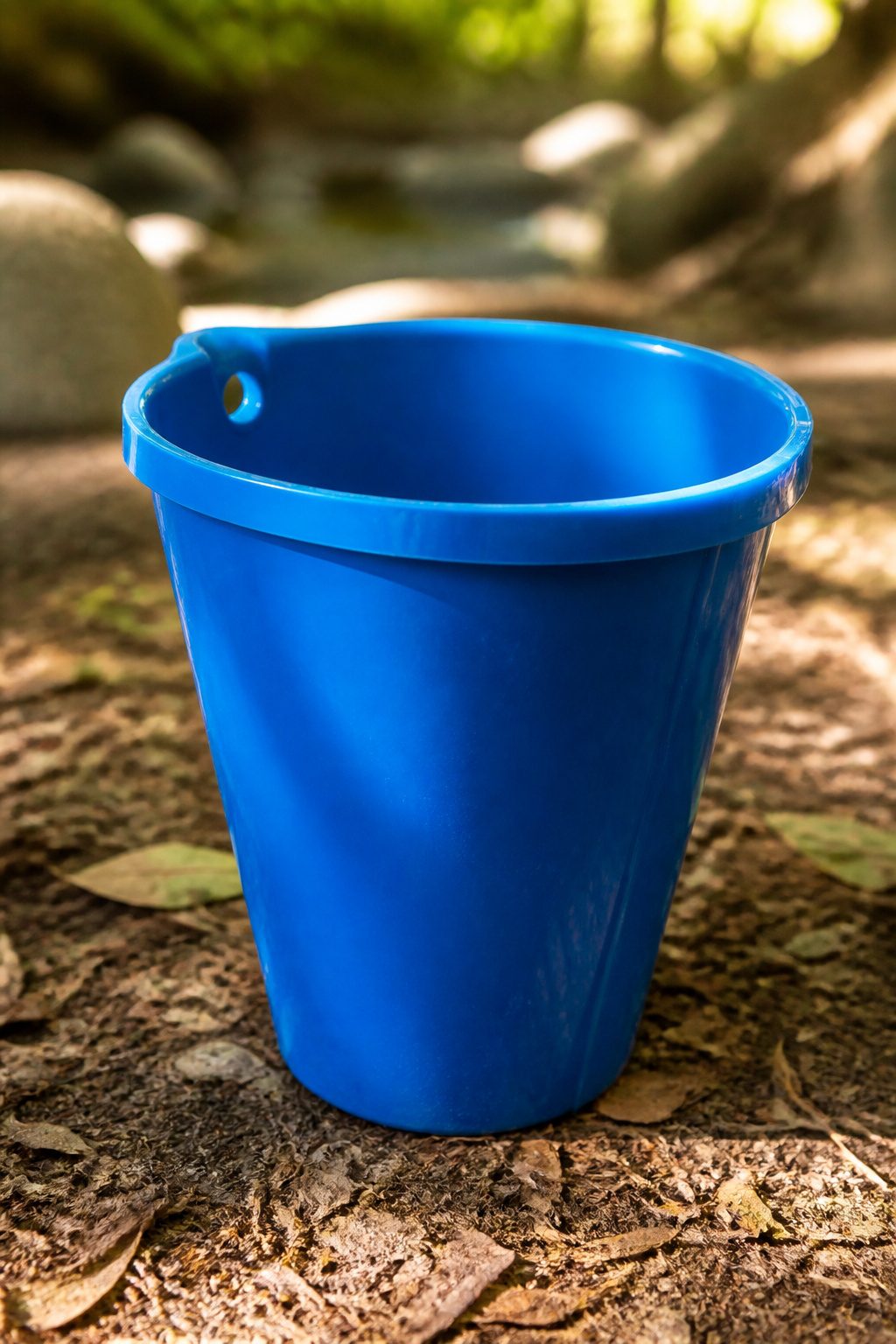
Some situations call for a bailer bucket you can pull off the shelf instead of cobbling one together. The marine and well-supply markets both stock pre-built options, and the difference in cost and durability against a homemade rig is worth weighing before you commit.
On the boating side, the Attwood Boat Bailer Bucket carries an MSRP of $8.99, which sets the floor for what a purpose-built plastic bailer runs. It is the third path: bought, not built. That price gets you a shaped vessel with a lanyard hole and enough capacity to satisfy Coast Guard requirements in most states, though an officer on a slow day might still side-eye anything smaller than a proper scoop. The Attwood sits in that zone where it is cheap enough to lose in the bilge but official enough to pass inspection.
Well-supply bailers are a different breed, typically steel or PVC with valve mechanisms to seal sediment inside. They cost more, start around $25 to $40 for basic models, and scale up from there. The tradeoff is precision: a homemade bottle rig will haul water, but it will not keep your sample layers intact the way a check-valve bailer does.
For occasional boat bailing or shallow-well clearing, the store-bought plastic bucket wins on convenience. For monitoring wells or contamination work, the specialized tool earns its price.
Where Bailers Get Used
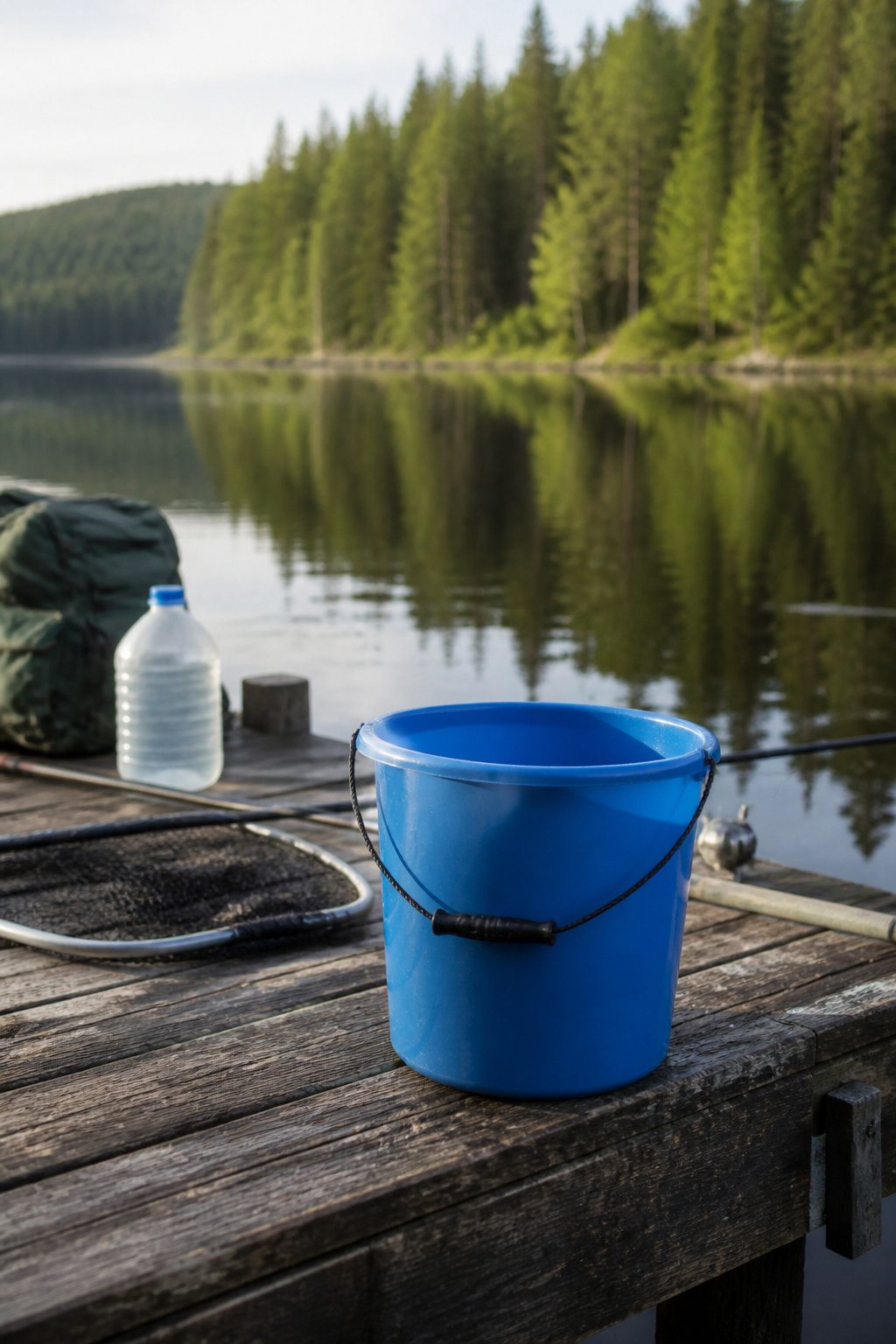
A bailer bucket earns its keep in three places where water is the problem and your hands are the only tool available.
On the water, a bailer is required safety equipment in most jurisdictions. An Ontario Provincial Police patrol once stopped a motorboat where the only "bailer" on board was a coffee cup. The officers let it pass, barely, but the point stands: if a hull springs a leak or waves swamp the deck, you need something that moves water faster than a cup. A proper bailer or bilge pump is the only way to empty the boat when you are far from shore or pinned in an eddy beside a rapid. The same tool doubles for carrying drinking water, dousing a campfire, or the less glamorous task of a tent bottle when mosquitoes make a shore trip unbearable.
For well owners, the bailer solves a harder problem. In dry regions where the water table sits 40 to 80 feet down, a fried submersible pump leaves you with a hole full of water and no way to lift it. A hand pump takes an hour to rig, but not everyone has one. A bailer dropped down the casing, dropped and lifted repeatedly, brings water to the surface without electricity or complex gear. The same tool cleans silt or sand plugs from the bottom, restoring flow when buildup chokes the well.
The common thread is having it ready before the need hits. A coffee cup will not bail a leaking boat, and improvisation at the wellhead wastes daylight you do not have.
Materials and Durability
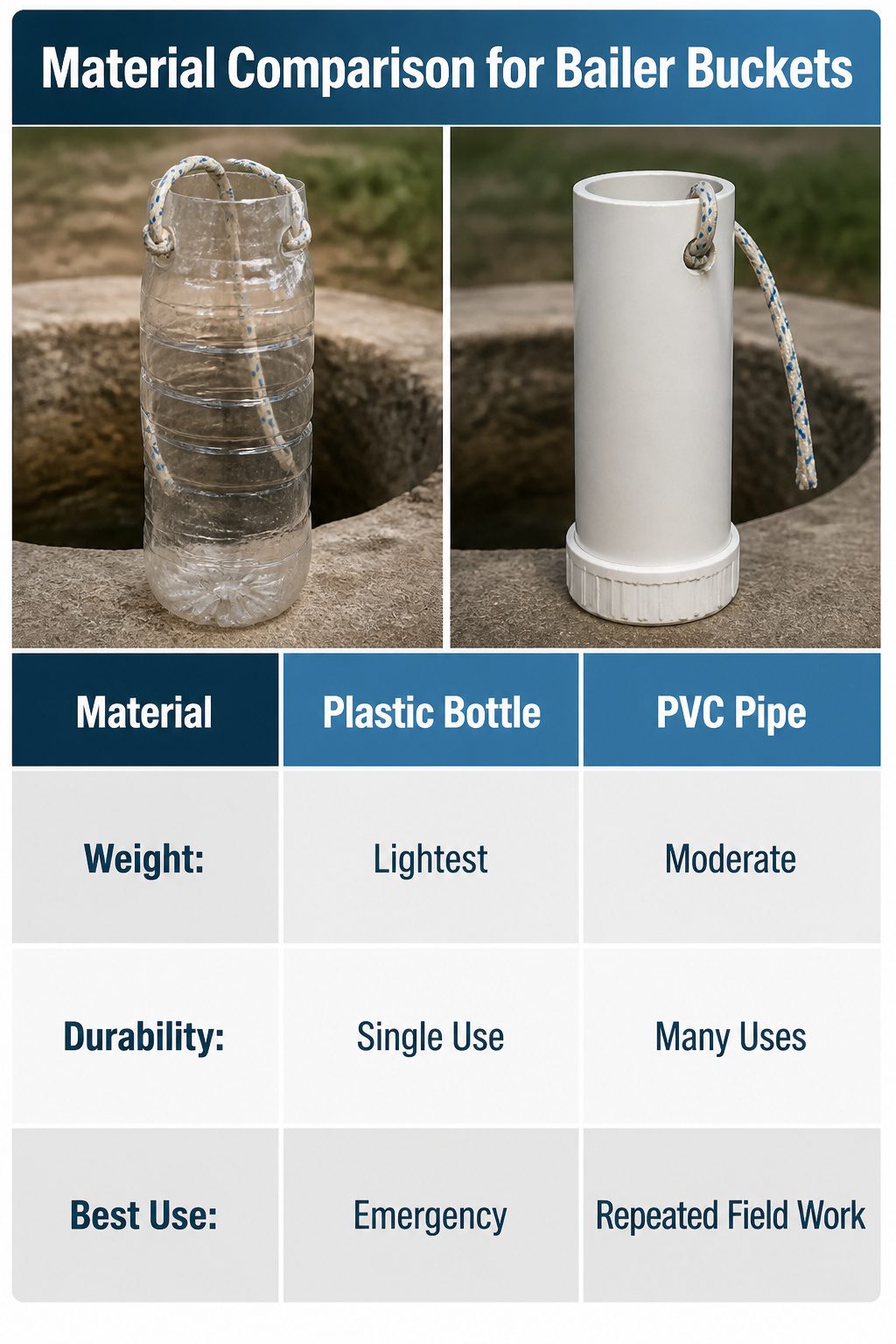
The material you choose for a bailer bucket shapes how long it lasts and where it actually works. Plastic bottles win on weight and cost, which matters when you need something right now and don’t plan to reuse it. The thin walls crack under repeated stress, though, and a sharp edge down a well will split the seam faster than you’d expect.
PVC pipe trades that portability for strength. Schedule 40 holds up to dozens of trips, resists abrasion against casing walls, and won’t deform in summer heat left in a truck bed. The downside is bulk; a six-inch diameter piece two feet long eats serious pack space.
Commercial bailers, typically polyethylene or PVC derivatives with reinforced fittings, aim for the middle ground. They cost more upfront but survive field conditions that destroy homemade versions. For a one-time emergency, a plastic bottle bailer is enough. For repeated well work, the extra durability of PVC or a commercial unit pays back quickly.
| Material | Weight | Durability | Best Use |
|---|---|---|---|
| Plastic bottle | Lightest | Single to few uses | Emergency, improvised |
| PVC pipe | Moderate | Many uses | Repeated field work |
| Commercial | Moderate | Highest | Professional, frequent use |
Frequently Asked Questions
How do you make a bailer bucket?
A plastic bottle bailer starts with a 2 to 3.57 liter container. Cut angled holes in the bottom, thread paracord through with a bowline knot, and drop a shooter marble through the neck to serve as the valve. Lower it neck-first; water pressure pushes the marble aside while filling, then the marble seals on the pull upward. For repeated use, build from 4-inch PVC pipe with a steel ball valve welded at the bottom and concrete weight at the top.
What is a bailer bucket used for?
A bailer bucket pulls water from wells, clears sediment that settles at well bottoms, and empties water from boats before they sink. The same basic design, a tube with a valve or open bottom, handles all three jobs by letting water in and trapping it on the way up. On boats it is required safety equipment in most jurisdictions; for wells it works when pumps fail or silt needs removal.
How deep can a bailer bucket reach?
A homemade pipe bailer can run up to 4 meters long for deeper wells, though hauling that much steel by hand grows tiring fast. Gravity does the descent work once you let the rope run, and the weight must be heavy enough to hold the valve open against suction during retrieval. For most personal wells, a hundred feet of paracord covers the depth needed.