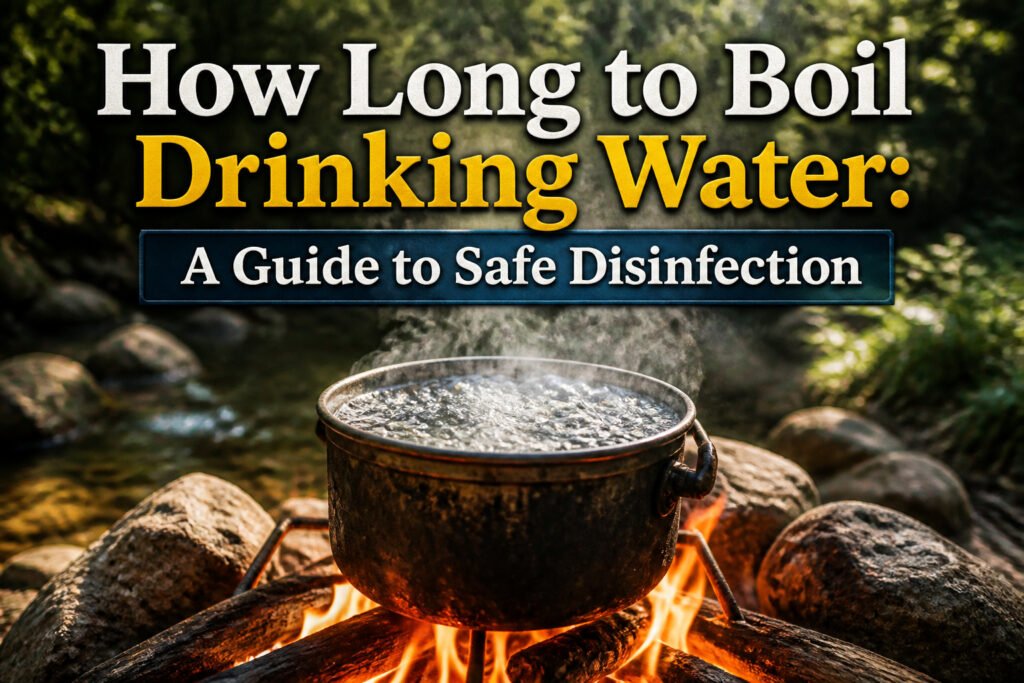
Boiling drinking water means holding it at a full rolling boil for one minute to kill bacteria, viruses, and protozoa. That minute stretches to three if you are above 5,000 feet in elevation, where thinner air drops the boiling point enough to weaken the kill. A coffee filter should clear cloudy water first, since sediment shields pathogens from heat you are counting on.
Filter Cloudy Water First
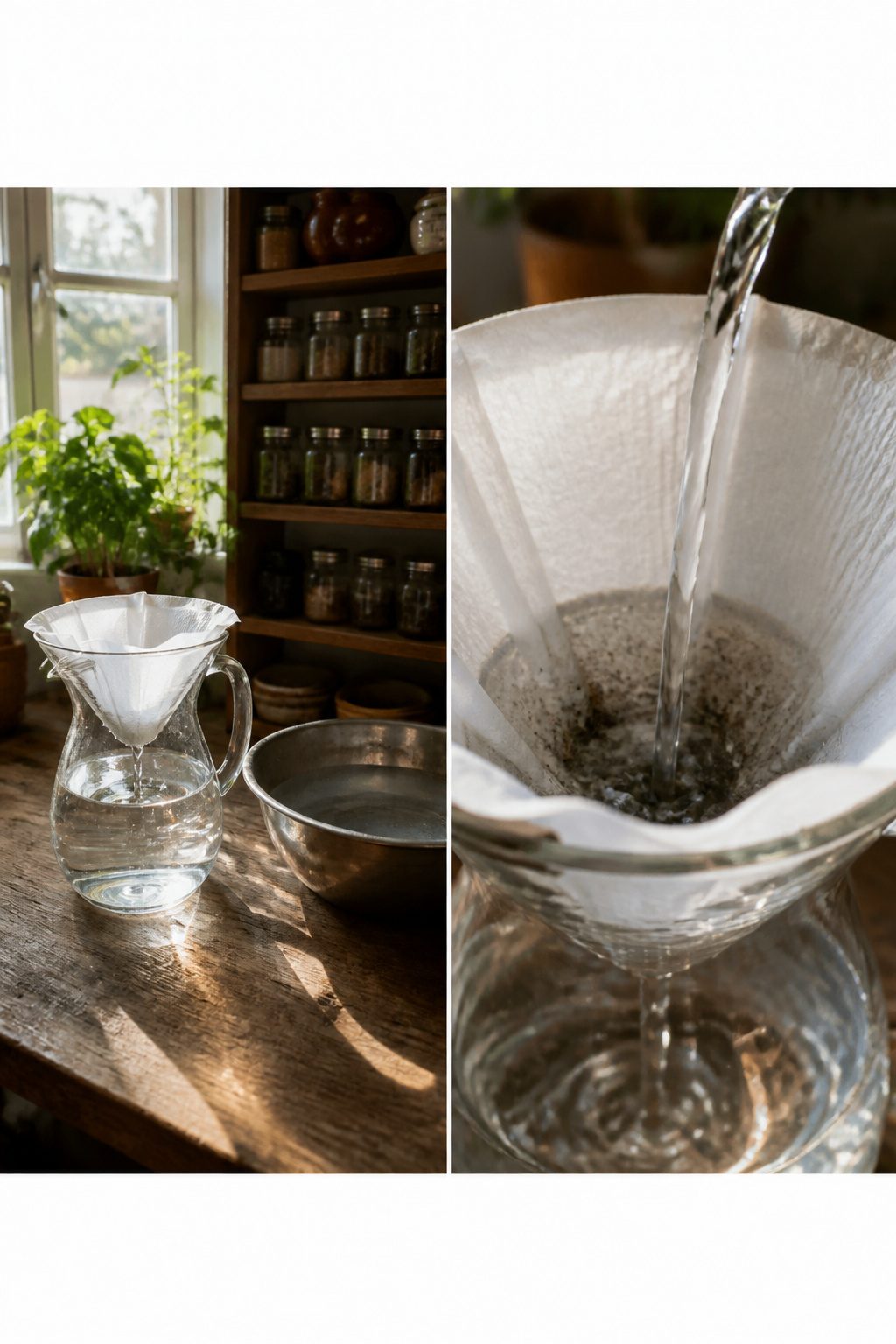
Cloudy water needs settling and filtering before it ever hits the flame. Particulates floating through the liquid can shield bacteria and viruses from the heat you’re about to apply, letting them slip past what should kill them.
The process is simple. Let the container sit until sediment drops to the bottom, then pour the clearer upper layer through a clean cloth, paper towel, or coffee filter into another vessel. A coffee filter works when nothing else is clean enough. The EPA and CDC both flag this step because the debris you strain out is exactly what boiling targets most effectively; leave it in, and you’re gambling with pockets of surviving pathogens.
This adds a few minutes upfront, but it costs nothing and removes the guesswork about whether that murky batch actually got safe.
Bring It to a Rolling Boil
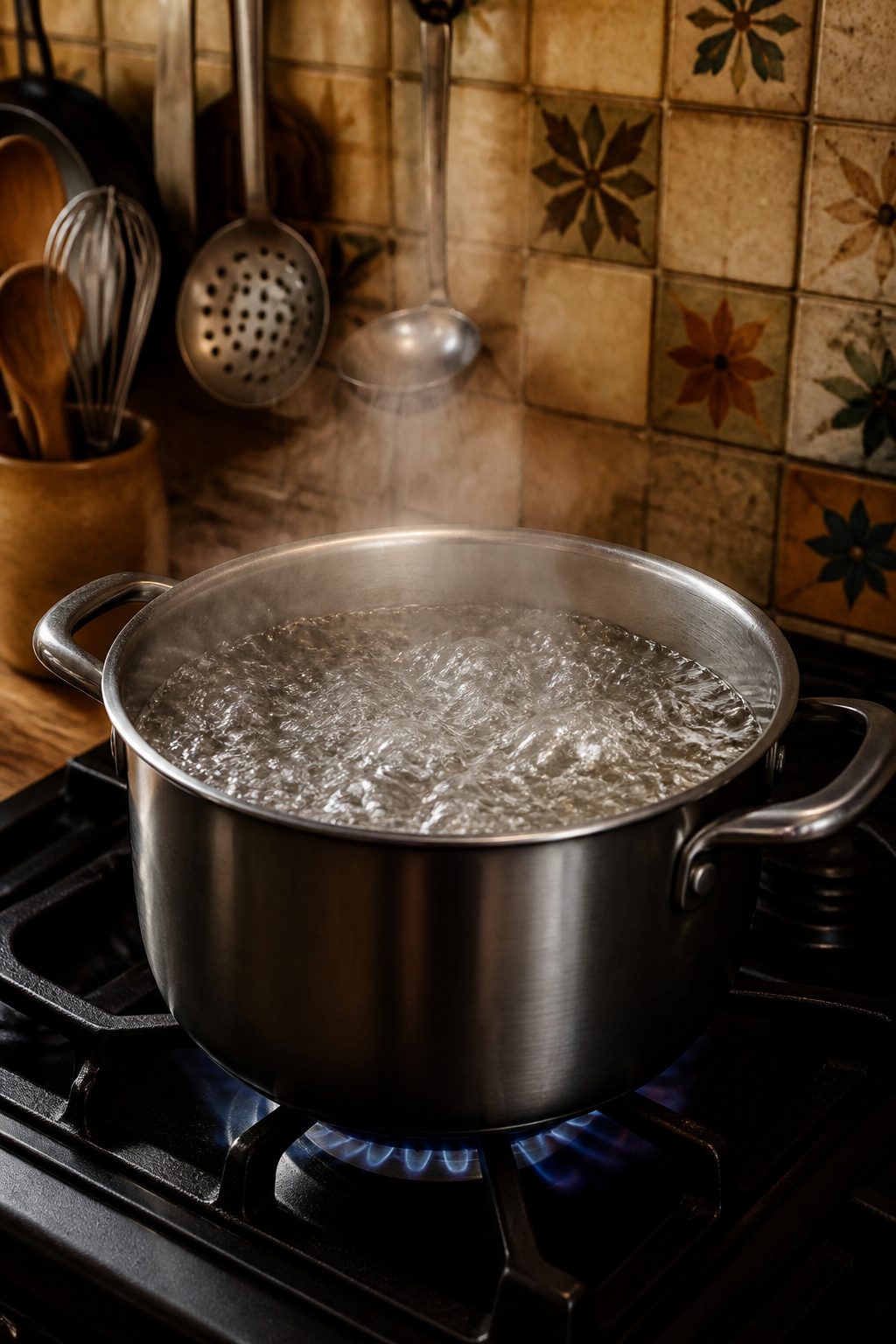
Water coming out of the tap cold, lukewarm, or already steaming from a sun-warmed jug all reaches the same endpoint: a full rolling boil with bubbles continuously rising and breaking at the surface. That motion matters more than the thermometer reading you cannot see. A simmer sends small bubbles drifting up from the pot bottom; a rolling boil churns the whole volume.
At sea level, that rolling boil happens at 212°F (100°C). Starting temperature does not change the goal. Cold water from a mountain stream and hot water from a kitchen tap both need the same visible, violent surface before the one-minute timer starts. The EPA sets the threshold there: once the rolling boil is reached, keep it going for one full minute. Altitude above 5,000 feet pushes that to three minutes, a point other sections cover, but the visual cue stays identical. Watch the pot. When the surface is truly roiling, you are there.
Boil for Elevation, Not Just Time
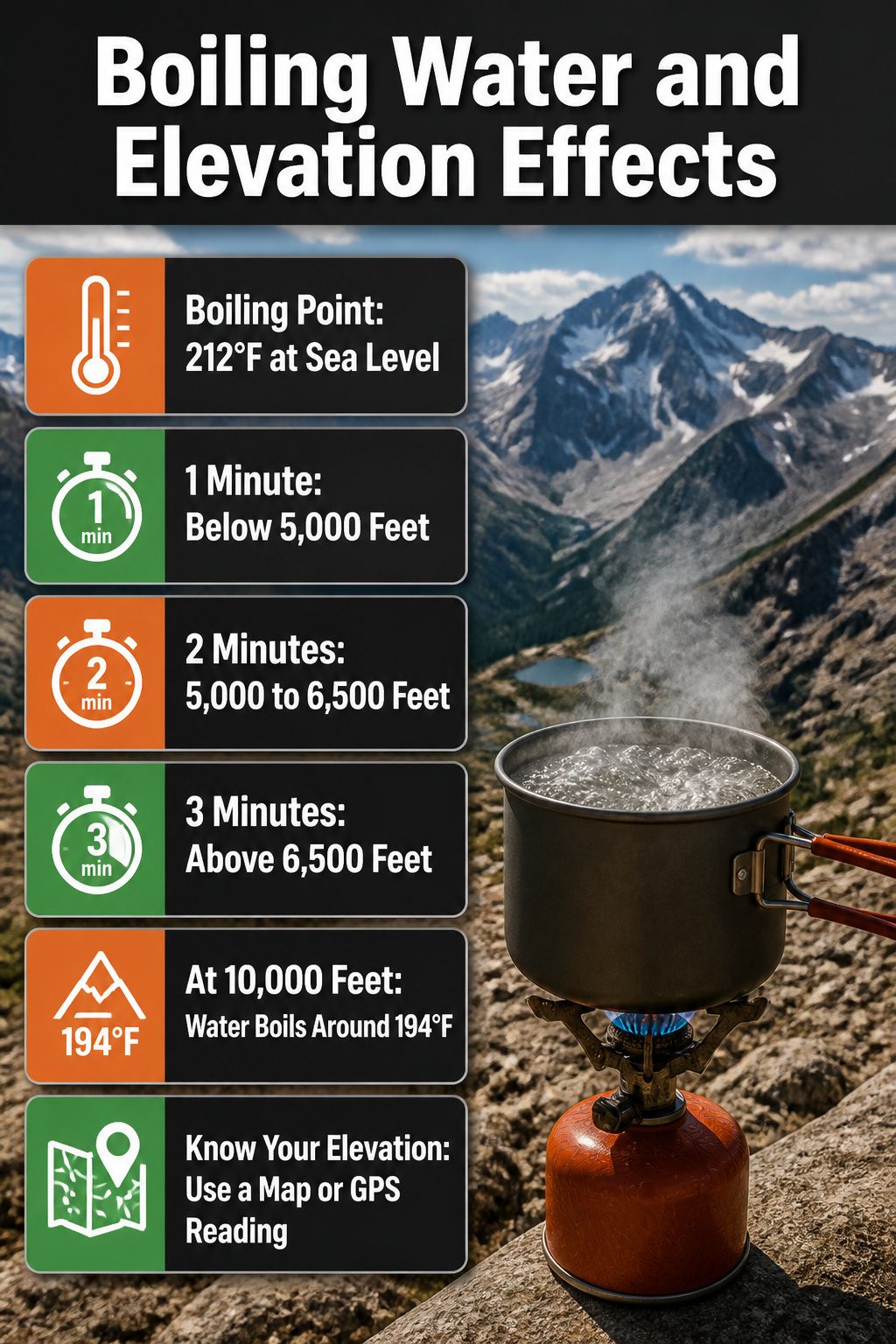
Water boils at 212°F at sea level, but that number drops the higher you climb. By 5,000 feet, the boiling point has fallen enough that the EPA’s standard one-minute rule no longer delivers the same killing heat. Below 5,000 feet, one minute at a rolling boil is enough. From 5,000 to 6,500 feet, stretch that to two minutes. Above 6,500 feet, make it three.
I learned this distinction the hard way on a trip to Colorado, where I treated 6,200 feet like a minor detail and stuck with the one-minute habit from home. The water bubbled vigorously, looked ready, but was technically cooler than a sea-level boil. The margin matters because altitude steals temperature faster than most people expect; at 10,000 feet, water boils around 194°F, nearly twenty degrees below the standard.
Some guidance splits the difference at 5,000 feet flat, calling for three minutes there and up. Others wait until 6,500 feet to demand that full three. The safer read is the longer time at the lower threshold, especially if you are unsure of your exact elevation. A topographical map or GPS reading settles it in seconds, and boiling an extra minute costs nothing against the alternative.
Cool and Store It Right
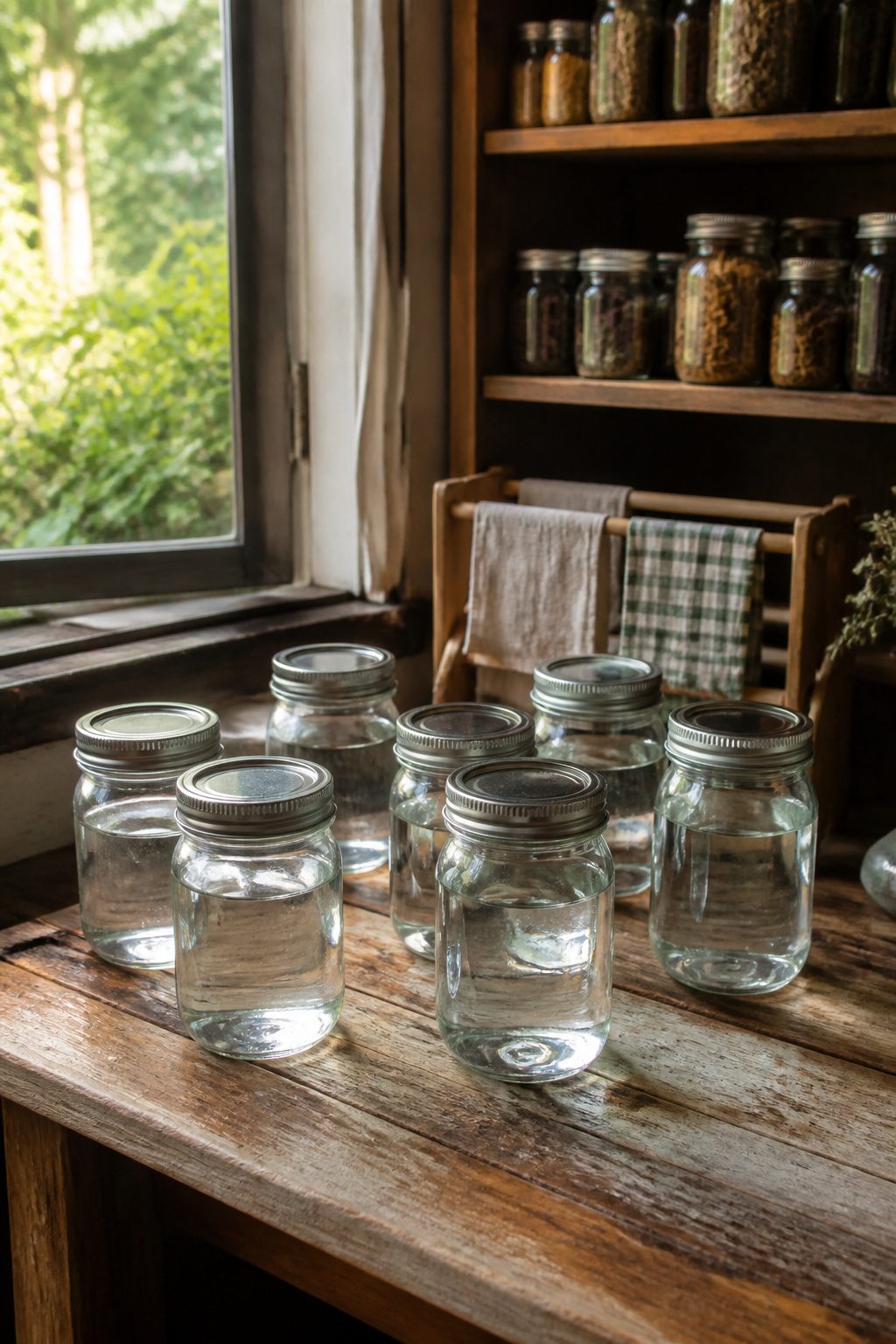
Once the boil is done, patience becomes the next step. Let the water cool naturally rather than dumping in ice or cold water to speed things up; that invites contamination from whatever source that water came from. The CDC and most guidance agree on this point, though one hospital source notes it typically takes about 30 minutes to cool completely, so planning ahead helps.
For storage, clean and sanitized containers with tight covers are what keep the work from going to waste. Glass mason jars with new lids are what I reach for; they seal well, leave no plastic taste, and let me see the water inside at a glance. Keeping those lids sealed tight between uses matters more than most people think. An open container on a counter is just waiting for airborne dust, hands, or worse to find its way in.
What Boiled Water Works For
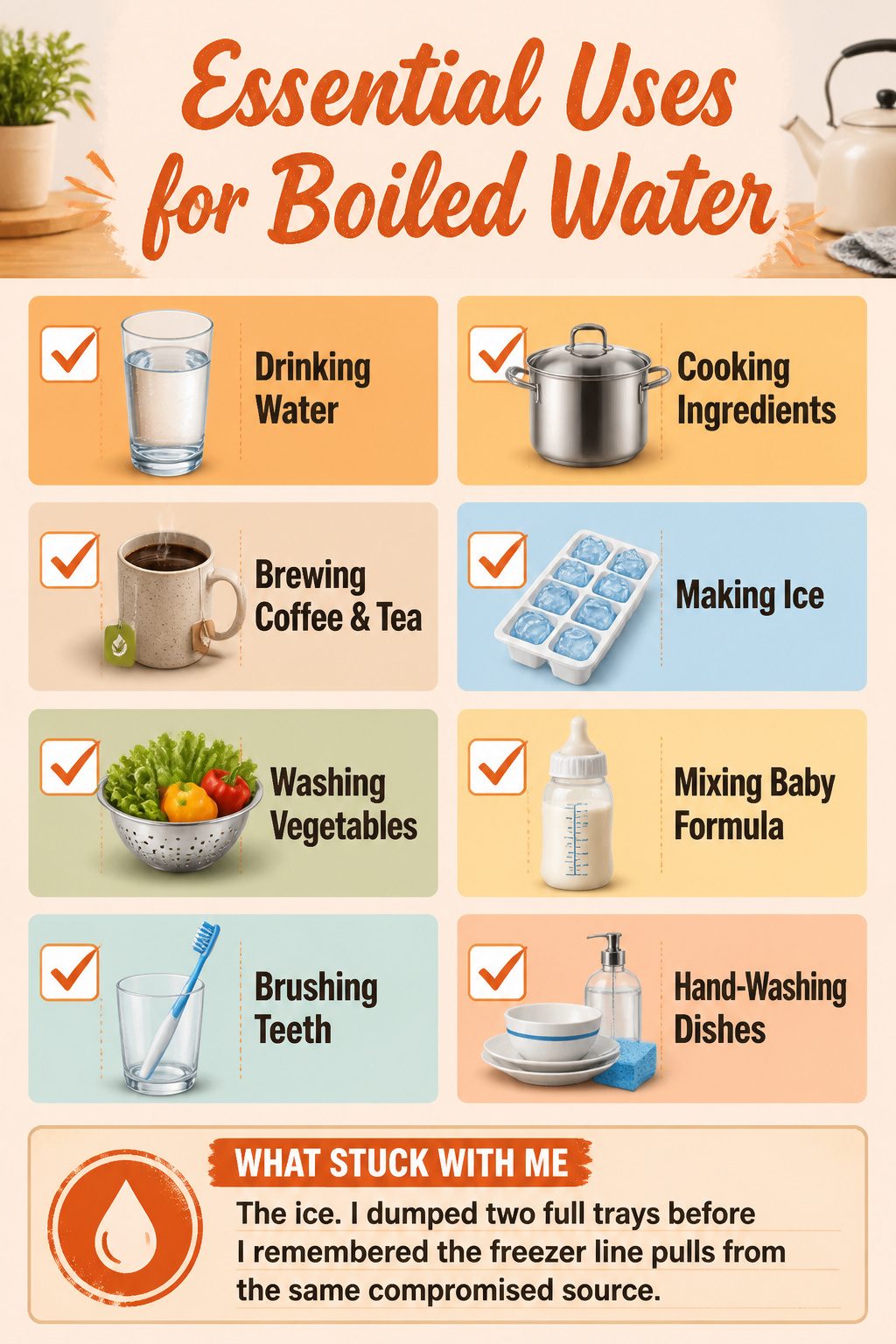
A boil-water order stretches further than the kitchen sink. These are the uses that actually matter, and a few that caught me off guard when a main break left me boiling for a full week:
- Drinking — obvious, but easy to slip up when you’re thirsty and the tap looks fine
- Cooking — boil it first unless the recipe itself boils for a minute or more
- Coffee and tea — the heat of brewing is not enough; start with boiled water
- Ice making — freezer trays need boiled water too, and skip the refrigerator dispenser entirely
- Washing raw vegetables — this one surprised me; I had never thought about what clings to lettuce
- Mixing baby formula — only boiled or bottled water, or use ready-to-use formula instead
- Brushing teeth — another surprise; a swallowed trace is all it takes
- Hand-washing dishes — dishwasher with a sanitizing cycle or final rinse above 150°F works; otherwise rinse in warm water with a tablespoon of bleach and air dry
What stuck with me that week was the ice. I dumped two full trays before I remembered the freezer line pulls from the same compromised source.
What Boiling Kills and What It Does Not
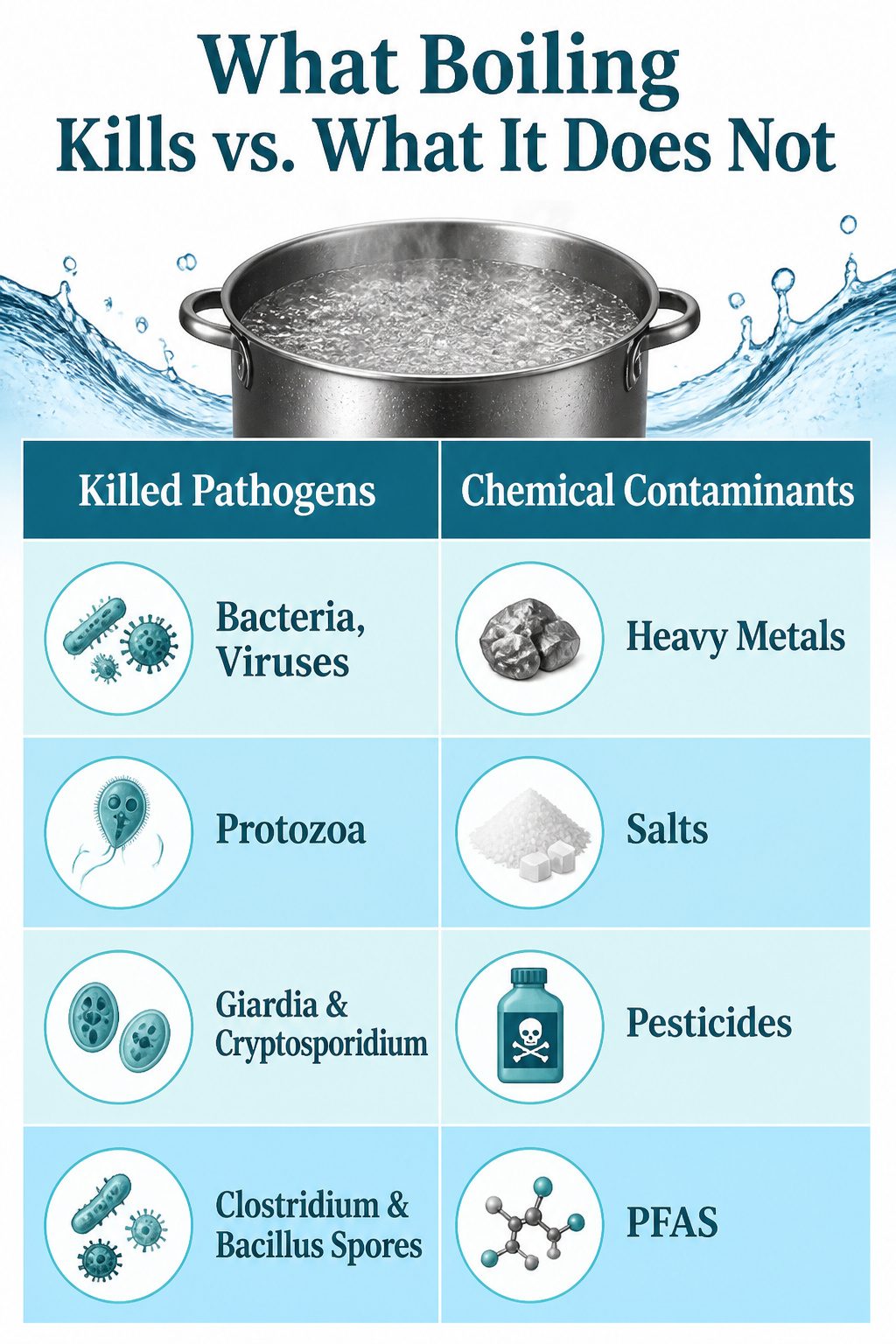
Boiling water at a rolling boil for one minute kills bacteria, viruses, and protozoa. Giardia and Cryptosporidium die at temperatures well below 212°F; studies show 162°F for one minute or 144°F for two minutes renders Cryptosporidium oocysts non-infectious. That is pasteurization, not sterilization, and the distinction matters. Clostridium and Bacillus spores can survive boiling, but waterborne pathogens do not.
What boiling does not do is remove heavy metals, salts, pesticides, or PFAS. Those carbon-fluorine bonds in "forever chemicals" will not break from household heat. I learned this the hard way during a 2019 boil advisory, filling jugs from the tap while assuming the rolling boil handled everything. The water was biologically safe and still full of whatever the industrial upstream had left behind.
Boiling or disinfection will not destroy other contaminants, such as heavy metals, salts, and most other chemicals.
If your water carries chemical contamination, boiling is the wrong tool. You need filtration certified for the specific contaminant, or a different water source entirely.
When a Boil Water Advisory Hits
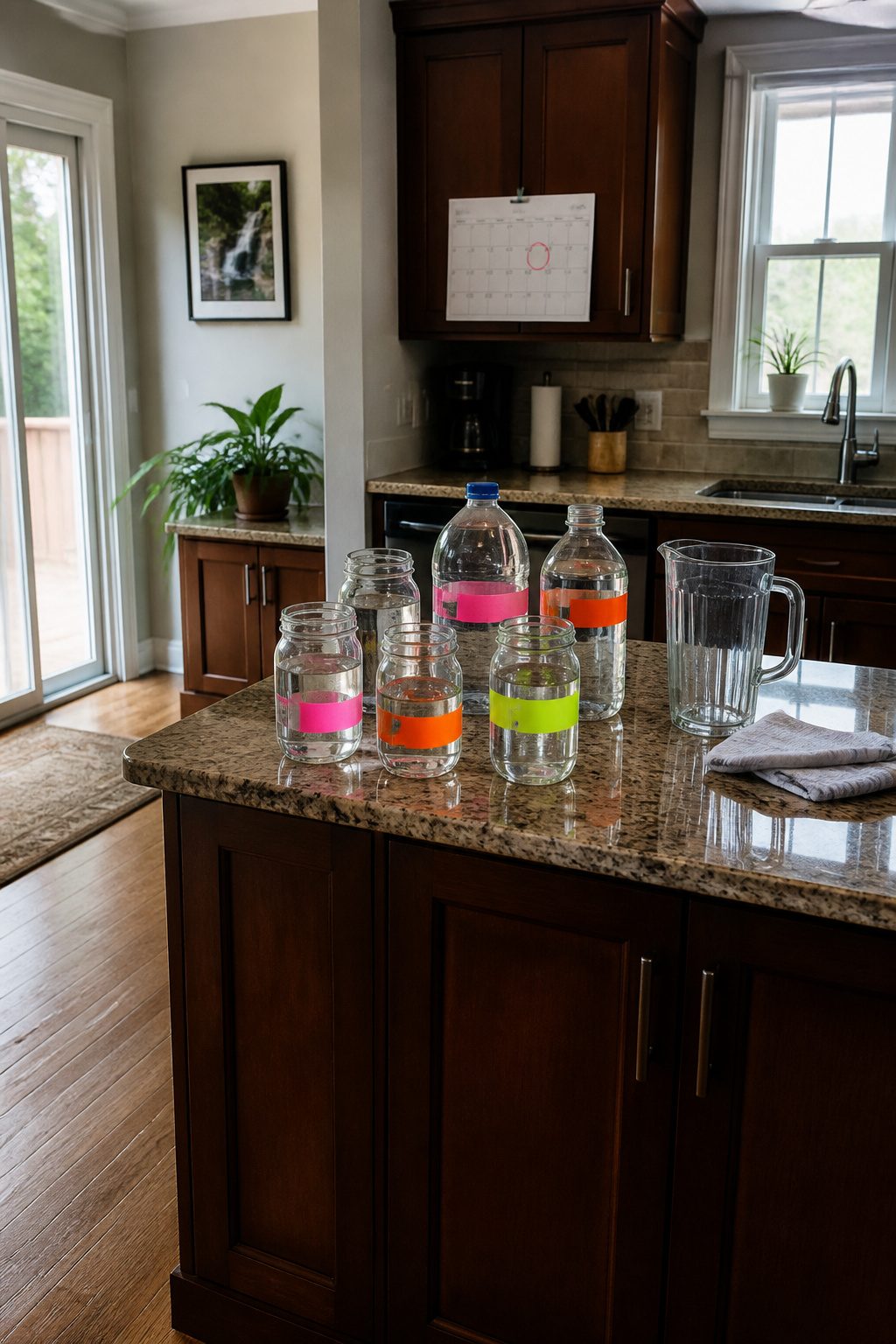
A boil water advisory means your community’s drinking water has or could have germs that can make you sick. Local health officials issue these when pressure drops in the distribution system, treatment gets disrupted, or flooding and severe weather introduce contamination. The standard response is a full rolling boil for one minute, then cool before use.
Ice machines connected to your water line keep running during an advisory, but that ice is not safe. Freezing does not kill bacteria; it only pauses them. When the ice thaws in your glass, those pathogens become active again. The same rule applies to water from your refrigerator dispenser. Toss any ice made during the advisory period.
Most home water filters, including pitcher filters, do not remove biological contaminants. Run tap water through them and you still need to boil it. The advisory typically lasts until tests confirm the water is safe again, at which point officials will notify you and may tell you to flush your pipes before drinking. Until that notice comes, every use that ends in your mouth or on raw food needs boiled or bottled water. That covers coffee, tea, mixed drinks, ice, washed vegetables, and even the water you brush your teeth with.
Fixing the Flat Taste
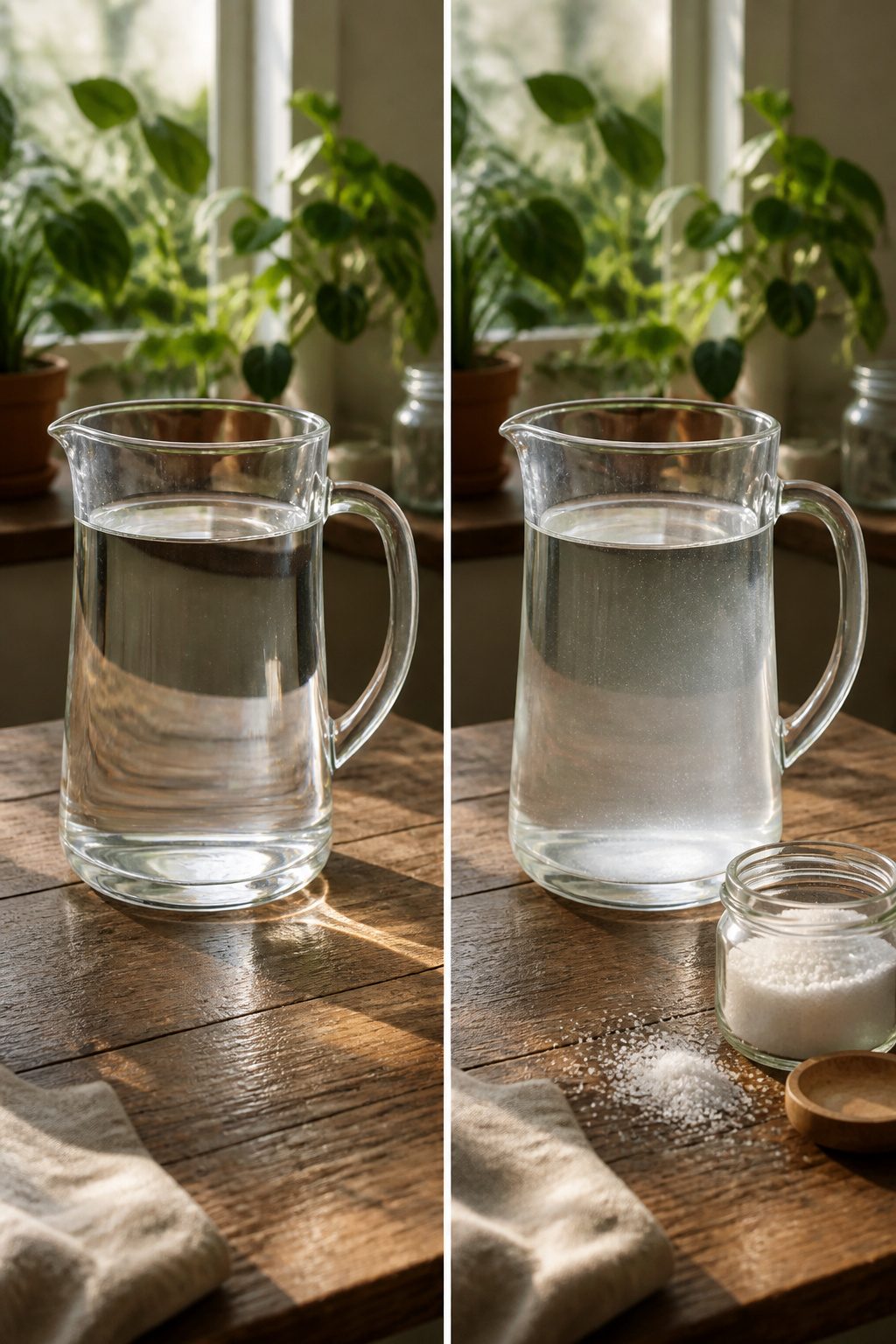
Boiled water tastes flat because dissolved oxygen and carbon dioxide escape during the boil. The water is safe, but drinking it feels like sipping from a stagnant pond.
Two fixes are worth trying. A pinch of salt per liter replaces some of the missing mineral edge. Or you can pour the water between two clean pitchers a few times to reintroduce air and restore some bite.
I ran both methods side by side with the same batch of boiled water. The salted version tasted acceptable immediately, but I kept noticing the salt more than I wanted. The aerated water took two minutes of pouring back and forth, plus a couple hours of sitting, yet it came closer to what came out of the tap before I boiled it. I now keep a spare pitcher on hand and aerate every time.
When You Cannot Boil
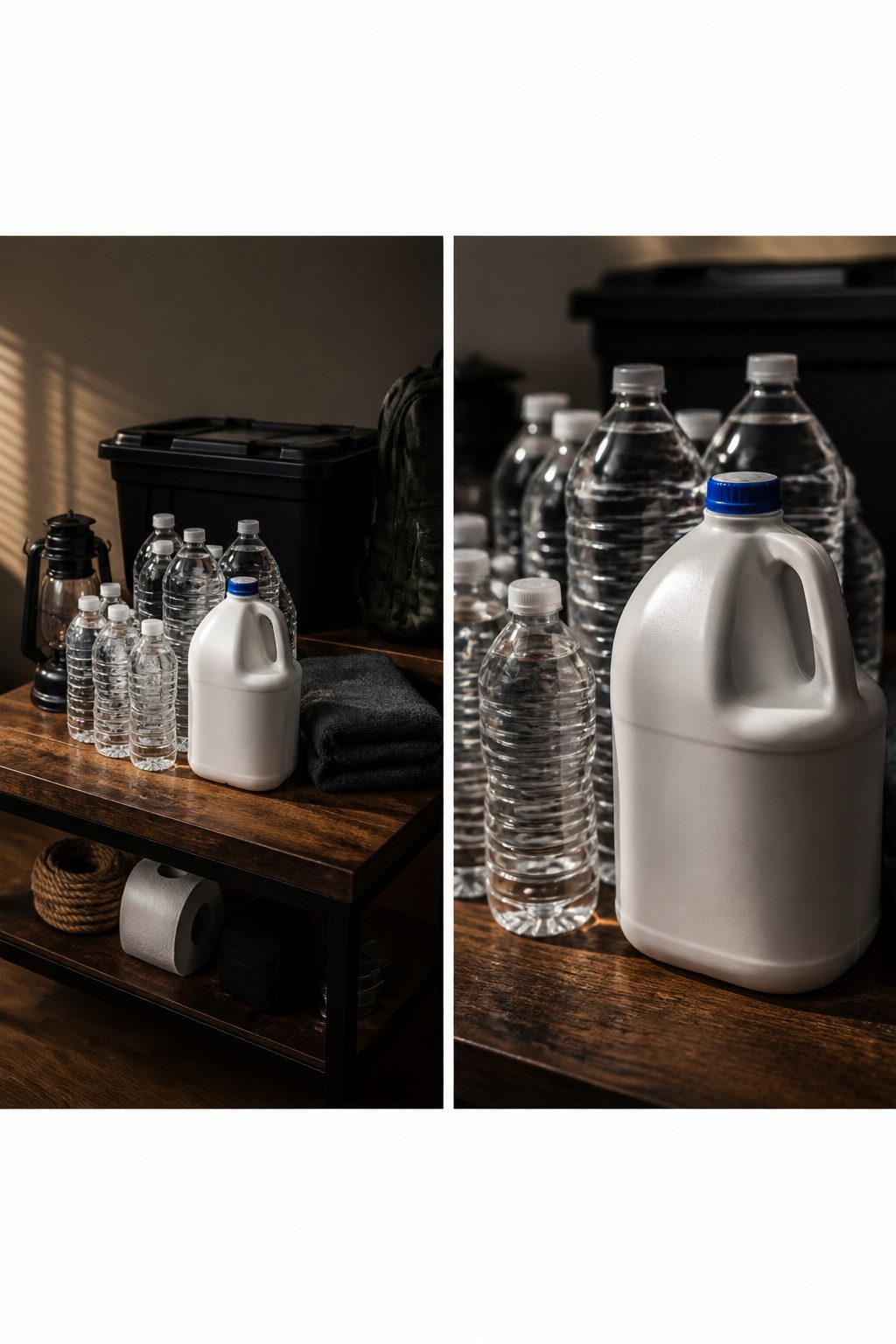
Sometimes the stove is out, the gas is off, or you are somewhere with no flame at all. Bottled water is the first fallback, and the only one that matches boiling for reliability. Keep a few gallons on hand, rotated so they do not sit past their date.
Chemical disinfection works when the bottles run out. Regular, unscented household bleach, the kind with 6% or 8.25% sodium hypochlorite, is what you want. For clear water, add 8 drops of 6% bleach, or 6 drops of 8.25% bleach, per gallon. Double that if the water is cloudy or very cold. Stir it, then let it stand for 30 minutes. A slight chlorine smell means it worked; if there is none, repeat the dose and wait another 15 minutes.
These methods are backups, not equals. Bleach handles bacteria and viruses well enough, but it will not touch some parasites the way a rolling boil will, and the taste takes getting used to. I keep bleach in my kit, but I reach for it only when the pot stays cold.
Minerals and Long-Term Use
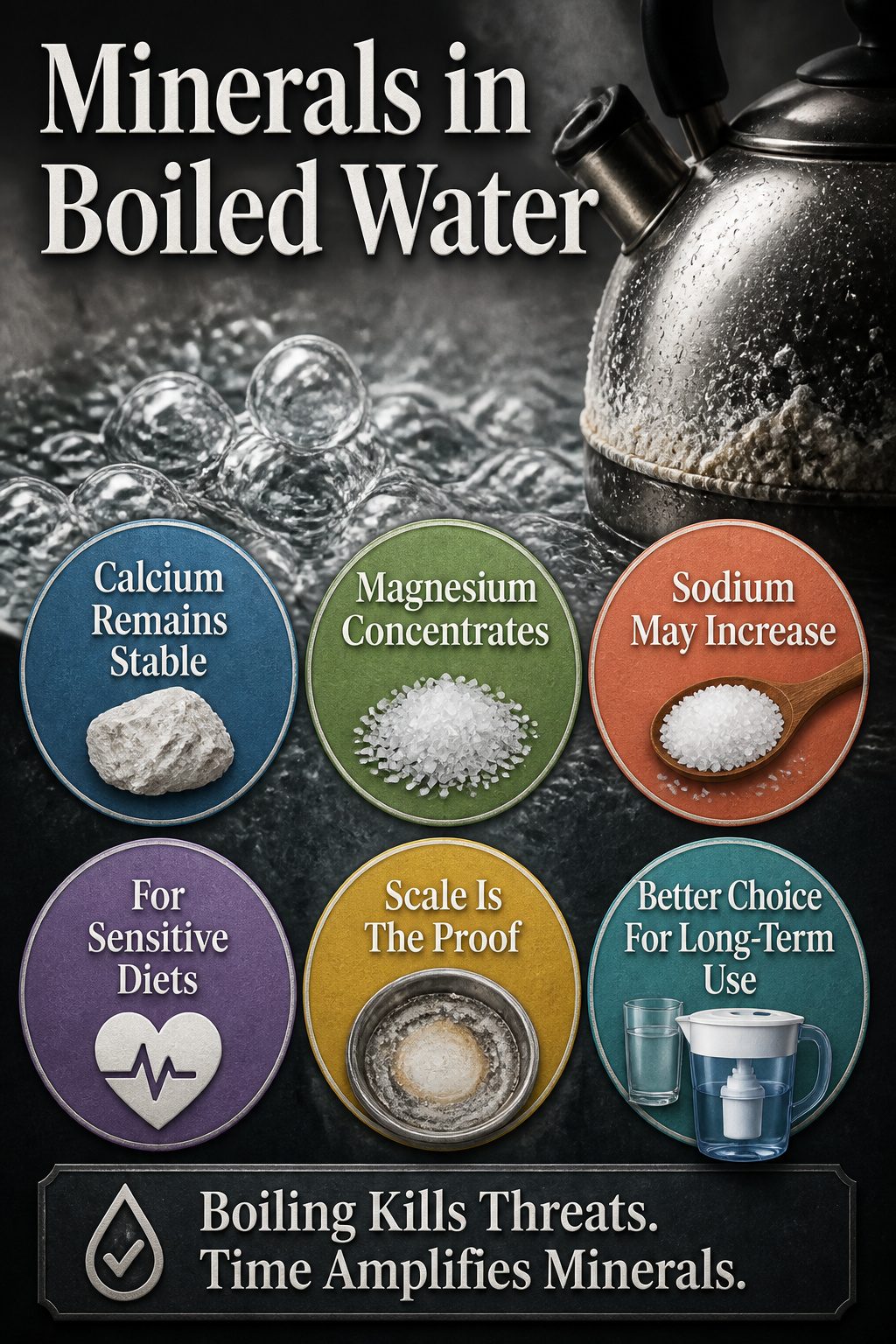
Boiling water for safety leaves every mineral right where it was. Calcium, magnesium, sodium, and the rest stay stable through the heat, and as steam escapes the concentration only climbs. For most people this is harmless, even beneficial. For anyone on a sodium-restricted diet or managing specific kidney or heart conditions, that concentrated mineral load can become a real problem over months of relying on boiled water as a primary source.
The scale on your kettle is the visible proof. What crusts the pot is the same calcium and magnesium still sitting in your cup, just more of it per ounce than before you lit the burner. This is not a reason to skip boiling when pathogens threaten; it is a reason to treat boiled water as the emergency tool it is, not a daily habit for the mineral-sensitive.
If you fall into that group and face a long-term boil-water advisory, a basic pitcher filter or distilled water run becomes the better path for routine drinking, with boiling reserved for the times the tap runs cloudy after a storm. The kill step matters more than the mineral count in the moment; the count matters more the longer the moment stretches.
Frequently Asked Questions
How long do you need to boil water to make it safe?
Bring water to a full rolling boil and keep it going for one minute at sea level. At elevations above 5,000 feet, extend that to three minutes. The rolling boil, not the starting temperature, is what matters; cold stream water and hot tap water both need the same violent surface churning before you start counting.
What should I do if my water is cloudy?
Let it sit until sediment settles, then pour the clearer top layer through a clean cloth, paper towel, or coffee filter. Particles in cloudy water can shield pathogens from heat, so skipping this step risks survivors even after boiling.
Can I use boiled water for cooking?
Yes, all tap water used for cooking must be boiled first unless the recipe itself boils for one minute or longer. This also applies to coffee, tea, ice making, washing raw vegetables, mixing baby formula, and even brushing your teeth.
Does boiling water remove chemicals?
No. Boiling kills bacteria, viruses, and protozana but does nothing to heavy metals, salts, pesticides, or PFAS. For chemical contamination, you need filtration certified for that specific contaminant or an entirely different water source.
What is a boil water advisory?
It is a notification from local health officials that your tap water may contain germs that can make you sick, usually due to pressure drops, treatment disruption, or severe weather. During an advisory, bring tap water to a rolling boil for one minute before any consumption or use with raw food, or use bottled water instead.