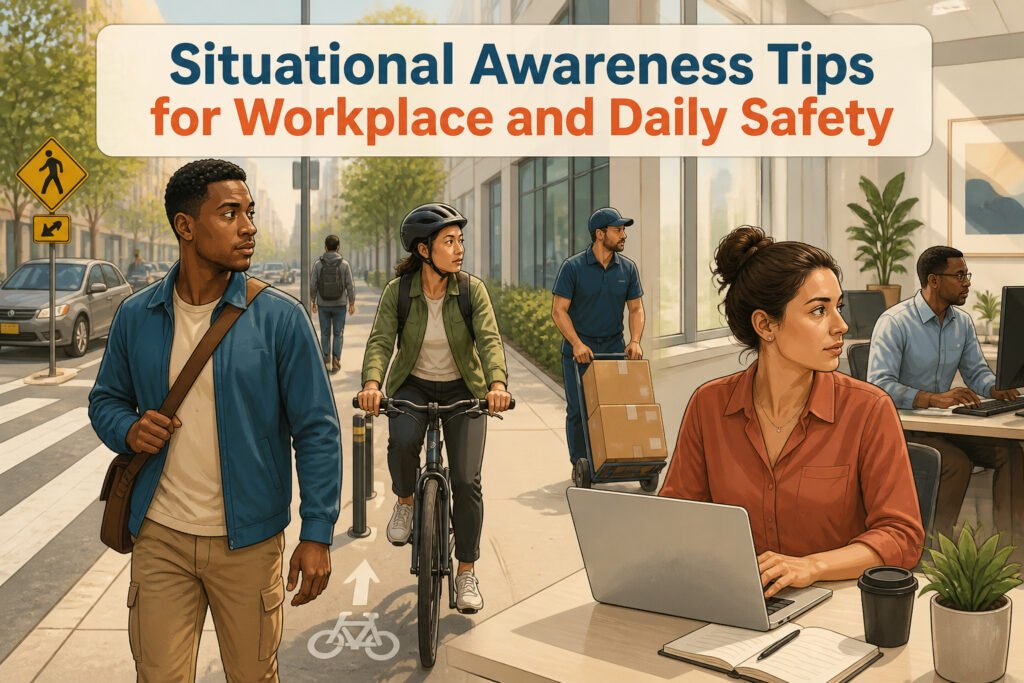
Situational awareness is the ability to perceive, understand, and anticipate events in your environment, and it collapses the moment you stop treating it as a skill rather than an instinct. The SLAM method, developed for industrial safety and now used in protection training worldwide, breaks it into four repeatable actions: Stop, Look, Assess, Manage. Most people scan without comprehending, or comprehend without projecting what happens next, and that gap between noticing and acting is where accidents live.
The SLAM Method
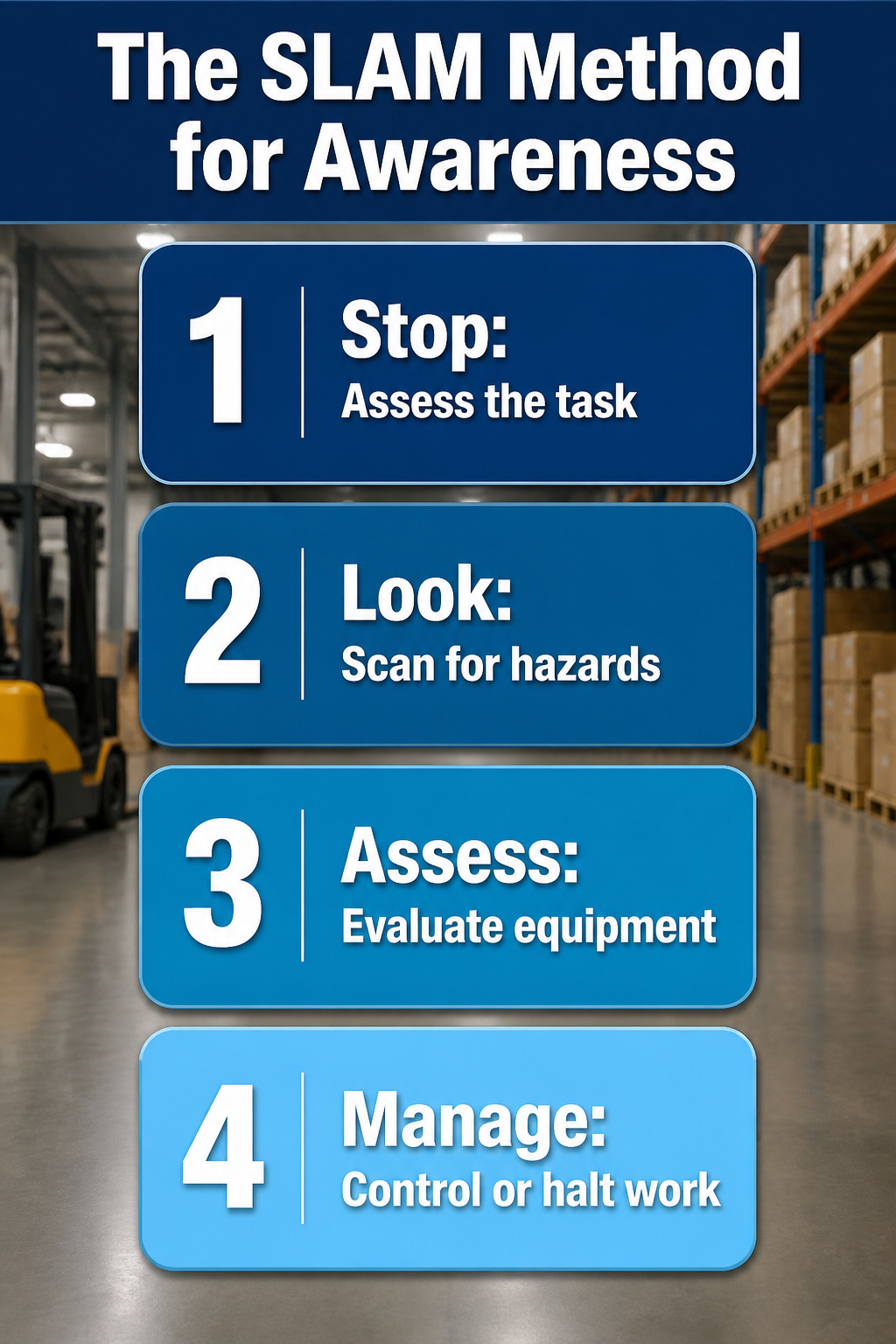
The SLAM method splits situational awareness into four repeatable actions: Stop, Look, Assess, Manage. A forklift operator running this sequence pauses before moving cargo, scans the path, spots the hazard, then reroutes or waits. That small loop prevents the collision that rushing straight into the task would not.
Stop means asking whether the task is new, changed, or unfamiliar enough to need a refresher. Look means observing the work area before, during, and after for hazards that shift as the job unfolds. Assess means deciding if the equipment on hand can handle the risks present. Manage means controlling what you can, halting work when you cannot, then following up to see what worked and what needs changing.
Four separate safety frameworks treat SLAM as a core technique, though they weight the steps differently. Some emphasize the upfront pause; others push harder on continuous scanning. Either way, the sequence turns awareness from a vague goal into something you can actually run through on the warehouse floor or walking into a parking garage at night.
Staying Vigilant
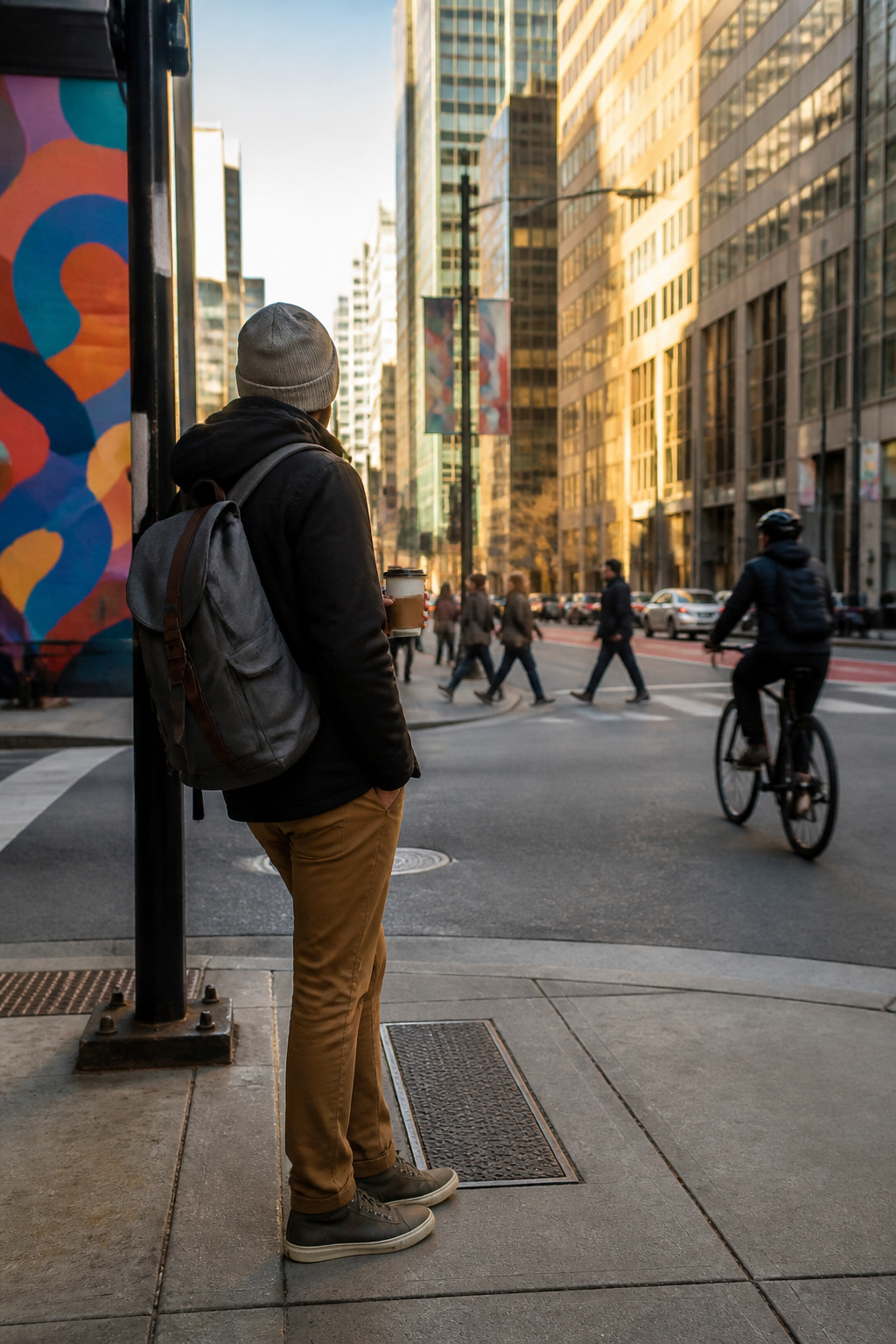
Sustained vigilance is not a state of hypervigilance. It is a habit of keeping about 80% of your attention on your surroundings while the remaining 20% handles the task at hand. Most people invert that ratio without noticing. The phone comes out, the earbuds go in, and suddenly 60% of awareness is on a screen while 40% pretends to cover the sidewalk, the parking garage, the crosswalk signal.
Scanning is the practical move. Eyes lift every few seconds, check faces and hands and exit paths, then return to the conversation or the email. In unfamiliar public places, that scan rate should probably double. Attackers gravitate toward oblivious targets; the phone in your hand broadcasts exactly that profile.
Complacency is the harder enemy because it disguises itself as competence. The same route to work, the same lobby, the same elevator, and after three months the brain stops logging what it already thinks it knows. Routines breed blindness. Construction crews and industrial sites see this clearly: deadlines and fatigue chip away at focus until one mistake costs someone a limb or worse. The fix is not heroic concentration but scheduled resets. A breath, a deliberate look around, a question asked fresh: what is different from ten minutes ago?
Calm sustains the habit better than anxiety ever will. Panic narrows vision; tunnel vision misses the second threat, the alternate exit, the colleague who froze. Deep breaths, conscious muscle relaxation, a full night’s rest beforehand, these keep the scan wide and the judgment intact. The goal is not to live on edge. The goal is to make the edge unnecessary.
Entry and Exit Points

Locate the exits before you do anything else. In a restaurant, that means the kitchen pass-through and the marked door by the restrooms, not just the one you came in through. Parking garages take longer: the stairwells are usually tucked behind concrete corners, and the elevator lobby is a trap if the power cuts. Office buildings are easier on paper, harder in practice, because the fire plan on the wall near reception rarely matches the furniture layout on the actual floor.
This habit sits apart from general scanning. Four distinct practices treat entry and exit mapping as its own drill, not a casual glance around. The difference is commitment: picking the alternative route before you need it, checking whether a door is blocked by a cart or chained for the night, noting whether a window that could break is reachable and not painted shut. One approach treats windows as secondary exits and trains how to break glass properly, which only works if you have already spotted the tool or the weak point.
The cost of skipping this is time you do not have. The payout is measured in seconds, but those seconds decide whether you reach the stairwell before the crowd does.
Reading Body Language
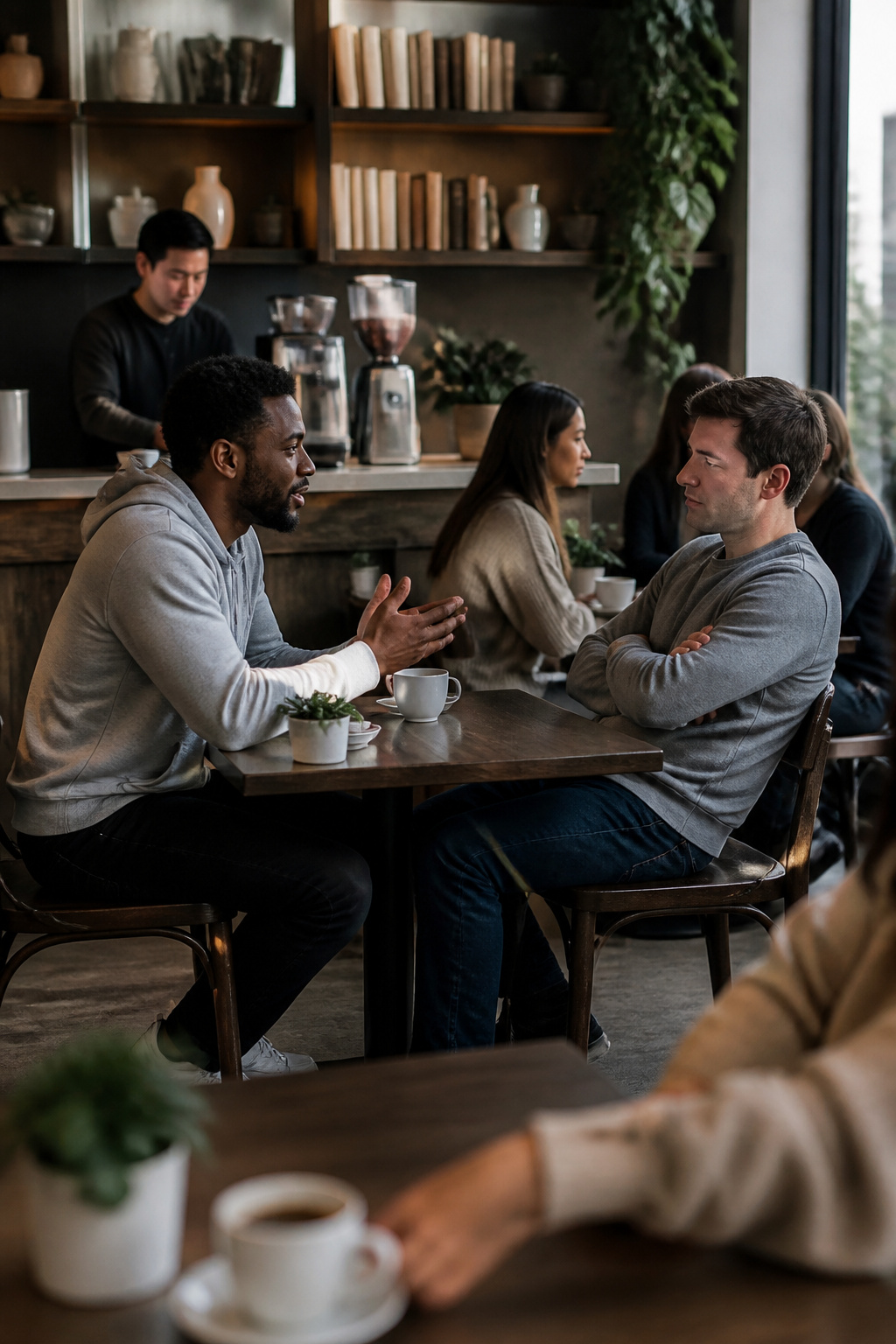
Posture changes are the first thing that pulls my eye when I’m watching a crowd. Someone shifting their weight onto the balls of their feet, shoulders squaring toward a target, that readiness-to-act stance described in protection training, it all reads like a sentence written in muscle tension. The gait matters too: head down with hunched shoulders and clenched fists has signaled aggression in every incident I’ve studied, though I once read that exact combination into a guy who was just late for a bus and furious about it. That taught me to watch where the hands go before I commit to a read. Hands disappearing into pockets or behind a back, or fingers balling up, deserve the longer look. Group dynamics are harder. A cluster that goes from loose shoulders to closed arms and broken eye contact with outsiders, that’s the mood shift that precedes trouble, and I missed it once at a bar when I was locked onto one loud drunk and didn’t notice his three friends go quiet. Clothing that doesn’t fit the weather, bulky layers on a warm day, still makes my list because of how often it shows up in threat indicators, though I’ve also learned that mental health crises and simple poverty can wear the same outfit. The real skill isn’t cataloging cues; it’s holding multiple possible meanings for the same signal until context settles it.
Trusting Your Instincts

Gut feelings are not magic. They are pattern recognition, built file by file from every close call you have survived. Daniel Kahneman called intuition exactly this: recognition and nothing more. The brain stores danger in mental folders called schema. Touch a hot stove once, and that folder stays open for life. The more complete your folders on a given situation, the faster you orient and decide. This is the OODA loop, coined by Air Force Colonel John Boyd: observe, orient, decide, act. Under pressure, your brain skips the deliberation and pulls the matching slide from memory.
The catch is that humans are the only animal that second-guesses the alarm. A gazelle flees; we talk ourselves into staying.
I have done both. The time I listened saved me nothing dramatic, just a parking garage that felt wrong. The elevator was out, the stairwell smelled of burned wire, and two men were waiting where they had no reason to be. My shoulders tightened before my head caught up. I walked back out, took the longer ramp, and never knew what I avoided. The time I ignored the signal cost me a broken nose and a stolen wallet in a train station I had been warned about by the same tightness in my chest ten minutes earlier.
Kahneman’s research splits thinking into two systems. System one handles reflex, like knowing 2 + 2. System two does deliberate work, like 17 times 34. The brain defaults to system one whenever possible to save energy. Intuition lives there, and it is usually right in two ways: it reacts to something real, and it acts in your interest. But it is also fallible. The baseball bat and ball costing $1.10 with the bat a dollar more than the ball? System one says ten cents. The correct answer is five.
Time allowing, break the default. Orient fully before you move toward what set the alarm off.
Limiting Electronic Distractions
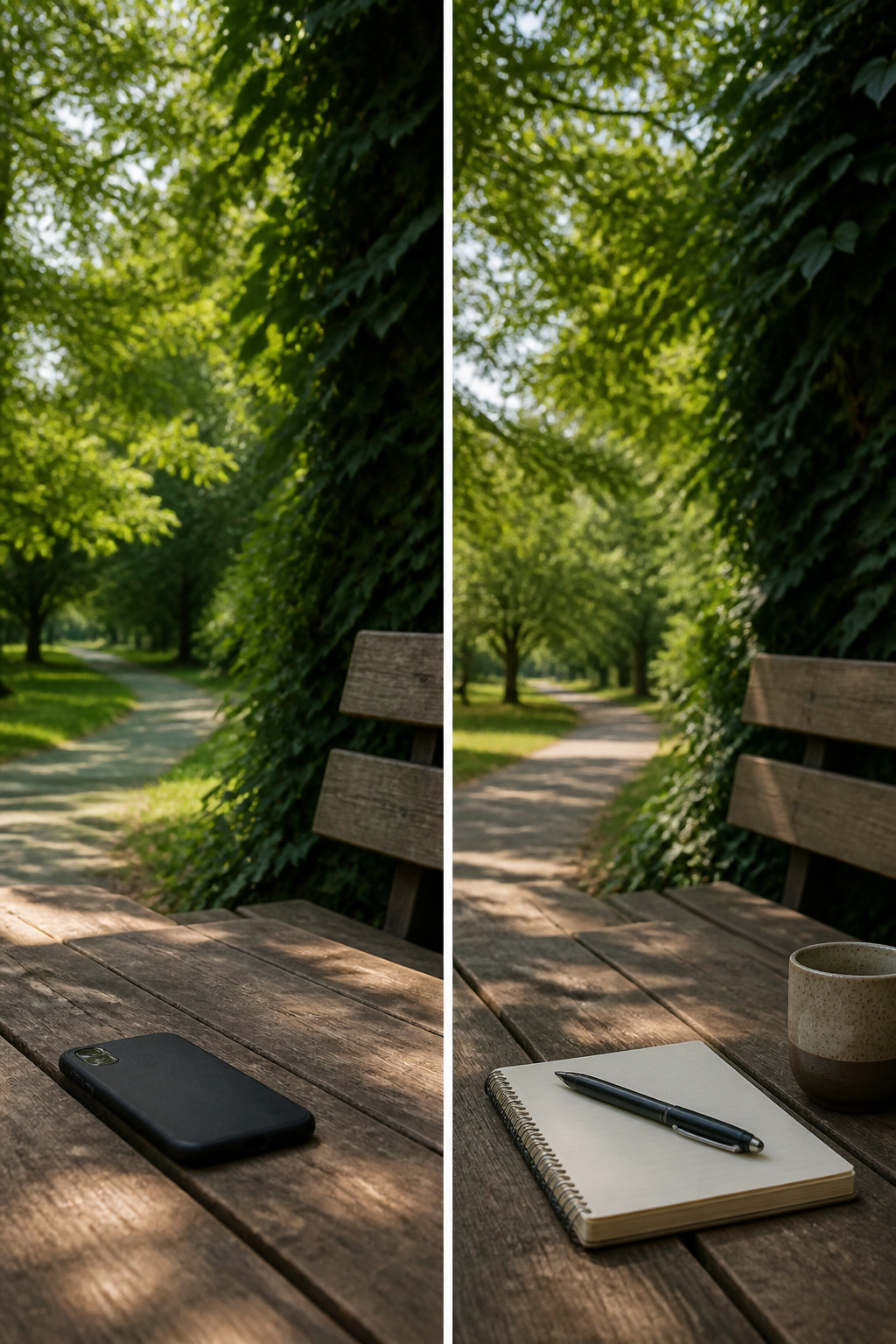
Phones pull attention downward in a way no other distraction does. A notification, a map check, a text back: each one carves out blind seconds where the environment keeps moving without you. The research on workplace injury backs this up. Multitasking with a device drops efficiency and raises error rates; heavy equipment and dangerous substances do not offer an undo button. That is not general vigilance. It is a specific, removable drain.
My own rule in public is simple. The phone stays in a pocket until I have stopped moving and chosen a safe spot. Standing against a wall inside a building, not on a street corner. Sitting on a bench with my back to something solid, not at a crosswalk waiting for the light. No walking and scrolling, no headphone volume that masks traffic or footsteps. Warehouses and high-risk work zones already treat this as policy: phones stored away during tasks that demand focus. The same logic applies to a parking garage at night or a crowded platform during rush hour. The device is not the enemy, but the divided attention it creates is, and that division is voluntary until it is not.
Regular Safety Drills
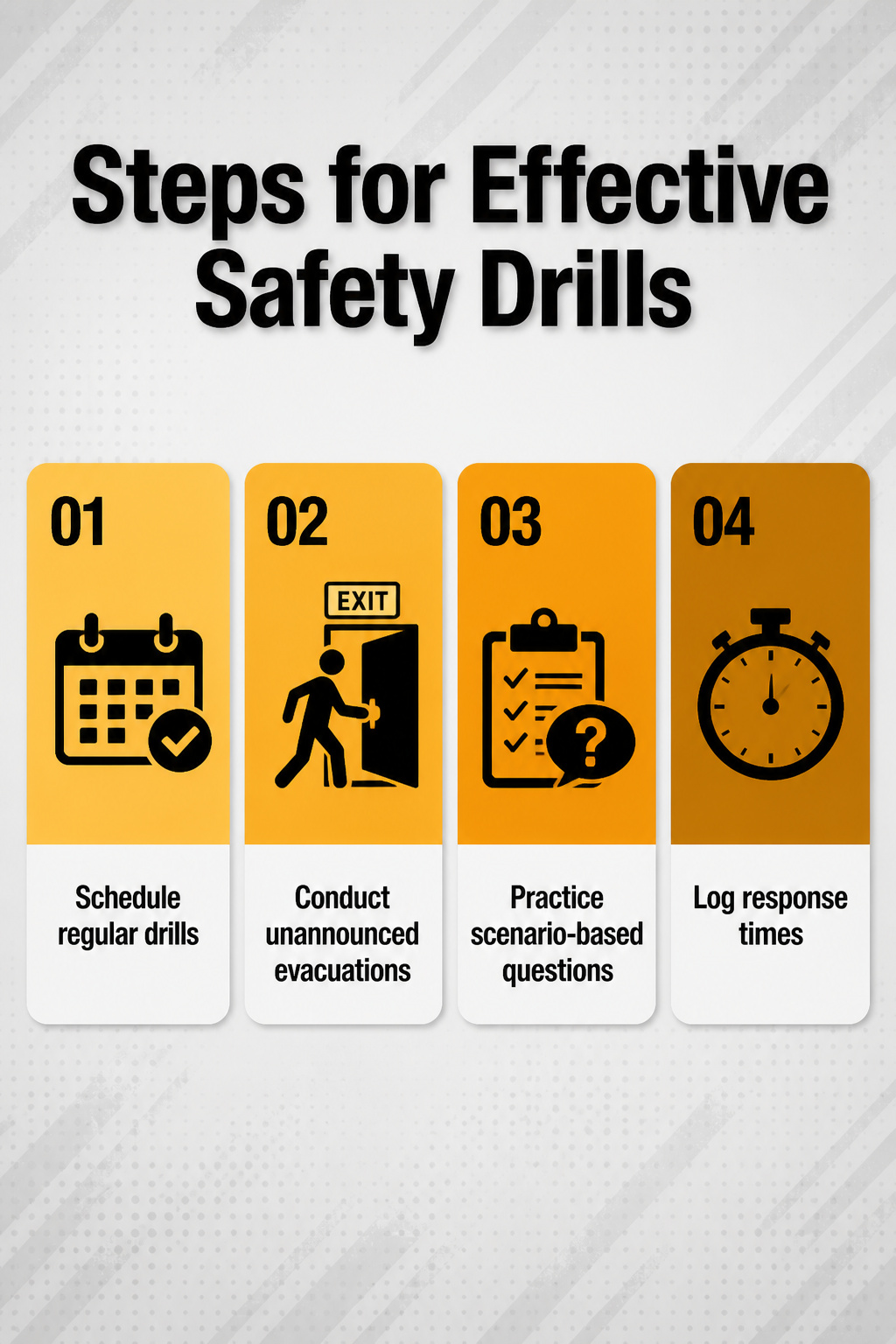
Muscle memory fades faster than most people expect. I run fire drills at the office twice a year, plus unannounced evacuation walks where I time how long it takes to reach the secondary rally point without using the main stairwell. Six months back, life got busy and I skipped both cycles. The next time the building alarm went off for real, a water heater issue two floors up, I stood in the hallway for a solid ten seconds trying to remember whether left or right led to the alternate exit. That hesitation is the gap between knowing and automatic response, and it opens wider than you’d think.
Scenario-based practice matters more than simple walkthroughs. I drill the malfunction questions too: equipment shuts down, who gets called first, which switches kill power to the line. OSHA requirements get you the posted routes and the annual fire drill. They do not get you the split-second decision when the posted route is blocked and the exit strategy has to adapt on the fly.
The honest limit here is measurement. Training improves retention, and continuous practice sharpens response, but quantitative proof of exactly how much drills reduce incident outcomes remains thin. Organizations track completion rates and response times in exercises, yet isolating drill frequency from other safety variables in real emergencies is difficult. I still drill because the alternative, that ten-second pause, proved costly enough.
Recognizing Team Member Changes

Behavioral shifts in the people around you are early warning signals most situational awareness guides skip entirely. A coworker who normally locks up the cash drawer without prompting starts leaving it open, or a roommate who keeps a strict sleep schedule starts nodding off mid-conversation. Fatigue and stress in one person degrade safety for the whole group, because missed cues don’t stay personal; they become shared risk.
Watch for the specific changes: tone flattening, eyes losing focus during routine tasks, irritability over minor friction, or someone skipping steps they never used to skip. These are not personality problems to manage; they are environmental data to act on. A well-rested person notices hazards a burned-out one walks past.
The practice is active observation of people you already know, not strangers. Crossed arms or broken eye contact with a friend carries meaning because you have a baseline. Avoid multitasking during handoffs or shared tasks; it costs you the subtle deviations that matter. When you spot the shift, the move is simple: take on the task they are dropping, or get them a break before the error happens.
Practicing Prediction

The hardest part of situational awareness is not seeing what is happening right now, but guessing where it goes next. Most training stops at observation: notice the exit, spot the odd behavior, put the phone down. Projection, the third piece, gets mentioned least and practiced least, yet it is the one that buys you seconds or minutes before trouble arrives.
I build this by running a quiet what-if when something shifts from baseline. The Uber pulling up at a high school near dismissal, a student climbing out with a long black case, the driver already leaving. Each piece alone means little; strung together, they point to one outcome that demands action. The security officer in that example did not wait for confirmation. Prediction means acting on incomplete information and accepting the cost of being wrong.
I have been wrong plenty. A man pacing outside a coffee shop last winter had me halfway to the side door before I realized he was waiting for a rideshare, not casing the place. The mistake costs nothing if you keep it internal: shift position, watch another minute, let the scene resolve without making a scene yourself. The practice is not about paranoia. It is about keeping the mental file open long enough to test your guess against what happens next.
These predictions may be imperfect, but they can offer potentially life-saving glimpses into the future.
The payoff is not in the guess itself. It is in the habit of asking the question.
Sleep and Stress Management

Seven to nine hours of sleep is the range where awareness stays sharp enough to matter. Drop below that, and the gap between noticing a hazard and reacting to it widens in ways caffeine will not close. Heat, stress, and overexertion can drag someone into that same fog even when the hours look right on paper, which is why tracking errors against sleep hours changed how I treat the numbers.
I started logging mistakes at work, minor ones first: a missed email, a wrong turn on a familiar route, a door left unlocked. After three months the pattern was hard to argue with. Under six hours, the incidents clustered. Between seven and eight, they nearly disappeared. I had been telling myself five and a half was "close enough." The log said otherwise.
Fatigue is not always obvious to the person feeling it. The coffee masks the lag; the deadline urgency masks the lapse. Employers who frame check-ins as safety rather than discipline get more honest reporting, and the same applies to self-monitoring. Breaks, mindfulness practice, and stress management are not soft skills here. They are maintenance for the system doing the watching. A well-rested employee spots risks a burned-out one walks past. The difference is not marginal. It is the difference between a near miss and an accident worth reporting.
What Situational Awareness Actually Means
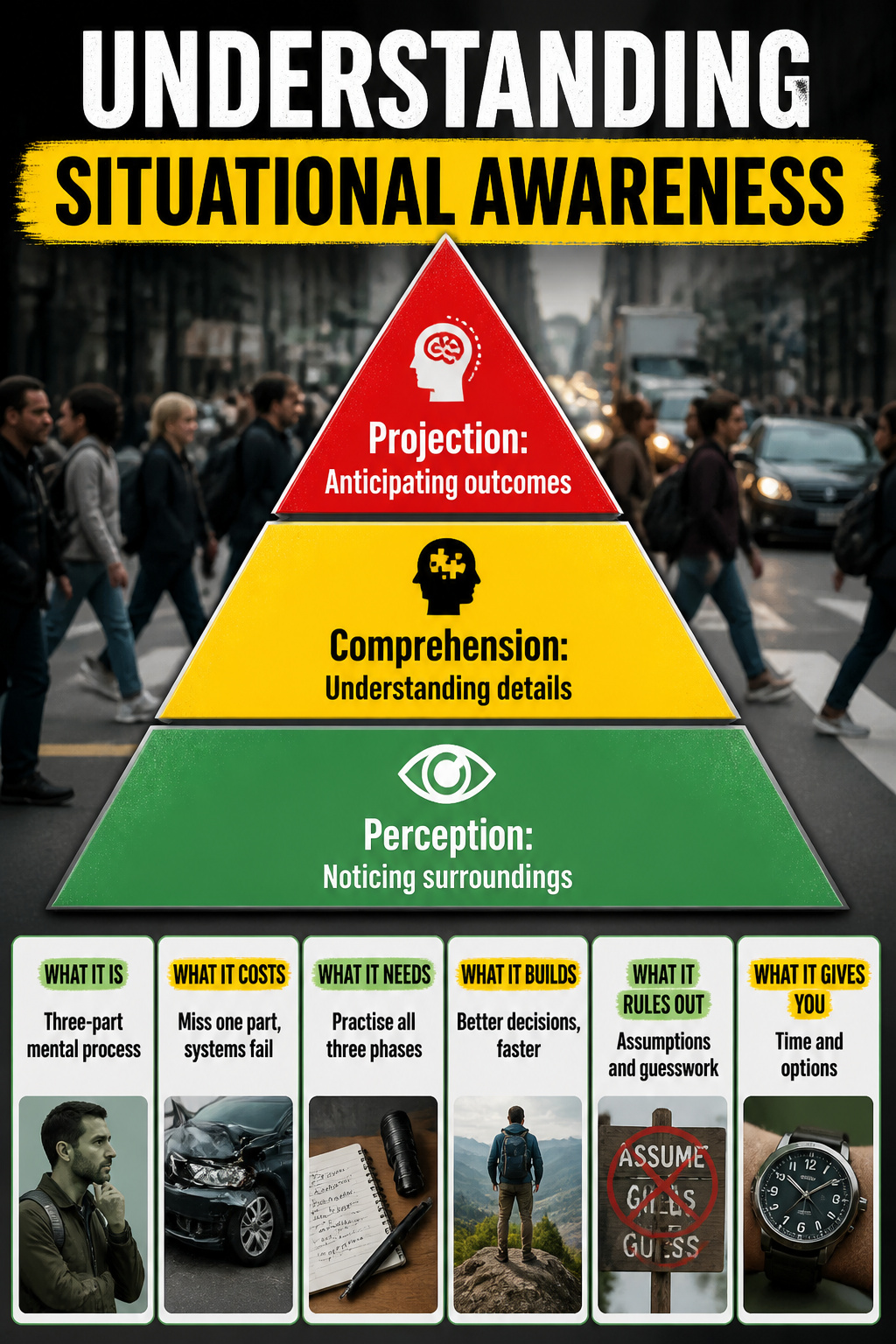
Most people who search for situational awareness tips already practice one piece of it without knowing the term. Situational awareness is the ability to perceive, understand, and anticipate events happening in your environment. That three-part definition breaks into perception (noticing the people, objects, and conditions around you), comprehension (grasping what those details mean together), and projection (anticipating what happens next based on what you now see).
The gap between someone who "notices stuff" and someone with trained awareness sits in the second two steps. A driver might see the pedestrian stepping off the curb, but comprehension means registering that the oncoming truck has not slowed, and projection means braking before the collision becomes inevitable. Miss any of the three, and the system fails: no observation leaves you blind, no comprehension leaves you confused, no projection leaves you reacting too late.
This is the foundation the practical tips build on. Without knowing the three phases, advice to "stay alert" stays vague. With it, you can diagnose your own weak point, whether that means scanning more deliberately, asking what a cluster of details signifies, or running the mental movie forward a few seconds to see where a situation heads.
The Cooper Color Code
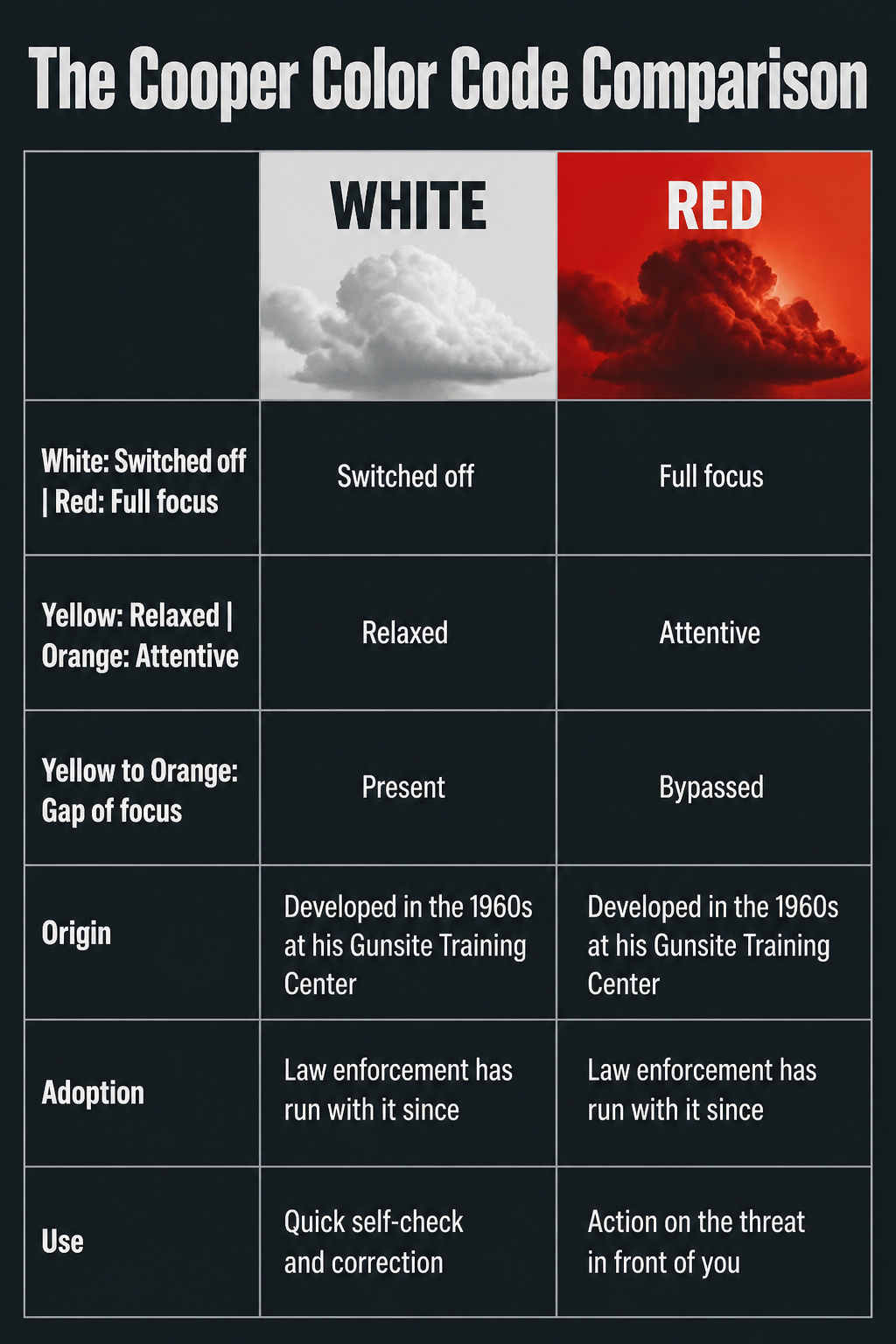
The Cooper Color Code gives four levels to check yourself against. White means switched off, asleep or zoned out, and it belongs at home, not in a parking garage. Yellow is the baseline for public spaces: relaxed but watching, ready to shift up or down. Orange locks your attention onto a specific problem, like someone following too close for too long. Red is action, full focus on the threat in front of you. Cooper developed this in the 1960s at his Gunsite Training Center, and law enforcement has run with it since.
The code is useful for catching yourself. Realizing you have slipped into white while walking through a crowd is a correction you can make in seconds. But it oversimplifies how the mind actually moves. Focus lock in orange can blind you to everything except the one threat, which is a feature when you need it and a liability when you do not. The jump from white to red, bypassing yellow and orange, is where panic lives; the model warns about that gap but does not close it. I treat the colors as a quick self-check, not a script.
Training That Sticks

Emotional stakes make training memories stick better than flat repetition. A drill that gets your pulse up, even slightly, stores the lesson in a deeper place than the same scenario walked through like a script. The research points this way, though the gap is real: no one has pinned a measured percentage improvement to emotional drills versus dry ones. That absence matters if you are deciding where to spend limited training hours.
What I track instead is behavior change the week after. Did the person who ran the drill spot the anomaly in the parking lot Tuesday? Did they report the propped door on Wednesday? Those markers tell me more than a post-test score. The pattern-match brain Chief Gasaway describes, searching memory under stress for what to do next, gets built from experiences that felt like something. A close call in training, a what-if that turns uncomfortable, the moment the scenario shifts and the room tenses. Those slide into the tray ready for recall.
I run three what-if variants after any drill, each one pressing harder on the same setup. The first is usually remembered. The third, where the stakes jumped, is the one they act on later. Make the third scenario the one that costs something. That is where the memory forms.
Communication Under Pressure
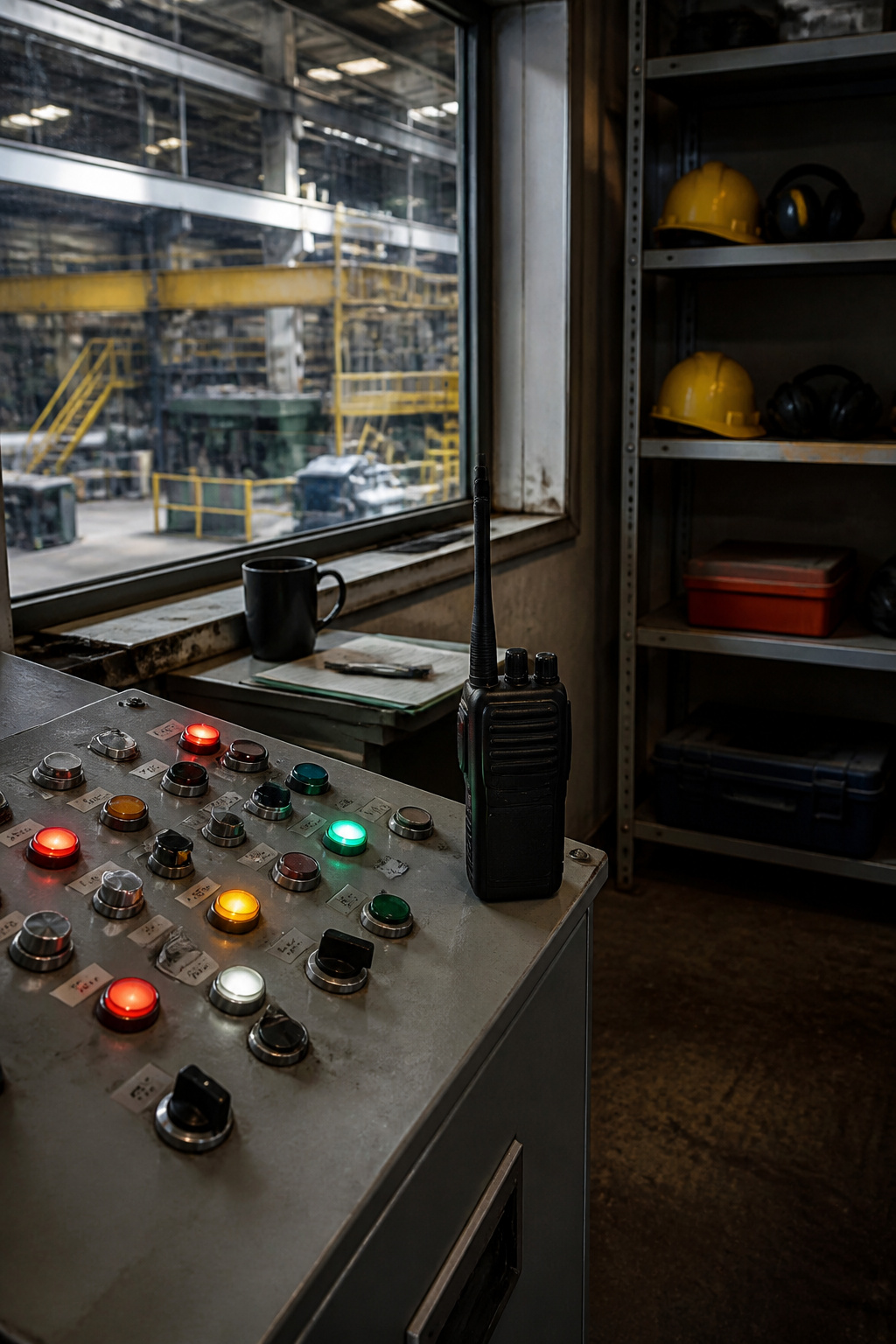
A warehouse floor radio call about a spill only works when the person on the other end actually says something back. Silence is not the all-clear; silence is an information black hole, and I have watched teams treat it like confirmation.
One afternoon years ago, a supervisor used a code word over the radio to signal a potential security concern in the building. Three people heard it. Two thought it meant "evacuate." One thought it meant "stay put and lock doors." Nobody repeated it back. The assumption that everyone shared the same mental picture turned a manageable moment into fifteen minutes of people moving in opposite directions, all of them sure they were right.
Shared awareness breaks down at the handoff. Verbally calling out hazards helps, but the loop only closes when someone acknowledges it in words. A two-way system with emergency notifications still fails if the culture treats "copy that" as optional. The routine lulls people; the hazard seems obvious to the person standing next to it, so they skip the step of making it obvious to everyone else.
The fix is boring and mechanical: state the hazard, state the location, wait for words back. No shorthand you have not drilled, no reading silence.
Frequently Asked Questions
What is situational awareness?
Situational awareness is the ability to perceive, understand, and anticipate events happening in your environment. It breaks into three phases: perception (noticing details), comprehension (grasping what they mean together), and projection (anticipating what happens next). Miss any phase and the system fails: no observation leaves you blind, no comprehension leaves you confused, no projection leaves you reacting too late.
How can I improve my situational awareness?
You improve it by practicing the SLAM method (Stop, Look, Assess, Manage), keeping about 80% of attention on your surroundings, running regular safety drills, and limiting phone use to when you are stationary in a safe spot. Sleep seven to nine hours, since awareness degrades measurably below that range. The habit that sustains all of this is asking what is different from ten minutes ago, which breaks the blindness routines create.
Why is situational awareness important?
It closes the gap between noticing a hazard and reacting before it becomes unavoidable. A driver who sees a pedestrian but also comprehends that the oncoming truck has not slowed can brake before the collision becomes inevitable. Without all three phases working, you end up ten seconds behind, trying to remember which way the alternate exit lies while everyone else has already moved.