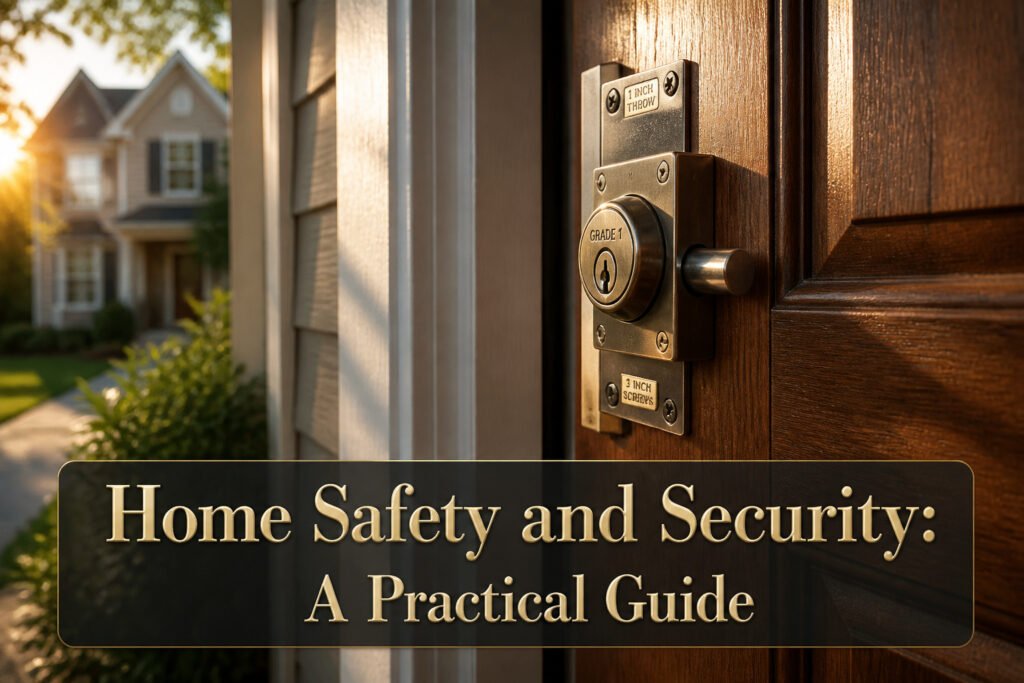
Safety and security at home in 2026 means pairing physical hardening with the judgment to know where it falls short. A Grade 1 deadbolt with a full 1-inch throw and 3-inch screws into the stud stopped a break-in at my door two years after a cheap hardware-store version splintered the frame. The deadbolt buys time; the alarm only starts once that time runs out.
Secure Doors and Windows

A cheap deadbolt from the hardware store failed on me once. The bolt was barely an inch long, the screws were short, and when someone leaned on that door hard enough, the whole thing gave. The frame splintered around the strike plate. A Grade 1 deadbolt with a full 1-inch throw and 3-inch screws into the stud behind the frame is a different animal entirely; mine held against a similar attempt two years later.
Window locks from the factory are usually flimsy. Replacing them with sturdier aftermarket locks, or adding vent stops that limit a double-hung window to six inches of opening, closes the gap between "locked" and "actually secure." For sliding glass doors, a dowel or bar in the track works, and drilling a hole through both frames with a sheet metal screw dropped in keeps the door from being lifted off its track entirely.
Security film on glass slows a break-in significantly. It will not stop a determined attacker forever, but it buys time, and time is what you need.
Physical barriers come first. The alarm matters, though: roughly 60% of burglars say they would pick a different target if they knew a home had one. But the alarm only helps after entry starts. The deadbolt and the reinforced frame are what keep them outside in the first place.
Outdoor Lighting

Motion-activated fixtures belong at the points a burglar must cross: doors, garages, and walkways. A burglary happens every 20.9 seconds in the U.S., so the speed of that light snapping on matters more than its brightness. Most units draw between 60 and 150 watts, with sensors picking up movement from 20 to 75 feet depending on the model. Mount them 6 to 10 feet high, angled to catch a horizontal approach rather than triggering on every raccoon.
The mistake I see repeatedly is aiming the beam where it blinds neighbors instead of lighting the path. That glare wastes the deterrent and earns you a phone call. Point the fixture down and across the approach so the intruder gets lit, not the bedroom window across the street.
Timer-based lighting fills the gaps when motion won’t help. A lamp clicking on at dusk and off near midnight reads as occupancy better than a static porch light burning all night. Mechanical timers cost little, need no Wi-Fi, and work on any fixture. Pair the two systems: motion for the perimeter, timers for interior rooms visible from outside. Light what they must cross, and light what suggests someone is already home.
Landscaping for Visibility

Three summers back, the boxwood hedge along our front walk reached shoulder height and I liked the privacy. Felt sheltered coming home at night. Then a neighbor’s security camera caught someone crouched behind that same hedge at 2 a.m., working a window lock. The footage changed how I think about greenery.
Tall shrubs under first-floor windows are cover, not coziness. Crime Prevention Through Environmental Design calls this natural surveillance: you want clear sight lines from the street to your door, and from inside the house out. I cut the boxwood to knee height and replaced the window-side plantings with low, thorny density; something that slows a body without hiding one.
The privacy trade-off is real. My living room faces the sidewalk now, so I added interior shades I lower after dark. The hedge still frames the walk, but it no longer creates a tunnel someone can stand in unseen. Trim back anything that blocks your view of the front approach, and plant defensively where height actually helps: under windows, keep it low and nasty to push through.
Security Systems

The FBI counted 847,522 burglaries across the U.S. in 2022. That number alone pushed me to sort out what actually protects a house versus what just makes noise.
Alarms and cameras come in two flavors, and the difference matters. Self-monitoring sends alerts straight to your phone; you decide whether to call 911. Professional monitoring routes the alarm to a dispatcher who calls the authorities. The second costs more monthly, but it covers the gap when your phone is on silent or you’re in a meeting three states away.
Smart cameras with motion detection sound ideal until they aren’t. I once set the sensitivity too low on a backyard camera, thinking I’d avoid alerts from passing cats. A person walked through the frame at dusk, and the system recorded nothing. The sensitivity dial is not a set-and-forget feature; it needs testing at different times of day, different light levels, different weather.
Video doorbells catch the first approach, since most burglars try doors before windows. Smart locks add controlled access without spare keys under pots. But cameras and doorbells work best as visibility tools, not guarantees; pair them with solid physical security rather than treating them as complete coverage.
Budget systems under $300 exist. Match the monitoring style to your actual habits, not the sales pitch.
Neighborhood Watch

A neighbor with your phone number is worth more than any camera. Mine is Linda two doors down; we exchanged numbers the week I moved in, and now she texts when a truck she does not recognize idles at my curb. That is the informal version, and for most streets it is enough. The formal neighborhood watch structure, with signs and scheduled patrols, adds visibility that can deter a casual burglar, but the core work is the same either way: someone who knows your rhythms notices when they break.
The practical limit hits when observation outruns information. Last fall Linda called the police about a man in a work van at my driveway; he was the HVAC technician I had scheduled, and I had forgotten to mention him. The pamphlet says "when in doubt, call," but what it does not say is how many of those calls burn goodwill with responders and with neighbors both. Now I send Linda a quick text when anyone is expected, and the false alarms have stopped.
Coordinating during absences works the same way. A neighbor who pulls your trash barrels out and grabs packages is not just helping; they are broadcasting that someone is paying attention. The reciprocal cost is low, a few minutes a week, and the return is a house that does not look empty. Just tell them who should actually be there, or you will train them to ignore everything they see.
Valuables Out of Sight

Window placement of valuables is the first thing a passerby notices, and the first thing a burglar maps. A television visible from the sidewalk, jewelry left on a dresser, a laptop open on a kitchen table: each one is a signal that the house holds what they came for. Interior walls, closets, and rooms that do not face the street are the safer storage spots, even if the daily routine takes an extra thirty seconds.
Package theft is where visibility becomes a pattern. An estimated 119 million packages were stolen in 2024, and the thefts do not stop at the porch. The boxes themselves, once emptied, tell the same story from the curb. A 65-inch television box at the curb on Tuesday, a new laptop box on Friday: the trash schedule becomes a shopping list. Breaking boxes down, flattening them, and placing them inside the bin delays that signal. Better still is timing the breakdown for the morning of collection rather than the night before.
Lock and System Checks

Thirty-three million people are injured by consumer products in the home each year, and most of those injuries are avoidable. That number is why my lock and system checks cover more than crime. A dead smoke detector battery nearly cost a family in a house two blocks from mine. The wired units in newer buildings fixed the "lasagna alarm" problem, but anyone in an older place with battery-operated detectors needs to change batteries when daylight saving time shifts, twice a year, without fail.
The routine itself is simple. Test every alarm sensor monthly. Walk the perimeter and verify each lock engages fully. Check that cameras still cover what they covered last season; a moved sofa or new shed can create blind spots nobody notices until it matters. Rehearse the emergency plan with everyone in the household twice yearly: which door, which meeting point, who calls poison control at 1-800-222-1222. Practice it until the kids stop giggling and start reciting.
Social Media Caution

A photo posted from the road carries more data than most people check. The timestamp is searchable. The location tags are embedded in the file by default. I learned this the hard way after a weekend trip to the coast; the post went up Saturday evening, and a friend later pointed out that the EXIF data showed exactly when I had left and, by extension, that the house sat empty. The platforms do not hide this well.
The tension between sharing and protecting is real. Vacation photos want an audience. But real-time updates signal an empty house to anyone scrolling, and the audience is never as controlled as it feels. Most burglaries are not random. They involve acquaintances or friends of friends, people who see the stream and know the address.
The fix is simple and costs nothing. Wait until you are home to post trip content. The photos do not expire. The story keeps. What changes is who knows when the driveway is clear, and for how long.
Decoy Tactics

Fake security signs and dummy cameras sit in a strange spot between real hardening and wishful thinking. The yard signs work better than the hardware, in my experience. A sticker in a window costs almost nothing and creates just enough doubt to make a burglar consider the house next door instead. Thieves prefer easy, low-risk targets, and uncertainty pushes them toward one.
The dummy cameras are where I have wasted money. One model I tried had the LED placed dead center on the face of the housing, a location no real manufacturer uses. From fifteen feet away it looked wrong, and anyone who paused to study it knew. Placement of the LED is what separates a convincing dummy from a toy. Pair any decoy with actual hardening; a sign without a deadbolt or a camera without a real door sensor is theater that cracks under pressure.
Work boots on the porch or a large dog bowl by the back door fall into the same category. They cost nothing and add texture to the story your home tells, but they do not stop someone who has already decided to enter.
One caution on signage: using a real company’s trademarked logo without having their service can create legal exposure. Generic "protected by alarm system" wording avoids that risk while still planting the doubt that matters.
Home Security Systems in Detail

Smart locks, video doorbells, glass-break sensors, and environmental monitors for fire and carbon monoxide each solve a different problem, and the real question is whether to build around one ecosystem or add them piece by piece.
Piecemeal buying is what most people actually do. A video doorbell goes up after a package disappears. A smart lock follows when the kids start losing keys. The catch is that four separate apps become your morning routine, and nothing talks to anything else. A unified system costs more upfront but puts the doorbell feed, lock status, and carbon monoxide alert on one screen. For families with kids getting home before the parents, that integration matters; one notification tells you the door unlocked and who was at the camera.
Glass-break sensors fill a gap the camera misses. Most burglars try doors first, but a window at the back of the house is the backup plan. The sensor listens for the frequency of breaking glass and triggers the alarm without waiting for motion inside. Pair that with smart lights tied to the same system and the house looks occupied when it is not.
Environmental monitors belong in this conversation even though they do not stop intruders. Fire and carbon monoxide detection integrated with the security panel means the system calls for help whether you are home or away. Standalone smoke alarms only scream; connected ones send the signal out.
The mixed research on deterrence is worth taking seriously. Cameras and doorbells help most as evidence tools and for real-time awareness, not as magic repellents. Physical hardening still carries the load; smart tech adds visibility and control.
Emergency Preparedness

An emergency plan for safety and security at home only works if everyone can actually execute it. The basics are straightforward: pick a safe room, set a rally point outside, assign roles, and rehearse twice a year. I change the clocks and run the drill then, which keeps the schedule honest.
Communication is where the plan usually breaks. Cell towers go down, batteries die, or a single phone ends up out of reach. Staging a backup phone, med kit, flashlight, and any protective tools in the safe room sounds smart until a drill proves otherwise. During one practice, my youngest could not reach the backup phone where it sat on a high closet shelf. The height that kept it "secure" made it useless to the person who needed it.
Store backup communication where the shortest household member can grab it.
Roles should match capability, not just age. Someone dials 911 first; someone else secures the room. After the phone incident, we moved the backup to a lower drawer and added a laminated card with the address printed large, since stress scrambles memory. Practice again in six months, because what worked last spring may not work after a growth spurt or a rearranged room.
Neighborhood Engagement Beyond Watch

Three years back, a neighbor two doors down texted our group chat about a white van making slow loops through our cul-de-sac. Turned out to be nothing, but the driver saw residents watching from porches and moved on. That is the part apps and text chains get right: speed. Ring Neighbors, Nextdoor, or a simple iMessage thread all work if people actually use them. The trick is keeping signal above noise. One guy posting every unfamiliar car burns the group out in a month.
Vacation checks with local police run the same risk of overuse. Most departments still offer them, but slots fill fast in summer and the officer is driving past, not camped on your lawn. Pair that request with a specific neighbor who knows your normal: which lights you leave on, whether the blinds stay open. Unusual activity only registers when someone knows what usual looks like.
The limit hits when engagement turns performative. I have seen text groups devolve into rumor mills about teenagers walking home from the bus stop, or neighbors demanding others check license plates in real-time. That surveillance posture frays trust faster than it catches thieves. The line is practical help versus anxiety theater: one package grab or mail pickup for a neighbor, fine. Running background checks on their guests, not fine. Communities that notice things work because relationships already exist, not because someone appointed themselves block captain.
Lighting Placement and Timing

Motion sensor lights around doors, garages, and walkways catch intruders off guard and raise perceived risk at the exact places someone must cross to enter. Broad street-lighting results are mixed, but targeted placement at entry paths works.
Inside, light timers create the illusion of activity. A lamp turning on in the evening or switching off late signals occupancy. Mechanical and electronic timers attach to most fixtures without needing smart home systems or virtual assistants.
The mistake is setting identical on-off times daily. Predictable patterns train anyone watching to read the house as empty. Vary the programming so the schedule looks lived-in rather than automated.
Combined with exterior lighting, these steps make a property less appealing. Light what a burglar must cross.
Package Theft Prevention

Package theft hit 119 million stolen deliveries in 2024, and the lockbox on my porch taught me that hardware alone does not solve the problem. Three different carriers left packages on top of it, behind it, and once wedged between the box and the railing. The box had a clear lid, a printed instruction card, and a latch designed for one-handed driver use. None of that mattered when drivers were running behind schedule or covering an unfamiliar route.
Delivery instructions in your account profile work better than notes on the door. I now route everything to a locker at a nearby pharmacy through the major carriers’ apps. It adds a ten-minute drive, but the pickup window runs until 10 p.m. and I sign for nothing. For items that must come to the house, scheduling delivery for a specific date when someone is home beats hoping a driver reads the fine print. Amazon Day and similar consolidation options let you bunch orders to one predictable window.
Alternative locations help if you have them. A neighbor retired and home most afternoons agreed to take packages for both of us; I return the favor with held mail when they travel. The garage keypad code, which some people share with delivery services, sits wrong with me after a friend had a bike stolen by a driver who passed it along. Lockers, trusted humans, or simply refusing same-day convenience carry less risk than hardware that depends on strangers noticing it.
Teaching Children Home Security

Kids need to know how the alarm works, but knowing and doing are different muscles. Mine could recite our code at eight years old, no problem. The day she actually came home to a blinking panel and a door left cracked open, her fingers could not make the numbers happen. Panic turns memorized sequences into mush. We switched to a key fob after that, one press, no digits, and tested it monthly until the motion was automatic.
The 10:00 AM to 3:00 PM window matters for school-age kids. Many break-ins hit then, when houses look empty. Teaching them "Stay" mode keeps the perimeter live while they move inside freely. Have them practice it until it bores them.
If they spot signs of entry, a window broken, a lock scratched, the rule is simple: do not go in. Not to check, not to grab a phone left on the counter. Neighbor’s house, call from there.
Scaring them works against you. I talk about alarms the way I talk about seatbelts, a system that handles the problem so we do not have to. They need alertness, not adrenaline.
Frequently Asked Questions
How can I improve my home security?
Start with physical barriers: install Grade 1 deadbolts with full 1-inch throws and 3-inch screws into the stud, replace flimsy window locks with sturdier aftermarket options, and add motion-activated lighting at doors, garages, and walkways. Layer in smart tech like video doorbells and glass-break sensors, and coordinate with neighbors to keep your property looking occupied. About 60% of burglars say they would pick a different target if they knew a home had an alarm.
What is the most effective home security?
A comprehensive approach that combines physical hardening with smart technology and community engagement. The FBI counted 847,522 burglaries across the U.S. in 2022, so effective protection means reinforced doors and windows, professional or self-monitored alarm systems, motion-activated outdoor lighting, and neighbors who notice unusual activity. Physical barriers do the heavy lifting; smart tech adds visibility and control.
How do I protect my home from intruders?
Secure every entry point with quality locks and reinforced frames, trim shrubs under first-floor windows to eliminate hiding spots, and use light timers to simulate occupancy when you are away. Keep valuables away from street-facing windows, break down packaging before leaving it at the curb, and wait until you are home to post vacation photos. A neighbor who pulls your trash cans out and grabs packages broadcasts that someone is paying attention.
What are general security tips?
Lock doors and windows with quality hardware, keep landscaping low and thorny under windows rather than tall and concealing, and vary timer settings so lighting patterns do not become predictable. Test alarm sensors monthly, change smoke detector batteries when daylight saving time shifts, and rehearse emergency plans twice yearly. Store backup communication where the shortest household member can reach it.