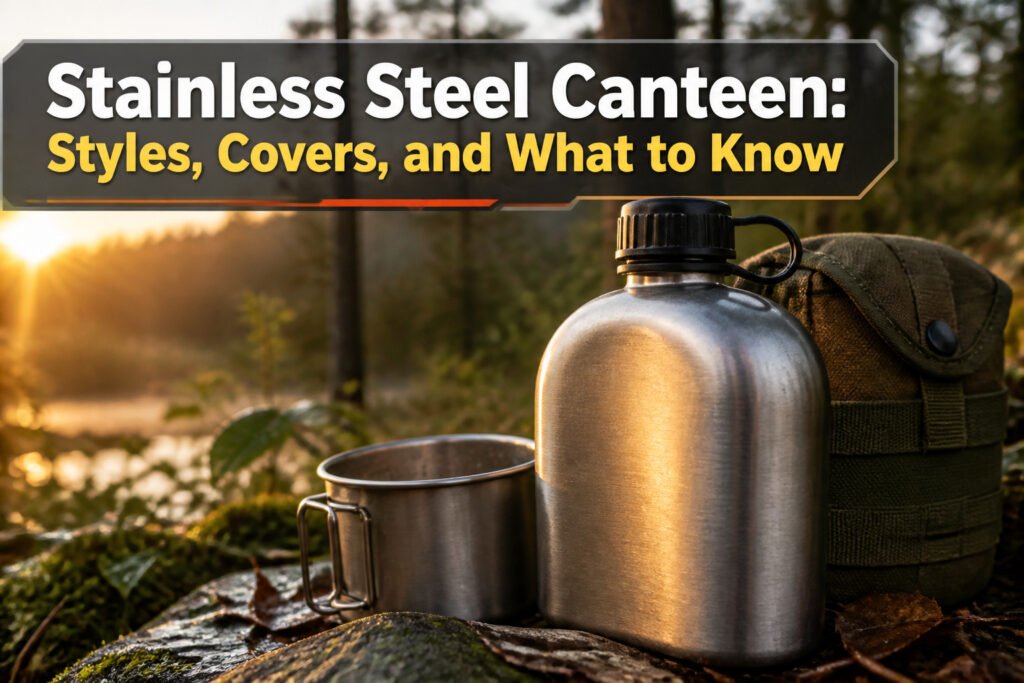
A stainless steel canteen is a heavy-duty outdoor water container built with thick steel walls to survive years of field use, heavier than plastic or aluminum but outlasting both. The tradeoff is weight, and most models are not dishwasher-safe. The Rothco GI style runs 1.3 quarts and nests with its own cup, a detail borrowed from military designs where every piece of kit must justify its pack space.
What a Stainless Steel Canteen Actually Is
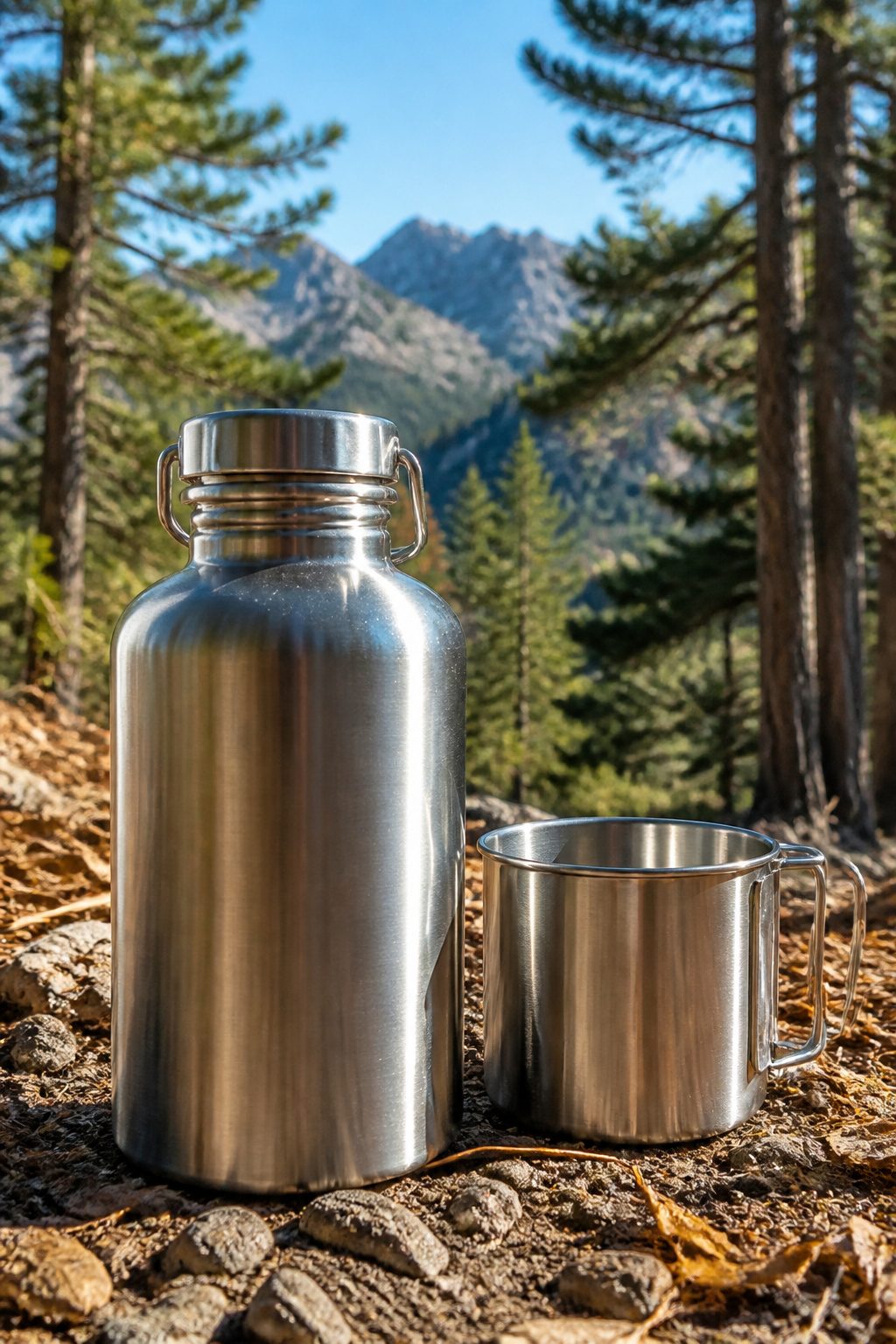
A stainless steel canteen is a heavy-duty water container built for outdoor use, shaped like the military-style flasks you have probably seen strapped to packs or belt kits. The name carries some weight: unlike the thin-walled bottle in your gym bag, a proper canteen uses thicker steel walls and a more rugged build to survive drops, scrapes, and years of field use.
The tradeoff is right there in the material. Stainless steel weighs more than plastic, aluminum, or the titanium you sometimes see on premium gear, and most models are not dishwasher-safe. What you get back is durability that outlasts the alternatives. A 1.3-quart capacity, like the Rothco GI style, holds enough for serious day hikes without refilling every hour. The steel also handles heat better than plastic if you want to warm water near a fire or pair the canteen with a matching cup for coffee.
Someone chooses this style when they need the container to last and do not mind the extra ounces. For car camping or short walks, a lightweight plastic bottle works fine. For multi-day trips, bushcraft, or kit you might pass down, the heavier steel walls start to make sense.
The Rothco GI Style and What 1.3 Quarts Carries
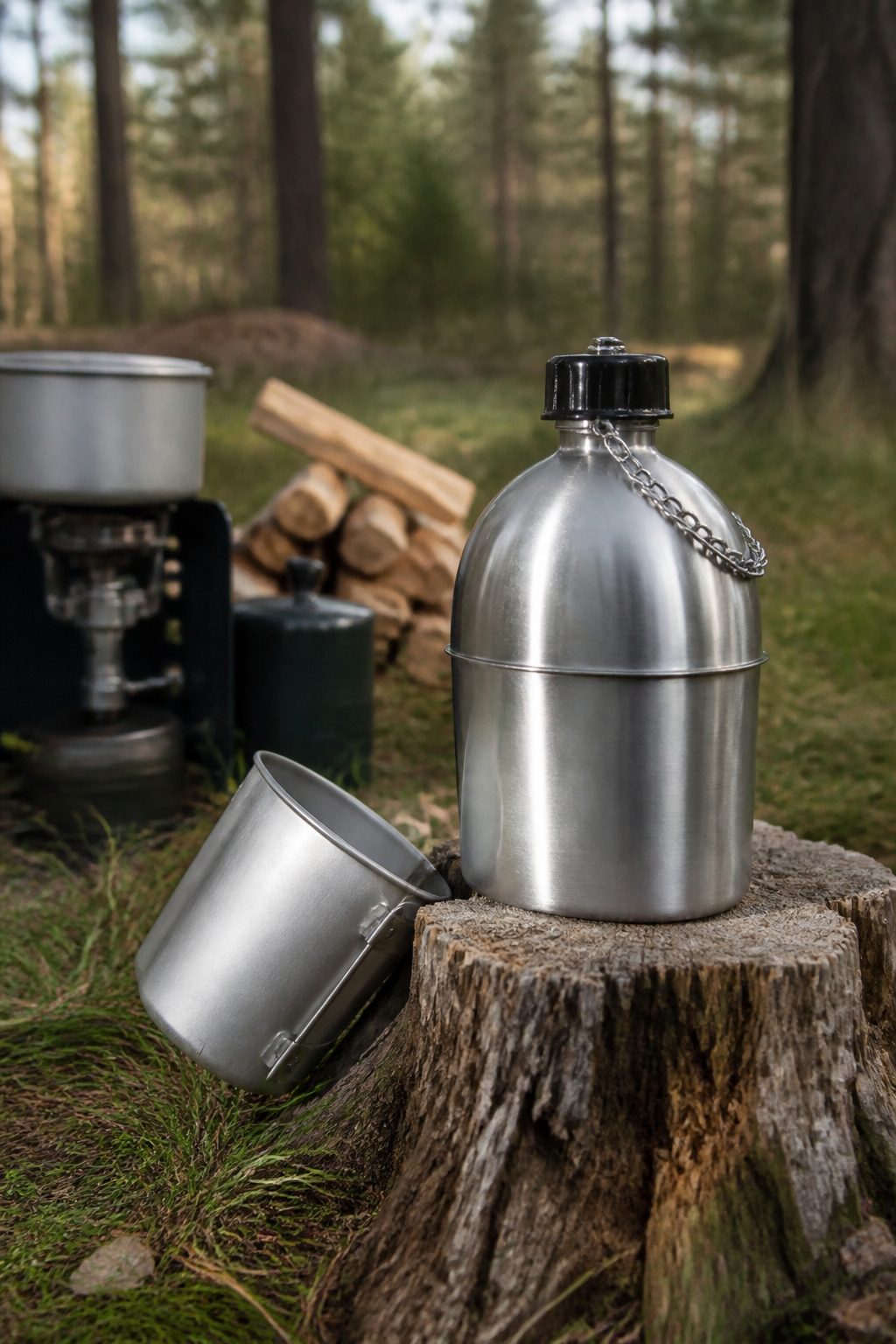
A full 1.3-quart stainless steel canteen holds roughly ten cups of water, which is enough to get through a full day of hiking in cool weather without refilling. The Rothco GI Style runs that capacity in a cylindrical body that nests with its own cup, a detail borrowed directly from military designs where every piece of kit has to justify the space it takes in a pack.
The screw-off cap with its attached chain is the kind of feature that seems minor until you drop a cap in leaf litter or watch one roll downhill. In steel, the canteen gains the obvious durability but also the weight that comes with it; at 1.3 quarts filled, you are carrying over three pounds of water alone.
The GI styling is not nostalgia for its own sake. The shape rides flat against a hip or back, the cup nests underneath where it does not shift, and the whole system fits standard military covers if you want to add insulation. For actual field use, those details matter more than any material badge.
Military-Style Canteens With Covers and Cups
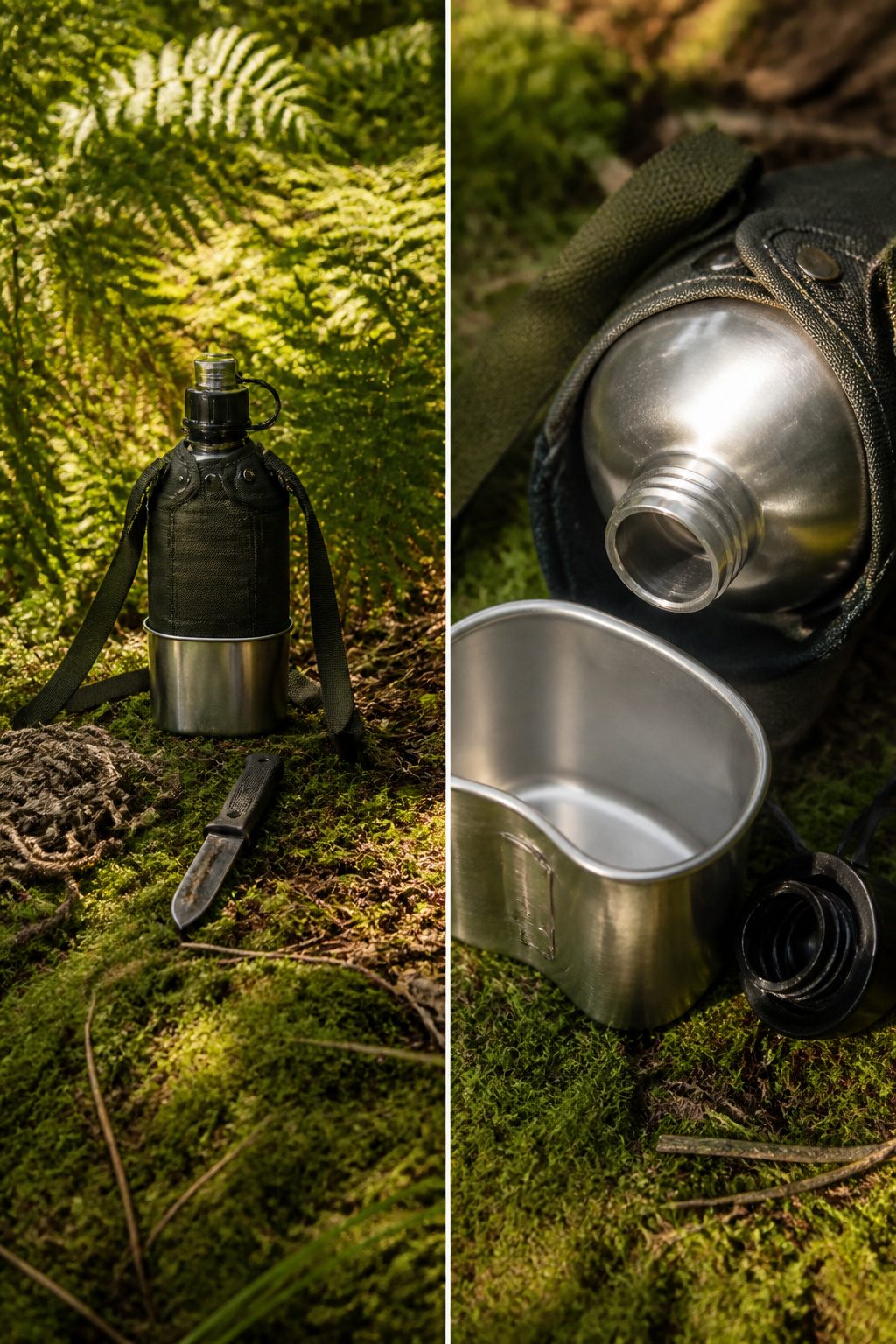
Military-style stainless steel canteens almost always ship as a set: the bottle, a fabric cover, and a nesting cup that fits over the base. The cover does more than prevent dents. Soaked in water, evaporative cooling pulls heat from the metal and keeps your drink cold for hours. Dry, it insulates against sun warming the contents. The cup slides onto the bottom, held in place by the cover, which means you carry one unit that does two jobs. Rothco’s GI style pairs a 1.3-quart stainless steel canteen with exactly this arrangement; the cup handles hot drinks straight off a stove or cold water dipped from a stream. Straps on the cover run long enough for shoulder carry or short enough to clip onto a pack with carabiners. Canvas outlasts nylon for belt loops and strap webbing, though both materials show up in the market. The chain-attached cap, a detail borrowed from actual issue gear, keeps the lid from rolling into leaves or mud when you are half-hydrated in the dark.
Fabric Covers That Keep Water Cool
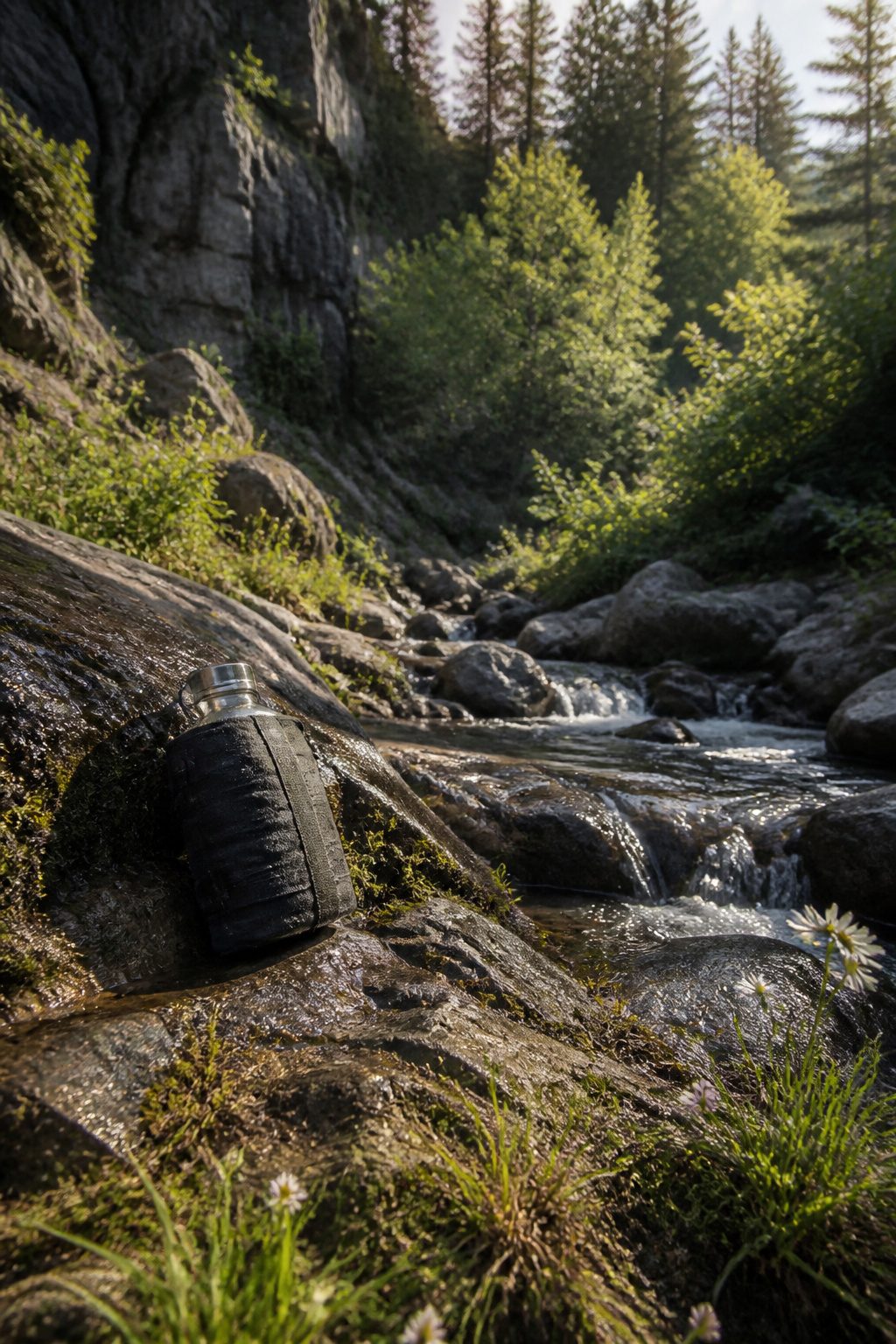
Fabric covers on a stainless steel canteen do more than stop dings. Cotton or nylon sheaths add a layer of padding against drops, and some builds include insulation that slows heat from creeping in and warming your water. The feature people keep asking about, though, is the evaporative cooling trick: soak the cover, let it hang on your belt or pack, and the damp fabric pulls heat away from the canteen body as the water dries. That only works when the air is dry enough for evaporation to actually happen. In thick humidity the cover stays wet and clammy and does next to nothing for temperature. The pouch-style covers let you pull the canteen free without lifting a strap over your head, which matters more than it sounds when you are fishing for water on a slope or in a tight vehicle seat.
Plastic, Aluminum, and Titanium Alternatives
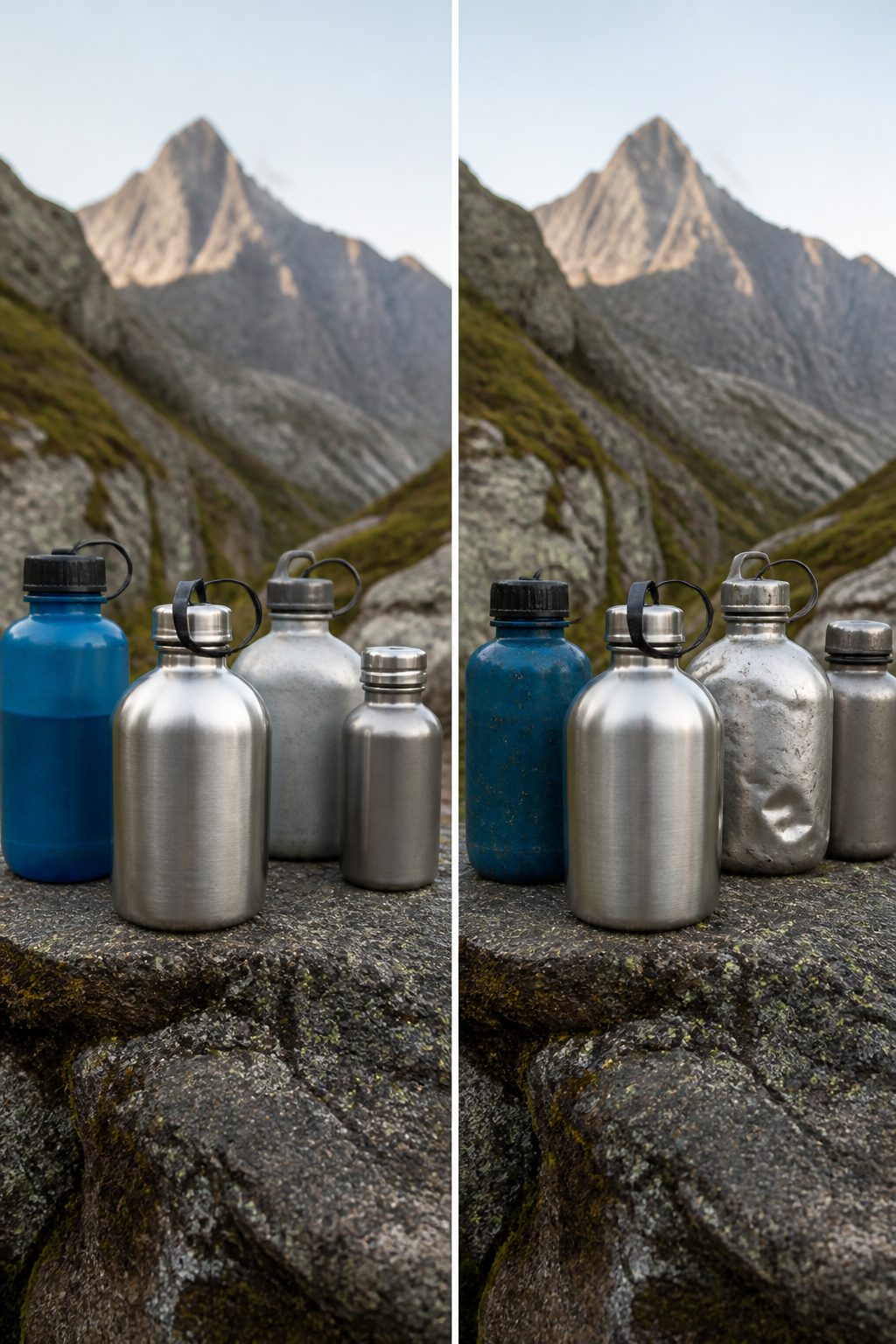
BPA-free plastic canteens shave serious weight off your pack, though the taste after a hot afternoon in the sun is something I never fully got used to. Some models collapse flat when empty, which matters more than you’d think on a long day. Aluminum splits the difference on weight, but a single drop onto rock leaves a dent that never pushes back out. That low price tag starts looking less appealing once the shape goes off.
Titanium sits at the other end of the cost spectrum entirely. The weight savings are real, and the strength holds up, though you’re paying for the privilege. For a canteen mess kit with cups and a hanging wire, the investment makes sense only if every ounce gets counted.
Stainless steel stays heavier than all three alternatives, no contest there. What it gives back is the durability to take that drop onto rock, the neutrality that leaves water tasting like water, and a price that doesn’t require treating gear as an investment decision. The choice usually comes down to whether you’re optimizing for ounces carried or years of use.
Capacity From 3 Cups to 1 Gallon
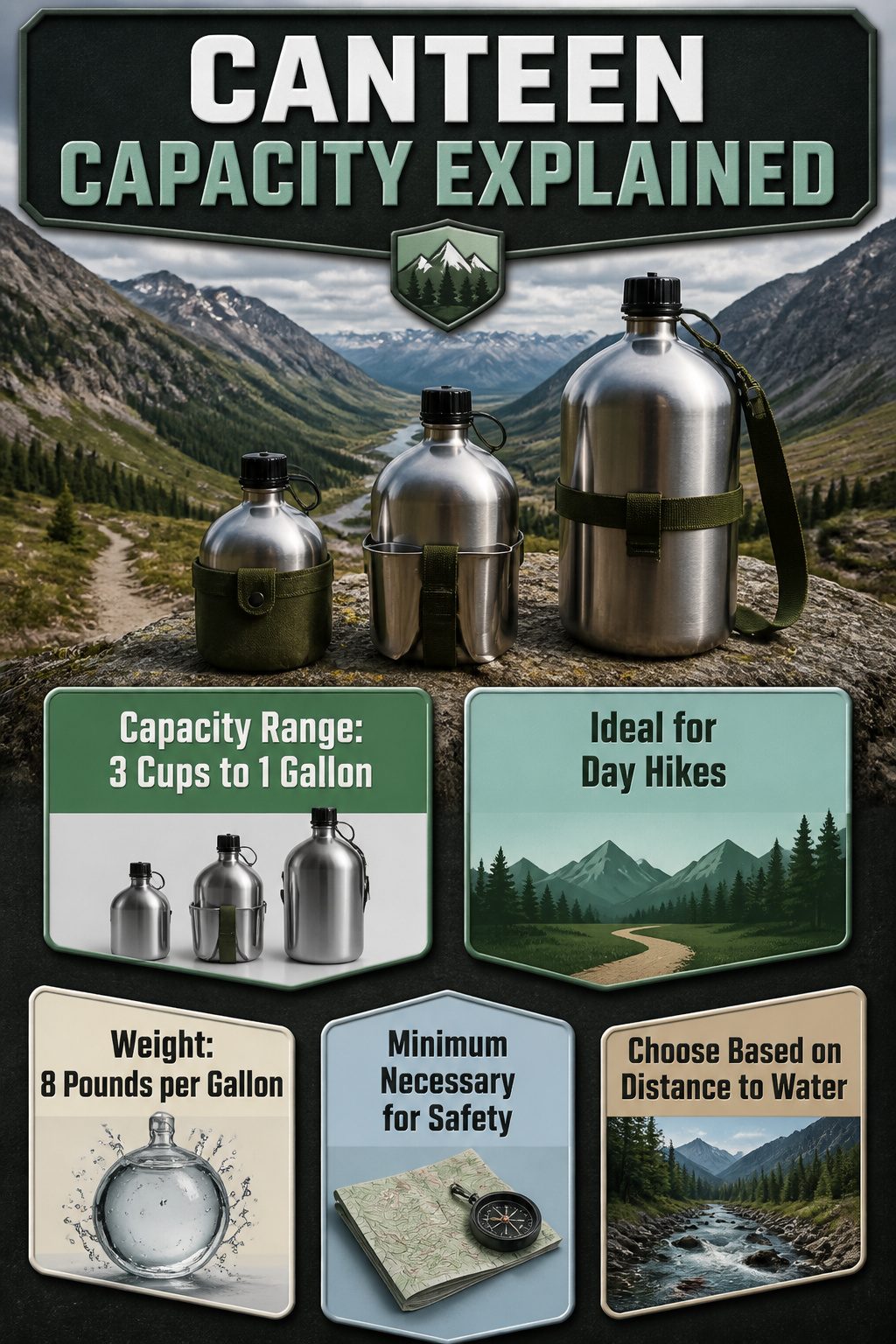
A stainless steel canteen running 3 cups to 1 gallon covers everything from a morning trail run to a full day of bushcraft with a partner. The small end, about a pint and a half, rides light on a hip belt and disappears against your body. The gallon sizes shift the load to your back or a vehicle, and you feel every ounce on a slope.
Matching capacity to the trip matters more than the marketing suggests. A 3-cup canteen saw me through a six-hour ridge walk where streams crossed the trail every mile. The same bottle on an overnighter in dry country would have meant rationing by noon. For a solo overnight, the 1.3-quart Rothco GI Style fills the gap without the bulk of a full gallon, and the steel cup nested to it saves packing a separate pot.
Weight compounds faster than most people account for. Water itself runs eight pounds to the gallon, so the container’s empty weight almost disappears in the math, but a wide, flat canteen still swings differently than a tall bottle. The military-pattern steel canteens with their covers and cups distribute that load against the hip; a round gallon jug on a strap becomes a pendulum.
Larger capacities mean you can go longer without a water source, but they also mean more weight to carry. Choose a capacity appropriate to how far you’re traveling and your access to clean water.
— CBS 42
The real decision is not the maximum you can haul, but the minimum you can get away with and still reach the next sure water source with a margin for getting lost.
What to Look For Before Buying
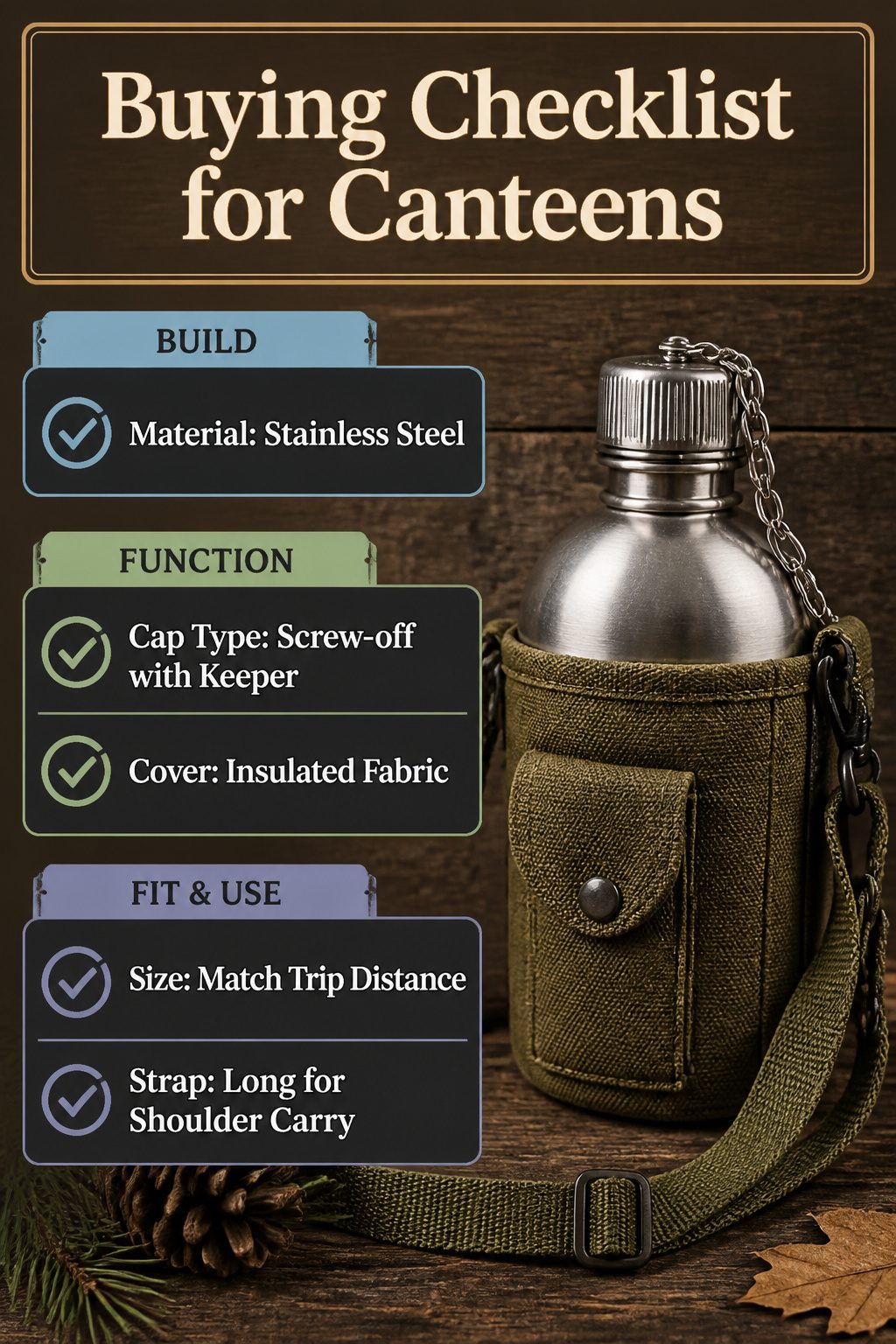
A stainless steel canteen carries more heft than aluminum or plastic right out of the gate, and that weight matters once you start adding water. The tradeoff is straightforward: the metal takes a beating that would crack HDPE or dent thin aluminum, and it does not pick up flavors or hold onto yesterday’s coffee smell.
Screw-off caps with a keeper chain beat push-tops for field use because the cap stays with the bottle instead of dropping into leaf litter. I have watched people lose unthreaded stoppers on portages; the chain costs nothing and saves the hike.
Fabric covers do more than prevent dings. Soak a cotton or nylon cover in water and evaporation pulls heat from the contents, a trick that works in dry air but less so in humidity. Some covers add insulation against sun, and a pouch-style cut lets you pull the canteen free without lifting a strap over your head. Straps run either long for shoulder carry or short for carabiner clipping. Nylon is common and cheap; canvas outlasts it by years.
Capacity runs from 3 cups to 1 gallon. The Rothco GI style sits at 1.3 quarts, a middle ground that covers a day hike without the bulk of a full gallon. Match the size to how far you are from the next fill-up, not to how much you wish you could carry.
How Different Materials Hold Up Over Time
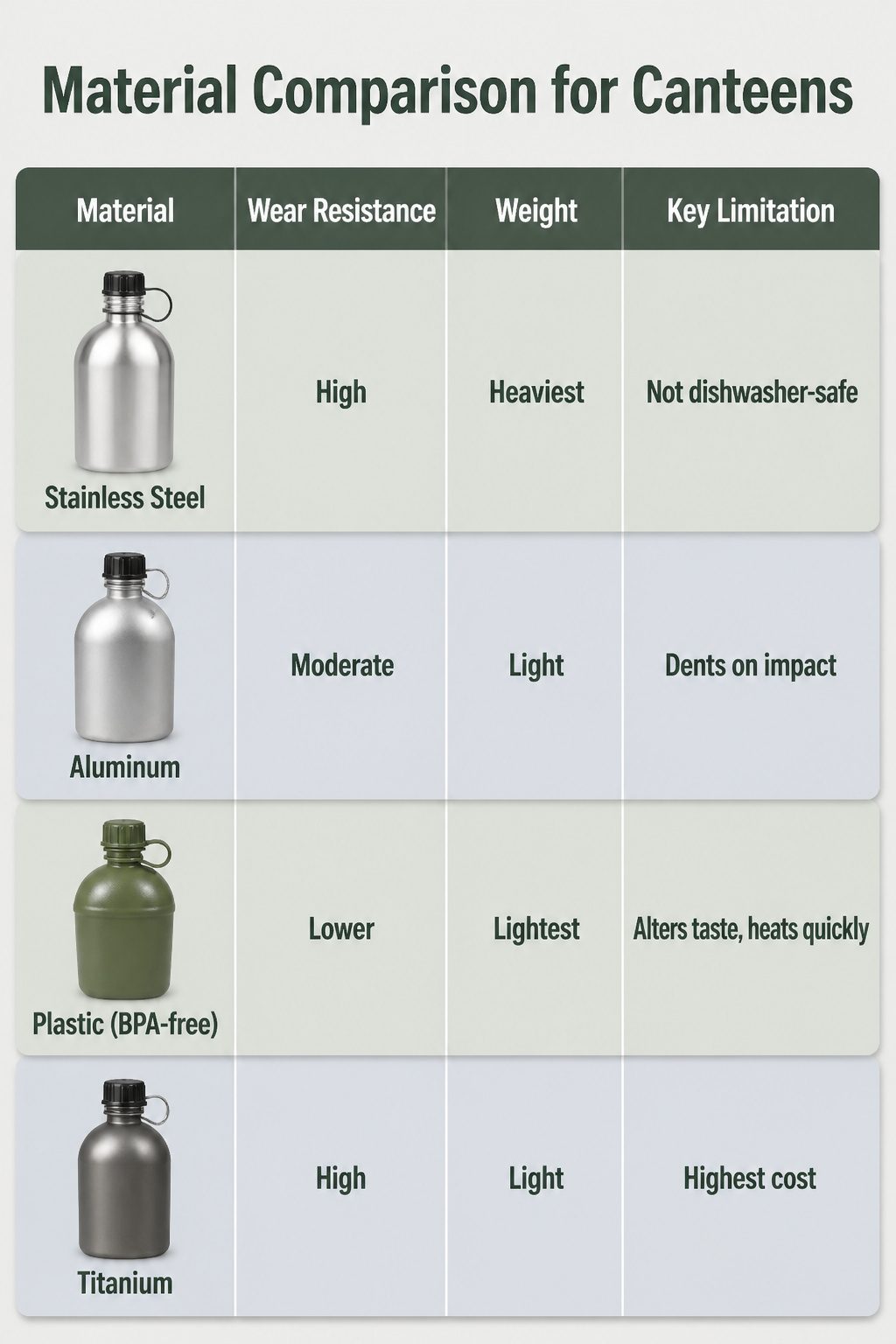
Stainless steel resists wear better than anything else in this lineup, which is why a canteen built from it tends to outlast the others. Aluminum dents when dropped, and that dent can crack a coating or leave a weak spot that corrodes later. Plastic, usually HDPE in military-style canteens, stays flexible and affordable but gives water an unpleasant taste and warms fast in sun. Titanium splits the difference on weight and strength, though it costs the most.
| Material | Wear Resistance | Weight | Key Limitation |
|---|---|---|---|
| Stainless steel | High | Heaviest | Usually not dishwasher-safe |
| Aluminum | Moderate | Light | Dents on impact |
| Plastic (BPA-free) | Lower | Lightest | Alters taste, heats quickly |
| Titanium | High | Light | Highest cost |
For long-term field use, the dent risk in aluminum and the taste shift in plastic matter more than the weight savings. I would carry stainless or titanium and accept the grams.
Frequently Asked Questions
What are canteens made of?
Canteens are built from stainless steel, titanium, aluminum, or BPA-free plastic. Stainless steel takes the most abuse but weighs the most; plastic is light and cheap but can give water an off taste and heats fast in sun. Aluminum splits the difference, though it dents easily on rock. Titanium saves weight and keeps its strength, yet costs enough that most buyers pause.
What features should I look for in a canteen?
Start with a screw-off cap on a keeper chain so the lid never hits the dirt. A fabric cover adds padding and, when soaked, pulls heat from the steel through evaporation in dry air. Pouch-style covers let you grab the bottle without lifting a strap over your head. Match capacity to your trip: 1.3 quarts covers a day hike, while a gallon suits dry backcountry where refills are hours apart.