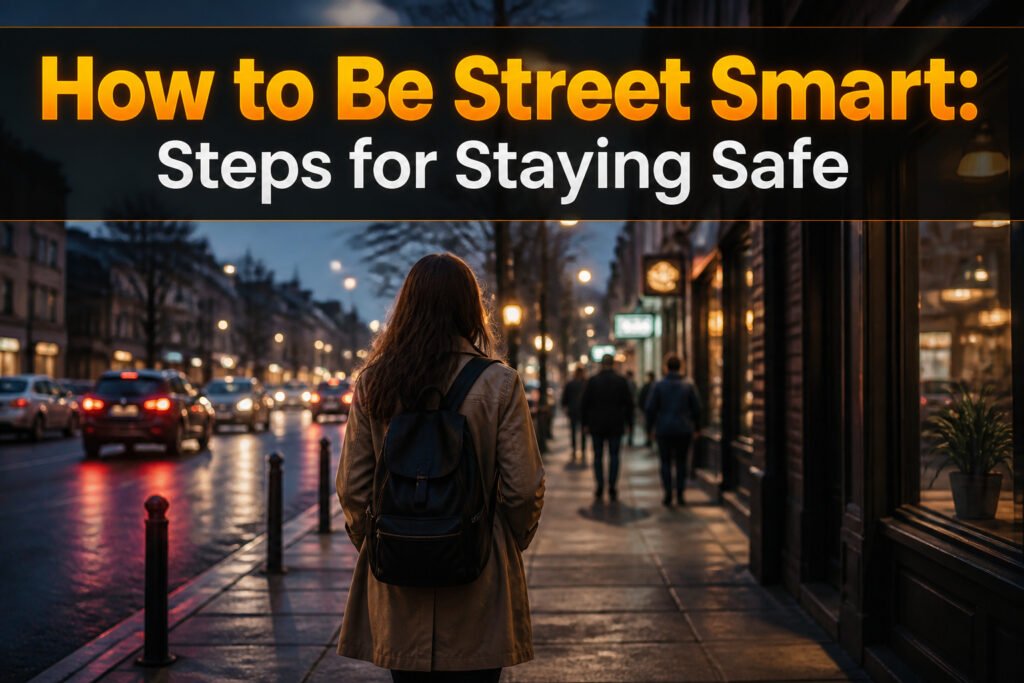
Being street smart in 2026 costs constant attention: your phone stays dark, your earbuds stay pocketed, and every new route gets mapped for the nearest 24-hour pharmacy or fire station before you need it. Most people get the first part right, staying aware, then fail at the stage that actually saves them, trusting the unease they cannot yet name. The hair on your neck rises before your brain assembles proof; by the time logic builds its case, the clean exit has usually closed.
1. Stay Aware of Your Surroundings
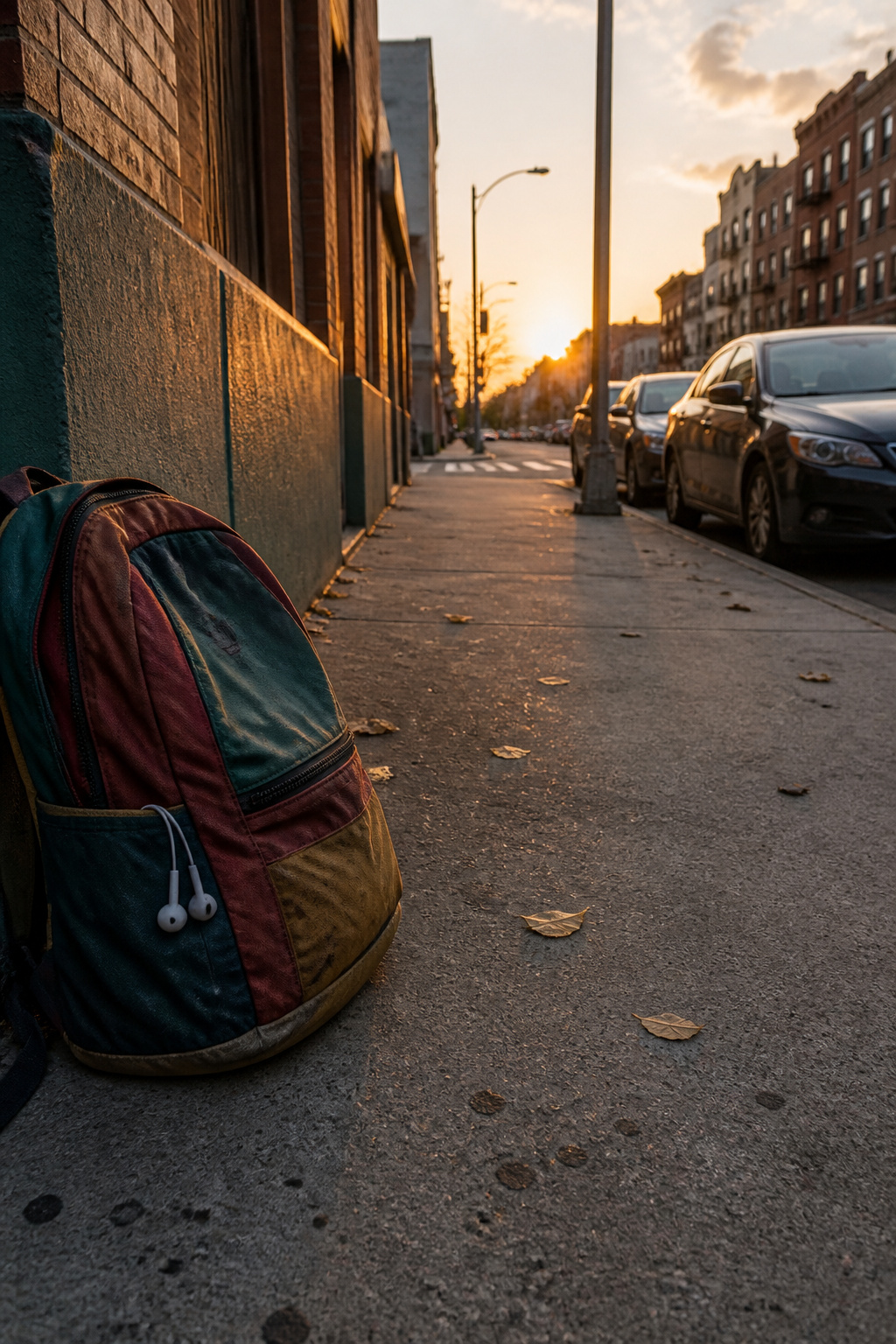
Headphones on the sidewalk used to feel like a small freedom, until the afternoon a car ran a red behind me and I heard nothing until brakes screeched. The earbud stays in the pocket now. Same with the phone: checking a text while walking turns a three-block route into a tunnel. Your eyes drop, your pace steadies in a way predators notice, and you miss the parked van with its engine running or the group that shifted formation half a block back. Sound matters too. Footsteps changing speed, a door closing twice, the absence of usual street noise, these are cues the distracted brain filters out. I still carry the phone, but it stays dark until I’m stopped against a wall with clear sight lines in every direction. The habit costs nothing and pays in time to cross the street, enter a shop, or simply know what’s around you before you need to.
2. Trust Your Instincts

The hair on your neck lifting is not imagination. It is your brain processing micro-signals you never consciously registered: a posture shift, a blocked exit, silence where conversation should be. If you feel uneasy or uncomfortable in a situation, remove yourself immediately. No explanation owed, no second-guessing permitted.
This reflex sharpens with mileage. Early on, every alley felt wrong; later, the distinction narrows to the one that actually is. The brain stacks encounters, good and bad, until pattern recognition outpaces conscious thought. Logic wants evidence, timelines, proof. By the time logic assembles its case, the window for clean exit has usually closed.
Walking away still feels rude, especially in cultures that prize politeness. The stranger insisting on conversation, the group whose attention locks onto you, the route that suddenly empties of other people: these are moments to abandon social grace for distance. The cost of a false positive is mild embarrassment. The cost of a false negative is not.
3. Know Safe Spots
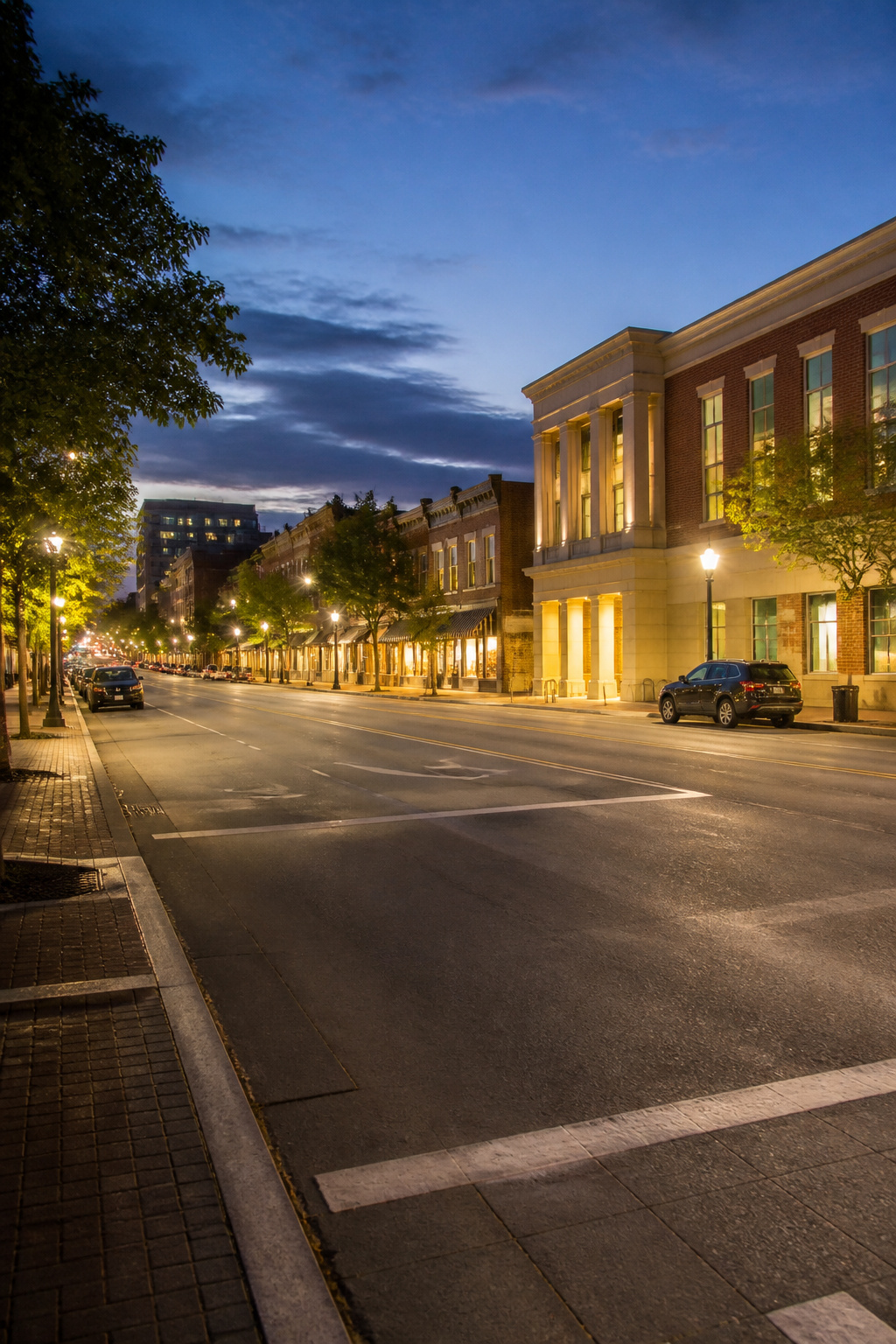
Mapping safe spots before you need them turns a bad moment into a solvable problem. Police stations, fire stations, and hospitals sit in fixed locations; knowing which ones fall within a few blocks of your route gives you a destination to move toward instead of panic. Busy businesses that stay open late work too, especially after dark when other options have closed.
The fallback matters more than the specific place. A 24-hour pharmacy with people at the register beats an empty parking lot every time, even if the pharmacy is farther away. The habit is simple: on any new route, note one or two of these locations in the first minute of walking it. Mental notes work fine; the point is having already decided where to run before adrenaline makes decisions for you.
4. Avoid Dangerous Areas

The fourth layer of being street smart is route selection and timing, and this is where most people I know have taken the biggest risks for the smallest rewards. A shortcut through an empty parking lot or a dark residential block might shave five minutes off a walk home, but well-lit, populated streets are always the better choice because visibility and witnesses are the two things that make a target less appealing.
Isolated areas break every safety rule at once. No one sees you enter, no one hears you call for help, and no one is close enough to respond before someone with bad intentions finishes what they started. The minutes you save evaporate the moment something goes wrong, because now you are alone with no easy exit and no one to notice. Population density is not just comfort; it is a practical buffer that gives you room to spot trouble early and options to move away from it.
Timing works the same way. The same street at 6 p.m. and midnight can be two completely different environments. When I plan a route, I look at when the foot traffic drops and the lighting changes, not just the distance on a map. The longer path through the main corridor costs you steps, but it buys you the one thing shortcuts through empty spaces cannot: people who would see.
5. Travel with Others

There is safety in numbers, but the phrase oversimplifies what actually changes when you move through a city with someone else. A pair shifts the math more than people expect. Two heads scanning opposite directions catch threats one person misses. Two bodies create hesitation in a potential attacker who preferred an easy, isolated target. The effect is real and well-documented in urban safety research, not just folk wisdom.
Pairs work best when you coordinate without performing it. Walking shoulder-to-shoulder while both stare at phones wastes the advantage. One person watches ahead, the other checks behind. You switch naturally, no discussion needed after a few trips together.
Groups of three or more amplify this, though practical limits hit fast. Coordinating schedules becomes its own vulnerability if you delay departure waiting on stragglers. Large groups also draw attention you might not want, marking you as tourists or otherwise predictable.
The tactic fails in specific conditions. A group of obvious strangers, heads down, radiates disorganization and becomes a target itself. Exit routes get complicated when you are responsible for someone slower or less alert than you. I have been in situations where splitting up was the safer call, meeting two blocks away rather than forcing the group through a bottleneck.
Solo travel has its place. Sometimes the schedule, the destination, or simply needing solitude wins out. The point is choosing with eyes open, not defaulting to alone because it feels easier.
6. Read Social Cues

Reading people starts with posture. Someone with shoulders squared toward you and weight on the balls of their feet is engaged; the same person with shoulders angled away and weight back is probably preparing to leave, or preparing something else. The shift happens before the move, and that half-second gap is where being street smart pays.
Eye contact works the same way. Held too long, it reads as challenge. Avoided entirely, it signals guilt, fear, or calculation. The useful middle, two to three seconds with a natural break, is what most people default to in ordinary conversation. When someone holds longer or breaks faster, the context tells you which side of ordinary you’re on.
Groups are louder signals than individuals. Three people spread in a loose arc facing outward are guarding something, even if that something is only their conversation. The same three walking in tight formation, matching pace, share intent. Psychologists call the constant scanning some people develop hypervigilance, and it wears you down over time, but it also trains pattern recognition faster than any classroom method.
Proximity is the cue most people miss until it’s too late. The social default in most American cities is about arm’s length for strangers, closer for friends. Someone who closes that distance without a reason you can name has given you a reason to watch their hands.
This skill builds through intentional observation, not instinct. Spend ten minutes on a busy corner watching who makes eye contact with whom, who adjusts their path to pass behind versus in front, whose laugh reaches their eyes. After a few sessions you stop seeing individuals and start seeing choreography.
7. Practice Self-Defense

Self-defense classes can be a great workout, but they also teach important skills. That distinction matters more than most people realize when they first walk into a gym. I spent months in a striking class that left me exhausted and technically worse than when I started, because the instructor prioritized fitness drills over practical application. The second school I tried spent the first twenty minutes of every session on de-escalation footwork and escaping holds, and the difference in what stuck was immediate.
Physical capability is backup, not a first resort. Awareness and avoidance handle ninety percent of situations before they ever become physical. Training builds the confidence that lets you hold your ground verbally, or recognize when running is the smarter option. The muscle memory for a proper palm strike or getting free from a wrist grab takes repetition, but the larger payoff is knowing your own limits under stress.
Realistic expectations keep training useful. Six months of consistent practice gives you fundamentals, not invincibility. Sparring against a resisting partner shows you how fast technique breaks down when adrenaline hits. The goal is not to win a fight; it is to create enough space to get away. That reframing changes what you prioritize in class and what you actually retain.
8. Be Cautious with Strangers

A stranger asking for directions to a lost dog knows exactly what social script makes you pause. The request seems small, harmless, even kind to answer. That is the moment distance collapses, and the person who needs help from a child should be asking an adult instead is the rule that keeps the boundary intact.
Street smarts means holding two truths at once: most people mean no harm, and the ones who do look exactly like everyone else. There is no visual test. The balancing act is social, not tactical. Too friendly reads as available; too cold draws attention you do not want. What worked for me, watching how others moved through uncertain spaces, was a default posture of mild preoccupation. Not fear, not aggression. Just someone already engaged elsewhere.
The liability shifts when conversation extends past a single exchange. One reply invites a second. A second invites proximity. The cost of being wrong is not evenly distributed, and the streets teach through consequence, not lecture. That is the origin of the instinct: the bite comes first, the wariness after.
The move is simple. Acknowledge without opening. "Sorry, no" while continuing to walk. A store or restaurant works as refuge if the person persists. Yelling for help is the last resort and the right one when the gap closes too fast. The mask of civility drops quick when someone wants something you have, and the gun shines when hunger gets specific enough.
What Being Street Smart Means
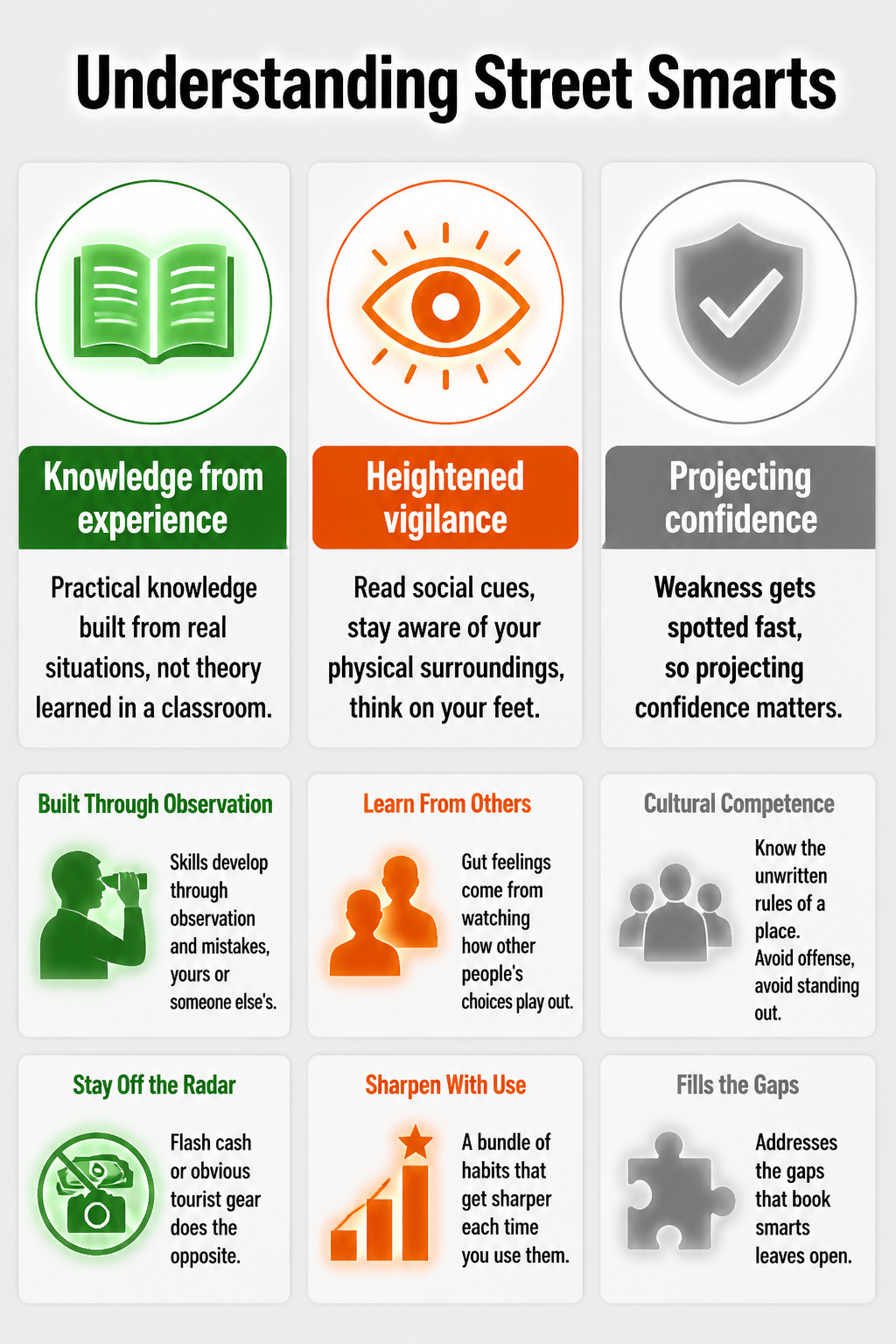
Being street smart is practical knowledge built from real situations, not theory learned in a classroom. The sources describe it as the ability to read social cues, stay aware of your physical surroundings, and think on your feet when something shifts unexpectedly. Weakness gets spotted fast, so projecting confidence matters; flashing cash or wearing obvious tourist gear does the opposite.
These skills develop through observation and mistakes, yours or someone else’s. One source notes that gut feelings come from watching how other people’s choices play out. Another frames it as working-class cultural competence, knowing the unwritten rules of a place so you do not cause offense or mark yourself as clueless.
The eight steps ahead are the answer to how this builds. Each one addresses a gap that book smarts leaves open: noticing who is around you, trusting instincts when logic hesitates, knowing where safety actually is, reading body language, and handling strangers without becoming a target. Street smarts is not one trait. It is a bundle of habits that get sharper each time you use them.
Situational Awareness vs. Distraction

Phones and headphones have turned the sidewalk into a different kind of space than it was even fifteen years ago. Back then, looking around was the default; now, the default is a screen held at chest height or buds sealing off half the world. Pulling out your phone at a red light is the moment someone watching for distraction chooses. I have caught myself doing it a dozen times, and each time my field of vision narrows to a rectangle while footsteps and engine sounds flatten into background noise.
The modern city makes this worse, not better. More people density means more signals to process, but the same devices that help us navigate also filter the wrong things out. A notification pulls your eyes down just as a bike lane empties into the crosswalk, or as someone changes pace behind you. The tension is not between technology and ignorance; it is between what a device promises, convenience, and what it quietly takes, the half-second warnings that only peripheral attention catches.
Instinct Against Logic

A crowded platform at 11 p.m. is no place to weigh options. The hair on your neck rises before your brain names the threat. That split-second lead is why instinct wins when time is the only luxury you don’t have.
Gut feelings aren’t mystical. They’re pattern recognition running below consciousness, built from watching who stands too close, who watches back, who breaks the rhythm of normal movement. The sources describe this as intuition developed through real-world experience and observation of others’ mistakes, not born from books.
But instinct alone has limits. A well-balanced approach means the gut raises the alarm while reasoned analysis handles what comes after: which exit, which crowd, whether to cross the street or duck into the lit storefront. Street-smart people integrate both. The panic response gets you moving; the thinking brain picks the destination.
Practice tightens this loop. The more situations you observe and survive, the faster your subconscious catalogues warning signs and the more accurate the read. What starts as vague unease sharpens into specific, actionable data. Instinct and logic stop competing and start trading off, each doing what it does faster than the other could.
Social Skills Against Isolation
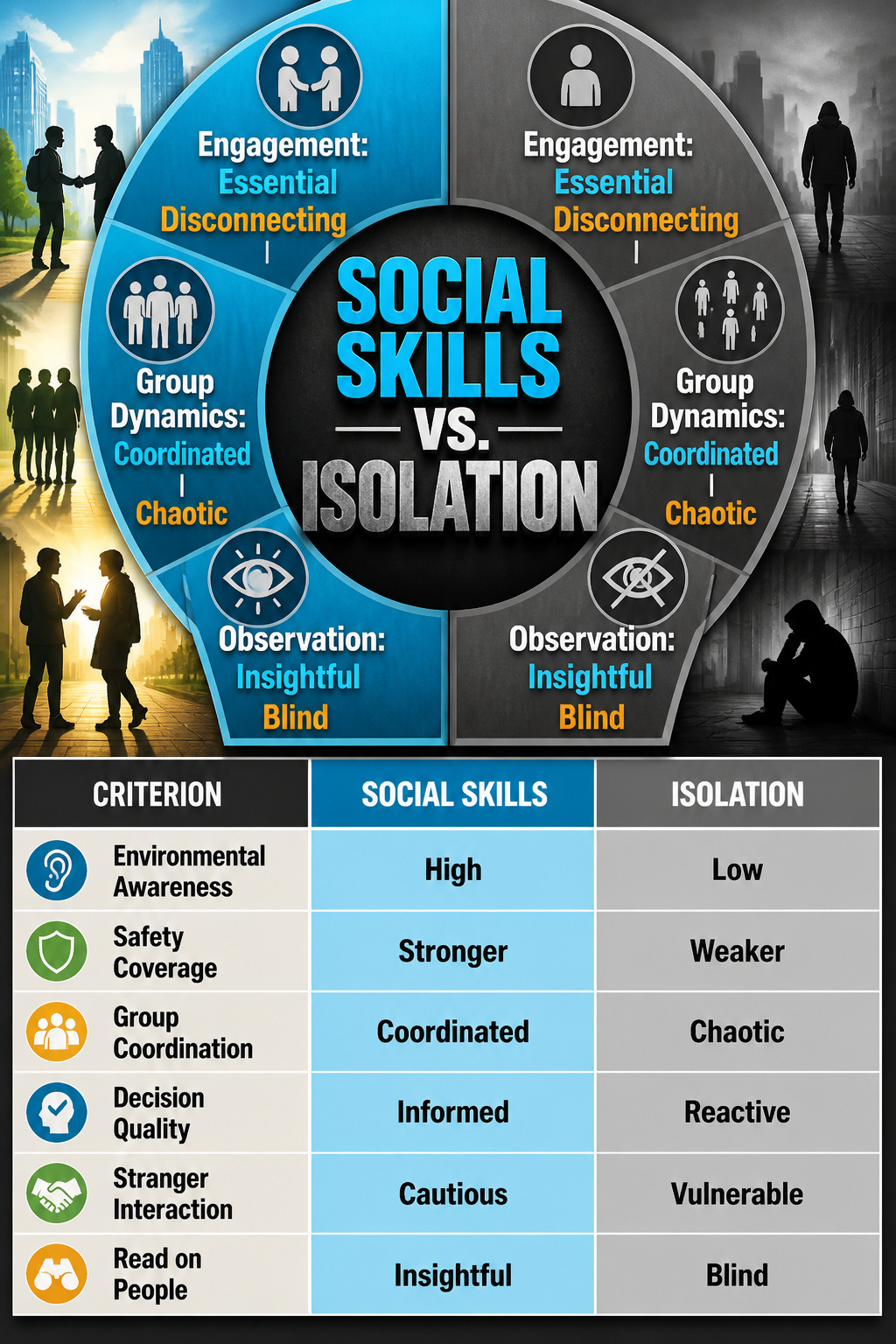
The hardest part of being street smart is knowing when to open up and when to shut down. Complete withdrawal feels safer, but it actually leaves you blind. You stop reading faces, miss shifts in a crowd, and lose the early warning that someone nearby is tuning into your frequency. A little interaction keeps your radar calibrated.
Traveling with others sharpens this in a different way. A group means coordination: who walks point, who watches the rear, whether you split up or stay tight. That social overhead is work, but it buys you coverage no single pair of eyes manages alone. The trick is picking people who actually coordinate, not just bodies who happen to be walking the same direction.
The line sits between useful social contact and dangerous stranger engagement: a store clerk you ask for directions is one thing, the person who approaches you with a story and a need is another. The first keeps you oriented; the second is testing whether you will override your own hesitation. Street smart means letting that hesitation stand, even when it feels rude.
Understanding Human Nature

The darker side of human nature is not a theory you read about; it is something you learn to read in real time, usually after a mistake. The toxic triad of narcissism, Machiavellianism, and psychopathy shows up in more places than boardrooms and true-crime documentaries. I have watched someone charm a room while calculating exactly who to discard, and the lesson stuck: self-interest, for some people, operates as a kind of love they will defend like war.
Being street smart means you have been close enough to see how people act when no one is watching. Desperation has its own body language. The hustle has a rhythm. Spotting it early, before the bluff lands or the betrayal closes, comes from exposure, not from books. Book smarts predict what should happen. Street smarts handle what actually does.
The scars matter. A cop, a CEO, a pastor, a kid who grew up where survival meant reading the room fast; the common thread is high-stakes behavior watched up close, repeatedly, until the pattern recognition becomes reflex. If it sounds too good to be true, it usually is, and the people who get street-smart fast are the ones who learned that the expensive way.
Frequently Asked Questions
How can I be more street smart?
Develop awareness, trust your instincts, and learn to read social cues. Awareness means keeping your phone dark and headphones out until you’re stopped with clear sight lines in every direction. Instincts sharpen with experience as your brain stacks encounters until pattern recognition outpaces conscious thought. Reading social cues starts with posture, eye contact, and proximity, skills that build through intentional observation rather than raw instinct.
What are the key skills of being street smart?
Situational awareness, reading non-verbal cues, and conflict avoidance. Situational awareness means noticing footsteps changing speed, doors closing twice, or the absence of normal street noise before your distracted brain filters them out. Non-verbal cues include shoulders squared toward you, eye contact held too long or broken too fast, and someone closing distance without a reason you can name. Conflict avoidance handles ninety percent of situations before they turn physical; the goal of any self-defense training is creating enough space to get away, not winning a fight.
How do I stay safe in urban environments?
Avoid distractions, know your surroundings, and travel with others. Pulling out your phone at a red light is the moment someone watching for distraction chooses; your field of vision narrows to a rectangle while sounds flatten into background noise. Know your surroundings by mapping safe spots, police stations, fire stations, hospitals, or 24-hour pharmacies before you need them. Traveling with others, especially in pairs with one person watching ahead and the other behind, shifts the math more than people expect, though solo travel has its place when chosen with eyes open.