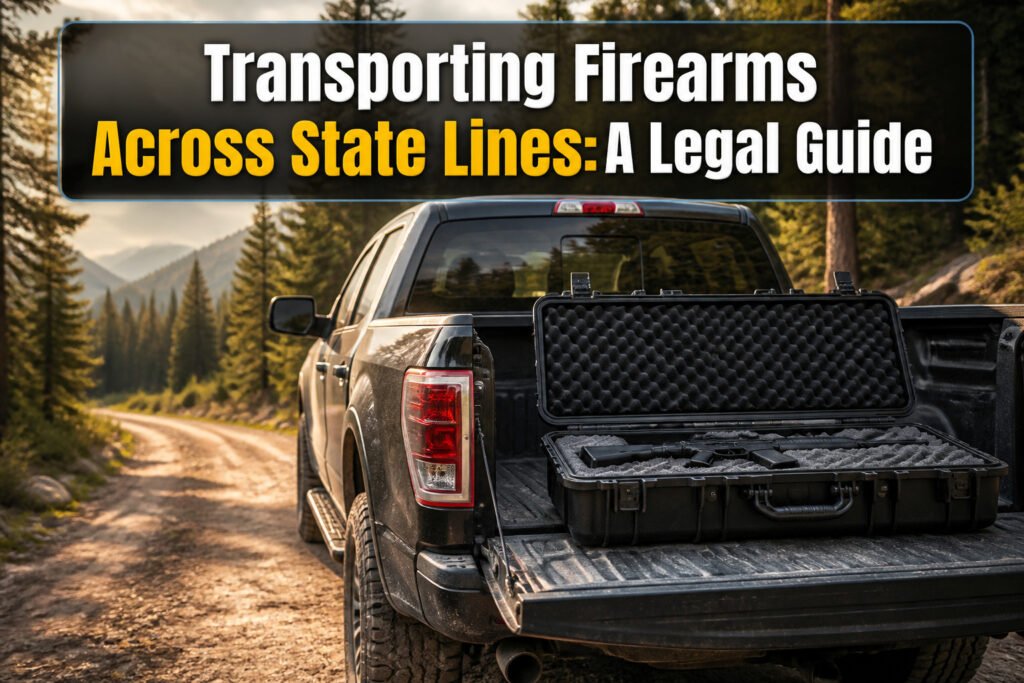
Transporting firearms across state lines is a legal process governed by a patchwork of federal and state laws that can turn a routine road trip into a felony arrest. The Firearms Owners’ Protection Act offers narrow protection, but only if the firearm stays unloaded, locked in a hard case, and never in a glove compartment or center console. One overnight hotel stay in New Jersey has already cost travelers that shield, with Third Circuit courts ruling that such a break ends the "continuous journey" federal law requires.
Verify Your Destination’s Laws
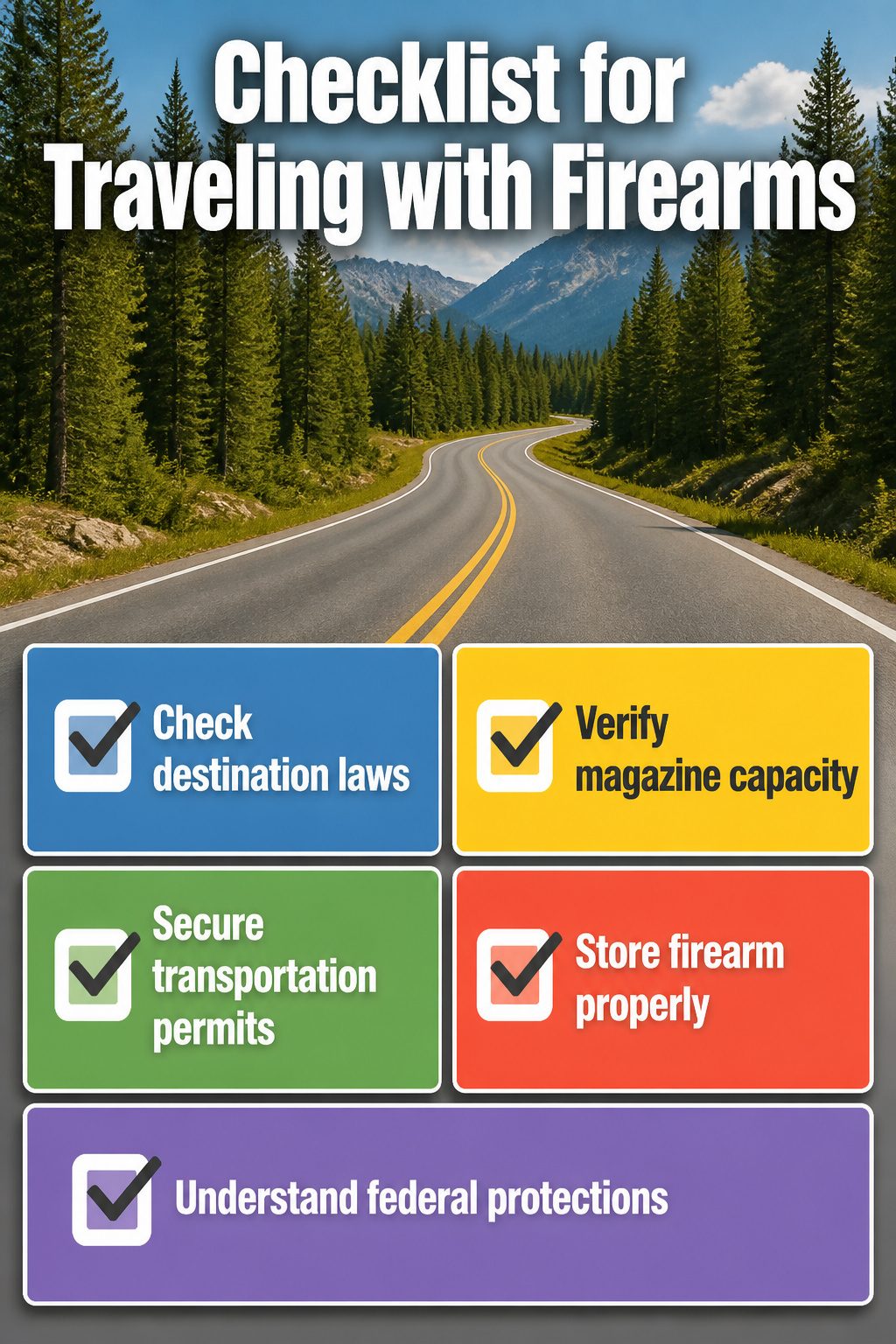
The rifle that sits legal in your gun safe this morning can turn into a felony charge by sundown if you cross the wrong state line. California Penal Code 25610 covers how handguns must travel there, but the real headaches hide in details most travelers miss until a traffic stop.
California generally limits magazines to 10 rounds. New York allows possession and loading of 10-round magazines, but prohibits anything exceeding that capacity. Connecticut and Massachusetts layer on their own rules, some criminalizing importation regardless of where the magazine was purchased.
New Jersey deserves special attention. The state requires specific permits for transporting firearms and imposes tight restrictions on nonresidents. Hollow-point ammunition faces its own separate limits there. What reads as a quick drive-through on the map can become a legal minefield if you stop for anything beyond fuel.
Federal law offers limited protection for continuous interstate travel, but magazine restrictions fall outside its explicit coverage. An extended stay, a sightseeing detour, or even the wrong overnight hotel can void that shield entirely.
The research itself is tedious. Fifty possible rulebooks, plus county and city ordinances layered underneath. But "I forgot" or "I didn’t know" earns no leniency in the states that enforce these laws most aggressively.
Prepare Your Firearm
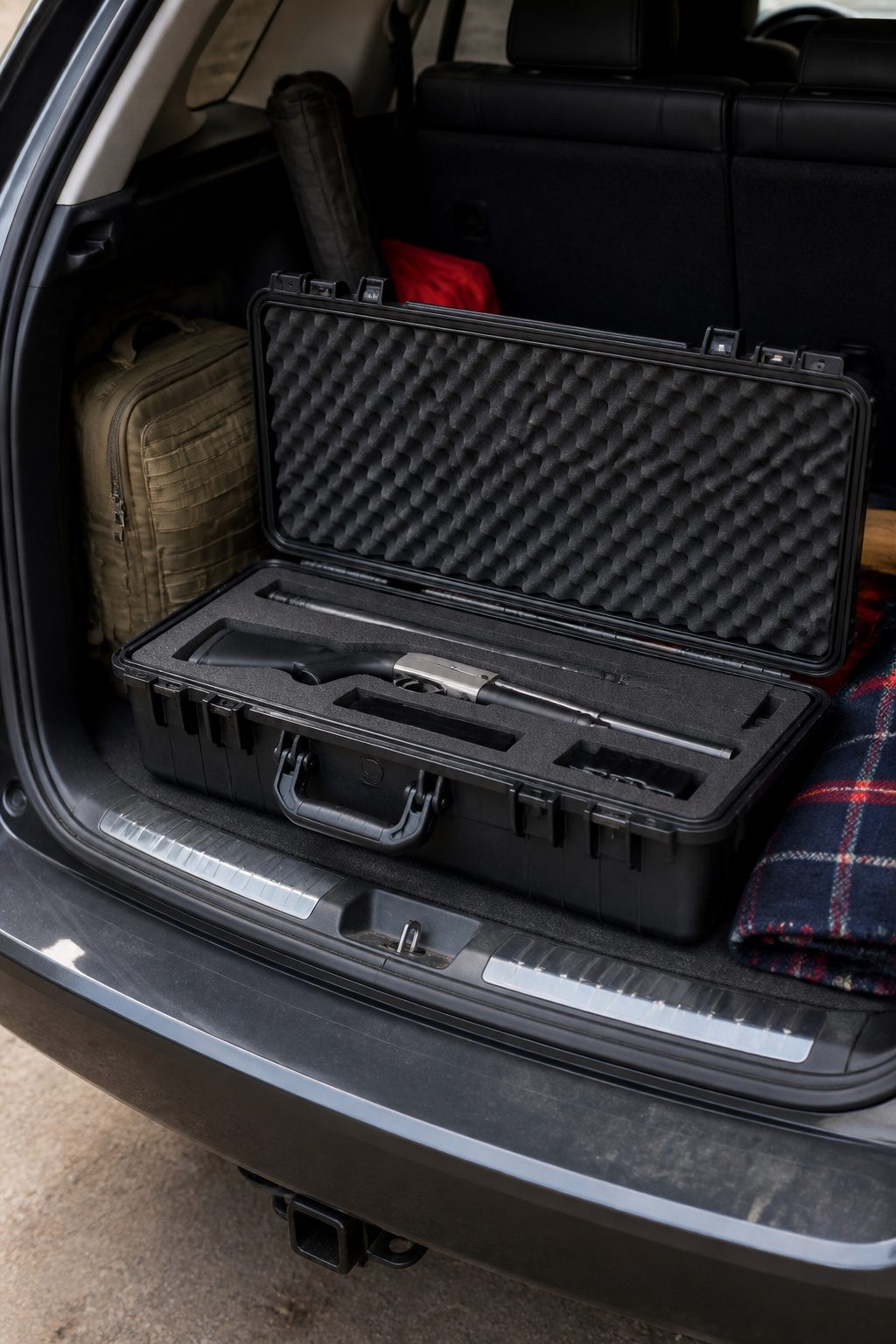
Federal law under FOPA, 18 U.S.C. § 926A, sets a floor for interstate transport: the firearm must be unloaded and not readily accessible from the passenger compartment. A trunk satisfies this. No trunk, and you need a locked container, with the glove compartment and center console explicitly ruled out.
What counts as "locked" matters more than it sounds. A hard-sided case with a padlock, key lock, or combination lock qualifies. A zippered bag or the factory cardboard box does not. I have seen travelers assume a locked car door is enough; it is not. The container itself must be locked, and the firearm must be inside it.
California tightens this further for handguns. State law requires the handgun be in the trunk or a locked container, and the definition of locked container excludes the utility or glove compartment. The same container rule applies while carrying the handgun to or from the vehicle.
a secure container that is fully enclosed and locked by a padlock, key lock, combination lock, or similar locking device. This includes the trunk of a motor vehicle, but does not include the utility or glove compartment.
For anyone passing through California, this means a dedicated lockbox in the cargo area, not the console you use for sunglasses and toll change. The same container that satisfies federal law in a no-trunk SUV will satisfy California too, provided it is fully enclosed and actually locked.
Store Ammunition Separately
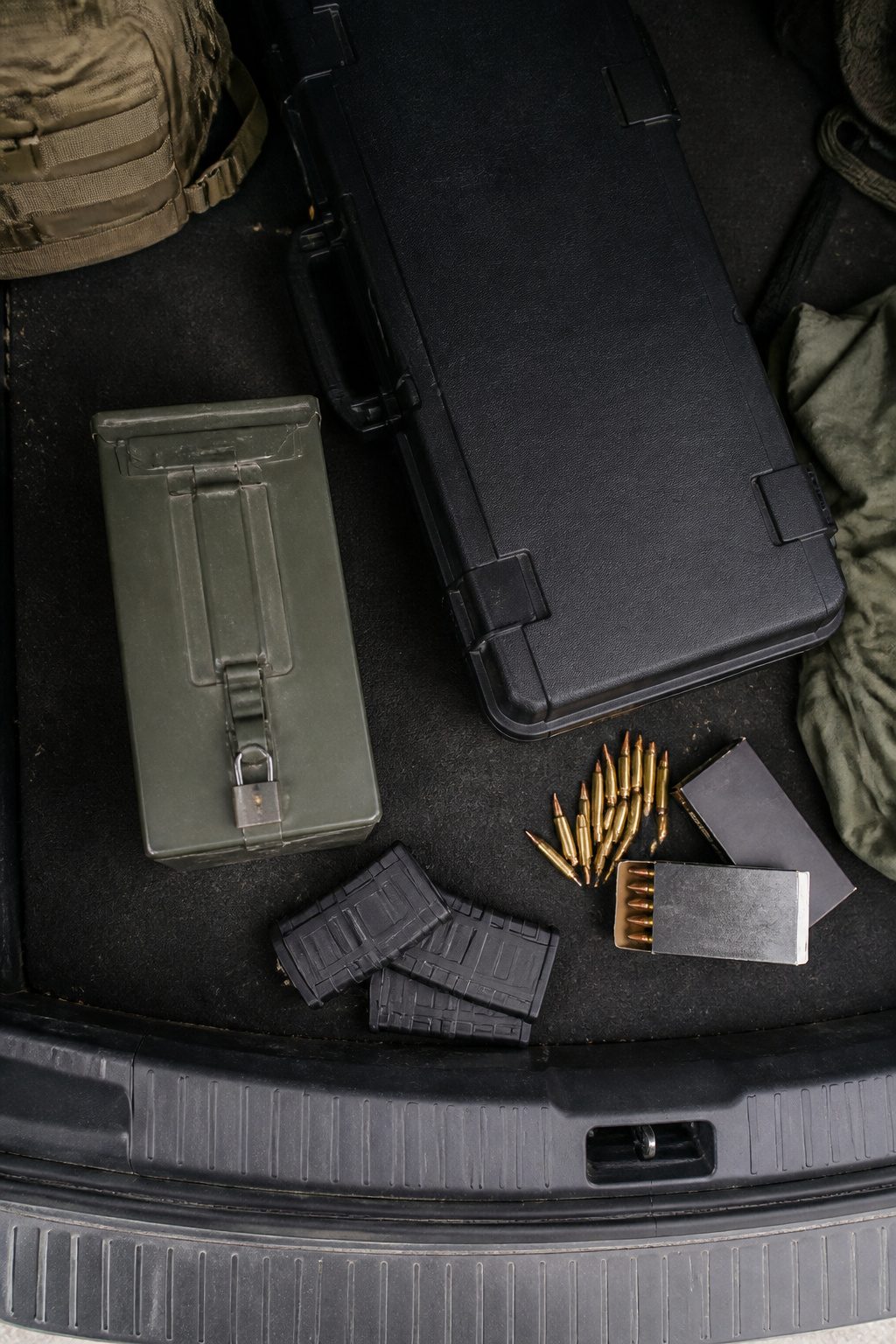
Ammunition storage during transport is a separate decision from how you lock up the firearm itself. Federal guidelines and most state laws expect ammunition in its own locked container, ideally not the same case as the unloaded gun. The original cardboard or plastic packaging the manufacturer used works fine for this, or a dedicated ammo box with a latch that takes a padlock.
The separation matters more than some travelers realize. On a drive through three states last year, the spare magazine in my range bag sat in a locked steel box in the trunk while the cased rifle rode in a rear seat footwell. Both were locked, both were out of reach, but they were never in the same container. That distinction has kept a routine traffic stop from becoming a legal problem in jurisdictions where combined storage gets interpreted as "accessible."
Original packaging keeps calibers identifiable and protected from moisture. If you have loose rounds, a plastic ammo can with a locking hasp does the same job. The point is a second locked barrier, not just a ziplock bag tucked beside the pistol case.
Plan Your Route
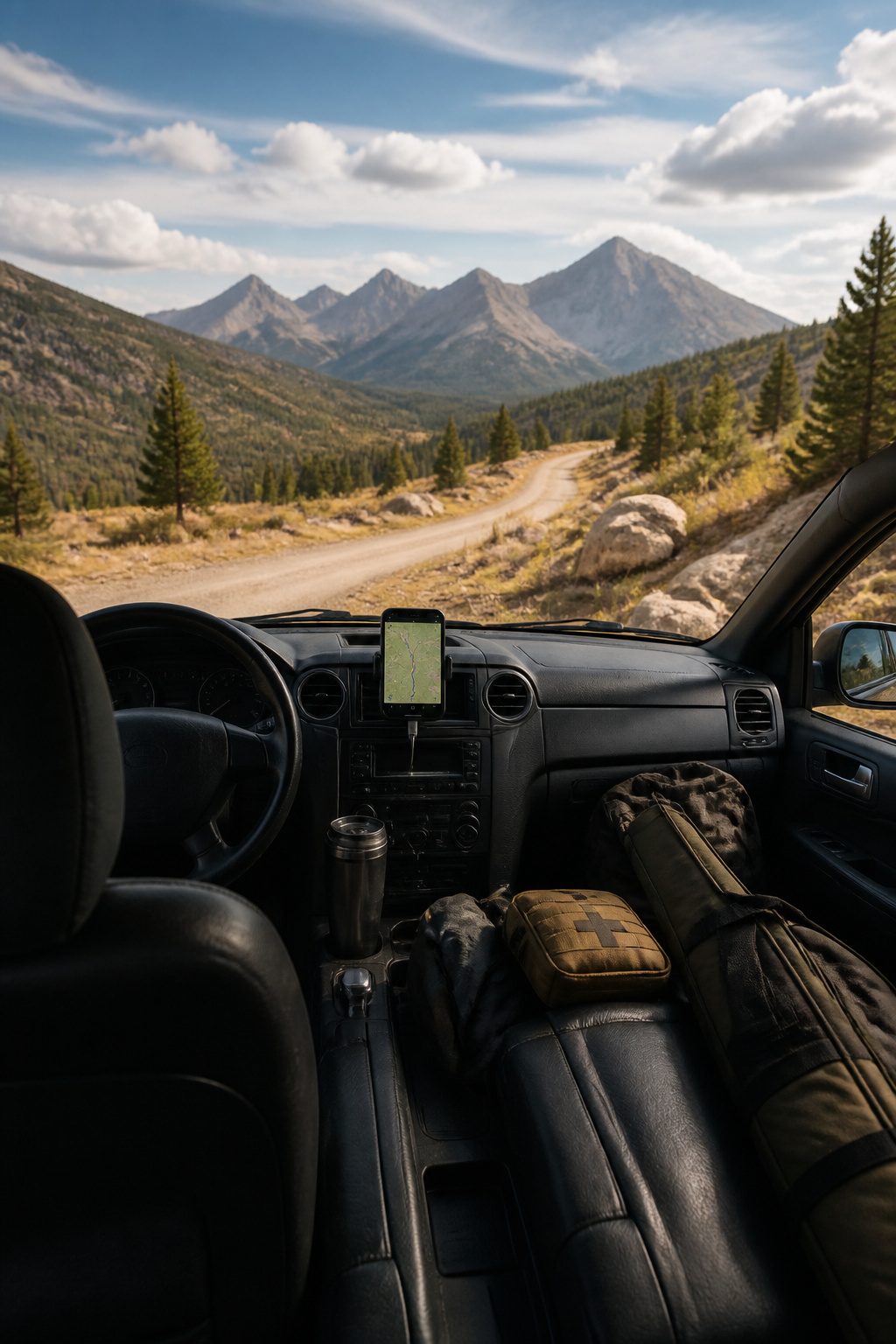
The last time I drove from Pennsylvania to Connecticut with a rifle in the trunk, I spent three hours mapping a route that avoided New Jersey entirely. An overnight stop in that state would have killed my FOPA protection, and Third Circuit courts have held exactly that: check into a hotel, and your continuous journey ends right there. The Ninth Circuit sees it differently, allowing overnight stops if the firearm stays locked in the vehicle, but I was not gambling on which interpretation a roadside arrest would draw.
Planned stops matter. Brief fuel or rest breaks usually do not break journey continuity, and courts have even recognized a duress stop defense for mechanical breakdowns or medical emergencies, provided you keep the repair receipt. What does break it is discretionary travel: sightseeing, visiting friends, conducting business. I map my route to minimize time in states like California, New York, and New Jersey, where local prosecutors aggressively pursue transport violations and magazine capacity limits can turn legal equipment into felony possession.
Document Your Travel
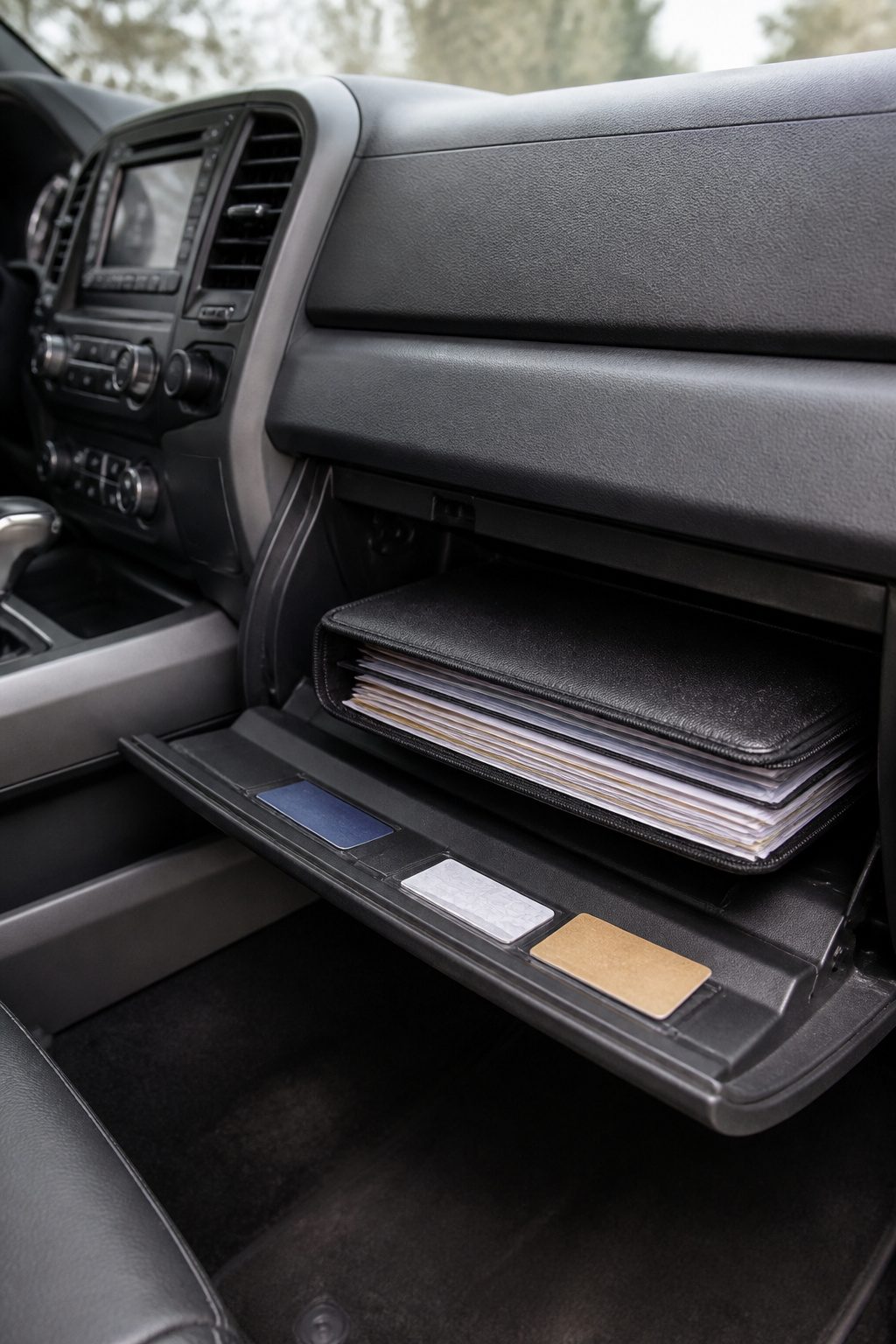
Paper beats phone when a trooper is standing at your window. I keep a slim folder in the glove box with my driver’s license, any concealed carry permit, and printed copies of FOPA and the specific statutes for every state on my route. A phone can die, glitch, or take thirty seconds to load a PDF that a printed page delivers in one.
The printed copy matters most in states where strict enforcement is the norm. New York and New Jersey both see cases where fully compliant transport still leads to arrest, and the traveler later invokes an affirmative defense. Having the law in hand does not prevent the arrest, but it changes the shape of the encounter. Officers can verify your intent and your compliance on the spot rather than booking first and sorting it out later. I also print current reciprocity maps from official sources, since permit recognition changes and the print date shows I checked before leaving.
Follow Traffic Stop Protocols
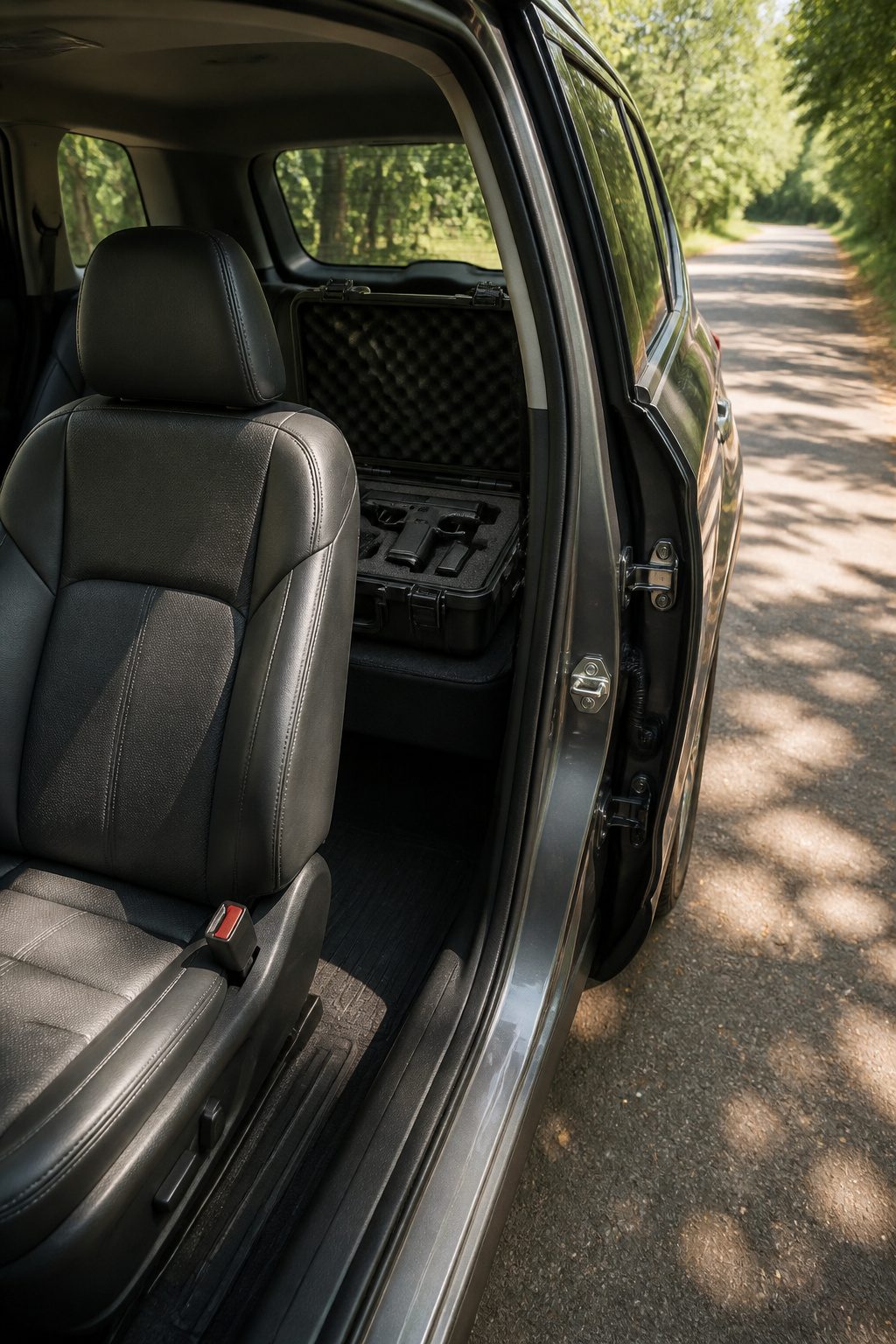
A traffic stop with firearms in the vehicle is not the moment to sort out what the law requires. Some states demand immediate disclosure the instant an officer approaches; others leave the choice to you. Knowing which rule applies before you cross the border is the difference between a routine stop and a felony arrest.
Hands stay on the wheel, visible, until instructed otherwise. No reaching for the glove box, no motion toward the back seat, even to retrieve your registration. The firearm is unloaded, locked in the trunk or another inaccessible place, and that is where it remains. If you are carrying under a concealed-carry permit recognized in that state, the same rule applies: announce the permit and the weapon’s location calmly, then follow instructions without improvisation.
The sources disagree on whether proactive disclosure is always wise, but the risk of arrest for non-disclosure in a mandatory state outweighs the brief awkwardness of speaking up. Silence is only a safe choice where the law explicitly permits it. Check each state on your route; assumptions about reciprocity or transport protections will not shield you from a local charge.
Federal Law Protections
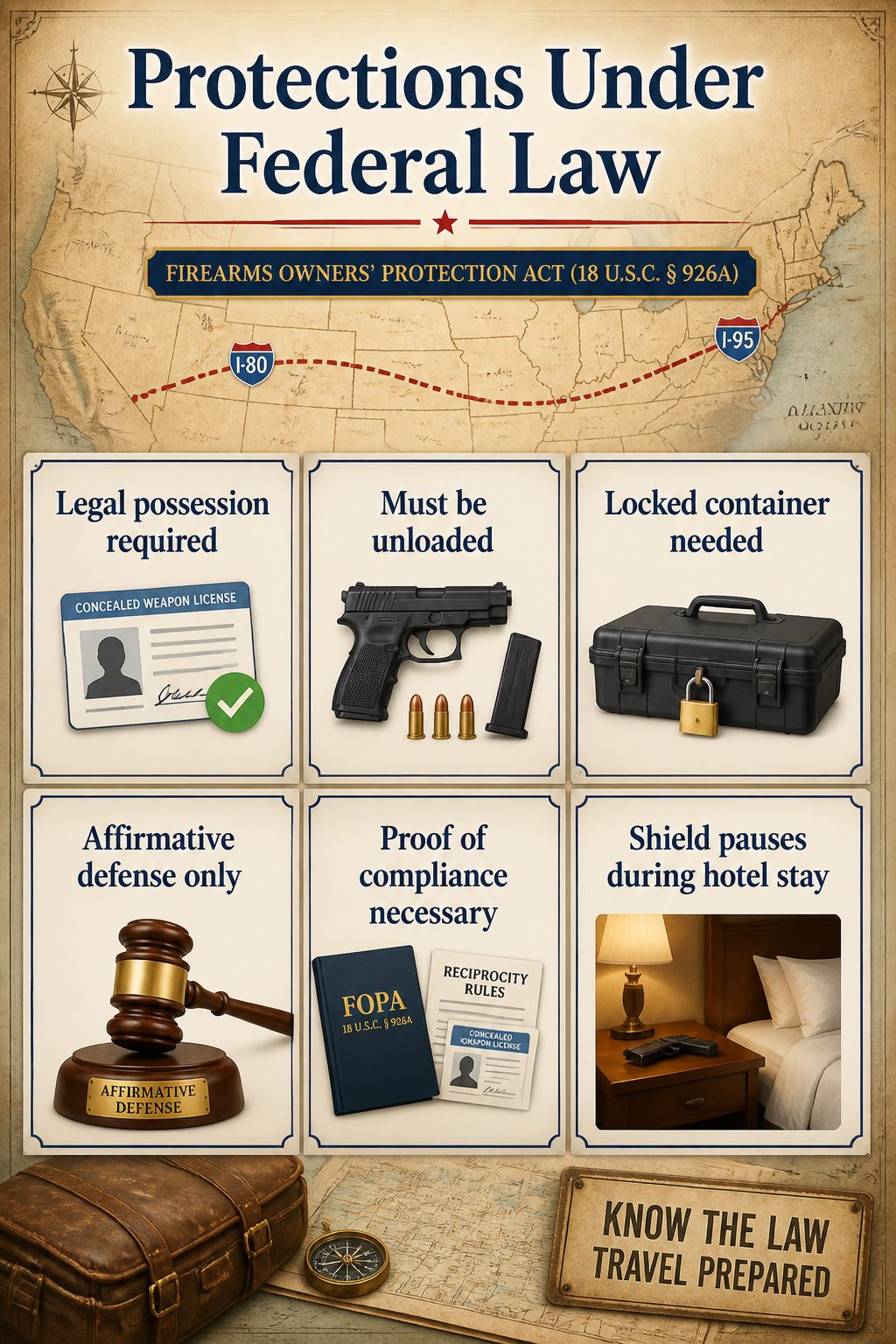
The Firearms Owners’ Protection Act, or FOPA, creates a narrow but real shelter for anyone transporting firearms across state lines. Passed as 18 U.S.C. § 926A, it says that if you can legally possess the firearm where you start and where you end up, the states in between cannot jail you for their own possession bans. The firearm must be unloaded and locked in a container. In a sedan without a trunk, that container cannot be the glove compartment or center console.
Three conditions, all mandatory. Miss one and FOPA drops away entirely, leaving you exposed to whatever local law says.
Here is the part that cost one traveler I read about: FOPA is an affirmative defense, not immunity. Officers in strict-enforcement states can still arrest you, impound the firearm, and make you prove later, in court, that you met every condition. The Third Circuit added another wrinkle, ruling that a firearm becomes "readily accessible" during a hotel stay, so FOPA’s shield pauses when you stop driving. That ruling binds only in New Jersey, Pennsylvania, Delaware, and the U.S. Virgin Islands, but the logic travels.
Carry copies of your licenses, the destination’s reciprocity rules, and FOPA itself. An unexpected delay can strand you in hostile territory, and paper is sometimes what stands between a night in jail and a dismissal months later.
State Law Variations
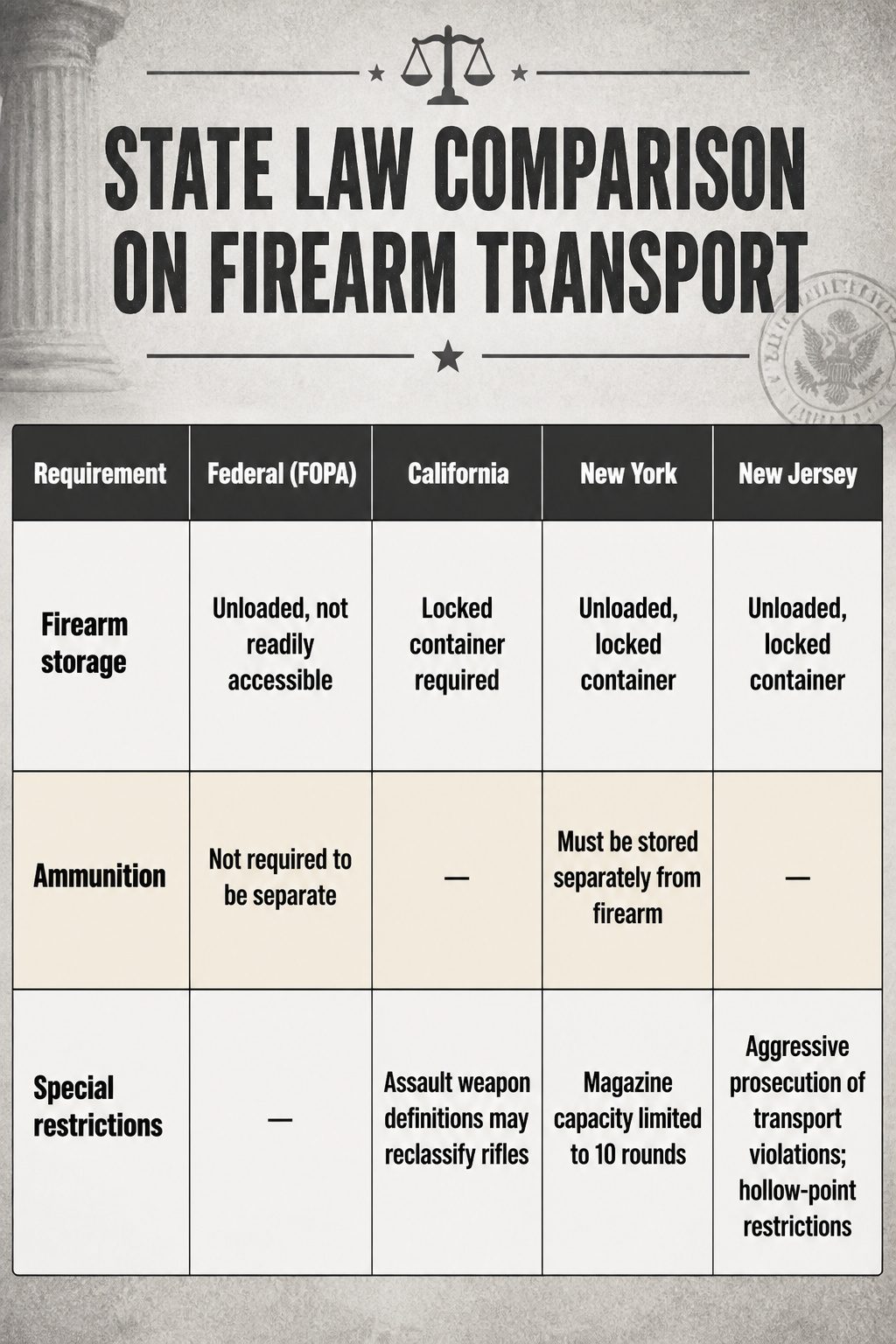
Federal law sets the floor, but states stack their own rules on top, and some of those stacks get tall. The Firearms Owners’ Protection Act says unloaded, locked out of reach keeps you covered through states where you could not otherwise carry. That means trunk storage satisfies the requirement in a sedan; an SUV or truck needs a locked container that is not the glove box or center console.
The table below lays out how a few states tighten that baseline further.
| Requirement | Federal (FOPA) | California | New York | New Jersey |
|---|---|---|---|---|
| Firearm storage | Unloaded, not readily accessible from passenger compartment | Locked container required | Unloaded, locked container | Unloaded, locked container |
| Ammunition | Not required to be separate | — | Must be stored separately from firearm | — |
| Special restrictions | — | Assault weapon definitions may reclassify rifles | Magazine capacity limited to 10 rounds | Aggressive prosecution of transport violations; hollow-point restrictions |
California demands a locked container even when the firearm rides in a trunk. New York wants ammunition locked away from the gun itself. New Jersey has prosecuted travelers who met federal standards but stayed overnight, since the Third Circuit ruled a hotel room breaks the "not readily accessible" chain. Magazine capacity limits add another trap: a 15-round magazine legal at home becomes contraband once you cross into California, New York, or Connecticut, and FOPA does not clearly shield you.
The locked case is cheap insurance. A hard-sided box with a key or combination lock runs about the cost of a tank of gas and saves you from arguing law on the roadside.
Concealed Carry Reciprocity
FOPA protects the drive, but the moment you step out of the vehicle, reciprocity takes over. Some states honor no out-of-state permits at all. That distinction matters more than most travelers realize until they are standing at a gas pump with a handgun on their hip.
Reciprocity maps shift year to year. North Carolina currently recognizes 25 states’ permits, yet that recognition does not force those same states to honor a North Carolina permit in return. The asymmetry catches people regularly. A valid permit at breakfast can mean nothing by lunch two hundred miles down the road.
Constitutional carry states complicate this further. More states now allow permitless carry for residents, but that freedom rarely extends to visitors. The rules that apply to someone who drove in from a neighboring state differ from what locals live under.
Handgunlaws.us and similar sites track these changes, and checking them before a trip is worth the ten minutes. A speeding stop in a non-reciprocity state turns into something worse if the firearm is accessible and the permit holds no weight there. The transport itself stays legal under federal law. The carry at the destination does not.
Transporting by Air
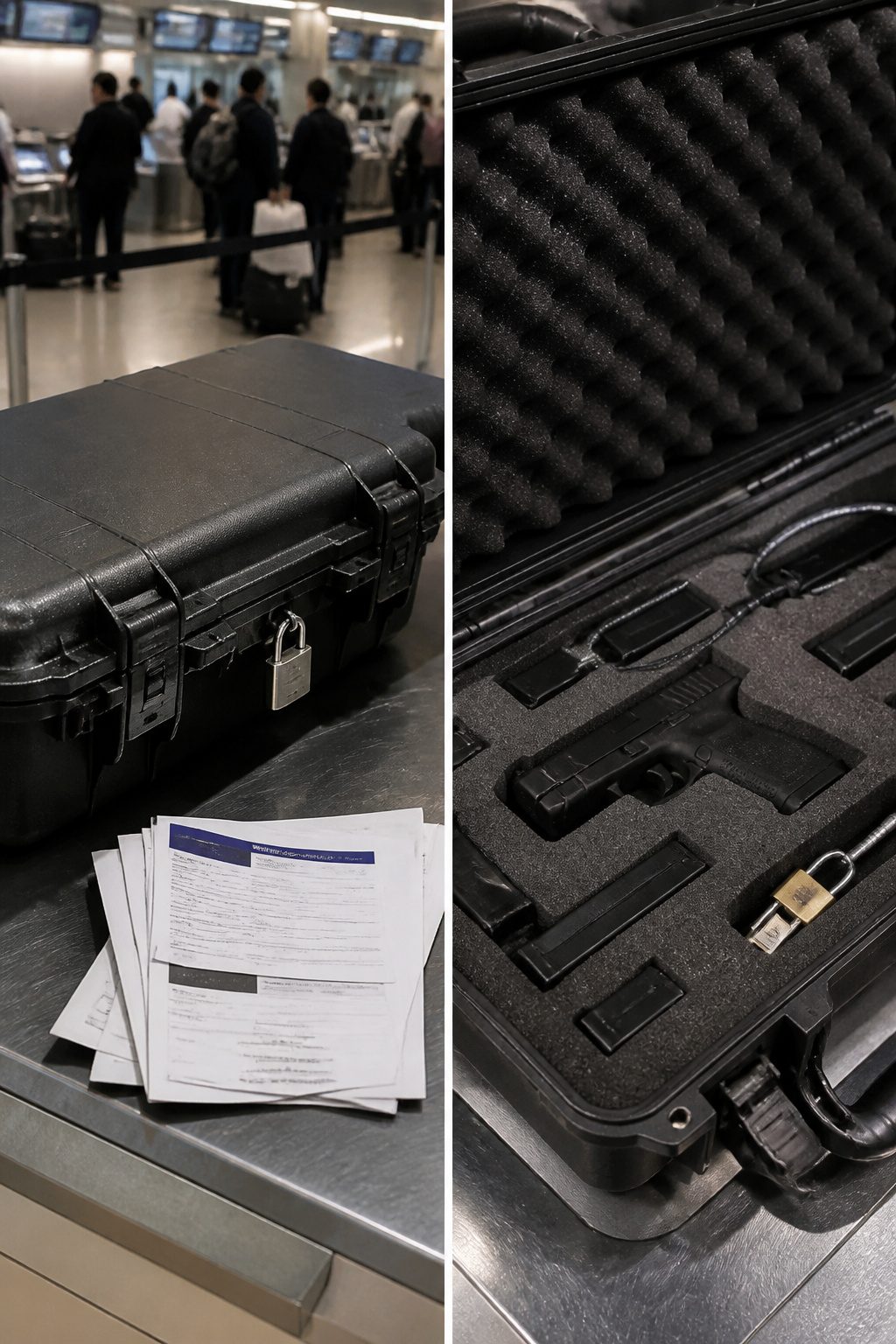
Flying with a firearm means leaving the road rules behind and learning a separate system entirely. The Transportation Security Administration requires every gun to travel as checked baggage only, declared at the counter every single time, locked inside a hard-sided case with only you holding the key or combination. Ammunition rides in that same case if you want, but it stays out of your carry-on entirely, and magazines, even empty ones, need to be inside the locked container too.
Airlines layer their own limits on top of TSA’s baseline. Some cap how many rounds you can pack, and most want ammunition in its original manufacturer’s box or something equally sturdy. Printed copies of both TSA rules and your specific airline’s policy are worth carrying, since training levels among check-in staff vary widely and a paper reference saves arguments.
New York and New Jersey airports deserve a hard look before you book. Federal protections exist for travelers passing through, but authorities at JFK, LaGuardia, Newark, and Albany have arrested people who met every federal requirement anyway. Shipping the gun ahead starts looking reasonable compared to that risk.
Vehicle Storage Methods
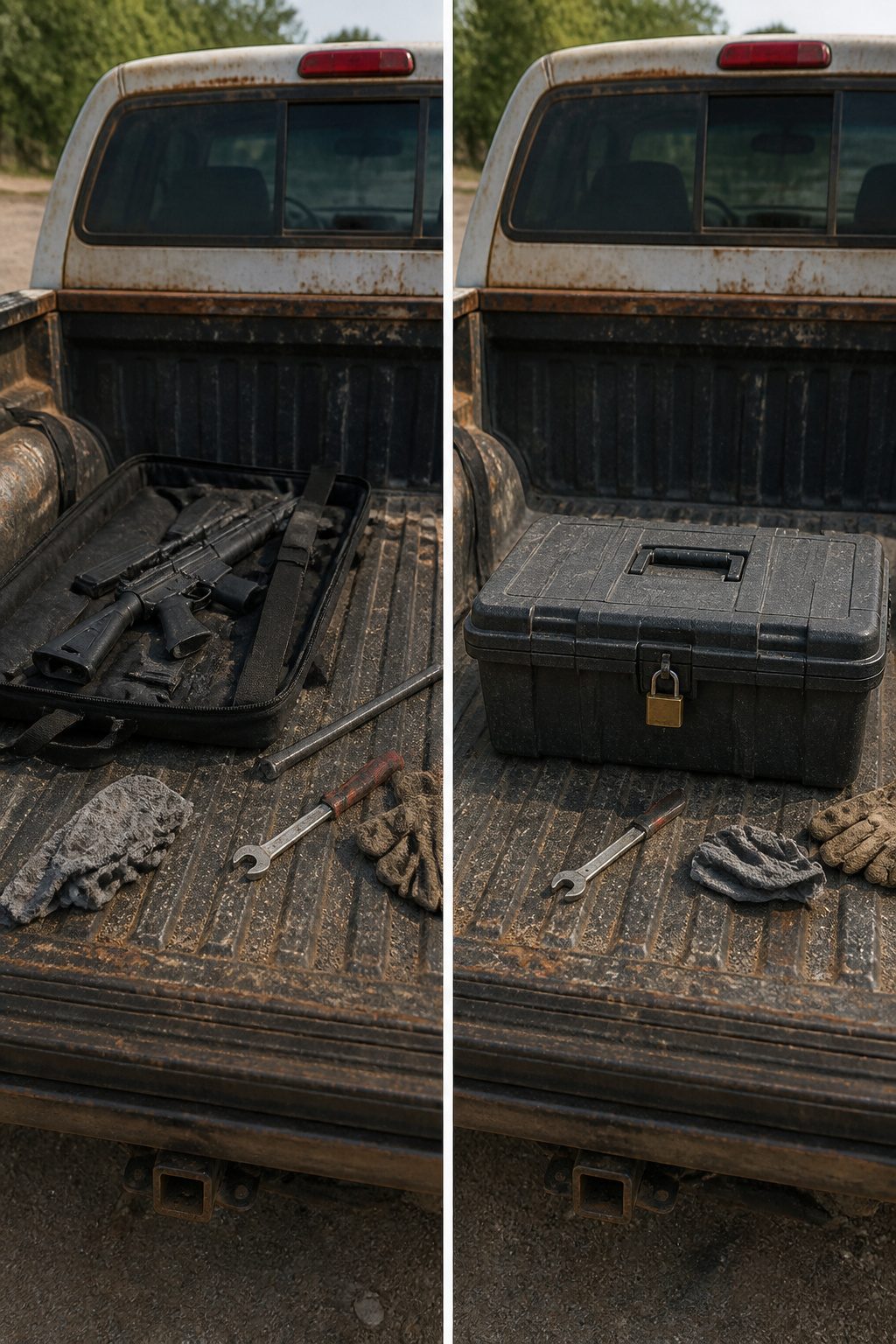
A locked hard case is the baseline for transporting firearms across state lines, but where that case sits in the vehicle changes with the body style. Sedans with a separate trunk make this straightforward: the trunk itself counts as a compartment inaccessible from the passenger area, so an unloaded firearm in a locked case back there satisfies federal requirements under 18 U.S.C. § 926A. The glove box or center console never qualifies, even locked.
SUVs, hatchbacks, and trucks introduce the locked-container requirement because no separate trunk exists. The firearm must go into a locked case, and that case must be inaccessible from the passenger compartment. In a pickup, that means behind the seat only if the case is locked; better still, a toolbox or other storage that can be secured. For SUVs, the rear cargo area behind the last row of seats works if the case is locked, though some states scrutinize whether a folded seat or cargo cover creates "access."
Ammunition adds another layer. Federal law does not mandate separate storage, but keeping magazines unloaded and ammo in its own locked container, preferably original packaging or a designated case, aligns with the stricter state laws you are likely passing through. The locked container must be something other than the glove compartment or center console, a distinction that has tripped up more than one traveler in court. I have read enough transport-arrest reports to keep a second small lockbox just for ammo and to never let the two share a container, even when federal law might allow it.
Frequently Asked Questions
Can I transport a firearm across state lines without a permit?
Yes. Federal law under the Firearms Owners’ Protection Act lets you transport a firearm between two places where you may legally possess it, provided the gun stays unloaded and locked in a container not reachable from the passenger compartment. A trunk satisfies this requirement in a sedan; vehicles without trunks need a locked case that is not the glove box or center console.
Do I need to tell police I have a firearm if pulled over?
It depends entirely on which state stops you. Some states require immediate disclosure the moment an officer approaches your window; others leave the choice to you. Silence is only safe where the law explicitly permits it, and assumptions about reciprocity will not shield you from a local charge for non-disclosure in a mandatory state.
How should I store ammo during transport?
Keep ammunition in its own locked container, separate from the unloaded firearm. Original manufacturer packaging or a dedicated ammo box with a padlock works. Federal guidelines do not mandate this separation, but many state laws do, and combined storage has been interpreted as making ammunition accessible in some jurisdictions.