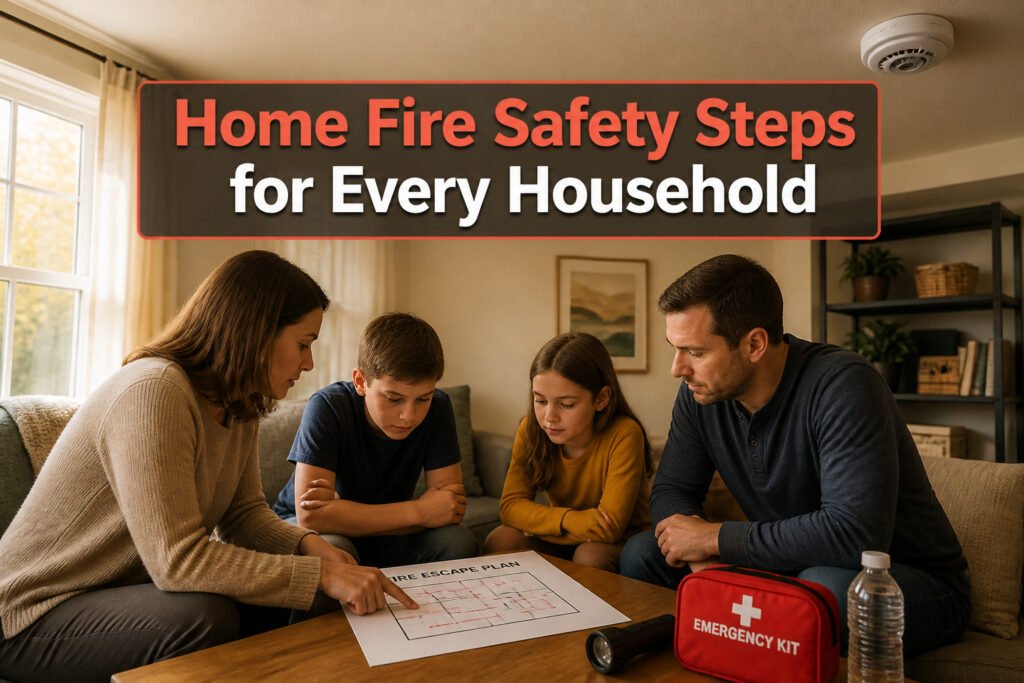
Home fire safety is the set of habits and equipment that give you a chance to escape before smoke and flame trap you. Most people who die in house fires had no working smoke alarm to wake them, and the National Fire Protection Association puts that figure at three out of five. The two minutes you might have are not enough to learn your exits for the first time.
Smoke Alarms on Every Level

The National Fire Protection Association found that three out of five home fire deaths happen in homes with no working smoke alarms. That statistic is what moved me to stop assuming the old units in my hallway were enough.
Every level of the house needs its own alarm, including the basement, plus one inside each bedroom and another just outside sleeping areas. The bedroom placement matters because closed doors buy time but also muffle sound. A unit in the hallway may not wake someone behind a solid door.
Monthly testing takes thirty seconds. Press the button, listen. If you have the newer 10-year sealed units with long-life batteries, you still test monthly; you just skip the battery swap. For replaceable batteries, the twice-a-year daylight saving time change is the easiest memory hook. The whole alarm itself gets replaced at ten years, not because it looks old but because the sensor degrades.
Kitchen placement deserves real thought. Mount the alarm at least 10 feet from the stove, or expect false alarms that train you to ignore the thing. Cooking smoke is not a fire; a blaring alarm you disable mid-burger is not protection.
If a fire starts in your home you may have as little as two minutes to escape. Early warning from a working smoke alarm plus a fire escape plan that has been practiced regularly can save lives.
Two minutes is barely time to find your shoes. The alarm’s job is to hand you those minutes awake and moving, not coughing in a dark hallway wondering which way is out.
Testing and Maintaining Alarms

A smoke alarm only earns its place on the ceiling if it actually works when you need it. The test button gets pressed once a month, every month, and the sound should fill the room within a few seconds. Weak or delayed sound means either a dying battery or a unit going bad.
Replace standard batteries every six months, or at minimum once a year. The newer alarms with sealed 10-year lithium batteries still need that monthly test, though the battery itself gets left alone. When the unit hits ten years old, the whole thing goes in the trash. Age degrades the sensor, not just the power source.
That chirp in the middle of the night means low battery, period. I learned this the hard way: 2 AM, a single beep every minute, the alarm mounted on a vaulted ceiling. The ladder lived in the garage. By the time I dragged it through the hallway, found a 9V in the junk drawer, and climbed up half-asleep, the chirp had trained me to keep batteries stocked in the kitchen and a small step stool in the hall closet. Borrowing a battery from a working alarm to silence the noise leaves you with a dead unit somewhere else. The replacement battery costs less than a coffee; the borrowed silence could cost everything.
The Escape Plan

A working escape plan starts with two ways out of every room, and one of them has to be a window if the door is blocked by smoke. The Portland fire department’s guidance puts it plainly: agree on those exits, pick a meeting place outside, and practice the whole thing twice a year. Drawing the floor plan helps, especially with kids in the house. Mark the doors, the windows that open, the smoke alarms, and the spot where everyone gathers, something fixed like a tree across the street or a neighbor’s mailbox.
I made the wrong assumption that my own child knew which window opened in their room. The latch was stiff, the screen stuck, and in a drill they wasted seconds yanking the wrong one. Now we test both exits every spring and fall, including whether a child or a pet can actually use them. Small children and anyone with mobility needs need an adult assigned to them; the plan fails if everyone assumes someone else will do it.
The rule after that is simple and hard: get out, stay out. Never go back inside for a pet, a phone, anything. Call 911 from outside, using a cell phone or a neighbor’s line, and tell the dispatcher if someone is still inside so firefighters can handle the rescue.
Cooking Without Burning

Cooking fires top the list of what starts home blazes, and most of them begin with someone walking away from the stove. A burner left on with no eyes on it can turn a quick errand into an emergency call, so the rule is simple: stay put, or turn the burner off before you leave the room.
Flammable stuff belongs nowhere near the heat. Dish towels, paper, sleeves that hang loose, anything that can catch should stay back at least three feet. Gas stoves need the flame kept entirely under the pan, not licking up the sides where it meets fabric. Turn pot handles inward so a bump doesn’t send dinner and fire onto the floor.
Timers matter more than pride. Simmering, baking, roasting, it all gets a timer even if you’re "just in the house," because distraction finds everyone eventually. Clean the stovetop and range hood too; grease buildup is fuel waiting for a spark.
The oil I left heating one afternoon taught me the rest. Smoke hit first, curling black from the pan, and water would have sent flaming oil everywhere. A lid slid over the pan killed it. No water. Ever. Starve the fire of air, turn off the heat, and keep that lid on until the metal goes cool.
Fire Extinguishers Within Reach

A fire extinguisher only works if you can get to it before the fire grows past the point of no return. That means one on every level of the home, with the kitchen and garage as the non-negotiable spots since most home fires start in one of those two places. I keep ours mounted on the wall near the stove, not buried under the sink where panic would make me forget it exists.
The label to look for on a typical home unit is ABC, meaning it handles ordinary combustibles, flammable liquids, and electrical fires. Specialty extinguishers exist, but most households are fine with that rating.
Using one correctly comes down to PASS: Pull the pin, Aim at the base of the fire, Squeeze the handle, and Sweep side to side. Everyone in the household should practice the motion before the moment arrives, because reading the label while smoke fills the room is not a viable plan.
The harder judgment is knowing when to pull the extinguisher versus when to leave. A small fire in a pan or a wastebasket, caught immediately, is what these are for. Anything larger, anything spreading, or any doubt about your exit path means the extinguisher stays on the wall and you get out. The extinguisher is for buying seconds, not for fighting a fire that has already won.
If the Alarm Sounds

Smoke kills more people than flames do, and it rises fast. The back of your hand against a closed door, starting low and working up, tells you whether the room beyond is survivable. Heat means fire on the other side; find another way out. Every room needs two exits because smoke can block the first one without warning.
If the path out is smoky, crawl with your head under two feet from the floor where the cleaner air sits. Close doors behind you as you go; each one slows the spread.
The meeting place matters more than people think. Pick a tree, a mailbox, something across the street. Everyone heads there, everyone gets counted. Someone missing gets reported to the dispatcher when you call 911, not to a firefighter you hope to flag down. The fire department has the gear and training for rescue; you do not.
Most fire deaths come from smoke inhalation, not burns. Yet people still run back inside for pets, for phones, for photo albums. The numbers say what that costs. Once out, staying out is the rule that keeps you alive.
Heating and Space Heaters
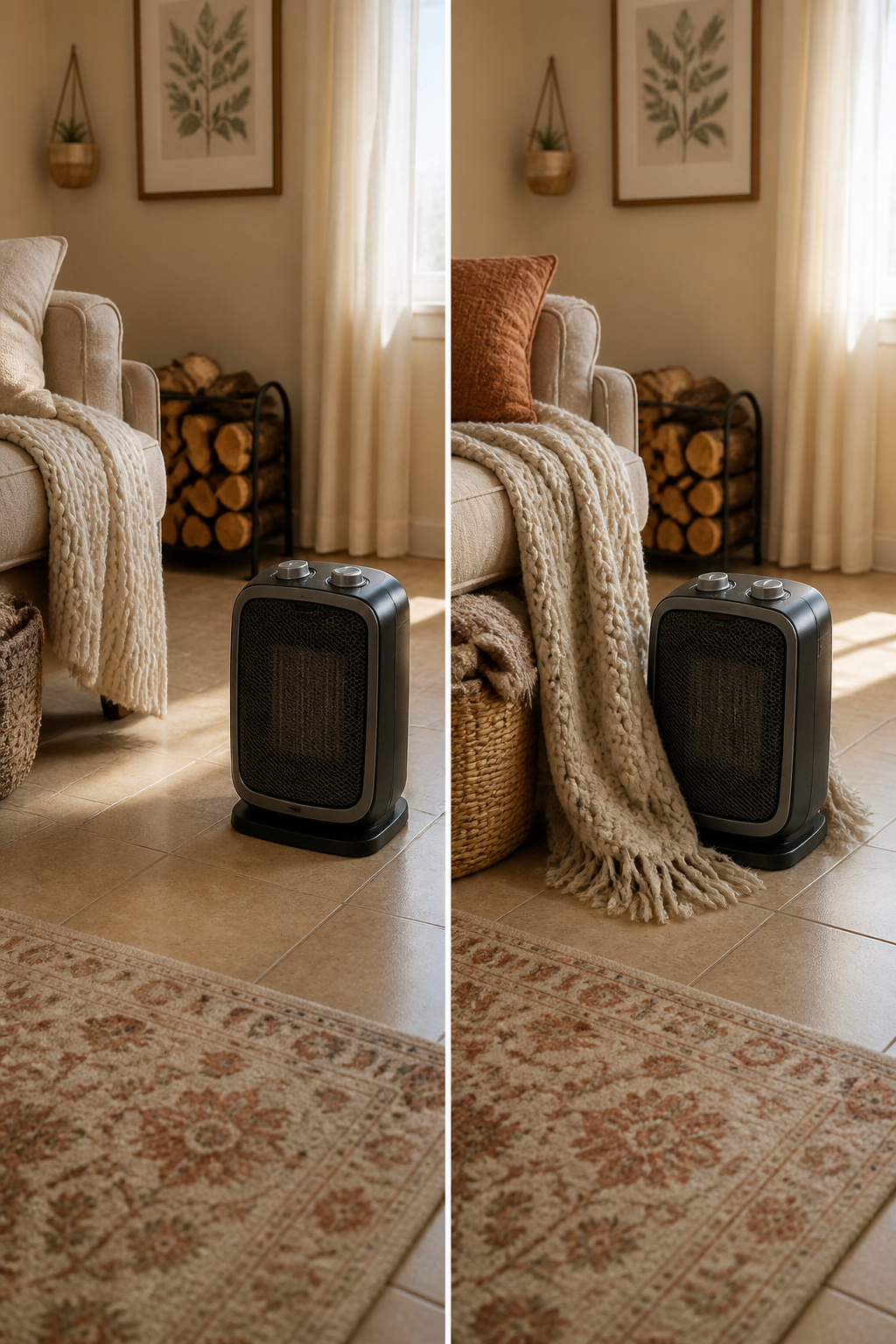
Space heaters demand respect, and most of the time people give them none. Three feet of clearance on all sides is the minimum; anything that can burn, including bedding, clothing, or rugs, belongs well outside that zone. The unit itself sits on a level, flat surface, never on furniture or carpet that can overheat underneath.
A fire in the local paper last winter stuck with me. A blanket draped too close to a bedroom space heater, left running while the occupant stepped out. The room was gone in minutes. That is the pattern: never leave a space heater unattended, and never run one overnight while you sleep. The tip switch that shuts the unit off if it tips over is worth checking for before you buy.
Plug directly into the wall outlet. Extension cords are not built for the draw, and the failure point starts at the connection.
Alternative heating carries its own rules. Wood stoves and fireplaces need annual chimney inspection and cleaning, with no more than one inch of soot or ash buildup allowed. Refuel any heater only when it is cool, and keep the refueling away from open flame. A fire screen or glass doors contain sparks. Gas fireplaces need a professional-installed safety pilot, even with an annual chimney check.
Candles and Open Flame

Candles light roughly 15,600 residential structure fires every year, according to the latest available figures, killing 150 people, injuring another 1,270, and causing $539 million in direct property damage. Most of those fires started because someone left the room, fell asleep, or simply forgot the flame was there.
A coworker once told me about the candle she left burning on her bathroom sink while she soaked in the tub. The window was cracked, the curtain moved, and the flame tipped onto a stack of hand towels she had set too close. She caught it before the fire spread past the ceiling paint, but the scorch mark stayed there until she moved out. Never leave a candle unattended means exactly that: out of the room, out of sight, extinguished.
Sturdy holders on stable, level surfaces keep the wax where it belongs. Keep them clear of upholstery, curtains, bedding, paper, and anything else that can burn. Place them where children and pets cannot reach or knock them over, and trim wicks to one-quarter inch before lighting. Extinguish a candle when it burns within two inches of its holder, or when you leave the room, whichever comes first.
Battery-operated candles flicker without any of this risk. The good ones cost a few dollars more than a bag of tea lights, and they never drip wax onto your ceiling.
Escape Ladders and Backup Routes

A second-story bedroom with one door and painted-shut windows is a trap waiting for a match. Collapsible escape ladders matter only when the path downstairs is blocked, so test the ladder before the night you need it. Mine lives under the bed; the first time I unrolled it, the hooks caught the sill wrong and the whole thing twisted. Better to learn that at 2 PM than 2 AM.
The window itself needs checking. Paint layers over a decade can seal a sash so tight that breaking the glass becomes the only option, and bare feet on broken glass in a fire is its own disaster. Work the window open twice a year when you test the smoke alarms.
Sprinkler systems deserve a mention here even though few homes have them. Fires are controlled before firefighters arrive roughly 90% of the time where sprinklers are present, yet the cost and installation hassle keep them rare. For most households, the ladder and the opened window are the more practical second route.
Lithium-Ion Batteries in the House

Lithium-ion batteries power more of the house every year, and most guides to home fire safety still treat them like an afterthought. E-bikes, scooters, power tools, laptops, the spare phone in the drawer: each one is a potential ignition source if the battery is damaged, cheaply made, or left charging on the wrong surface.
Charge only on hard surfaces, never on a bed or couch, and keep the device away from sleeping areas. A video I watched showed a battery fire starting in an apartment hallway with no warning sound, no smell, no smoke detector tripping first. Thirty seconds to flashover. The person filming had walked past that pack ten minutes earlier.
Certification marks matter more with batteries than with almost anything else plugged into the wall. Look for UL, ETL, or CSA on the product itself, not just the charger. Third-party chargers save a few dollars and cost people their apartments. The same goes for "overnight charging," which really means charging unattended; if you are not awake to notice the first wisp of smoke, you are not charging safely.
Fire Blankets and Small Tools

A fire blanket belongs in the kitchen, not buried in a closet, because you will not have time to hunt for it. The fiberglass weave smothers a stovetop fire or wraps someone whose clothes ignited, and it leaves no powdery residue to clean off the range. That is where its usefulness ends. A spreading fire or one behind cabinetry needs an extinguisher, and the blanket will not substitute for one.
My neighbor proved this faster than I did. His skillet caught flame while we were both cooking, and he dropped a lid on it, killed the oxygen, and walked away. I, meanwhile, was rummaging for the extinguisher I had not inspected in two years, half-certain it would discharge and half-certain it would not. The lid worked in ten seconds. My plan would have taken two minutes and a cloud of monoammonium phosphate across his stove. I keep a blanket on a wall hook now, within arm’s reach of the burner, and I check the extinguisher every spring when the clocks change.
Frequently Asked Questions
How often should I test my smoke alarms?
Test smoke alarms once a month by pressing the test button. Even 10-year sealed units with long-life batteries need this monthly check; you just skip the battery replacement. The whole alarm gets replaced at ten years because the sensor degrades, not because it looks old.
What should I include in my fire escape plan?
Your plan needs two ways out of every room, with one being a window if the door is blocked by smoke. Pick a fixed meeting place outside, like a tree across the street or a neighbor’s mailbox, and practice the whole escape twice a year. Assign an adult to help small children or anyone with mobility needs so no one assumes someone else will do it.
What are the best practices for cooking safely?
Stay at the stove or turn the burner off before you leave the room. Keep flammable materials, including dish towels, paper, and loose sleeves, at least three feet from heat. Turn pot handles inward so a bump won’t send contents onto the floor, and use a timer even when you’re "just in the house" because distraction finds everyone.
What should I do if there’s a fire?
Get out, stay out, and call 911 from outside using a cell phone or neighbor’s line. Never go back inside for pets, phones, or belongings. Tell the dispatcher if someone is still inside so firefighters can handle the rescue; they have the gear and training that you do not.
How can I prevent candle fires?
Never leave a candle unattended; extinguish it when you leave the room or it burns within two inches of its holder, whichever comes first. Use sturdy holders on stable, level surfaces, keep them away from curtains, bedding, and paper, and trim wicks to one-quarter inch before lighting. Battery-operated candles eliminate this risk entirely.