Ice safety is a moving target that depends on more than thickness alone. Four inches of clear, blue ice can hold a person on foot, but white ice formed from refrozen snow carries only half that strength. The color tells you what formed it, and that formation predicts whether it will hold weight before you ever step on.
Visual Inspection
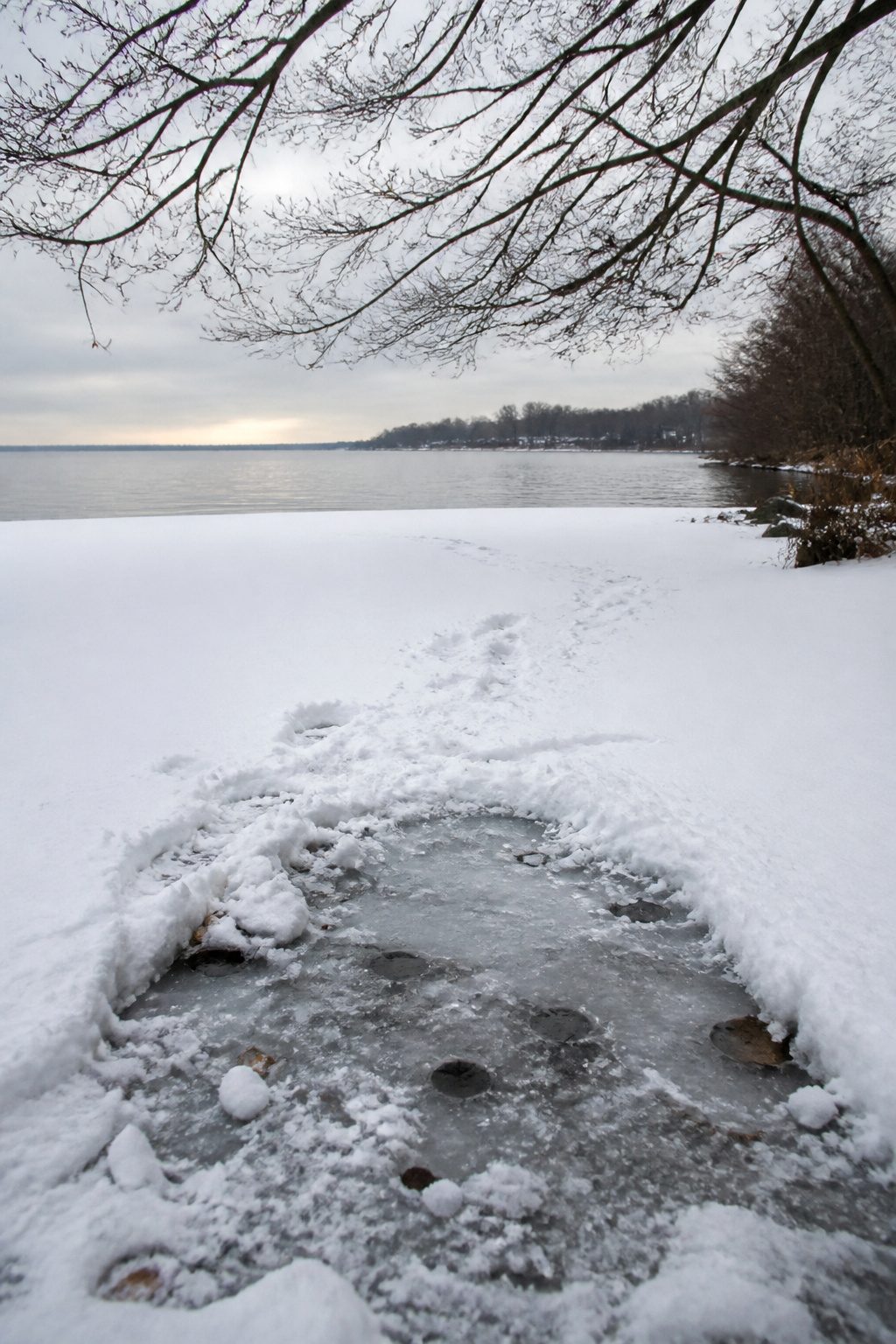
Snow cover is the first thing that makes me hesitate. It looks harmless, even beautiful, but it acts like an insulator that warms the ice underneath and hides whatever cracks, breaks, or holes might be waiting. Before I do anything else, I sweep it aside with a boot and look for water pooling on the surface, or water flowing onto the ice from the shore. Either one means the ice is actively melting or was never thick enough to support weight in the first place.
Soft or mushy spots are an immediate turn back. So is ice that looks like it already thawed and refroze; that cycle weakens structure instead of restoring it. I also watch for logs and rocks embedded in the surface, since they absorb solar heat and create thin pockets around them. If you see water on top, do not step on. That rule has kept me dry more than once. The visual scan takes maybe two minutes and costs nothing. Skipping it to save time is the mistake that turns a good day into a rescue.
Ice Color
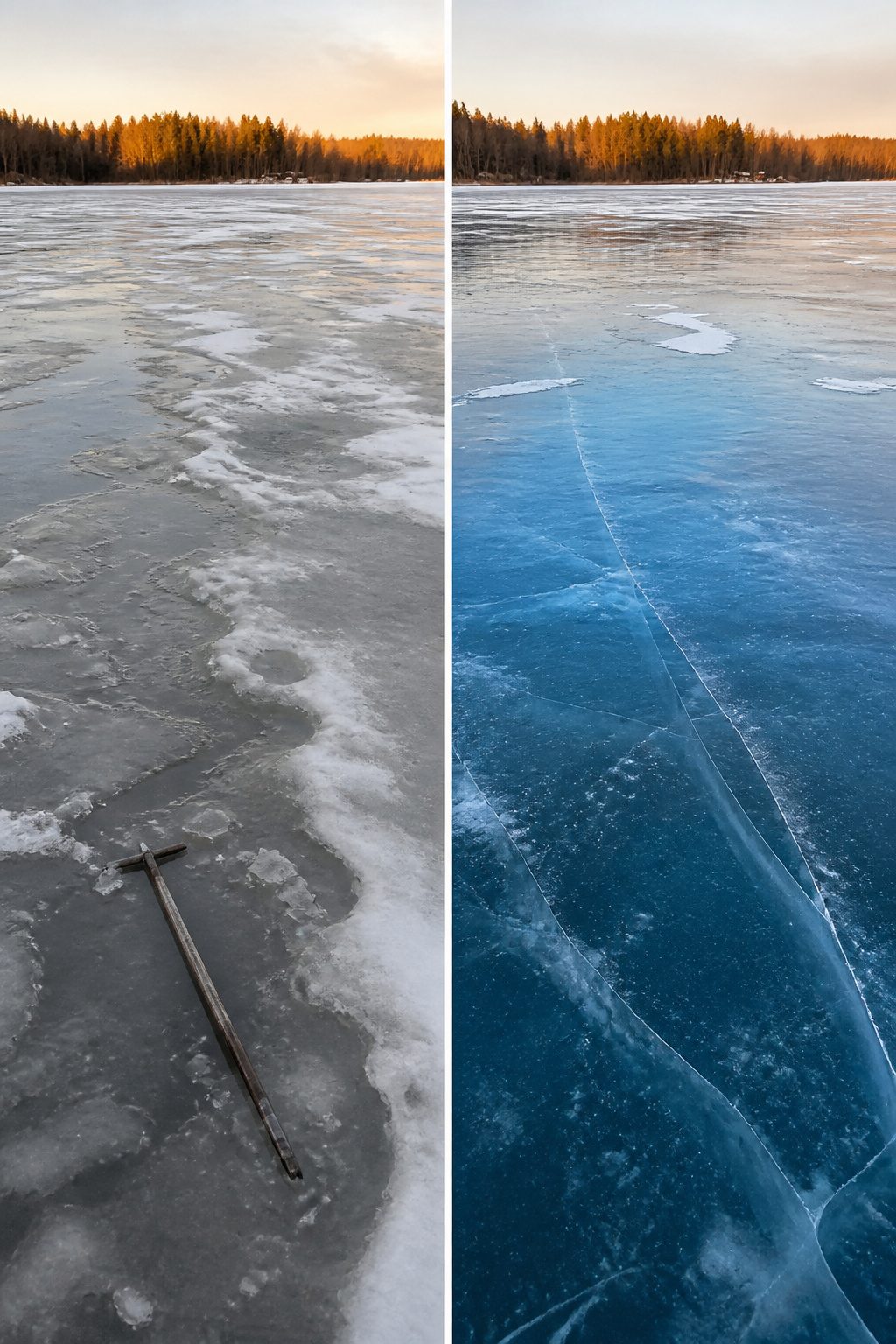
Ice color tells you more than thickness alone, and learning to read it took me a few hard lessons.
Dull grey means water is present. The ice is actively failing. Grey shows up in spring thaw or anywhere current runs underneath, and it will not hold weight. I once watched a snowmobile track disappear into grey ice near a river mouth; the rider had checked thickness but missed the color shift.
White opaque ice forms when snow falls, partially melts, and refreezes. It looks solid but carries only about half the strength of clear ice. Four inches of white ice is not four inches of safe ice. I have drilled through thick white layers and found slush underneath, the whole stack weaker than it appeared.
Blue or clear ice is the safest, when thick enough. It forms from lake water freezing hard and cold, typically below -8 degrees Celsius, and the color deepens as thickness builds. This is the ice the old saying points to: thick and blue, tried and true. I check for it with a spud bar before I drill; the ring of clear ice sounds different, sharper, than the dull thud of white.
White and grey mottled ice late in the season is the worst combination. It is breaking down from within. I stay off it entirely.
Ice Thickness
A hand auger with a four-inch bit lives in my truck all winter, mostly because one hole tells you almost nothing. Ice thickness can run a foot in one spot and drop to an inch or two just a few yards away, so checking at regular intervals across your route is the habit that keeps you dry.
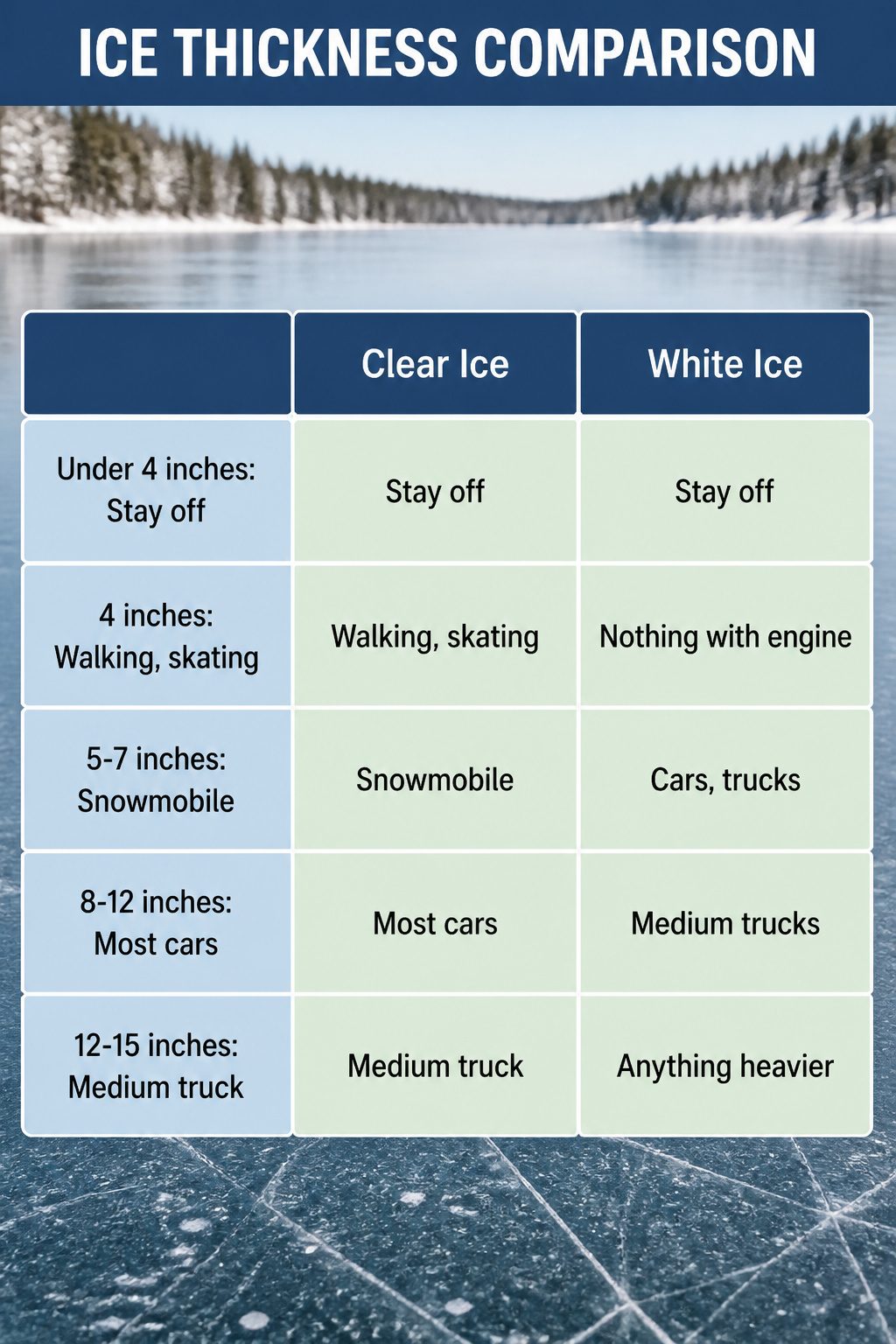
The numbers are straightforward once you have them. Under four inches means stay off. Four inches of new, clear ice supports walking, ice fishing, or skating. Five to seven inches handles a snowmobile or ATV. Eight to twelve inches is the threshold for cars or small pickups, and twelve to fifteen inches is what you want before driving a medium truck out there. White ice, the kind formed with snow, carries about half the strength of clear blue ice, so those numbers assume the good stuff.
A cordless drill with an eighteen-inch wood auger bit works if you mark the bit at four, five, eight, twelve, and fifteen inches. Drop a tape measure through the hole for the exact read. Do not trust how fast the drill breaks through; the surface goes quick and your brain will overestimate what is left underneath.
Buddy System
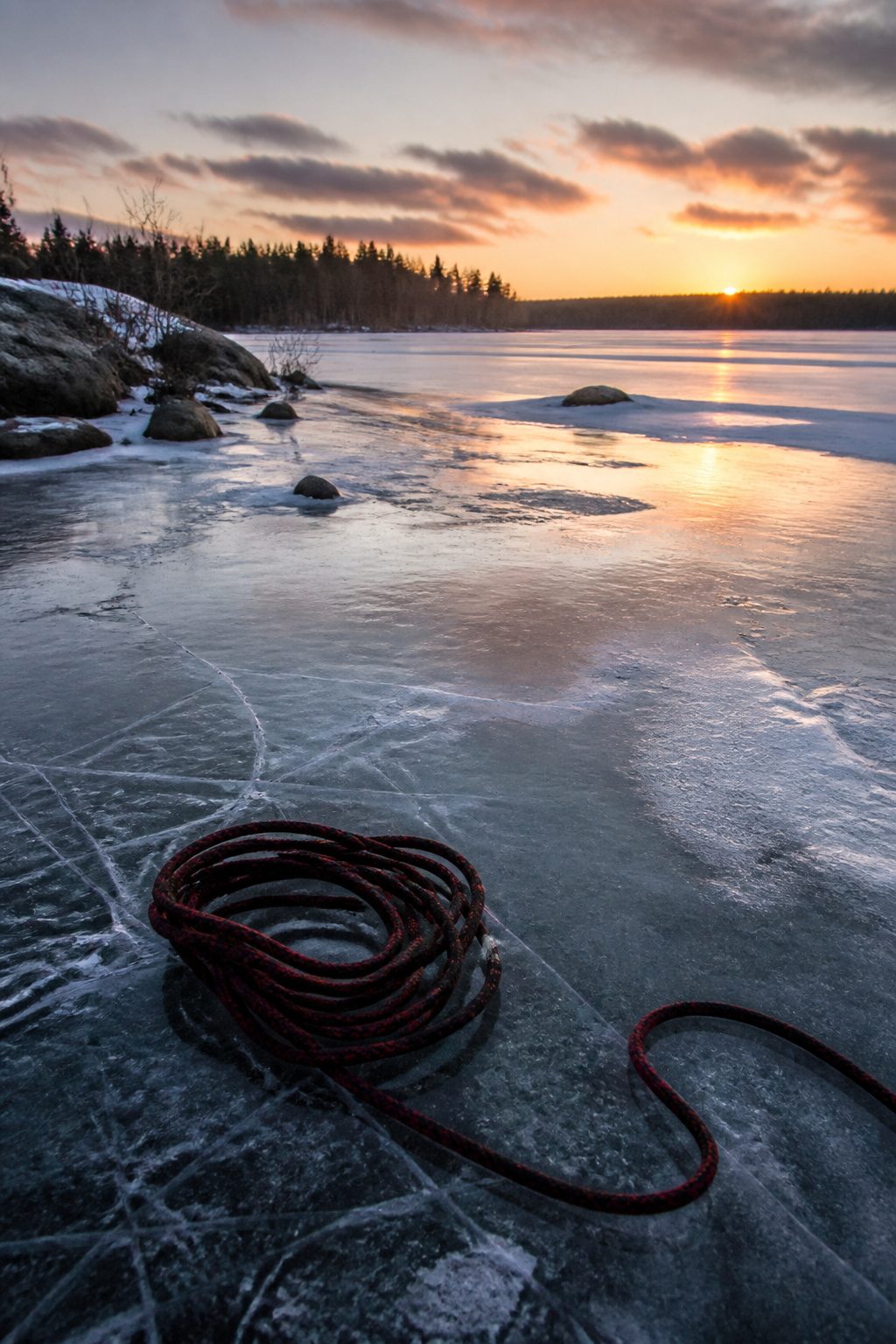
Ice over your head with nobody around is a hard way to learn why the buddy system matters. Four winters back, I stepped onto a lake alone at dusk, figuring I could read the ice well enough after twenty years of doing this. I was wrong about a pressure ridge near the inlet, and the crack that opened under my left foot stopped my heart before my body got wet. I backed out on my belly, drove home shaking, and have not broken that rule since.
Always go with someone, and always tell someone else where you are going and when you expect back. The person on shore does not need to be on the ice; they just need to know your route and your hard return time. Two people on the ice should travel single-file and spaced apart, so one person’s weight does not load the same plate the other is testing. If the person ahead goes through, the person behind stays back, calls for help, and throws rope rather than walking to the edge. I carry a length of webbing for exactly this now. Going alone means no one is there to do any of that, and no one on land knows to send rescue if you are not back by dark.
Emergency Preparedness
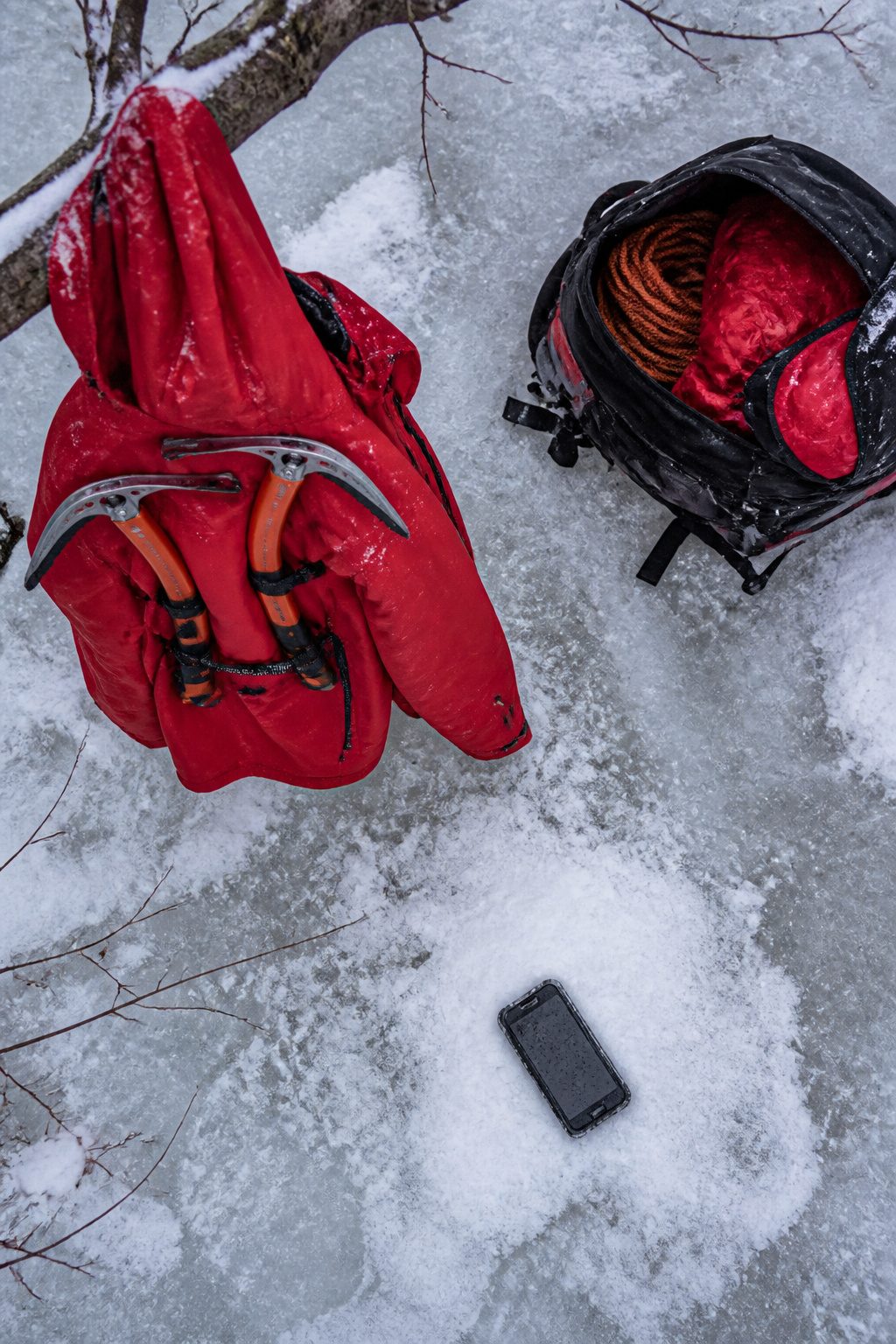
Ice picks live on a cord around my neck from the moment I step onto a frozen lake, because pulling yourself out of black water with numb hands is nearly impossible without them. The picks bite into the shelf while you kick, the technique sources describe: arms spread, kick hard, roll to safety. I also carry a cell phone in a waterproof bag, not loose in a pocket where one fall would kill it. A float coat or life jacket goes on before the picks; the insulation buys time, and keeping your head above water is the difference between a bad story and a statistic. Rope lives in my pack too, not for me but for the reach-throw-row sequence if someone else goes through. Two seasons back, a buddy broke through near a pressure ridge he assumed was solid. The picks got him out before I could throw the line, but the rope was already in my hand. Check the thermometer, not the calendar is the rule that keeps me carrying all three every trip, because air temperature and recent weather rewrite ice quality faster than memory does.
What the Color Means
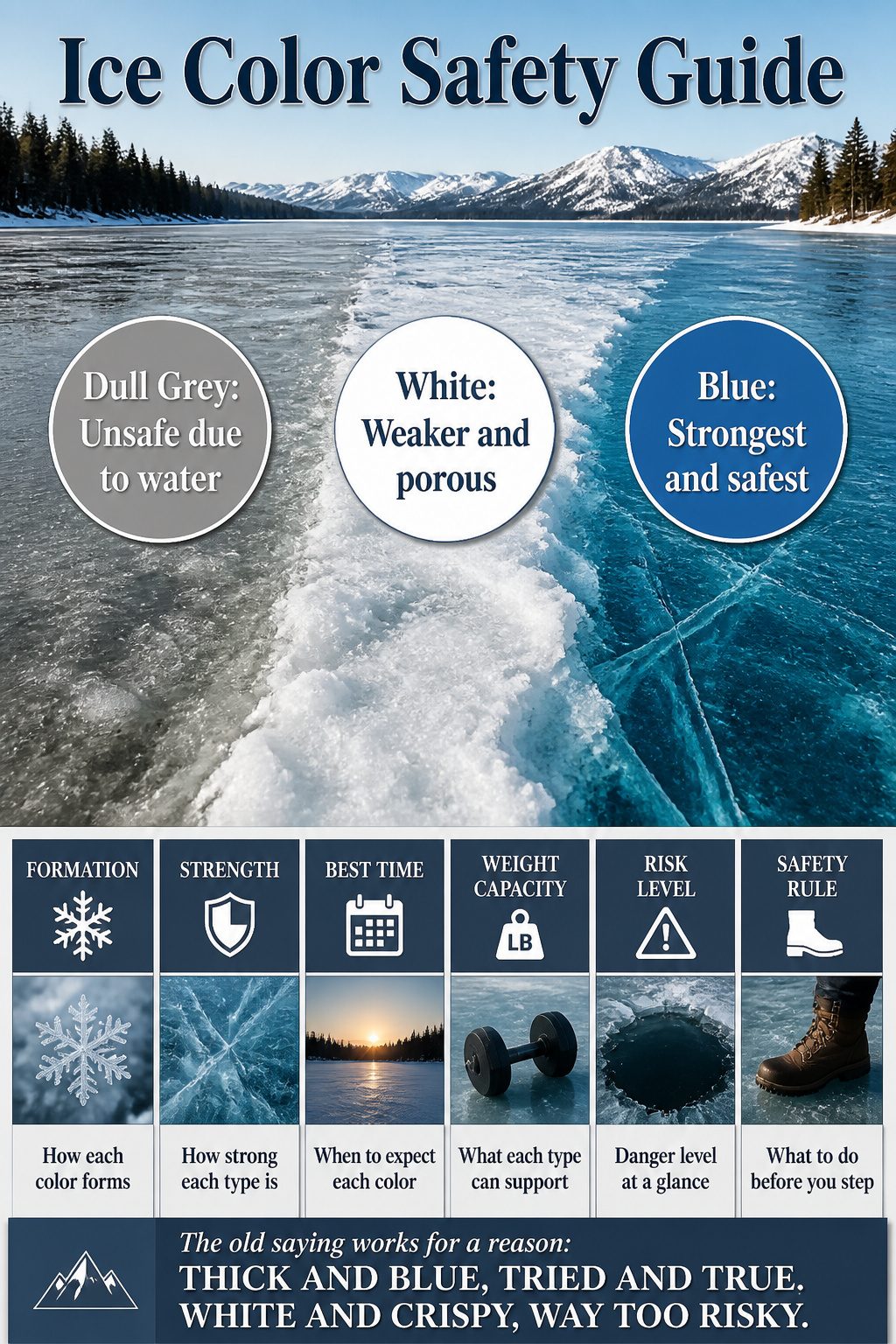
Ice color tells you what formed it, and that formation predicts strength better than thickness alone. Here is what each color means for the decision to step on.
- Dull grey means water is present and the ice is unsafe. This color shows up in spring or over fast-moving water all winter long. It will not hold much weight. Stay off.
- White or opaque ice is weaker than it looks. It forms when snow falls on the surface, partially melts, and freezes again. The result is porous, often full of air pockets, and only about half as strong as clear ice.
- Blue or clear ice is the strongest and safest type when it is thick enough. It forms from the lake water itself freezing, not from snow. The color deepens as thickness increases because water is naturally turquoise blue, and this density is what holds weight.
The old saying works for a reason: thick and blue, tried and true. White and crispy, way too risky.
Thickness by Activity
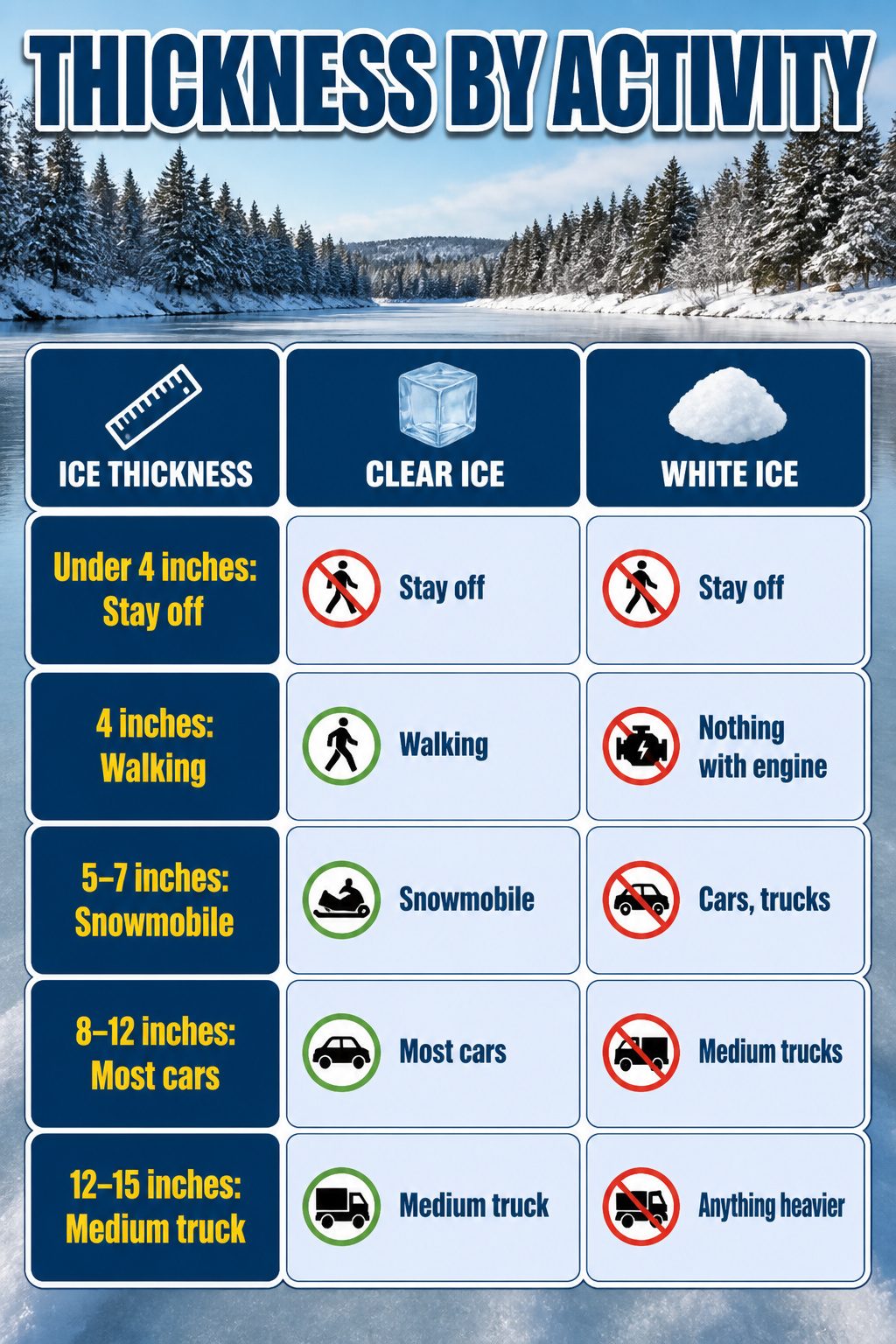
The numbers for ice thickness stay fixed in my head from years of checking before I head out. Clear, new ice is what these measurements assume, and that distinction matters more than most people realize.
| Ice thickness | What it supports | What to avoid |
|---|---|---|
| Under 4 inches | Nothing — stay off | Any activity at all |
| 4 inches | Walking, ice fishing, skating on foot | Anything with an engine |
| 5–7 inches | Snowmobile or ATV | Cars, trucks |
| 8–12 inches | Most cars or small pickups | Medium trucks |
| 12–15 inches | Medium-sized truck | Anything heavier |
White ice or "snow ice" cuts these figures roughly in half, which is why a lake that held my snowmobile last January might not hold it after a warm spell refreezes. Connecticut makes it flat illegal to drive cars or trucks on ice regardless of thickness, a rule I check for whenever I cross state lines.
If Someone Falls Through
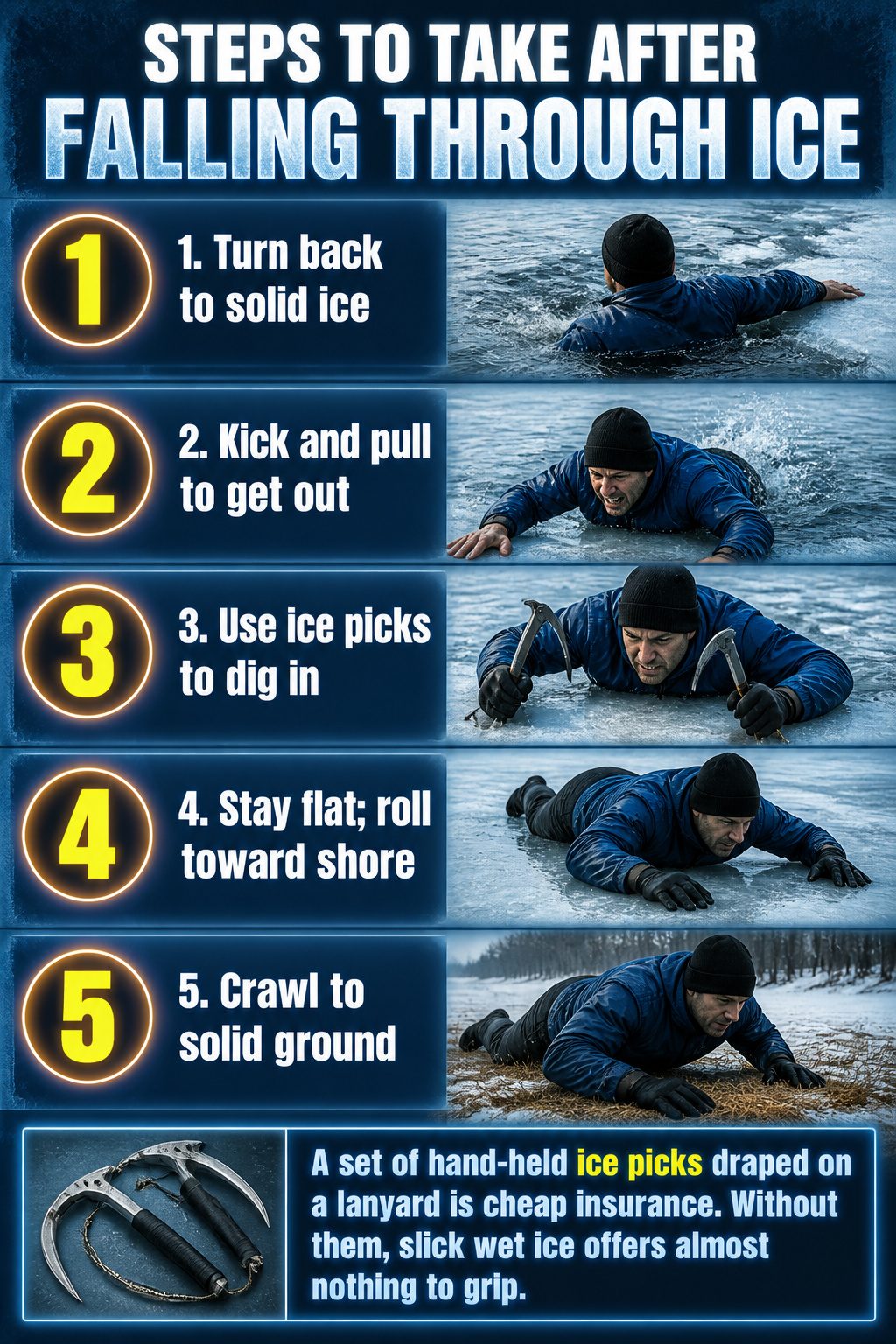
Cold water shock hits hard and fast. Your heart rate and blood pressure spike the instant you go through, so the first minute is about controlling your breathing before your hands go numb.
- Turn back toward solid ice, the direction you came from, and get your arms flat on the unbroken surface.
- Kick your feet hard while pulling with your arms to haul yourself out horizontally. Do not try to lift yourself straight up; that loads the ice edge and can break it again.
- Grab your ice picks if they are around your neck and use them to dig in and pull.
- Once your chest clears the water, stay flat. Do not stand. Roll away from the hole toward shore, keeping your weight spread.
- Crawl until you are on obvious solid ground, then start treating for hypothermia and get medical attention.
A set of hand-held ice picks draped on a lanyard is cheap insurance. Without them, slick wet ice offers almost nothing to grip.
Why I Ask Locally First
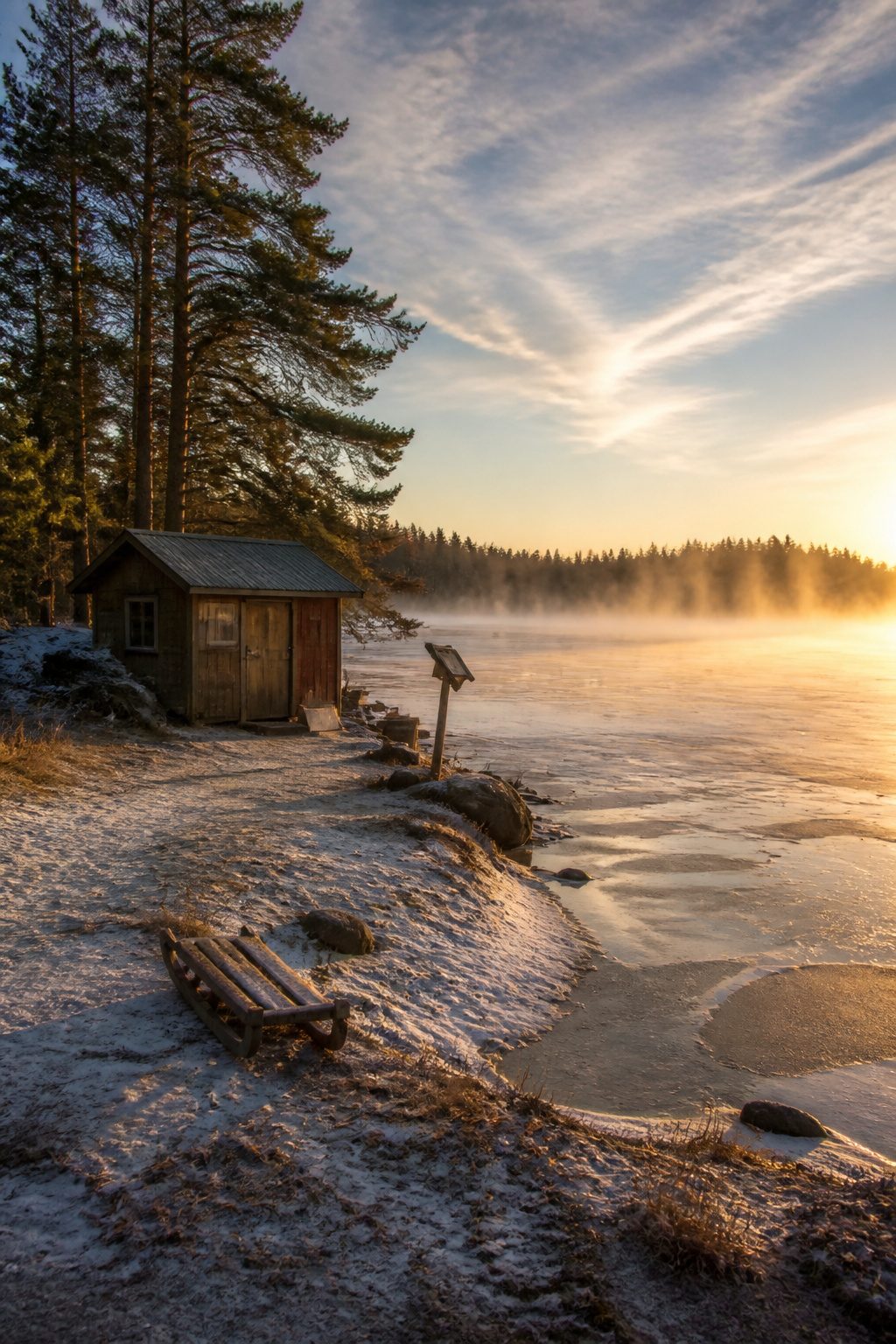
General rules about ice thickness only get you so far. Last January, I had four inches of clear ice on a back lake in northern Wisconsin, which should have been enough for foot traffic. The local bait shop guy, an older man who runs jigs through the same holes every winter, told me to stay away from the east end where a spring fed in. The ice there looked identical, maybe even a little thicker with drifted snow on top. I listened, and later that week two snowmobilers went through in exactly that spot. The DNR doesn’t monitor local conditions; bait shops, fishing clubs and resorts often have the most current read on thickness and danger zones because they’re out there daily. Ice changes fast, sometimes dramatically across short distances. A statewide guideline won’t tell you about yesterday’s warm snap, the current shifting under a pressure ridge, or which inlet the local kids already tested and found wanting. The general rule says four to six inches of clear ice for walking. The local expert says which four inches you can actually trust today.
Frequently Asked Questions
How thick does ice need to be to skate on?
Ice needs to be at least 4 inches thick for safe skating, walking, or ice fishing. That measurement assumes clear, blue ice rather than white or snow ice, which is only about half as strong and needs to be roughly twice as thick for the same load.
What color ice is safe?
Blue or clear ice is the safest type when it is thick enough. White or opaque ice is weaker than it looks, and dull grey ice means water is present and the ice is actively failing. The old saying works: thick and blue, tried and true.
What should I do if I fall through the ice?
Turn back toward solid ice, spread your arms flat on the unbroken surface, and kick your feet hard while pulling yourself out horizontally. Do not try to lift yourself straight up, and do not stand once you clear the water; stay flat and roll away from the hole until you reach solid ground. Ice picks on a lanyard around your neck make pulling yourself out possible with numb hands.
Is it safe to drive on ice?
Driving on ice is risky and requires at least 8 to 12 inches of clear ice for cars or small pickups, and 12 to 15 inches for medium trucks. Connecticut makes it flat illegal to drive cars or trucks on ice regardless of thickness, and other states may have similar restrictions you should check before crossing state lines.
How can I check ice thickness?
Use an ice auger, chisel, or cordless drill with a marked bit to make a hole, then drop a tape measure through for the exact read. Check at regular intervals across your route because ice can run a foot thick in one spot and drop to an inch or two just a few yards away. Do not judge thickness by how fast the drill breaks through, since the surface goes quick and your brain will overestimate what remains underneath.