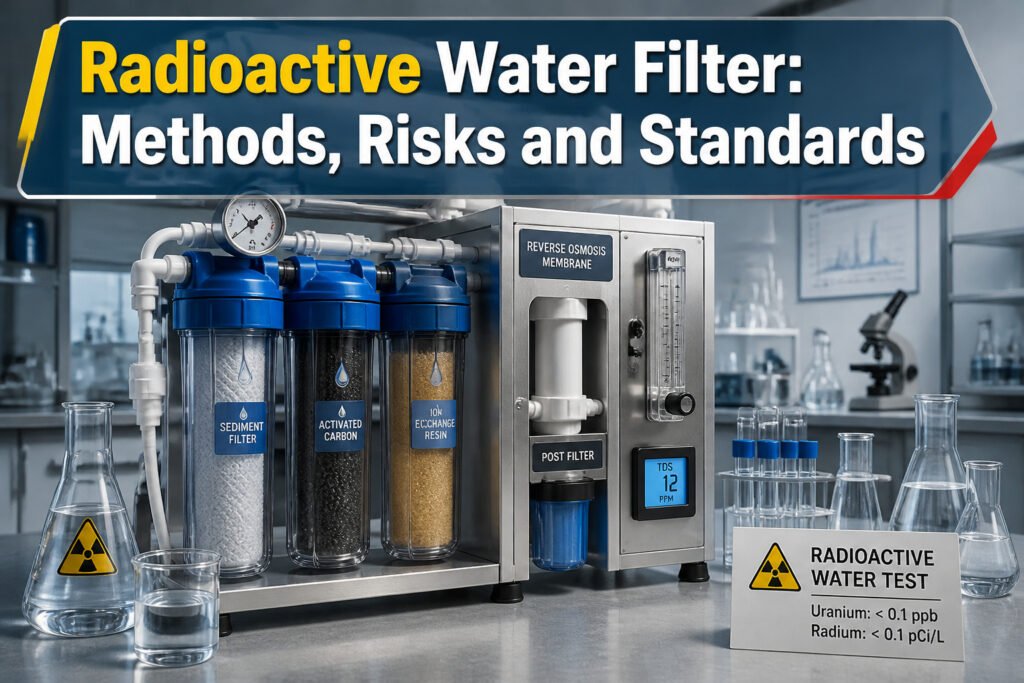
A radioactive water filter is a specialized water treatment system designed to remove radionuclides like uranium, radium, and alpha particles from drinking water. No single method removes everything: reverse osmosis membranes block dissolved metals but let gaseous radon and iodine-131 pass straight through, which is why the EPA identifies it as best available technology only for certain contaminants, not all. The gap forces most effective setups to layer multiple technologies, such as pairing RO with activated carbon or ion exchange resin, and even then the carbon reaches saturation and can actually raise radiation exposure if replaced late. Up to 99 percent removal is published for RO on uranium and radium, but that figure drops when the contamination includes dissolved gases or when maintenance slips.
Reverse Osmosis
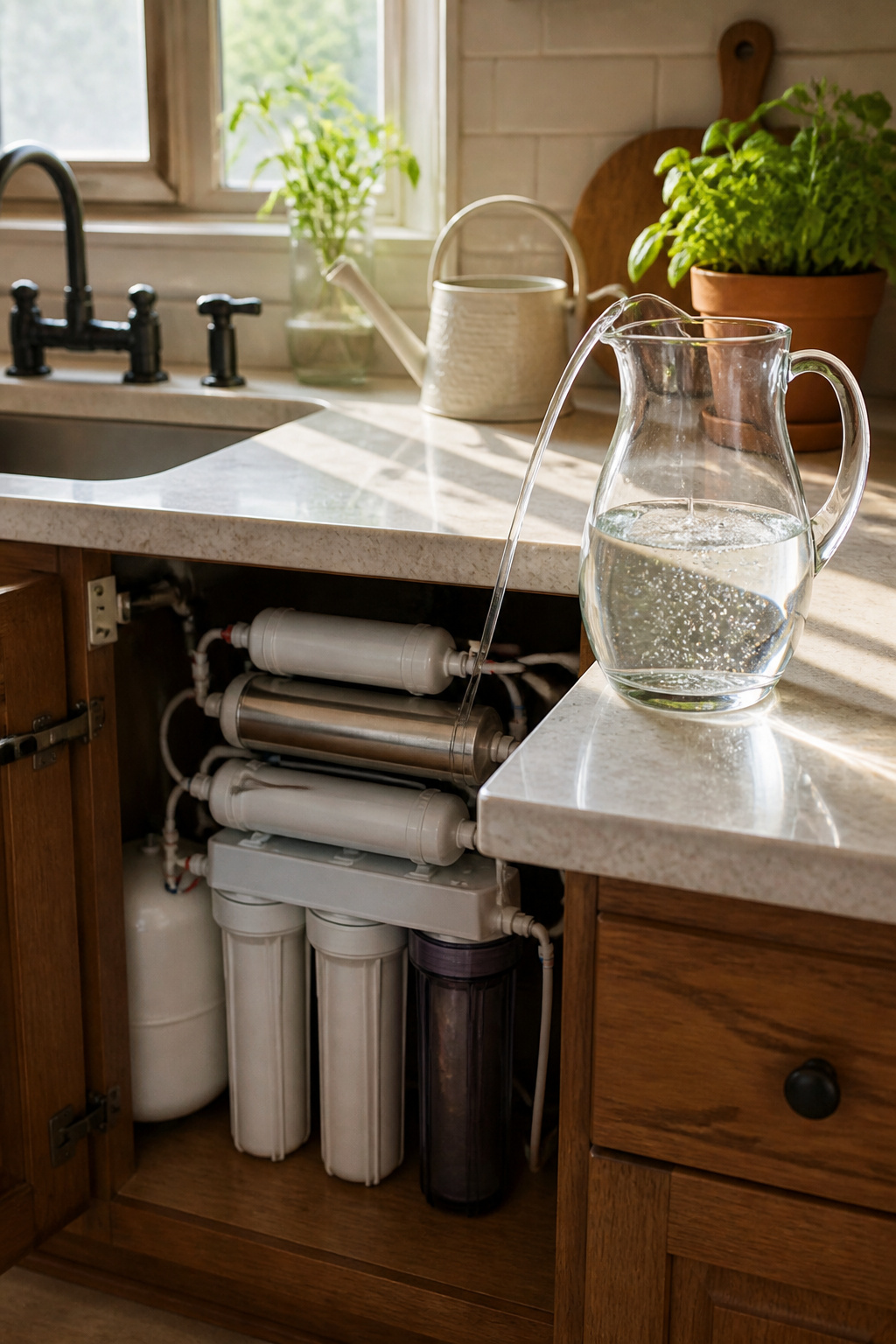
Reverse osmosis membranes filter water through pores sized at 0.0001 microns, small enough to block uranium, radium, and other radionuclides while letting water molecules pass. The EPA identifies this as a best available technology for uranium, radium, gross alpha, and beta particles, with removal rates reaching up to 99 percent.
That figure is why reverse osmosis sits at the top of the list for single-method radioactive water filter options. A typical under-sink unit runs water through a pre-filter, the membrane housing, and a post-filter stage, often including activated carbon to handle what the membrane misses. Whole-house systems scale this up with a storage tank and delivery pump.
The gap in the system is gaseous contamination. Radon and radioactive iodine-131, which enters water supplies as a dissolved gas after atmospheric release, pass straight through RO membranes. A 2011 detection in Boise, Idaho showed this pathway in action: iodine-131 appeared in rainwater, then drinking water days later. For that scenario, activated carbon helps, but the membrane alone does not.
Compact and automatable, RO units fit small systems and residential installs without heavy infrastructure. The technology is proven, the numbers are published, and the limitation is known.
Ion Exchange
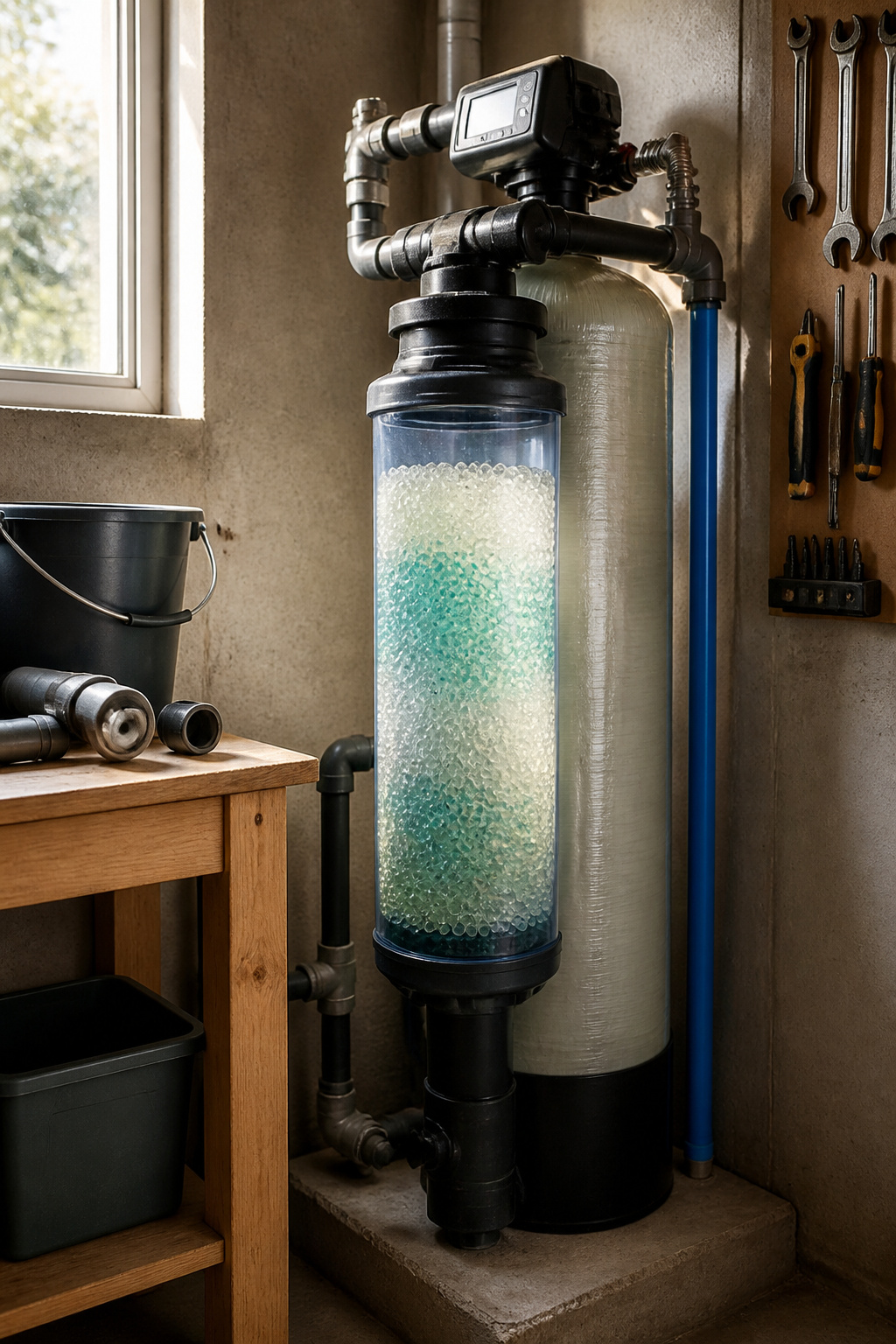
Ion exchange works like a chemical swap meet inside a tank of resin beads. Water flows through, and the radioactive ions trade places with safer ones already clinging to the resin. Radium, a positively charged cation, gets bumped off by sodium or potassium. Uranium, negatively charged, gives way to chloride. The radioactive material stays trapped while the water moves on.
This method shines in two very different setups. Small water systems already use it to soften water by swapping out calcium and magnesium for sodium; about 95 percent of radium comes out in that same pass, with no extra equipment needed. The beads get backwashed and reused until the radionuclide buildup eventually forces disposal.
Standalone ion exchange handles radium and uranium well enough that some under-sink filters build around it specifically, leaving beneficial minerals like calcium untouched. Pairing it with reverse osmosis makes sense when the water carries multiple contaminants the resin was not designed to catch, or when a household wants the redundancy of two removal barriers rather than one. The resin does the heavy lifting on radioactive ions; the secondary system mops up what slips past or handles a broader threat profile.
Ion-exchange beads remove about 95 percent of the radium. The beads are usually backwashed and reused. Radionuclide content eventually builds up in the beads after prolonged usage and are then disposed.
That buildup matters for anyone running these systems: the beads do not last forever, and replacement or disposal is a scheduled cost, not an emergency surprise.
Activated Carbon Filtration

Activated carbon pulls radioactive contaminants out of water through adsorption, a surface-level bond where particles stick to the carbon as water passes through. The material captures radium, strontium, and some dissolved solids effectively enough that it sits alongside ion exchange as one of the two primary treatment options for radiation in drinking water.
The catch is capacity. Carbon reaches a load limit. Once saturated, it stops binding new contaminants, and the filter becomes a liability rather than a shield. Radon makes this especially urgent: carbon adsorbs radon gas, but accumulated particles can break free and wash back into the water stream, which actually raises radiation exposure instead of lowering it. That means replacement frequency depends on what is in your water. Heavy contamination demands shorter intervals, not the standard schedule. Running carbon past its useful life is a mistake that turns the filter into a source of the very problem it was installed to solve.
Zeolite Filters

Zeolite minerals pull cesium and strontium out of water through ion exchange, swapping those radioactive ions for harmless ones like calcium and potassium. The crystal structure of these natural aluminosilicates creates a molecular trap: water flows through, the radioactive cations stick, and what continues downstream carries ordinary minerals instead. Nuclear facilities in Britain and the United States have used this method for environmental cleanup, and the same approach was deployed after the Chernobyl disaster to protect drinking water supplies.
For homeowners, zeolite shows up in specialized countertop and undercounter filtration systems marketed for radiation reduction, often combined with activated carbon and KDF media. The mineral itself requires processing; raw zeolite does not perform the same way as material that has been cleansed and activated for maximum exchange capacity. Cesium-137 and strontium-90 are the isotopes these filters target most specifically.
Ion exchange resins, a related technology, were used at the Department of Energy’s Savannah River Site to address legacy nuclear waste. Some resins have been engineered specifically for cesium capture. The EPA lists ion exchange as a recommended method for radioactive compound removal, though its guidance notes cesium-137 has appeared in U.S. rain samples without yet entering drinking water supplies here.
Combination Systems
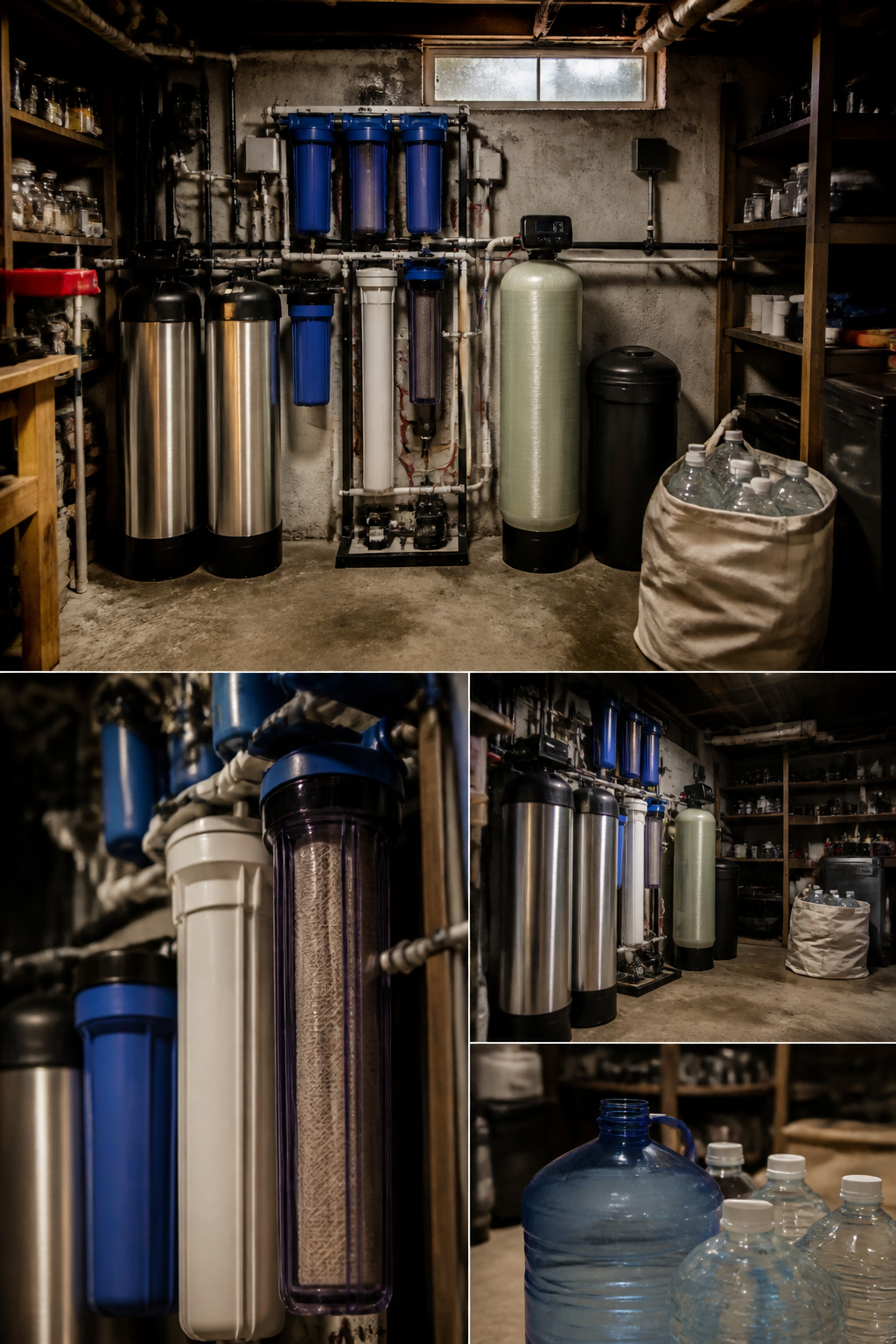
A radioactive water filter that relies on one method leaves you with whatever that single barrier misses. Reverse osmosis handles dissolved solids well, but pairing it with carbon filtration catches contaminants the membrane might not address. The carbon absorbs and fixes radioactive materials through adsorption, while the RO membrane works on a different principle entirely. Each layer compensates for the other’s gaps.
Layered filtration matters because no single method removes 100% of radioactive contaminants. The difference between 85% reduction and 95% reduction is not incremental; it is the difference between a system you trust and one you replace. Some combination units add ion exchange resins, exchanging harmless sodium ions for radioactive radium. Three-stage systems exist that stack carbon, reverse osmosis, and ion exchange in sequence.
The catch is maintenance load. Carbon reaches capacity and stops binding contaminants. Multiple stages mean multiple points of failure, multiple filter changes, multiple chances for a busy owner to let one slide. I would rather change three filters on schedule than discover one failed barrier after the fact.
Health Risks
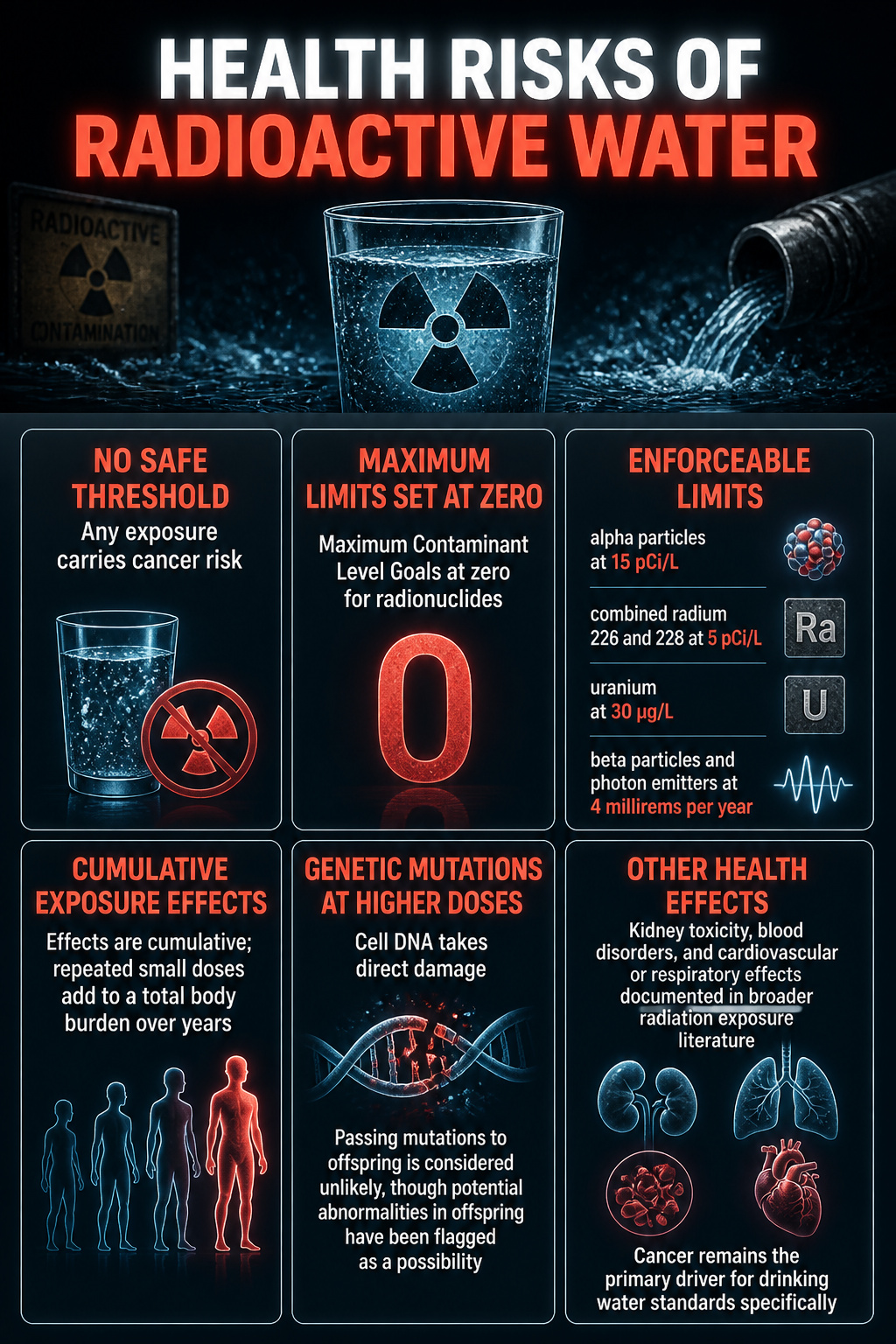
Radioactive particles in drinking water carry no safe threshold, according to the EPA. The agency sets Maximum Contaminant Level Goals at zero for radionuclides, including alpha particles, beta particles, radium 226 and 228, and uranium, because any exposure carries cancer risk. The enforceable limits sit higher only because treatment technology cannot always hit that zero mark: alpha particles at 15 pCi/L, combined radium 226 and 228 at 5 pCi/L, uranium at 30 µg/L.
Cancer remains the documented endpoint that drives these standards. What convinced me, reading through the health literature, is how low-level exposure accumulates. The effects are cumulative; repeated small doses add to a total body burden over years, not days. The EPA also notes beta particles and photon emitters at 4 millirems per year as the enforceable ceiling, a figure that reflects this buildup rather than any single glass of water.
Genetic mutations enter the picture at higher doses, where cell DNA takes direct damage. Passing mutations to offspring is considered unlikely, though potential abnormalities in offspring have been flagged as a possibility. Pregnancy carries its own concern: fetal cells divide rapidly, making them more vulnerable during developmental windows. The kidney toxicity, blood disorders, and cardiovascular or respiratory effects documented in broader radiation exposure literature turn up in contaminated water contexts too, though cancer remains the primary driver for drinking water standards specifically.
Where Contamination Starts

Radionuclides start their journey into drinking water from three distinct places, and groundwater carries the highest risk because it moves slowly and lacks the natural dilution that surface water gets from currents and turnover.
Natural deposits in the earth’s crust release radon, radium, and uranium as these elements decay through soil and bedrock. Granite formations are particularly rich in radium, and deep aquifers sitting in this bedrock tend to show higher concentrations than shallow wells. What convinced me, reading through the technical literature, is how passive this contamination is: no spill, no accident, just water slowly picking up particles as it percolates through radioactive strata.
Mining changes the equation. Uranium extraction, oil and gas drilling, any activity that fractures or removes overburden, accelerates the release by exposing fresh surfaces to oxygen and water. The deposits were already there; the disturbance gives them a faster path into your well.
Nuclear facilities add the third source. Waste from power plants and medical facilities contains beta and photon emitters that surface water catches first, then groundwater absorbs as leachate seeps down. Japan’s treated wastewater release from Fukushima, begun August 24, 2023, illustrates how even coastal discharges raise concern: a 2021 study estimated core pollution reaching North America’s coast within about 5 years, spreading across the North Pacific and potentially worldwide within a decade. Ocean water with radioactive particles evaporates, forms vapor, and returns to land through rainfall, eventually percolating into aquifers.
Your well pulls from whatever the surrounding land has released. Shallow, fast-moving water tends to test cleaner. Deep, slow-moving groundwater in mineral-rich or disturbed geology does not.
Testing Your Water
Over 15 million U.S. households drink from private wells, and unlike municipal systems, those wells get no routine inspection for radionuclides. The contaminants are invisible and tasteless; you will not taste uranium or see radium. That is why the burden falls on the well owner to test.
Most well owners never think to check for radiological contamination, partly because the risk is not obvious. A standard water test for bacteria or minerals will not catch radioactive material. For radionuclides, the water needs to go to a certified laboratory, typically after contacting your state or local health department for guidance on sampling.
The EPA sets Maximum Contaminant Levels for community water systems based on drinking two liters daily over seventy years. Those same limits work as guidelines for private wells, even though the EPA does not enforce them there. A certified lab report is the only way to know whether your water stays below those thresholds or whether a radioactive water filter is something you actually need.
EPA Limits
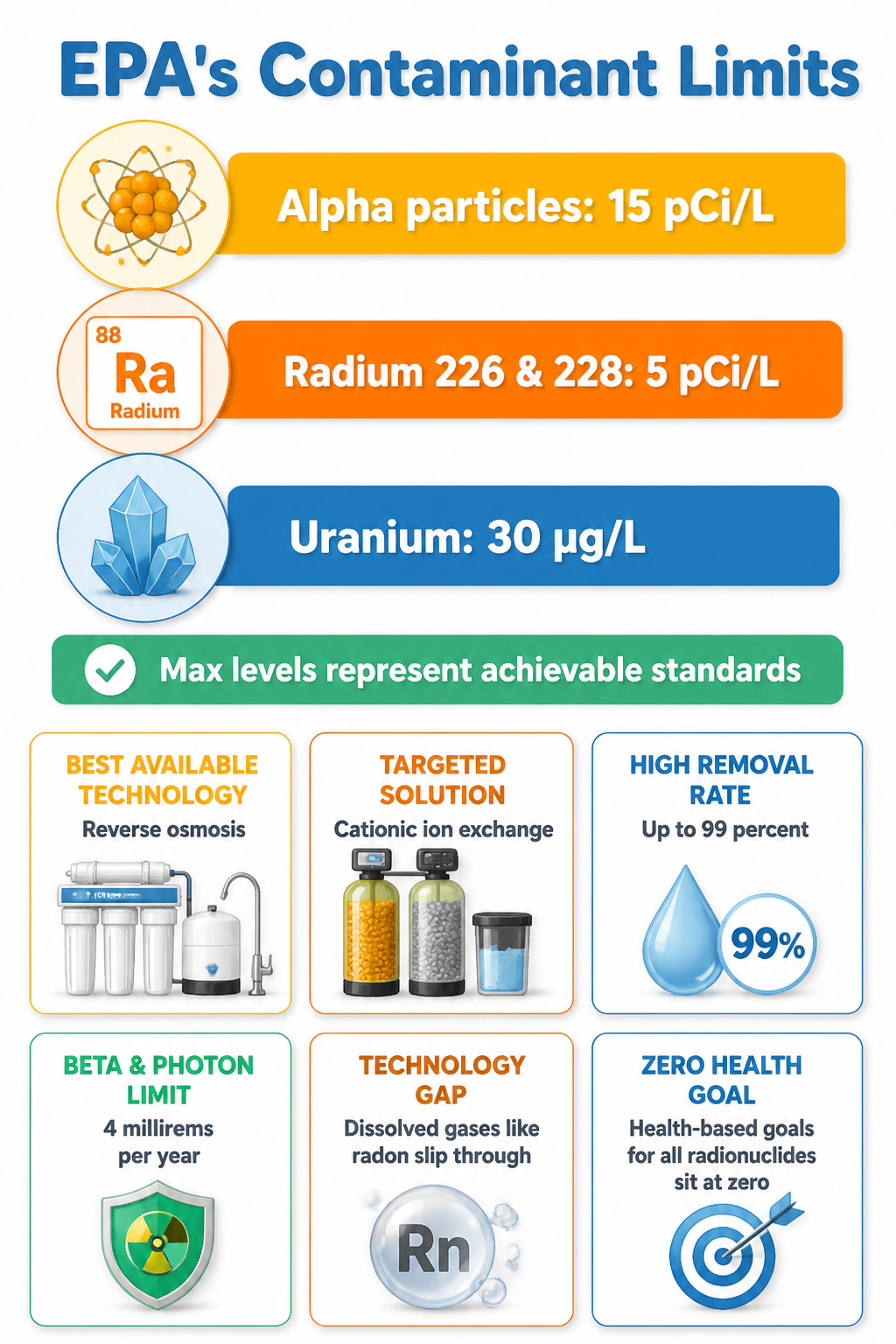
The EPA’s Radionuclides Rule, last updated in 2000, sets enforceable Maximum Contaminant Levels at 15 pCi/L for gross alpha emitters, 5 pCi/L for combined radium-226 and radium-228, and 30 µg/L for uranium. These are not aspirational targets; they represent the lowest levels the agency considers achievable with existing treatment technology, since the health-based goals for all radionuclides sit at zero.
What this means for filter selection is straightforward. A radioactive water filter needs to bring your water at or below these thresholds, not just close to them. Reverse osmosis, which the EPA identifies as best available technology for uranium, radium, and alpha particles, can remove up to 99 percent of these contaminants. Cationic ion exchange offers another path, selectively targeting radium and uranium without stripping beneficial minerals. The 4 millirems per year limit for beta particles and photon emitters matters too, though this is where the technology gaps get tricky: dissolved gases like radon, and contaminants that behave as gases, slip through most membranes entirely.
Frequently Asked Questions
What are radioactive materials?
Radioactive materials are substances that emit ionizing radiation, a type of energy that strips electrons from atoms and can break down molecules in living tissue. Low levels occur naturally from space and Earth itself, while higher exposures come from sources like medical exams, certain building materials, and contaminated water from leaching. The radiation harms living organisms by damaging cells and DNA.
How do radioactive contaminants affect human health?
The EPA sets Maximum Contaminant Level Goals at zero for all radionuclides because any exposure carries cancer risk, and the effects accumulate over years of drinking contaminated water. At higher doses, radiation damages cell DNA directly, which can lead to genetic mutations and potential abnormalities in offspring. Fetal cells are especially vulnerable during pregnancy due to rapid division, and documented effects also include kidney toxicity, blood disorders, and cardiovascular or respiratory problems.
Can water be radioactive?
Yes, water becomes radioactive when radionuclides from natural deposits, mining operations, or nuclear facilities dissolve into it and travel through groundwater or surface sources. Natural decay in soil and bedrock releases radon, radium, and uranium into aquifers, while uranium mining and nuclear waste accelerate this process or add man-made isotopes. Japan’s Fukushima wastewater release beginning August 2023 shows how coastal discharges can spread contamination across oceans and eventually into rainfall and drinking water supplies.
How to remove radioactive particles from water?
Reverse osmosis, ion exchange, and activated carbon filtration are the primary methods, with combination systems offering the most complete protection since no single method removes 100% of radioactive contaminants. Reverse osmosis membranes at 0.0001 microns block up to 99% of uranium, radium, and alpha or beta particles, though gaseous radon and iodine-131 pass through. Ion exchange resin beads remove about 95% of radium by swapping radioactive ions for harmless sodium or chloride, while activated carbon adsorbs radium, strontium, and other particles until it reaches capacity and requires replacement.