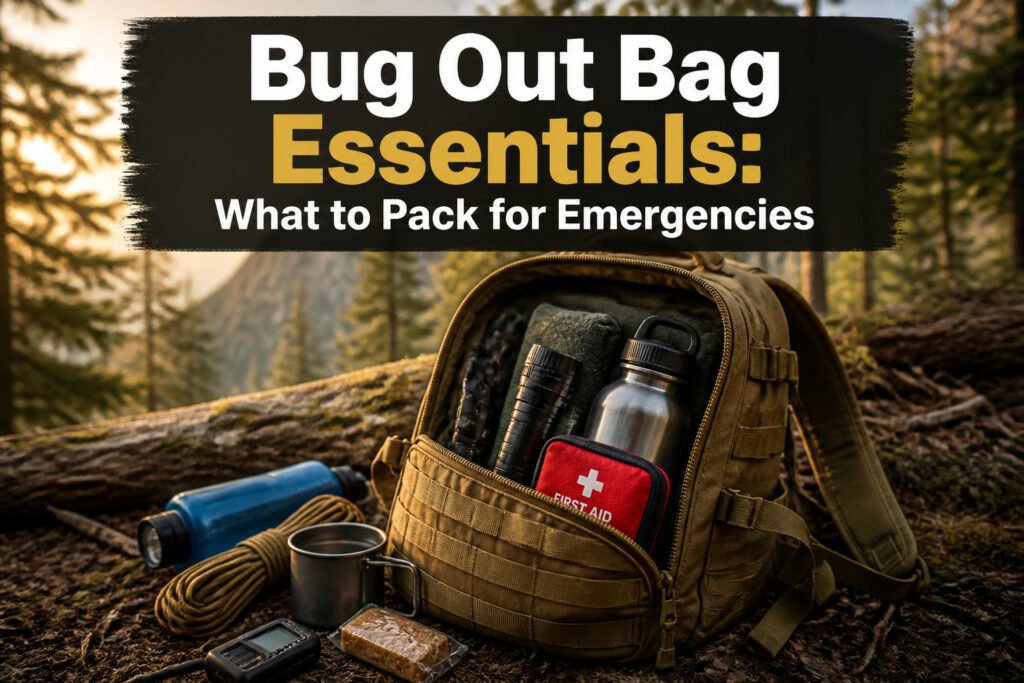
A bug out bag is a portable kit designed to keep you self-sufficient for 72 hours during a forced evacuation. The catch is that most people pack them too heavy to actually carry; FEMA recommends one gallon of water per person per day, which alone hits 25 pounds for a single person. The author learned this the hard way during the Creek Fire, standing in a garage with a laundry basket and dead batteries while an evacuation order allowed seventeen minutes.
Water and How to Purify It
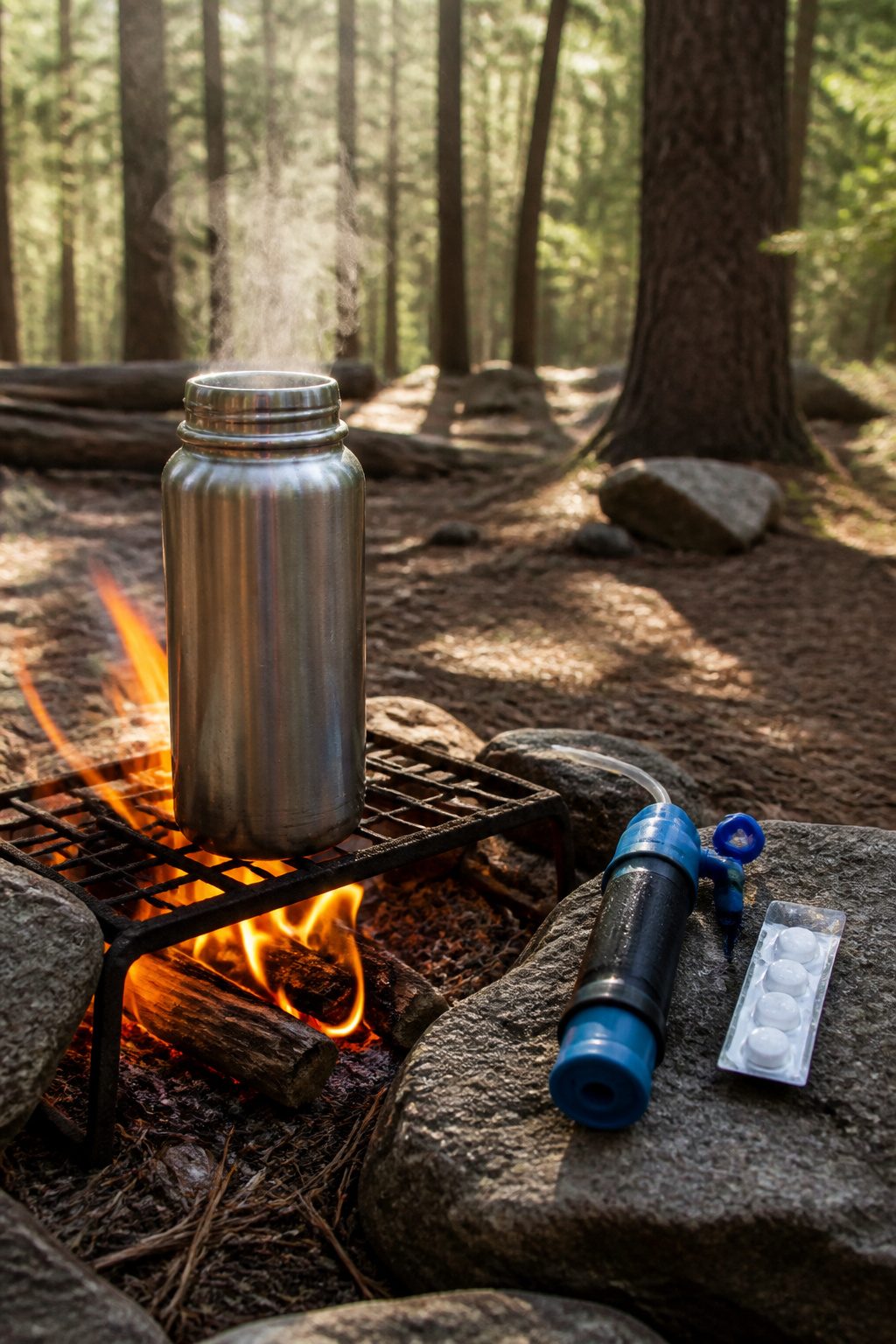
Water weighs 8.3 pounds per gallon, and one gallon per person per day for three days is the standard FEMA recommends for a 72-hour kit. That is nearly 25 pounds of water alone for one person, which is why the first mistake most people make with their bug out bag is packing too much of it.
Stored water runs out. Three days stretch into four, or the route to your destination takes longer than planned. When that happens, purification becomes the actual plan. My approach is layered: a stainless steel bottle that can sit over a fire to boil, a small filter for immediate use, and chemical tablets as a backup that weigh almost nothing. The filter gets used first, the bottle expands what you can carry once you find a source, and the tablets are for when the filter clogs or you need to treat water overnight while you sleep.
The weight rule matters here more than anywhere else. A loaded bug out bag should stay under 20–25% of body weight, and every pound of water you carry is a pound of something else you cannot. Better to carry the means to make water safe than to haul three days of it across broken terrain.
Non-Perishable Food
Three days of food sounds modest until you are carrying it on your back. The Federal Emergency Management Agency recommends a 72-hour supply, and that figure is where most people stop thinking and start overpacking. Weight, not calories, is what ends the trip.
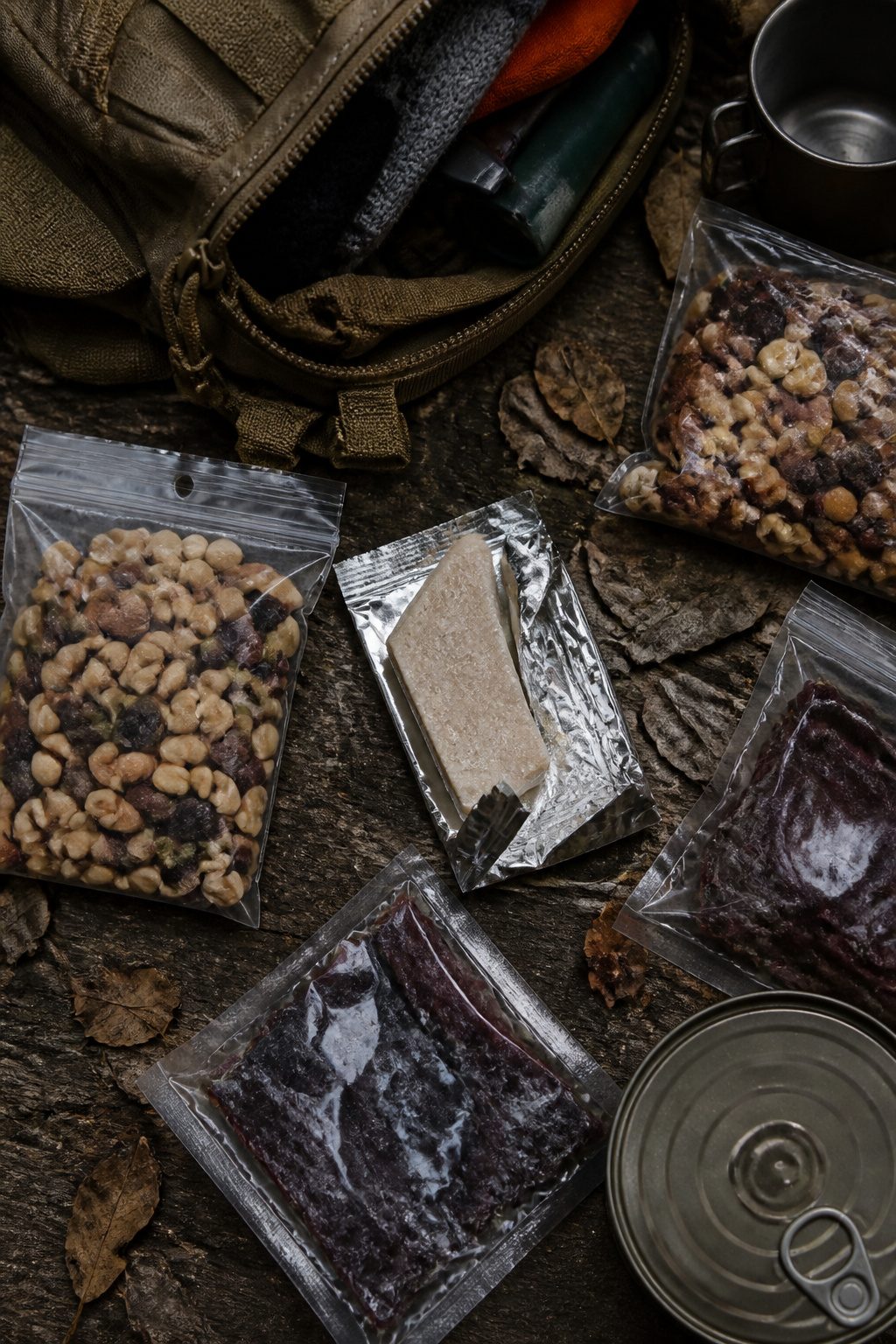
Energy density per ounce matters more than the big number on the wrapper. A standard SOS Emergency Food Ration bar packs 3,600 calories with no fire, no water, no stopping. That is the same bar found in life raft and aircraft kits, and the logic translates: eat while moving, because active food procurement burns time and energy that belongs to distance. Freeze-dried meals from brands like Mountain House need boiling water. Fine at camp, useless on the march.
What sits heavy in the bag tells the same story. MREs run about a pound and a half each, and the accessory packet adds bulk you do not need. I have opened packs where the chocolate-foil spread had melted through the crackers, where the pound cake crumbled to sugared sand. Trail mix and beef jerky survive crushing better, though the salt load means the water math shifts.
The bars that survive heat and impact win over the meals that need a kitchen. Hunting and fishing belong to the destination, not the evacuation. On the move, they are a liability dressed as self-sufficiency.
First Aid Kit
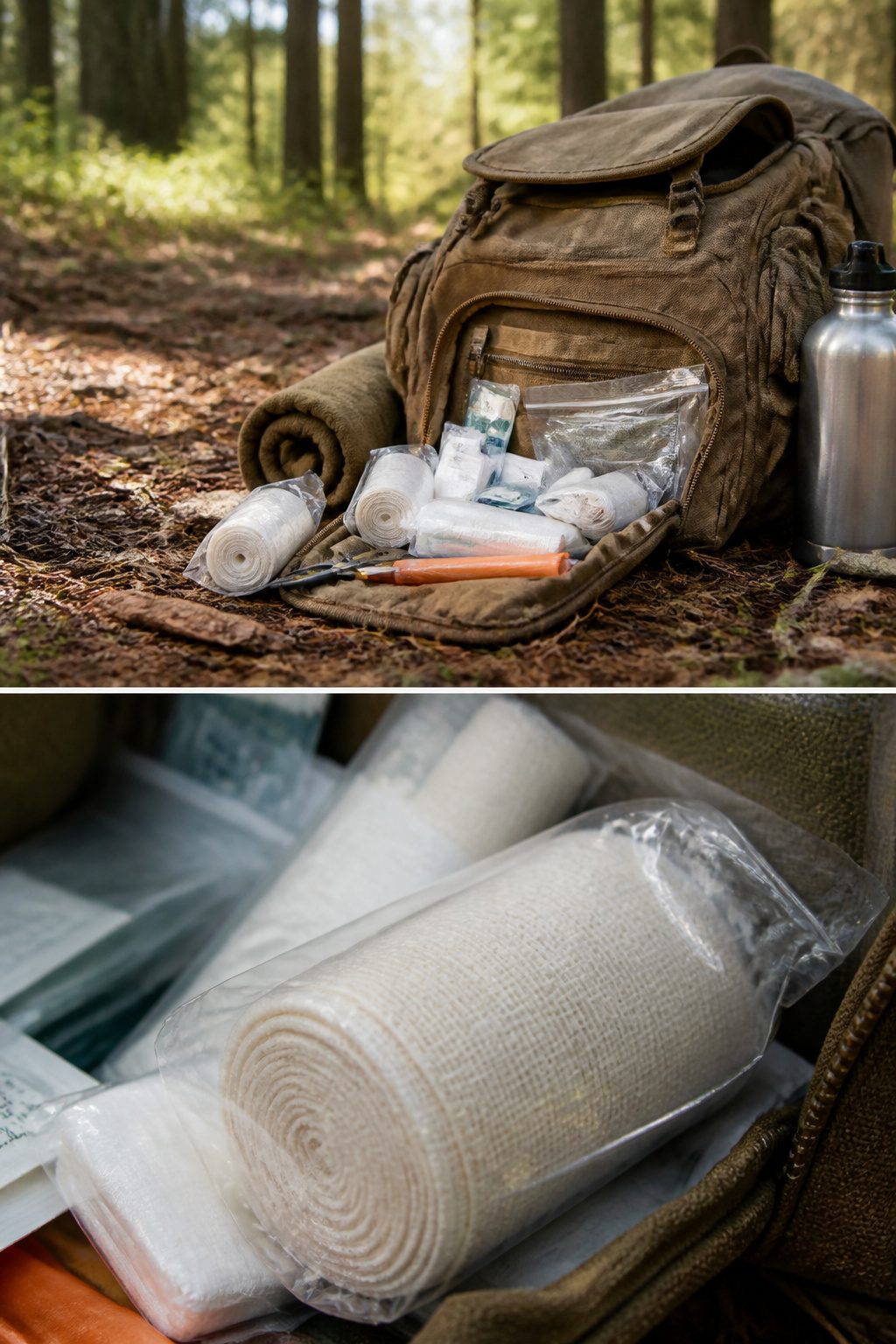
Gauze that actually covers a palm-sized scrape beats a strip of adhesive the width of your finger, and that difference only matters at the wrong moment. The first aid kit stashed in my trunk for three years held plenty of band-aids, a few alcohol wipes, and a triangle bandage still sealed in plastic. When I needed to press something sterile against a gash above my knee after a trail spill, those band-aids curled at the edges and left most of the wound exposed. A car kit is built for quick access in a stationary vehicle, not for the weight and space limits of a pack you carry for miles.
What moved into my bug out bag after that: rolls of gauze that flatten when vacuum-sealed, a few non-stick pads larger than my hand, and a pressure bandage that replaces the useless triangular sling. The car kit’s bulky case and hard plastic boxes got cut entirely. Antibiotic ointment stayed, but in single-use foil packs rather than a tube that splits open against gear. Tweezers for splinters matter more than the disposable thermometer I never once unwrapped.
Flashlight and Batteries
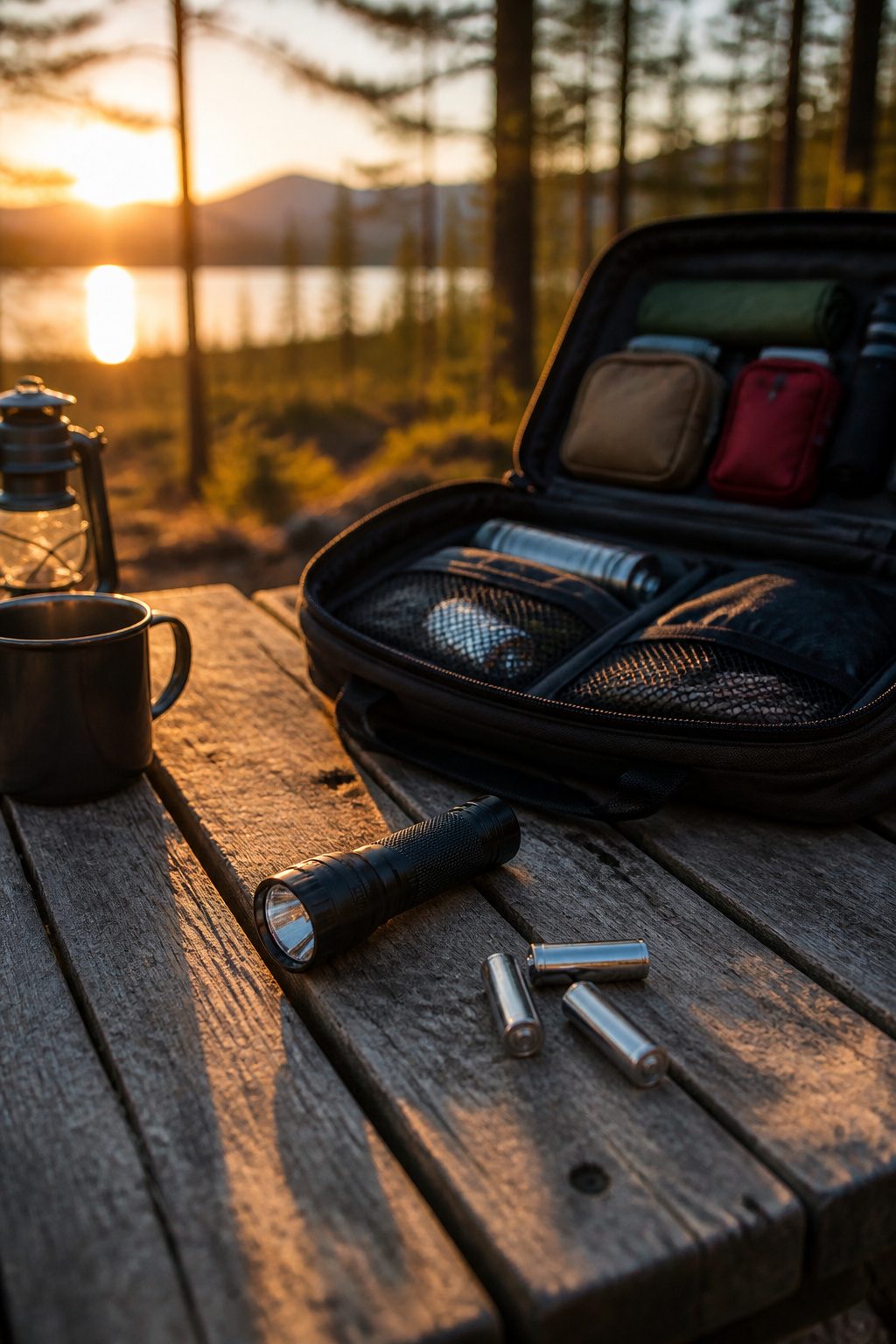
A compact flashlight belongs in every bug out bag, and so do extra batteries, but the chemistry matters more than most people think. Alkaline cells are cheaper and easier to find, yet they weigh more and leak without warning once they sit past their prime. Lithium batteries cost more upfront, but they handle cold temperatures better and stretch their shelf life far longer, which is what you want for gear that might sit untouched for years.
I learned the hard way after finding a white crust of corrosion inside my pack where a spare alkaline AA had split open. The flashlight itself was fine, but the spare was ruined, and the residue ate through a small pocket of the organizer. Now I run lithium in everything that stays packed.
Lumens are another place where numbers mislead. A 1,000-lumen blast looks impressive on a product page, but in total darkness, 150 lumens is enough to pick a path or read a map without wrecking your night vision. In an urban environment, where you are reading street signs through ambient glow, you need less than you think. The Princeton Tec Vizz headlamp defaults to red for exactly this reason: white light carries farther than most people realize, and one accidental click can broadcast your position across a block. Starting in red removes that mistake entirely.
Emergency Radio
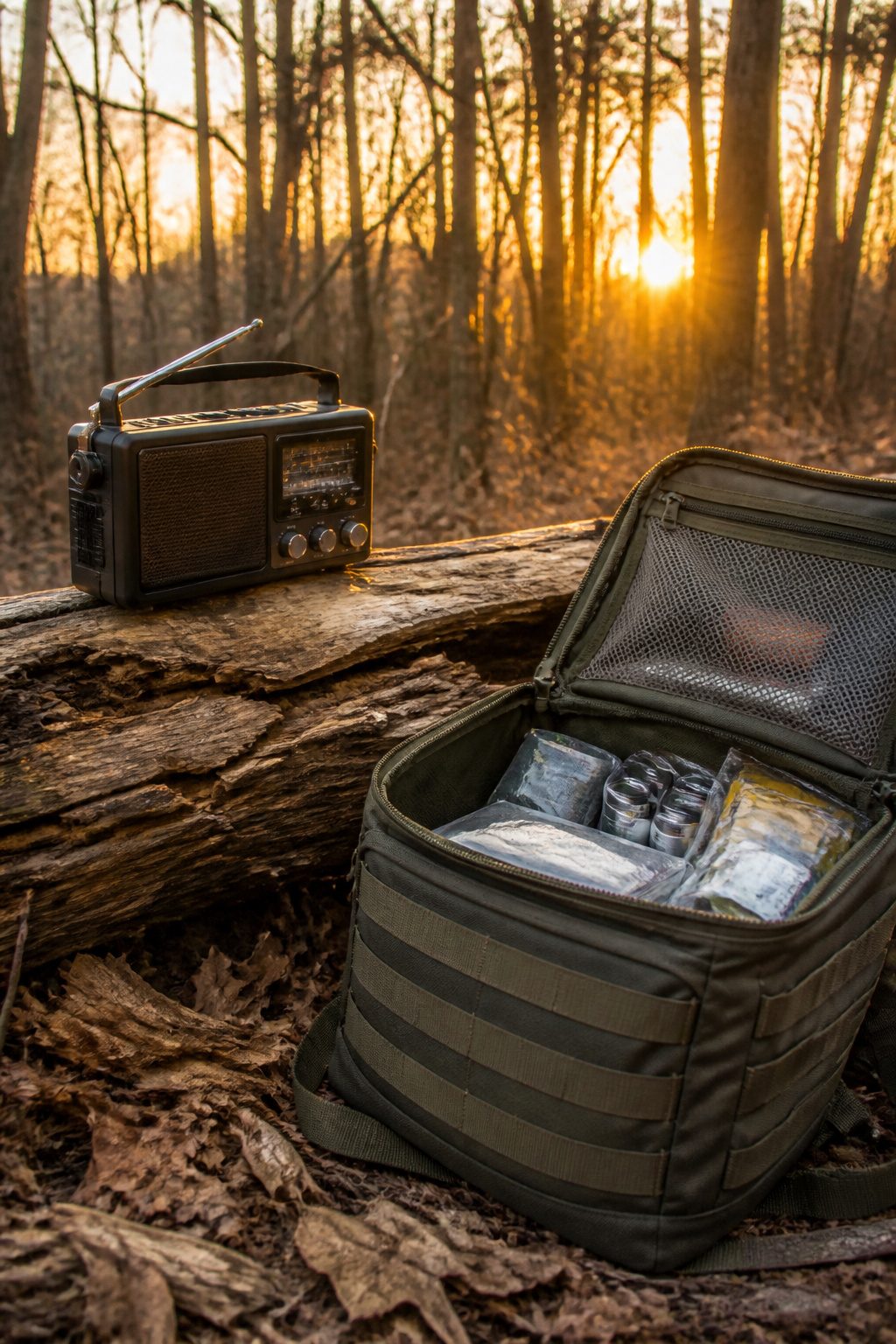
A hand-crank radio in your bug out bag sounds self-sufficient until the handle snaps off on the third rotation. That happened to me. The plastic pin sheared clean, and I was left with a brick that cost twice what a simple battery-powered model runs.
Battery-powered radios with standard AA cells win for actual reliability. Carry a spare set in a sealed bag and you have hours of runtime without praying that a tiny generator holds together. The hand-crank units often add flashlight and phone charger features that dilute the build quality of every function.
What actually matters is reception, not generation method. Your radio needs NOAA weather band for alerts, AM for regional emergency broadcasts, and FM for local news. Shortwave is a nice extra but not essential for most continental U.S. evacuations. Skip the fancy solar panels too; in a real bug out situation you are moving through shade and weather, not leaving electronics out to charge.
Test the radio monthly. Batteries leak, contacts corrode, and a dead radio is just weight.
Whistle for Signaling
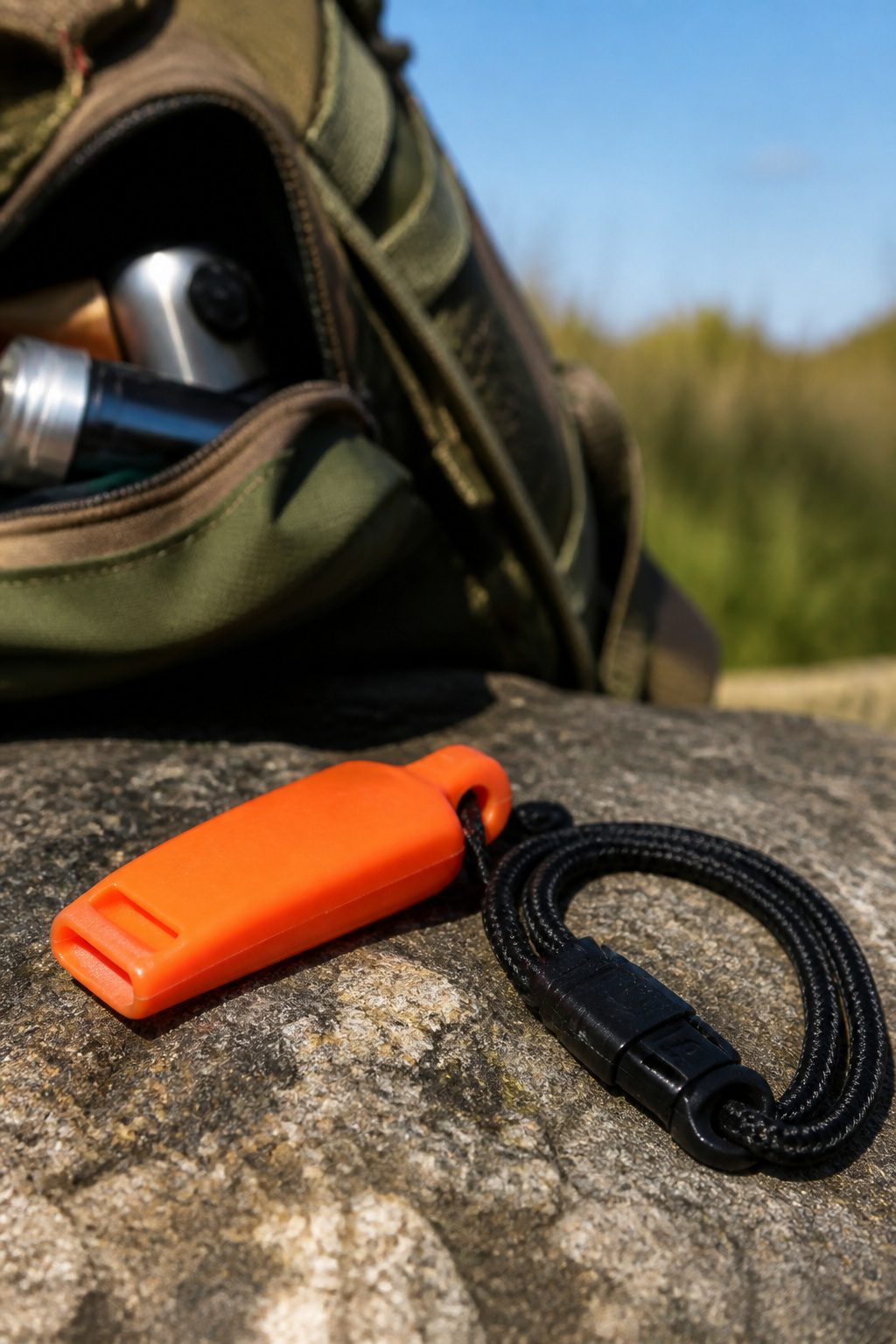
A pea-less whistle cuts through wind about twice as far as the cheap plastic kind with the little ball inside. The pea absorbs energy, muffles the tone, and in a hard rain it can freeze or stick. The pea-less design screams at a sharper frequency, roughly 120 decibels, which is the threshold where human hearing starts taking damage. That is the point. You want something painful at close range because search teams are not close.
I keep mine on a breakaway lanyard around my neck, not buried in the pack. Three sharp blasts is the universal distress signal, spaced about a second apart, then listen. During a March test on an open ridge with 15 mph gusts, the pea-less whistle was still audible at roughly a quarter mile to my partner downslope. The plastic pea whistle died out past a hundred yards. The gap matters when helicopters are scanning or a ground team is working a grid. Cost difference is maybe eight dollars. The weight is identical. There is no argument for the old style except habit, and habit is a bad reason in a bug out bag.
Dust Mask
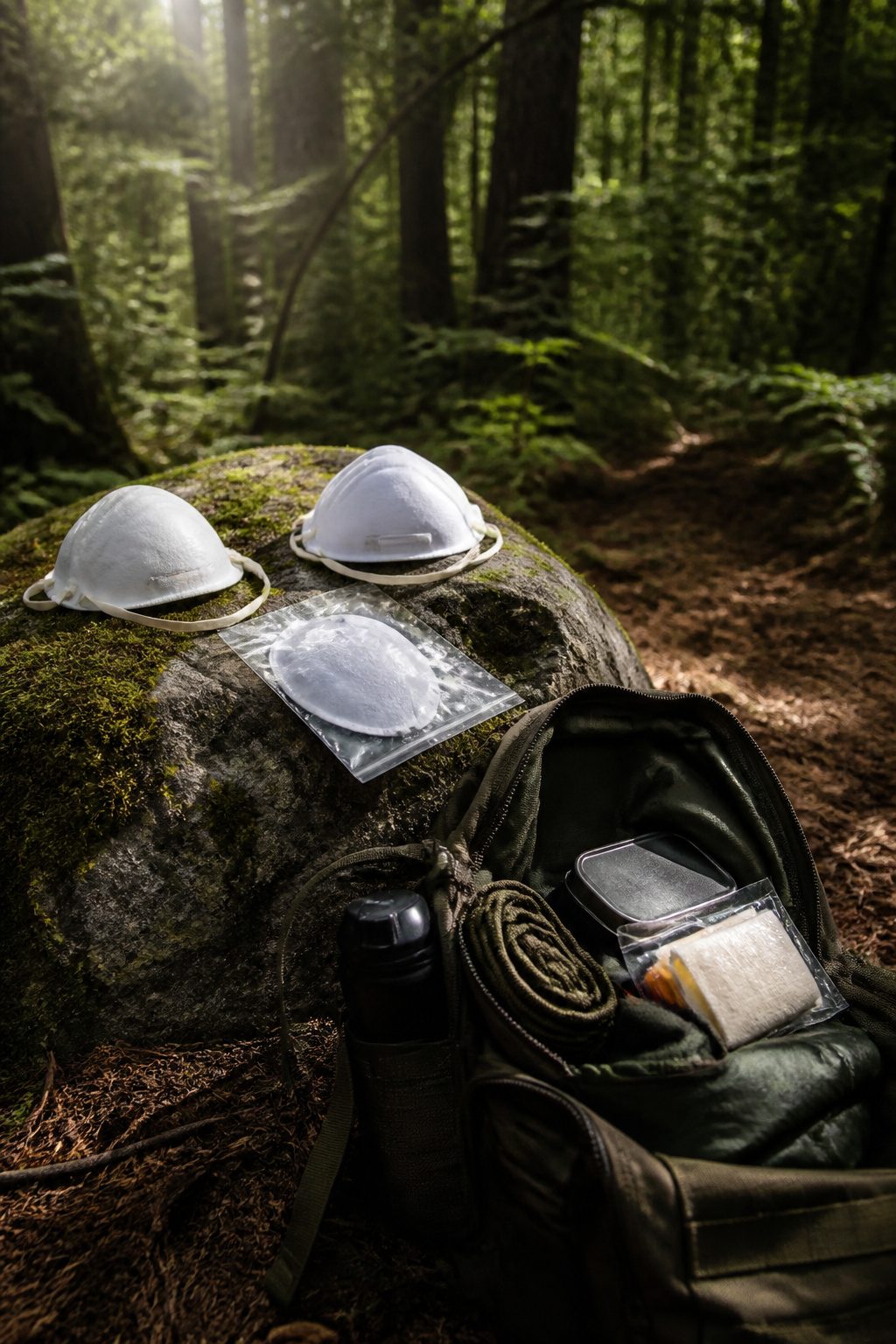
Dust masks in a bug out bag are for filtering particulates, not gases. Wildfire smoke, building collapse dust, and volcanic ash all demand a real seal against the face, which is where the N95 versus surgical mask distinction mattered in 2020. Surgical masks leak at the edges; they protect others from your breath, not your lungs from the environment. An N95 with two straps and a metal nose wire can be fit-tested at home: cover it with both hands, inhale sharply, and feel for suction against your cheeks. No suction means air is bypassing the filter.
Fogged glasses signal a failed seal. A tight nose wire and the straps crossed one higher, one lower on the back of the head usually fix this. The valveless N95s cost a few dollars more but protect people near you too, which matters in crowded evacuation corridors. I carry two unvalved N95s in sealed bags, rotated every five years, and a third in a ziplock I open for practice fits. Surgical masks stay in the first aid kit for wound dressing, not breathing.
Plastic Sheeting and Duct Tape
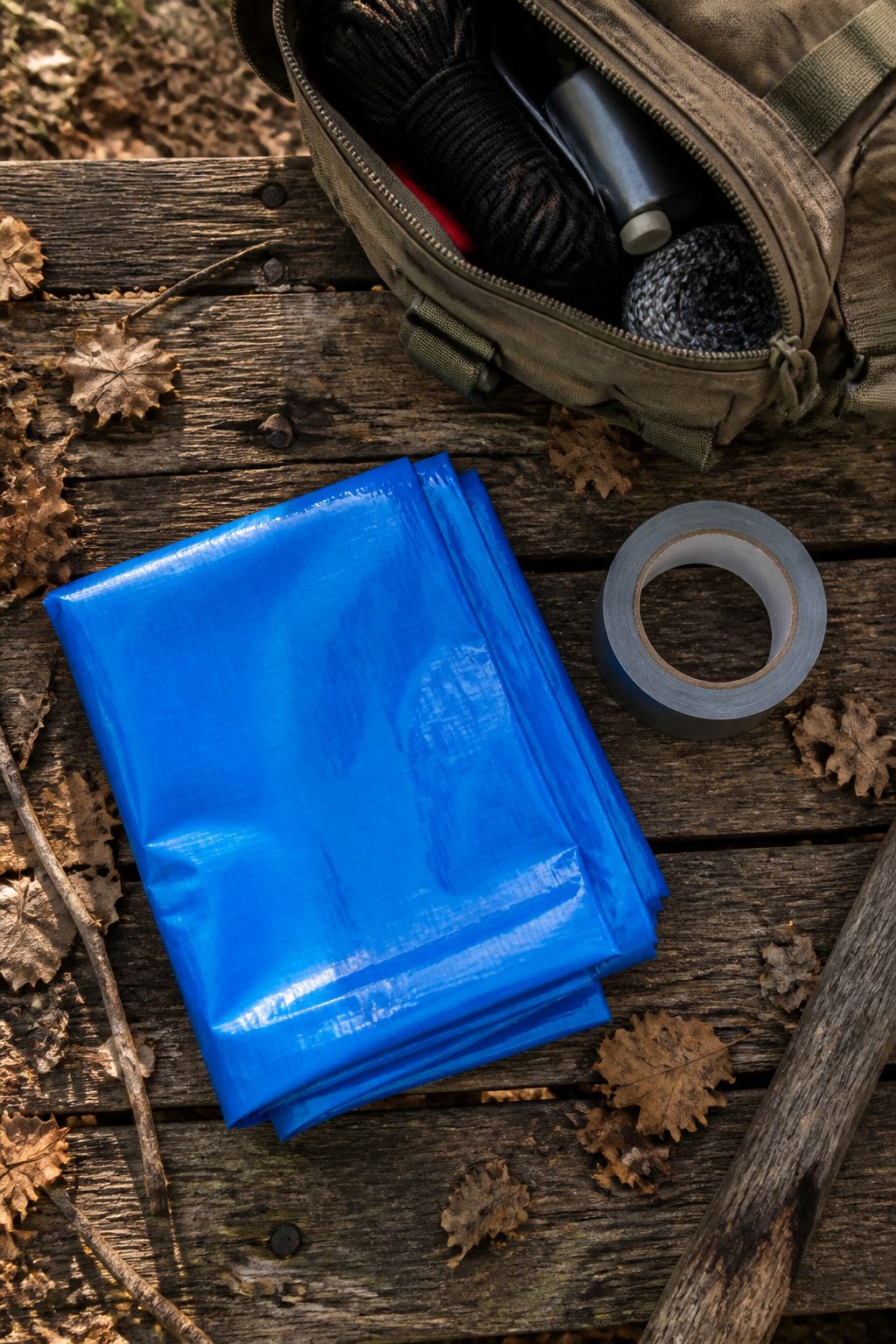
A folded 10×12 sheet of plastic sheeting can weigh close to a pound if you roll it loose or let it bunch, which is how most people pack it the first time. The right fold, tight as a bedroll and taped at the seam, drops that bulk by half and keeps it from turning into a crinkling football at the bottom of your bag. I learned the fold from a carpenter who used the same sheet for vapor barriers, and I have used it since for rain, wind, and the kind of privacy that matters when you are sleeping in a church parking lot or changing clothes behind a stripped car.
Rain is the obvious one. String the sheet between two trees, duct tape the grommet holes if it did not come with them, and you have a lean-to in about four minutes. Wind is harder because the sheet wants to sail; the tape becomes the frame here, reinforcing eyelets you cut yourself and binding the free edge to a branch or a door frame. For privacy, the same rig inside a broken window or across a car windshield blocks light and blocks sightlines without the commitment of a tarp and poles.
The tape has its own weight problem. A full roll is a brick. Carry a flat-wrapped ten-yard strip around an old gift card and you keep the repair capacity without the core. I have sealed boots, patched a torn bag, and once taped a cracked radiator hose well enough to limp twenty miles. The sheeting and tape together shelter you in place when moving is the worse option, which is more often than the bug out bag mythology admits.
Local Maps
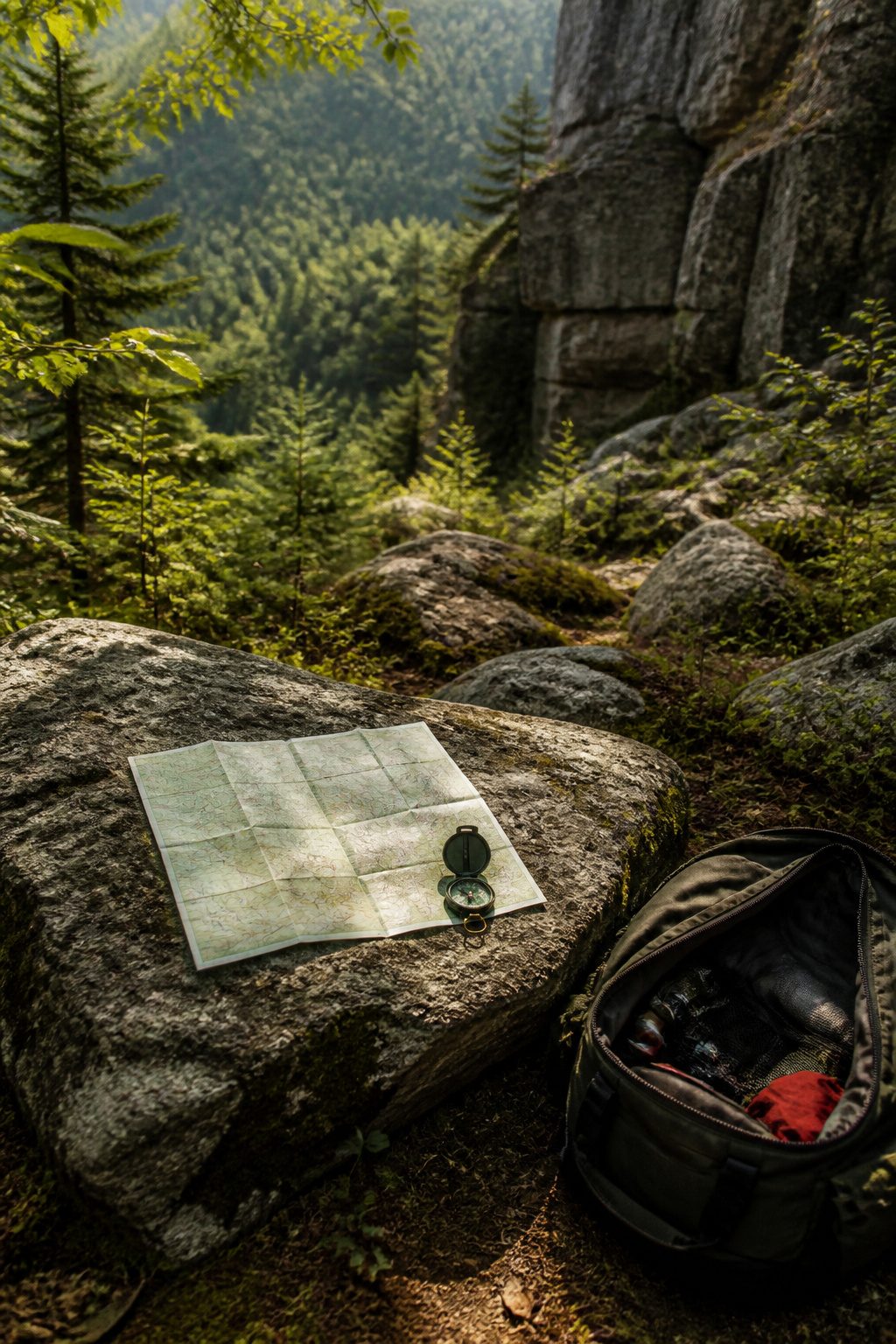
Phones die at the worst possible moment, and mine proved that on a humid July afternoon when the battery dropped from 30 percent to black in under ten minutes. The trail back to the parking area was not complicated, but without the blue dot on the screen, every fork looked the same, and the three miles I had covered suddenly felt like guesswork.
A paper map at 1:24,000 scale gives you enough detail to identify streams, ridge lines, and trail junctions without unfolding a billboard. The Suunto MC-2 compass pairs with it well; the mirror works for signaling and for checking spots you cannot easily see yourself, and the built-in magnifier helps when the contour lines crowd together. Pace beads or a simple tally system keep honest distance count when adrenaline makes every hundred meters feel like fifty.
Before anything goes wrong, mark your planned routes in pencil, not ink. Water sources change, bridges wash out, and the route that looked obvious in daylight shifts when you are moving at night or in weather. Custom topographic maps from MyTopo or SARTopo let you print exactly your area rather than carrying a state atlas where 90 percent of the pages are irrelevant.
GPS coordinates in MGRS or UTM format matter even when the device is working, because those systems translate directly to the paper map grid. If the phone is your only source for that conversion, the knowledge vanishes with the battery.
Multi-Tool or Knife
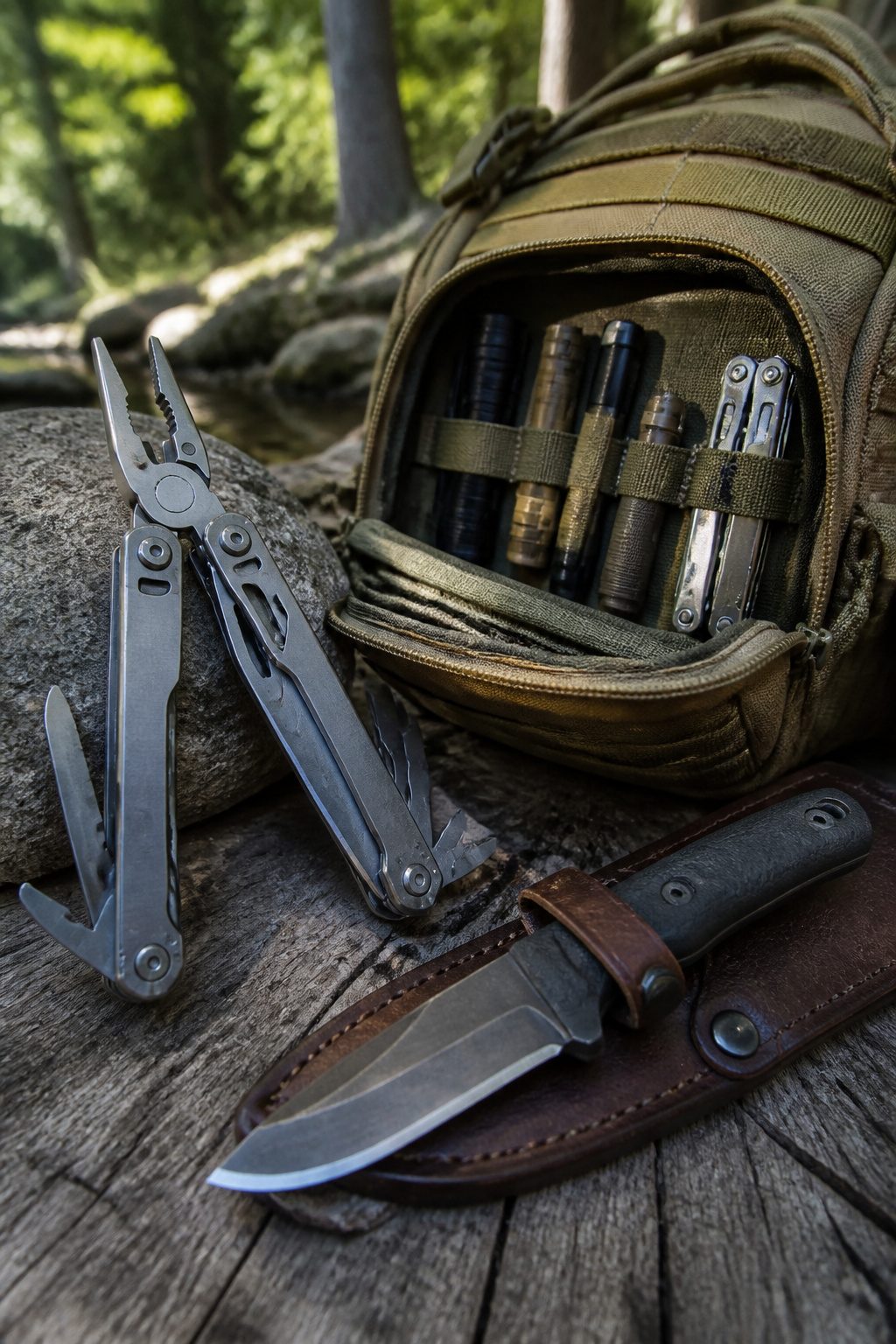
The Leatherman spent more time in my pocket than any fixed blade I have ever carried. The saw, the awl, and that secondary blade handled the repairs I actually faced: webbing that tore, cordage that needed threading through grommets, the small stuff a disaster turns into work. A Swiss Army knife covers the same three functions lighter, and lighter matters when the whole bug out bag needs to stay under twenty pounds.
Fixed blade laws caught me off guard. Blade length limits vary by state, and what clears TSA rules in one place runs afoul of local statutes in another. A multi-tool never triggers that conversation. It also never matches the confidence of a belt knife for batoning wood or heavy carving. The Mora Garberg or something in that class handles jobs the plier-based frame simply will not. Two tools, two roles. The multi-tool wins on daily use. The fixed blade wins when the task outclasses it.
Hygiene Items
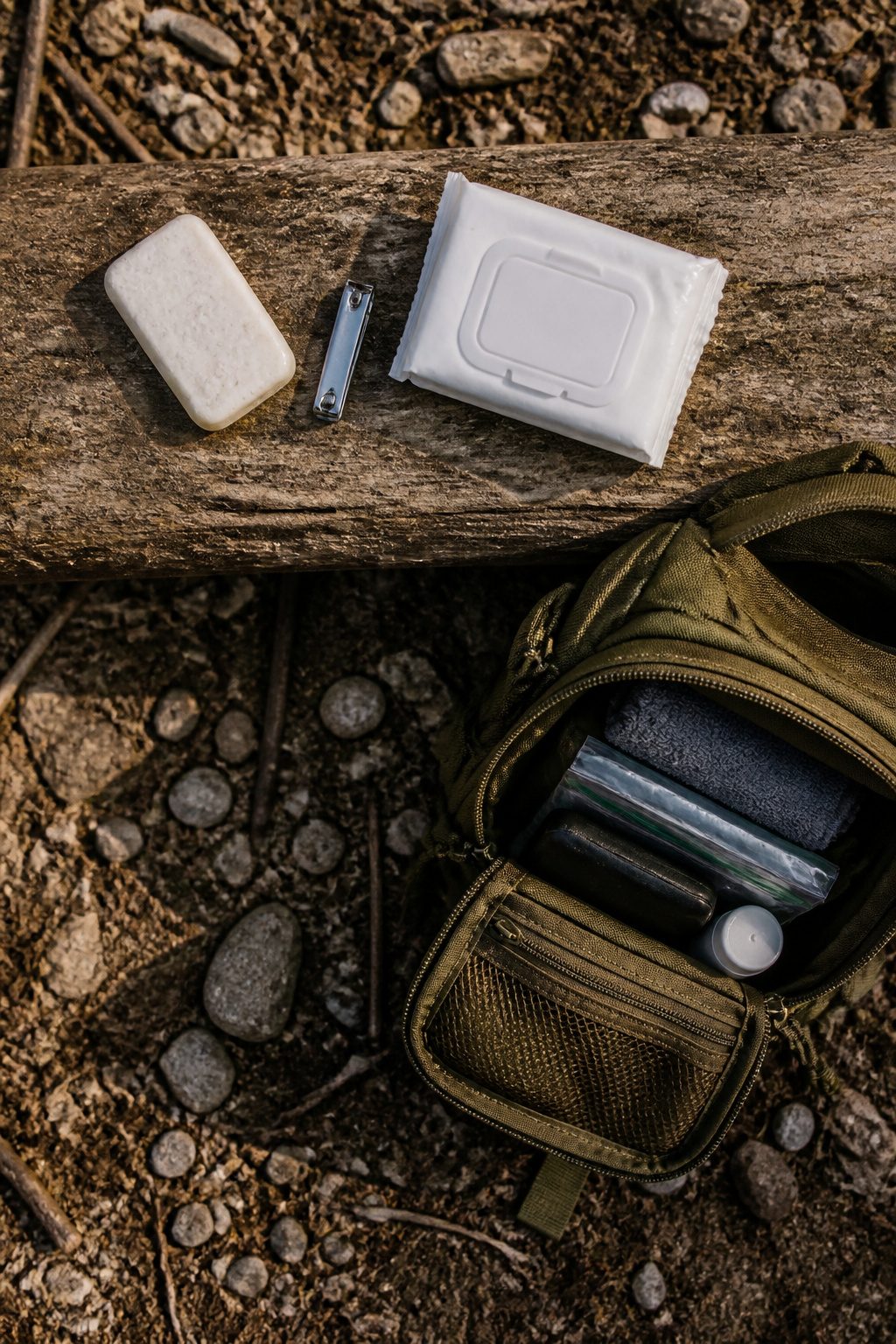
Three days without a toothbrush or soap costs more than most people pack for. Morale tanks fast when your mouth tastes like a gas-station floor, and the health hit is real: dirty hands transfer bacteria straight to anything you eat, and skin infections start where sweat sits.
A bar of soap beats liquid for the weight savings alone. A 4-ounce bar of Dr. Bronner’s covers hands, body, dishes, even teeth in a pinch, diluted 10:1 and still effective. Wet wipes fill the gaps where water is scarce: underarms, feet, the back of your neck. Toothbrush, small nail clipper, a bit of baking soda for deodorant and paste. Skip the towel if you’re counting ounces; a bandana dries and dries again.
Spare Clothing
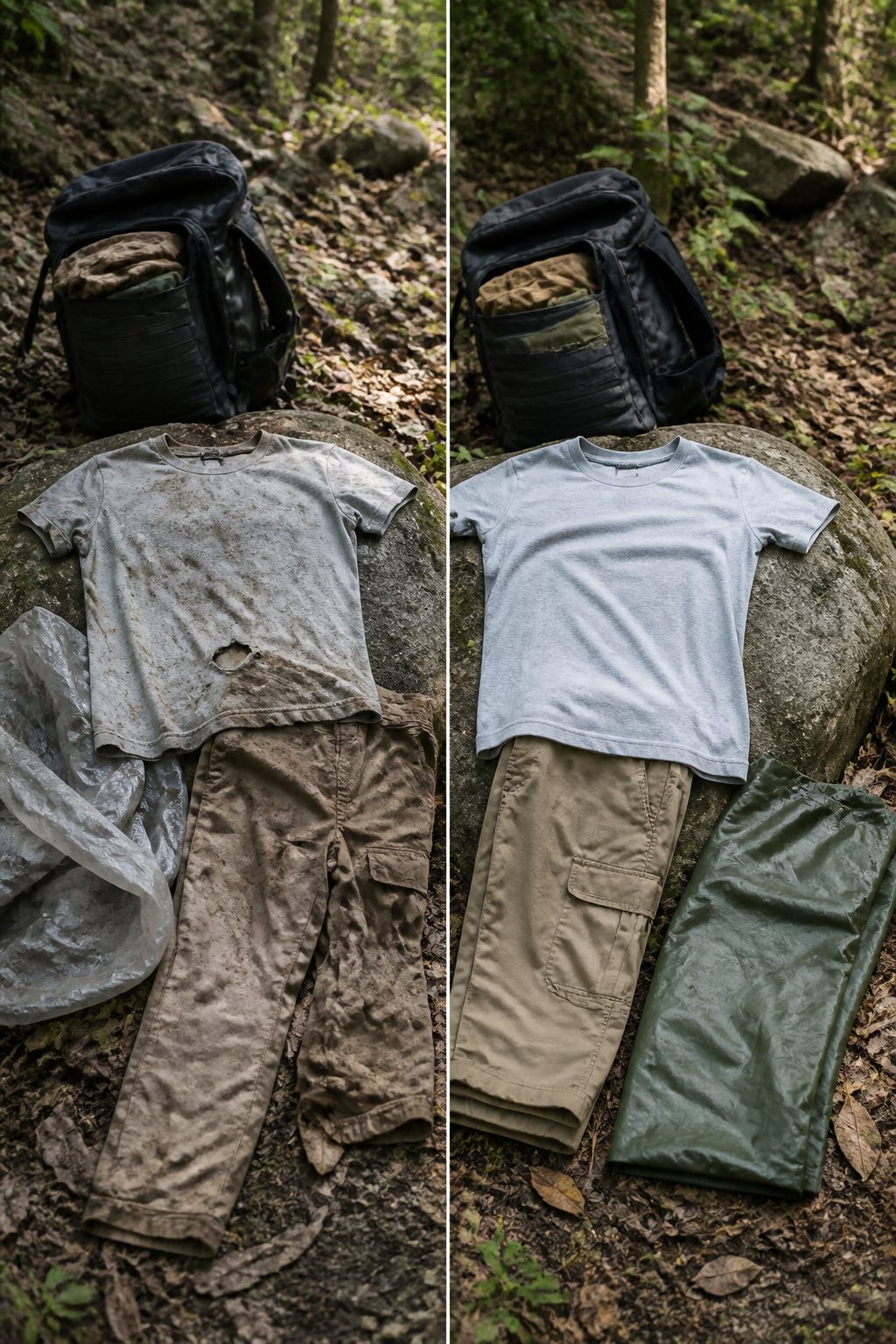
A cotton t-shirt I wore on a wet October morning stayed damp for three hours and left me shivering by noon. That single mistake taught me layering for a bug out bag is not about comfort; it is about drying fast and packing flat.
Long pants beat shorts for moving through brush and for keeping sunburn off. A spare shirt should be simple, free, and comfortable rather than specialized. Merino wool with zip-off sleeves sounds impressive, but a basic tee does the job in most realistic evacuations. Clean underwear and socks matter more than people admit. A warming layer, even in hot climates, handles the chill that exhaustion and nightfall bring.
What actually fits in a pack without ballooning the weight is the harder question. I once left my sweater behind to save space and froze after dark when a light breeze hit. Now I carry a poncho that doubles as a small tarp, plus a few clothes clips with cordage to hang wet gear. The clips weigh almost nothing and dry time drops from hours to one.
Important Documents
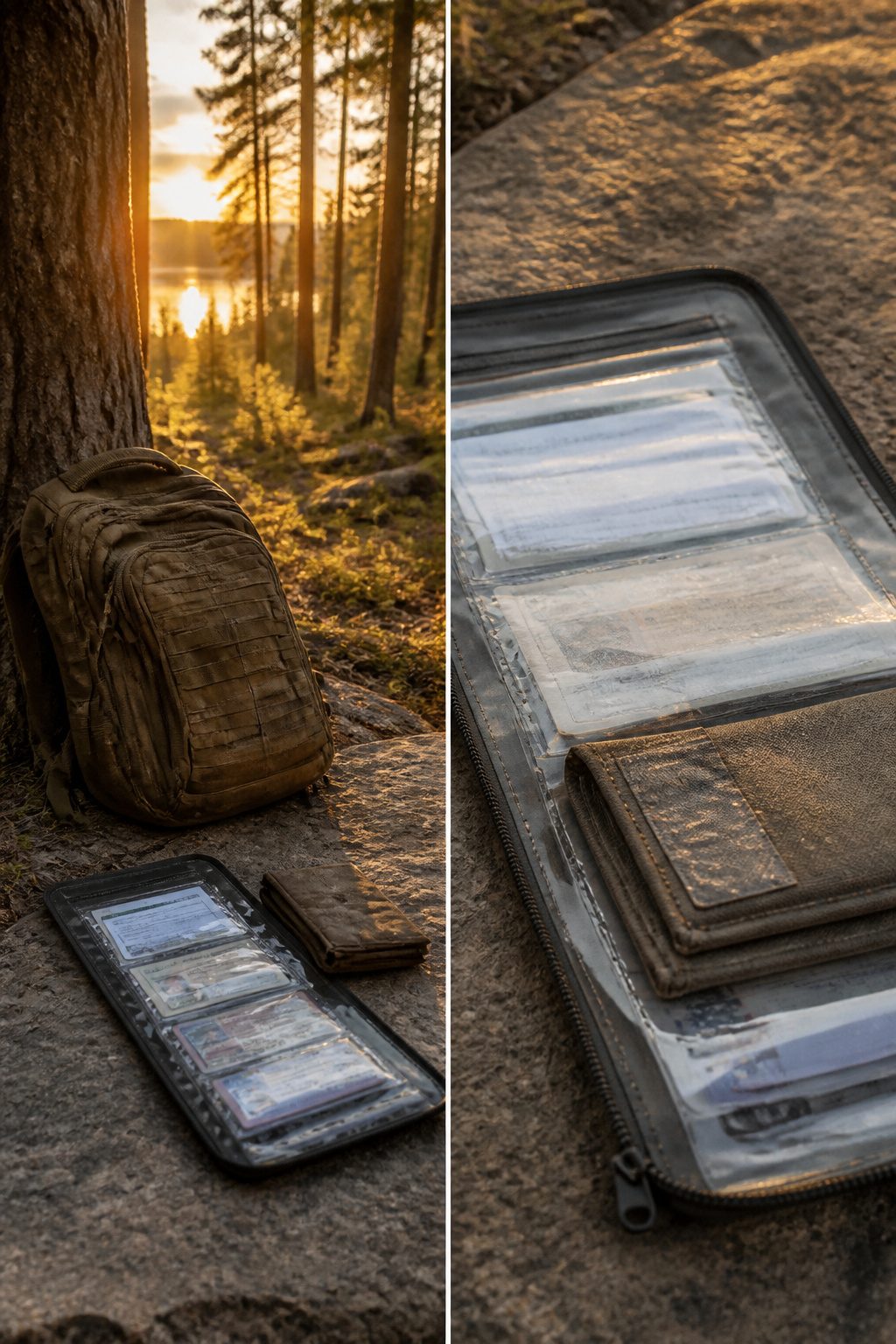
A backup wallet sits in the admin pouch of my bug out bag, holding copies of the ID and insurance cards I laminated last spring. The pouches are nothing fancy, just 5 mil thermal pouches run through a home iron, but they have kept paper readable through two camping trips worth of rain and pocket sweat.
I scanned everything else to cloud storage the same weekend. The login required two-factor authentication through a phone number I did not have memorized. That phone stayed home during the evacuation drill that followed, and the files might as well have been on the moon for all the good they did me in the parking lot.
The document I actually needed was the original car title, which sat in a fire safe in my bedroom closet. Copies would not have worked for the DMV appointment I was trying to keep. Now the original rides in a sealed pouch behind the backup wallet, and the cloud folder has a printed backup code folded inside.
Cash in Small Bills

A working bug out bag should carry at least $1,000 in small bills, though the number that finally stuck for me came from running the math on a three-day evacuation with no cards. Hotels want deposits, gas stations with power might still have broken networks, and a family of four eating diner food burns through cash fast. I keep mine in a waterproof pouch inside a secondary zip compartment, not loose where sweat or rain finds it.
The upper limit is whatever you can afford to have sitting portable. Some people aim higher and convert excess past a couple thousand into gold for compact durability. I have not gone that route yet.
Cards failed me once during a regional ice storm, when every terminal in a fifty-mile radius was down. Cash bought the last motel room, the last tank of gas, hot food from a generator-lit kitchen that could not process anything else. The backup credit card in my bag, RFID-sleeved and ready, has since saved me on ordinary trips, but it sat useless that week.
Pet Supplies
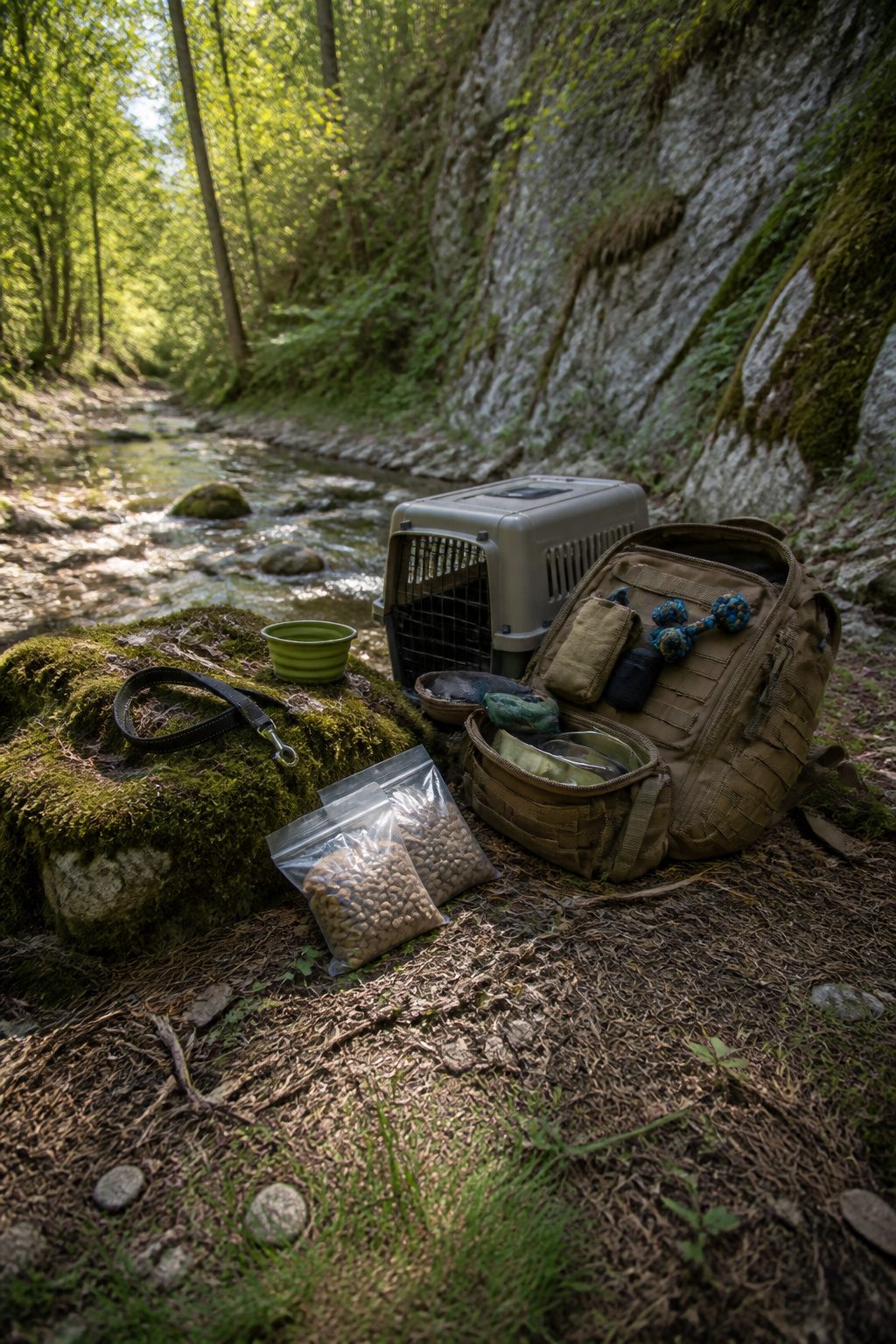
The dog’s needs in a bug out bag look nothing like the gear that filled my first attempt. A retractable leash I never tested snapped the second morning of a road-closure drill, leaving me chasing a seventy-pound shepherd through a rest-stop parking lot. Wet food in foil pouches beats dry kibble for portability, but the cans I packed in 2019 sat unopened past their date because they were too heavy to bother carrying on practice runs. The soft-sided carrier I bought without measuring blocked the rear door from closing; the hard crate I replaced it with rode in the footwell, which meant leaving a go-bag behind. My current setup is a six-foot fixed leash, three days of dehydrated raw in vacuum bags, and a collapsible bowl that clips to the outside of my pack. The dog carries his own load now in a saddlebag rig, two liters of water and his own booties. Those booties took three brands to get right; the first set rubbed raw at the ankle after two miles of asphalt.
Why Preparation Matters
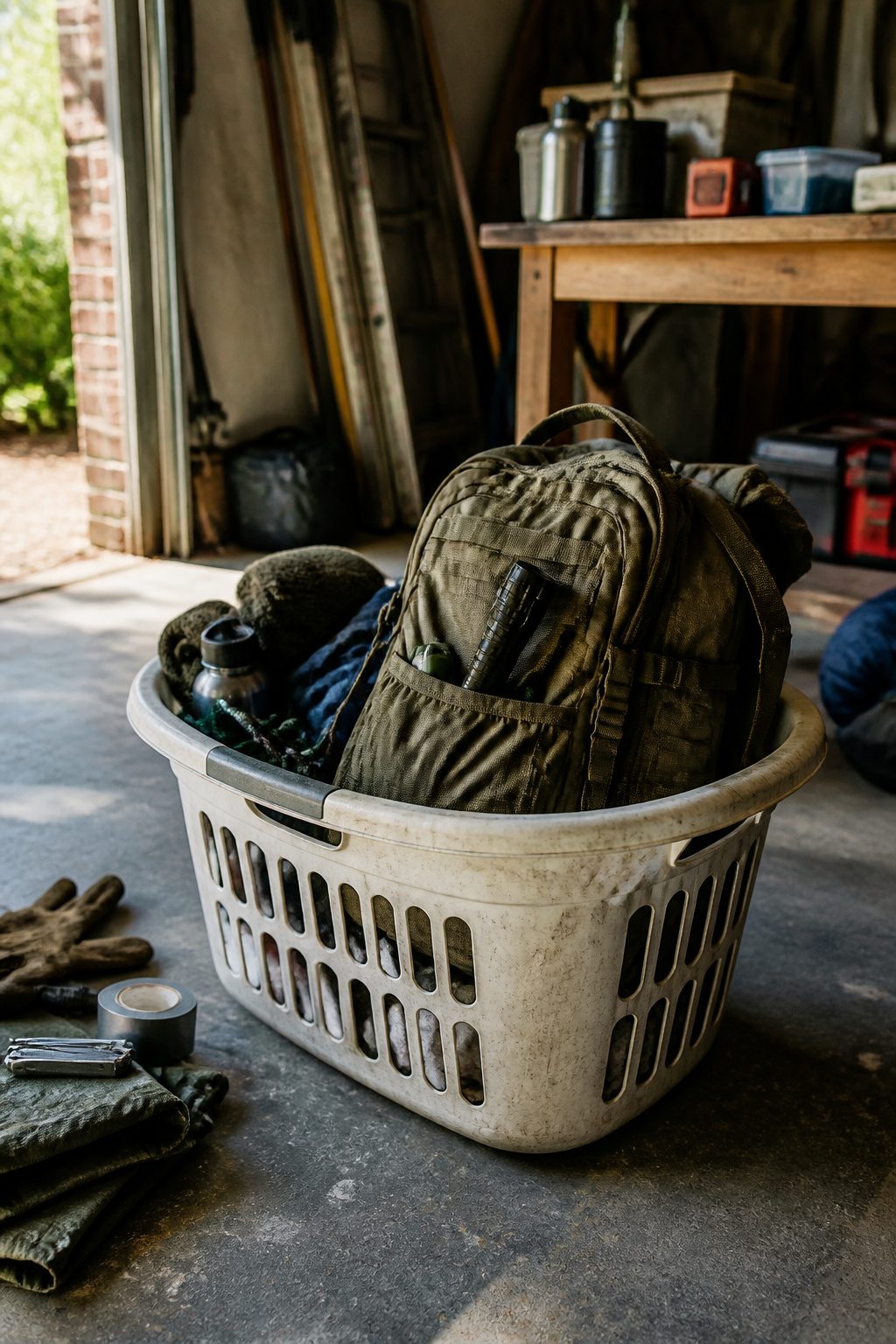
The night the Creek Fire jumped two ridgelines in four hours, I stood in my garage with a laundry basket, throwing in whatever looked useful. A flashlight with dead batteries. A sweatshirt from college. A half-empty bottle of ibuprofen. The evacuation order gave us seventeen minutes. That was the moment I understood preparation is the only choice you make before panic takes it from you.
Most disasters do not arrive on schedule. Hurricanes shift track overnight. Wildfires outrun their forecasts. Chemical spills close highways and the alternate routes behind them. Grid failures stretch from hours into days. In each case, the gap between an orderly exit and a scramble comes down to whether the bag is already packed.
A bug out bag is not a statement about how you see the world. It is the same logic as a fire extinguisher in a kitchen or a spare tire in a trunk: you prepare while preparation is still possible. FEMA recommends keeping at least seventy-two hours of basic survival supplies on hand at all times, and a packed bag is the simplest way to meet that standard.
The math on weight surprised me when I started rebuilding my kit. A loaded bag should stay under about twenty percent of body weight, or carrying it for hours becomes its own emergency. Three days of water, food, shelter, warmth, light, first aid, and communication, staged where you would exit and revisited seasonally. That is the baseline. What you add after that is where the personal choices live.
Bag Size and Weight
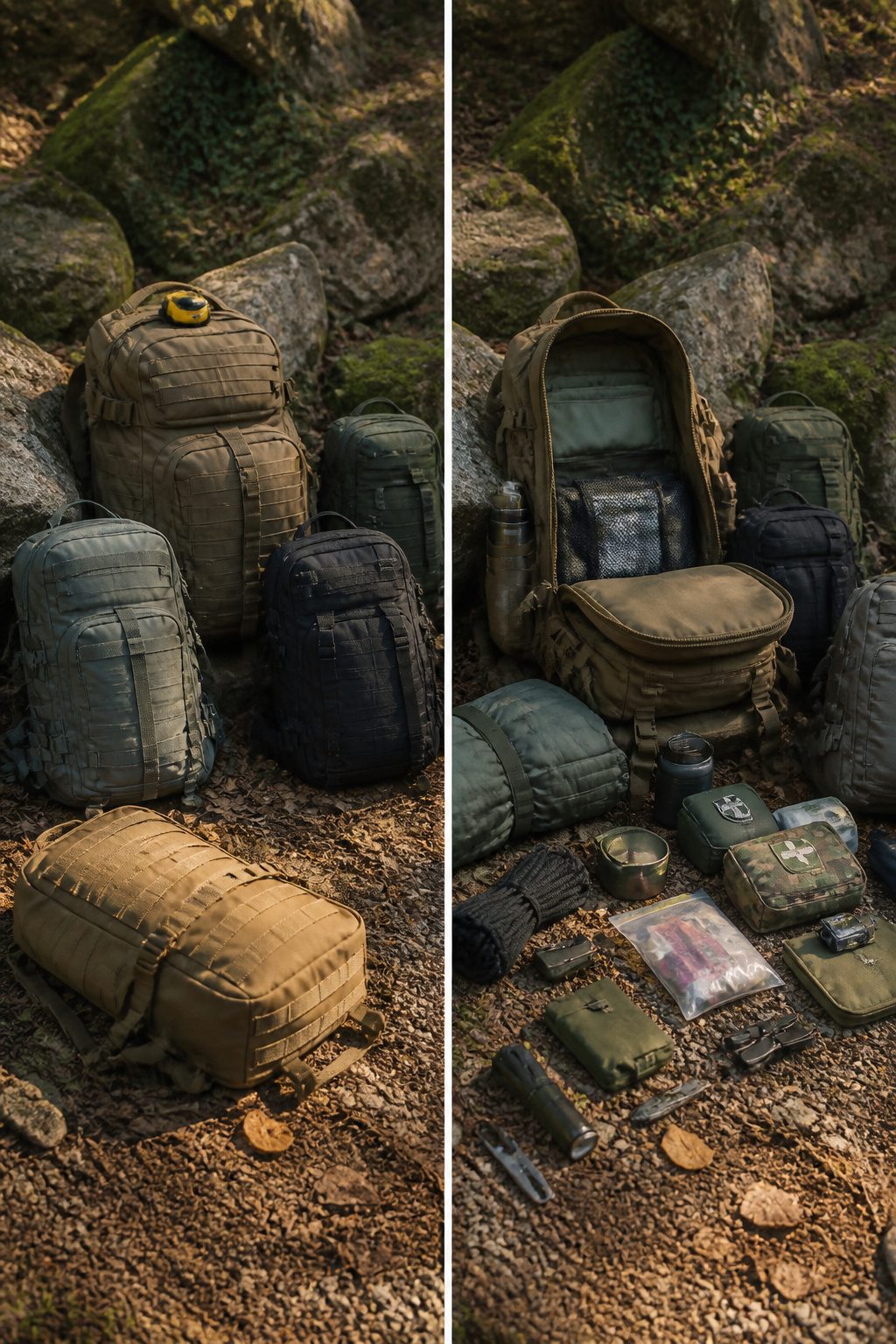
A 30–55 liter pack hits the range most bug out bag builds settle into. Go smaller and you leave out shelter or water; go larger and the load grows to fill every pocket you give it.
The weight ceiling matters more than the liter count. Most setups land at 20–25% of body weight, and that percentage is where the body stays useful. Cross it and the penalty shows up fast in calories burned, water consumed, and distance covered before the pack comes off.
I ran mine at 35% once, thinking the extra gear justified the heft. One mile in, the shoulders had enough. I stopped, stripped out the redundancy I had talked myself into, and walked back to start over with the load that actually moved. Nothing in that extra weight had earned its place; it just felt like insurance until I tried to carry it.
The test is simple and it is not optional. Load the bag, walk five miles on terrain that resembles your actual route, and note where the straps dig or the pace drops. If the weight is not sustainable at a brisk walk with an obstacle or two, it will not be sustainable in the emergency you built it for.
Tailoring to Your Situation
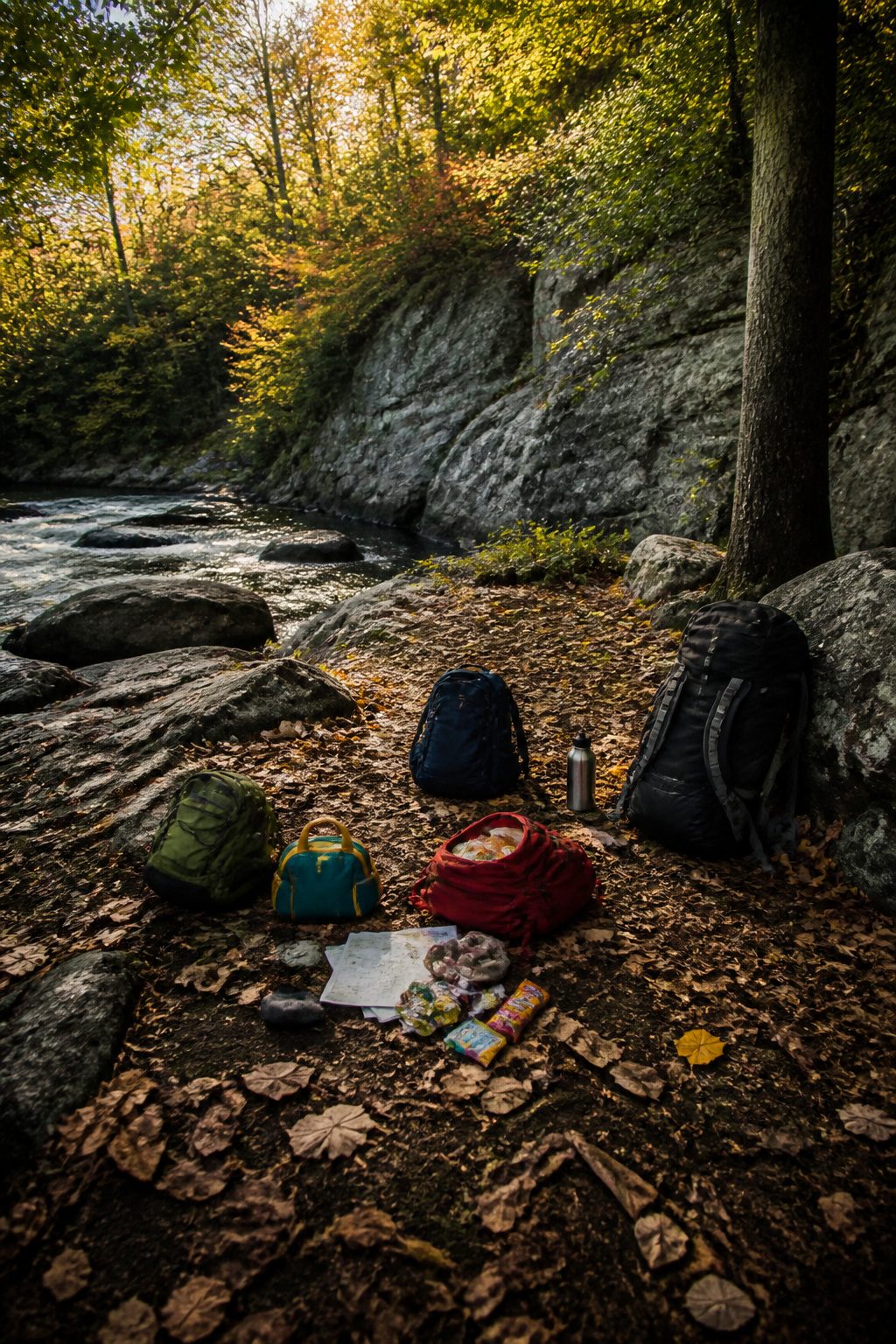
A bug out bag built for one person collapses the moment a family is involved. Every adult needs their own bag, and each one stays under 10% of body weight or the plan fails before the first mile. Children old enough for a school backpack can carry their own: water, a snack, a light layer, and a whistle. The weight gives them a role when stress runs high, not independent survival.
For toddlers, the adults absorb that load. Every unnecessary ounce in your pack is an ounce you cannot allocate to diapers, formula, or the child themselves. I dropped the mess kit entirely from our bags. Paper plates and utensils do not survive being jostled, and the weight went to a second water filter instead. We live nowhere near hurricane country, so flood-specific gear never made the list. What the standard lists miss is the comfort item: a small stuffed animal for a three-year-old prevents a manageable march from becoming an unmanageable one.
Route planning changes too. Family pace drops, rest stops multiply, and forcing adult speed on children compounds problems fast. Plan shorter legs between cache points, and pre-stage supplies for the kids there if you can.
Choosing the Right Bag
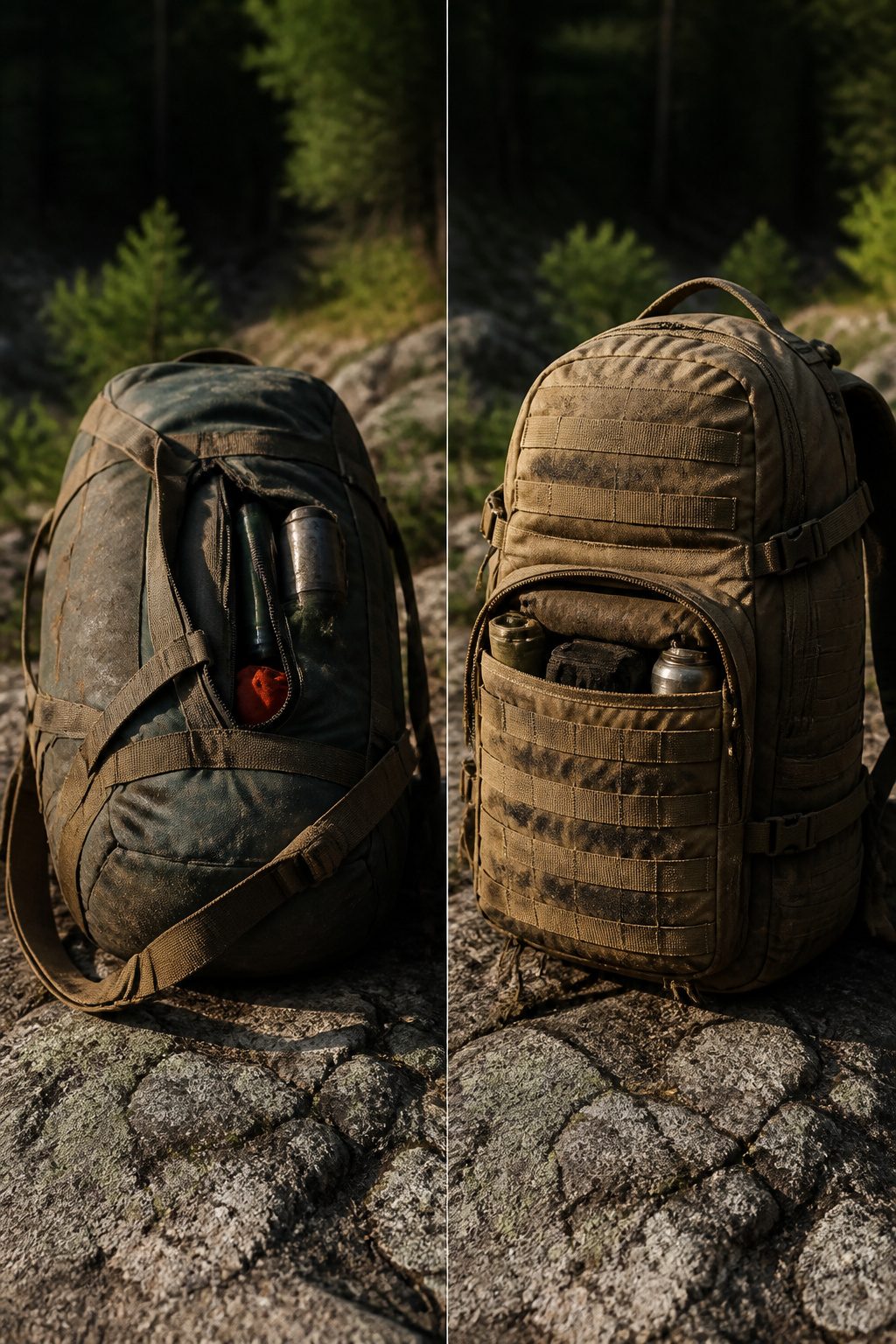
A bug out bag sits in an awkward middle ground: bigger than a go bag, but meant to move. The sources split on the container. Backpacks keep your hands free for obstacles and fit in tight spaces, even a National Guard truck bed. Duffel bags swallow more gear and throw easier into a trunk, though carrying one any distance gets old fast.
My own history with both shapes is mostly error. A 100-liter duffel with a compression-molded EVA shoulder strap seemed like the smart middle path until the strap pulled free at the rivet, mid-crossing of a parking lot in a drill. No disaster, just gear on asphalt and a lesson about load-bearing hardware. After that, a frame pack that fit wrong in the torso left me with bruised hips after three miles. The frame was right for someone; that someone was not me.
What stays in the rotation now is a 26-liter rucksack built to one specification and left alone since. No redesigns, no quiet cost reductions. Two MOLLE strips live on the exterior, empty if the gray man approach matters that day; the bag still reads as ordinary travel or work gear to most eyes. For the distance I can actually cover on foot, that capacity forces discipline, which turns out to be the point.
Frequently Asked Questions
What should be in a bug out bag?
A bug out bag needs water and a way to purify it, three days of calorie-dense food, a first aid kit, flashlight with spare batteries, emergency radio, whistle, dust mask, plastic sheeting and duct tape, local maps, a multi-tool or knife, hygiene items, spare clothing, copies of important documents, cash in small bills, and pet supplies if applicable. Every item should earn its place by weight; the loaded bag needs to stay under 20–25% of your body weight.
How much should a bug out bag weigh?
Keep a loaded bug out bag under 20–25% of your body weight, with lighter being better. The article notes that crossing this threshold burns extra calories, drinks more water, and shortens the distance you can cover before the pack has to come off. One test run involved a load at 35% body weight that had to be stripped down after a single mile.
What is the difference between a bug out bag and a get-home bag?
A bug out bag is built for leaving home and sustaining yourself for multiple days of evacuation, while a get-home bag is lighter and optimized for a single mission: getting from wherever you are back to your home. The get-home bag typically stays in a vehicle and covers about 24 hours of supplies rather than 72.