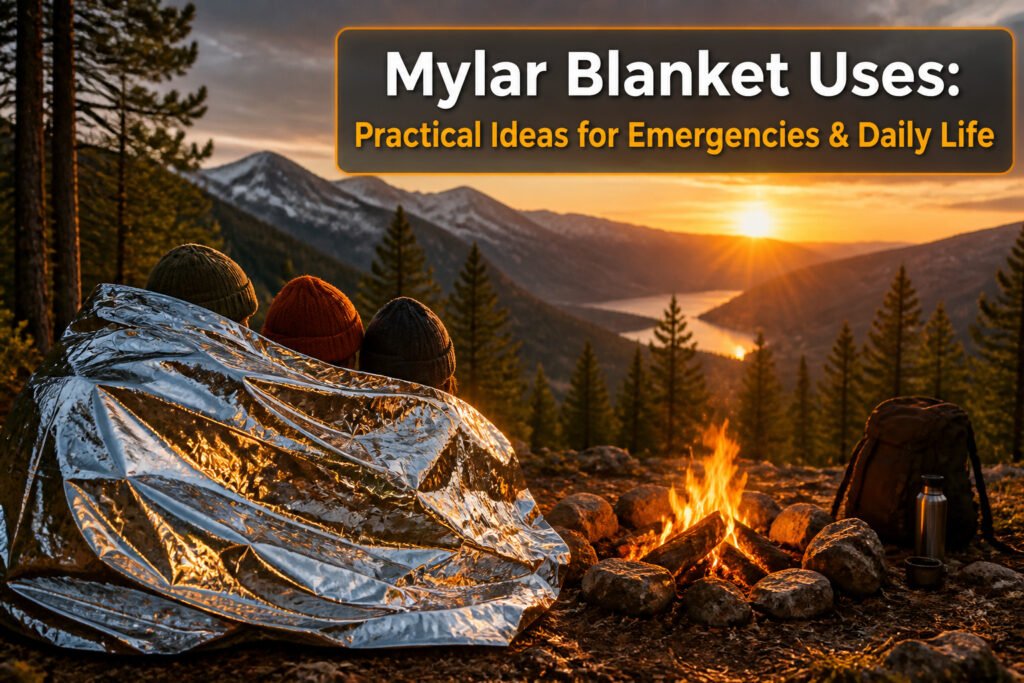
A mylar blanket has 38 distinct uses, but only if you accept that it will tear on a pine needle, melt too close to a fire, and leave you soaked with sweat if you seal it too tight. The 52 by 82 inch sheet reflects 90% of body heat back toward you, a property NASA developed in the 1950s for spacecraft, not campers. That same reflection works in reverse: angle it behind a fire and it bounces radiant heat toward your shelter instead of letting it escape into the dark.
What Mylar Blankets Actually Are
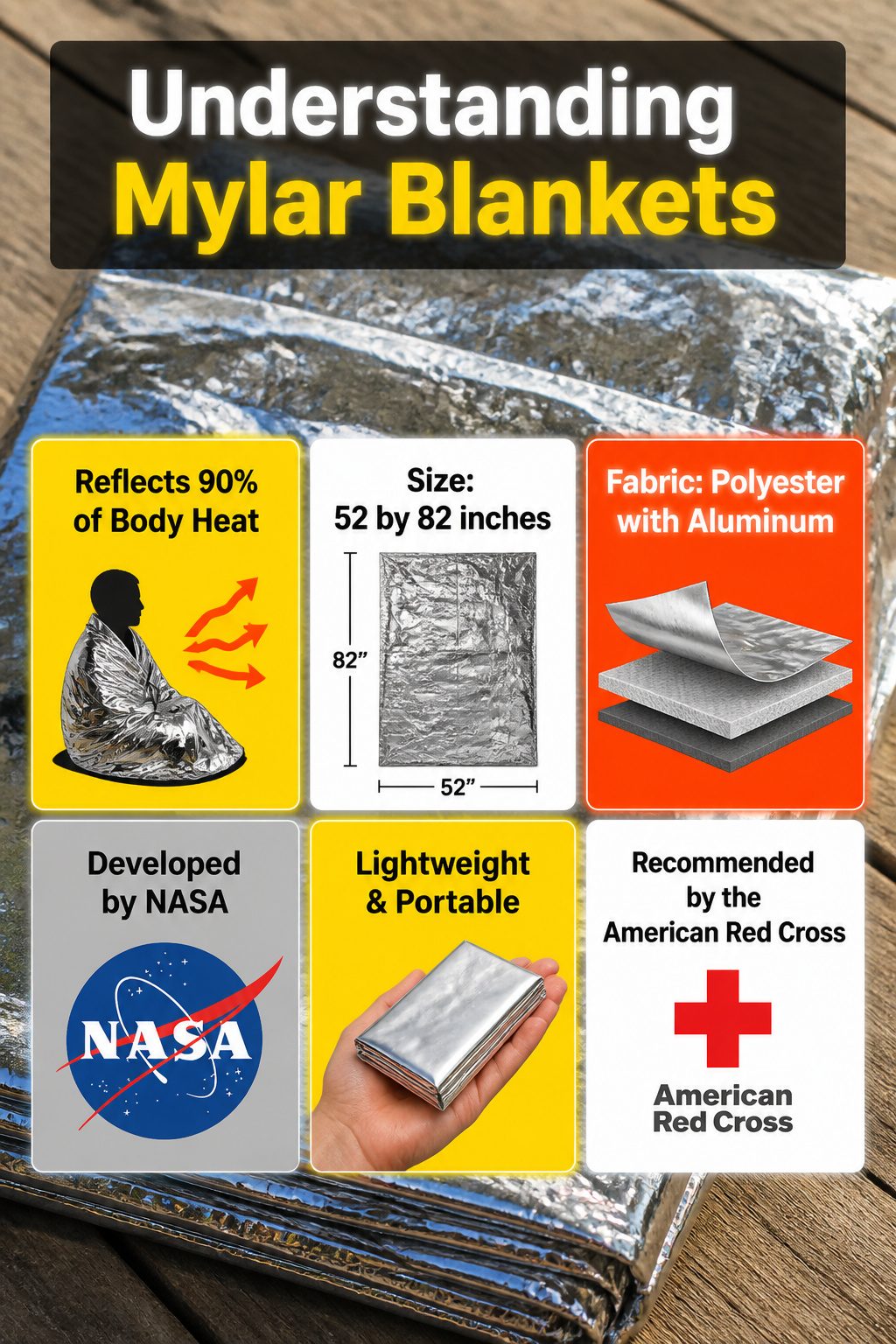
The sheet in your hand is not actually Mylar, at least not in the legal sense. Mylar is a trademarked polyester resin owned by DuPont, and the name stuck to these blankets the way "Kleenex" stuck to all tissues. What you are holding is a thin, lightweight sheet of polyester with an aluminum coating, roughly 52 by 82 inches, that reflects up to 90% of body heat back toward the body rather than letting it escape into cold air.
NASA developed the underlying material in the 1950s to protect equipment from drastic temperature shifts in space, where infrared reflection matters more than bulk insulation. The same property makes it useful in a backcountry emergency or a stalled car in February. The American Red Cross recommends keeping one in any first aid kit, and at the price and packed size, the only real argument against it is forgetting you have it.
"Emergency Blanket: 52 by 82 inches; reusable; can offset hypothermic reactions; reflects sun; retains up to 90 percent of body heat; for emergencies, camping, sporting events and more!"
That single sheet covers a lot of ground: heat retention, sun reflection, and a barrier against wind and water. The gardening angle surprised me when I first ran across it, but reflective mulch is just the start.
How They Work
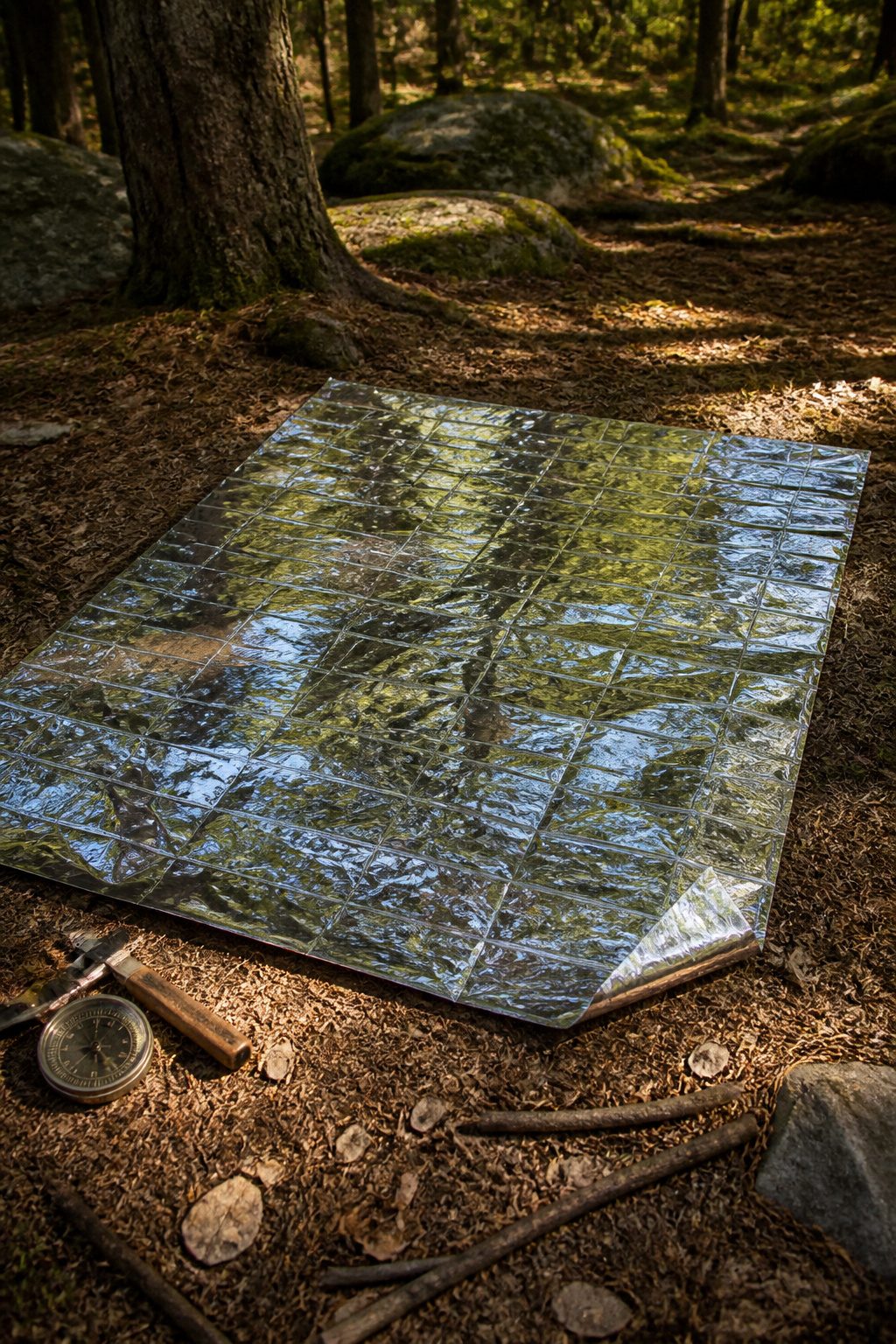
The reflective surface on a Mylar blanket does not generate warmth; it bounces your own body heat back toward you instead of letting it escape into the air. That distinction shapes every use case in this list. A mylar blanket will not warm a cold room, and it will not heat a chilled body on its own. What it does is slow the loss of heat you are already producing.
Wind and water strip heat away fast. Sweat cools you; rain chills you; wind pulls warmth from exposed skin. Mylar blankets block all three. They are waterproof and windproof, so the barrier extends past reflection alone. You can use one to stop a breeze from reaching you or to keep rain off your back when other shelter fails.
The material itself provides no insulation against conduction. Lying on cold ground with only a mylar blanket between you and the dirt still loses heat through direct contact. The blanket works best as a layer on top of other insulation, clothing, or bedding, not as a replacement for it. Shiny side facing in is the rule for reflecting heat back toward your body; flip it outward if you need to deflect sun or radiated heat instead.
That airtight foil traps moisture too. Sweat builds up inside if you are working hard, which can eventually work against you. The blanket is a tool for specific conditions, not a magic layer for every situation.
1. Ground Tarp
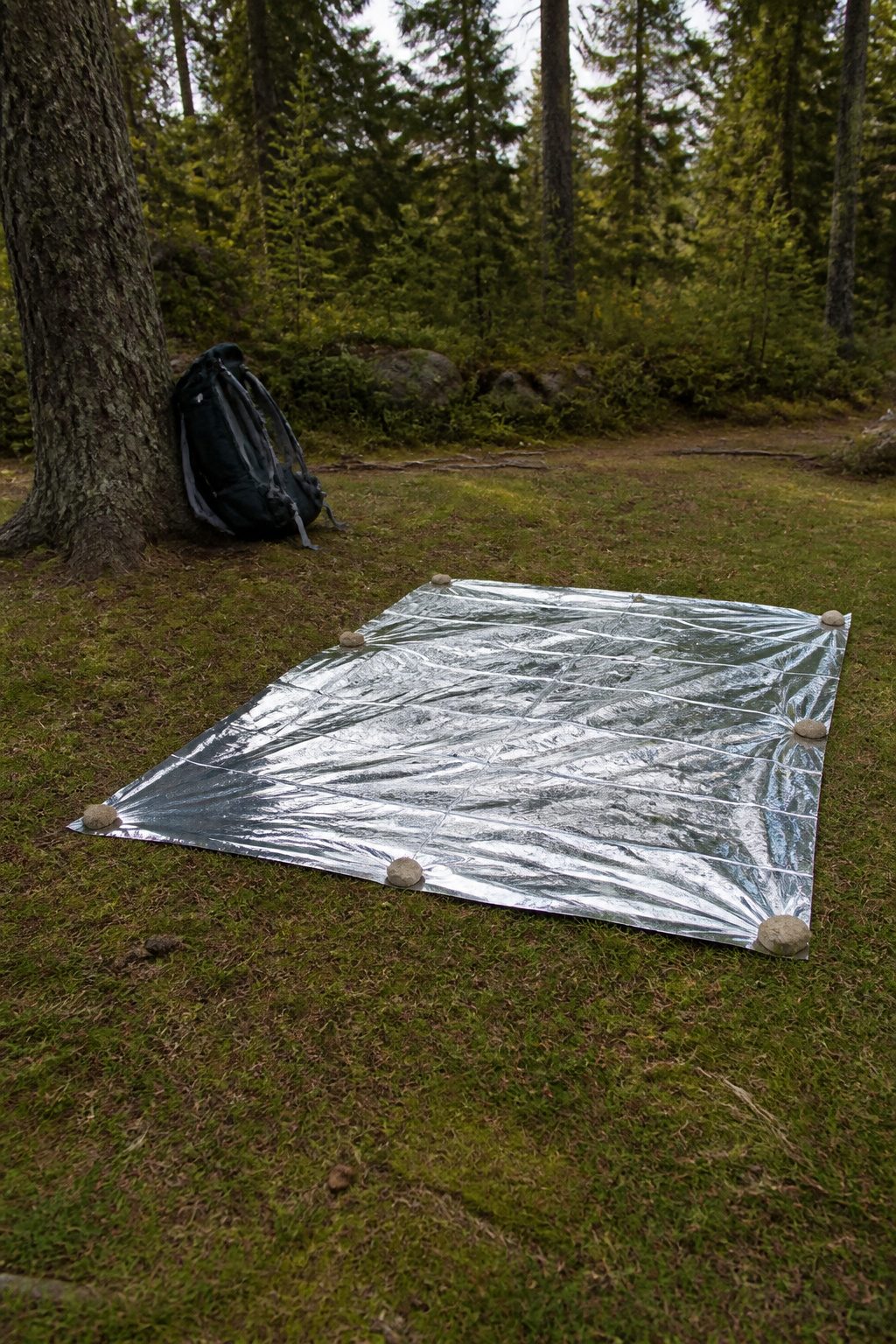
Unfolded flat, a mylar blanket makes a decent ground tarp for keeping moisture from seeping upward, though calling it durable would be generous. The thin, crinkly film creates that waterproof barrier underneath you, which is the main reason to bother with it. Against sticks and stones, the material does not fare well. I learned that the hard way on an overnight where a single pine needle, pressed by my hip for three hours, punched a slit wide enough to defeat the whole purpose. The cheap space blankets tear easily, and even the tougher tarp-style versions with grommets will puncture if the ground underneath is not cleared. For a picnic or a tent footprint in soft grass, the protection holds. On rougher terrain, sweep the site first, or accept that you are carrying a disposable layer.
2. Boost Fire Heat
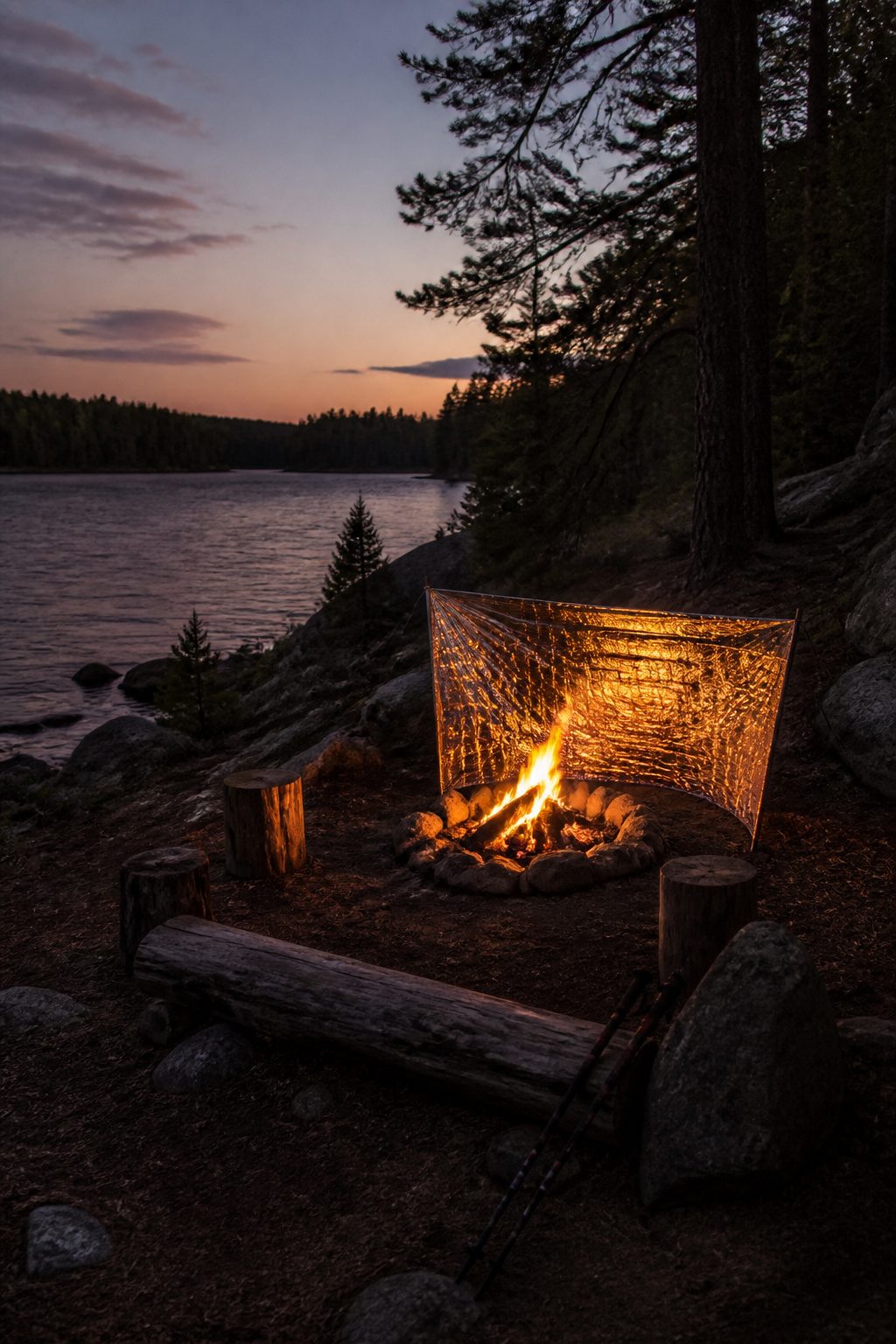
A mylar blanket angled behind a fire turns a cold camp into a warm pocket faster than building the flames higher. The reflective surface bounces radiant heat back toward your shelter or seating area instead of letting it escape into the dark. Drive two long stakes into the ground on the side of the fire opposite where you sleep, then hang the blanket vertically with the shiny side facing inward. Keep it far enough back that the material does not melt, because the thin polyester film will distort or shrivel fast once it feels real heat. The sources do not name an exact distance, and that is the point: wind, fuel type, and fire height all shift the safe zone, so the blanket should sit well outside the circle where your hand still feels uncomfortable. The payoff is noticeable. Wind drops on the sheltered side, and the reflected warmth stacks on what the fire already gives. One angle works better than a flat wall; tilt the bottom edge slightly away from the flames so rising heat hits the center of the sheet and scatters down toward you. I have seen people set the blanket almost among the coals, thinking closer means hotter, and end with a wrinkled strip of orange plastic that reflects nothing.
3. Trail Markers
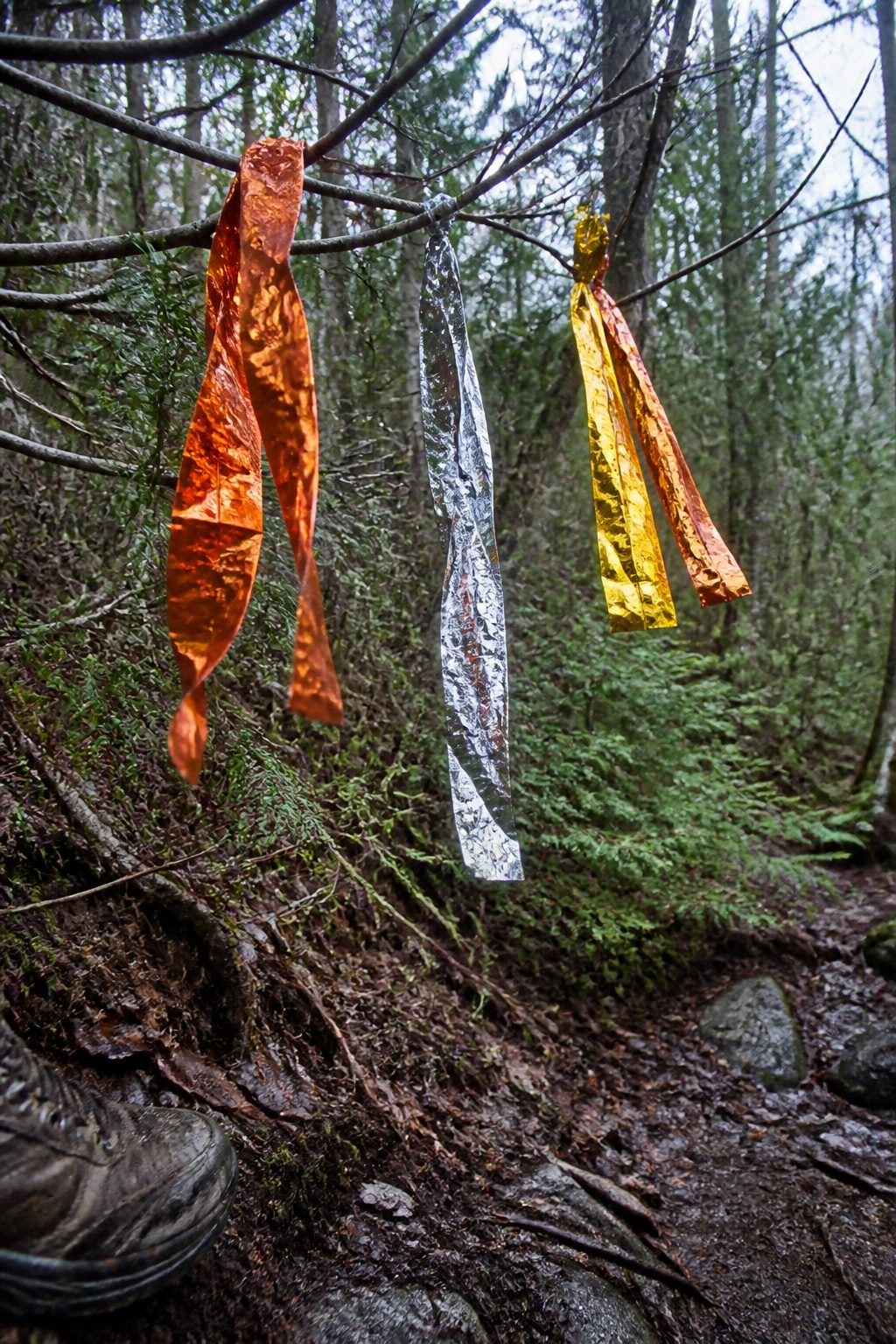
Standard trail markers fade fast in snow or under thick canopy, and that is where a mylar blanket earns its keep. The reflective surface catches a headlamp beam from surprising distance, even through falling snow or tangled understory. I cut a single blanket into roughly a dozen strips, each about two inches wide and long enough to tie off on a branch without pulling free immediately. In practice the thin material starts to shred at the tie points after a day or two of wind, especially if the edges were cut with dull scissors and left ragged. High-quality tear-resistant blankets last longer than the single-use foil sheets from basic first aid kits, though neither will survive a week of hard weather. For a short out-and-back or a single overnight, the trade is worth it: the markers are light, visible, and you already carried the blanket anyway.
4. Emergency Bivvy
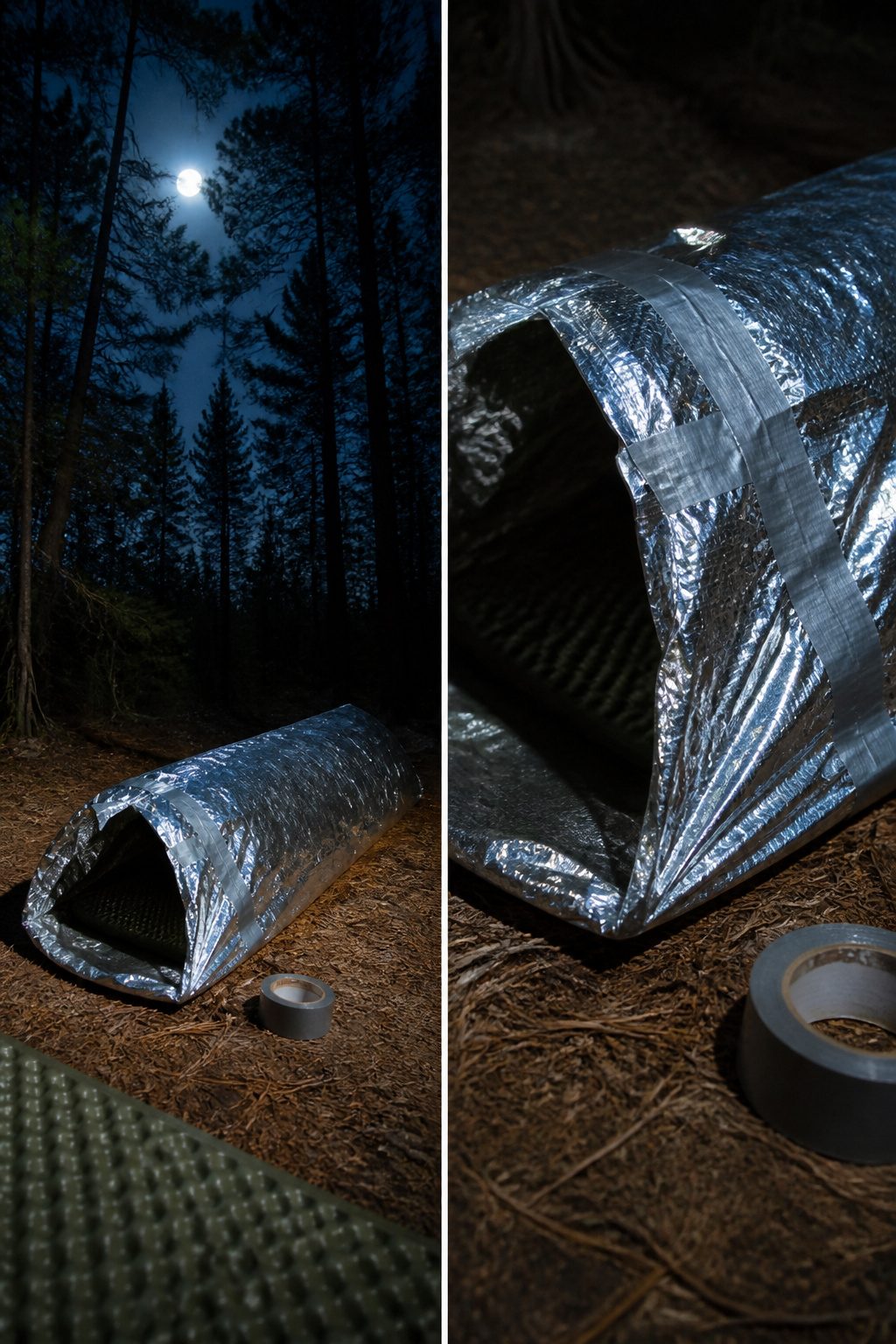
A mylar blanket by itself leaks heat at every opening. Sealed into a bivvy with duct tape, the same sheet holds noticeably more warmth, though the exact gain depends on how completely you close it. I leave a small vent at the shoulder on the theory that some air exchange beats waking up soaked.
The condensation problem is real. My first attempt, taped tight from neck to toe, left the interior wet enough to wipe with a hand. Now I run a strip of tape along the long edge, fold the bottom into a foot box and seal it, but stop the side seam about eight inches short at the top. That gap lets enough moisture escape without creating a draft chimney.
Open wrap versus sealed bivvy is the choice you face if the temperature really drops. The wrap is faster and lets you adjust, but the wind finds every gap. The taped bivvy takes two minutes and a helper or some patience, and it performs closer to the 90% heat-loss reduction these blankets claim, since that figure assumes a closed system rather than a loose drape. For short-term emergencies, either keeps you alive; for several hours in wind, the tape is worth carrying.
5. Rain Poncho
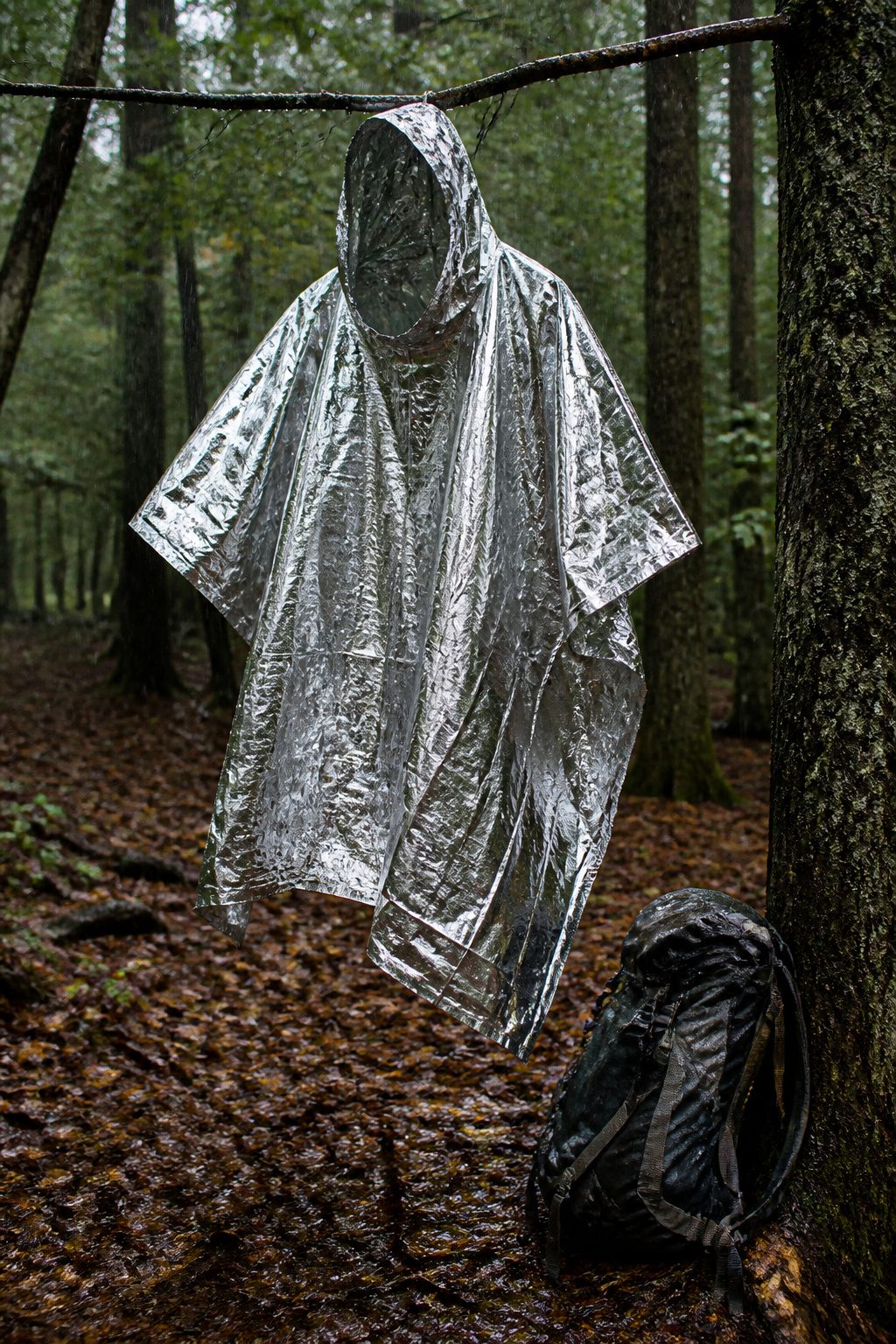
Cutting a head hole through a mylar blanket turns it into an emergency rain poncho in about ten seconds. The waterproof polyethylene layer sheds water well enough to keep your torso dry through a steady shower. The problem starts at that neck hole. Mylar has almost no tear strength against a point load, and the weight of the poncho pulling at the opening turns a small slit into a running rip before you’ve walked half a mile.
I learned this on a wet trail in the Cascades when my first attempt split clean to the shoulder seam in under twenty minutes. Now I reinforce the neck with a strip of duct tape folded over the cut edge, front and back, before I ever leave the truck. Even with that tape, the material fatigues. If rain protection is the planned use, a second blanket lives in the kit; the first becomes a disposable shell that might last one outing or might not.
6. Table Cloth
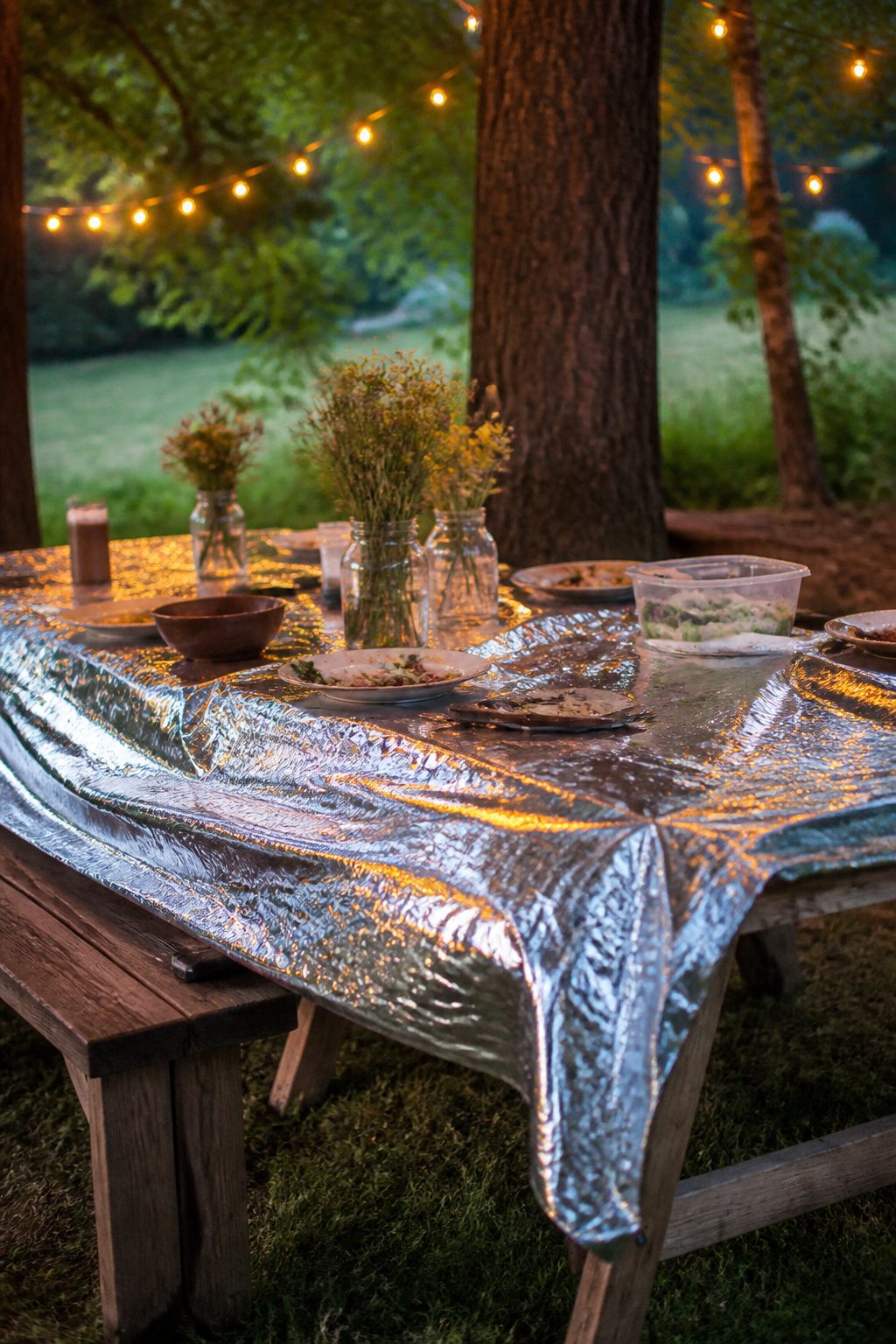
A mylar blanket spread over a picnic table catches light in a way that cheap plastic never manages. The metallic shimmer works best at dusk, when string lights or candles reflect back and the surface seems to glow from within. I have seen this at outdoor weddings and at backyard cookouts where someone wanted the look without renting linens.
The crinkling is the main drawback. Every plate shift, every elbow rest, every breeze sends the material snapping and rustling. Conversation competes with it. Wind is worse: the blanket lifts at corners unless you weight all four sides, and even then the surface ripples like water. Tape helps, but the tape shows.
For a single evening, the visual effect justifies the hassle. The material is windproof and waterproof, so spilled drinks bead up rather than soak through. Cleanup means folding the whole thing into a pocket-sized wad. Reuse is limited; creases multiply and the reflective coating flakes at fold lines. Two or three events, and the shimmer dulls to something closer to worn foil.
7. Food Cover
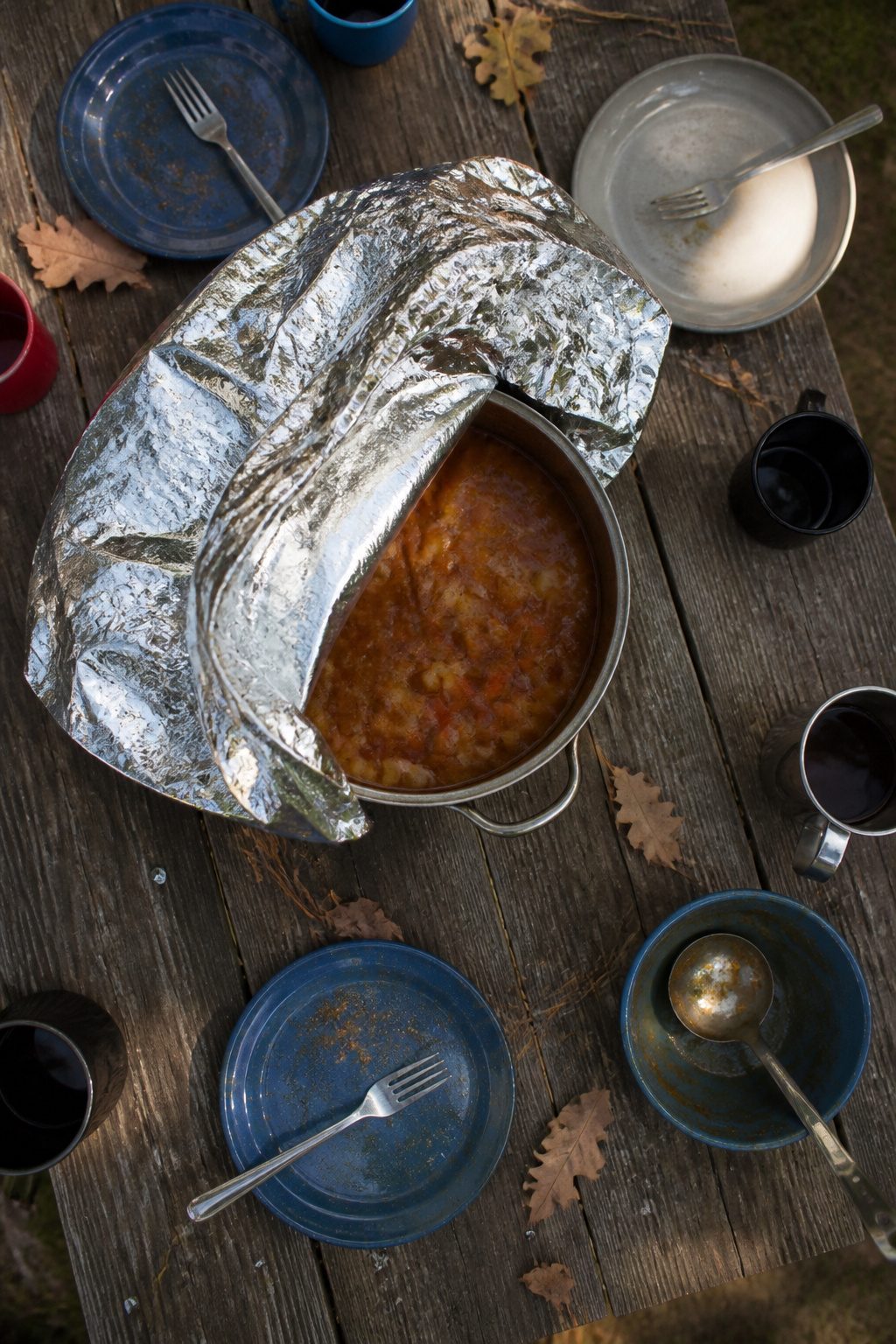
The reflective surface of a mylar blanket seems to throw off flies and wasps in ways a regular cloth cover does not. At a camp kitchen last summer, draping one over a pot of cooling stew kept the insects circling overhead instead of landing. Tuck the edges under the pot rim or plate lip so nothing crawls underneath, but leave one side loose enough to lift without exposing the whole dish. The material weighs next to nothing and packs smaller than any mesh food tent, though it will not breathe like mesh will, so condensation can collect on the underside if the food stays covered too long in humid air. For a picnic spread, a larger blanket works better than piecing together smaller squares, since seams between sections leave gaps where ants find their way in.
8. Signaling
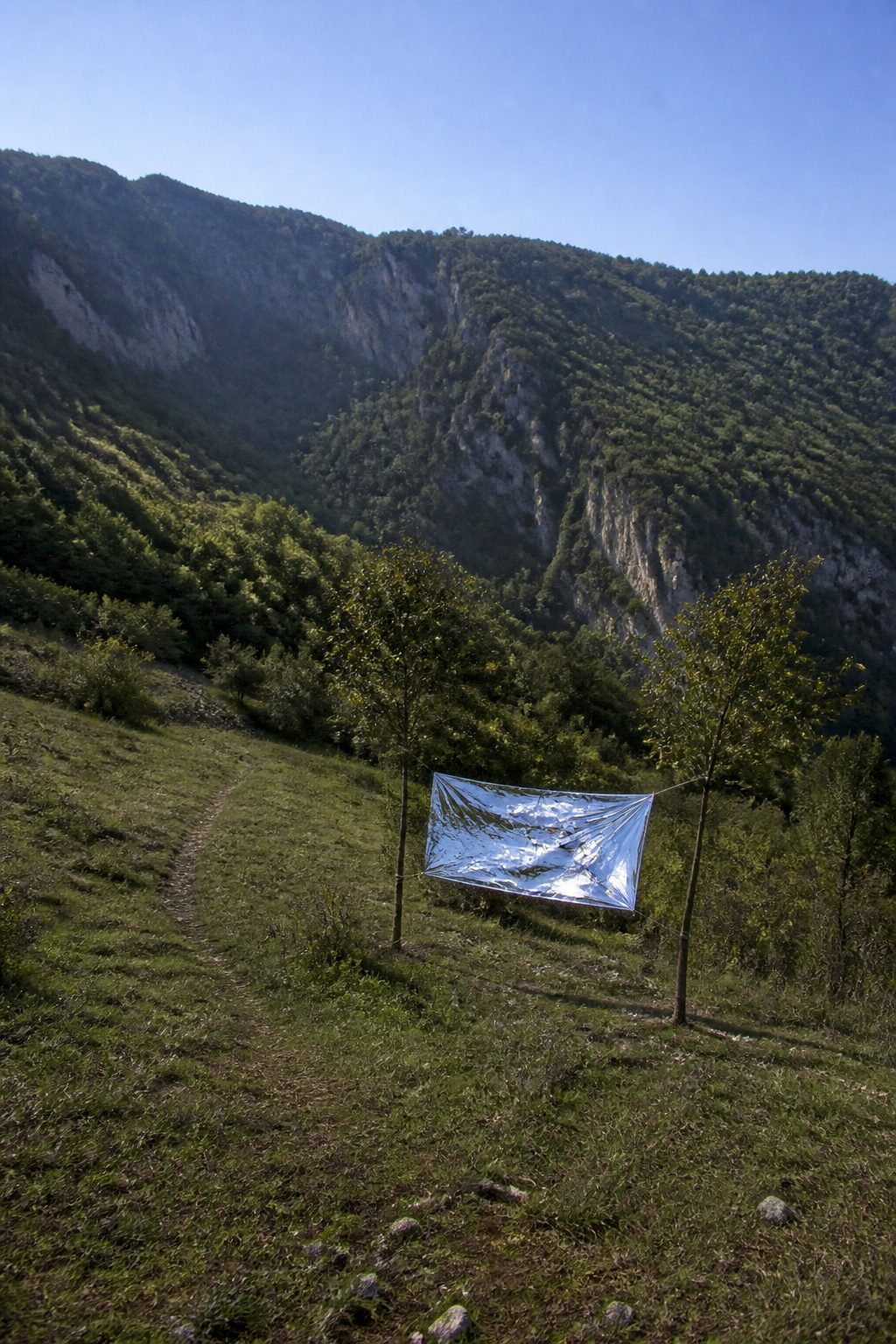
A mylar blanket’s reflective surface can substitute for a proper signal mirror in a pinch, but the technique matters more than the material itself. Small, controlled flashes work better than waving the whole sheet around; the goal is a sharp, intermittent glint that catches a pilot’s eye against the terrain. On a clear day, these flashes remain visible out to roughly two miles in my own testing, which is enough for most search aircraft operating standard patterns.
Overcast skies defeat this use almost entirely. The diffuse light lacks the punch to create a directional flash, so the blanket just looks like a pale patch on the ground from above. If the sun is behind clouds, your time is better spent on other signals or shelter.
For aiming, pin the edges to a frame of sticks or tie it to a pack frame so the surface stays taut. A slack sheet warps in the wind and scatters the reflection. Laying it flat on a hillside works as a passive signal if you cannot aim it actively, though it draws far less attention than a deliberate flash.
9. Pillow
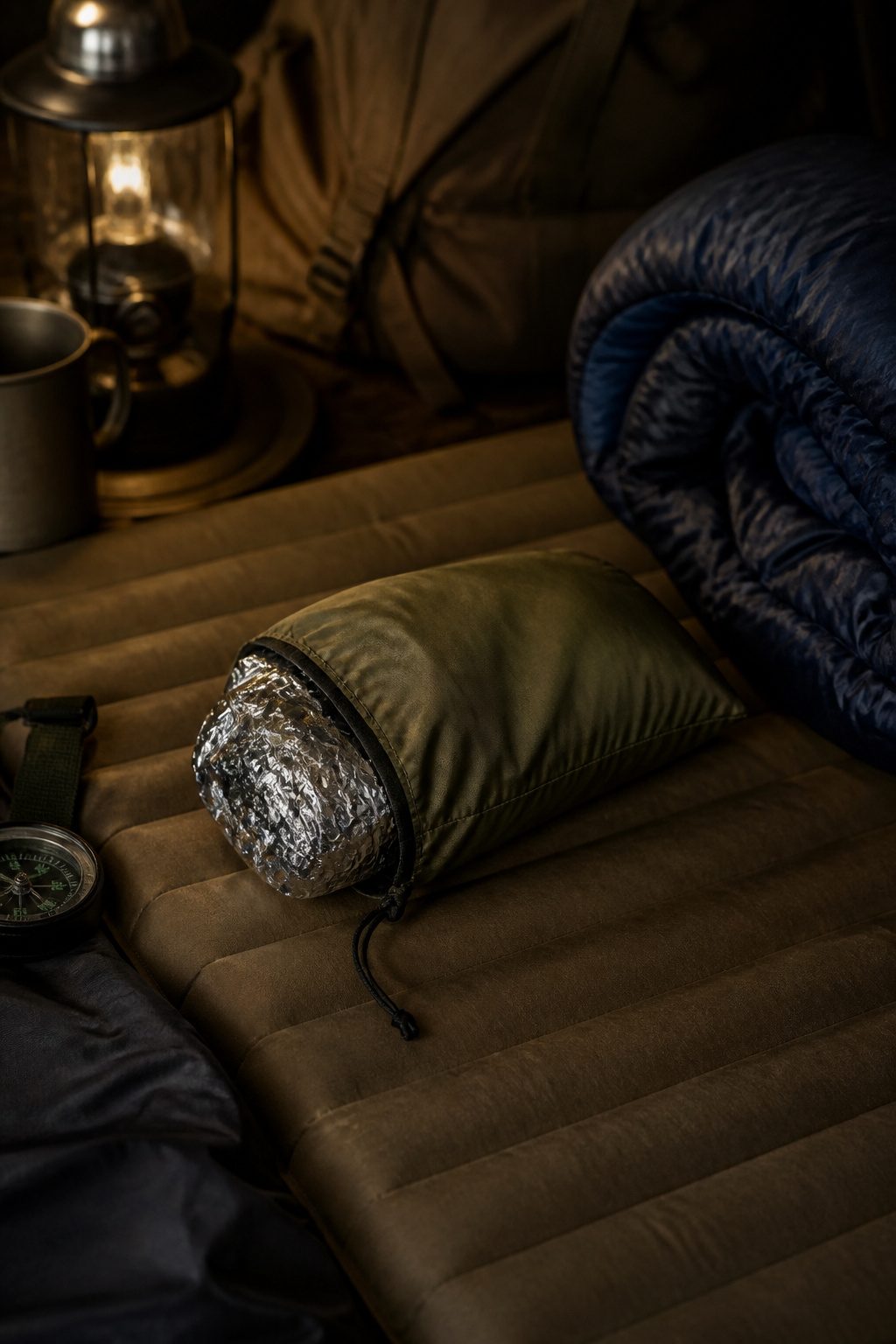
The crinkle of a mylar blanket stuffed into a stuff sack will wake a light sleeper three tents over. Bare mylar against your cheek feels like sleeping on a grocery bag, and the metallic surface either sticks to damp skin or slides away every time you turn. A fistful of dry leaves, pine needles, or crumpled clothing between the folded blanket and the sack wall fixes both problems; the filler absorbs the rustle and puts something soft against your face. Clothing works best because it packs denser and stays put. The resulting lump is about the size of a softball, half again as bulky as a dedicated inflatable camp pillow that compresses to a soda can. The weight is nearly nothing, which is the only reason to bother when space in a daypack already runs tight. On one overnight in the Adirondacks, I tried the mylar alone and woke with a crease across my jaw that lasted until noon. The blanket works in a pinch, but calling it comfortable requires a generous definition of the word.
10. First Aid
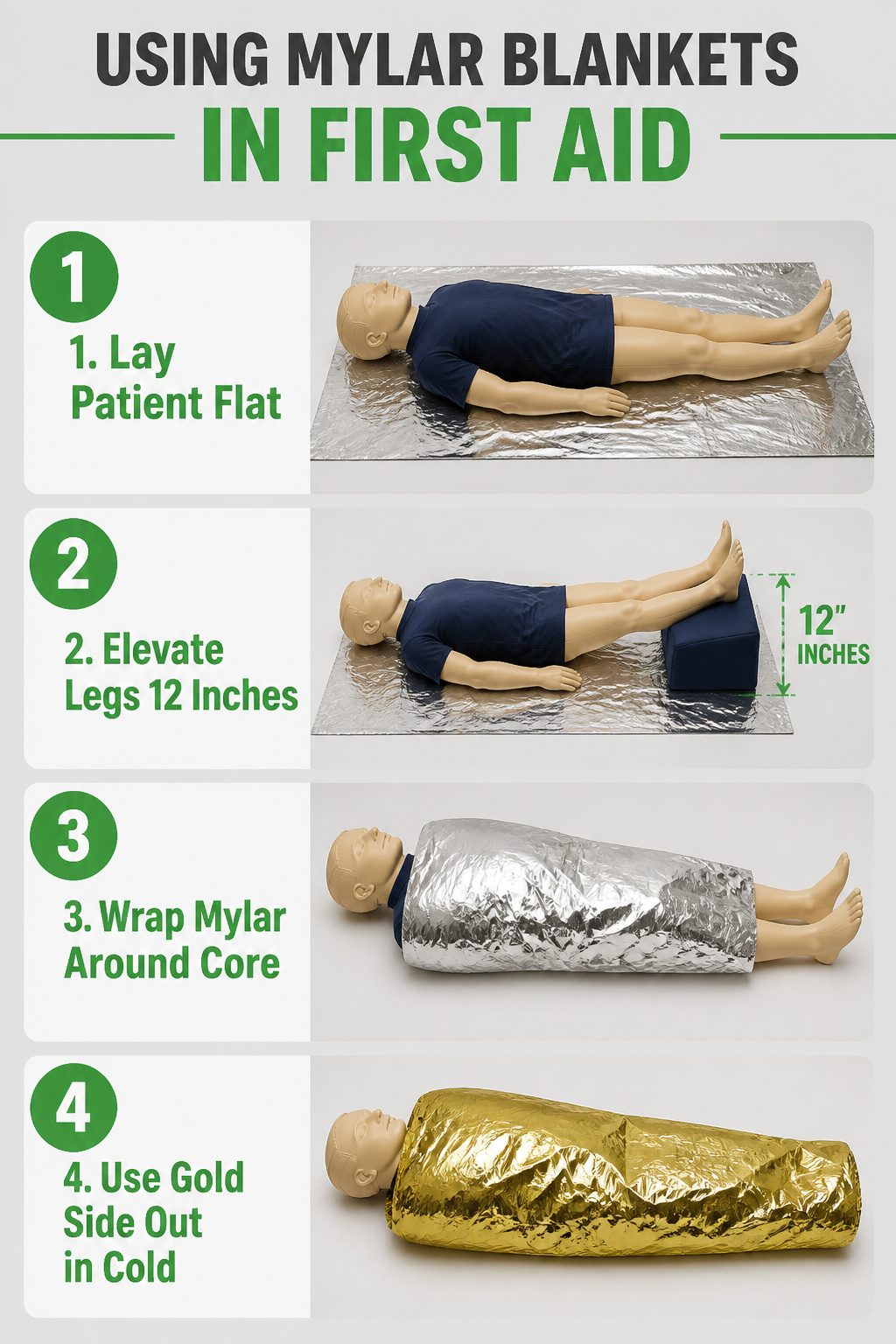
The American Red Cross includes mylar blankets in its first aid kits for good reason. In a real emergency, the material does three things at once: it blocks wind, stops sweat from evaporating, and reflects radiant heat back toward the body.
The reflective silver side faces inward when you are treating shock or hypothermia. Body heat bounces off that surface and returns to the patient rather than bleeding into the air. Gold faces out in cold conditions; this is the configuration that traps warmth effectively.
For shock treatment specifically, the blanket works best when combined with proper positioning. Lay the patient flat, elevate the legs roughly twelve inches if injuries allow, then wrap the mylar layer over and under the torso to create a sealed envelope around the core. The legs can stay outside if you need to monitor bleeding or if elevation alone is the priority.
A sling is another solid use. Tear or cut a strip wide enough to support the forearm, pad the neck where the triangle knot sits, and the slick surface will not bind against clothing the way fabric can. For splint padding, fold a section into quarters and tuck it between limb and rigid support; it adds no weight worth mentioning and the crinkling is irrelevant next to the pain of a fracture moving.
Hospitals use these same blankets post-surgery, and veterinary clinics use them during animal procedures. The applications transfer cleanly to field first aid.
11. Fishing Bait
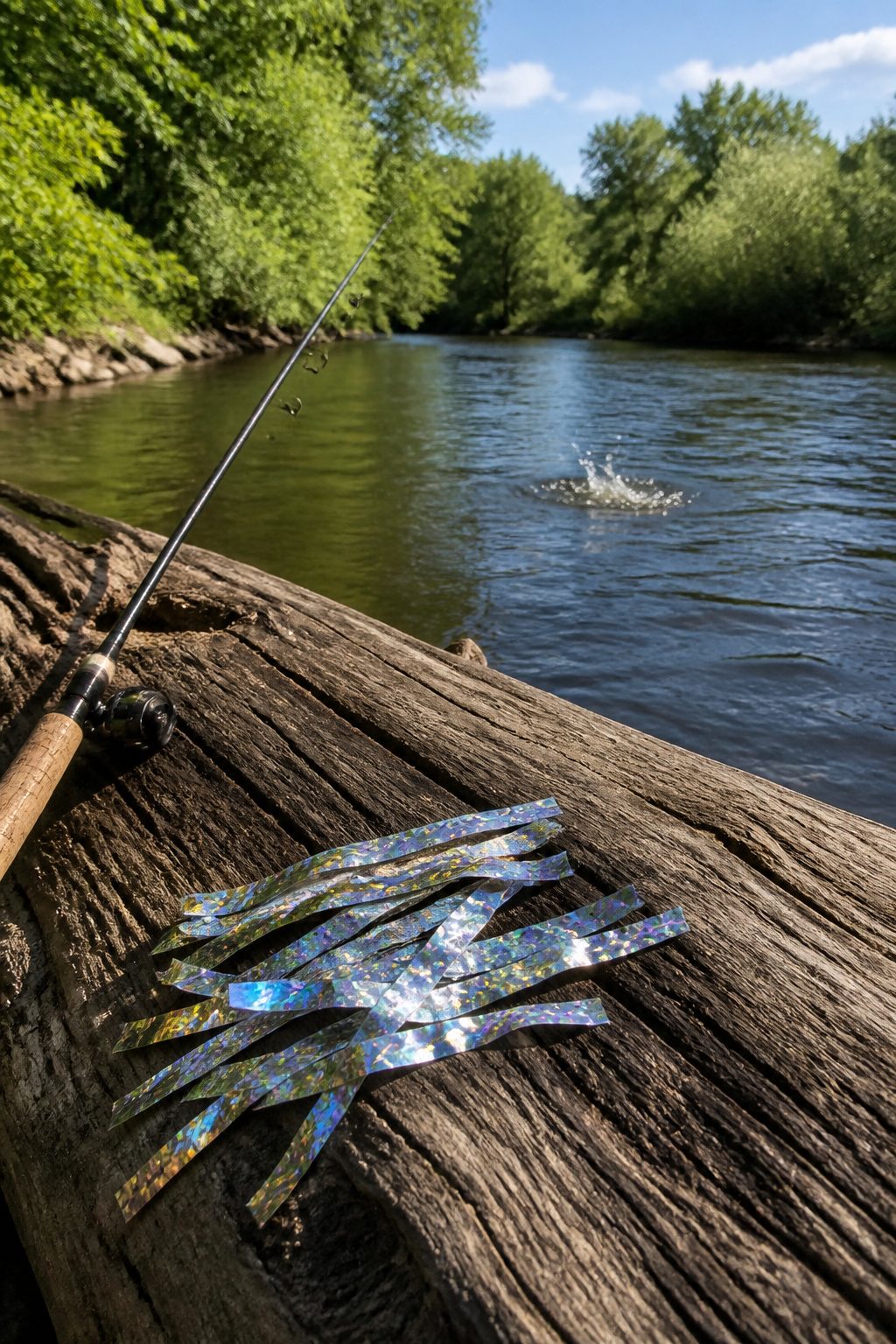
Shiny strips cut from a mylar blanket will catch fish, though not nearly as universally as some guides claim. The flash works best in murky water or low light, when predators rely on lateral-line sensing more than sight. Smallmouth bass in the Great Lakes tributaries hit these strips hard in spring, especially when rigged on a bare hook with a split shot to keep it sinking slow. The same presentation went completely ignored by brown trout in the same watershed, and after a dozen trips I stopped wasting the material on them.
Walleye on Lake Erie showed mild interest, but only when the strip was cut narrow, maybe half an inch, and twitched near bottom. Largemouth bass in southern ponds could not care less regardless of strip size or retrieval speed. The mylar holds up better than tin foil, which shreds after one strike, but it still kinks and dulls after a few casts. A fresh edge catches more fish than a creased one.
12. Sunning Mirror
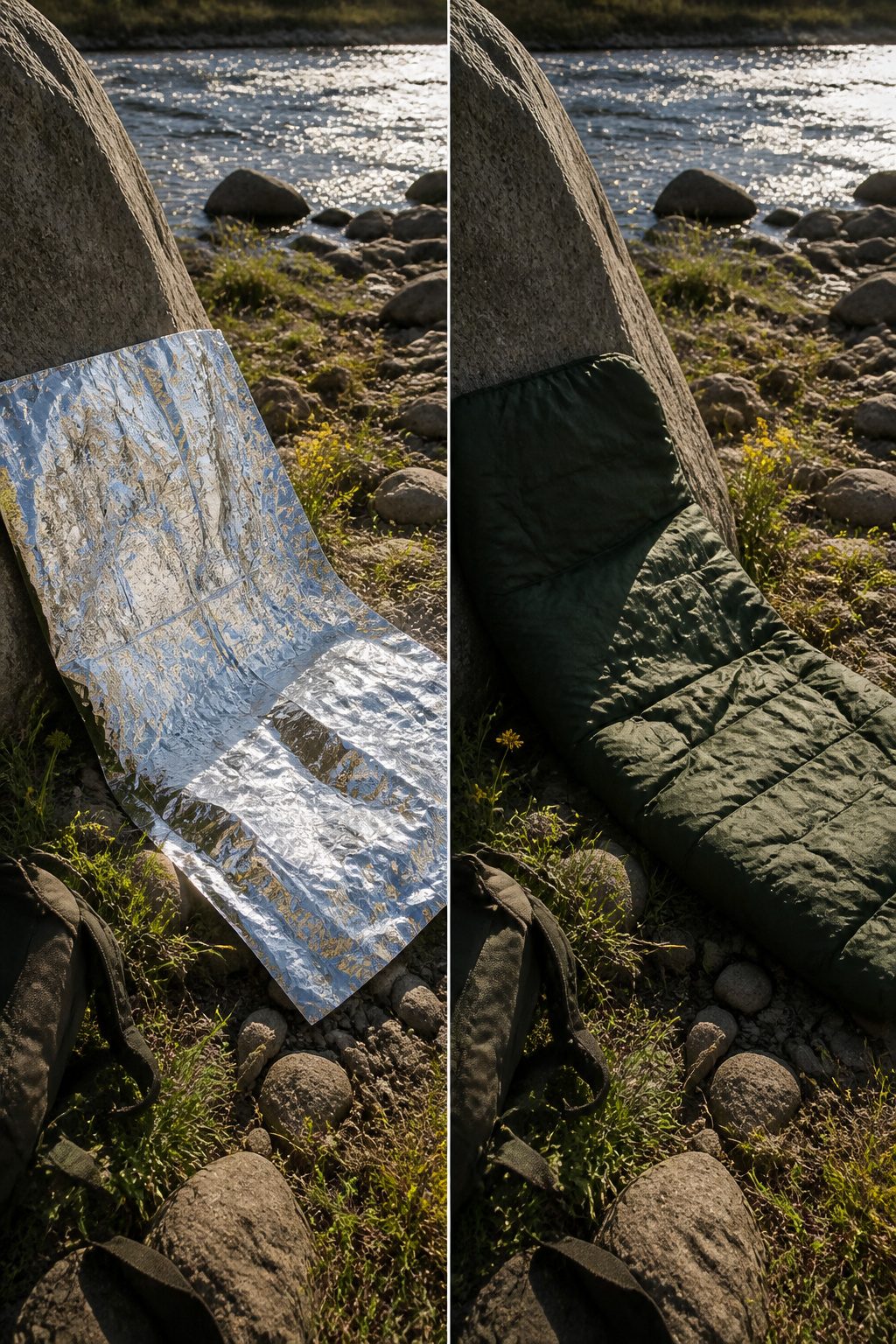
A mylar blanket stretched flat and propped at an angle throws back a surprising amount of light. The reflection concentrates what hits it, so the tanning effect is stronger than sitting in open sun. Fifteen minutes per side is the ceiling, and even that proved too much the first time I tried it. I went twenty, thinking it was no different from lying on a towel, and the burn showed up within two hours, deep enough that the skin peeled. Now I set a phone alarm and move into shade the moment it sounds. The blanket works best in late morning or early afternoon when the sun is high enough to hit the surface squarely. Morning or evening angles scatter the light and do little beyond making you cold.
13. Safety Orange
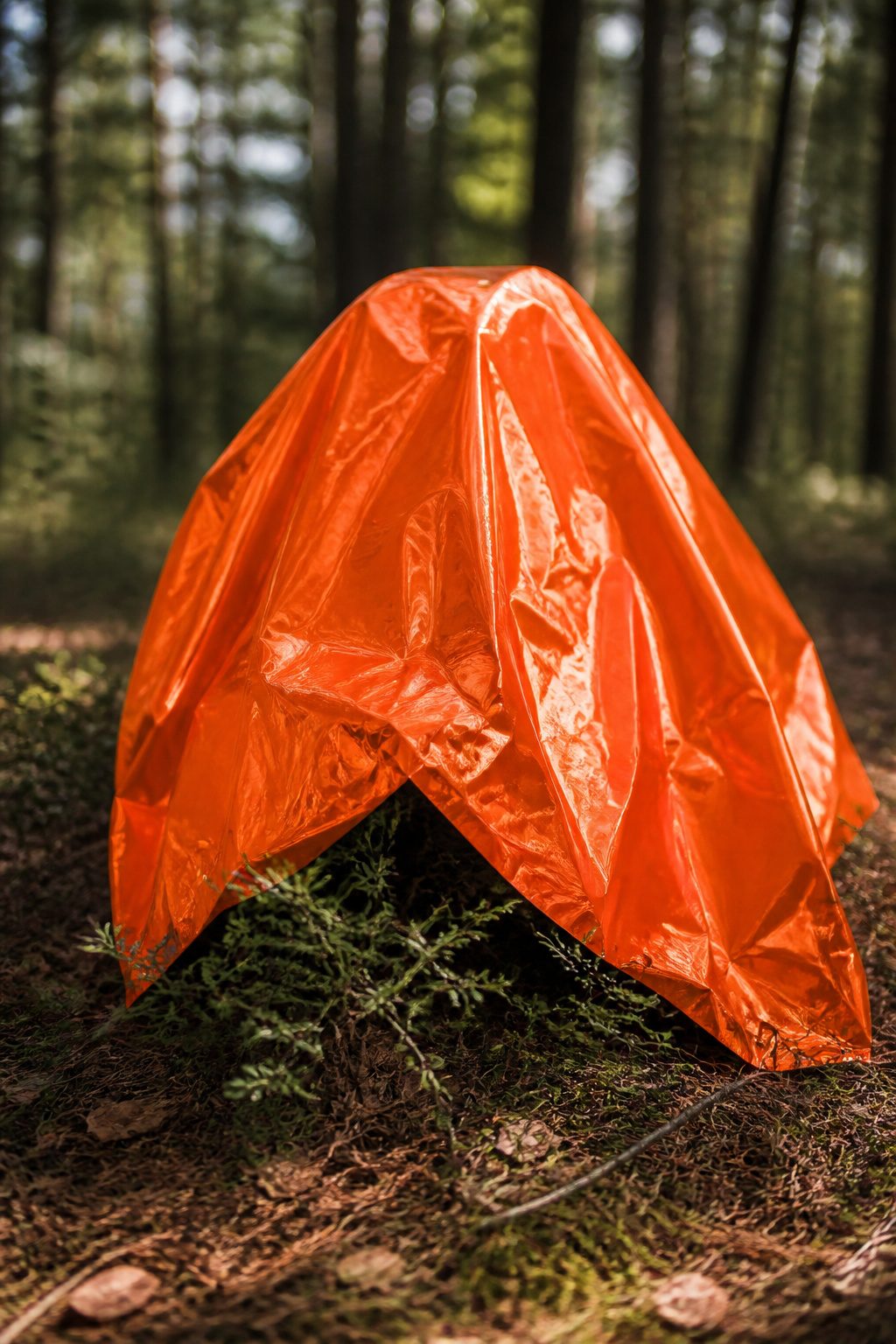
Silver or gold mylar won’t cut it when you need to be seen. The orange variant is the only one that works for hunting-season visibility, and even that only helps if you drape enough of it to read as a solid block of color rather than a flash of foil.
The standard silver version is worse than neutral clothing. In dappled light or against snow, the metallic surface breaks up your outline into random reflections that read as debris, not a person. Brown canvas or olive drab at least holds steady as a single shape a hunter’s eye can classify. The mirror finish does the opposite, scattering light in unpredictable directions.
Adventure Medical Kits lists this use explicitly under "Safety Orange" in their emergency-blanket guides, and the distinction matters enough that they brand the color as a feature. If your kit holds the usual silver-gold model, leave it packed and wear the hat or vest you already own. The orange mylar is a backup worth carrying only because it packs smaller than fabric and weighs next to nothing. Two sizes exist; the larger sheet wraps more convincingly around shoulders and pack. A forum poster who cave-rescued in Costa Rica still carries the orange "Julie" bag style in helmet and pack for exactly this kind of improvisation.
14. Plant Insulation
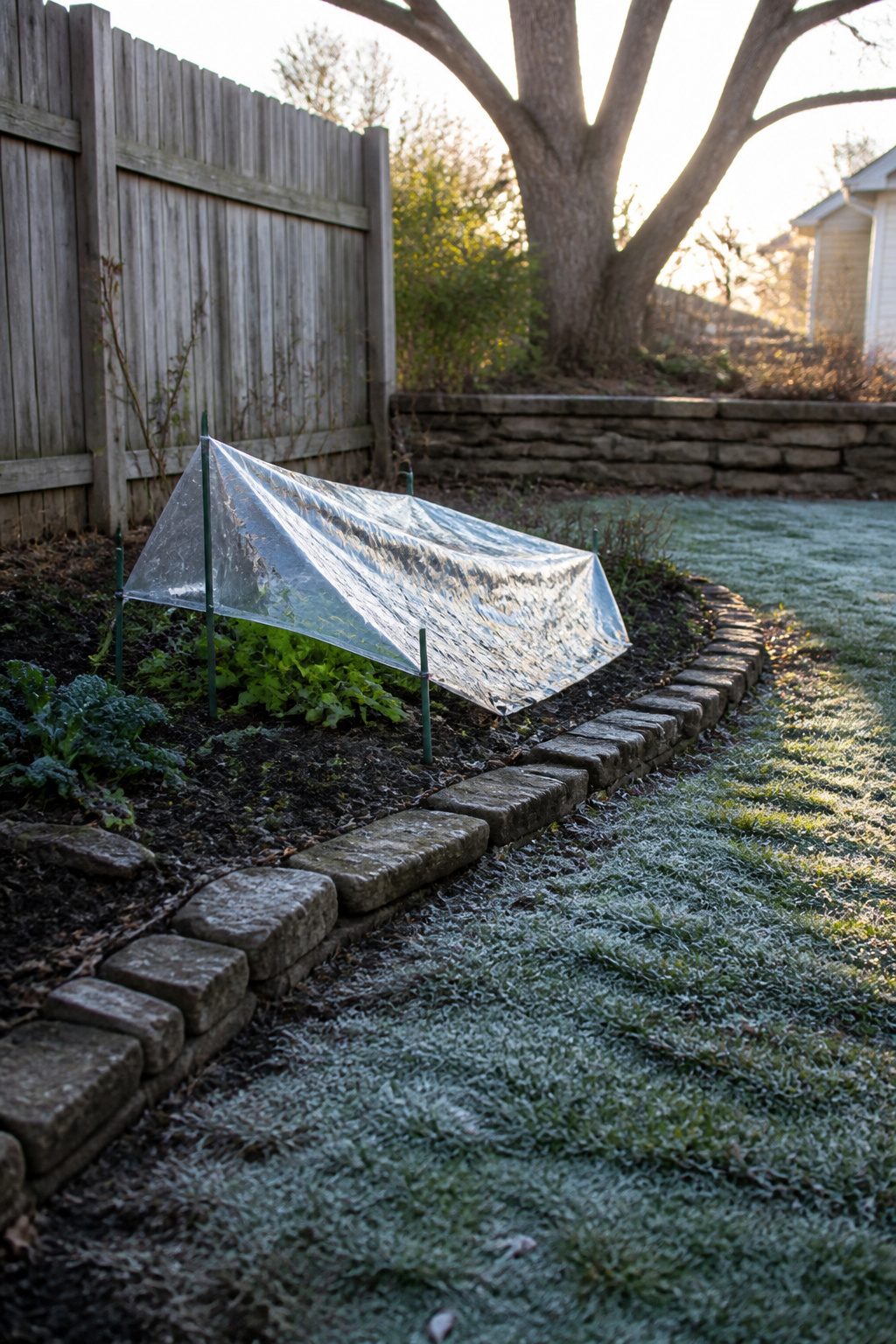
A mylar blanket draped over tomato cages or stakes can buy a garden bed a few critical degrees on a clear spring night when frost threatens. The trick is keeping the material off the leaves entirely. Where the thin film touches foliage, cold transfers straight through the contact point, and the leaf freezes harder there than if it had no cover at all.
I learned this the hard way one April after draping a blanket directly over pepper seedlings like a bedsheet. By morning the edges where plastic met leaf had turned to black mush, while the untouched centers looked fine. The blanket had done the opposite of protecting those spots.
The fix is simple: drive four stakes around the plant so the blanket forms a tent, not a shroud. The ground itself is your heat source here, not reflection off the mylar. Soil holds daytime warmth and releases it slowly overnight; the blanket just traps that radiating heat in a pocket of still air. Leave the bottom open so the warmest air, which sinks, pools around the plant rather than escaping. On still nights this beats throwing the blanket on flat, and on windy nights the stakes keep it from becoming a kite.
15. Greenhouse
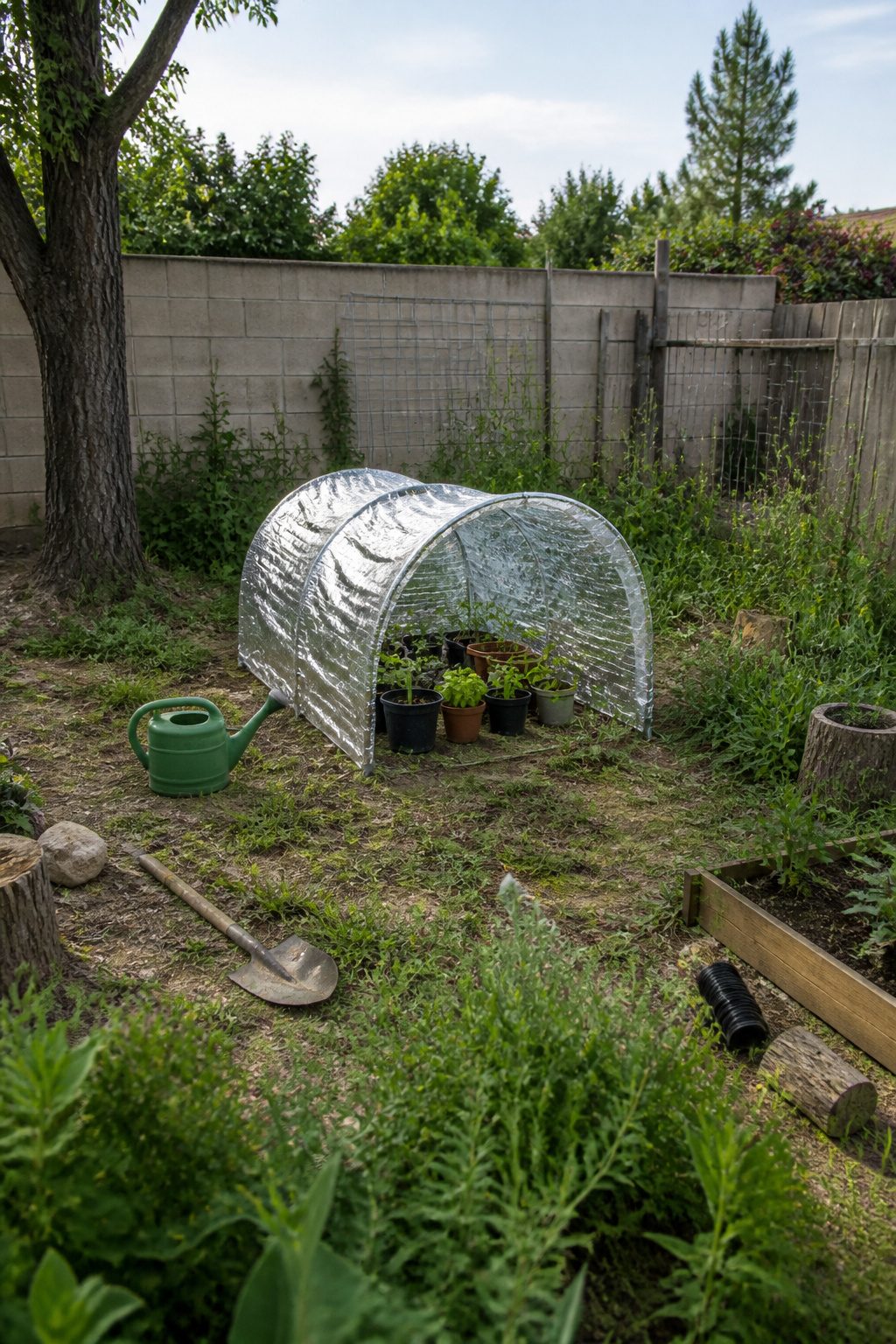
A sheet of Mylar stretched over a PVC hoop frame turns a raised bed into a working greenhouse for about the cost of the fittings. The reflective interior bounces light down to the undersides of leaves, which matters more than I expected when the sun sits low in January. I have used both PVC and old tomato cages for the skeleton; the cages rust eventually but hold up through one season without cost.
The heat-reflective properties trap enough warmth that the air inside stays roughly 10–15 degrees above ambient on clear days, though that gap collapses to almost nothing under heavy overcast. The material is 100% waterproof, so condensation runs off rather than soaking the frame. Wind is the real enemy. Stakes every eighteen inches and a wrap of wire through the grommets, or tape if you are using the cheap blankets without grommets, keeps the whole structure from sailing into the neighbor’s yard.
I have not tested this against a proper greenhouse polycarbonate, and I would not trust it for tender seedlings through a hard freeze without supplemental heat. For extending spinach and kale into December, or starting tomatoes two weeks early, the reflected light and modest temperature lift do enough.
16. Waterproofing
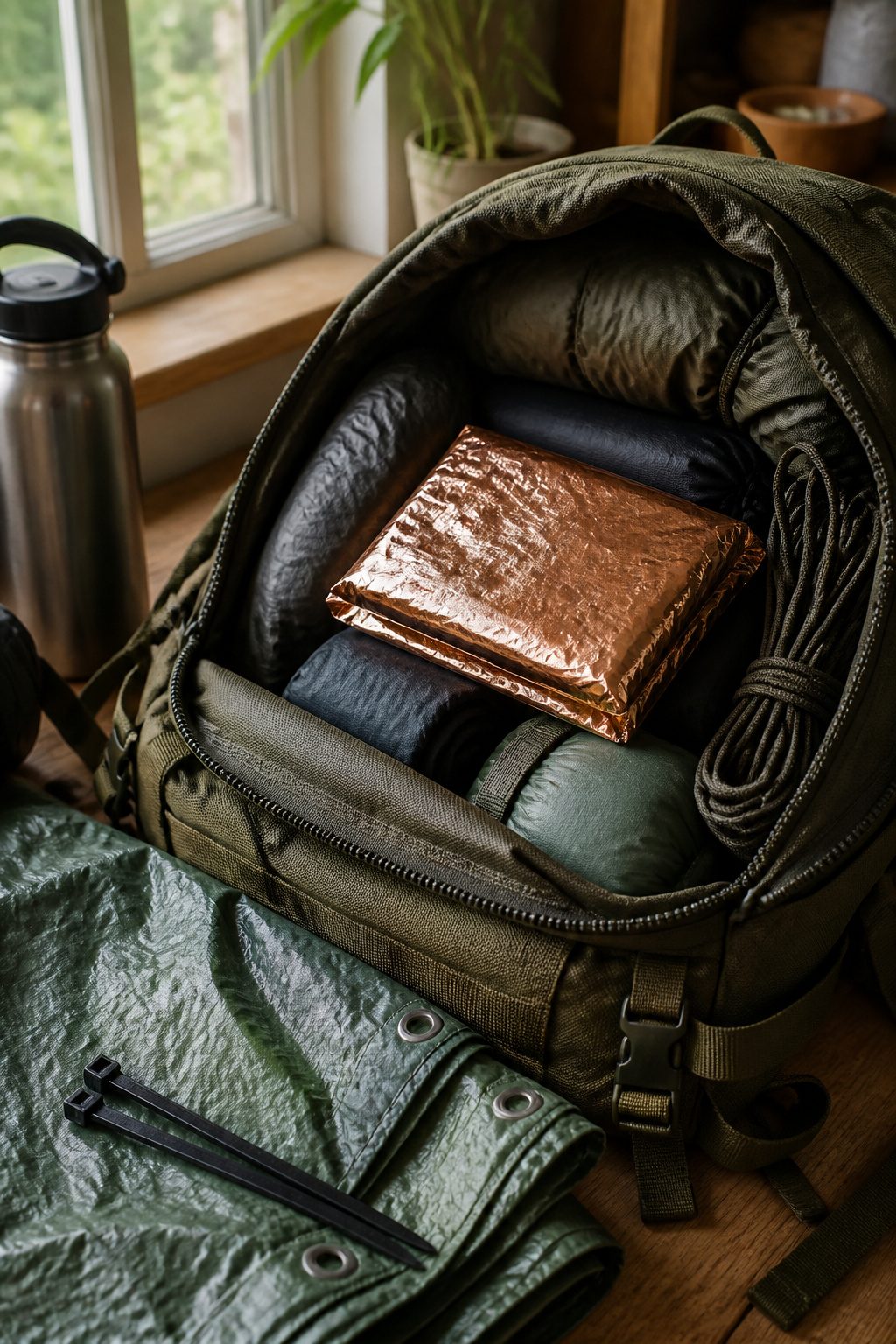
The seam is where water always finds its way in. A mylar blanket can wrap electronics or documents into something nearly waterproof, but the fold itself is the weak point, not the material.
For a phone or GPS unit, I lay the device on one half of the blanket, fold the other half over, then roll the edges twice toward the item, like a dry bag. The pressure from the roll keeps the seal tight against the inside. I learned the hard way that a single fold, held with a rubber band, failed on a rainy hike in the Ozarks. The phone survived the downpour but died from the moisture that wicked through a gap I had not noticed. Now I double-roll both long edges and tuck the ends under, no band needed.
Small items in a pack pocket get the same treatment. A folded wallet of mylar weighs nothing and beats a ziplock for puncture resistance, though it takes thirty seconds more to open.
17. Rain Fly
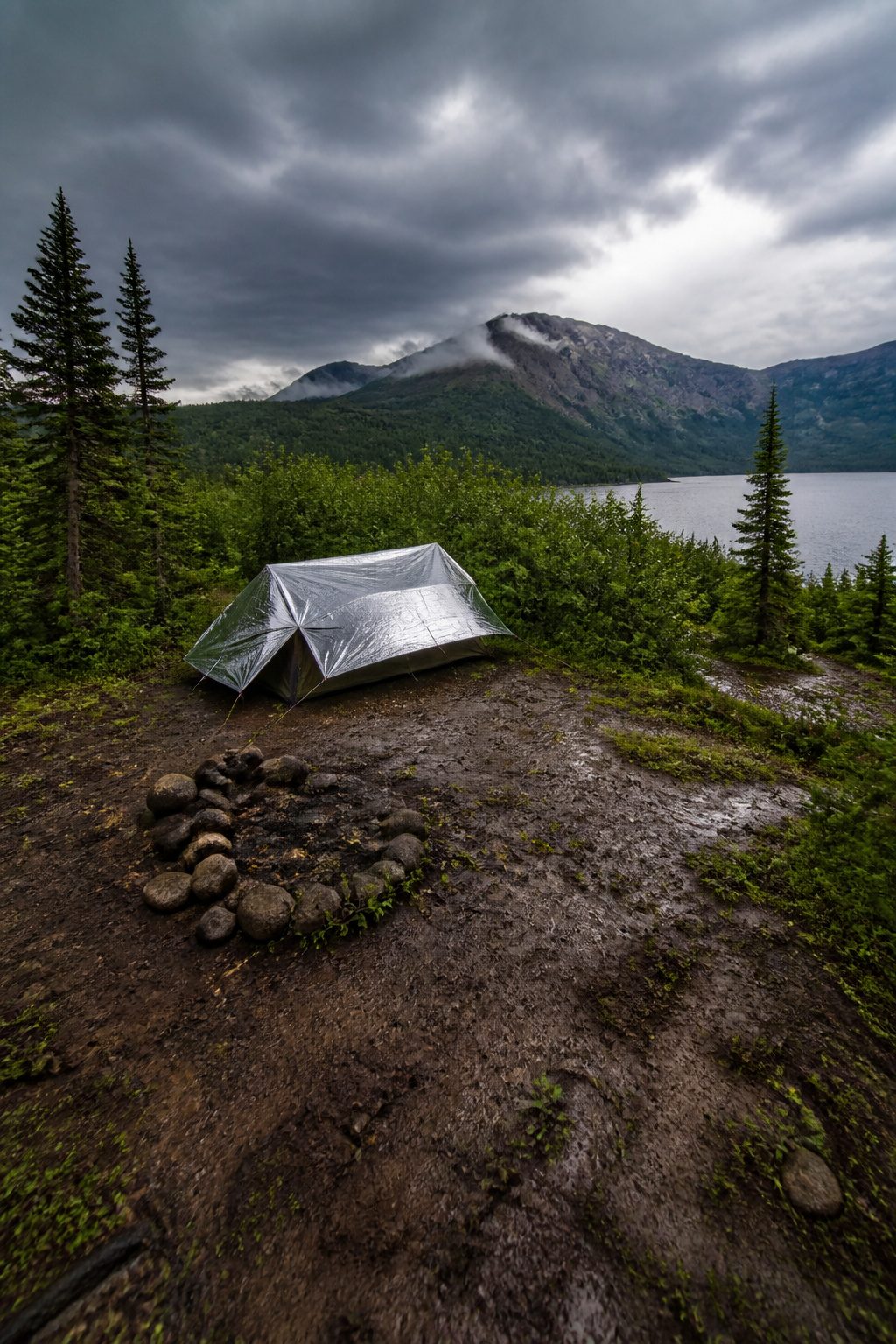
A standard mylar blanket at 52 by 82 inches rarely lines up with actual tent footprints, so the first thing to check is whether your shelter even fits inside that rectangle. The geometry works cleanly for one-person backpacking tents in the 80–88 inch range, and it covers most two-person ultralight models if you angle the corners and accept a little overhang on one end. Anything larger leaves gaps where water funnels through.
When the dimensions do not match, I rig a diagonal guyline pattern instead of corner stakes. Fold the blanket to the rough shape of your tent’s roof, tie cord to two opposing grommets or reinforced corners, then run those lines to trees or trekking poles at a steeper angle than you would with a factory rain fly. The mylar will sag between attachment points; a third line across the middle, cinched with a slipped half hitch, pulls the center up and sheds water to the sides rather than pooling.
The crinkle noise is unavoidable, and the material tears at grommet holes after a few nights of wind. I treat it as a single-trip backup, not a season-long substitute. Pack repair tape; the punctures start small and grow fast.
18. Office Warmth
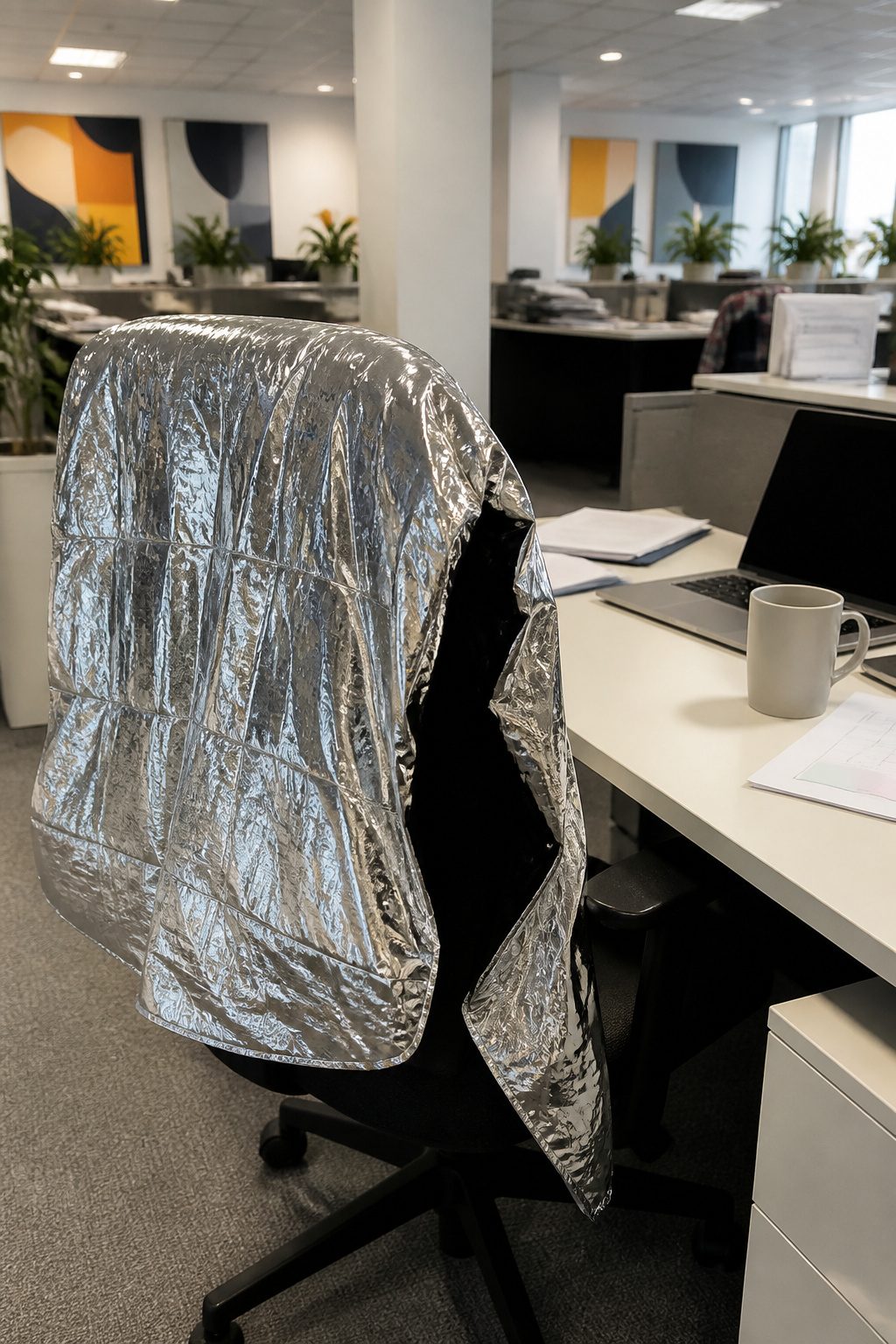
The crinkle of a mylar blanket at your desk draws every glance in an open floor plan. Folding the material into thirds lengthwise, then draping it over your shoulders like a shawl, keeps the noise to a dull rustle instead of that chip-bag crackle. The reflective side faces in, bouncing your own body heat back at you while the silver exterior just looks like a strange fashion choice. It works for a two-hour meeting in an over-air-conditioned conference room, or for that one coworker who keeps the vent aimed at your chair.
After three weeks of this, the constant adjusting and the occasional static shock on my neck got old. A fleece throw from home, left in a desk drawer, solved the problem permanently with zero noise and actual breathability. The mylar blanket still lives in my work bag for true emergencies, but for daily use, the dedicated office blanket wins without contest.
19. Kite
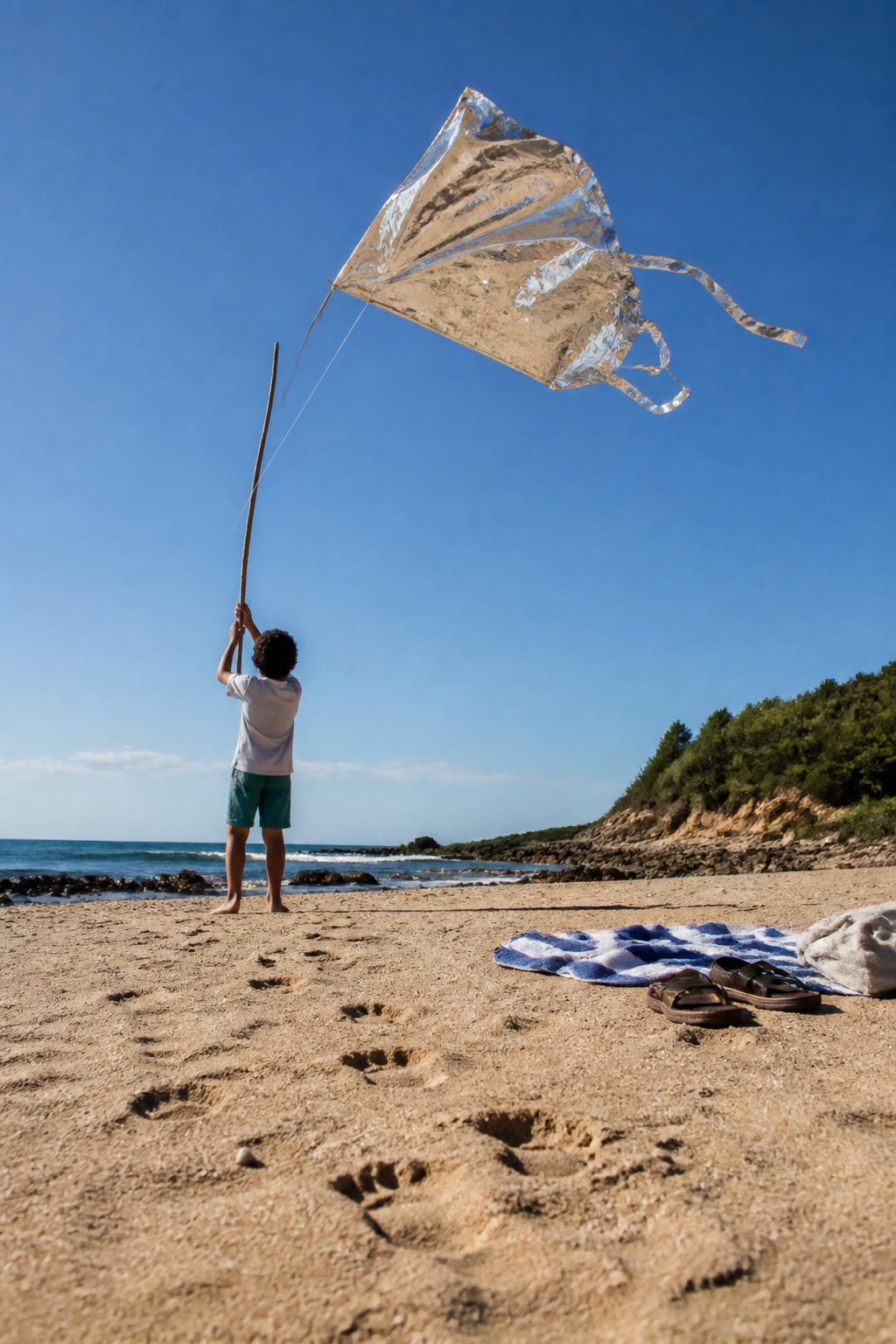
A mylar blanket makes a surprisingly flyable kite in a pinch, though the material fights you at every attachment point. The film weighs next to nothing, which gets you aloft fast, but the corners shred where line meets plastic unless you reinforce them. I use small squares of packing tape, layered in an X pattern over each spar junction, then punch the hole through the center of that tape patch. Without this, the mylar rips clean through in the first gust.
The kite performs in a narrow band. Steady breezes around 8–12 mph keep it stable and responsive; anything lighter and the blanket folds into a limp silver ribbon. Push past 15 mph and the spars bend, the mylar belly balloons out, and the whole thing dives or spins rather than climbs. I learned that upper limit the hard way, watching one pancaked shape skitter across a parking lot before the line snapped.
20. Sun Shield
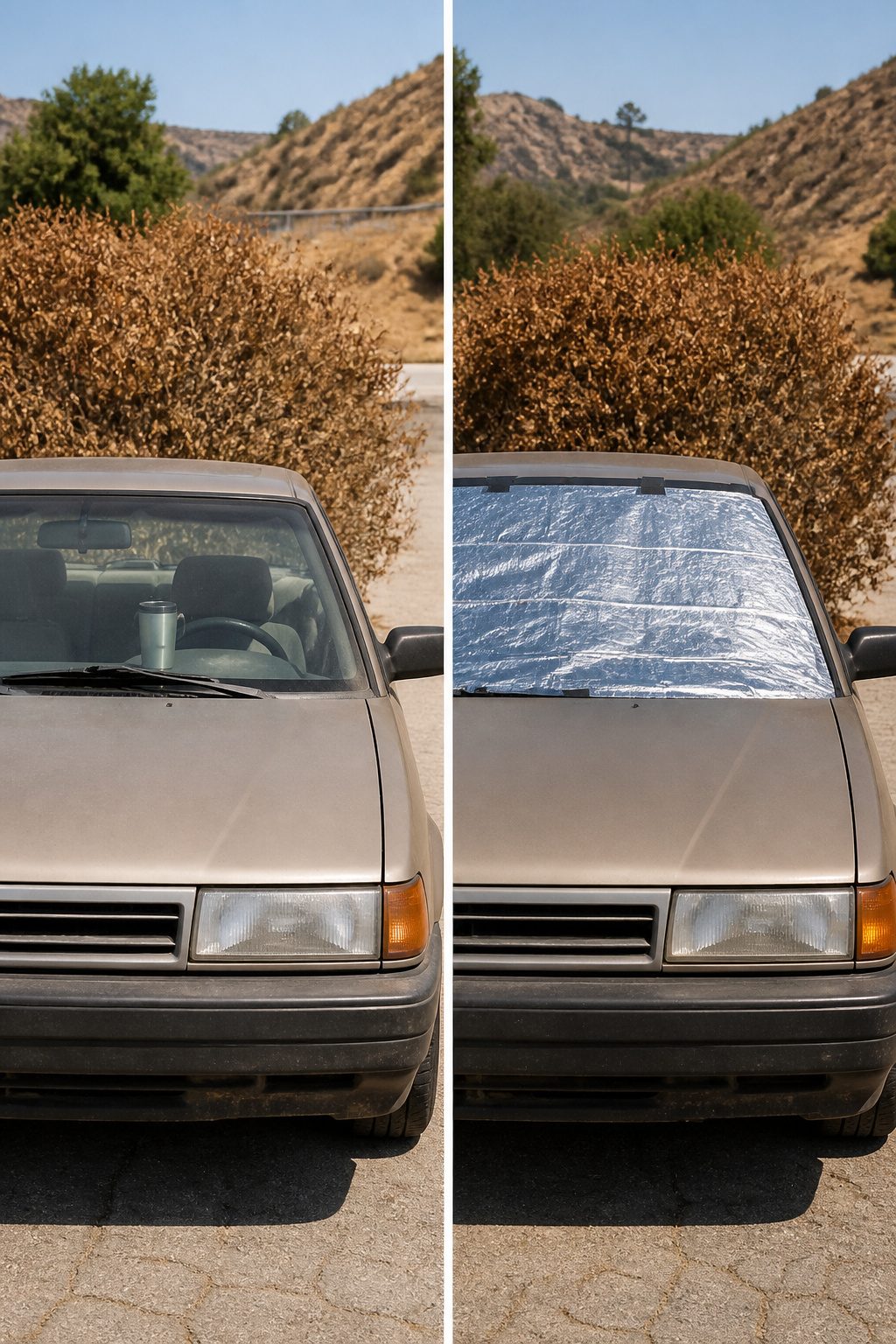
A mylar blanket taped silver-side-out across a windshield turns a parked car from an oven into something survivable. The reflective surface bounces away far more heat than any dark sunshade, which absorbs the energy and radiates it inward. Last August I left two identical vehicles side by side for three hours, one shielded with the blanket and one bare. The shaded cabin hit 103°F while the unprotected one climbed past 127°F. That 24-degree gap is the difference between a stifling wait and a genuine hazard.
The same setup works hung between tent poles at outdoor events where no natural shade exists. Facing the silver side toward the sun is the critical move; gold outward would do the opposite, trapping heat beneath. I keep a blanket folded behind the passenger seat year-round now. It costs nothing extra, takes ten seconds to deploy, and has outlasted three store-bought cardboard shades that warped and tore.
21. Seat Cover
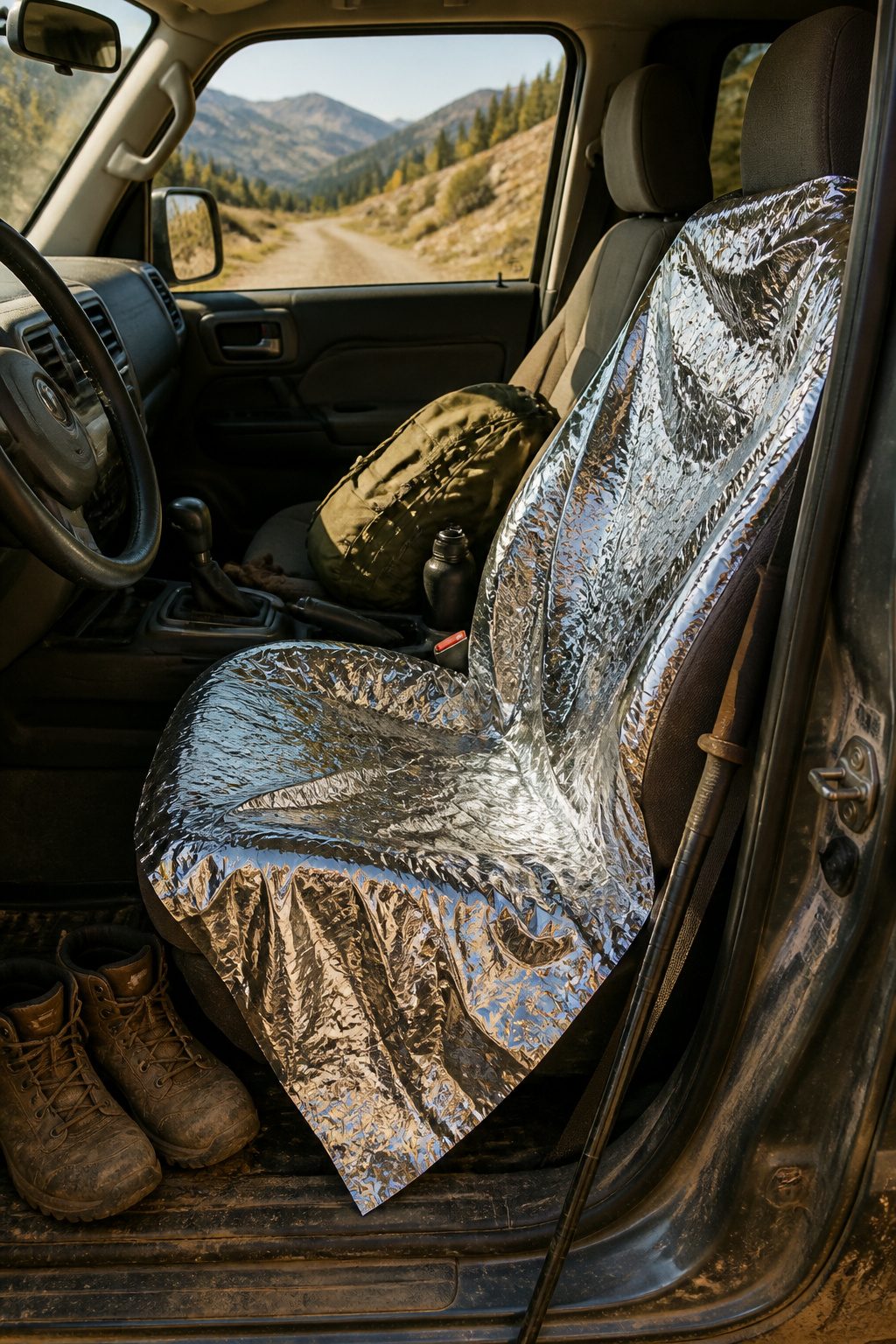
A mylar blanket draped over the seat back catches mud from mountain-bike gear and sand from beach trips before it grinds into upholstery. The crinkled surface works best on cloth or woven seats, where friction holds it in place through a whole drive. Leather is where the trouble starts. The mylar slides with every turn, pooling in the seat crease by the first stoplight and leaving thighs exposed to whatever you were trying to block. Vinyl behaves almost as badly. Bare skin in summer heat makes it worse: the metallized side clings like tape to sweaty legs and peels off with an audible snap. Cloth seats only, and only when you’re wearing pants or shorts that cover enough skin. I tried it once on leather after a rainy hike, spent twenty minutes re-smoothing it at every corner, and arrived with mud on the seat anyway. For leather or vinyl, a proper towel or dedicated seat cover costs little and actually stays put.
22. Toga
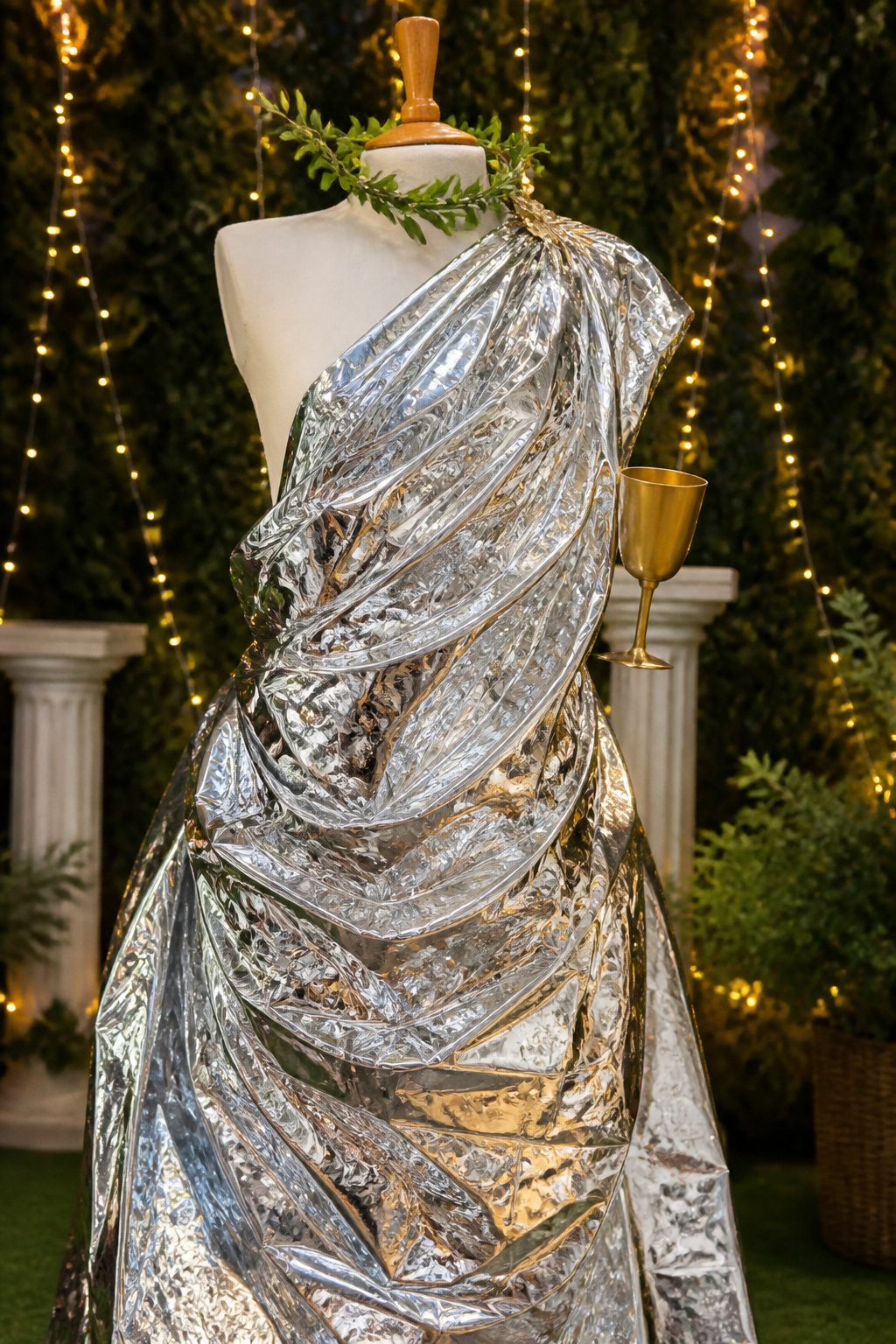
The metallic drape of a mylar blanket actually looks convincing as a toga for about twenty minutes. The shine catches light like real lamé, and the weight hangs with that same stiff fold you see in cheap costume-shop fabric. Two blankets handle most adult frames; three if you are broad-shouldered or want the full knee-length drape. The problem is the tear resistance, which is basically none. A toga pinned wrong means sudden exposure when the fabric splits at the shoulder.
Pinning matters more than with real cloth. Standard safety pins pull through the thin mylar after a few minutes of movement. The fix is a cross-pattern: one pin horizontal through all layers at the shoulder, a second pin vertical through the same spot, forming a plus sign. This spreads the stress. Even then, sit down carefully. Standing at a party works; lounging on a couch does not. The crinkle noise is loud enough that conversation partners notice, though at a crowded event that mostly blends in. For a single evening of novelty, the look holds up. For anything longer, the replacement cost is low but the embarrassment is not.
23. Gaiters
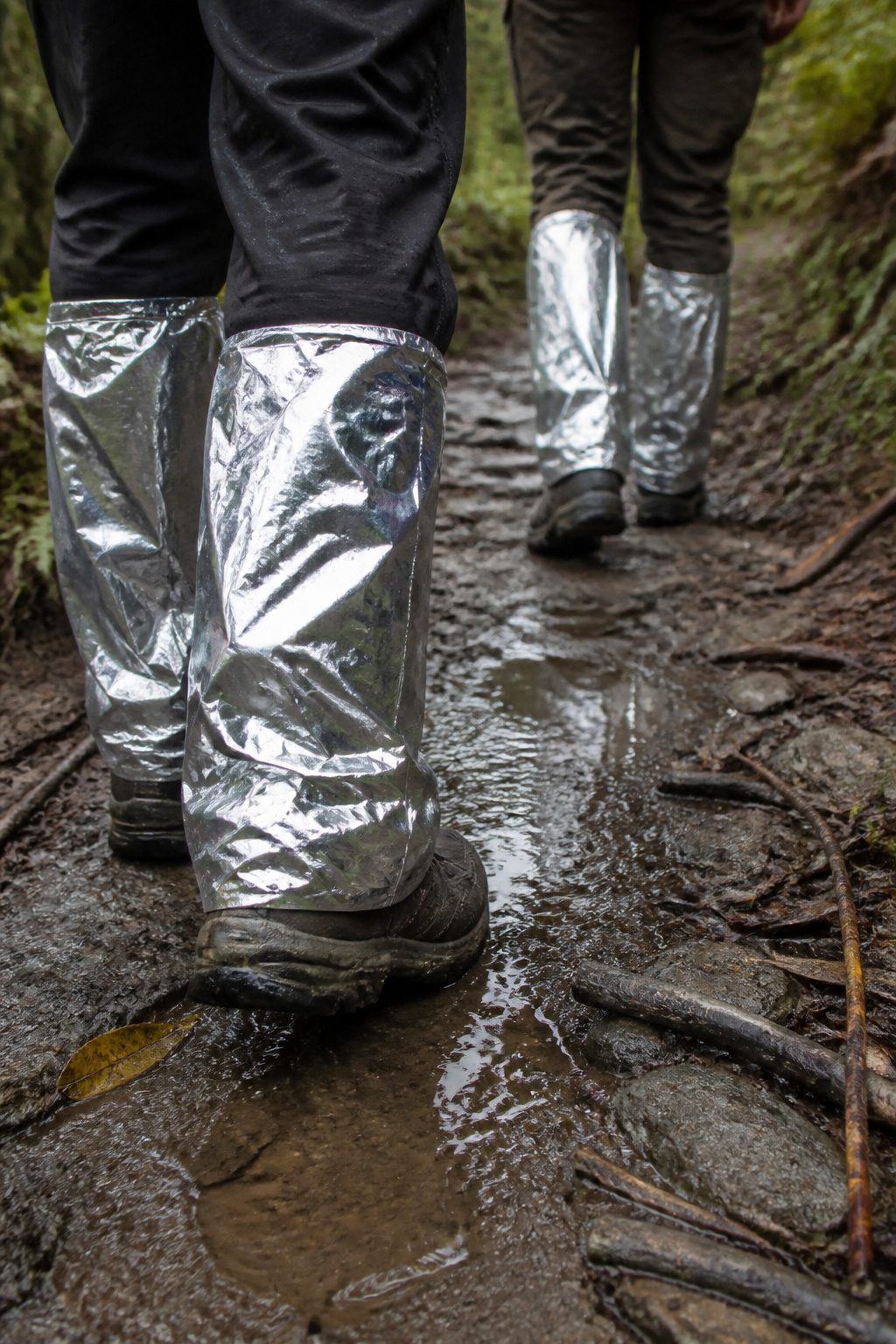
Water gets in at the ankle, not the top. That is the whole problem with mylar blanket gaiters, and most homemade pairs fail because the maker worried about height instead of seal.
I learned this the hard way on a rainy October hike in the Cascades. My first attempt ran twelve inches up the calf, looked proper against my boots, and soaked through in forty minutes. The mylar had bunched above the laces, leaving a gap at the ankle that funneled water straight down into my socks. Height above about eight inches is mostly for show; what matters is a closure that keeps the gap closed when you flex your foot forward.
The fix that finally worked was a two-part seal. I cut the blanket strip to wrap the lower boot with about six inches of overlap at the front, then ran a strip of duct tape from the top edge down across the laces and under the arch, taping the gaiter to the boot itself at that single point. The tape goes on before the elastic, not over it. A loop of shock cord or a cut elastic hair tie at the very top, cinched above the ankle bone, handles the rest of the seal. The mylar is too slick for elastic alone; it rides up, it bunches, it quits. Tape at the instep keeps the base fixed so the elastic can do its one job.
Mylar tears at creases, so the strip needs a fold allowance where the ankle bends. Without it, three miles of walking will split the seam at the bend line. That fold is the detail that separates a working gaiter from a silver tube that shreds and leaks.
24. Backcountry Umbrella
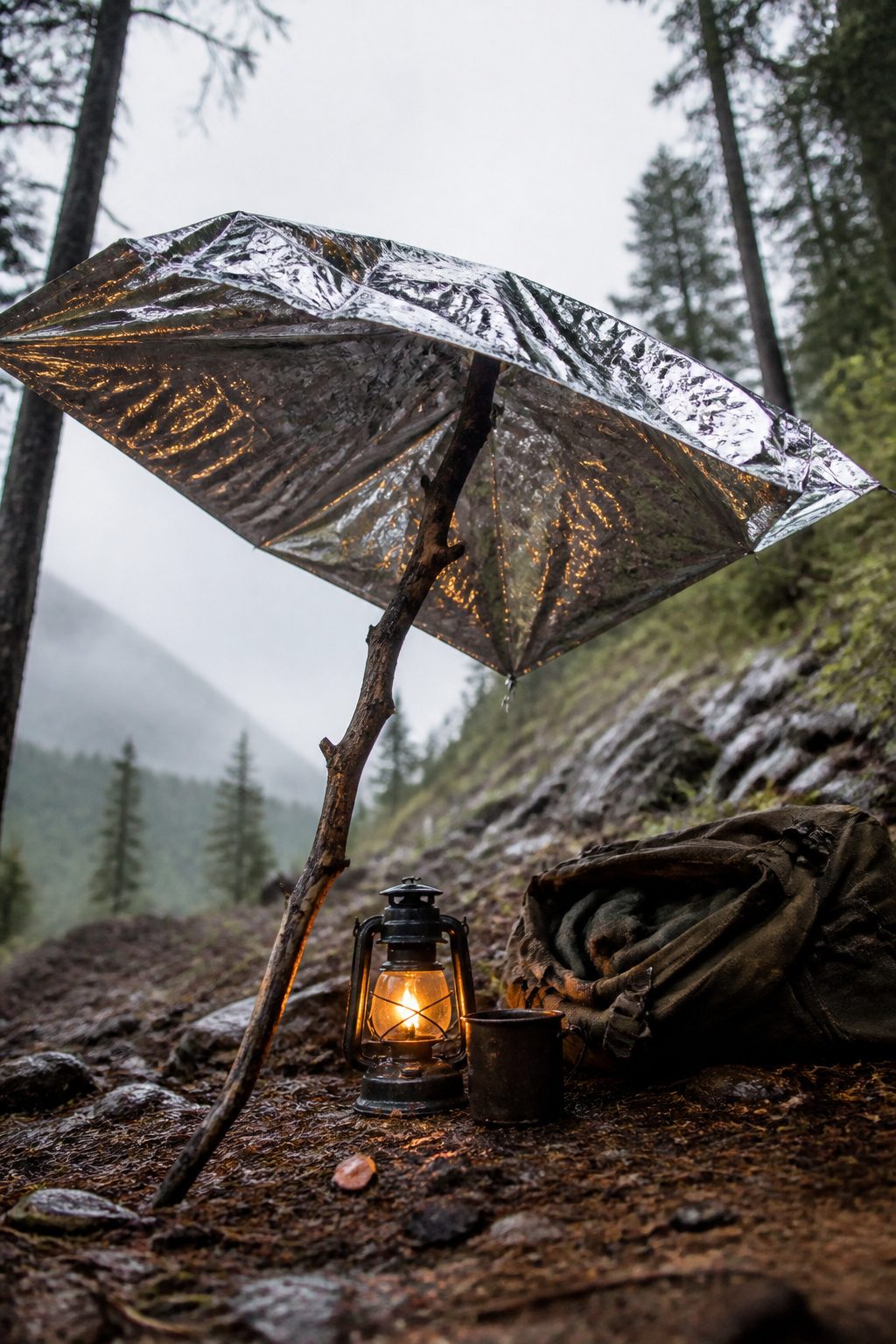
A mylar blanket stretched overhead catches more rain than you would expect, though the span is barely enough for one person and the material wants to crumple at every gust. The real problem is the handle, or rather the complete absence of one. A stout stick from the trail, forked near the tip, does the job if you wrap the blanket’s corner around the fork and twist a strip of duct tape or a length of paracord to cinch it tight. Without that wrap, the mylar slides right off and you’re holding a wet stick in a downpour.
Wind is what ends this arrangement. Anything above a stiff breeze, maybe 15 mph or so, and the blanket becomes a sail that either inverts and dumps water on your neck or tears free entirely. The material is stronger than it looks, but the grip point is the failure point. A second hand on the opposite corner helps, though then you’re walking like you’re carrying a banner in a parade and your shoulders still get soaked. For a real storm, this is a desperation move, not a plan.
25. Christmas Tree Tinsel

A mylar blanket can read as ribbon or tinsel depending on how wide you cut the strips. I go with half-inch strips for tinsel, one-and-a-half inches for ribbon, and nothing in between if I want a clear effect. The material cuts cleanly with ordinary scissors, though the static means it clings to fingers and itself; working over a table rather than the carpet saves sanity.
The half-inch strips catch light differently than commercial tinsel. Store-bought stuff is usually thinner and twists on its own, so it sparkles from more angles at once. Mylar lies flatter, which means the flash is more directional: a string of white lights behind it sends back a sharper, mirror-like pinprick rather than a soft shimmer. I angle the strips so they cross the branches rather than hang straight down; that gives the light more surfaces to hit and keeps the effect from looking too much like someone draped foil on a tree.
Color matters less than you’d think. Most emergency blankets come in that silver or gold, and either one picks up both warm and cool bulbs. The gold reads warmer against green needles; silver looks colder and more modern. Both crinkle audibly when the furnace kicks on, which is either charming or irritating by the third evening.
26. Storage Bag
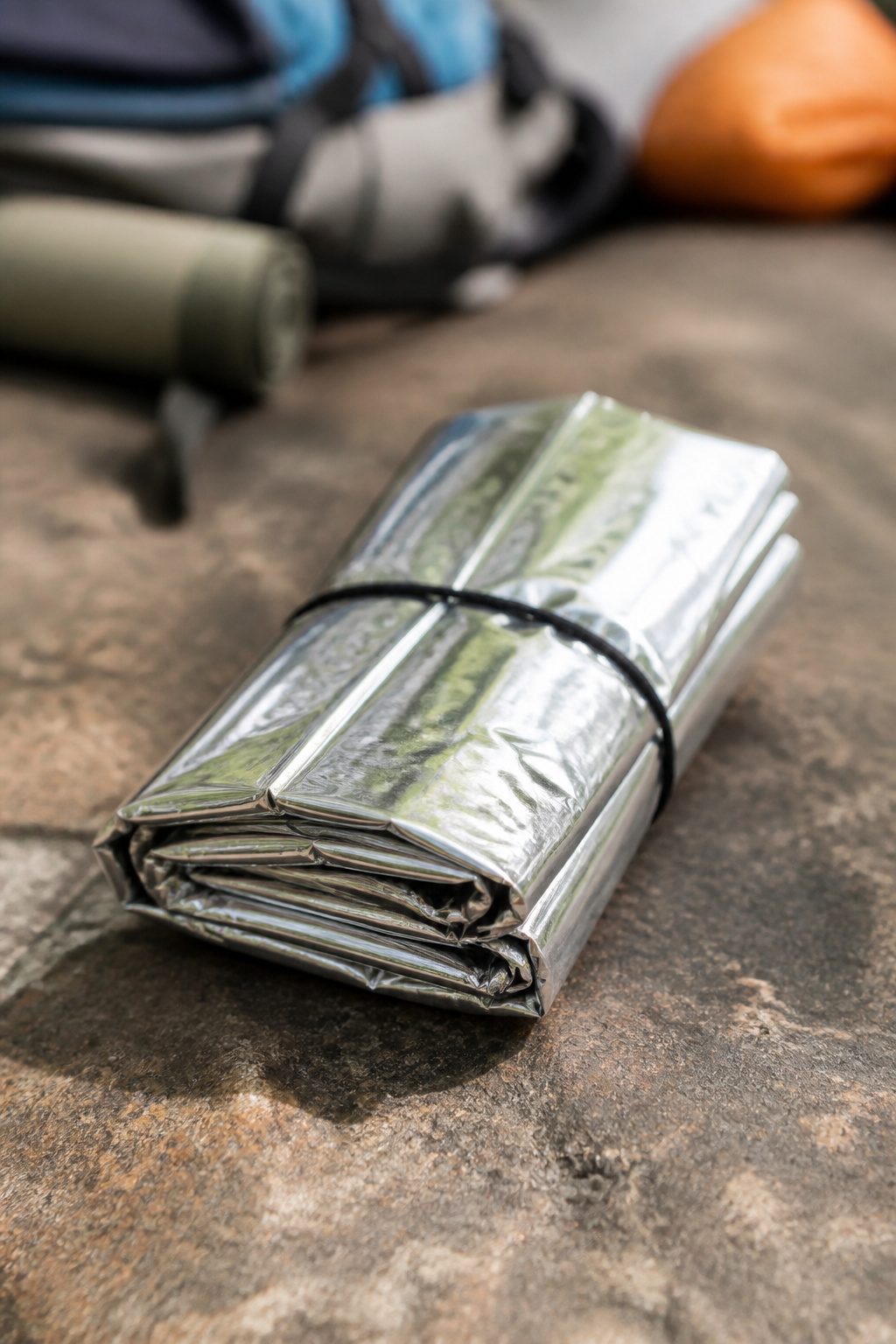
Folding a mylar blanket into a knapsack works for short carries, but the strap points tear almost immediately without help. The material is strong in sheet tension and weak at any puncture or fold stress. After the first two attempts failed at the shoulder seam within minutes, I started reinforcing the strap attachment with a sandwich method: a square of duct tape on both sides of the mylar, the strap loop captured between them, then a second tape square offset forty-five degrees to cover the corners of the first. Even with that, the blanket fabric itself fails around eight to ten pounds of sustained load, reinforcement or not. The tear propagates from the strap point in a straight line across the sheet. For anything heavier, the blanket becomes a sling you carry in your arms, not on your back. Lighter loads, firewood or foraged greens, stay manageable for a mile or so before the tape edges start peeling from body heat and movement.
27. Rope
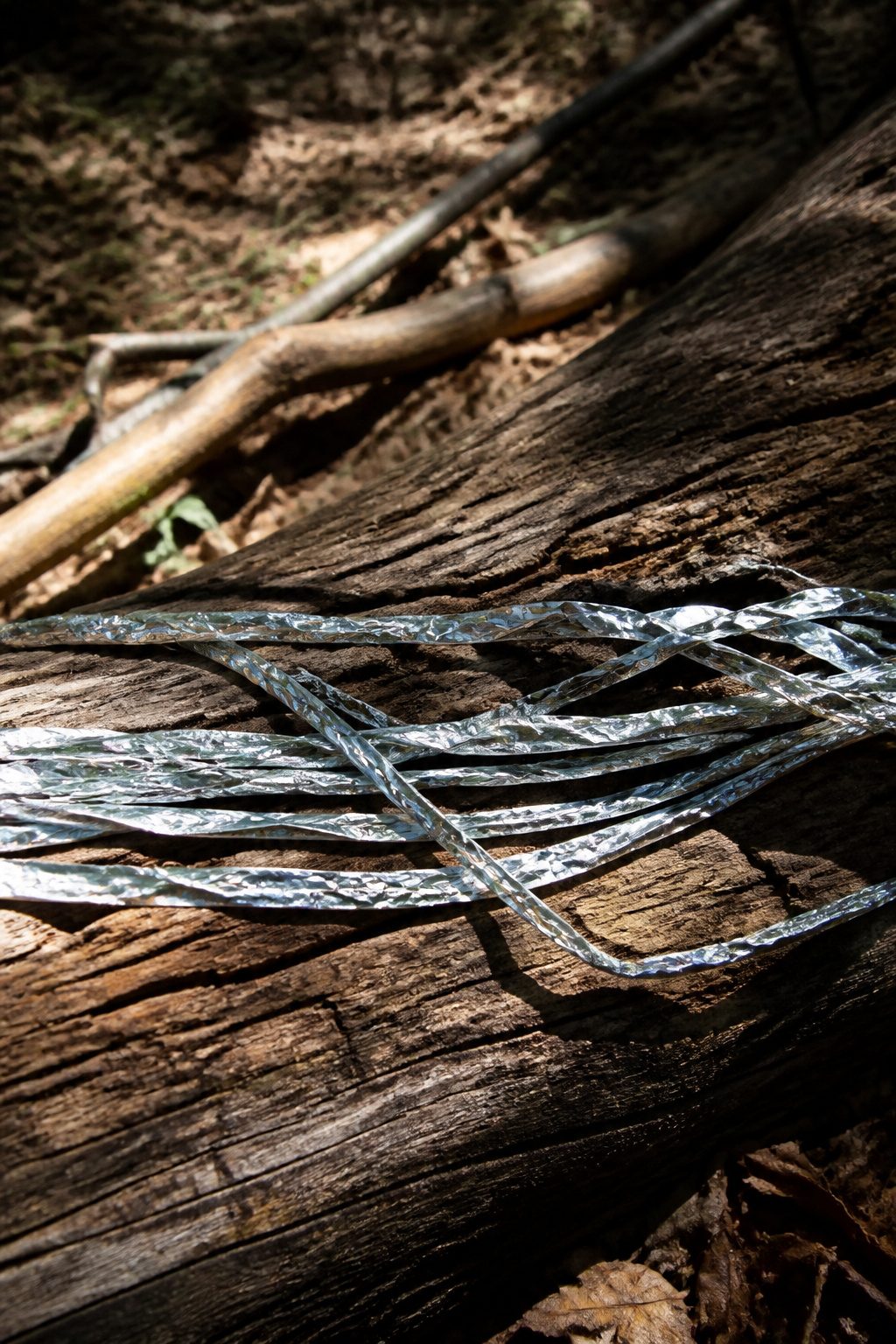
Cutting a mylar blanket into strips for rope or cordage sounds better on paper than it performs in hand. The material is thin, it tears on the bias, and the tensile strength drops sharply once you slice through the reinforcing edges. A strip two inches wide held my body weight for maybe thirty seconds before the fibers started separating with a sound like tearing foil. Half that width snapped immediately when I put any real load on it.
The strips work for lashing light gear, tying a bundle of kindling, or a short-term guyline in dead calm. For anything that matters, paracord weighs more but wins every time. If a mylar strip is all you have, double or triple it and keep the load static. Any shock or swing, and you are holding air.
28. Halloween Costume
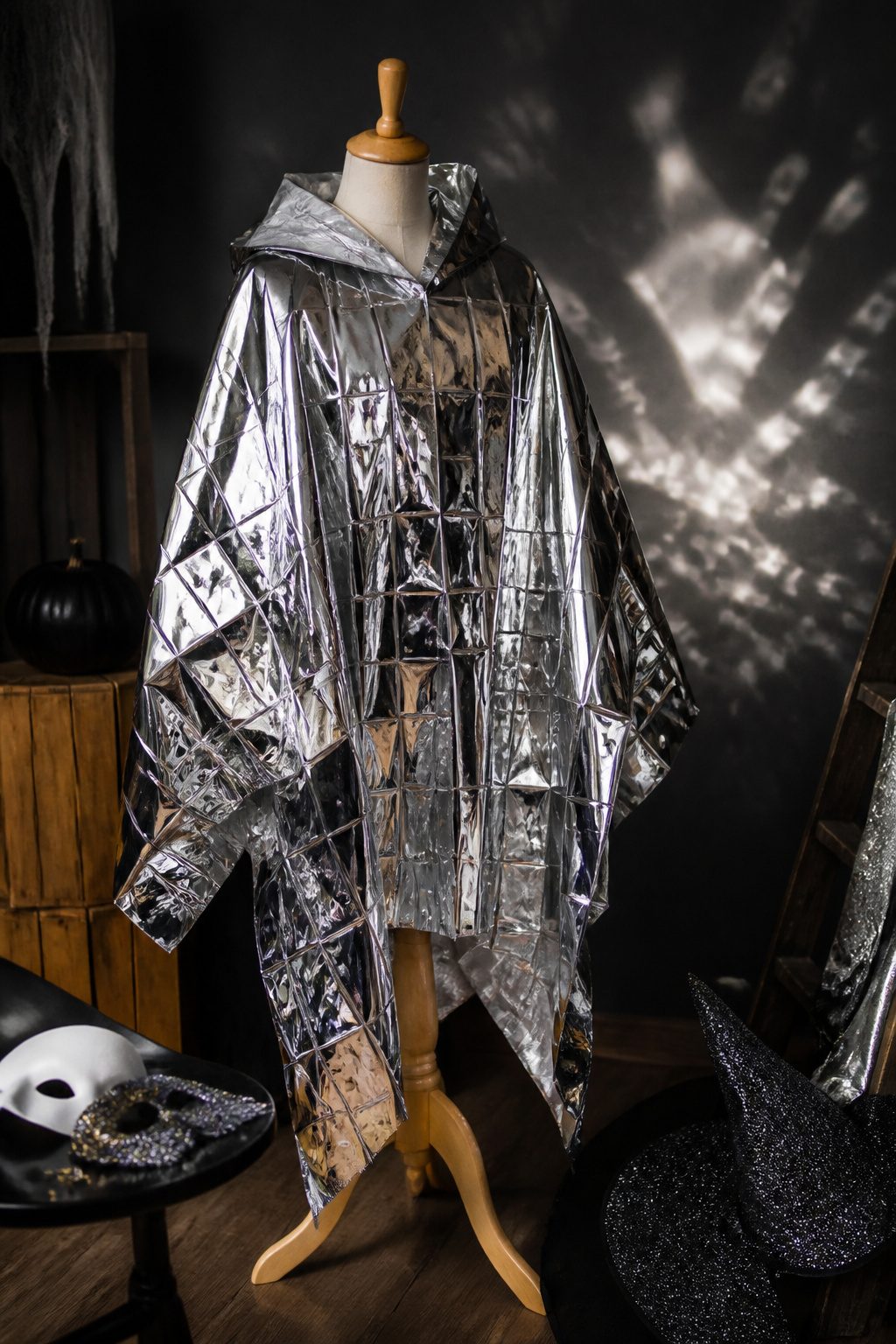
The crinkle and tear factor of mylar blankets makes them a tricky costume material, but that same metallic flash is what sells the look under porch lights. A flat panel design works better than anything with drape or stretch, because the material has zero give and splits along any fold you flex too many times.
My one success was a robot costume built from two blankets cut into rectangles and taped at the seams with silver duct tape, which blended in and held. The boxy shape meant no stress on the mylar itself; I just stood there and looked shiny. Tape every seam on both sides if you try this, because the material pulls away from adhesive when it warms against your body.
The failure was a cape for a superhero outfit. The neck hole tore within twenty minutes of walking, and by the time I reached the party the thing had shredded into strips that caught on every bush. Any design that moves, flaps, or drapes is asking the material to do something it physically cannot.
29. Butt Padding for Biking
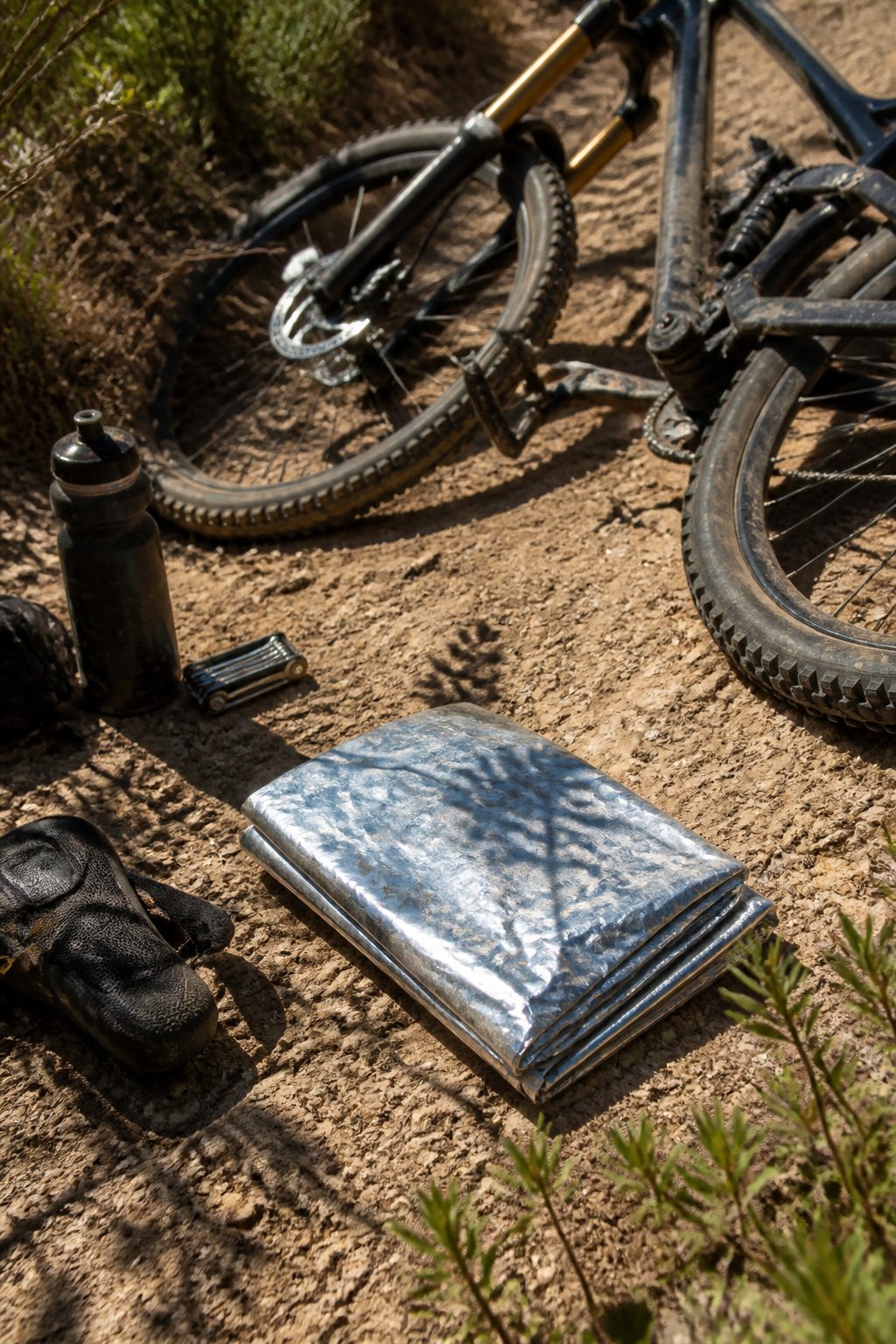
Long rides on a hard saddle leave the sit bones aching well before the legs give out. A folded mylar blanket can buy you an hour or two of relief, though the material behaves differently than foam or gel. Mylar doesn’t compress; it bunches and shifts, so the folding pattern matters more than the thickness. Three accordion folds lengthwise, then rolled into a flat pad about six inches wide, keeps the pressure spread across both cheeks instead of collecting in the center crease. The crinkling sound fades after the first mile, or you stop noticing it. After roughly ninety minutes the folds have shifted enough that you’re sitting on ridges again, and stopping to refold beats continuing to bruise. The blanket works in a pinch for a commute or a quick trail loop, but a real chamois or padded seat still wins for anything longer.
30. Food Insulation
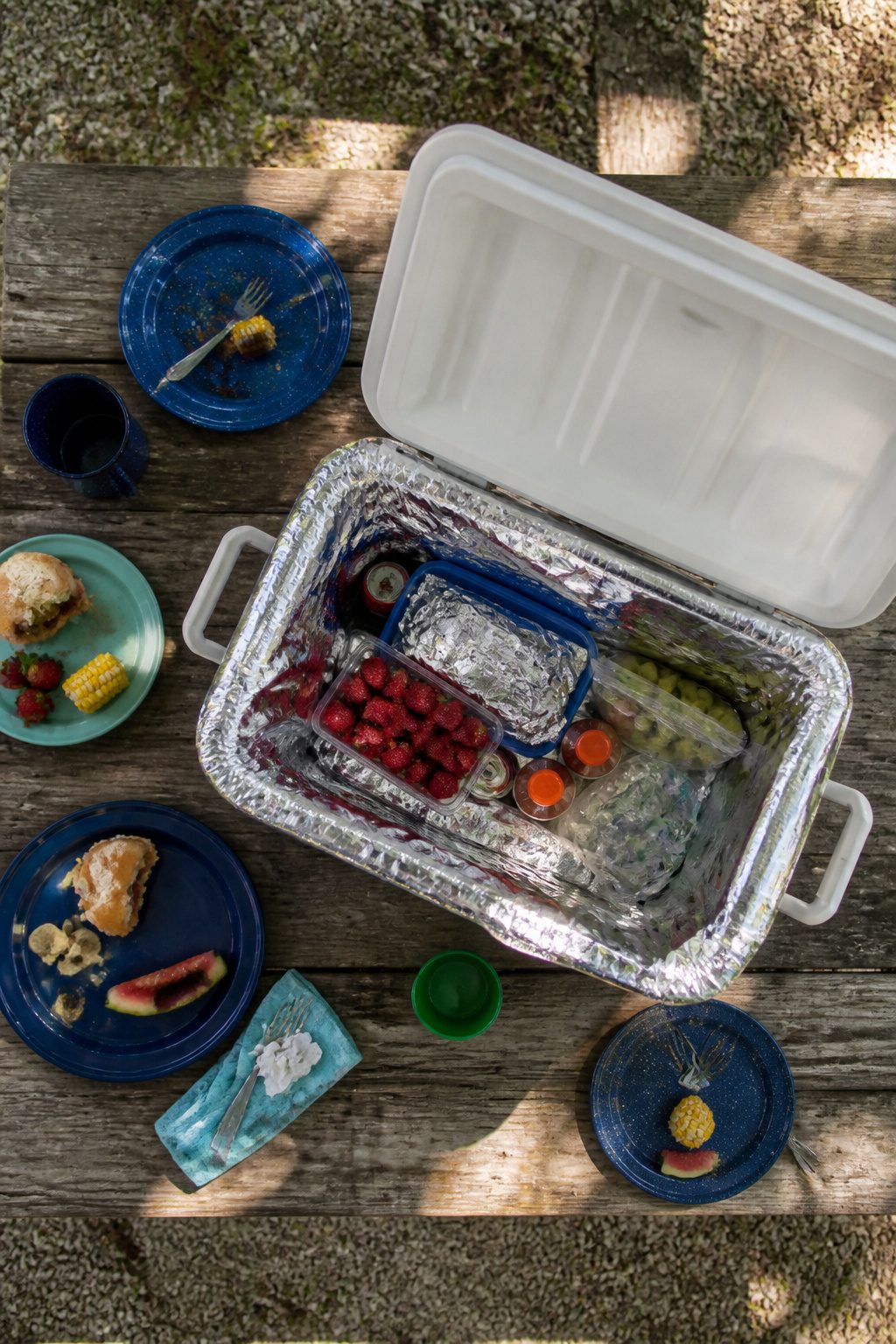
A cooler without lining loses heat fast through the walls, especially in cold air or wind. The plastic shell does almost nothing to stop radiant heat from escaping upward, which is where most of it goes. Line the inside with a mylar blanket, shiny side facing the food, and that radiant heat bounces back instead of bleeding out.
I tested this on a brisk October afternoon with a pot of chili straight off the stove. The unlined cooler dropped from 165°F to barely warm in about an hour and a half. The lined one held above 140°F for closer to three hours, long enough to serve seconds without reheating. The difference was roughly double the safe window.
The blanket needs to sit against the walls and lid, not just the bottom, or you leave a heat chimney open at the top. I cut one blanket into panels and taped the seams with foil tape so it stays put. A second blanket intact across the lid handles the biggest loss zone. For short trips, this beats buying a dedicated hot box.
31. Paper
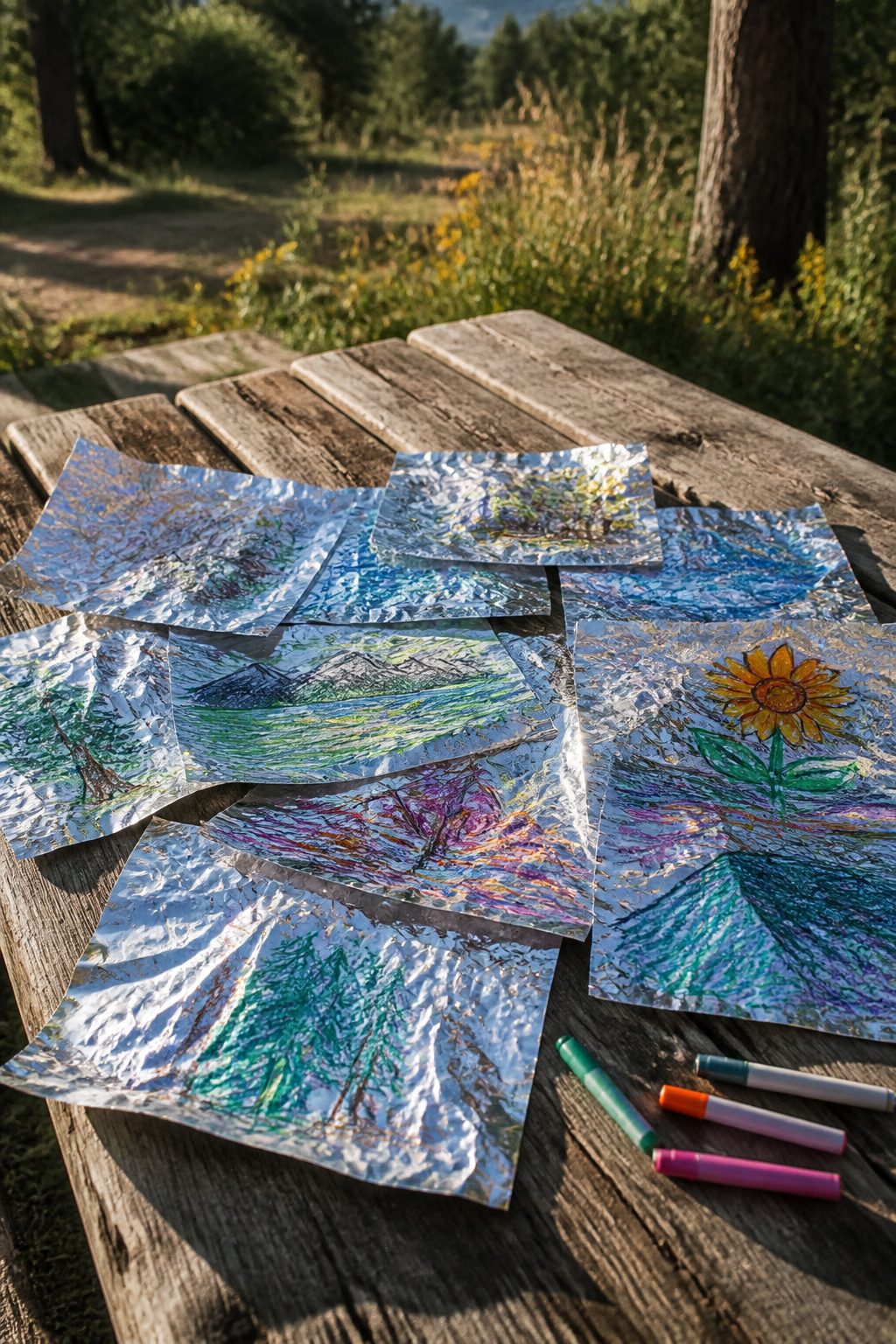
A mylar blanket can serve as emergency paper when nothing else is available, though the material fights you every step. Permanent markers and grease pencils leave legible marks that survive folding and moisture. Ballpoint pens are a mistake; the thin polyethylene tears under the point pressure, leaving ragged holes where words should be. The same goes for pencils, whose graphite barely deposits and whose wooden bodies easily punch through.
Felt-tip markers work inconsistently. Some bleed along the crinkled surface, turning precise letters into fuzzy clouds. Testing before you need it matters. In actual use, a Sharpie or an old-school china marker writes dark and stays readable, which is what you want for a note left on a vehicle or a trail marker tied to a branch.
The surface reflects light, so angling the blanket away from sun or headlamps helps your eyes and whoever reads it later. Writing on the matte side grips ink slightly better than the shiny side, though neither feels like real paper. For length, a few words or a short grid coordinate fit fine. Anything longer, and the crinkling makes the text harder to follow.
32. Privacy Curtain
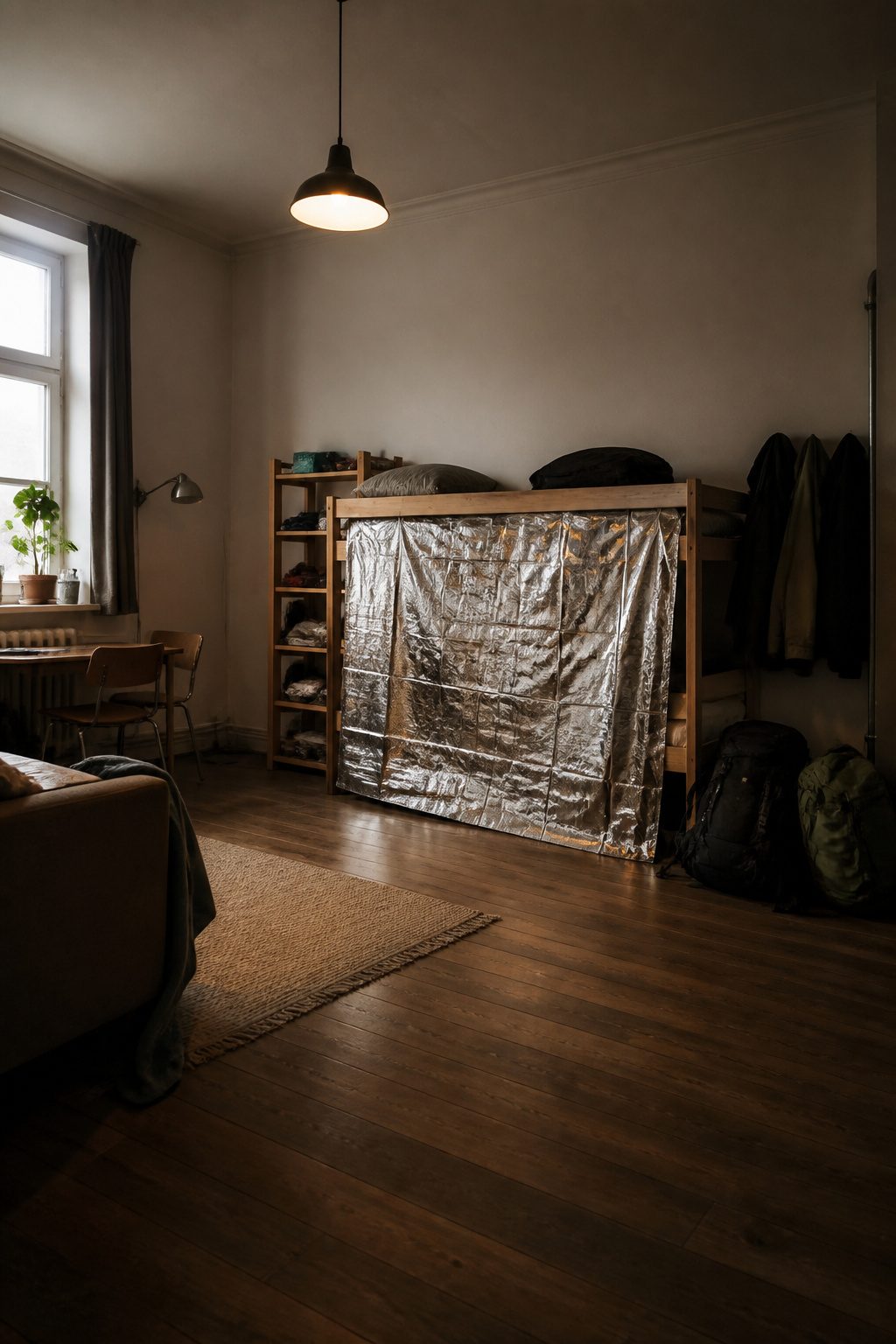
A single mylar sheet hung across a bunk or cot leaves nothing to the imagination under direct light. The material, usually 12 microns of metallized PET film, catches and throws back every lumen. In a shelter with overhead fluorescents or midday sun through a window, you need at least two layers, offset so their seams do not line up, to break the silhouette enough for actual privacy.
The same sheet works alone in dim conditions. A single layer in a blackout shelter, a tent at dusk, or a room lit only by a candle gives enough cover because the eye adapts to the dark and stops reading through the film. The reflective surface becomes a dim mirror instead of a backlit screen.
For shared hostel rooms or emergency shelters where overhead lights stay on, tape two blankets edge-to-edge with a slight overlap, then hang them with the gap facing away from the light source. The first layer scatters the direct beam; the second absorbs what leaks through. In a power outage with only a phone screen or a chem light for illumination, one layer hung between cots is enough to signal "occupied" without building a wall.
33. Belt
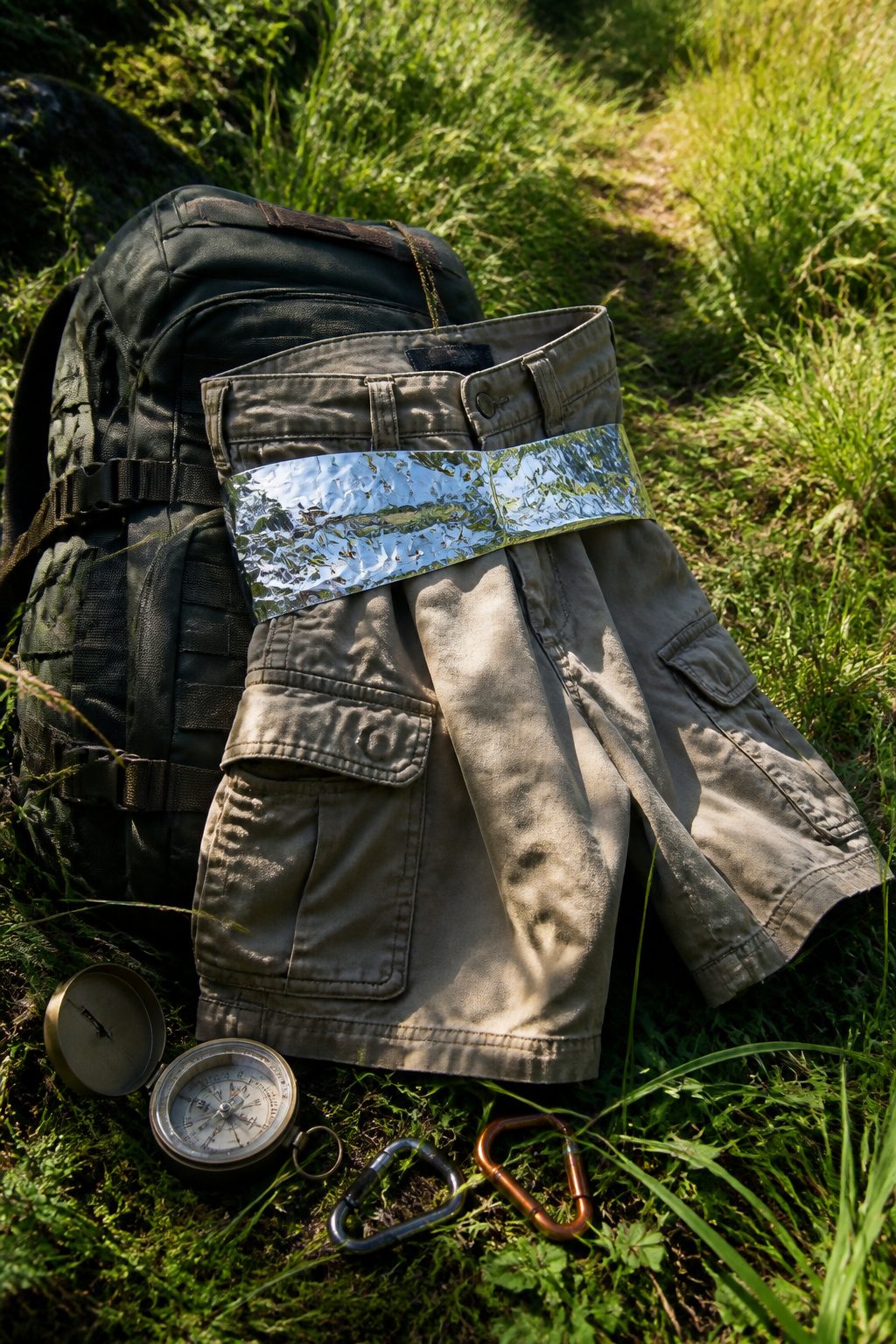
A strip of mylar blanket can hold up pants in a real pinch, which is the kind of moment these emergency items are built for. The material cinches tight around the waist, but the surface is slick enough that a square knot slips less than a granny knot and still needs checking every few minutes. I have used this on a short walk back to camp after a belt buckle snapped, and it held for twenty minutes of easy trail. Running, climbing, or any real exertion makes the knot walk loose fast; the crinkle of the mylar seems to work against itself once body heat and sweat hit the strip. For anything more than slow, flat walking, the mylar belt fails entirely.
34. Cooking Apron
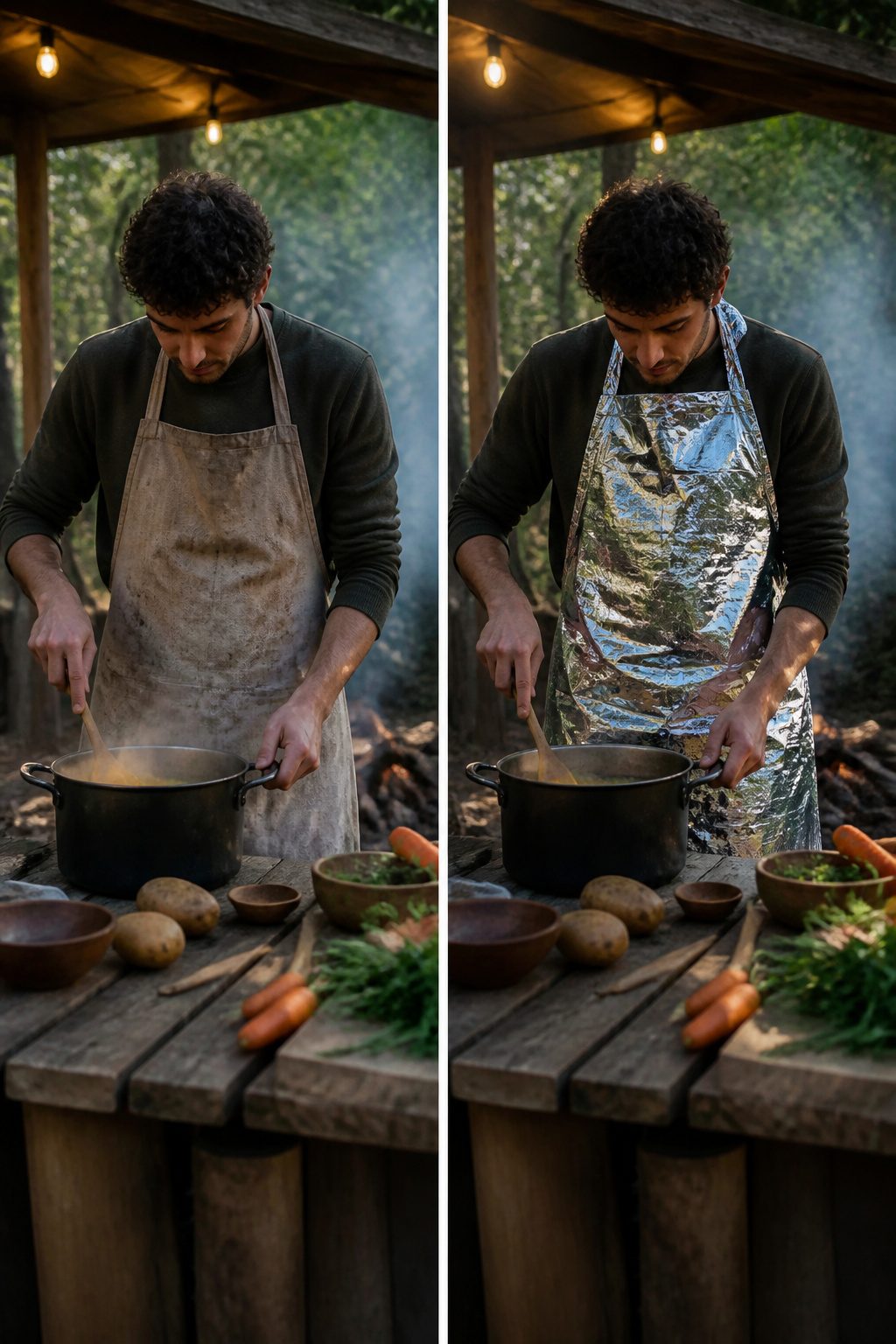
A crumpled mylar sheet makes a decent barrier against grease splatter and ash when you are tending a fire or camp stove, but the material has a weakness that cost me a shirt. Mylar melts at roughly 254°F, which sounds high until you realize a wood flame runs 600°F or more at its base, and radiant heat carries farther than you think. The first time I tried this, I stood maybe eighteen inches from a small cook fire with the blanket draped across my chest. A gust shifted the flame, a single hot coal popped, and I had a nickel-sized hole in the mylar and a permanent grease mark on my cotton tee underneath before I could step back.
Now I keep three feet of clear space between the blanket and any open flame, more if the fire is lively, and I only use it for camp stoves where the heat source is controlled and pointed upward. Even then, the reflective side goes toward my body, not the flame, because the coating can bubble and flake with repeated exposure to moderate heat. The blanket works best as a quick shield while you are stirring or flipping, not as something to wear continuously over a fire. For real open-fire cooking, a leather apron or even a heavy canvas shirt is worth the weight; mylar is a backup for when you forgot the real thing or need to keep a down jacket clean for the hike out.
35. Window Covers
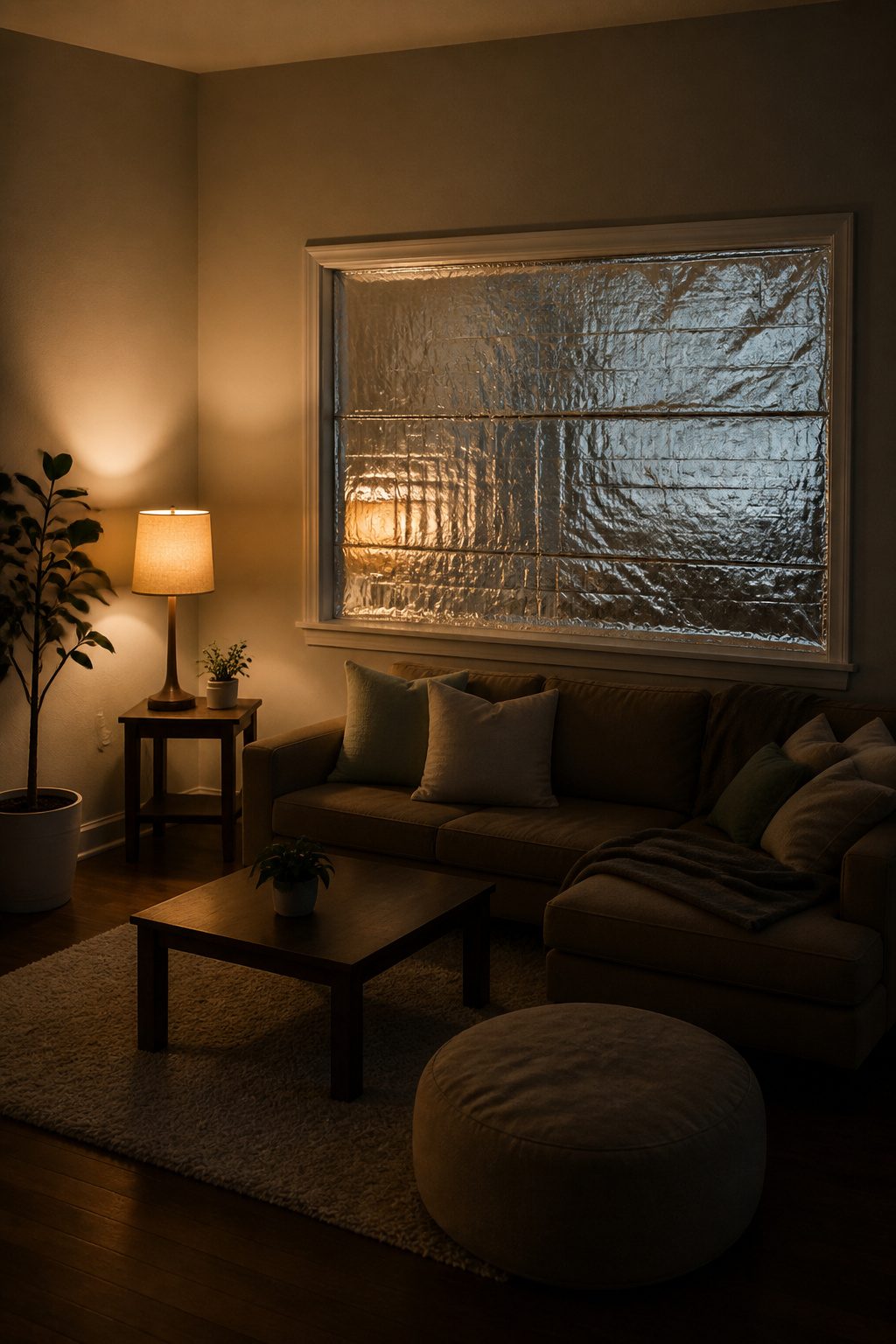
Cold glass pulls heat out of a room faster than most people realize. A mylar blanket taped to the inside of a window frame blocks that loss by reflecting radiant heat back into the space instead of letting it escape. The material works the same way in reverse as it does in an emergency, just aimed inward.
The trick is sealing the edges completely. Gaps defeat the whole purpose, so painter’s tape along every side matters more than the blanket itself. A tight installation against the glass, not floating an inch out, creates the air gap that actually insulates.
I ran this one January on a north-facing bedroom window with obvious drafts. The wall thermometer three feet from the glass read 8 degrees warmer by morning with the mylar up versus the night before without it. That was enough to keep the baseboard heater from cycling on every twenty minutes, which the utility bill later confirmed.
The downside is living with shiny windows. It looks like a greenhouse from the outside and blocks daylight from the inside, so this works best on windows you do not need to see through in winter. Bedrooms and back utility rooms are the natural candidates.
36. Sled
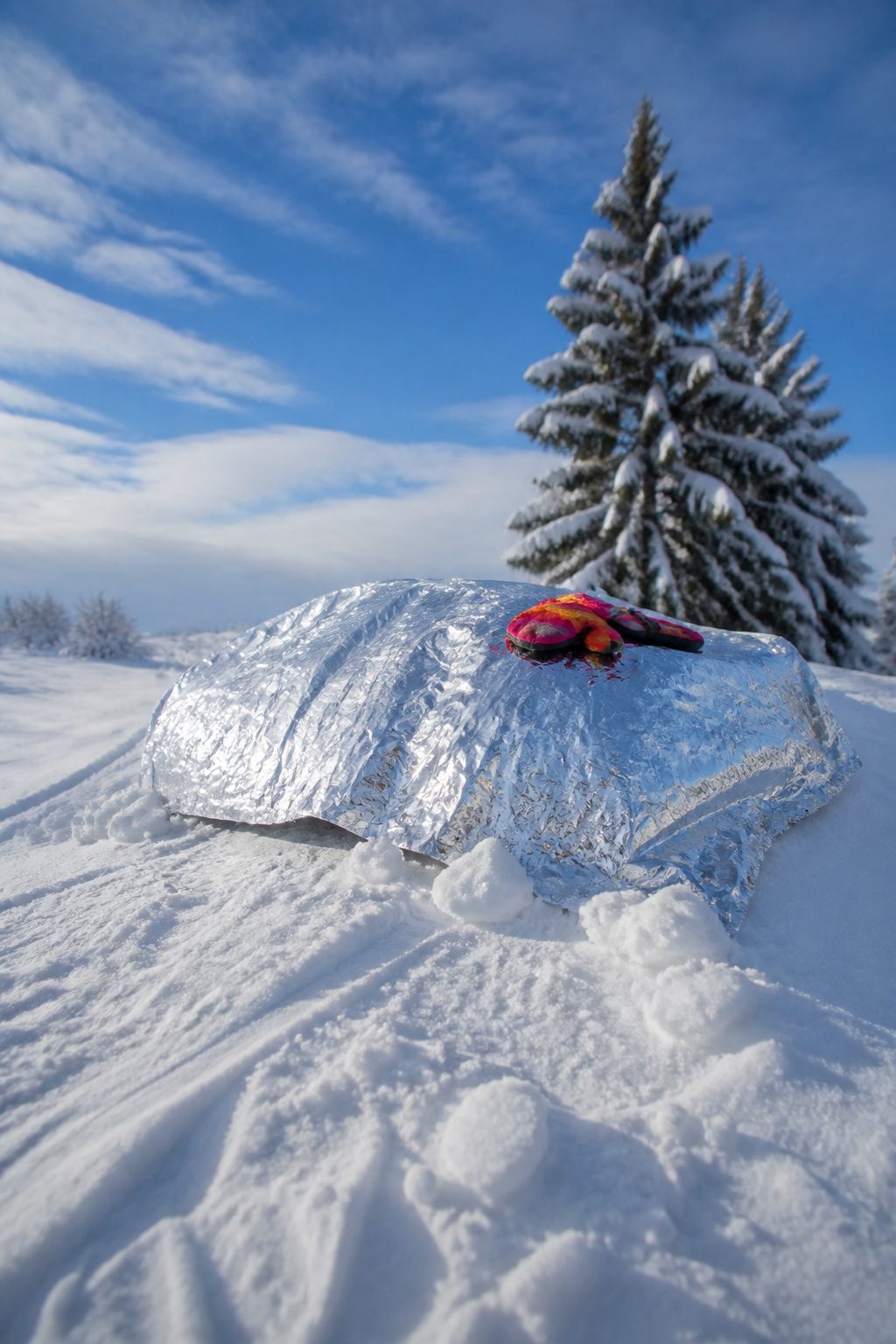
A folded Mylar blanket makes a surprisingly fast sled on hardpack snow, though the material tears fast if it catches an edge. The trick is slope angle: anything under about fifteen degrees leaves you pushing with your feet, while twenty degrees or steeper gets you moving before you’ve fully sat down. Snow depth matters more than you’d think. Six inches of powder stops the blanket cold; it parachutes and digs in like a shovel. Two inches over frozen ground, or any amount of corn snow, and you’ll glide until the slope runs out or until a rock slices through the film. I’ve tried it on grass too, wet and dry, and the friction wins every time. You slide three feet, hear the crinkle, then you’re walking. The blanket works best as a one-ride emergency sled, not a toy. Bring tape for the holes.
37. Art Studio

A mylar blanket under a watercolor session saves a worktable without the cleanup that newspaper or butcher paper demands. The paint skins over in minutes, then lifts off in soft flakes once fully dry. Acrylic behaves the same way, and even heavy-body oils release after a day or two if the layer stayed thin.
Gouache and tempera peel cleanly too, though they powder more than flake. The real trouble starts with anything solvent-based. Mineral spirits, turpentine, and some alcohol inks pass straight through the polyester film and bond it to the surface beneath. That adhesion is permanent; the blanket becomes the table’s new skin and tears in strips when pulled.
India ink is the surprise offender. Water-based formulations seem safe, but carbon black pigment finds microscopic imperfections in the mylar and locks in. After three sessions, faint gray shadows ghost the sheet, then transfer to the next project. For that medium, masonite or glass still wins.
The sheet’s own weight works against it with spray paint. Overspray curls the edges, and the blanket becomes a sail. Taping the perimeter fixes this, though at that point a drop cloth was simpler.
38. Pack Liner
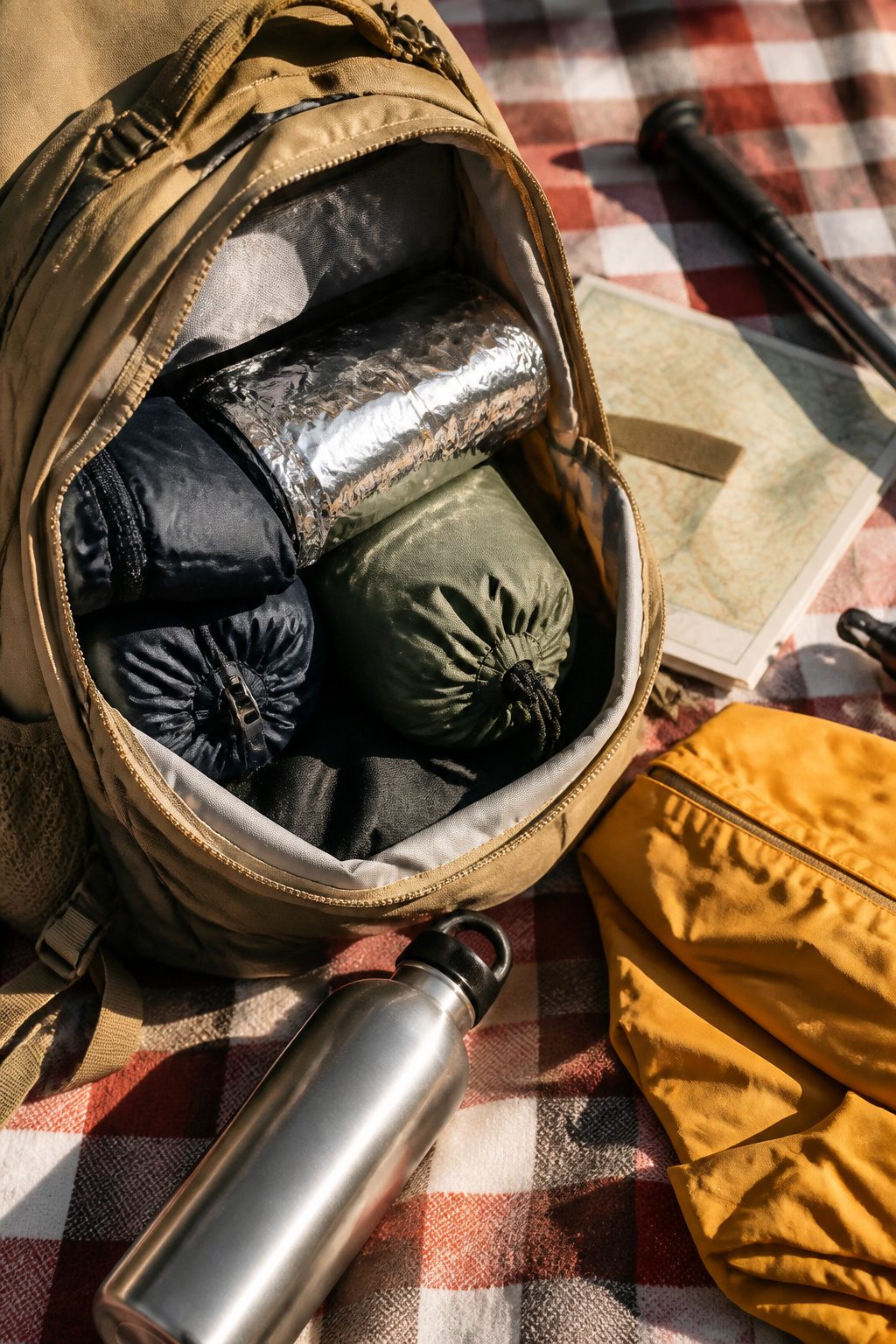
A pack liner needs to work from the inside because seams and zippers fail outward first. Water finds the stitching at the top opening, then gravity does the rest.
The trick is folding the mylar so it seals rather than gaps. I run the blanket up the back panel first, letting the excess drape over the front. At the top, I fold the mylar down twice, like a dry-bag closure, then roll it against the pack frame before buckling the lid. That rolled lip becomes the barrier; pressure from the lid against the frame pinches it shut.
Most daypacks from about 20 to 35 liters take this without the wadded bulk that steals space. The mylar adds maybe two ounces and folds flat against the back when empty, so pulling gear stays simple. In a frameless pack, the crinkle noise is the tradeoff; you hear every shift of load. For a waterproof barrier at that weight, the noise is acceptable to me, though friends with ultralight setups sometimes line a stuff sack instead and accept the gap at the pack opening.
Frequently Asked Questions
What are Mylar blankets?
Mylar blankets are thin, lightweight sheets of polyester with an aluminum coating, typically about 52 by 82 inches. Despite the name, they are not actually made of Mylar; that is a trademarked polyester resin owned by DuPont, and the name became generic like Kleenex for tissues. NASA originally developed the underlying material in the 1950s to protect equipment from extreme temperature shifts in space.
How do Mylar blankets work?
The reflective surface bounces your own body heat back toward you instead of letting it escape into cold air, blocking up to 90% of heat loss. They also stop wind and water from stripping warmth away, though the material itself provides no insulation against conduction from cold ground. For reflecting heat inward, keep the shiny side facing your body; flip it outward to deflect sun or radiated heat.
Are Mylar blankets reusable?
Yes, but how many times depends entirely on thickness and how carefully you handle them. Standard thin mylar sheets, around 0.5 to 1 mil thick, survive roughly one to three uses before tearing or puncturing. Heavy-duty versions at 2 to 4 mil thickness, including tarp-style models with grommets, can last ten or more uses. Fabric-backed emergency blankets also hold up for repeated use. Once torn, punctured, or soiled with bodily fluids, replace the blanket.
How long do Mylar blankets last?
With proper storage and gentle handling, a quality mylar blanket can last for years in a kit before its first use. In actual field conditions, lifespan shrinks fast depending on terrain, wind exposure, and whether you fold or crumple it. Heavy-duty models with grommets outlast thin single-use sheets by a wide margin. Keep them dry and away from sharp objects to maximize usable life.
Can Mylar blankets be used for cooking?
Yes. A mylar blanket angled behind a fire reflects radiant heat toward your cooking area or shelter, making the fire’s warmth more effective. For solar cooking, the reflective surface can concentrate sunlight onto a pot or oven. The key safety limit is distance: set the blanket well back from flames or hot coals, because the thin polyester film melts and shrivels quickly when it feels serious heat.