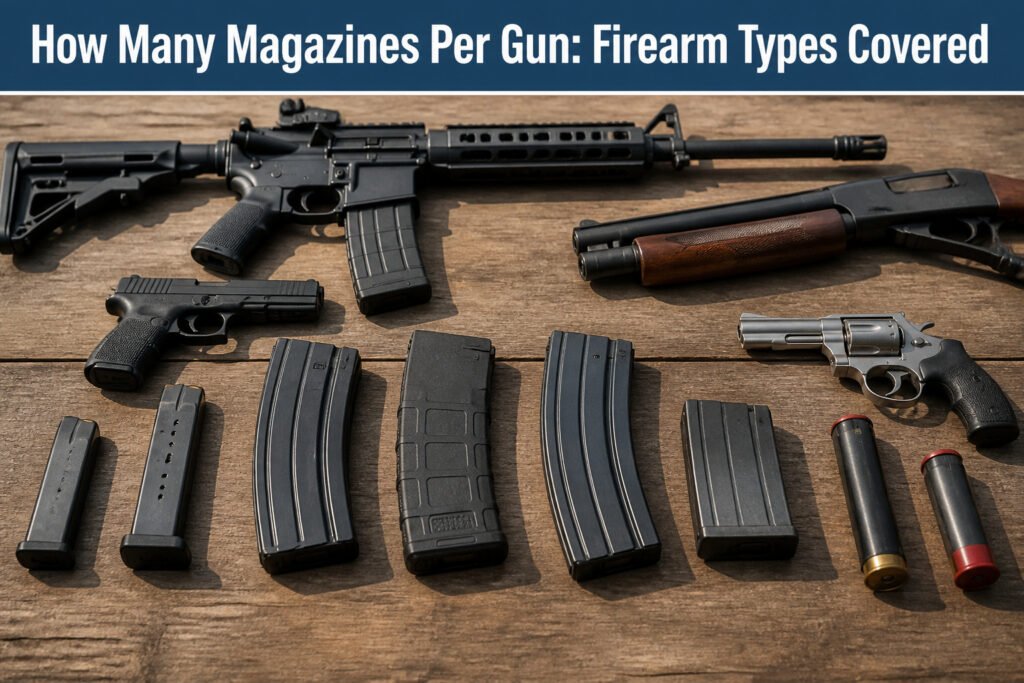
Most firearms need at least two magazines, though the right number depends entirely on what you do with the gun. A concealed carry pistol needs four for serious training: two loaded with defensive ammo, two with ball ammo to abuse on the range. A hunting rifle gets by with two total, not because you will reload under fire, but because a magazine dropped in three feet of snow turns your rifle into a single-shot for the rest of the day.
How Many Magazines Per Gun
Most firearms need at least two magazines, with specific counts varying by type and use. Two is the bare minimum for any gun, though several categories call for more.
Concealed carry pistols run 2–4, which lets you keep one in the gun plus a spare or two for reloads or malfunctions. Defensive carbines scale up to 3–9 depending on how you train and stage them. Shotguns stay lean at 2–4. Competition pistols spread wider, 3–7, because the discipline dictates whether you’re reloading once or burning through stages. Hunting rifles need just 2 in most cases. Antique firearms are the outlier: collect as many as possible, since replacement may not exist at all.
Magazines are the weak point in any semi-auto, so the count should match how hard you run the gun. One spare might cover a nightstand pistol. A carbine used in classes or competition justifies the higher end of that range, or more.
1. Concealed Carry Pistol
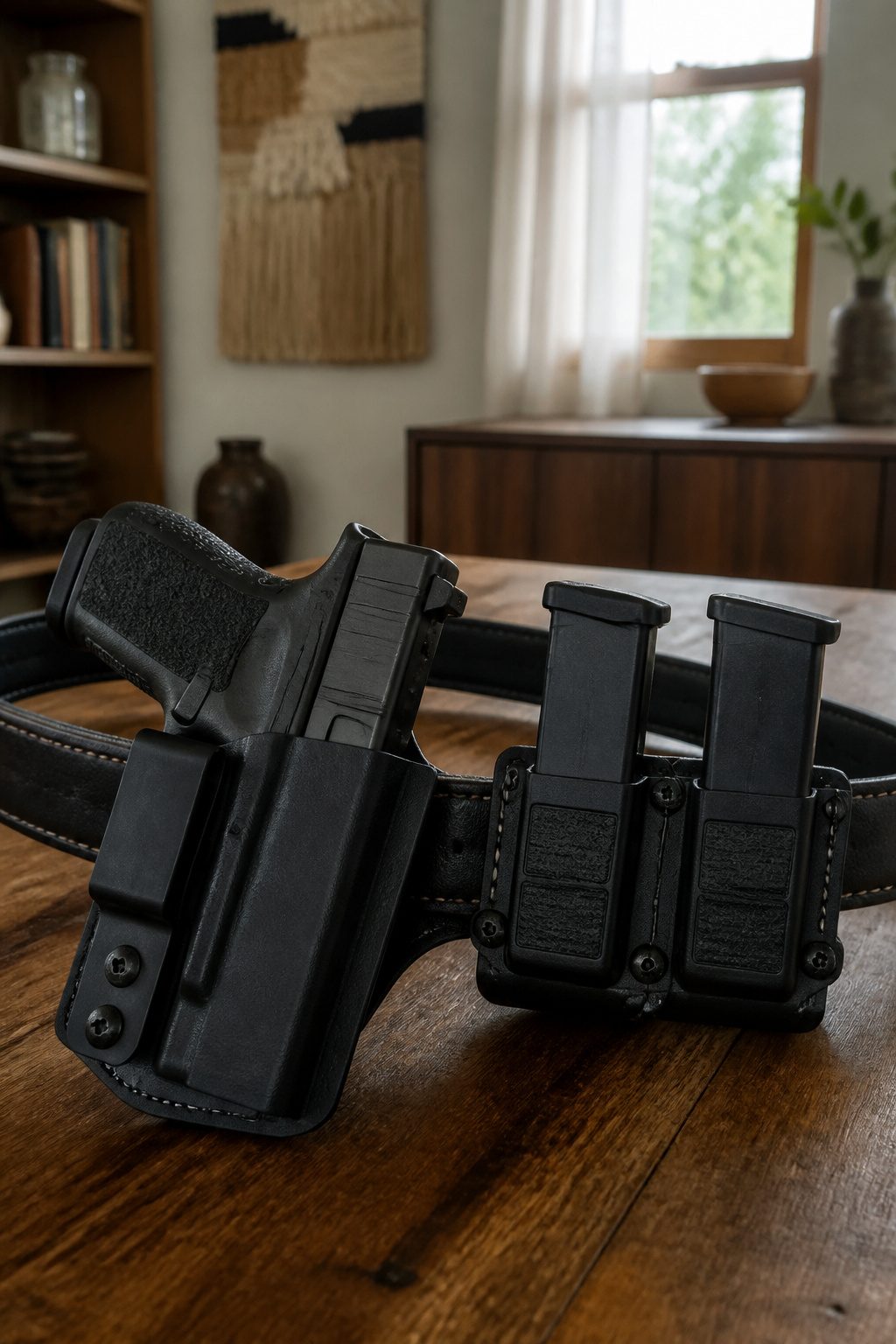
A concealed carry pistol needs two magazines minimum and four optimal. One rides in the gun, one rides on your body, and that second one matters more than most people think until their first failure.
Magazines are consumable items. The spring fatigues, the feed lips spread, the base plate cracks when it hits asphalt during a reload. Modern handguns run well, but when they choke, the magazine is usually the culprit. A spare on your belt turns a stoppage into a two-second fix instead of a very bad day.
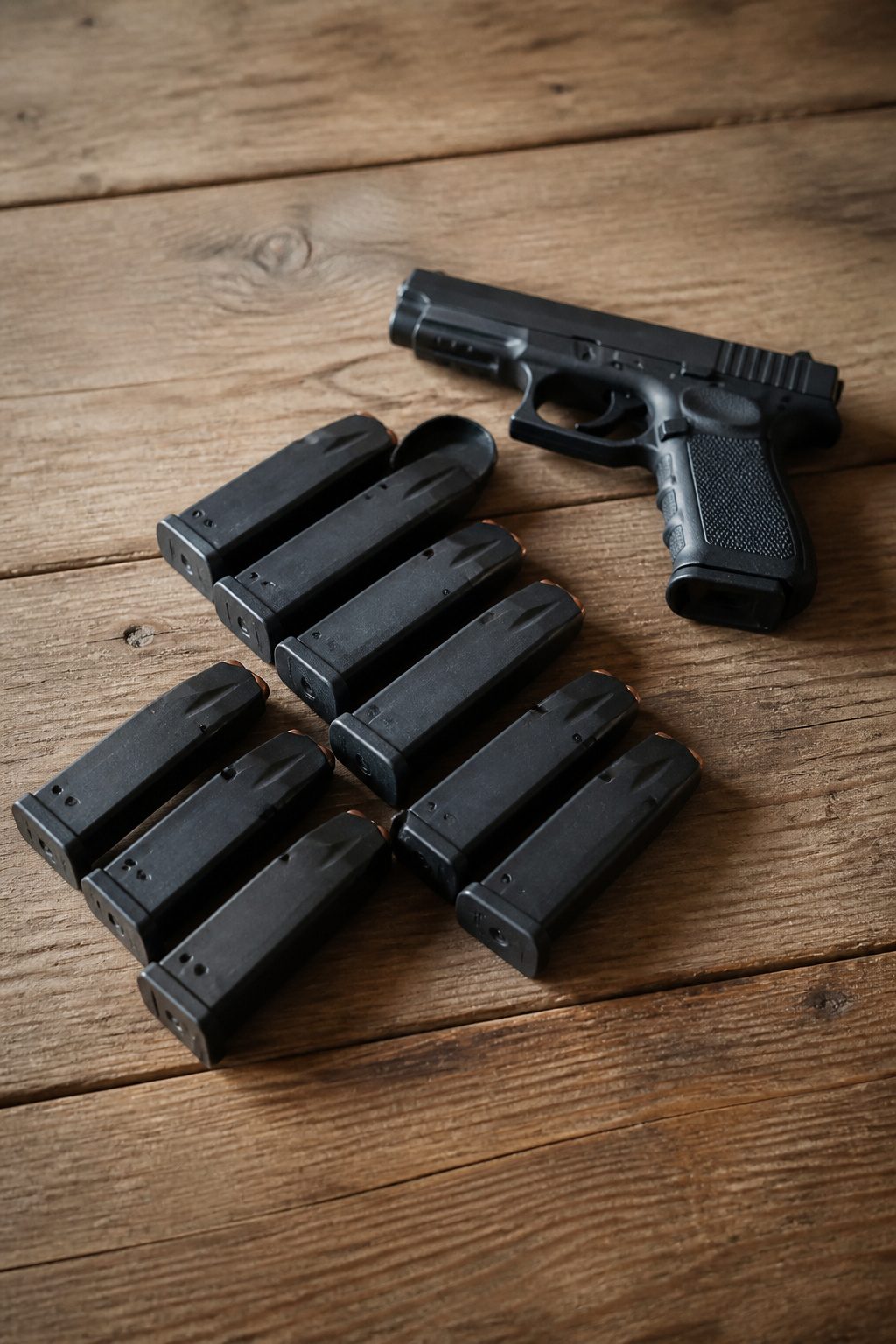
Four makes sense once you train with any regularity. Two stay loaded with defensive ammunition and live in your carry rotation. Two get loaded with ball ammo, dropped in the dirt, stepped on, and run hard. That separation keeps your carry mags fresh and saves you the chore of unloading hollow points every time you want to shoot. In a class, four magazines also mean less time thumbing rounds between strings and more time actually learning.
The rotation matters. Running the same two magazines forever just wears them both out faster. With four, you spread the wear, spot problems in training instead of on the street, and always have a tested spare ready to step in.
2. Defensive Carbine
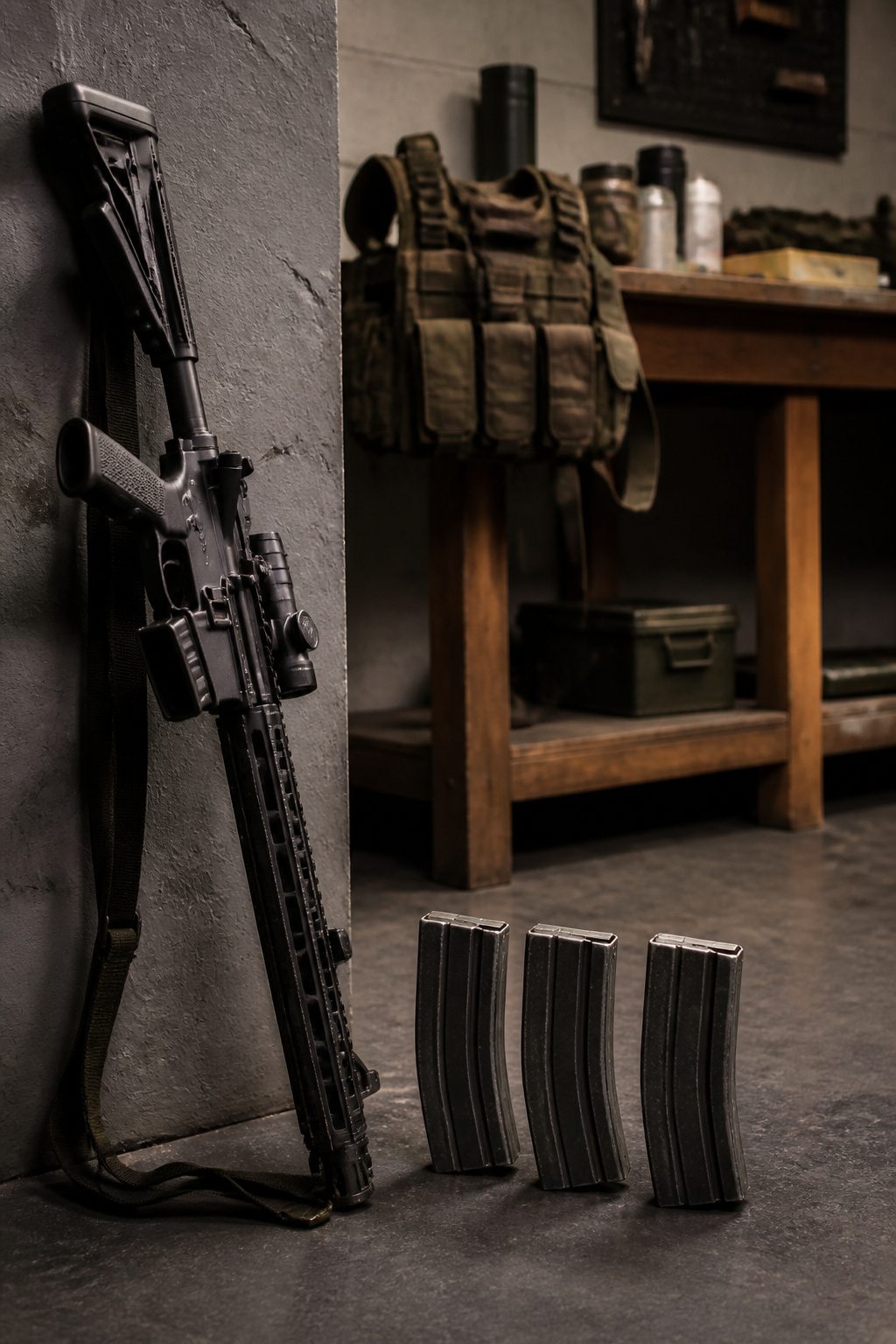
A defensive carbine burns through ammunition faster than any handgun, which is why the magazine count climbs. Three magazines is the floor, nine is the working number to aim for. The math comes from round counts and wear patterns, not guesswork.
Three gives you one loaded for home defense and two spares for training or whatever scenario pushed you past the first magazine. Six fits a standard chest rig with twin pouches, a habit carried over from military loadouts, though running dry on that many in a domestic situation is unlikely. Nine lets you rotate three hard-use training magazines while keeping six in service, preserving the lot instead of grinding the same few to failure.
The military rates standard-issue aluminum AR-style magazines at a 4,000-round service life, roughly 130 loadings. Feed lips deform, springs weaken, and the most common malfunctions in semi-automatics trace back to a defective magazine. Rotating a larger pool spreads that wear, and numbering them with a Sharpie lets you pull a problem child the moment it starts causing stoppages.
3. Defensive Shotgun
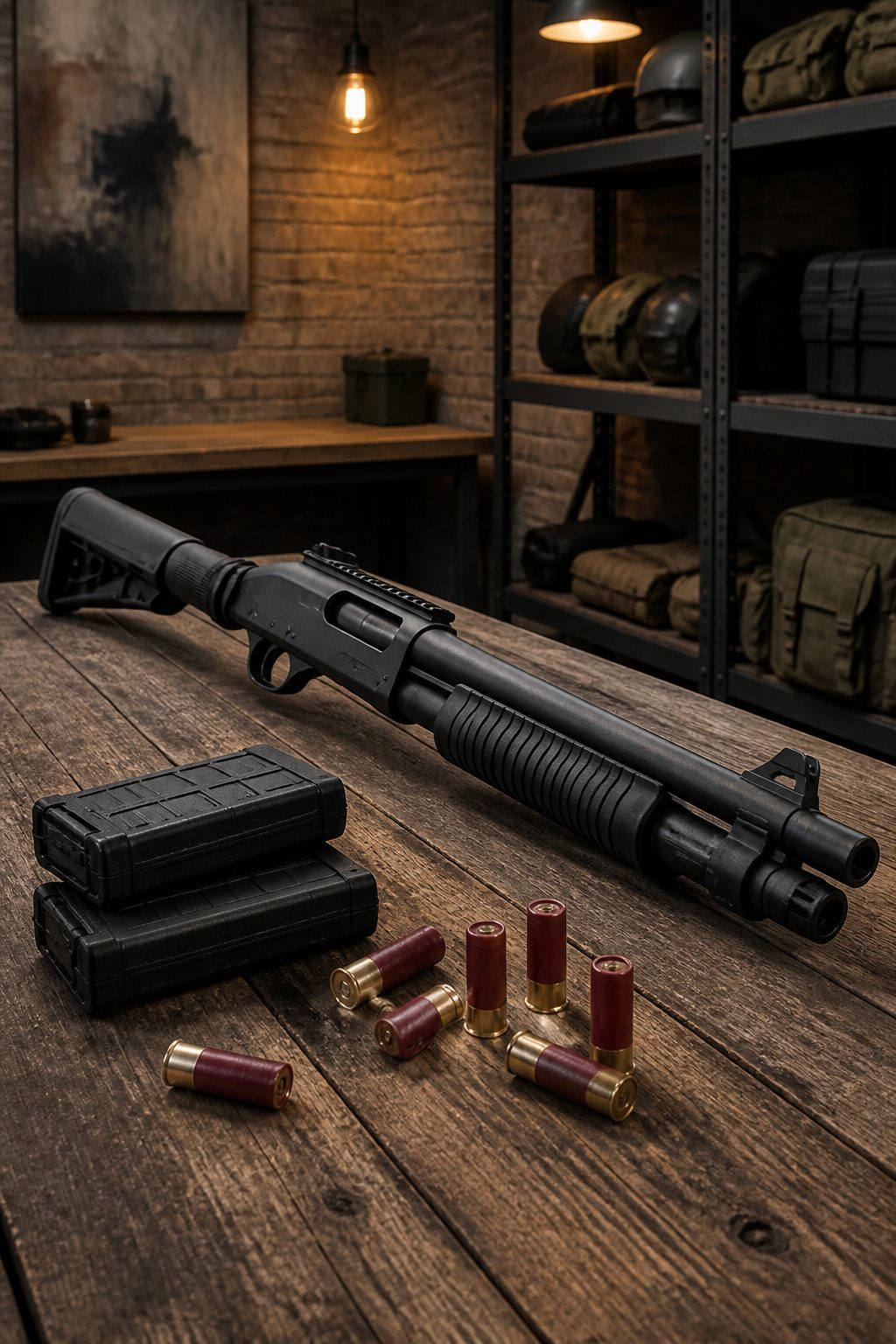
Magazine-fed shotguns like the Mossberg 590M or Saiga-style guns need at least two magazines minimum, four optimal. That second magazine is not for reloading mid-fight, it is for when the first one fails or sits loaded too long.
Shotgun ammo loads differently than rifle rounds. The plastic hulls deform under spring pressure inside a box magazine, and after a couple months you can get feeding issues. The fix is rotating your ammo every two months: load fresh shells into your spare, train with the old batch, and keep the cycle moving.
Tube-fed shotguns do not have this problem, but the magazine-fed designs that are showing up in more home-defense setups do. Four magazines lets you keep two loaded for defense and two for training, which matters because shotgun magazines take more abuse than most people expect. The plastic construction and the blunt ammo shape mean dropped mags and dirty feed lips show up faster than on a metal AR magazine. Two gets you through a bad night. Four lets you practice reloads and malfunction drills without wearing out your defensive set.
4. Competition Pistol for 3-Gun
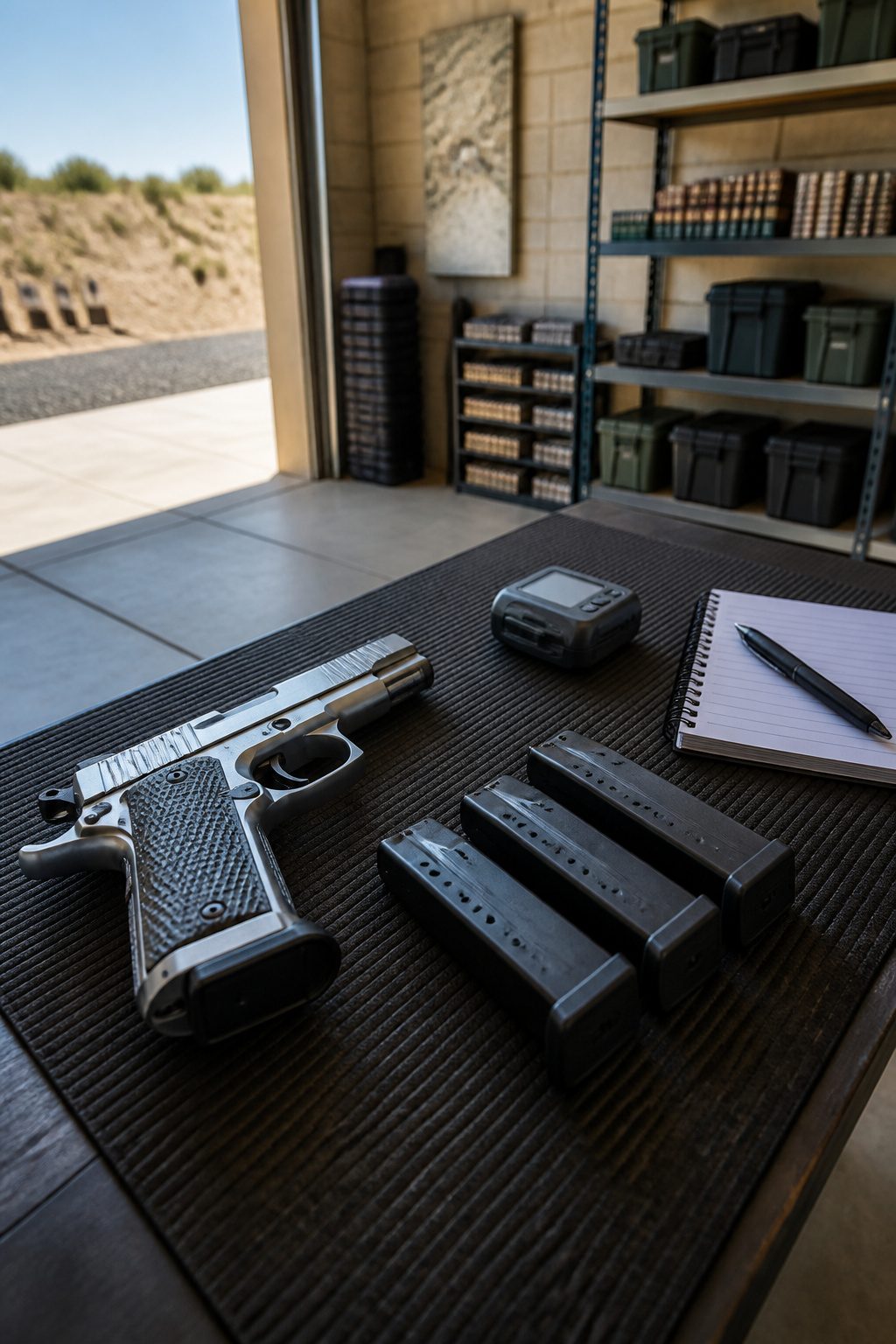
Three to five magazines will cover a 3-Gun pistol, and the number stays lower than dedicated pistol sports because the rifle and shotgun eat so much of the round count. Stage designs vary, but most pistol portions run short enough that three magazines get you through without a reload panic. The rare long stages, or a mag that hits the dirt and fails to seat, are what the fourth and fifth are for.
I started with three for my first season and only bought the fourth after a stage had me stuffing a partially depleted mag back into a mag pouch while the timer ran. That fifth one now lives in the range bag as insurance, not on my belt. For comparison, the competition shooters running pure pistol games often stack ten or more mags deep because every round comes out of their handgun. In 3-Gun, the pistol is just one leg of the race, so the magazine count stays modest.
5. IPSC Magazines
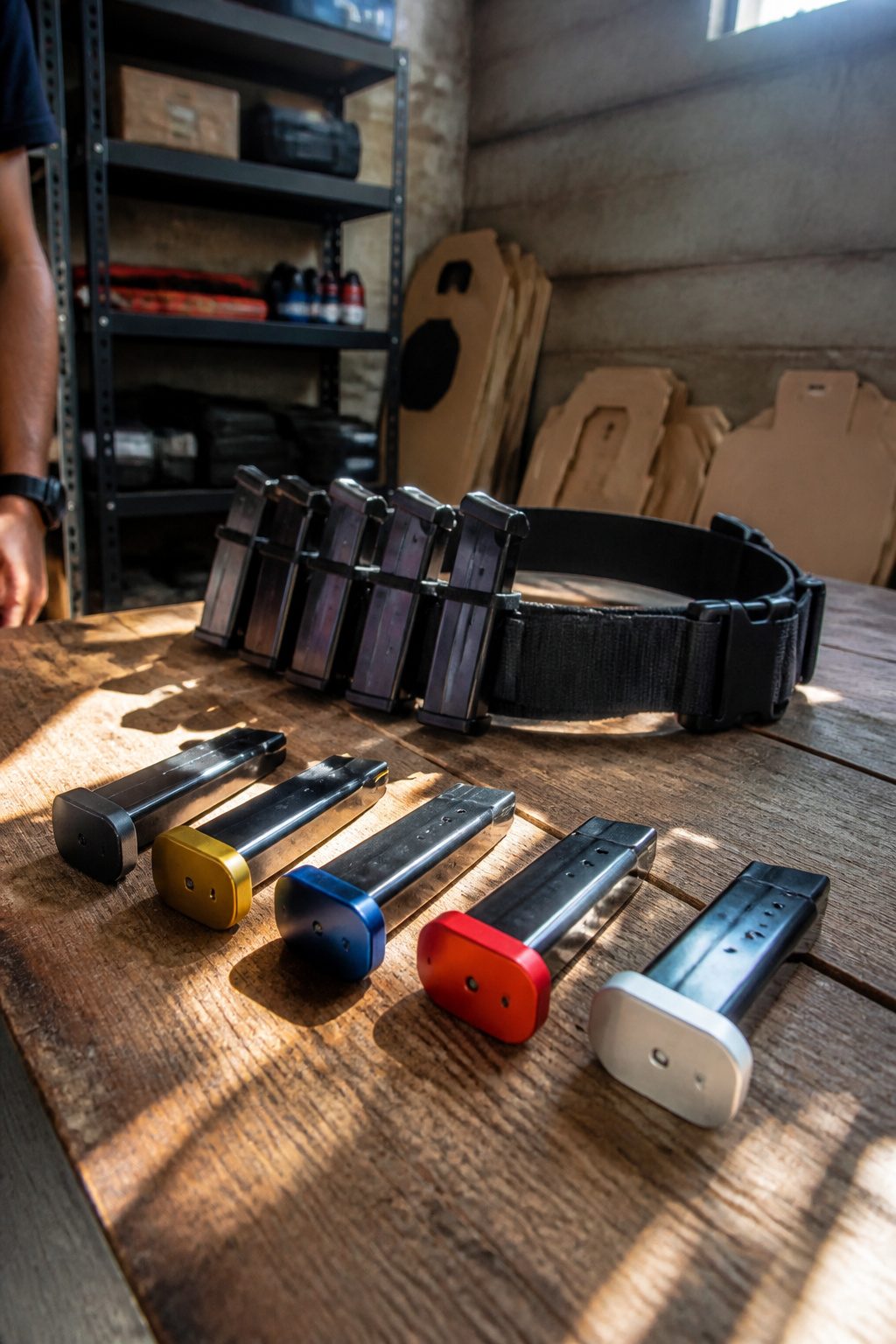
IPSC stages burn through ammunition faster than most people expect walking up to their first match. The round counts run high, and division rules often cap magazine capacity, which means more reloads and more magazines riding on your belt. Five magazines is the floor the IPSC website itself lists as minimum, though running six or seven leaves room for a magazine that fails to seat or a stage plan with multiple positions where dropping a partially loaded mag beats counting rounds under pressure.
I learned this the hard way at a local match where I brought exactly five, figured that was the rule so it must be enough, and spent the last stage reloading magazines between shooters while the squad waited. The math works out tight: a 32-round stage with 10-round magazines means three changes even if everything goes clean, and nothing ever goes clean when you are also thinking about footwork and cover. Seven lets you stage extras at different positions or absorb a bad malfunction without borrowing gear from the next squad over.
6. USPSA Pistol Magazines
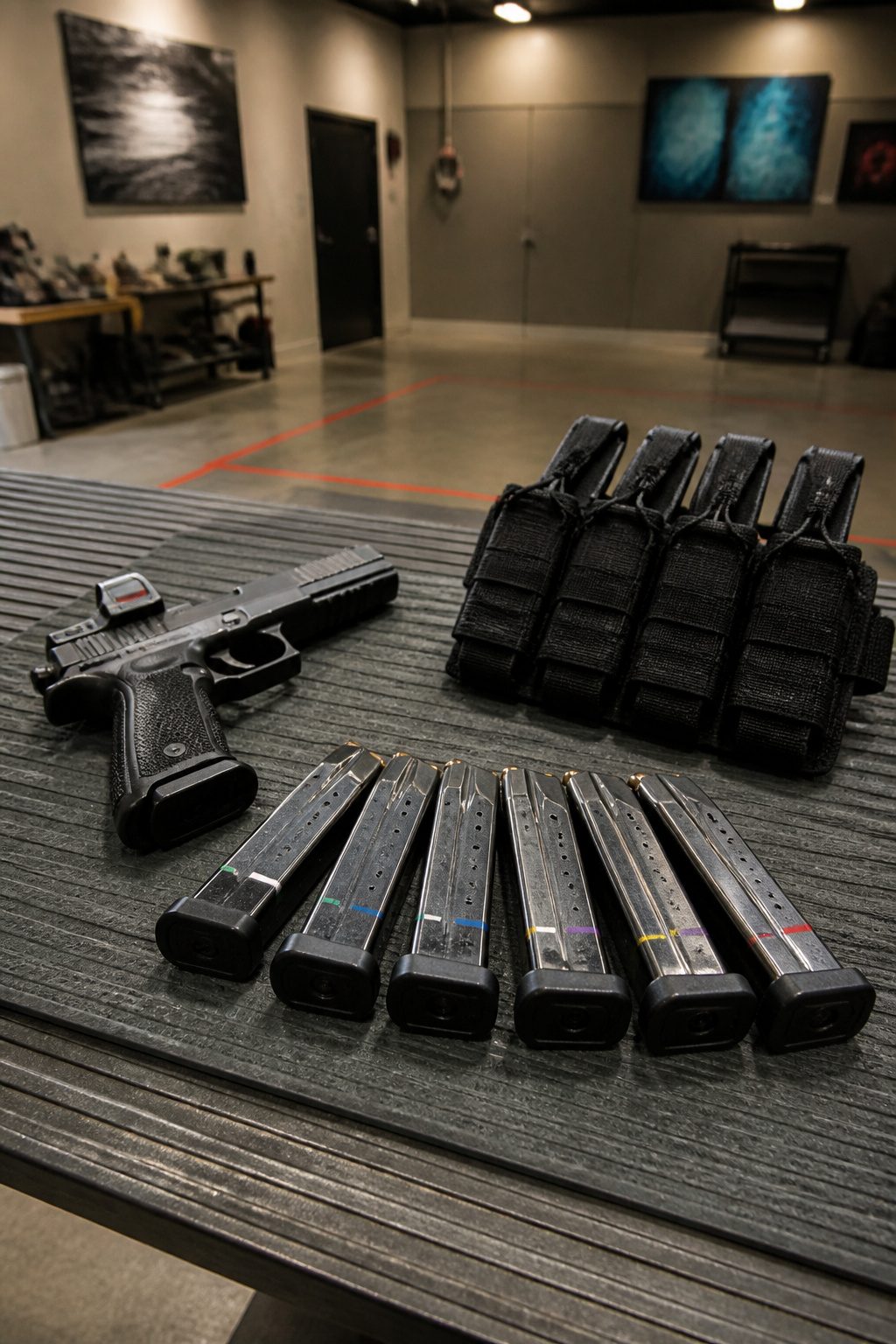
A USPSA belt setup usually needs 4 to 6 magazines to get through a match without sweating reloads between stages. The exact count depends on which division you’re running.
Production division, with its 10-round capacity limit, burns through magazines faster. Open division shooters running 170mm sticks might only touch two or three mags per stage. That range from 4 to 6 covers both ends: one in the gun, the rest on the belt, enough to sail through most courses of fire.
Single-stack division is the outlier. Lower capacity means more changes, so the math shifts. Six magazines starts looking like the safer floor there, especially if one mag goes down mid-match and you need a spare to finish.
The stages themselves tend to run shorter than IPSC, but the round counts still add up fast when you’re making up points on steel or taking an extra shot on a partial target. Having those extra two magazines on the belt beats standing at the safe table reloading while the next squad waits.
7. Hunting Rifle
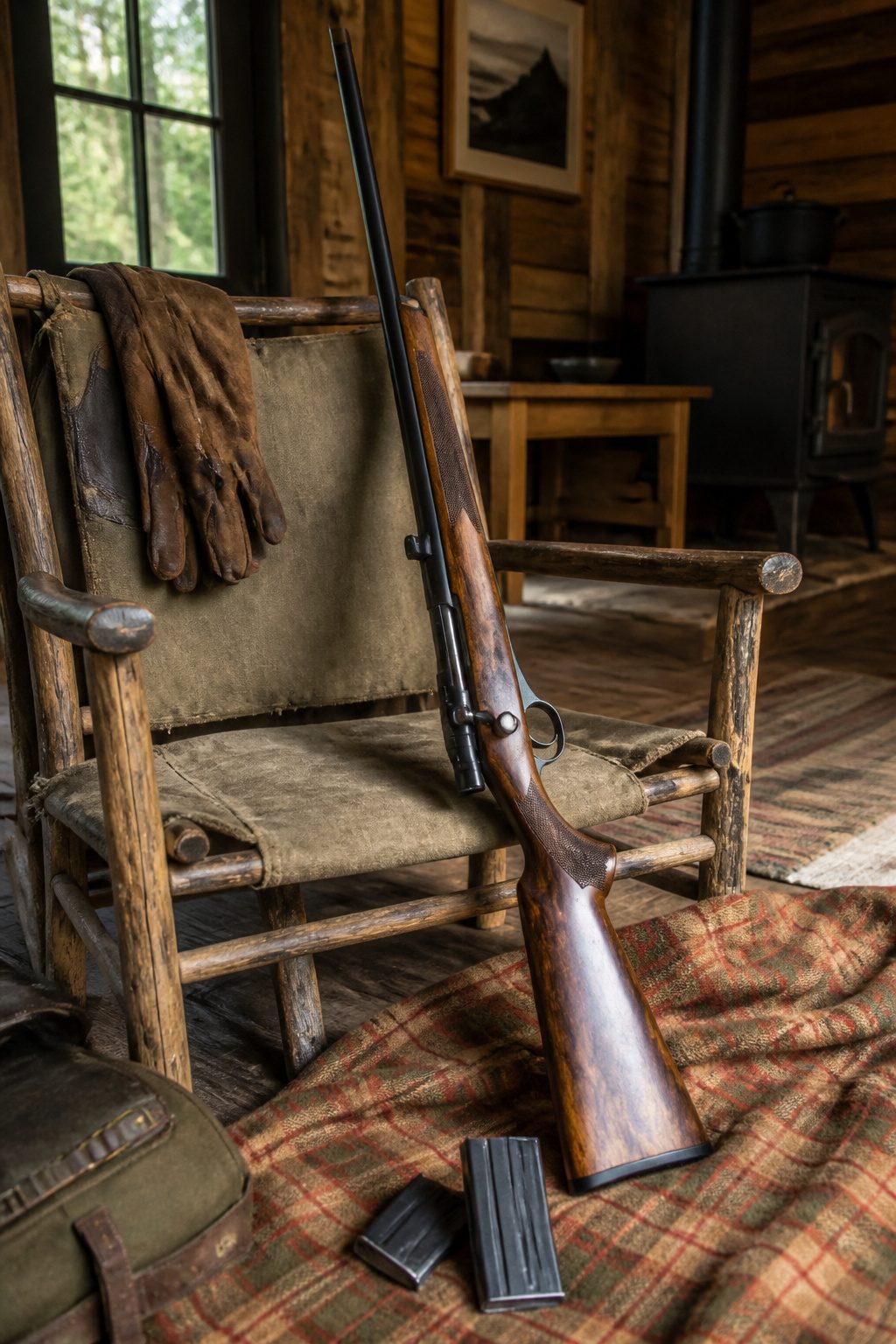
A bolt-action hunting rifle in the field rarely asks for more than two or three rounds in a morning. Most of the deer I’ve watched taken, including my own, dropped on the first shot. The second magazine lives in the truck or the pack, not on the belt, because two magazines is the right count here: one in the rifle, one backup for loss or damage.
The backup matters more than capacity. Fixed magazines and small detachable boxes don’t fail often, but a slip on wet rock or a gate latch in the dark can turn one into a paperweight. I learned that the hard way on a late-season elk hunt when a magazine release caught on a saddle horn and the box vanished into three feet of snow. The rifle became a single-shot for the rest of the day.
Most lever guns carry their rounds in a tube under the barrel; for those with detachable boxes, the same rule holds. Two total. The second isn’t for reloading under fire. It’s insurance against the kind of dumb mistake that only happens miles from the truck.
Cost stings on some models. A spare for the Fierce Arms Fury LR runs $120, enough that some hunters convince themselves one is plenty. That calculation changes fast when you’re staring at a tag you can’t fill because the magazine took a fall you didn’t plan for.
8. Antique Firearms
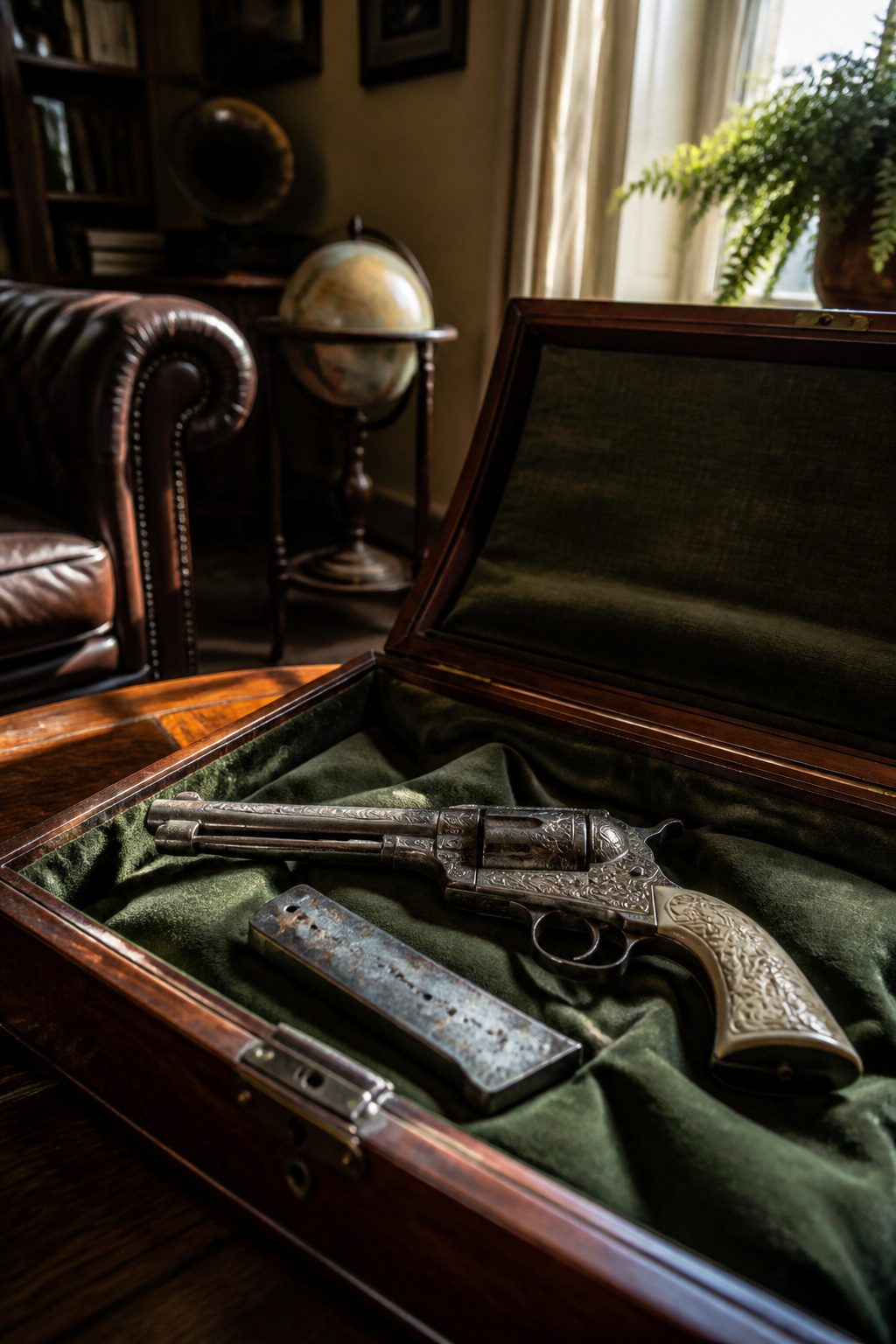
Original magazines for antique firearms are as irreplaceable as the guns themselves, and that changes the math completely. A single lost or cracked magazine can turn a functional piece into a wall hanger, and reproductions either do not exist or run unreliable enough that feeding becomes a gamble. The Savage M1907, Colt 1903, FN M1922, guns of that era: their magazines were not made in surplus, and every year the supply thins. Discontinued magazines only get more expensive and harder to find over time. Two magazines is the floor for a working gun, but the collector’s play is different. Every working magazine you encounter at a reasonable price is worth buying, because the next one may not appear. This is preservation, not preparation. The firearm stays shootable only if the magazine supply outlasts your own mistakes.
Why Magazines Fail
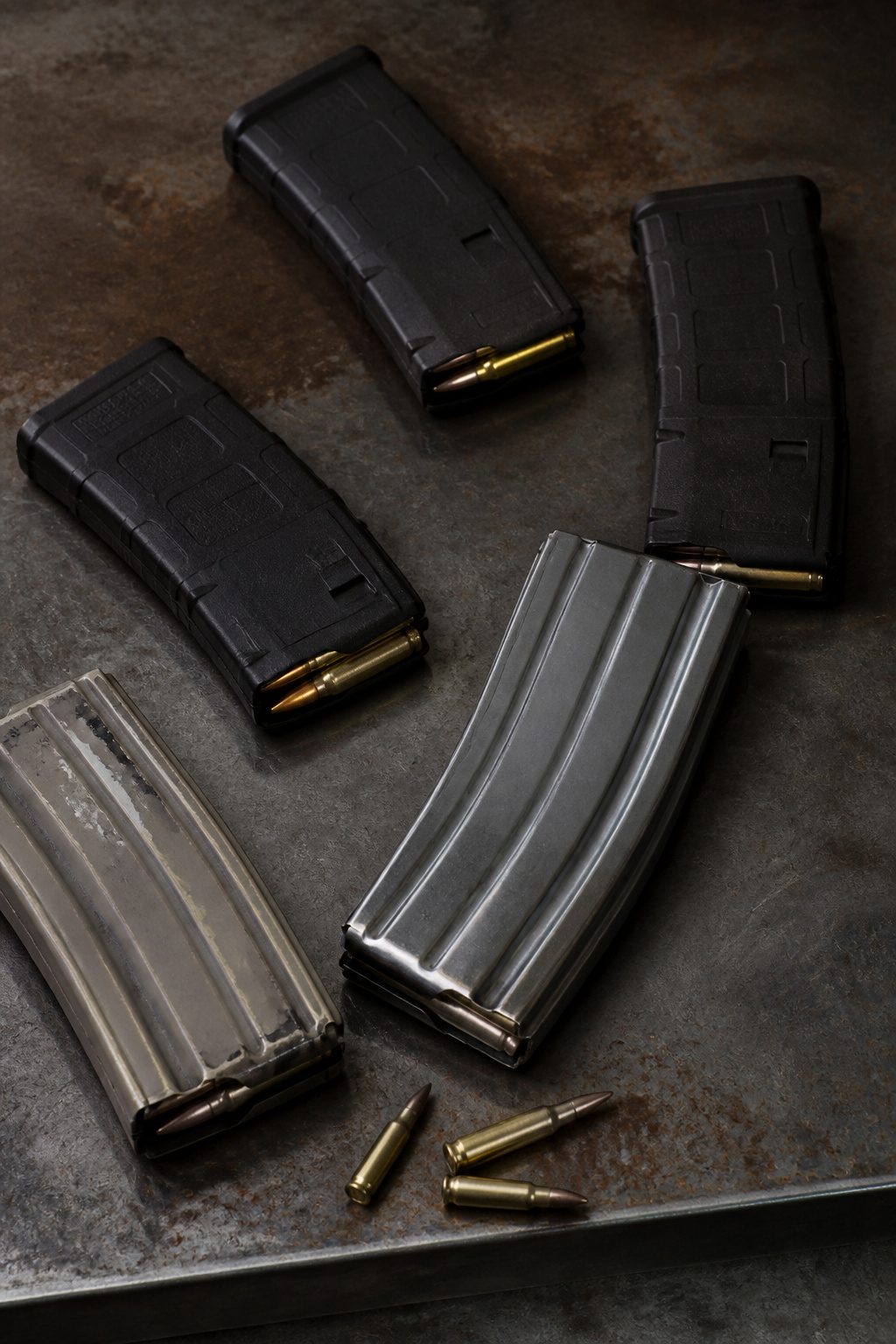
Magazines wear out like brake pads, not like the guns they feed. The military treats its standard-issue aluminum AR-style magazines as expended after 4,000 rounds, roughly 130 load cycles. That number surprised me when I first heard it during a carbine class years ago; I had magazines in rotation with five times that many rounds, still rattling along.
The failure modes show up gradually, then all at once. Feed lips on aluminum bodies bend from hard insertions and drops to concrete. Springs lose tension not from sitting loaded, which the old myth still claims, but from the repeated compression and release of actual use. Followers tilt, hang up, or drag against dented tube walls. Polymer magazines resist dents better, but their feed lips can spread; steel and aluminum bodies dent and bind rounds mid-stack.
Numbering magazines with a Sharpie turns this from a mystery into data. Magazine #3 choked twice in one drill; it went into a separate range bag, then the trash. Without extras on hand, that discovery happens during a match stage or a night in the hallway, not on a sunny practice day.
Training Magazines
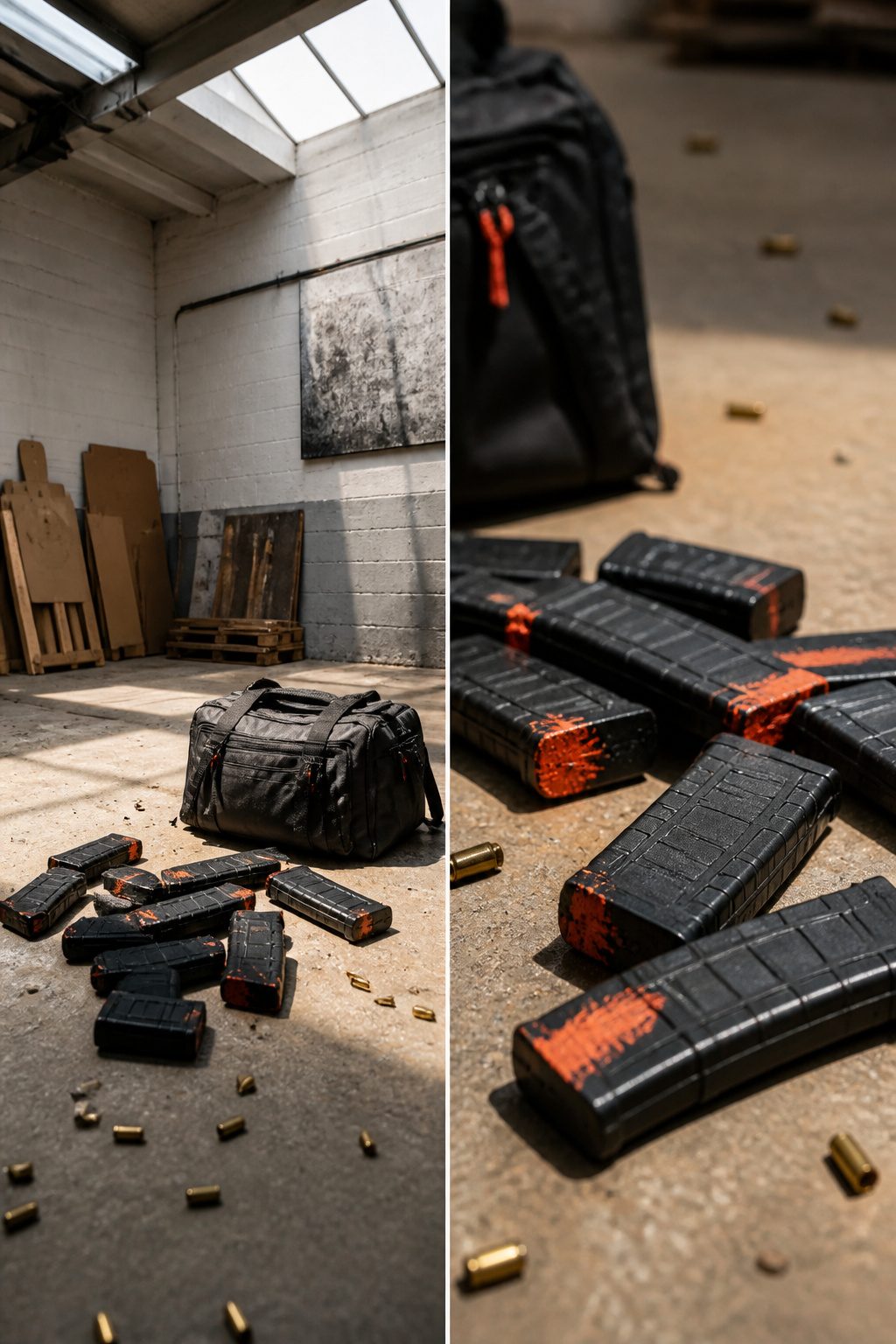
Dedicated training magazines keep your life-saving gear off the ground. Aftermarket options from KCI, ETS, or Mec-Gar run cheaper than OEM and work fine for the range, where concrete, dirt, and gravel do the real damage. Dropped magazines deform feed lips and weaken springs, and the military already treats aluminum AR mags as expended after roughly 4,000 rounds, about 130 loadings.
Worn magazines have their place. A mag that starts failing consistently becomes a practice tool for malfunction clearance, marked with orange paint so it never drifts back into working rotation. Numbering every magazine with a paint pen or Sharpie tracks which ones act up, whether they are identical factory models or mixed brands.
Capacity does not need to match either. Five-round Saiga shotgun mags cost the least, so those work for drills. Ten-round CZ 75 Mec-Gar magazines pinned down to that limit work fine if the price is right. The point is separating what you bet your life on from what you abuse on the range.
Marking and Maintenance
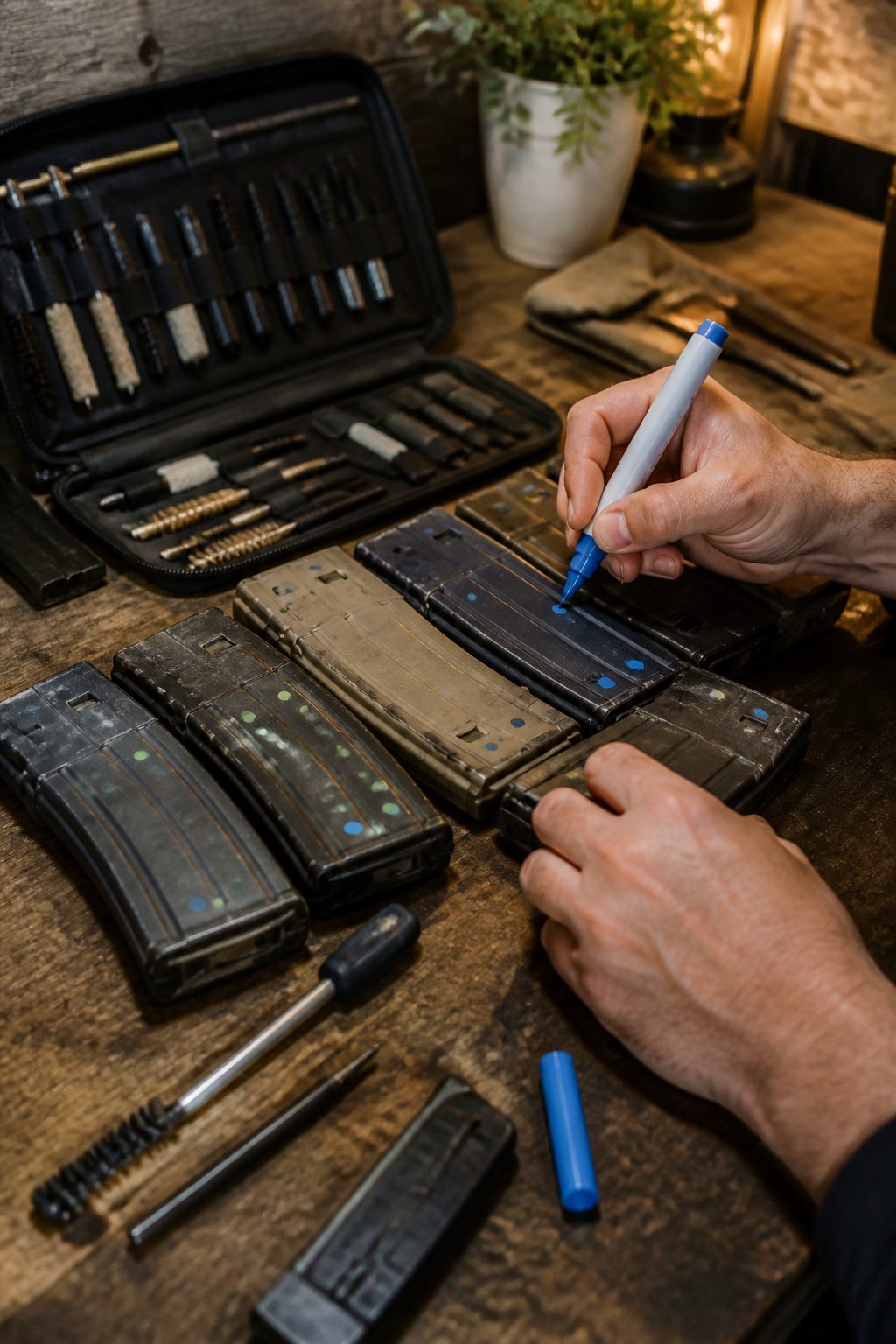
A Sharpie dot or paint-pen number on the baseplate turns a magazine from anonymous hardware into something you can track. Military logistics treat standard aluminum AR magazines as having about a 4,000-round service life, roughly 130 loadings. That sounds generous until you burn through it in a season of weekend classes. Numbering lets you spot the pattern when magazine #3 starts causing failures on the same day.
Color-coding goes further. Orange paint on a problem mag marks it for training use only, not the load you bet your life on. Colored baseplates do the same at a glance. The spring and follower wear out before the tube does; keeping a log, even just mental, of which magazines hit which round counts catches weakness before it becomes a stoppage.
Basic maintenance is quick and saves money. Disassemble, wipe the follower and feed lips clean, check the spring for kinks or set. Reassemble dry, no oil that attracts grit. A magazine that drops free smoothly and feeds every time is the result of attention, not luck. Mark them, track them, and retire them on schedule.
Legislation and Availability

Magazine bans have a way of turning affordable hardware into panic-priced collectibles overnight. The 1994 Assault Weapons Ban pushed standard AR magazines past $100 and Glock mags to about the same, measured in 1990s dollars. That was not exotic aftermarket gear; that was factory equipment suddenly reclassified as contraband.
Watching shelves empty during subsequent panic cycles convinced me that buying magazines when they are cheap and available is the only hedge that works. Legislation shifts with election cycles, court rulings, and state line crossings. A $15 PMAG becomes a $50 anxiety purchase the week a ban is filed, then disappears entirely.
Some firearms ship with a single magazine, particularly rifles, and a spare alone can run $120 for something like a Fierce Arms Fury LR. Two magazines is the floor for anything that leaves the safe. For competition or defensive guns, doubling your working number plus one spare covers training wear and the inevitable failure without cannibalizing your match kit.
State laws fragment the map in ways that change driving routes and online checkout options. What ships to Arizona stops at the California border. Check your own jurisdiction; this is observation, not legal advice.
Frequently Asked Questions
How many magazines should you have for a handgun?
Two is the absolute minimum for any handgun, though three to four is better for concealed carry and five is the floor for IPSC competition. A spare magazine matters more than most people think until their first failure on the range or in a dark hallway. For handguns used daily, keeping some loaded with defensive ammo and others reserved for training keeps your carry mags fresh and your practice honest.
How many magazines do you need for a rifle?
Three magazines is the minimum for a defensive carbine, with six fitting a standard chest rig and nine being the working number to aim for if you train regularly. The higher counts let you rotate magazines so the same few do not get ground to failure. Feed lips deform and springs weaken, and numbering your mags with a Sharpie lets you pull a problem child before it chokes at the wrong moment.
What is the minimum number of magazines for a defensive firearm?
Two magazines is the bare minimum for any defensive firearm, whether it is a pistol, carbine, or shotgun. One rides in the gun and one rides on your body, because magazines are consumable items and the magazine is usually the culprit when a semi-auto chokes. That second spare turns a stoppage into a two-second fix instead of a very bad day.
How often should you replace magazines?
Replace magazines when they show signs of wear or start causing malfunctions, not on a calendar schedule. The military treats standard aluminum AR magazines as having about a 4,000-round service life, roughly 130 loadings, but springs lose tension from repeated compression and release during actual use, not from sitting loaded. Numbering your magazines and tracking which ones act up catches weakness before it becomes a stoppage in a match or a defensive situation.