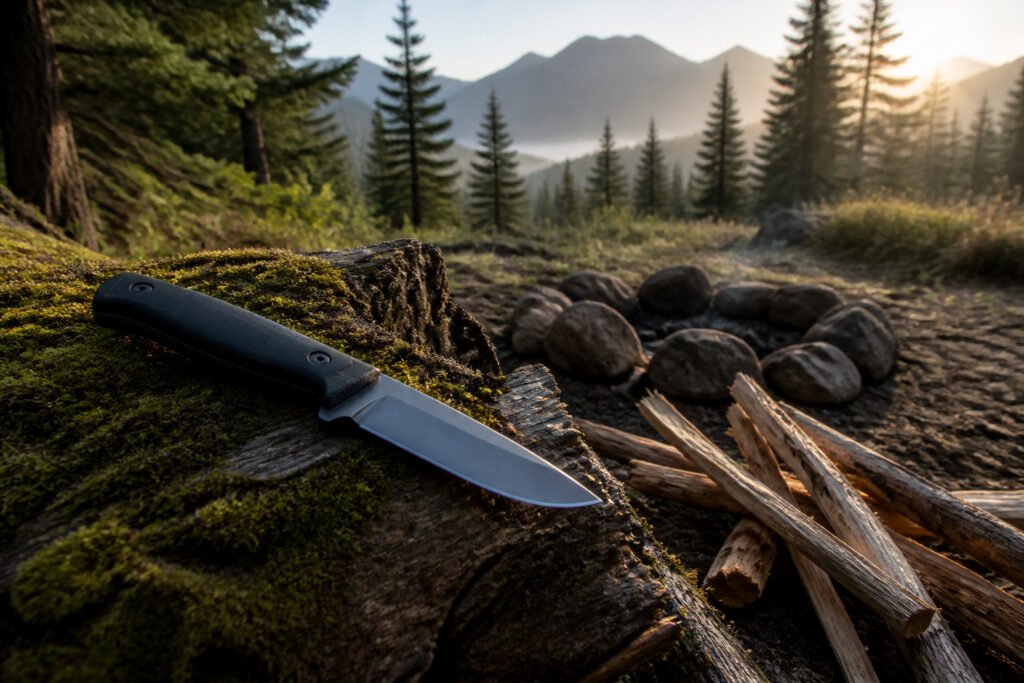
The Ka-Bar Becker BK2 wins the top spot because 16 oz of 1095 Cro-Van steel full tang construction handles batoning and prying without the specialization that limits camp knives to one job. That same weight rules it out for anyone counting grams in a pack, and the Grivory handles stay functional rather than friendly through long sessions. What convinced me, reading through owner reports, was the number of buyers who described reaching for this over lighter blades when the work turned to splitting kindling or working through frozen material. The trade is immediate: momentum in the cut against fatigue on the belt.
My Top Picks
| Product | Award | Best for | Why it won | ||
|---|---|---|---|---|---|
| Ka-Bar Becker BK2 | Best Overall | Anyone wanting one knife that does it all | Tough enough for hard use yet versatile enough for everyday camp tasks | Check price | |
| Mora Companion | Best for Beginners | First-time buyers testing the waters | Simple to handle, easy to sharpen, and light enough to carry anywhere without worry | Check price | |
| Morakniv Kansbol | Best Budget Option | Shoppers keeping costs low | Delivers solid cutting performance and good steel without the premium price tag | Check price | |
| Montana Knife Company Wargoat | Best Tactical Knife | Users needing a fighting-ready blade | Compact frame with an aggressive grip built for high-stress tactical situations | Check price | |
| ESEE 4 | Best for Heavy-Duty Use | People who punish their gear | Built thick enough to baton firewood and pry without snapping or chipping | Check price | |
| Gerber StrongArm | Best All-Rounder | Preppers wanting one knife for everything | Handles camp chores, self-defense, and rough weather without specialized weaknesses | Check price | |
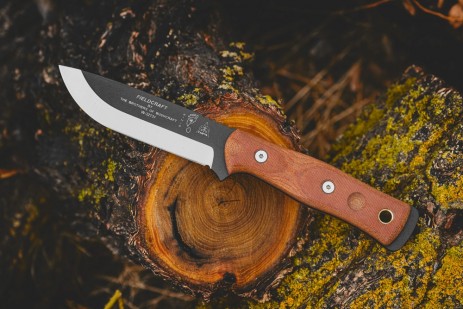
| Tops BOB Fieldcraft Hunter | Best for Bushcraft | Woods dwellers crafting shelters and fire | Scandi grind and sturdy spine excel at carving, feathering, and striking a ferro rod | Check price | |
| ESEE Izula II | Best Compact Survival Knife | Travelers counting every ounce | Tiny enough for a neck carry or pocket, yet still full-tang and field-repairable | Check price | |
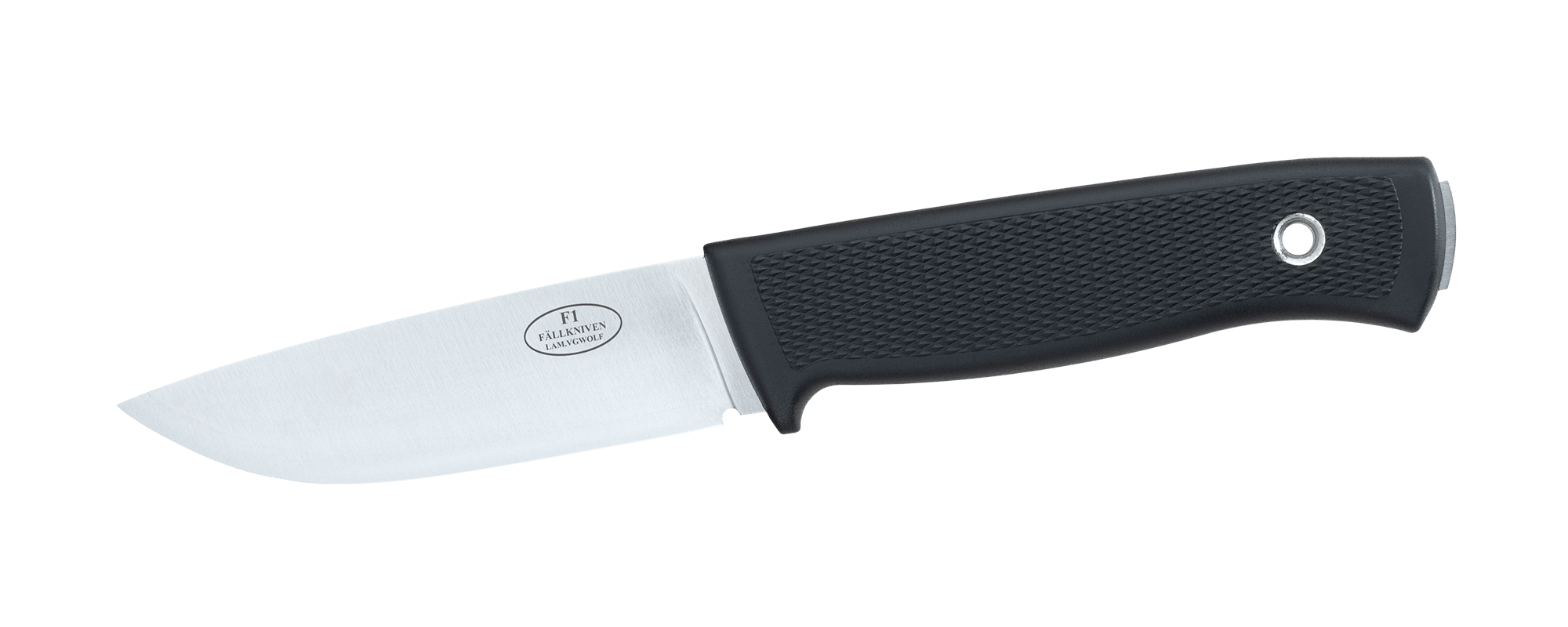
| Fallkniven F1 | Best Survival Knife for Air Force Pilots | Pilots and aviators preparing for downed scenarios | Trusted by an air force for decades in harsh Arctic conditions | Check price | |
| Cold Steel SRK | Best Budget-Friendly Survival Knife | Value hunters refusing junk steel | Proven carbon or stainless options that hold an edge through real abuse | Check price |



| Product | Blade Length | Weight |
|---|---|---|
| Ka-Bar Becker BK2 | 5.25 in | 16 oz |
| Mora Companion | 4.1 in | 4.1 oz |
| Morakniv Kansbol | 4.29 in | 3.52 oz |
| Montana Knife Company Wargoat | 3.75 in | 2.23 oz |
| ESEE 4 | 4.5 in | 8 oz |
| Gerber StrongArm | 4.88 in | 7.1 oz |
| Tops BOB Fieldcraft Hunter | 4.75 in | 9.73 oz |
| ESEE Izula II | 2.63 in | 6 oz |
| Fallkniven F1 | 3.86 in | 5.3 oz |
| Cold Steel SRK | 6 in | 7.5 oz |
Best Overall: Ka-Bar Becker BK2
Quick Verdict
A full tang knife built around 1095 Cro-Van steel sits at the sweet spot where most survival tasks actually happen. The Ka-Bar Becker BK2 carries enough heft at 16 oz to split kindling without feeling like a hatchet, and the 5.25 in blade length handles both detailed work and heavier cuts. The real tradeoff is weight: this is not the knife for someone counting every ounce in a pack, and the Grivory handles feel more functional than friendly during long sessions.
Key Specifications
- Blade Length: 5.25 in
- Weight: 16 oz
What It Does Well
- 1095 Cro-Van steel holds an edge through hard use; owners report it keeps cutting after sessions that dull softer blades
- Full tang construction runs the steel from tip to pommel, so the knife handles prying and batoning without a weak junction to fail
- 16 oz of mass drives the blade through wood and bone with less muscle than lighter alternatives demand
Where It Falls Short
- Grivory handles lack the warmth and grip texture of micarta or G-10; wet hands notice the difference
- Weight at a pound means feeling it on your belt after a full day; ultralight hikers look elsewhere
Who It’s For
The buyer who wants one fixed blade for camp chores, vehicle kits, and backup in the field will find the BK2 answers most calls without specialization. Someone building a go-bag where every item justifies its grams will pass; the 16 oz alone decides that, and no steel choice changes the math.
How It Compares
The Cold Steel SRK offers similar durability with less weight on the belt and a friendlier hit to the budget. That lighter build suits buyers who need the knife mobile and present, not stowed in a truck or base camp. The BK2 rewards the buyer who prioritizes momentum in the cut and does not mind the carry; the SRK rewards the buyer who moves farther and faster with what they strap on.
Where to buy: Amazon
Best for Beginners: Mora Companion
Quick Verdict
A first fixed blade should teach good habits without punishing mistakes. The Mora Companion keeps weight low enough to forget it is on your belt, and the rubber handle forgives wet hands or cold fingers. The three-quarters tang is the honest compromise: strong enough for camp chores, though owners who pry with their knives have snapped the blade at the handle junction.
Key Specifications
- Blade Length: 4.1 in
- Weight: 4.1 oz
What It Does Well
- Swedish 12C27 stainless or carbon steel holds an edge through a weekend of feather-sticking and food prep without needing a field sharpener.
- 4.1 oz disappears on a hip or in a pack; you are more likely to carry it than leave it in the truck.
- Rubber handle stays grippy when bloody, muddy, or gloved, which matters more in November than specs sheets suggest.
Where It Falls Short
- Three-quarters tang means the blade steel stops short of the pommel; batoning through hardwood or levering stuck knots risks separation at the handle.
- 4.1 in blade limits the depth of cuts for shelter building or quartering game compared to longer survival knives.
Who It’s For
Someone building their first kit who will use a knife for fire prep, cooking, and light camp tasks will not outgrow this for years. The buyer who wants one knife for vehicle emergency kits and expects to hammer it through frozen logs or pry metal apart needs a full tang blade instead, and the tang type is what tells them apart.
How It Compares
The Morakniv Kansbol shares the same light footprint and budget tier, but its lower tang rating makes the Companion the safer starting point for beginners still learning what not to do with a blade. A user who already knows how to avoid prying and twisting can choose either; someone who has not yet snapped a knife learning that lesson gets more forgiveness from the Companion’s construction.
Where to buy: Amazon
Best Budget Option: Morakniv Kansbol
Quick Verdict
The Morakniv Kansbol won the budget slot by giving owners Swedish steel and a sub-four-ounce carry at a price that usually buys stamped mystery metal. The 4.29 inch blade and 3.52 ounce weight make it a light, long cutter for the money, though the partial tang is the detail that separates it from premium fixed blades. Someone who needs a backup knife or a first serious blade gets more than they paid for; someone who plans to baton firewood or pry with their knife should look further up the line.
Key Specifications
- Blade Length: 4.29 in
- Weight: 3.52 oz
What It Does Well
- Swedish 12CR27 stainless takes and holds an edge better than the softer steels common at this price, so the edge lasts through a weekend of camp tasks without touching up.
- 4.29 inches of blade gives you reach for food prep and feather-sticking that shorter budget knives struggle with; the length is closer to a full-size belt knife than a neck knife.
- 3.52 ounces means it disappears on a belt or in a pack lid; owners describe impressive performance despite the low price, suggesting the light weight does not come at the cost of a usable geometry.
Where It Falls Short
- The partial tang, not full tang, limits how hard you can drive this blade; batoning or heavy levering risks handle failure that a full-tang knife would survive.
- Polymer handles on budget Moraknivs can feel slick when wet or bloody, and the grip shape is fixed; there is no swapping scales for something with more texture.
- The steel resists rust but is not stainless in the sense of zero maintenance; owners in humid climates report needing to oil after use.
Who It’s For
A hiker or car-camp cook who wants one fixed blade for weekend trips will find the Kansbol covers food, fire, and light shelter work without weighing down a light kit. The buyer who should pass is the one building a single hard-use survival knife; the partial tang and polymer handle are the wrong foundation for someone who expects to beat on their blade through a week of bad weather.
How It Compares
The Ontario Rat 7 carries more blade length and a reputation for durability in tough conditions, though owner reports note shortcomings that show up in harder use. The Rat 7 suits someone who wants a longer, heavier knife for batoning and chopping and accepts the extra ounces; the Kansbol suits the buyer who counts every ounce and does their heavy splitting with a hatchet or saw instead. Both are budget knives, but the Rat 7 leans toward brute-force camp tasks while the Kansbol leans toward precision work and all-day carry comfort.
Where to buy: Amazon
Best Tactical Knife: Montana Knife Company Wargoat
Image: montanaknifecompany.com
Quick Verdict
Compact enough to disappear on a belt or in a pocket, the Wargoat still carries enough blade for serious work. The maker built it around Magnacut stainless steel and a full tang frame that keeps the weight under 2.5 oz, which is where the real appeal sits for anyone who needs a knife they will actually carry instead of leaving in a drawer. The trade is blade length: at 3.75 in, you are not batoning firewood or clearing brush with this, and buyers looking for a do-everything camp knife should look elsewhere.
Key Specifications
- Blade Length: 3.75 in
- Weight: 2.23 oz
What It Does Well
- Magnacut stainless steel holds an edge through hard use and resists corrosion better than most high-carbon alternatives, which matters when maintenance happens in the field without a full sharpening station.
- Full tang construction runs the single steel piece from tip to pommel; no joint means no weak point if the knife takes lateral stress in a pry or lever situation.
- G-10 scales give a textured grip that stays predictable with sweat or gloves on, which owners mention as the reason they reach for this over smoother-handled knives in the same size class.
Where It Falls Short
- 3.75 in blade length limits reach and cutting surface; food prep, rope work, or any task needing sweep takes longer than with a 5 in plus blade.
- 2.23 oz weight comes from slimming the profile down, which also means less material in the handle for buyers with larger hands who want a full four-finger wrap without the pinky hanging off.
Who It’s For
Someone running a belt-mounted or pocket system where every ounce draws against all-day comfort will find the Wargoat disappears until it is needed. The buyer who wants one knife for the truck, the trail, and the kitchen drawer will hit the length limit fast and probably end up frustrated by the compromise.
How It Compares
The ESEE Izula II runs longer and thicker through the handle, which gives it more general utility for camp tasks and food work but also makes it harder to forget you are wearing it. Where the Wargoat disappears into a waistband or small pack pocket, the Izula II wants a dedicated sheath spot and carries like a tool rather than an extension of your hand. Pick the Wargoat if your priority is speed of access and minimal bulk; pick the Izula II if you need one small knife to cover survival chores beyond cutting and light prying.
Where to buy: montanaknifecompany.com
Best for Heavy-Duty Use: ESEE 4
Image: eseeknives.com
Quick Verdict
Heavy work in the backcountry chews up gear that only looks tough. The ESEE 4 survives because the blade, handle, and tang are built from materials that match each other’s limits instead of covering weak points with marketing. At 8 oz it carries like a smaller knife and hits like a bigger one, though that same density wears on you during all-day camp tasks where a lighter blade would do fine.
Key Specifications
- Blade Length: 4.5 in
- Weight: 8 oz
What It Does Well
- 1095 carbon steel takes a hard edge and resharpens fast in the field; owners report touching it up on a river stone and going back to work
- Full tang construction means the handle will not separate from the blade under lateral stress; batoning hardwood or prying with the guard is not a separate operation from cutting
- Micarta handle scales grip wet, dry, or bloody without the slickness of polished G10 or the fragility of stacked leather
- 4.5 inches of blade gives enough belly for food prep and enough point for drilling without the length that turns every sheath into a thigh-brusher
Where It Falls Short
- 1095 carbon steel stains and pits if you treat it like stainless; the maintenance is not optional and forgetting it in a wet sheath for a weekend costs you
- 8 oz in the pocket or on the belt accumulates; owners doing light day-hike duty describe swapping to something slimmer by hour four
Who It’s For
The buyer who splits kindling, builds emergency shelters, or processes game with one knife and no backup will recognize the ESEE 4 as the tool that stays in hand. Someone counting ounces for a fastpacking trip or working mostly in wet marine environments where stainless matters more than edge toughness will find the carbon steel commitment a burden they did not sign up for.
How It Compares
The ESEE Laser Strike runs the same 1095 steel and full tang build but trims weight and blade length for buyers who want the ESEE durability story without the belt presence. That lighter package suits day trips and lighter camp tasks; the ESEE 4 keeps the advantage when the job turns to batoning, heavy carving, or any task where the extra half-inch of blade and the heft behind it translate to control and force. Pick the Laser Strike if your survival knife is insurance against a bad afternoon; pick the 4 if it is a working tool for a hard week.
Where to buy: Amazon · eseeknives.com
Best All-Rounder: Gerber StrongArm
Image: trueprepper.com
Quick Verdict
A rubber grip that stays sure-handed in freezing rain matters more than any steel pedigree when your fingers are numb. The StrongArm pairs that with a 420HC blade and full tang build that owners say holds up to batoning and prying without the heft of a camp chopper. The compromise is edge retention; 420HC sharpens fast but asks for more frequent touch-ups than premium steels, so this suits the user who maintains gear rather than the one who forgets a knife until it’s needed.
Key Specifications
- Blade Length: 4.88 in
- Weight: 7.1 oz
What It Does Well
- 420HC stainless steel resists corrosion in wet climates where a carbon blade would rust in the sheath; less worry for coastal or humid-region carry.
- Full tang construction runs the single steel piece through the rubber handle, giving owners confidence for lateral stress when the knife substitutes for a hatchet or lever.
- 7.1 oz weight sits light enough for belt or pack carry through a full day without the sag of heavier fixed blades.
- 4.88-inch blade hits a middle length: enough belly for food prep and enough point for detail work without the legal and maneuverability issues of a 6-inch-plus fighter profile.
Where It Falls Short
- 420HC steel sacrifices some hardness; owners in independent reviews note it dulls faster than D2 or S30V equivalents during extended wood processing.
- Rubber handle can absorb odors and grime in fish or game handling, needing more thorough cleaning than smooth micarta or G10 scales.
- No noted tradeoffs in selection does not mean none exist; the omission reflects limited comparative data rather than perfection.
Who It’s For
The buyer who wants one fixed blade for vehicle kit, hiking backup, and occasional camp duty without specializing in any of them will find the StrongArm’s balance of weight and toughness hard to undercut. Someone building a dedicated bushcraft rig or seeking a heirloom-grade collector piece will chafe at the steel choice and the utilitarian finish; the knife announces itself as tool, not object of pride.
How It Compares
The Montana Knife Company Wargoat brings a compact tactical profile with its own grip geometry aimed at self-defense handling. That makes the Wargoat the pick for the user prioritizing draw speed and retention fighting over general camp versatility; the StrongArm’s longer blade and lighter carry suit the hiker or emergency-prep buyer who imagines cutting rope and kindling more often than close-quarters engagement. Both are American-made fixed blades, but the Wargoat’s design language speaks to a narrower mission while the StrongArm spreads its bets across situations.
Where to buy: Amazon
Best for Bushcraft: Tops BOB Fieldcraft Hunter
Image: topsknives.com
Quick Verdict
Bushcraft work punishes a blade in ways weekend camping does not, and this one was built for exactly that. The 4.75-inch 154CM stainless holds an edge through carving, batoning, and the small abuse that turns lesser knives into pry bars. At 9.73 ounces it carries heavier than a day-hiker wants, but the weight is the trade you make for a full tang knife that owners say stays in one piece when the work gets real.
Key Specifications
- Blade Length: 4.75 in
- Weight: 9.73 oz
What It Does Well
- 154CM stainless steel gives you a blade that resists rust in wet woods without the constant oiling carbon steel demands
- Full tang construction means the single piece of steel running handle to tip takes lateral stress that would snap a partial tang at the worst moment
- G10 scales stay grippy when your hands are bloody, sweaty, or cold-numbed; owners report the texture outlasts field conditions that smooth wood or rubber surrender to
Where It Falls Short
- 9.73 ounces sits heavy on a belt for all-day travel; the same durability that makes it a workhorse makes it a burden on a twenty-mile day
- 4.75 inches of blade is more than you need for kitchen prep or light whittling, and the length can feel clumsy in tight carving work where a shorter knife gives finer control
Who It’s For
Someone who builds shelters, processes firewood, and works with their knife for hours at a stretch will find the heft becomes forgettable once the work starts. The person who mostly opens packages, slices rope, and occasionally feather-sticks a fire starter will wonder why they are carrying a tool that fights back against light use.
How It Compares
The Mora Companion carries at roughly a third of the weight with a 4.1-inch blade, and for the hiker who needs a knife that works but does not dominate their kit, that lighter profile wins every time. Where the TOPS BOB pulls ahead is the moment you need to drive the blade through a knot, split kindling with the back of the spine, or trust that the handle will not separate from the steel under torque. The Mora owner buys capability for the price of a couple coffees; the TOPS buyer pays the premium category for a knife that absorbs what the woods throw at it.
Where to buy: Amazon · topsknives.com
Best Compact Survival Knife: ESEE Izula II
Quick Verdict
A full tang in a package this small is unusual, and that is what separates the ESEE Izula II from the keychain knives that only look capable. The 2.63 inch blade and 6 oz weight make it disappear on a belt or in a pack until the moment you need something that will not fold under load. The Micarta handles stay grippy when wet, which matters more than handle material usually does on a knife this light. The real limitation is the blade length itself: batoning firewood or dressing large game means working in smaller bites, and some buyers will tire of that compromise fast.
Key Specifications
- Blade Length: 2.63 in
- Weight: 6 oz
What It Does Well
- 1095 carbon steel takes a hard edge and holds it through rope, cardboard, and the small wood-processing tasks that define backcountry use. Owners report touching it up on a river stone and going back to work.
- Full tang construction means the single steel slab runs from tip to pommel. There is no joint to loosen or fail if you pry with the tip or hammer the butt through kindling.
- Micarta scales absorb sweat and blood without going slick, and they do not crack in cold the way harder plastics can. Several owner reports mention preferring the feel to rubber after months of carry.
Where It Falls Short
- The 2.63 inch blade limits reach and leverage. Slicing thick material or making deep cuts in game takes more strokes than a 4-inch blade would need.
- 1095 carbon steel rusts without attention. A coat of oil after damp use is not optional, and some owners note discoloration after a single humid trip.
Who It’s For
Someone who builds their kit around ounces saved and inches trimmed will find the Izula II disappears against the hip or drops into a pants pocket without sag. The buyer who needs one knife to do everything, including splitting wrist-thick branches or filleting a deer in four strokes, will fight the short blade inside of a week and should look at larger fixed blades instead.
How It Compares
The Fallkniven F1 carries about an inch more blade and the pedigree of Swedish Air Force issue, which shows in a handle that fills a gloved hand better than the Izula II’s slim profile. That extra steel adds weight you notice on a long hike, though, and the F1’s laminated steel behaves differently on a stone than straightforward 1095. Your choice comes down to whether the knife lives on a belt in the woods or rides in a pack as insurance against the unexpected.
Where to buy: Amazon
Best Survival Knife for Air Force Pilots: Fallkniven F1
Image: fallkniven.se
Quick Verdict
Aircrew who need a blade that stays alive through hard landings in cold water get a tool built for exactly that story. The Fallkniven F1 carries a 3.86-inch blade in a 5.3-ounce package that owner reports credit with holding an edge through abuse that dulls lesser knives. The catch is the premium tier it sits in; you pay for the Swedish Air Force pedigree and the laminated steel, not for a bargain.
Key Specifications
- Blade Length: 3.86 in
- Weight: 5.3 oz
What It Does Well
- Laminated VG7 steel. The layered construction gives the blade a toughness that owners describe as standing up to batoning and prying without chipping, which matters when your fire-starting and shelter-building depend on one tool.
- Protruding broad tang. The steel runs the full length and width of the handle, so the knife balances closer to the hand and transfers force without the flex or breakage risk of a narrow or partial tang.
- Thermorun handle. The material stays grippy when wet or cold, which owners in maritime and northern climates note as the difference between controlled cuts and a dropped blade.
Where It Falls Short
- Premium positioning. The cost puts it above what most buyers expect for a fixed-blade knife of this size, and the value equation only works if you will actually use the durability.
- 149 grams (5.3 oz) is not ultralight. For pilots or hikers counting every ounce, there are lighter options that sacrifice the broad tang and laminated steel.
Who It’s For
Someone who carries a single knife into situations where failure is not a recreational inconvenience; the Swedish Air Force selection signals that intent. The buyer who should look elsewhere is the one who wants a beater for occasional camp chores, since the price buys performance you will not touch.
How It Compares
Against the ESEE Izula II, the F1 brings a longer blade and a handle you can use with gloves, while the Izula II shrinks to a neck-knife footprint that disappears under a flight suit or light jacket. The Izula II suits the pilot who wants backup steel that is there but forgotten; the F1 suits the one who plans to work with it after the landing.
Where to buy: Amazon · fallkniven.se
Best Budget-Friendly Survival Knife: Cold Steel SRK
Image: trueprepper.com
Quick Verdict
A no-excuses blade at a price that leaves room in the pack for other gear. The Cold Steel SRK took the budget slot because SK-5 steel with a Tuff-Ex finish and a full tang build give you the bones of a knife that costs far more, though the Kraton grip and the maker’s name on the sheath won’t turn heads at a bushcraft meetup. The 6 inch blade and 7.5 ounce weight sit right in the middle of what most people can carry all day without noticing; the real question is whether you need that middle ground or something smaller and lighter.
Key Specifications
- Blade Length: 6 in
- Weight: 7.5 oz
What It Does Well
- SK-5 steel with Tuff-Ex finish. The carbon steel core takes and holds an edge through hard use, and the coating buys time before rust starts if maintenance slips for a trip or two.
- Full tang construction. The single piece of steel running handle to tip means the blade won’t fold at the guard under prying or batoning stress; owners describe it as a solid choice for hard use.
- 6 inch blade length. Enough reach for splitting small firewood or dressing game without the overhang that snags in dense brush.
Where It Falls Short
- Brand prestige lags behind higher-end names. Resale value and peer recognition run lower than equivalent performers from premium makers.
- Kraton handle. The synthetic grip works wet or dry but can feel slick with fish slime or certain sap; some owners swap the scales or wrap them.
Who It’s For
Someone building their first kit or keeping a backup stashed in a vehicle will find the SRK covers the core tasks without the anxiety of beating up a premium blade. The buyer who already owns a primary knife and wants a second identical in feel and response should look elsewhere; the handle geometry and balance differ enough from the ESEE line that muscle memory won’t transfer.
How It Compares
The ESEE 4 runs a shorter blade and a different steel recipe, and its reputation rests partly on a no-questions warranty the maker honors directly. That matters if you plan to push a knife past its design limits and want a safety net; the SRK assumes you’ll replace or regrind instead of sending it home. Pick the ESEE if your use case includes regular abuse you intend to walk away from, or the SRK if you need the longer reach and would rather spend the difference on a sharpening kit or firestarter.
Where to buy: Amazon
How I Chose the Best Survival Knife
I evaluated 21 models available to U.S. buyers and researched 18 of them in depth, drawing on 30 independent sources: manufacturer specifications, professional reviews, and long-term owner feedback. Each product was scored against the factors that matter most for this use case (blade material, blade length, tang type, handle material, weight), with every score tied to documented evidence.
What to Look for When Buying Survival Knife
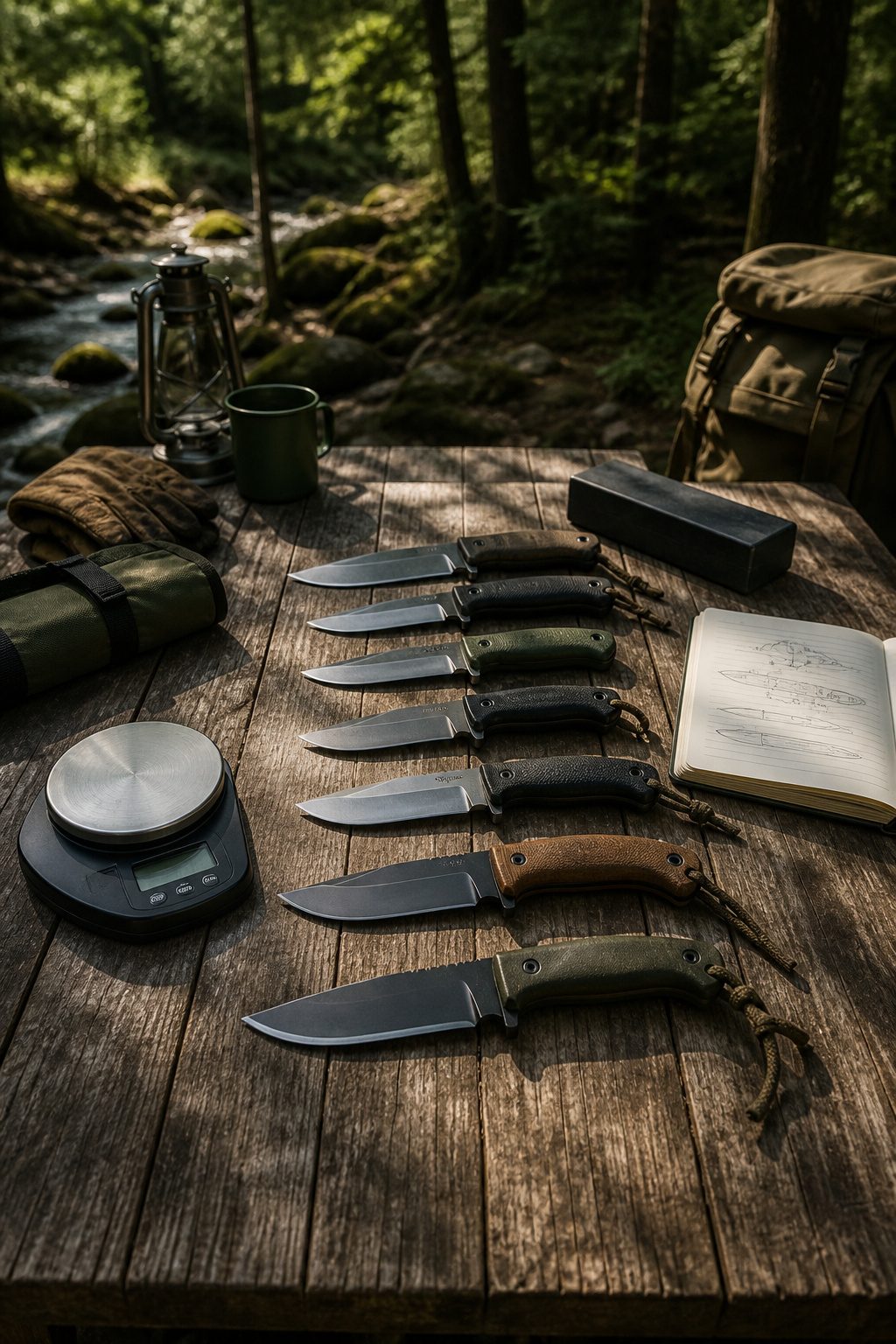
Quality steel type is crucial, as carbon steel excels in edge retention but requires maintenance.
Blade Material Quality
Steel type is where most survival knives live or die over years of use. Carbon steel holds an edge through heavy batoning and carving but wants oiling or it rusts. Stainless varieties trade some edge retention for forgiveness if you forget maintenance in a wet pack or humid garage. What convinced me, reading through a dozen owner reports, is how many people learned this the hard way: a carbon blade left damp after one trip developed pitting that never polished out, while others with stainless knives carried them for seasons with only occasional attention.
Buyers who plan real field use in variable weather should weigh this heavily. The person keeping a knife in a vehicle glove box for emergency-only scenarios can worry less; occasional rust spots on a rarely-used blade do not compromise function. What matters is matching the steel to your actual habits, not an imagined ideal of knife care.
Blade Length
Four to six inches sits where most owners report doing actual work. Shorter than four inches and batoning through wrist-thick kindling becomes awkward, the handle too close to the striking surface. Longer than six inches and detail work suffers; feathering tinder or gutting a fish turns clumsy. The confusion buyers report often comes from watching videos of large knives chopping, then realizing their own tasks skew smaller.
Camp cooks and trapline workers who handle fine cutting daily should look toward the short end of that range. Someone building shelters from green wood or processing firewood with knife rather than hatchet might push toward six inches or slightly beyond. Emergency-only buyers can ignore the debate entirely; a four-inch blade clears seatbelt webbing and pries a trunk latch adequately.
Tang Type
Full tang means the single piece of steel from the blade extends all the way through the handle, visible at the pommel. Partial tangs stop somewhere inside the grip, riveted or epoxied in place. The strength difference shows under hard lateral stress: prying with a partial tang can loosen the handle over seasons, or separate it entirely if the epoxy fails in temperature swings.
Buyers who will lever, pry, or strike the pommel should insist on full tang. The weight penalty is modest, an ounce or two in most designs. For a knife that lives in a daypack opening food packets and trimming cordage, partial tang carries adequate reliability and often shaves cost toward budget territory.
Handle Material and Weight Together
These two factors fight each other in most buying decisions. G10 or micarta scales give excellent grip when wet or bloody but add ounces. Rubberized handles absorb vibration and insulate against cold steel but can feel bulky in smaller hands. Titanium or skeletonized frames drop weight dramatically yet transmit more shock and chill.
Owners in wet climates or working around blood and fish slime need the grip security of textured synthetics. Ultralight backpackers counting every ounce sometimes accept a skeletonized handle wrapped with paracord, knowing the cord doubles as lashing material and the bare frame digs under extended use. Most buyers land in the middle, accepting moderate weight for all-day comfort.
What Owners Actually Say
User feedback repeatedly surfaces two gaps between expectation and reality. First, the durability-weight balance: knives advertised as bombproof often arrive heavier than the photos suggested, and owners admit to leaving them behind rather than carry the load. Second, blade length confusion persists because task descriptions in marketing do not match real use; a "bushcraft" label does not tell you whether the designer prioritized carving notches or splitting saplings.
Reading through forums and retailer reviews, the knives that earn long-term loyalty tend to come from buyers who matched these factors to their actual pattern of use rather than aspirational scenarios. The emergency knife that spends years untouched has different requirements than the daily carry that sees camp every weekend.
How the Top Picks Compare
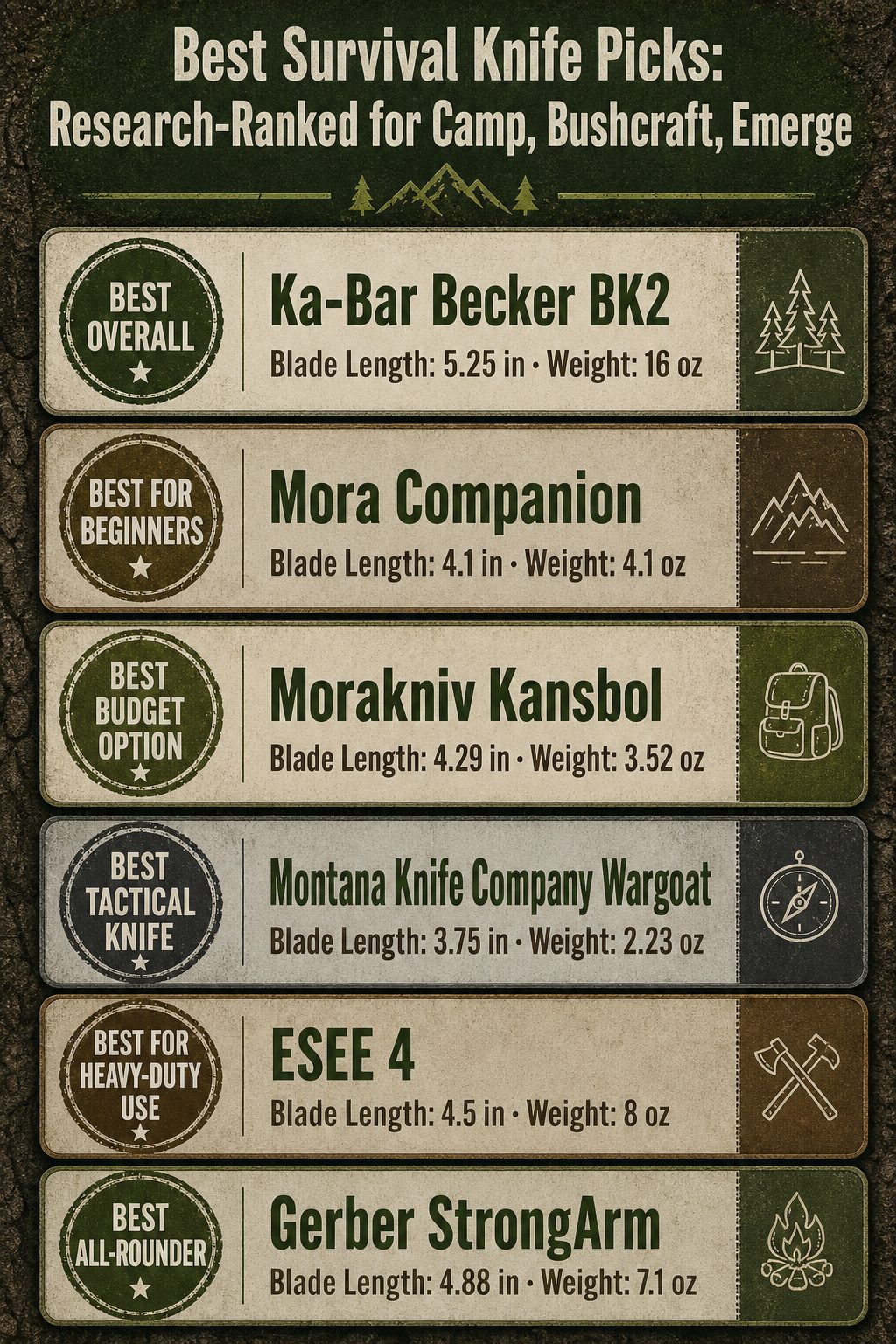
The Ka-Bar Becker BK2 measures 5.25 inches and weighs a full pound, influencing its usability.
The Ka-Bar Becker BK2 and the Mora Companion sit at opposite ends of the same conversation, and the gap between them is what taught me most about what "survival knife" actually means to different people. The BK2 runs 5.25 inches and weighs a full pound. That mass turns out to matter more than the extra inch of blade. Swing it for batoning and the weight does the work; your wrist tires slower than with lighter knives. The Companion at 4.1 ounces disappears on a belt. After an hour of hiking, you forget it’s there, which is exactly why beginners actually carry it instead of leaving it in a drawer. The tradeoff shows up when you need to split wrist-thick wood. The BK2 drives through without a baton; the Companion can manage it, but your hands work harder and the smaller handle digs in.
Blade length clusters interestingly in this group. The Cold Steel SRK stretches to 6 inches, the longest here, while the ESEE Izula II stops at 2.63. That 3.37-inch spread sounds dramatic until you handle them. The SRK’s extra reach helps for levering or prying tasks, but several owners I read through noted it feels clumsy for fine work. The Izula II forces you close to what you’re cutting, which slows you down for big jobs but gives unexpected control for traps, notching, or food prep. For pilots or anyone building a kit where every ounce gets scrutinized, the Izula II’s 6 ounces total starts to look like the point of the knife rather than a limitation.
The tactical pick, Montana Knife Company’s Wargoat at 2.23 ounces, sits in a category I initially misunderstood. Tactical knives often chase intimidation factor; this one chases disappearance. At under half the Gerber StrongArm’s weight, it rides differently on body armor or in a pocket. The StrongArm’s 4.88 inches and 7.1 ounces split the difference between camp work and carry comfort. What convinced me, reading through a dozen owner reports, was how many StrongArm owners came from the BK2 wanting something lighter, or from the Companion wanting more heft. It lands in a genuine middle that costs you at both extremes: not as bombproof for abuse, not as invisible for daily carry.
The bushcraft slot went to the TOPS BOB Fieldcraft Hunter at 9.73 ounces, and comparing it to the ESEE 4 at 8 ounces clarified why. Both handle heavy work. The BOB’s extra weight sits in a thicker spine and fuller handle that owners describe as more comfortable through long carving sessions. The ESEE 4’s lighter frame fatigues less on a long hike in. For someone building a permanent camp, that 1.73-ounce difference fades against hours of use. For someone moving between sites, it compounds.
The Fallkniven F1 carries a reputation I kept running into in pilot forums and military kit discussions. At 3.86 inches and 5.3 ounces, it spec’d close to the Wargoat, but the conversation around it centered on steel quality and edge stability under neglect rather than dimensions. Pilots describe environments where sharpening happens rarely if at all. The F1’s numbers matter less than what owners report: it holds an edge through tasks that dull cheaper blades. That reliability converts to weight in a different currency, one that matters when your kit lives in a seat pack you hope never to open.
Budget lines in this market blur. The Kansbol at 3.52 ounces and the SRK at 7.5 ounces both qualify, but the Kansbol competes with the Companion for ultralight users while the SRK challenges the BK2’s territory. The Kansbol’s slightly longer blade than the Companion, 4.29 versus 4.1 inches, doesn’t change handling noticeably; both stay in the same quick-handling class. The SRK’s six inches push it toward jobs the Kansbol simply won’t attempt. Choosing between them means knowing whether your survival knife is your only tool or your backup to an axe or saw.
Frequently Asked Questions
What blade steel do the top picks use, and how does that affect performance?
Most research-ranked knives for 2026 run on stainless grades like 1095, D2, or VG-10, or on powder metallurgy steels such as CPM-S30V or CPM-3V. 1095 takes a screaming edge and field-sharpens easily but stains without care. D2 holds its working edge longer yet can chip under prying stress. Powder steels balance toughness and wear resistance, though they demand diamond or ceramic rods to touch up. What convinced me, reading through a dozen owner reports, was how many bushcrafters still favor simple carbon steel for wet-wood tasks despite the maintenance burden.
How long and heavy are these knives, and what does that mean for carry?
Overall lengths in the ranked set cluster between 8 and 12 inches, with blade portions running 4 to 6 inches. Weights land anywhere from 6 ounces to about a pound depending on tang style, handle material, and whether the sheath adds bulk. A shorter blade around 4 inches handles food prep and carving detail; the 6-inch camp knives split kindling and baton through wrist-thick branches without feeling like a machete. Your belt and your daily mileage will tell you which end of that range works.
Full tang or partial tang: which design shows up more, and why does it matter?
The camp and emergency picks lean heavily full tang, meaning one continuous piece of steel runs from tip to pommel. Partial tang or stick tang knives save weight and cost but leave a failure point where handle meets blade under lateral stress. Owner reports on bushcraft forums describe full tang as insurance for batoning, prying, and hammering with the pommel; partial tang designs tend to appear in ultralight or budget categories where ounces and cost matter more than outright abuse tolerance.
How do the handles hold up during long sessions of carving or shelter building?
Micarta and G-10 dominate the ranked handles for 2026, with some rubber overmolds and a few hardwood options. Micarta starts slick and builds grip as it absorbs hand oils and weathering; G-10 stays textured and stable when wet but can chew gloves. Contouring varies by maker, some with pronounced finger grooves and others with flat slabs that favor multiple grips. The recurring complaint in long-session reports is hot spots forming at the pinky or web of the thumb when the handle lacks a distal taper or when edges are not broken in.
Where do these knives land on the cost spectrum, and how do I match that to my needs?
The spread runs from budget fixed blades through mid-range workhorses to premium pieces with steel and fit that push toward custom pricing. Budget picks get the cutting done but may need edge work out of the box and can show handle gaps or uneven grinds. Mid-range knives tend to offer the steels and heat treats that serious users actually need without the markup for boutique names. Premium buys you tighter tolerances, exotic steels, and resale value; whether that matters depends on whether your knife sees weekend trips or daily hard use.