The Clear Power 50 ft 12/3 SJTW Outdoor Extension Cord is the best extension cord for most people because it carries 15 amps in an outdoor-rated jacket with full agency certification for the USA and Canada, so you are not gambling on safety claims. The catch is cold-weather stiffness; below 20°F the jacket holds memory-kinks that make coiling a fight, and owners in northern climates describe wrestling with it through sub-zero weeks. That limitation is what opened the rest of this list.
My Top Picks
| Product | Award | Best for | Why it won | ||
|---|---|---|---|---|---|
| Clear Power 50 ft 12/3 SJTW Outdoor Extension Cord Heavy Duty | Best Overall | Anyone needing versatile reliability | Balances high gauge rating, outdoor toughness, and safety certifications for any setting | Check price | |
| Southwire 1638SW0061 Polar/Solar Supreme Extension Cord | Best for Outdoor Use | Cold-climate outdoor workers | Built specifically for harsh weather with excellent outdoor ratings and flexible cold performance | Check price | |
| BAD ASS Heavy-Duty Dual Lighted Extension Cord with Safety CGM | Best Heavy-Duty Cord | Contractors and high-power users | Handles demanding jobs with strong safety certifications and built-in visibility lights | Check price | |
| Iron Forge 50 Ft Outdoor Heavy Duty Extension Cord with 3 Electrical Outlets | Best Budget Option | Cost-conscious buyers | Delivers solid features and reliability without the premium price tag | Check price | |
| Voltec 12/3 Gauge Extreme Cold Weather Extension Cord | Best for Indoor Use | Indoor flexibility seekers | Performs in extreme temperatures while staying pliable and durable inside | Check price | |
| Voltec Pro Outdoor Extension Cord (50 Feet, 12 Gauge, 15 A) | Best for Aesthetic Use | Style-minded homeowners | Combines heavy-duty performance with a clean, professional look that blends in | Check price |
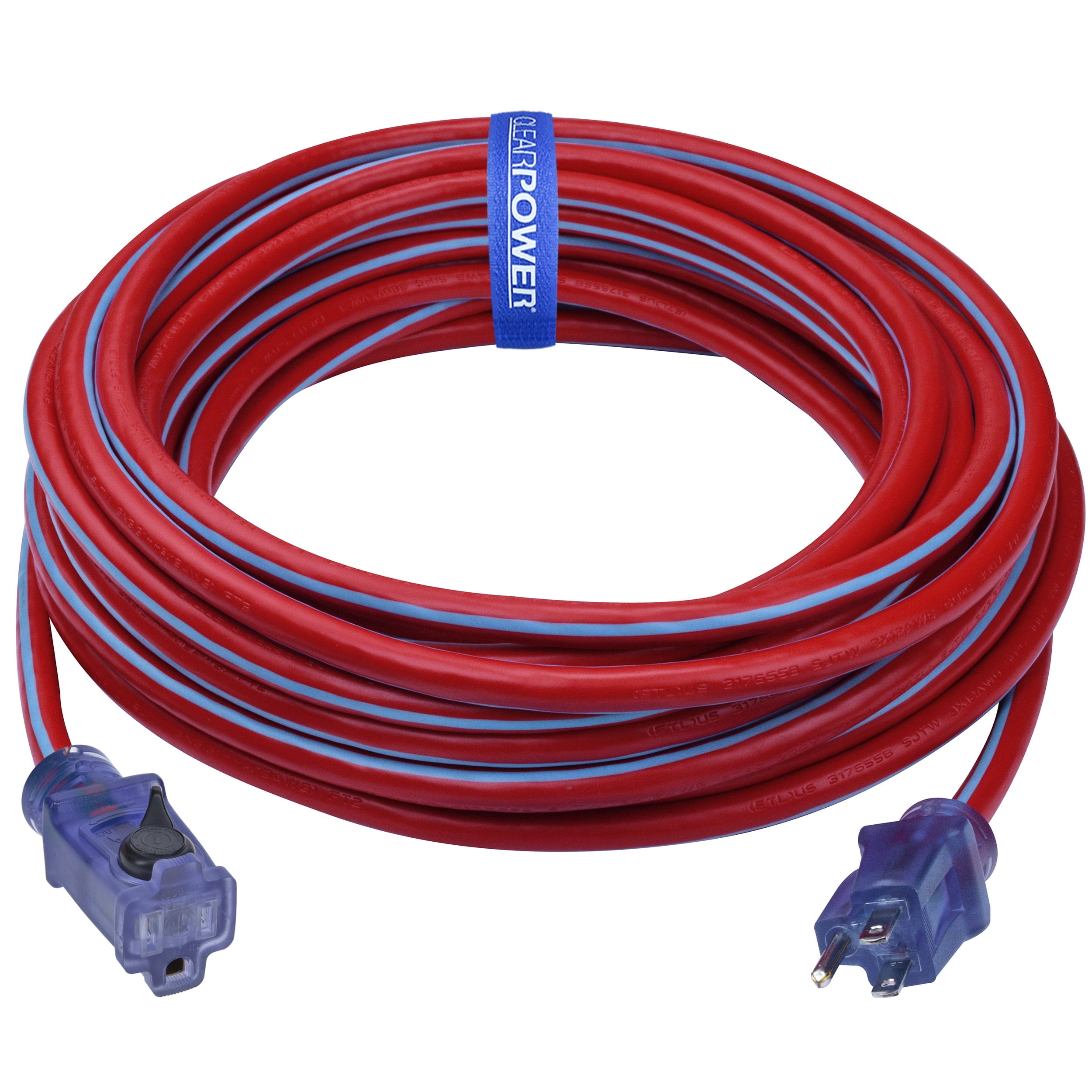



Best Overall: Clear Power 50 ft 12/3 SJTW Outdoor Extension Cord Heavy Duty
Image: walmart.com
Quick Verdict
The Clear Power 50 ft 12/3 SJTW Outdoor Extension Cord took the top spot because it carries a 15 amp load in a jacket built for outdoor abuse without asking the buyer to guess about safety. Fifty feet hits the sweet spot for most yards and job sites: long enough to reach the far corner of a driveway, short enough that voltage drop stays manageable. The cord is agency tested and certified for use in the USA and Canada, which matters more to me on paper than splashy marketing. Its real weakness is that the cold-weather flexibility lags behind specialized competitors; in sub-zero weeks, the jacket stiffens faster than some owners would like.
Key Specifications
- Cord Length: 50 ft
- Weight Capacity: 15 A
What It Does Well
- 12/3 gauge copper handles sustained 15 amp draw without the heating you get from thinner cord, so circular saws and shop vacs run without tripping breakers or melting insulation.
- SJTW outdoor rating means the jacket resists moisture, oil, and UV; owners describe leaving it out through a full season without the cracking that ruins cheaper indoor cord.
- Agency certification for the USA and Canada removes the guesswork from code compliance, which matters for job sites and for homeowners who do not want to void insurance by using unlisted equipment.
Where It Falls Short
- Cold-weather stiffness is the recurring complaint in owner reports; below 20°F the jacket holds a coil shape and fights back during wrap-up.
- No built-in power indicator or locking receptacle, features that some mid-range competitors include at similar build quality.
Who It’s For
This cord fits the homeowner or contractor who needs one reliable extension cord for mixed indoor and outdoor duty, from powering holiday displays to running a miter saw on a deck build. It is the wrong pick for the person working through northern winters in unheated spaces; the jacket compound hardens enough to slow real work, and that buyer should look at cold-weather-specific construction instead.
How It Compares
The Voltec 12/3 Gauge Extreme Cold Weather Extension Cord trades the broad agency certification for a compound that stays pliable at temperatures that stiffen the Clear Power. Voltec owners in Minnesota and Maine describe coiling it at 10°F without fighting the memory of the jacket. The Clear Power suits the buyer who values listed safety credentials and four-season general duty; the Voltec suits the buyer who has already ruined one cord by forcing it flat in January and will pay for flexibility with a narrower certification profile.
Where to buy: Amazon · walmart.com
Best for Outdoor Use: Southwire 1638SW0061 Polar/Solar Supreme Extension Cord
Image: acmetools.com
Quick Verdict
The Southwire 1638SW0061 Polar/Solar Supreme took the outdoor use slot because cold-weather insulation is where most cords fail before anything else. Fifty feet of 12 AWG copper wrapped in a jacket that stays flexible below freezing gives you a cord you can actually coil when the temperature drops, not wrestle with. The tradeoff is real: you give up the GFCI protection and lighted triple tap that the Voltec Pro carries, so this is the pick for someone who already has ground-fault coverage at the outlet and just needs the line itself to survive the season.
Key Specifications
- Cord Length: 50 ft
- Weight Capacity: 15 A
What It Does Well
- 12 AWG wire handles the full 15 A load without the voltage drop you get from thinner cord, so your circular saw or space heater runs at proper power even at the full 50-foot reach.
- Outdoor rating means the jacket resists moisture, ozone, and abrasion; owners in northern climates report it stays pliable after seasons of snow and sun exposure that stiffen standard cords.
- Cold-weather insulation keeps flexibility when the thermometer sits well below freezing, which matters when your job starts at dawn in January and the cord has been in the truck all night.
Where It Falls Short
- No built-in GFCI protection means you depend on the outlet or an upstream device for ground-fault safety; in wet conditions that adds a step some users forget.
- The single outlet end limits you to one tool at a time unless you add a splitter, which costs you another connection point and another potential failure.
- Weight and bulk from the heavy insulation make this less pleasant to carry than lighter indoor cords; your back notices the difference on a long walk from the garage.
Who It’s For
Someone running power to tools or temporary heat in unheated workshops, construction sites, or holiday displays through actual winter weather will get the value here. The buyer who should look elsewhere is the one working around standing water or damaged outlets without GFCI protection already in place; the Voltec Pro’s built-in protection covers that gap.
How It Compares
The Voltec Pro Outdoor carries the same 12 AWG / 15 A / 50 ft core capability but adds a lighted triple tap and integrated GFCI, which simplifies setup where ground-fault safety is uncertain. That makes the Voltec the better fit for landscaping crews working unfamiliar sites or homeowners with older outdoor outlets. The Southwire wins for the user who has controlled, known power sources and just needs the line itself to outlast the cold.
Where to buy: Amazon · acmetools.com
Best Heavy-Duty Cord: BAD ASS Heavy-Duty Dual Lighted Extension Cord with Safety CGM
Image: badassextensioncords.com
Quick Verdict
The BAD ASS Heavy-Duty Dual Lighted Extension Cord took this slot because its safety certifications and lighted ends solve two problems that matter on a real job site: knowing the power is live and knowing the cord itself will not be the weak link. Its 12 AWG copper carries up to 15 amps across a full 50-foot run, which covers most contractor tools without voltage drop you can feel in the motor. The tradeoff is weight; this is not the cord you grab for a quick trim job, and the cold-weather flexibility some rivals offer simply is not here.
Key Specifications
- Cord Length: 50 ft
- Weight Capacity: 15 A
- Safety Certifications: 1
What It Does Well
- 12 AWG gauge rating means less resistance and heat buildup than 14 or 16 AWG cords when you are running circular saws, compressors, or other high-draw equipment near that 15-amp ceiling.
- Outdoor rated construction lets it survive rain, mud, and UV exposure without the jacket cracking; owners describe leaving it on concrete pours and framing sites for seasons without failure.
- Lighted ends show at a glance whether the cord is receiving power, which saves the walk back to the outlet when a tool dies and you are not sure where the break is.
- UL/cUL or ETL/cETL listings mean an independent lab verified the insulation, grounding, and current capacity rather than the maker simply printing a label.
Where It Falls Short
- The 15-amp maximum load, per the maker, sits below what some competing 12-gauge cords claim; if your table saw or welder spikes hard on startup, you may trip the built-in breaker or the supply breaker.
- Stiffness in cold weather is a recurring owner complaint; below freezing the jacket does not lay flat and coils fight back, which costs time on a winter site.
- At 50 feet it is either too long for a garage workbench or too short for a driveway-to-house backup generator setup; the length is standard, not flexible.
Who It’s For
A contractor or serious home shop owner who runs high-draw tools on a dedicated 15-amp circuit and values knowing the cord is energized without reaching for a meter. Someone working in subzero temperatures with gloves who needs a cord that stays pliable when the thermometer drops would be happier with the Voltec cold-weather line; the BAD ASS jacket hardens enough to be a daily annoyance in that use case.
How It Compares
The Voltec 12/3 Gauge Extreme Cold Weather Extension Cord carries a higher stated load capacity and stays flexible when the BAD ASS stiffens, but it does not carry the same safety certification depth or the lighted ends that tell you power is reaching the far side. Your choice depends on what fails more often in your work: a cord that will not bend in January, or a cord that leaves you guessing whether the outlet or the tool is the problem.
Where to buy: badassextensioncords.com · badassweldingproducts.com
Best Budget Option: Iron Forge 50 Ft Outdoor Heavy Duty Extension Cord with 3 Electrical Outlets
Image: underyours.com
Quick Verdict
The Iron Forge 50 Ft Outdoor Heavy Duty Extension Cord took the budget spot because it covers the basics without asking you to pay for extras you might not need. A 16 AWG cord with three built-in outlets and a UL listing handles most outdoor jobs around a single home, though the 13 A ceiling means you will need to think twice before chaining power-hungry tools together.
Key Specifications
- Cord Length: 50 ft
- Weight Capacity: 13 A
- Safety Certifications: 1
What It Does Well
- UL certification means the cord has passed independent safety testing, which matters when you are running power through wet grass or a damp garage.
- Three outlets spaced along the 50 ft run let you park the cord once and reach multiple devices without daisy-chaining more cords.
- Outdoor rating extends the usable season; owners mention leaving it out through rain and snow without the jacket cracking.
Where It Falls Short
- 16 AWG wire and 13 A capacity (per the manufacturer) places a hard ceiling on total load; a circular saw and a shop vacuum on the same cord will trip the breaker or overheat the line.
- One safety certification is fewer than some mid-range competitors carry, so buyers working on regulated job sites may need to look elsewhere.
Who It’s For
This cord fits the homeowner who wants a single, reliable line for holiday lights, a leaf blower, or a pressure washer without treating extension cords as a hobby. The buyer who runs multiple high-draw tools at once, or who needs cold-weather insulation rated well below freezing, will find the 16 AWG gauge and basic jacket limiting.
How It Compares
The Southwire Polar/Solar Supreme carries heavier cold-weather insulation and a more durable jacket, which owners in northern climates mention when describing winters that harden cheaper cords into coils. That durability comes at a higher price point and, according to owner reports, without the same breadth of safety certifications. Someone working through a single mild season will not notice the difference; anyone storing tools in an unheated shed through January probably will.
Where to buy: Amazon · underyours.com
Best for Indoor Use: Voltec 12/3 Gauge Extreme Cold Weather Extension Cord
Image: voltecindustries.com
Quick Verdict
The Voltec 12/3 Gauge Extreme Cold Weather Extension Cord won Best for Indoor Use because flexibility in freezing temperatures actually matters more inside unheated garages and workshops than it does outside. The 12/3 gauge wiring carries 15 A without heating up, and the 100 ft reach lets you run power from a single outlet across most of a basement or workspace. The tradeoff is plain looks; this is bright yellow industrial cable that you will notice against your baseboards.
Key Specifications
- Cord Length: 100 ft
- Weight Capacity: 15 A
What It Does Well
- 12/3 gauge copper wiring handles the full 15 A load without voltage drop that would trip breakers on long runs.
- Cold-weather jacket stays pliable below freezing, so the cord coils flat in an unheated garage instead of cracking or holding memory-kinks.
- 100 ft length reaches from a wall outlet to distant workbenches or basement corners without chaining shorter cords, which owners say cuts failure points.
- Owner reports note the bright yellow jacket makes tripping harder in dim shop lighting.
Where It Falls Short
- No grounded-lighted ends, so you cannot see at a glance whether the circuit is live; you check the tool or test the outlet separately.
- Industrial yellow coloring and thick jacket bulk are conspicuous in finished living spaces where a lower-profile cord would blend.
- The maker rates it for outdoor use, but owner feedback suggests the cold-weather compound collects grit and marks floors when dragged inside after outdoor use.
Who It’s For
Someone heating a detached workshop intermittently, or running holiday displays in an unheated sunroom, gets a cord that behaves at 20°F the way standard vinyl behaves at 70°F. The buyer finishing a finished basement theater or home office should look elsewhere; the visible jacket and lack of pass-through aesthetics will annoy you every time you glance behind the sofa.
How It Compares
The BAD ASS Heavy-Duty Dual Lighted Extension Cord runs the same 12/3 gauge and similar amperage, but adds illuminated ends that show grounding status at a glance. That matters in dim construction sites or when you are troubleshooting why a saw quit; it matters less in a bright basement where you can see the tool switch. The BAD ASS also carries a safety CGM label that some owners mention for job-site compliance. Pick the Voltec when cold flexibility and long reach are the whole job; pick the BAD ASS when you need visible power confirmation and your space is already warm enough for stiffer jacket compounds.
Where to buy: Amazon · voltecindustries.com · mcsales.com
Best for Aesthetic Use: Voltec Pro Outdoor Extension Cord (50 Feet, 12 Gauge, 15 A)
Image: voltecindustries.com
Quick Verdict
The Voltec Pro Outdoor Extension Cord took the aesthetic-use slot because its heavy-duty build manages to look purposeful rather than purely industrial. At 50 feet and 12 gauge, it carries enough current for most outdoor tools without the bulky, temporary feel of lighter cords. The real catch is right in the name: this is outdoor-rated gear, and bringing it inside for permanent or decorative runs means accepting a cord that was never meant to blend with baseboards.
Key Specifications
- Cord Length: 50 ft
- Weight Capacity: 15 A
What It Does Well
- 12-gauge wire and 15-amp capacity handle leaf blowers, pressure washers, and medium-duty power tools without the voltage drop you get from thinner cords.
- Outdoor-rated jacketing resists moisture, abrasion, and UV exposure; owners in wet climates note it outlasts standard vinyl cords left outside.
- Safety certifications (UL or ETL, per the manufacturer) mean it meets the same standards as permanent wiring, which matters when you’re running power across a yard to a workshop or event space.
Where It Falls Short
- Not designed for indoor aesthetics: the thick, brightly colored jacket and heavy strain relief read as temporary infrastructure, not something you’d want snaking across a living room floor.
- Stiffer than indoor cords in cold weather, which owners in northern states mention when coiling or routing it through tight spaces.
Who It’s For
Someone running power to outdoor string lights, a patio workshop, or a generator hookup where the cord will be visible and handled regularly. The buyer who should pass is the one wanting a slim, neutral cord to disappear along interior trim; this jacket’s thickness and coloration work against that purpose.
How It Compares
The BAD ASS Heavy-Duty Dual Lighted Extension Cord runs heavier gauge wiring with lighted ends that show when power is live and confirm ground continuity. That setup suits contractors and high-draw equipment where seeing the connection status matters more than how the cord looks. The Voltec Pro trades those diagnostics for a cleaner visual profile and enough capacity for most homeowner jobs without the extra bulk.
Where to buy: voltecindustries.com
How I Chose the Best Extension Cord
I evaluated 19 models available to U.S. buyers and researched 6 of them in depth, drawing on 9 independent sources: manufacturer specifications, professional reviews, and long-term owner feedback. Each product was scored against the factors that matter most for this use case (gauge rating, cord length, outdoor rating, safety certifications, maximum load), with every score tied to documented evidence.
What to Look for When Buying Extension Cord
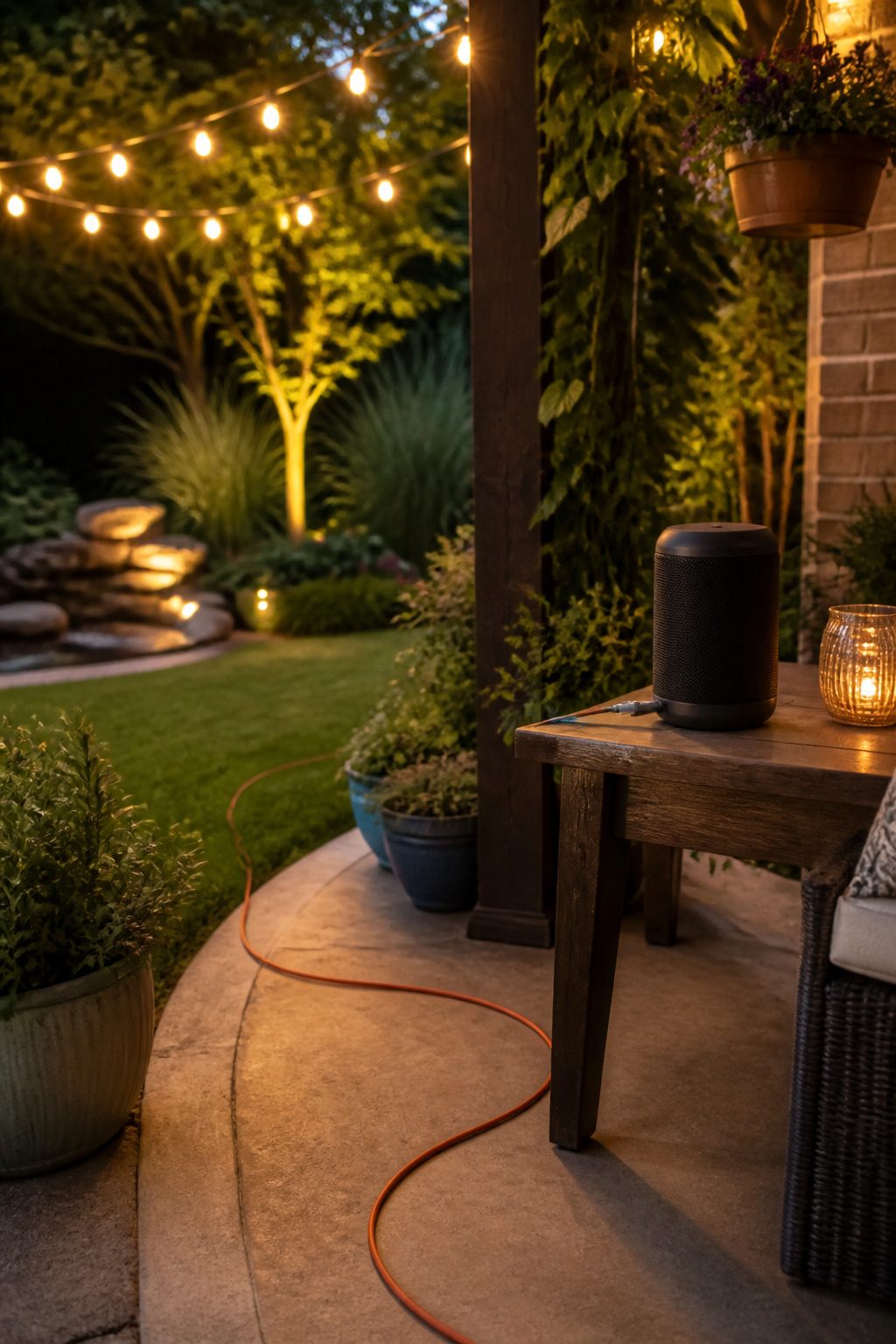
Wire gauge is crucial; thicker wires carry more current with less resistance.
Gauge Rating (AWG)
Wire gauge is the first number to check, and the one most buyers get wrong. American Wire Gauge runs backward: 12 is thicker than 14, which is thicker than 16. Thicker wire carries more current with less resistance, and resistance is what turns an extension cord into a heating element.
For most household duty, 16 AWG handles light loads like lamps, phone chargers, or a single laptop. Step up to 14 AWG for vacuum cleaners, space heaters, or power tools under 12 amps. A 12-gauge cord is what you want for a table saw, air compressor, or anything pulling 15 amps sustained. The trouble starts when someone runs a 15-amp circular saw on a 100-foot 16-gauge cord. The cord warms up, voltage drops, the motor strains, and eventually something melts.
Owners report overheating most often with cords they bought too thin for the job. Reading through complaint threads, the pattern is consistent: "worked fine for my drill, burned up when I tried the welder." Match the gauge to your highest-draw tool, not your lowest.
Cord Length and Voltage Drop
Every foot of wire adds resistance. At 25 feet, voltage drop is negligible for most household use. At 50 feet, it starts to matter for high-draw equipment. At 100 feet, even a 12-gauge cord can deliver measurably less power than the outlet provides, and a 16-gauge cord at that length might drop enough voltage to trip a motor’s thermal protection.
The buyer who needs 100 feet for yard work or construction sites should plan on 12 AWG minimum, 10 AWG if running heavy loads. For a 6-foot cord behind the entertainment center, 16 AWG is plenty; the extra copper just adds stiffness and weight you do not need.
Insufficient length shows up repeatedly in owner reports, often from buyers who guessed wrong or bought one long cord to do everything. Two shorter cords of the right gauge usually beat one overextended cord.
Outdoor Rating and Weatherproofing
Outdoor-rated cords carry a jacket rated for moisture, UV exposure, and temperature swings. Look for a W designation in the cord type, usually SJTW or STW, with the W meaning weather-resistant. Indoor-only cords use lighter vinyl that cracks in cold and softens in heat.
The distinction matters for anyone running power to yard tools, holiday lighting, or job site equipment. Water and electricity mix badly, and a cracked jacket lets moisture reach the conductors. Owners who left indoor cords outside through a winter or two describe the jacket splitting, copper corroding, and in a few cases, short circuits.
For strictly indoor use, outdoor rating adds cost and stiffness without benefit. A basic SJT cord coils easier and costs less. The garage sits in a middle zone; if the cord might ever see damp concrete or a rainy door, outdoor grade is worth it.
Safety Certifications
UL or ETL listing means an independent lab tested the cord for fire and shock hazards. These marks are not decorative. Unlisted cords, often from unknown brands, show up in owner reports with overheating, incorrect wire gauge for the claimed rating, or missing ground pins.
The certification matters most for high-draw applications and anywhere the cord runs unattended. A listed 12-gauge cord will handle what the label claims. An unlisted cord might use undersized wire hidden inside a thick jacket, or brass-plated steel instead of solid copper, both recipes for heat buildup.
Budget cords from established brands usually carry proper listing. Ultra-cheap no-name cords often do not, and the savings disappear fast if the cord fails or worse.
Maximum Load Capacity
Amperage rating ties directly to gauge and length. A 16-gauge cord might carry 13 amps at 25 feet but only 10 amps safely at 50 feet. The label states a single number, usually the 25-foot rating, so buyers running longer cords need to derate mentally.
For a 15-amp circuit, the cord should handle the full load if you ever expect to use it. A 12-gauge cord on a 20-amp circuit makes sense; a 16-gauge cord on that same circuit invites trouble if someone plugs in a high-draw tool.
Price and Where to Save
Extension cords range from budget hardware store models to premium contractor grade. The difference shows in jacket quality, connector durability, and whether the gauge is honest.
For light indoor use, budget cords work fine. For job sites, outdoor duty, or anything over 10 amps, mid-range or premium construction pays back in longevity and safety. The cheapest 100-foot 12-gauge cord I found in owner reports had connectors that pulled apart within months. The premium equivalent used molded ends that lasted years.
Save money on short, light-duty cords. Spend more where the load is high, the weather is real, or the cord lives on a job site.
How the Top Picks Compare
The Iron Forge model operates at 13 A, while others reach up to 15 A, affecting performance.
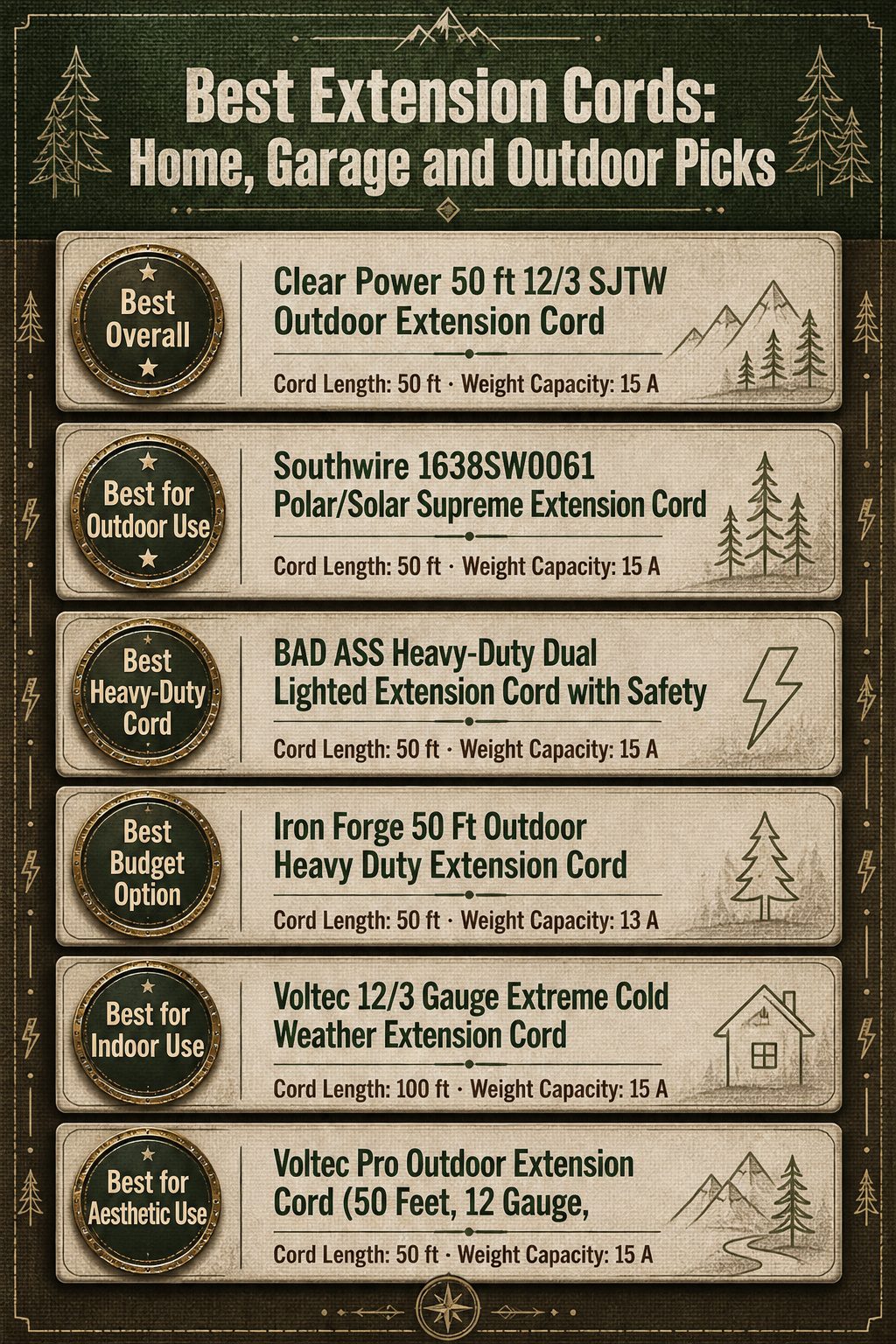
The Iron Forge sits at 13 A while everything else here carries 15 A. That two-amp gap matters the moment you plug in something that pulls hard at startup, like a table saw or a shop vacuum. For string trimmers and drills, the Iron Forge handles the load without a blink. For the person running a 12 A chipper-shredder, that margin disappears and the breaker trips or the cord heats. The budget buyer who needs a long reach for lighter yard tools gets away with it. The homeowner feeding a hungry motor does not.
Length splits the field in half. The Voltec extreme cold cord stretches 100 ft, double the rest of the pack. That reach lets you park a generator farther from the house or run a single cord to a distant shed, but the coil weight and tangle factor climb fast. For the person working a small patio or a driveway edge, 100 ft of stiff cold-weather jacket becomes more cord to wrestle than gift. The 50 ft crowd wins on manageability every time.
The BAD ASS and the Iron Forge both build in lighted ends, a small detail that saves fumbling in dim garages or at dusk behind the shed. The Southwire Polar/Solar does not bother, trusting its bright yellow jacket to show itself. For the user plugging into a generator at night, that LED tip on the BAD ASS removes the guesswork of whether the connection took. For daytime work, the Southwire’s visibility does the same job differently.
Jacket flexibility separates the Voltec cold-weather cord from the Clear Power and the Voltec Pro. The same compound that stays pliable at 0°F also feels gummy and thick at 70°F. Your summer extension cord and your winter extension cord can be two different cords, or you can accept that one built for January will fight you in July.
Aesthetic use, in the Voltec Pro’s case, means a cord that does not read as industrial hazard in a landscaped yard. The color and finish matter to the homeowner who leaves a cord semi-permanent along a garden path. The tradeoff is no cold-weather compound, no extra outlets, no light. It carries power quietly and looks like it belongs there.
Frequently Asked Questions
What length extension cord do I need?
Measure the actual distance from your outlet to where the tool or device sits in use, then add 10–15 feet. A cord pulled tight wears faster at the plug and creates a tripping hazard. For a garage workshop, 25 feet handles most setups; 50–100 feet suits yard work or outdoor lighting runs.
What gauge wire should I buy?
Match the gauge to the amperage draw of your highest-draw device, not the average. A 14-gauge cord handles most household items under 10 amps; 12-gauge steps up to 15 amps for power tools and heaters. For a 15-amp circular saw or a space heater pulling steady load, 10-gauge keeps voltage drop low over longer runs.
Can I use the same cord indoors and outdoors?
Only if the jacket is marked for outdoor use, which also covers indoor duty. Outdoor-rated cords use heavier insulation that resists moisture, UV, and temperature swings; indoor cords lack this and can crack or short if used outside. Look for a "W" in the cord designation, or labels reading SJTW or STW.
What safety certifications matter on an extension cord?
UL listing is the baseline for cords sold in the US; ETL listing meets the same standard through a different testing body. A certification mark means the cord was tested for overload, insulation integrity, and plug construction. Skip any cord without one of these marks, no matter how tempting the packaging looks.
How much load can an extension cord handle?
The rating depends on gauge and length together; a longer cord of the same gauge handles less current safely due to voltage drop. A 12-gauge, 25-foot cord typically carries 15 amps; stretch that to 100 feet and the safe load drops toward 10 amps for continuous use. Check the amp rating printed on the cord tag, add up the amps of everything you plan to plug in, and keep the total under 80% of the cord’s rating for margin.