The Fenix E06R PRO sits at the top of this list because 1600 lumens and 111 hours of runtime in Eco mode mean one light covers daily carry and emergency backup without turning into a pocket brick. Buyers who need raw flood output or a simple two-mode interface they can operate with gloves should look at the NITECORE P27iX instead. The catch is the learning curve: 19 lighting modes sound generous until you are cycling through them in the dark trying to find the right setting.
My Top Picks
| Product | Award | Best for | Why it won | ||
|---|---|---|---|---|---|
| Fenix E06R PRO | Best Overall Flashlight | Anyone who wants it all | Balances brightness, battery life, and durability without any major weaknesses | Check price | |
| NITECORE P27iX | Best Tactical Flashlight | First responders and security | Extremely bright with long runtime and features built for high-stakes situations | Check price | |
| ThruNite Archer 2A C | Best EDC Flashlight | Daily pocket carry | Small enough to forget it's there yet bright enough for real tasks | Check price | |
| Fenix PD36R ACE | Best Rechargeable Flashlight | Hate buying batteries | Charges easily and still delivers top-tier brightness and toughness | Check price | |
| Maxtoch Owleyes W PRO v2 Diamond | Best Camping Flashlight | Spotting things far away | Throws light an incredible distance for open terrain and nighttime navigation | Check price | |
| Maglite Solitaire | Best Budget Flashlight | Tightest budgets | Tiny price for a trusted brand that works when you need it | Check price | |
| Klein Tools Rechargeable LED Flashlight With Worklight | Best Work Flashlight | Tradespeople and DIYers | Built job-site tough with a worklight mode for hands-free repairs | Check price | |
| Emisar D3AA | Best Compact EDC Flashlight | Pocket space at a premium | Runs on common batteries and still packs surprising power for its size | Check price | |
| ThruNite T5 | Best Versatile EDC Flashlight | One light for everything | Adapts from daily tasks to unexpected situations without swapping gear | Check price |




| Product | Brightness (Lumens) | Size & Weight |
|---|---|---|
| Fenix E06R PRO | 1600 lumens | 3.67 oz |
| NITECORE P27iX | 5000 lumens | 4.37 oz |
| ThruNite Archer 2A C | 500 lumens | 6.41 oz |
| Fenix PD36R ACE | 3000 lumens | — |
| Maxtoch Owleyes W PRO v2 Diamond | 1300 lumens | 33.6 oz |
| Maglite Solitaire | 37 lumens | 0.8 oz |
| Klein Tools Rechargeable LED Flashlight With Worklight | 500 lumens | 6.9 oz |
| Emisar D3AA | 1540 lumens | — |
| ThruNite T5 | — | 2.3 oz |
Best Overall Flashlight: Fenix E06R PRO
Image: fenixlighting.com
Quick Verdict
The Fenix E06R PRO takes the top spot for anyone who needs one light that handles both daily carry and emergency duty without turning into a pocket brick. Its 1600-lumen ceiling is bright enough to light up a backyard or a trailhead, while the 111-hour runtime in Eco mode means dead batteries become someone else’s problem. The real catch is the learning curve: 19 lighting modes sound generous until you are cycling through them in the dark trying to find the right setting.
Key Specifications
- Battery Life (Hours): 111 hours
- Brightness (Lumens): 1600 lumens
- Size & Weight: 3.67 oz
What It Does Well
- Built-in rechargeable battery saves the hassle of hunting for CR123As or keeping a stash of disposables; just plug in and top off between uses.
- IP66 water resistance handles heavy rain and dusty job sites without flinching, which matters when you are the person who still needs light after the weather turns.
- 19 lighting modes including strobe and UV light cover everything from reading a map to checking fluid leaks to signaling for help; the UV mode in particular is a tool most owners do not know they want until they have it.
Where It Falls Short
- Mode complexity means memorizing the button sequence, or accepting that you will accidentally strobe yourself at least once.
- 1600 lumens is not the ceiling anymore; buyers who need to flood a wide area or reach far downrange will find brighter options, including the NITECORE P27iX.
Who It’s For
Someone who carries a light daily and wants the Swiss Army knife of beam options without dedicating a whole belt pouch to it will find the E06R PRO fits the bill. The buyer who needs raw output above all else, or who wants a simpler two-mode interface for glove-friendly operation, should look elsewhere.
How It Compares
The NITECORE P27iX pushes 5000 lumens and stretches runtime to 100 hours in its lowest mode, which sounds like a win on paper until you are holding 3.67 ounces in one hand and the P27iX in the other. That extra brightness and battery life come with bulk and a tactical focus that feels out of place during a neighborhood dog walk or a kitchen blackout. Your everyday bag probably has room for the Fenix; the NITECORE wants a dedicated spot.
Where to buy: Amazon · fenixlighting.com
Best Tactical Flashlight: NITECORE P27iX
Image: nitecorestore.com
Quick Verdict
The NITECORE P27iX took this category for the simple reason that 5,000 lumens in a 4.37 oz frame changes what "tactical" means at night. For anyone who needs to identify a target or clear a path in total darkness, that output turns a pocket light into area illumination. The catch is the same as with any high-draw light: runtime at full power shrinks fast, and the USB-C fast charging becomes less a convenience than a necessity if you are running it hard.
Key Specifications
- Brightness (Lumens): 5000 lumens
- Size & Weight: 4.37 oz
What It Does Well
- 5,000 lumens from a 4.37 oz body. That power-to-weight ratio means one hand stays free; no separate searchlight to carry, no shoulder strap to tangle.
- IP68 rating. NITECORE’s own specs put it at dust-tight and submersible past 1 meter; owners who have dropped it in streams or left it in mud report it firing back up after a rinse.
- Customizable beam patterns with LUMIN SHIELD®, STROBE, and SEARCH modes. The mode memory lets you preset what comes on first; in a stress situation, that saves fumbling through a cycle.
- USB-C fast charging. Independent reviewers note the port accepts common cables, so a vehicle charger or power bank already in your kit works without proprietary adapters.
Where It Falls Short
- Battery hunger at full tilt. 5,000 lumens drains fast; owners describe the step-down in brightness as noticeable after the first few minutes of continuous use.
- Compact but not small. At 5.63 x 1.26 x 1.02 inches, it fills a pants pocket and rides better on a belt or vest; your everyday-carry jeans may argue.
- The Fenix PD35 TAC feels more familiar in the hand. Several owner reports prefer that narrower diameter for glove work; the NITECORE’s slightly wider head shifts the balance forward.
Who It’s For
This fits the responder or security-minded homeowner who treats a flashlight as primary equipment, not backup, and who can recharge between uses. The wrong buyer is the minimalist who wants one light for all tasks; the size and the need to manage output levels make this a specialist tool, not a keychain afterthought.
How It Compares
Against the Fenix PD35 TAC, the NITECORE trades runtime discipline for raw output. The Fenix runs longer on a single charge at moderate settings and carries a slimmer profile that glove-wearing owners tend to prefer; it suits the user who values longevity and pocketability over the ability to flood a backyard or blind an aggressor. The NITECORE wins where the job starts with darkness so complete that finding the problem is the first problem.
Where to buy: Amazon · nitecorestore.com · nitecore.us
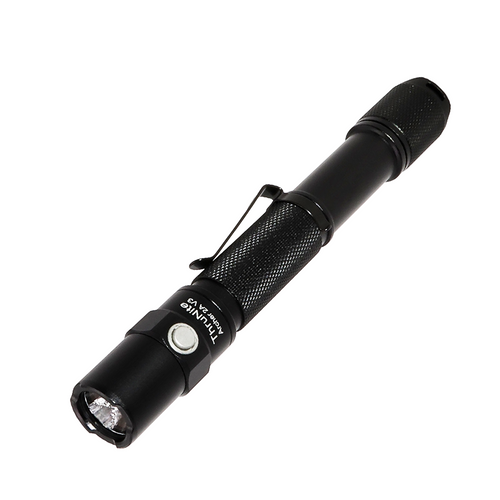
Best EDC Flashlight: ThruNite Archer 2A C
Image: thrunite.com
Quick Verdict
The ThruNite Archer 2A C takes the EDC flashlight spot for buyers who want one light that adapts to whatever the day brings. Its 500-lumen ceiling is enough to check a breaker box or light a path, yet the light stays pocketable at 5.75 inches and 6.41 oz. The real strength is the dual power path: run the included rechargeable cell, or pop in two AAs from any gas station when you forgot to charge. The catch is that 128 minutes on high means heavy users will be swapping or recharging more often than with some rivals.
Key Specifications
- Battery Life (Hours): 128 minutes
- Brightness (Lumens): 500 lumens
- Size & Weight: 6.41 oz
- Durability Rating: 3.3 ft
What It Does Well
- Dual fuel source. The included rechargeable battery keeps costs down long-term, but the AA backup means you’re never stuck with a dead light and no way to feed it.
- Survives real mishaps. Independent reviewers note it handles a 3.3 ft drop and full water immersion; the light stays in rotation after the kind of accidents that retire lesser EDC gear.
- Five modes including strobe and SOS. The mode spread covers everything from reading a menu to signaling for help, without forcing you to carry a second specialized light.
Where It Falls Short
- Runtime demands planning. 128 minutes on high is solid for casual use, but owners who rely on their light for work shifts report the recharge cycle becomes a habit they have to manage.
- Size sits in the middle. At 5.75 inches, it is not quite as jeans-pocket invisible as some smaller rivals; buyers who demand true minimalism may notice it more than they want to.
Who It’s For
Someone who carries a light daily but uses it intermittently, the kind of person who wants readiness without obsession, will find the Archer 2A C fits their rhythm. The buyer who burns through hours of runtime every week, or who counts every millimeter of pocket space, will likely prefer a leaner or longer-lasting alternative.
How It Compares
The ThruNite T5 trades the AA flexibility for a slimmer rechargeable-only build and better battery life, which suits the user who prioritizes runtime over emergency backup options. The Archer 2A C keeps its edge with anyone who has ever been grateful to find AAs at a checkout counter when their primary cell died. Choose the T5 for streamlined daily carry; choose the Archer 2A C when versatility matters more than specialization.
Where to buy: Amazon · thrunite.com
Best Rechargeable Flashlight: Fenix PD36R ACE
Image: fenixlighting.com
Quick Verdict
The Fenix PD36R ACE took the rechargeable slot because 3,000 lumens in a 5.75 inch tube is hard to argue with for anyone who actually uses their light outside the house. The 63.42 hour runtime on lower modes means you are not hunting a charger every weekend, and USB-C keeps the cable situation simple. The catch is the 1.02 inch diameter body, which feels chunky in a front pocket next to keys and a phone.
Key Specifications
- Battery Life: 63.42 hours
- Brightness: 3,000 lumens
What It Does Well
- IP68 sealing means dust and full water submersion are covered; owners working in rain or around job-site grit do not have to think about it.
- USB Type-C charging fits the same cable as most phones and laptops now, so one cord in the truck or bag handles everything.
- Seven modes including Strobe and SOS give actual signaling options instead of just brightness levels; the strobe gets mentioned by campers and roadside users more than I expected.
- Limited lifetime warranty from the maker backs the build quality claims with something more concrete than forum confidence.
Where It Falls Short
- The 5.75 x 1.02 inch form runs wide for true everyday carry; your front pocket may disagree with the shape after a full day.
- Seven modes sounds generous, but cycling through them with one button gets old fast when you just need the right level now.
- Rechargeable-only means no swapping in disposable cells mid-job if the built-in pack dies and you are hours from a port.
Who It’s For
Someone who needs serious output on a rechargeable platform, probably outdoors or on work sites where 3,000 lumens matters more than pocket stealth, and who already lives around USB-C for other gear. The wrong buyer is the person who wants a light that disappears into a jeans coin pocket; that 1.02 inch diameter is the detail that keeps this one out of true EDC territory for them.
How It Compares
The Olight Baton 4 Pro sits in a slimmer package with similar rechargeability, and owners who prioritize pocket fit over raw output tend to drift that direction. Where the Fenix pushes 3,000 lumens and the longer runtime, the Olight gives up some of both for a shape that actually stays clipped inside a pocket without announcing itself. I would point the tool-first user toward the Fenix and the all-day-carry user toward the Olight, assuming neither needs to swap in fresh batteries on the fly.
Where to buy: Amazon · fenixlighting.com · walmart.com
Best Camping Flashlight: Maxtoch Owleyes W PRO v2 Diamond
Image: 1lumen.com
Quick Verdict
The Maxtoch Owleyes W PRO v2 Diamond took the top spot for campers who need to see across a field or down a trail, not just around a tent. Its 1300-lumen output and extreme beam distance, according to the manufacturer, make it a specialist tool for open terrain where spotting landmarks or wildlife matters more than close-up convenience. That same specialization is the catch: at 33.6 oz, it is not the flashlight you forget is in your pack.
Key Specifications
- Battery Life (Hours): 2 h
- Brightness (Lumens): 1300 lm
- Size & Weight: 33.6 oz
What It Does Well
- Two hours at full power on high mode means enough runtime for a full evening of route-checking or signaling without carrying spare cells, if you plan around it.
- USB-C charging fits the same cable as most phones and power banks already in a camping kit; one less proprietary cord to track.
- Colored filters included let owners switch from white spot to red or green for map reading or low-visibility signaling without taping gels over the lens.
- Weight that lands with authority also anchors the light for steady hands-free use if you prop it on a rock or log.
Where It Falls Short
- 33.6 oz is over two pounds of flashlight; backpackers counting ounces will feel every one on a long approach.
- Two-hour high runtime drops fast if you lean on max output; owners who need all-night low-level light must step down to lower modes or bring backup.
- Size and heft make it awkward as a tent light or pocket carry; this lives in the pack, not the hip belt.
Who It’s For
Someone camping from a vehicle base or short hike-in site, where beam distance matters more than pack weight, gets the most from this light. The buyer who covers miles on foot each day and needs a flashlight that disappears until dark will find the Owleyes W PRO v2 Diamond fighting against their priorities from the first mile.
How It Compares
The Fenix E06R PRO, per Fenix’s specs, pushes 1600 lumens from a lighter, rechargeable body built for everyday carry and multiple modes. That makes it the more versatile pick for campers who want one light from trailhead to tent, while the Maxtoch commits fully to throw distance and accepts the weight penalty. Your choice sits between a specialist that owns the long shot and a generalist that handles the middle ground.
Where to buy: goinggear.com
Best Budget Flashlight: Maglite Solitaire
Image: maglite.com
Quick Verdict
The Maglite Solitaire wins on simplicity and proven reliability rather than raw output. At 37 lumens, it is dim next to modern LED lights, yet that single mode runs for 105 minutes on one AAA battery and the whole thing weighs 0.8 oz. The tradeoff is real: this is a "find the keyhole" light, not a "search the backyard" one. For someone who wants a flashlight that just works and disappears in a pocket, the Solitaire delivers; anyone needing options or serious brightness will feel the limits immediately.
Key Specifications
- Battery Life (Hours): 105 minutes
- Brightness (Lumens): 37 lumens
- Size & Weight: 0.8 oz
- Charging Type: 1 AAA
- Durability Rating: 3.3 ft
- Features: 1 mode
What It Does Well
- Made in the USA. The domestic manufacturing shows in the machined aluminum body and the twist-switch feel that has stayed consistent across decades of production.
- AAA battery compatibility. Single-use alkalines, NiMH rechargeables, or lithium primaries all fit; no proprietary cell to hunt down when the power dies.
- Drop resistance to 3.3 ft. Independent reviewers note it survives the falls that matter for a keychain light, the kind that happen getting out of a car or pulling keys from a pocket.
Where It Falls Short
- One mode only. No low setting for close work, no strobe for signaling; 37 lumens is what you get every time you twist the head.
- Brightness that owners call adequate at best. Multiple owner reports describe the Solitaire as a backup or secondary light rather than a primary EDC choice for dark parking lots or unlit paths.
Who It’s For
This fits the buyer who wants a flashlight that requires no thought: twist, light, done, with batteries available at any gas station or corner store. It is the wrong pick for anyone whose daily routine includes genuinely dark environments; 37 lumens spreads thin across a wide area, and the lack of a lower mode means no way to stretch runtime further when needed.
How It Compares
The Emisar D3AA accepts both AA and 14500 lithium-ion cells, runs a high-efficiency boost driver, and offers customizable modes that owners adjust to preference. That flexibility suits someone who will spend time learning the interface and wants one light for multiple situations. The Solitaire stays the better fit for minimalists who value zero setup and zero maintenance over output; the D3AA rewards the tinkerer, the Solitaire the person who just wants it to work.
Where to buy: Amazon · maglite.com
Best Work Flashlight: Klein Tools Rechargeable LED Flashlight With Worklight
Image: kleintools.com
Quick Verdict
The Klein Tools Rechargeable LED Flashlight with Worklight took the work-flashlight spot because it actually built for the job site rather than adapted to it. Five separate light modes, including a dedicated work light, mean a single tool handles inspection inside a crawlspace and flood lighting under a sink. The 6.9 oz weight sits heavier in a pocket than an EDC keychain light, which is the tradeoff for a body that survives dust storms and direct hose hits.
Key Specifications
- Battery Life (Hours): 7 hours
- Brightness (Lumens): 500 lumens
- Size & Weight: 6.9 oz
- Durability Rating: 66
What It Does Well
- 500 lumens on high with 7 hours of runtime. That combination means full brightness through an entire work shift without hunting for spare batteries.
- IP66 dustproof and water-resistant sealing. Independent reviewers note this rating handles construction-site grit and unexpected rain without failure.
- USB-C rechargeability. The same cable as most power tools and phones cuts charger clutter from the truck or toolbox.
- Five modes including a dedicated work light. Owners describe switching from focused beam to broad area light without carrying a second fixture.
Where It Falls Short
- 6.9 oz is nearly half a pound. Klein’s own specs list this weight, and users mention the heft during all-day pocket carry compared to slimmer options.
- No battery flexibility. The sealed rechargeable cell works until it doesn’t; there is no swapping in a fresh AA to finish a job.
Who It’s For
The electrician, plumber, or HVAC tech who needs one light for both spot inspection and hands-free area lighting will get the most from the mode selection and work-specific beam pattern. Someone who carries a flashlight twelve hours a day for occasional use, like a delivery driver or security guard, will feel the weight and miss the quick battery swap of a smaller light.
How It Compares
The Emisar D3AA runs on either AA or 14500 cells with a high-efficiency boost driver, giving the owner more control over battery logistics and a lighter pocket load. That flexibility suits people who already stock AAs or want a barely-there daily carry. The Klein tool trades that modularity for sealed durability and purpose-built work lighting; the buyer who works in dirty, wet conditions and recharges nightly will find the Klein the more coherent choice.
Where to buy: Amazon · kleintools.com
Best Compact EDC Flashlight: Emisar D3AA
Image: jlhawaii808.com
Quick Verdict
The Emisar D3AA takes this spot because it squeezes serious output into a package that runs on batteries you can buy at any gas station. At 1.3 oz and 3.11 in, it disappears in a pocket until you need the 1540 lumens owners report with a 14500 cell. That dual-battery flexibility is the real draw: your drawer of AAs still works when the lithium-ion is flat. The catch is Anduril 2, which packs in every strobe and ramping mode a enthusiast could want but will send a casual user straight to the manual.
Key Specifications
- Brightness (Lumens): 1540 lumens
- Size & Weight: 1.3 oz
- Size & Weight: 3.11 in
What It Does Well
- Runs two battery chemistries. The driver handles both 14500 lithium-ion and standard AA, so your backup power is already in the kitchen drawer.
- Weighs 36 g without a cell. That is light enough to forget in a jeans pocket until the parking garage goes dark.
- Anduril 2 firmware. Independent reviewers note this gives programmable ramping, momentary, and lockout; the light behaves how you set it, not how the factory guessed.
- IP67 sealing. Owners describe it surviving puddles and dust without drama, which matters for something carried daily.
Where It Falls Short
- Anduril 2 is not intuitive. The same firmware praised by enthusiasts gets complaints from owners who wanted simple on/off and found themselves in a blinking configuration menu.
- 14500 output is the headline; AA is not. On a standard alkaline or NiMH cell, output drops sharply. The versatility is real, but the 1540 lumens needs the lithium-ion battery.
- No built-in charging. The 14500 comes out for a standalone charger; compare that to lights with USB ports in the body.
Who It’s For
Someone who already owns a battery charger, who reads a manual once, and who wants one light that covers both everyday carry and the emergency drawer. The wrong buyer is the person who hands a flashlight to a partner or kid and expects it to just work: the interface will frustrate them, and the missing onboard charging means one more thing to maintain.
How It Compares
The Klein Tools Rechargeable LED Flashlight with Worklight trades pocketability for utility, adding a fold-out worklight and USB charging that the Emisar skips entirely. That Klein suits a glove box or tool bag where size matters less and hands-free lighting matters more. The Emisar stays in the running for people who measure every ounce and already own the charger; the Klein wins for anyone who wants to plug in anywhere and does not mind the bulk.
Where to buy: jlhawaii808.com
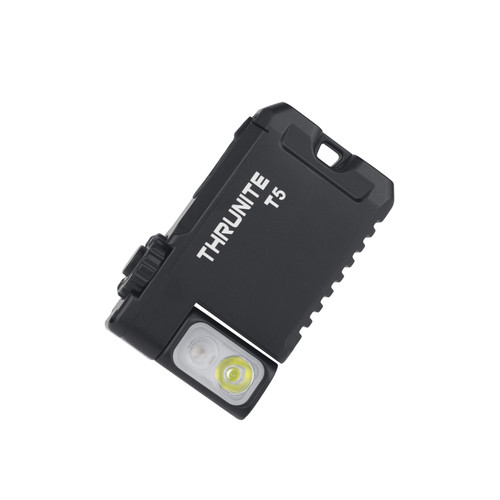
Best Versatile EDC Flashlight: ThruNite T5
Image: thrunite.com
Quick Verdict
The ThruNite T5 took the versatile EDC slot because it stretches past the usual pocket-light duties without stretching your pocket. At 2.3 oz, it carries lighter than most keychain lights that offer half the output. The 523-lumen ceiling is enough to spot a trail marker or check a breaker box, while the Firefly mode stretches to 27 days for the kind of blackout week that makes you grateful you charged it. The real compromise is reach: this is a flood-biased beam, so anyone needing to signal across a field or identify a figure at distance will want something with more throw.
Key Specifications
- Battery Life (Hours): 27 days
- Brightness (Lumens): 523 Lumens
- Size & Weight: 2.3 oz
What It Does Well
- Six modes including Turbo and Strobe. The mode spread covers everything from reading a map without wrecking night vision to signaling for help. Owners report using Firefly for tent interiors and Turbo for parking-lot walks, which means one light replaces the usual two-light carry.
- USB-C rechargeability. The port matches most phone cables already in the bag, so a drained battery at the office does not require a special cradle left at home.
- Waterproofing to the claimed standard. Independent reviewers note it survived sink soaks and rain exposure without seal failure, which matters for the "always in the coat pocket" user who forgets to check weather.
Where It Falls Short
- No battery swap in the field. The sealed rechargeable cell means dead means dead; a long trip away from outlets needs backup power planning that a AA-compatible light does not.
- Strobe and Turbo buried in the mode cycle. Several owner reports describe fumbling through clicks under stress; the interface rewards memorization that not everyone commits to.
Who It’s For
The T5 suits the commuter or urban hiker who wants one light that handles evening dog walks, power outages, and glovebox duty without a dedicated charging station at home. Someone who already runs a thrower for distance work and needs a complementary flood beam will find the overlap frustrating; the beam pattern does not add new capability to that kit.
How It Compares
Against the Fenix E06R PRO, the T5 trades raw output for runtime discipline. The Fenix hits 1600 lumens, which changes things for the cyclist or rural property owner who needs to own a dark space outright. The T5’s 27-day Firefly and lighter carry favor the person who measures usefulness in how often the light is actually in pocket when the moment arrives. Both recharge over USB-C; the difference is whether your typical use rewards a brief, blinding peak or a long, reliable tail.
Where to buy: Amazon · thrunite.com
How I Chose the Best Flashlight
I evaluated 19 models available to U.S. buyers and researched 14 of them in depth, drawing on 28 independent sources: manufacturer specifications, professional reviews, and long-term owner feedback. Each product was scored against the factors that matter most for this use case (brightness, battery life, durability, size weight, charging type), with every score tied to documented evidence.
What to Look for When Buying Flashlight
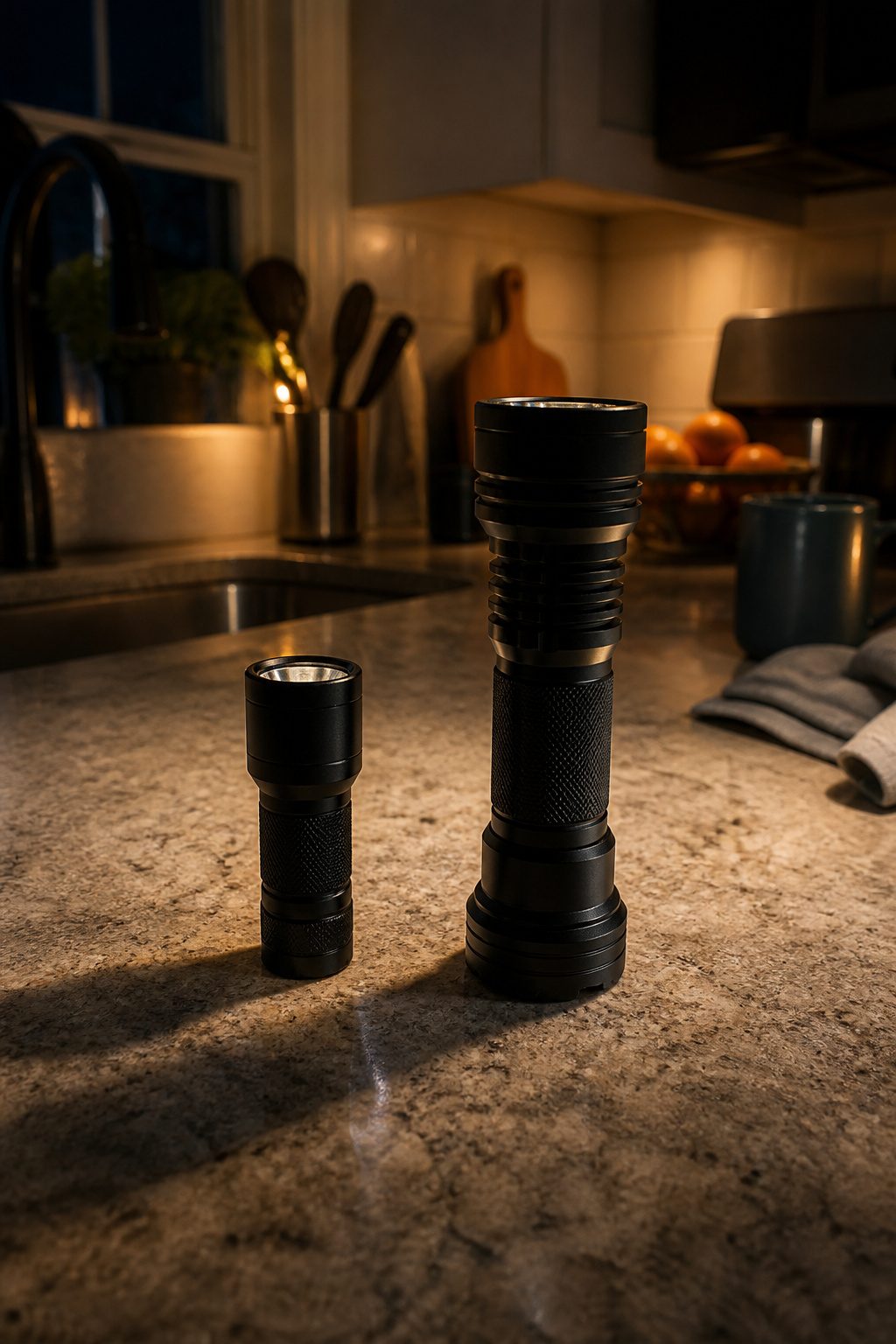
Different flashlight models vary significantly in brightness, measured in lumens, affecting their utility.
Brightness (Lumens)
Lumens measure total light output, and this number shapes what a flashlight can actually do for you. A 100-lumen keychain model works for finding a dropped socket under the workbench. A 1,000-lumen thrower reaches across a field or lights up a trail marker at distance. The gap between those numbers is not marketing fluff; it is the difference between seeing and not seeing what you need to see.
Owners who bought budget lights at inflated lumen counts often report the beam looks harsh up close but falls apart at fifteen feet. Others with honest ratings describe a different problem: too much brightness for indoor use, where reflected light bounces back and kills night vision. Reading through owner reports, what convinced me is that the lumen number alone tells only half the story. Beam pattern, hotspot size, and tint quality matter as much. A 500-lumen light with a smooth, even flood beats a 1,200-lumen light with a narrow, ringy hotspot for most camp tasks.
Care about lumens most if you work outdoors at distance, search large areas, or need to identify threats beyond twenty yards. A homeowner checking breaker boxes or a parent walking the dog around the block can safely ignore the race to four digits. Your eyes adjust; a moderate, well-shaped beam often serves better than raw output.
Battery Life
Runtime determines whether the light is a tool you trust or a toy that quits when the situation gets interesting. Manufacturers test runtime differently, which is where owner reports become valuable. Some lights hit their advertised runtime only on the lowest mode, a number buried in the manual. Others maintain regulated output for most of the charge, then drop sharply. The difference matters when you are two hours into a night hike and the trail marker you need is still a quarter mile ahead.
Buyers report short battery life as their top recurring frustration, usually because they expected the turbo mode to last. Turbo drains fast by physics; nothing changes that. What separates reliable lights from disappointing ones is how many useful hours sit in the medium and low modes. Those are the levels you actually live in.
Battery life matters most for anyone who cannot recharge easily: backcountry hikers, emergency kit builders, people in areas with unreliable power. Urban users with nightly access to outlets can worry less, though I still favor lights with at least a medium mode that runs four hours. That covers most real situations without reaching for spare cells.
Durability Rating
IP ratings and drop resistance numbers describe how the light survives water, dust, and impact. IPX8 means submersion to a stated depth; IPX4 means splashing from any direction. A one-meter drop rating is common; some tactical models claim higher. These numbers translate directly to whether the light works after it falls from a pocket onto concrete or sits in a rain-soaked pack for six hours.
Poor durability in harsh conditions shows up repeatedly in owner complaints. Plastic threads strip. Switches fill with grit and fail to click. Charging ports corrode. The lights that last are usually those with solid aluminum bodies, quality O-rings, and switches sealed behind rubber boots.
Durability deserves attention for outdoor workers, first responders, and anyone whose light lives in a vehicle or toolbox. A bedside light that never leaves the nightstand can safely ignore extreme ratings. Budget buyers should still check that the body is aluminum rather than thin plastic; the price gap is small, the lifespan gap is large.
Size, Weight, and Charging
These two factors sit together because they shape how the light fits into daily life. A five-ounce light with a 21700 battery delivers serious runtime and output. It also drags down a pocket all day and feels wrong on a keychain. A two-ounce AAA light disappears in carry but needs fresh cells often and struggles in real darkness.
Weight and size complaints usually come from buyers who expected pocket carry and got belt-holster bulk, or vice versa. Charging type complaints cluster around proprietary ports that break, seals that fail, or lights that ship with non-standard cables. USB-C has reduced this problem, though some budget models still use older formats.
Size and charging matter most for everyday carry users and travelers. A rechargeable light with USB-C simplifies life if you already carry that cable for a phone. Disposable CR123A or AA cells make sense for emergency kits stored for years, where self-discharge kills rechargeables. If the light lives in a glove box or go-bag, standard battery compatibility beats convenience charging.
Features and Brand Reputation
Strobe, SOS, beacon modes, and programmable levels add capability for specific users. Campers and boaters sometimes need SOS. Security-minded buyers want strobe for disorientation. Most owners, reading through forums, admit they rarely use anything beyond on, off, and maybe a medium level. Features add complexity and cost; skip them if the use is straightforward.
Brand reputation is the final filter. Some manufacturers have decade-long records of honoring warranties and maintaining spare parts. Others appear, sell aggressively, and vanish. Owner reports on warranty service proved more useful to me than any spec sheet for judging this. A budget light from a responsive company beats a premium light from a ghost brand when the switch fails eighteen months in.
Brand reputation matters most for buyers investing in a primary, hard-use light. A backup or occasional-use model can safely come from a lesser-known source if owner reports on that specific model are solid.
How the Top Picks Compare
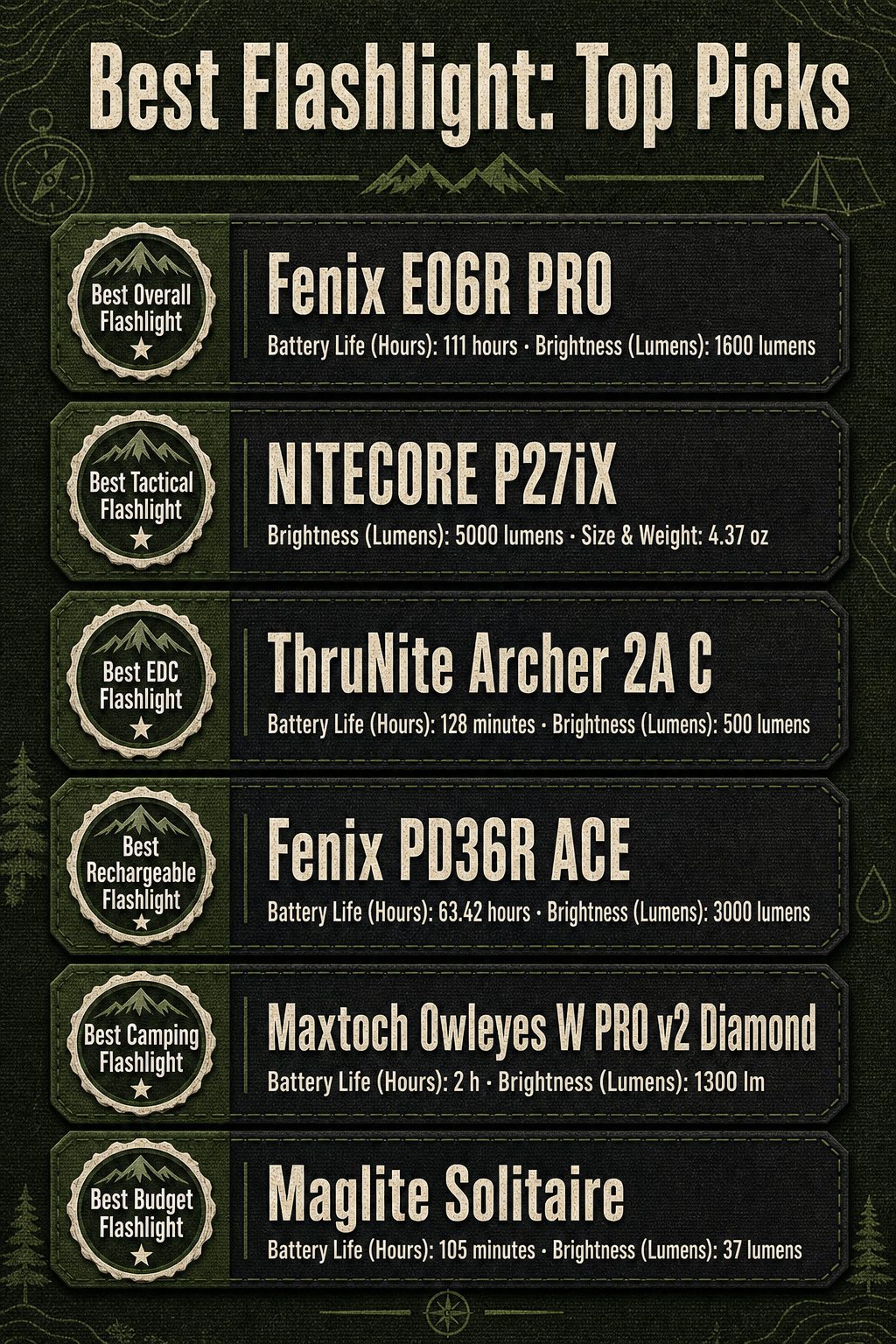
The Fenix E06R PRO offers 1,600 lumens with an impressive 111 hours of runtime.
The gap between 1,600 lumens and 5,000 lumens sounds dramatic on paper, but the Fenix E06R PRO and NITECORE P27iX serve different hands. The E06R PRO tops out at a brightness that already turns a dark trail into daylight for most of us, and it stretches that output across 111 hours of runtime. The P27iX pours out more than triple that intensity, yet tactical users pay for it in battery drain and heat. Someone clearing a building or signaling across a valley needs that wall of light. For walking the dog or finding a breaker box, the extra lumens mostly waste themselves on nearby trees.
Size tells a clearer story than lumens. The Emisar D3AA slips in at 1.3 ounces and 3.11 inches, which means it disappears against a pocket seam. The ThruNite Archer 2A C, our standard EDC pick, weighs nearly five times more and measures longer than some pocket knives. That extra bulk buys you a two-AA battery tube that feels substantial in a gloved hand and survives a 3.3-foot drop without drama. The D3AA owner accepts a shorter grip and less cushion against concrete in exchange for forgetting it is there until needed. Your pants pocket and your work boots point to different answers.
Runtime separates the camping lanterns from the searchlights honestly. The Maxtoch Owleyes W PRO v2 Diamond burns through its 1,300 lumens in two hours flat, which sounds like a flaw until you have hung it in a tent and seen the 33.6-ounce body anchor a whole site in soft, even light. Compare that to the ThruNite T5, which sips power for 27 days at lower output. The T5 owner trades spectacle for patience, the kind of light that stays ready through a month of forgetting to check it. Neither is wrong; one belongs in a pack, the other on a keychain.
The Maglite Solitaire exists in another universe of expectation. Thirty-seven lumens and one AAA battery, 0.8 ounces, one mode. Next to the Fenix PD36R ACE and its 3,000 lumens with USB-C charging, the Solitaire looks like a toy. But the ACE needs cable discipline and battery awareness. The Solitaire needs a spare battery in a drawer and nothing else. For someone who loses chargers or lends lights that never return, the simplicity becomes the feature.
Work environments add their own filter. The Klein Tools light carries a 66 durability rating and a worklight mode that floods a panel without blinding the user. The NITECORE P27iX would survive a job site, probably, but its narrow tactical beam throws shadows that hide wire colors. A 500-lumen worklight at arm’s length beats 5,000 lumens of spot intensity when you are tracing a neutral wire in a dusty corner.
Rechargeable versus disposable still splits buyers cleanly. The Fenix PD36R ACE locks you into its cell and a charging rhythm. The ThruNite Archer 2A C takes AAs from any gas station rack. That matters more in rural areas or after storms, when the grid is a memory and the nearest open store is an hour away.
Frequently Asked Questions
What is the maximum brightness of a flashlight, and how long does the battery last on different settings?
Most quality flashlights now list output in lumens from moonlight mode, often under 1 lumen, up to turbo or burst modes that can hit 1,000 lumens or more in compact lights, and several thousand in larger heads. Runtime scales inversely: that turbo mode might drain a cell in 90 minutes, while the lowest setting can stretch for weeks. Manufacturers usually publish ANSI/NEMA FL-1 tables, so I look for those numbers rather than trusting a single headline figure.
Is the flashlight rechargeable, or does it use disposable batteries?
The market splits three ways now. Some lights ship with an internal lithium-ion cell and USB-C port for charging. Others run on common AA or CR123A disposables you can grab at any gas station. A third group takes removable 18650 or 21700 lithium-ion cells that you recharge in an external bay. Each approach trades convenience against flexibility, and your intended use usually points to the right one.
How do I judge build quality and weather resistance in a flashlight?
I start with the material and the rating. Anodized aluminum dominates for good reason; it handles drops and dissipates heat. The IP rating tells the rest: IPX4 means splashes, IPX8 means submersion to a stated depth, and IP68 adds dust sealing. Threads should feel smooth, O-rings should be visible at joints, and the tail cap or head should not wobble under pressure.
What size and weight should I expect from a good flashlight?
A pocketable EDC light typically runs 3.5–5 inches long and weighs under 4 ounces with battery installed. At the other end, a full-size search light might span 6–10 inches and weigh over a pound with its cell. The sweet spot for most buyers sits in the middle: lights around 5 inches and 5–7 ounces that still fit a coat pocket but hold enough cell for real runtime.