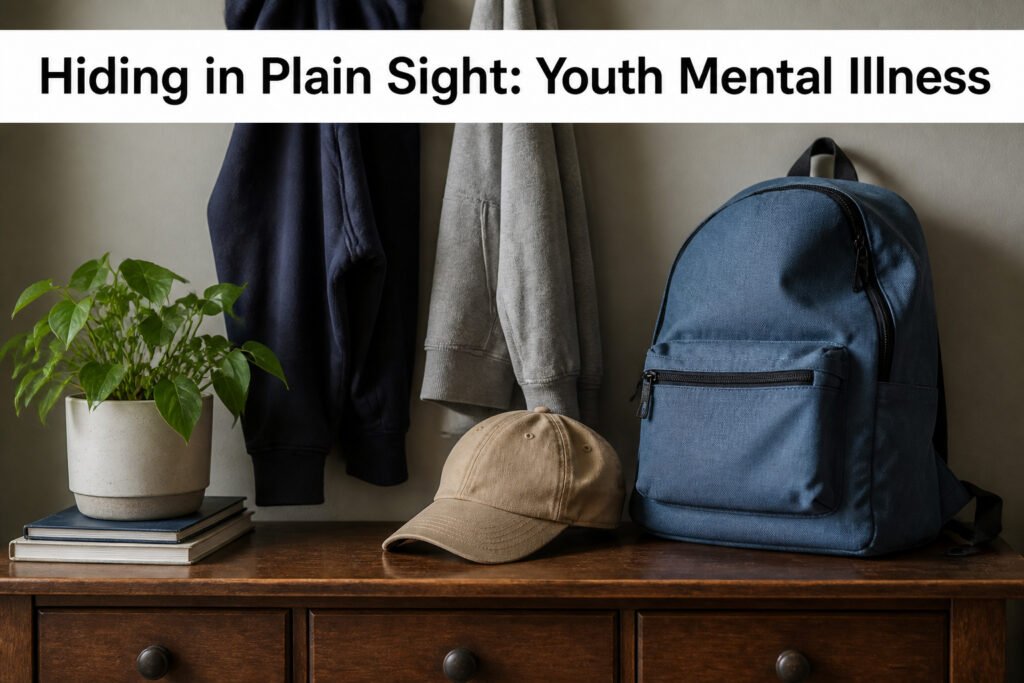
Hiding in Plain Sight: Youth Mental Illness is a 2022 Ken Burns documentary executive produced for PBS, directed by Erik and Christopher Loren Ewers, in which more than 20 Americans aged 11 to 27 describe living with conditions their families and teachers often failed to notice. The gap between appearance and reality is the film’s entire subject: symptoms present, routines continue, and the people nearby miss what is happening until crisis forces the issue. A 51 percent spike in emergency room visits for suicide attempts among adolescent girls in early 2021, against 2019 levels, sits behind these stories as national context.
What Hiding in Plain Sight Is
The full title is Ken Burns Presents Hiding in Plain Sight: Youth Mental Illness, a Film by Erik Ewers and Christopher Loren Ewers. It premiered June 27-28, 2022, as a two-part, four-hour documentary and the first entry in a series called Our Mental Health Crisis.
What the phrase "hiding in plain sight" actually describes is the gap between how these conditions look from outside and what lives inside them. More than 20 young Americans, ages 11 to 27, speak directly to that disconnect: symptoms present, routines continue, and the people around them often miss what is happening until a crisis forces the issue. The film pairs their first-person accounts with parents, teachers, healthcare providers, and independent experts, but the weight stays on the young people themselves.
Ken Burns served as executive producer; Erik Ewers and Christopher Loren Ewers directed. The structure is unvarnished by design, moving from what the participants call "the storm" through to what some found on the other side. For anyone who has watched a teenager seem fine at dinner and later learned otherwise, the title lands as literal description, not metaphor.
The Youth Mental Health Crisis by the Numbers
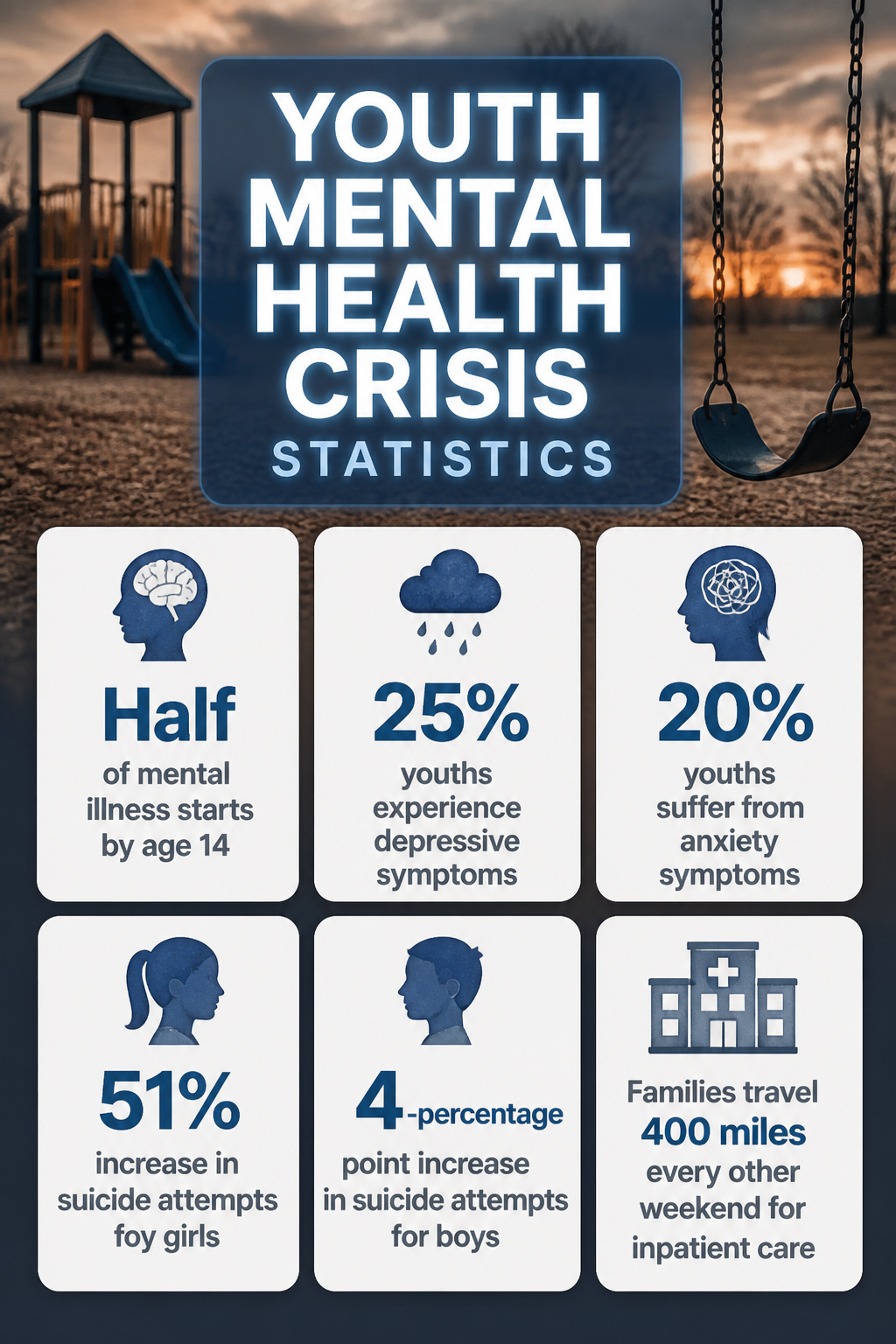
Half of all lifetime mental illness begins by age 14, a threshold most families do not see coming. The U.S. Surgeon General’s data puts hard numbers to what the documentary "Hiding in Plain Sight" traces across 23 young lives: 25% of youths experienced depressive symptoms and 20% suffered anxiety symptoms, a doubling during the pandemic’s isolation. For adolescent girls, emergency room visits for suicide attempts rose 51% in early 2021 against 2019 levels; boys saw a four-percentage point increase. Those percentages sit differently once you have watched a nine-year-old’s family drive 400 miles every other weekend for inpatient care, the nearest facility they could find.
Personal Accounts from More Than 20 Young Americans
The documentary builds its case almost entirely through first-person accounts, letting more than 20 young Americans speak for themselves rather than framing their experiences through experts. The raw intimacy of this approach is what makes the film difficult to watch and necessary to see. Samantha Fisher from Vermont appears as one of the central voices, describing mental health challenges she has faced throughout her life. Gabe Peaslee, a 16-year-old from Miles City, Montana, brings another perspective from a very different part of the country. The range of struggles shown runs from depression and anxiety to substance use and suicidal ideation, with no single story standing in for the rest. Childhood trauma, stigma, and the isolating pressure of social media surface again and again across these individual narratives. What struck me, watching how the film is structured, is that the directors trust these young people to carry the full weight of the argument themselves. The result is not a clinical overview but an unstinting look at what it actually feels like to live inside these conditions while often appearing fine to the people nearby.
How the Pandemic Worsened What Was Already There
The pandemic did not create the youth mental health crisis. It stripped away the routines that had been hiding symptoms in plain sight.
U.S. Surgeon General Dr. Vivek Murthy issued an advisory on this crisis last year. Emergency room visits for suicide attempts rose 51 percent for adolescent girls in early 2021 compared with 2019. Among boys, the increase was four percentage points. Depression and anxiety doubled during the coronavirus pandemic, with 25 percent of youths experiencing depressive symptoms and 20 percent suffering anxiety symptoms, according to the Surgeon General’s report.
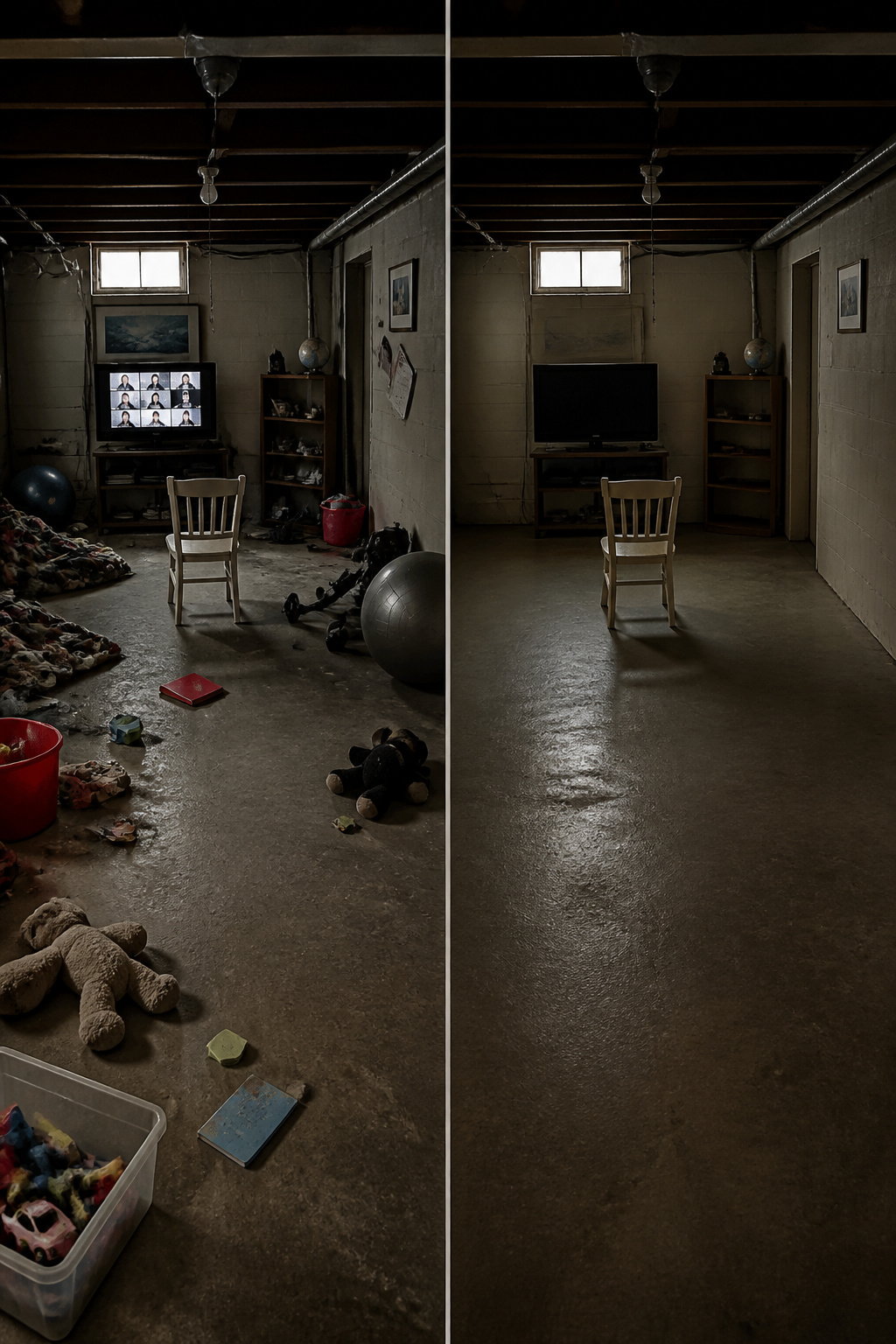
Isolation was the mechanism. Removing young people from classrooms and daily social contact removed the structure that had kept some conditions manageable. The classroom had been a place where difficulty showed up, where a teacher might notice, where peers provided informal checks. Without it, the same conditions worsened in bedrooms and basements, unseen.
The documentary "Hiding in Plain Sight" captures this acceleration through the stories it follows. One North Dakota family drove 400 miles every other weekend to visit their nine-year-old at the nearest inpatient facility. That distance existed before COVID-19. The demand that made it matter did not.
Stigma and the Silence Around Mental Health
The documentary puts stigma on screen in a way statistics never could. Twenty-three young people describe the mental health and substance use challenges they have faced, and in doing so they force the viewer to confront what silence usually lets us ignore. Talking about mental health is the step that makes every other step possible, yet most of these young Americans spent years hiding symptoms from family, teachers, and friends because the cost of being seen was worse than the cost of suffering alone.
What changes when openness replaces that silence is measurable in the film itself. The young people who found recovery almost always name one turning point: someone finally asked, or they finally spoke. Discrimination shrinks not through policy alone but through repeated, ordinary conversation that makes the condition familiar. The documentary’s unvarnished accounts of daily life with mental illness, from ages 11 to 27, advance a shift in public perception by making the hidden visible. Where society fails is in demanding that visibility first, before offering support; the film argues for reversing that order.
Barriers to Accessing Care

Geography alone kills half the battle before it starts. A family in a rural county might drive two hours each way for a child psychiatrist appointment, burning vacation days and gas money they do not have. The wait lists in cities are not much better; six months for an intake evaluation has become standard in places where demand tripled and provider rolls stayed flat.
Insurance paperwork acts as a second gatekeeper. Prior authorizations for therapy sessions expire mid-treatment. Out-of-network providers charge cash upfront, and reimbursement checks arrive three months later, if they arrive at all. Some families pay the full freight themselves until the money runs out, then stop care altogether.
School counselors could bridge the gap, except their caseloads run to the hundreds. A child in crisis gets twenty minutes before the bell rings. The parents who manage to thread all these needles, the ones who fight through every barrier, often arrive at the same place: a provider who does not take their insurance, a program with no open beds, a diagnosis that disqualifies the kid from the service that could help.
Cultural and Societal Pressures Beyond the Film
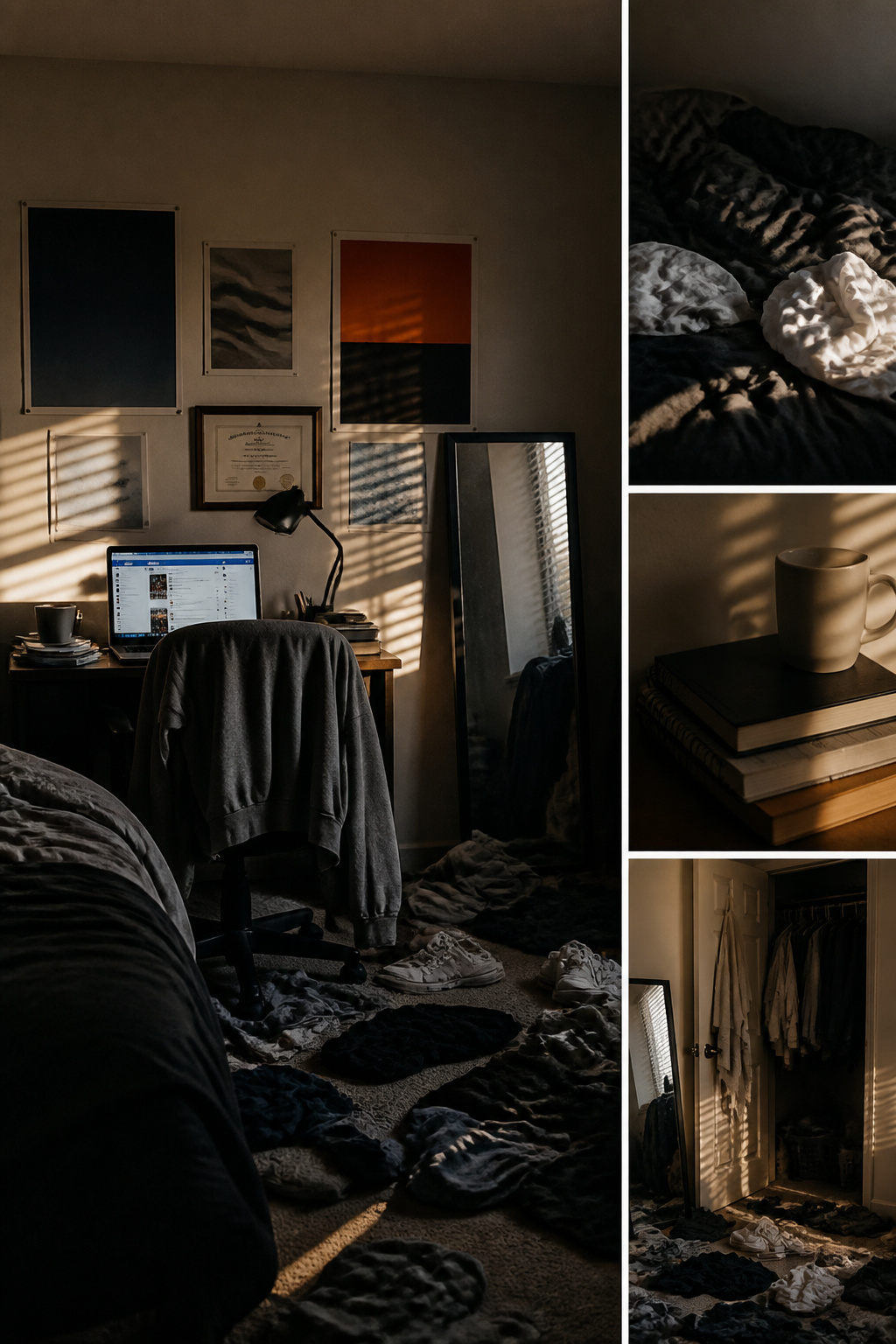
The documentary shows what isolation did to kids during the pandemic, but social media keeps that isolation going even when the hallways are open again. A 51 percent spike in emergency room visits for suicide attempts among adolescent girls in early 2021, compared with 2019, did not come only from lockdown. The Surgeon General’s advisory points to 25 percent of youths experiencing depressive symptoms and 20 percent with anxiety symptoms, and those numbers stayed high after schools reopened. Algorithms do not care that a teenager has returned to in-person classes; they still serve comparison, harassment, and the performative pressure to seem fine while falling apart.
Family dynamics get touched on in the film, mostly through the lens of access: one North Dakota family driving 400 miles every other weekend to see their nine-year-old in inpatient care. What the film cannot spend time on is how many families never make that drive because the cost or the stigma or both stop them at the door. Cultural expectations pile on top. In communities where achievement is the only acceptable emotion, a young person learns quickly that depression reads as laziness and anxiety as weakness. The documentary puts 23 faces on the crisis; what it cannot fit is the daily math those kids do, calculating whether honesty costs more than silence.
What Watching the Documentary Changed for Me

The first time through Hiding in Plain Sight, I kept waiting for the dramatic moment, the obvious breakdown. It never came. What the film actually shows is quieter: a kid still making the bus, still turning in homework, still posting like nothing’s wrong. That was the part I missed. The second viewing, I started recognizing the half-smiles, the too-long pauses before answers, the exhaustion dressed up as laziness. My nephew had that same pause last Thanksgiving. I chalked it up to teenage moodiness. The documentary made me rewind that memory and watch it again.
In my own high school, the kids who struggled weren’t the ones in the counselor’s office. They were the ones who sat through every class, who laughed at lunch, who disappeared so gradually nobody marked the day. The film’s subjects describe this exact pattern: performing normalcy until the performance itself becomes the weight that breaks them. I thought I knew what depression looked like. I had the checklist version in my head. What I had was the version that announces itself, the version that already failed the hiding. The plain sight part is harder to see because it looks like adaptation, like coping, like Tuesday.
The pandemic years made this worse in ways the film captures without needing to say it outright. Screens became the only window, and screens are where the performance lives. I watched a neighbor’s kid deliver a flawless class presentation over Zoom three weeks before hospitalization. The gap between what we could see and what was happening became a chasm we didn’t know to bridge. What changed for me wasn’t new information. It was the specific, named recognition that sustained ordinary function can itself be the symptom we keep missing.
Frequently Asked Questions
What is "Hiding in Plain Sight"?
"Hiding in Plain Sight: Youth Mental Illness" is a two-part, four-hour documentary that premiered on PBS in June 2022. Ken Burns served as executive producer, with Erik Ewers and Christopher Loren Ewers directing. More than 20 young Americans ages 11 to 27 describe living with mental health conditions while often appearing fine to those around them.
How has the pandemic affected youth mental health?
Depression and anxiety doubled during the pandemic, with 25% of youths experiencing depressive symptoms and 20% suffering anxiety symptoms. Emergency room visits for suicide attempts rose 51% for adolescent girls in early 2021 compared with 2019. Isolation removed the classroom structures that had previously helped some young people manage their conditions.
What are the main themes of the documentary?
The film centers on first-person accounts from young people living with conditions ranging from depression and anxiety to substance use and suicidal ideation. It examines stigma and silence, barriers to accessing care, the isolating effects of social media, and how the pandemic accelerated an existing crisis. The directors let the young participants carry the narrative rather than filtering their experiences through outside experts.