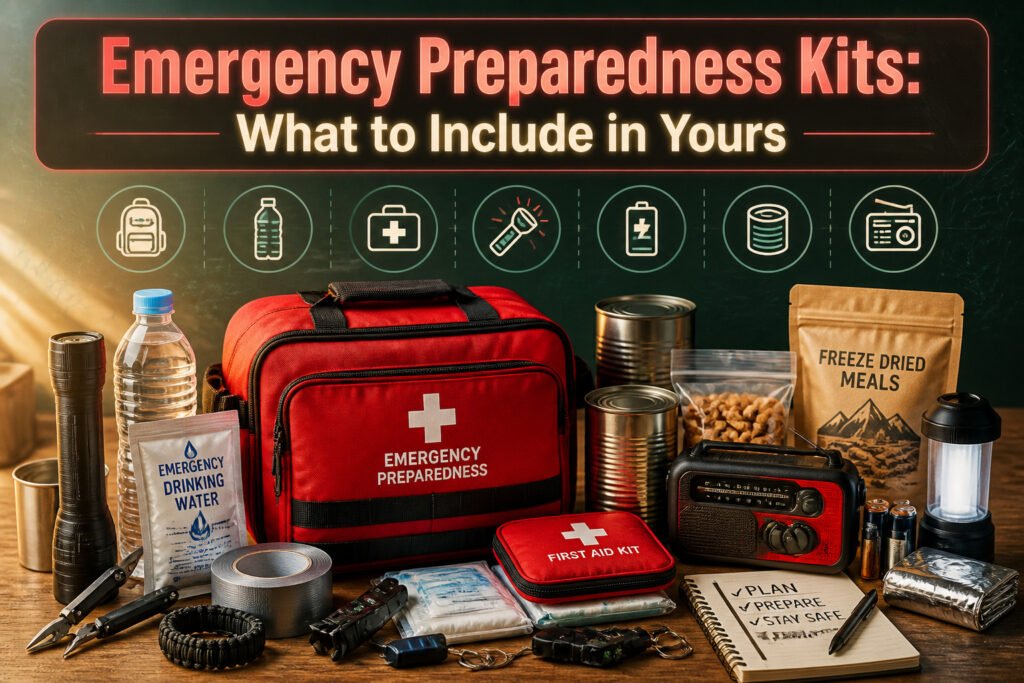
An emergency preparedness kit is a portable collection of supplies that keeps a household functional when normal systems fail. The gap between having one and having a useful one is maintenance: water expires, batteries leak, and medications age out while sitting in closets. A manual can opener matters only if it is in the kit, not the kitchen drawer, and a flashlight without spare batteries is half a tool once the power stays out past midnight.
Water and Food

A gallon per person per day is the baseline that keeps coming up, with sources split on whether to plan for three days or stretch to seven. The three-day minimum is what most people actually store; the week-long target is what you wish you had when the taps stay dry. Water takes up space fast. Six gallons for a couple fills a milk crate, and that is before you account for cooking or washing anything.
Food follows the same three-day floor, but only if it is non-perishable. Canned goods last, which means a manual can opener belongs in the kit, not in the kitchen drawer where you will forget to grab it. Rotation is the part that slips. A can of beans bought in 2019 is not emergency food; it is a museum piece. Check dates twice a year, same weekend you test the smoke detector, and eat what is aging out.
First Aid Kit
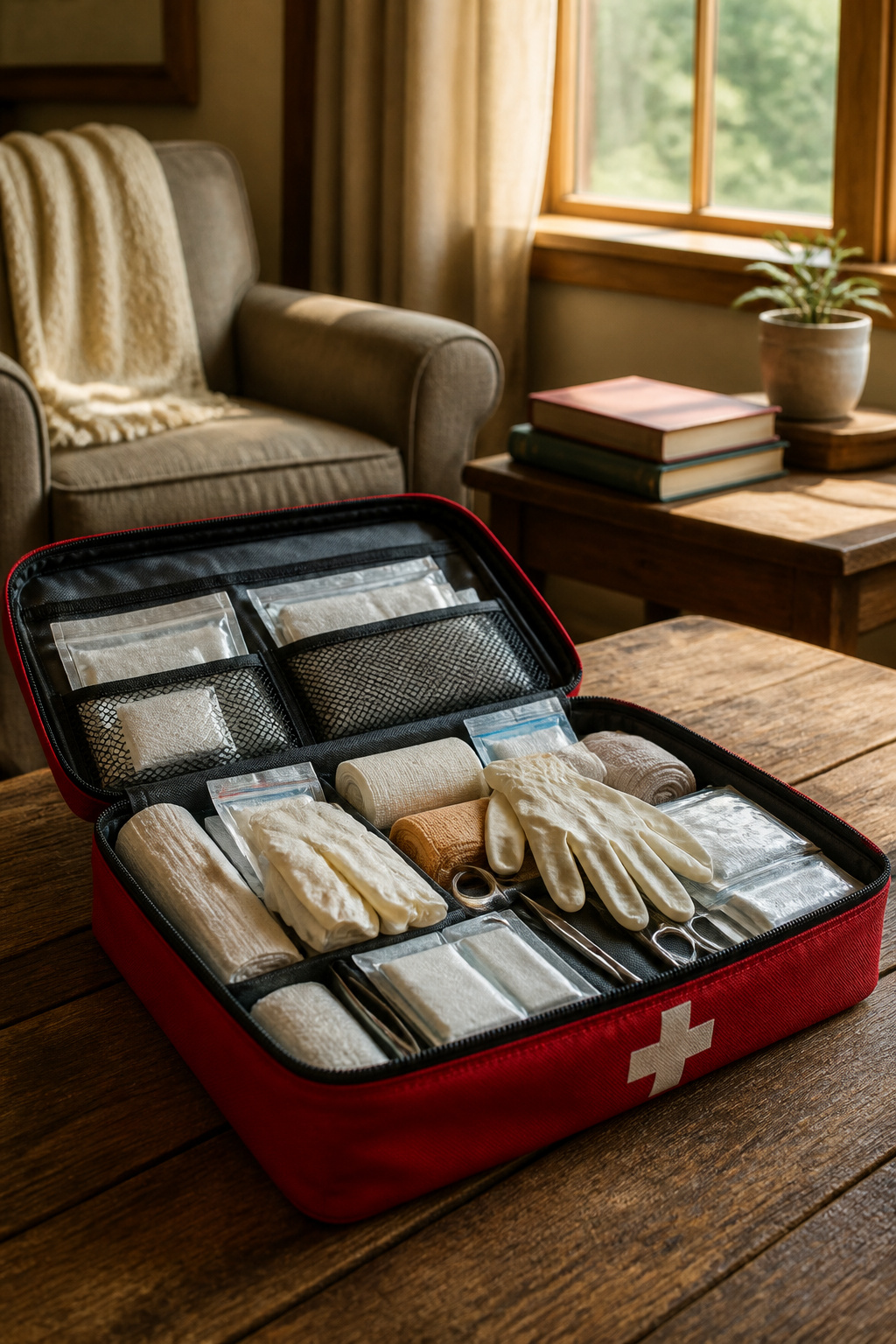
Every emergency preparedness kit needs a real first aid section, not the thin box from the drugstore. The supplies that matter start with two pairs of latex or other sterile gloves, bandages in enough sizes to actually cover a wound, and an antiseptic that works, whether that is soap and antibiotic towelettes or a proper cleansing agent. Antibiotic ointment and burn cream belong in there too, plus scissors and tweezers, because tearing tape with your teeth is a bad plan when you are already bleeding.
Prescription medications trip people up. Insulin, heart medicine, asthma inhalers, anything taken daily, it all needs to go in the kit and it all expires. Rotating those meds every few months is the part most people skip until they open the kit during an actual emergency and find a bottle from 2019.
What convinced me, reading through the official lists, is how many of them quietly add the same line: a first aid book or class helps. The kit stops bleeding and sanitizes, but someone in the room has to know which one to reach for first.
Flashlight and Extra Batteries

A flashlight without spare batteries is half a tool. The light goes dark, and the kit suddenly holds a plastic tube that does nothing. Store the batteries outside the device, not snapped in place. Alkaline cells can leak over years of disuse; lithium primaries cost more but sit for a decade without swelling. Keep them in the original packaging, or tape the contacts, so nothing in the bag bridges the terminals and drains them slowly. The government lists say "flashlight and extra batteries" as separate items for a reason. One spare set is a minimum. Two starts to make sense if the power stays out for days and you are walking the house at 2 a.m. checking windows.
NOAA Weather Radio

A battery-powered or hand-crank radio tuned to NOAA Weather Radio frequencies belongs in every emergency preparedness kit, even when cell service holds up. The National Oceanic and Atmospheric Administration broadcasts continuous weather alerts, and during Hurricane Sandy in 2012, my cousin’s phone died on day two while the radio kept running on AA batteries he had stashed in a coffee tin. Hand-crank models remove the battery dependency entirely, though the cranking gets old fast during a long outage. Extra batteries matter as much as the radio itself; store them separate from the device so corrosion does not kill both at once.
Important Documents

Paperwork is the part nobody wants to think about until the basement floods or the wind takes the roof. Insurance policies, identification, bank account records, and emergency medical information all need to come with you, and a waterproof container is what keeps them readable when everything else is soaked. I learned that the hard way watching a neighbor spread damp pages across a kitchen table after a pipe burst, trying to flatten Social Security cards and homeowner declarations that had turned to pulp.
A waterproof and portable container does two jobs: it blocks water and it keeps documents in one findable place. Most of these items already live somewhere in the house, which is exactly why they get left behind in a rush.
The time to put an emergency kit together is before a disaster.
— ReadyNC
That timing applies double to documents, since replacing them takes weeks when government offices are closed and phones are down.
Personal Hygiene Items

A sealed toothbrush and a travel-size bar of soap take up almost no room, yet skipping them turns a three-day shelter stay into something you remember for the wrong reasons. Three days without washing is the threshold where skin irritation, odor, and minor infections start to compound stress that is already high. The soap should be actual bar soap, not liquid, because a leak in your kit ruins other supplies.
Feminine supplies belong in every kit, not just the ones packed by women. A menstrual cup packs smallest and rewashes, but disposables in a ziplock bag work fine and require no water. Deodorant is the item people forget and then miss most in close quarters with strangers; the travel size costs little and runs just long enough.
These items sit separate from your daily bathroom supplies so you are not scrambling to pack them when evacuation orders come. Check the seal on the soap bag yearly; cheap ziplocks get brittle in hot car trunks.
Sturdy Shoes and Seasonal Clothing
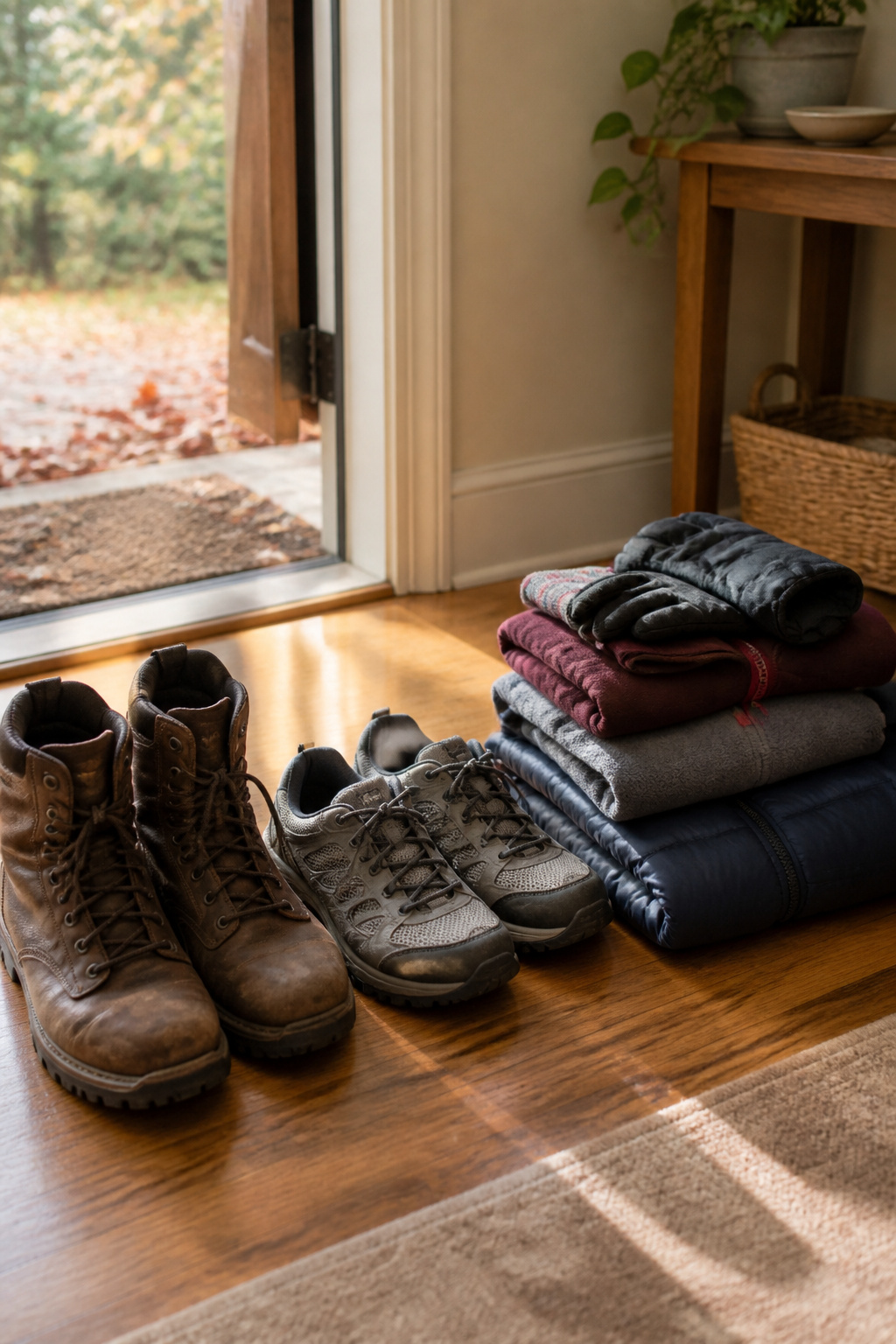
Closed-toe, sturdy shoes belong in every emergency preparedness kit, even if you keep a perfectly good pair by the door. The morning of an evacuation is a bad time to discover your sneakers are still damp from yesterday’s rain, or that someone else in the house borrowed yours and left them in the car. Boots or sturdy sneakers are best; flip-flops and dress shoes fail fast on broken glass, downed wires, or waterlogged streets.
A full change of clothes for each person covers more than comfort. In cooler climates, the kit needs warm layers: a jacket, hat, gloves, and rain gear. Wet clothes steal body heat fast, and spare socks matter more than most people expect. One kit per person means no one is sorting through a communal pile while the clock runs.
Seasonal rotation takes ten minutes twice a year. Swap the summer windbreaker for a wool coat, the thin gloves for insulated ones. The shoes stay the same year-round; sturdy soles do not go out of season.
Sleeping Bag or Warm Blanket

Cold nights after a storm taught me where the sleeping gear belongs in the priority list. One for each person, full stop. A sleeping bag rated for the season or a warm blanket that actually covers two people if they have to share a cot in a school gymnasium.
The official lists agree on the math: one per person. Not one to split, not one packed deep where you cannot reach it in the dark. I keep ours in a waterproof compression sack after a basement flood years back soaked the spare bedding while the power stayed out for two days. Synthetic fill or wool handles damp conditions better than down when you cannot control the environment.
Emergency shelters run cold. Heating systems fail at home. The blanket that lives on the couch all winter gets packed with the kit in spring, and a lighter backup takes its place. The bag you grab at 2 a.m. needs to be the one you tested for fit, not the emergency blanket still in its foil wrapper that you have never actually unfolded.
Dust Mask and Plastic Sheeting

A dust mask takes up almost no room in a kit, and the N95 style is what you want for filtering particulates from smoke, dust, or debris. A cotton t-shirt layered thick over nose and mouth works in a real pinch, though it catches far less; the mask stays in my bag because the space cost is basically zero.
Plastic sheeting and duct tape pair with that mask for shelter-in-place situations. Seal a room by covering windows, vents, and gaps under doors with 4-mil sheeting or heavier and tape every edge. The sheeting also serves for ground cover, rain catchment, or a makeshift poncho if the kit’s stripped down. Duct tape needs no justification; the roll in my kit has fixed boots, patched hoses, and held a car window closed through a storm.
The mistake to avoid is buying the thin painter’s dropcloth stuff that tears on a corner. Spend the extra dollar for the thicker roll, or you’ll be taping holes while the air quality outside is the problem you’re supposed to be avoiding.
Tools and Utility Shut-off

A wrench or pliers belongs in every emergency preparedness kit for the single reason that gas lines rupture in earthquakes and floods, and a quarter-turn of the main valve can keep a bad situation from becoming a house fire. The tool does not need to be large; an adjustable crescent wrench that fits your home’s valve is the one to pack, not the heaviest in your toolbox. I keep mine zip-tied to the water heater so nobody has to remember where it lives in a panic.
A whistle cuts through collapsed-wall quiet and storm noise better than shouting ever will. Three sharp blasts is the standard distress signal, though any pattern repeated at intervals works if rescuers know to listen for it.
Garbage bags serve more purposes than their name suggests: ground cloth, rain poncho, toilet liner, or temporary seal for a broken window. The 30-gallon contractor bags hold up to actual weight; the thin kitchen variety tear too easily when dragged across debris.
The fire extinguisher is the item most kits list and few people maintain. Check the pressure gauge twice a year, the same morning you test smoke detectors. An expired or discharged extinguisher is dead weight with a handle.
Cash and Local Maps
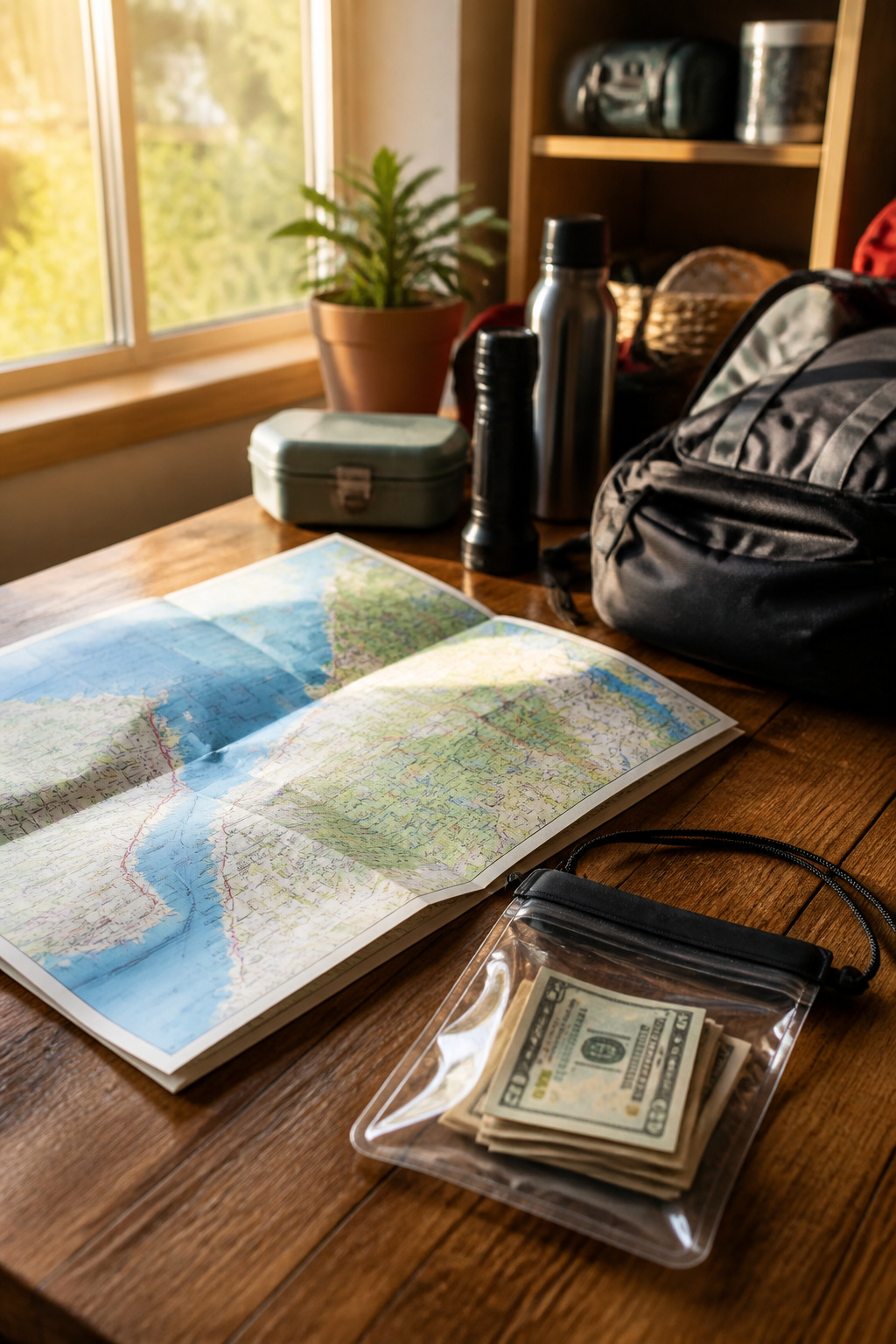
The power goes out, and the first thing most people check is whether their phone still works. When it doesn’t, cash and paper maps become your only way to get home or buy what you need.
Cards and mobile payments need networks. ATMs need electricity. A few hundred dollars in small bills, kept in a waterproof bag inside your kit, covers fuel, food, or a ride when nothing electronic functions. Small bills matter; no one makes change during an emergency.
GPS dies with the network or the battery. A local paper map, the kind gas stations used to give away free, shows alternate routes when your usual road is blocked. Mark your house, your workplace, your kids’ school, and the nearest hospital. Laminate it, or seal it in a ziplock with the cash.
These two items sit untouched for years, which is exactly the point. They are your fallback when the systems you use every day go quiet.
Baby Supplies

Baby supplies sit in their own category because the usual kit assumptions fall apart fast once a real infant is involved. Formula runs out, diapers soak through, and a pacifier that drops behind the storm-shelter bench becomes a crisis at 2 a.m. The federal guidance breaks it out separately from general family needs, and that separation matters.
Three days of formula, ready-to-feed if possible, covers the window when boiling water might not happen. Bottles, wipes, and diaper cream go in the same bin. A spare pacifier or two is not excessive; one lost in a dark basement means a sleepless night for everyone. Baby powder and mild soap handle cleanup when baths are off the table. An extra blanket and a change of clothes handle temperature swings that adults tolerate and infants do not.
The judgment call is powdered versus liquid. Powder keeps longer and packs lighter, but it needs clean water you may not have. Ready-to-feed formula costs more and weighs more, yet it removes one failure point entirely. For my own thinking, the trade goes to liquid for the core kit, with a small backup canister of powder if shelf space allows. Canned food and juices for older babies who have started solids round out the list; jars are glass, cans are not, and that distinction matters in a bag that gets dropped or stacked.
Pet Supplies
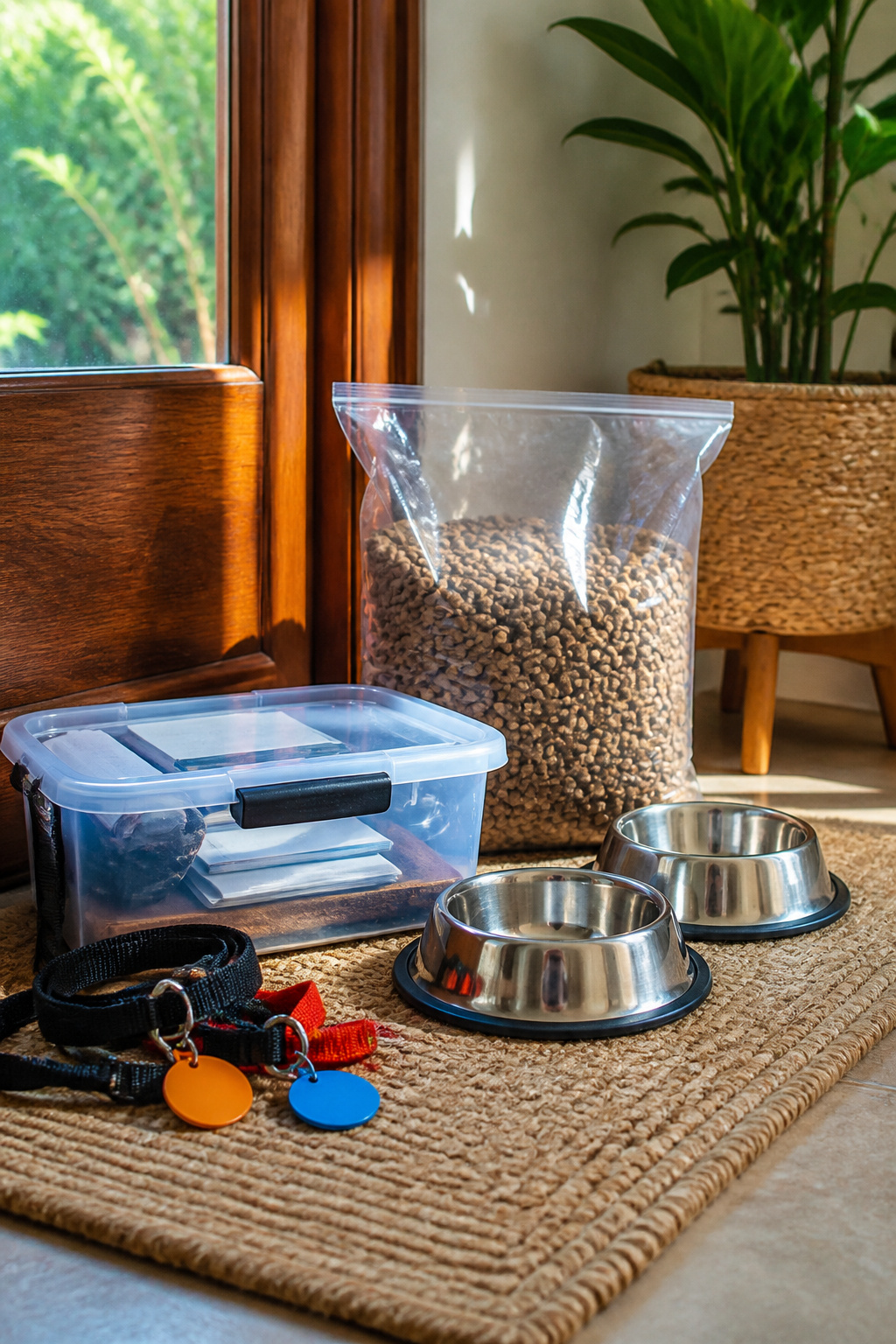
A pet emergency kit lives with the family kit, and everyone in the house needs to know exactly where both sit. Three days of food and water is the floor, not the ceiling; stretching that supply to a full week handles the scenarios where roads stay closed and stores stay dark longer than the headlines suggest. Canned or dry food both work, but the cans need a manual opener if the power cuts out.
Water goes in the same count, three to seven days, and it is easy to underestimate. A twenty-pound dog drinks more under stress, and summer heat after a hurricane or winter freeze after an ice storm both drive that number up. Bowls go in the kit too, not scavenged from the kitchen at the last minute.
Medications need rotating the same way human prescriptions do. Expired heartworm pills or insulin left to freeze are worse than useless; they are a false comfort. Photocopies of medical records and the vet’s phone number ride along, plus current photos for lost-poster speed if a gate fails or a carrier latch pops. Collar with ID tag, extra leash, harness, and a properly fitted muzzle; shelters and emergency vets sometimes require them, and a frightened animal bites people it loves. The carrier should be sturdy, not the soft-sided weekend model, and familiar enough that the pet sleeps in it before disaster strikes.
Games and Activities for Children

Stress during a long wait hits children harder than adults, and the boredom compounds it. A deck of cards, a small puzzle, or a few paper cups for impromptu games can matter more than another flashlight. I keep a pocket-sized magnetic chess set in our kit; the pieces stay put even on a car seat or shelter floor. Crayons and a small pad of paper weigh almost nothing. The point is not entertainment for its own sake, but giving a child something familiar to do when everything else feels wrong. Sources list books, games, and puzzles as optional, which means they are easy to skip when you are budgeting space. That is a mistake I nearly made, packing the kit tight with supplies I hoped not to use and forgetting the ones a child reaches for first.
Basic Supplies Check Interval

A gallon of water per person per day sits in my kit until it doesn’t. Same with the three-day food supply, the batteries, the prescription meds. Every three months, the whole container gets opened and checked for dates that crept past while nobody was looking. Calendar reminders help, but the habit matters more than the app. Rotate the water, eat the food that is close to turning, replace what you used. The radio, the flashlight, the manual can opener, they all get tested. A dead battery discovered during a blackout is a lesson learned at the wrong time.
Storage and Accessibility

A kit buried in the garage behind the camping gear is a kit you will not grab when the fire department pounds on the door at 2 a.m. The ready.gov guidance puts it plainly: every family member needs to know the exact spot, and that spot needs to be somewhere you can reach without moving anything else first. I have seen the same advice from weather.gov, which adds the practical test: if you cannot lift it into the car in one motion, you have stored it wrong.
The sources do not spend much time on what that storage spot should actually be like. Temperature swings, humidity, direct sunlight: none of the top pages address whether your closet or your basement preserves the supplies inside. They leave that gap because they are focused on speed of access, not shelf life. What convinced me, reading through these, is that accessibility wins the tradeoff. A kit in the hall closet degrades a little faster; a kit in the perfect climate-controlled corner of the house that nobody remembers is a kit that does not exist when you need it. Check the contents every three to six months, swap what has expired, and store it where the slowest person in your household can still reach it in under a minute.
Unique Needs by Family Member

A three-day supply of water and food sits on the shelf for each person, but that generic baseline falls apart fast once you look at who those people actually are. My neighbor learned this the hard way when an ice storm hit last winter and she realized her husband’s hearing aids needed dry storage she had never thought to include, plus extra batteries she had assumed were already in the kit from last year’s check.
Medications and mobility aids are non-negotiable duplicates: a full set of prescriptions, not just a few days’ worth, plus the specific container that keeps hearing aids or cochlear implants dry. Glasses, contacts and supplies, dentures, these all need backup copies because the original set breaks or gets lost exactly when clinics are closed.
Dietary restrictions turn a standard food stash into a problem. Canned goods work until someone in the household needs formula, specific juices, or cannot process the salt-heavy standard options. The same applies to sensory needs. A communication card explaining how to interact with someone who is deaf or hard of hearing belongs in the kit, not in a drawer back home.
What convinced me, reading through the guidance, was how quickly the generic list becomes inadequate. Three to seven days of supplies sounds reasonable until you multiply by the actual conditions each body carries.
Emergency Communication Plan
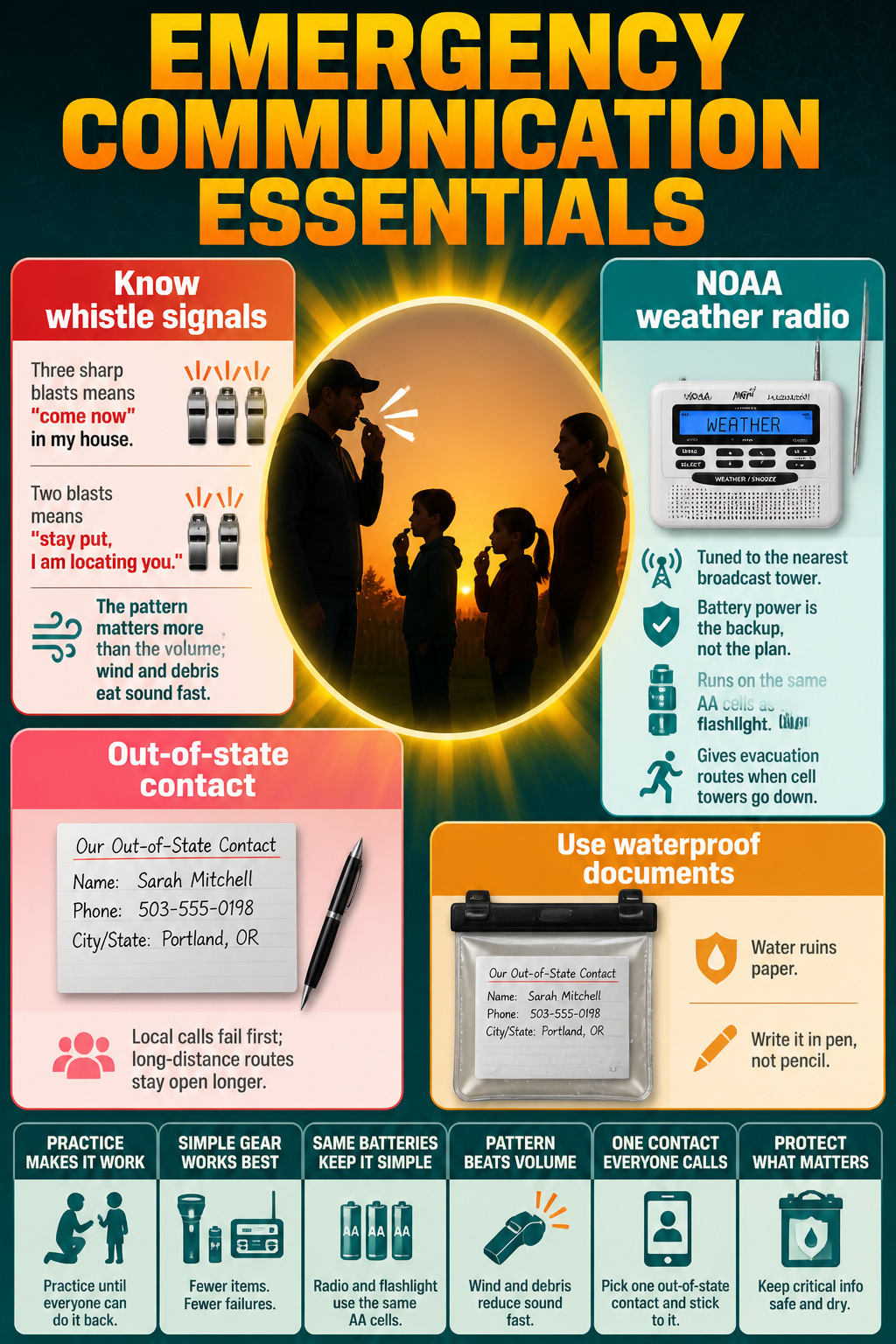
A whistle in your kit only works if your family knows the signal. Three sharp blasts means "come now" in my house. Two blasts means "stay put, I am locating you." We practiced this in the backyard until the kids could do it back to me without thinking. The pattern matters more than the volume; wind and debris eat sound fast.
The NOAA weather radio sits beside the whistle, tuned to the nearest broadcast tower. Battery power is the backup, not the plan. The radio gives evacuation routes when cell towers go down, and it runs on the same AA cells as the flashlight, so the math stays simple. I keep a card in the kit with our out-of-state contact, the one person everyone calls when local lines jam. Local calls fail first; long-distance routes stay open longer.
The contact card should name someone outside your county, not your block. Write it in pen, not pencil. Water ruins paper, so that waterproof document container the sources mention carries this too.
What a Pet Kit Needs Specifically
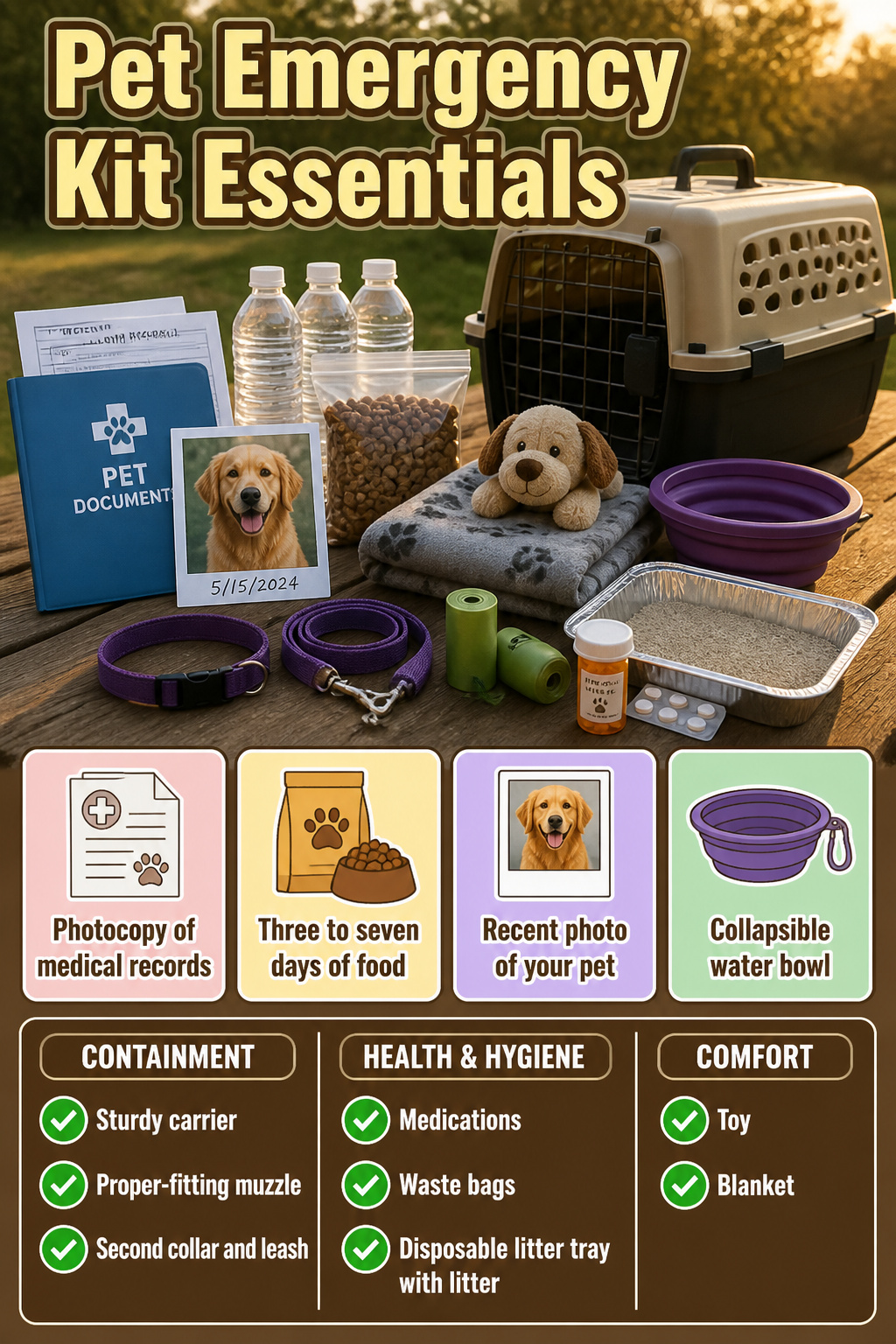
Pets in an evacuation move fast or not at all, and the paperwork is what gets them through a shelter door. A photocopy of medical records, current immunizations, and the veterinarian’s name and phone number should ride in the same folder you grab for your own documents. A recent photo of your pet, printed and dated, sits with that stack; if the leash slips or the carrier pops open in chaos, that picture is your search tool.
Food and water run three to seven days depending on whose guidance you follow. The ready.gov list says three days minimum; ReadyNC pushes toward a full week. Water is the heavier load, and pets drink more under stress. A collapsible dish saves space, but a familiar bowl calms a frightened animal better than novelty.
The carrier needs to be sturdy enough to stack in a vehicle, with a proper-fitting muzzle if your dog’s stress response is snapping. A second collar and leash live in the kit, not on the hook by the door where they stay during a rushed morning. Waste bags and a disposable litter tray with litter handle sanitation when outdoor breaks are not an option.
Medications rotate into the kit at the same interval you check your own supplies. The toy and blanket are not extras; the smell of home on fabric reduces shaking in a loud shelter.
First Aid Knowledge Matters More Than the Kit

A sealed first aid kit in the closet is about as useful as a cookbook you never opened. The supplies only matter if your hands know what to do with them.
A basic class covers the moves that buy time: stopping bleeding with direct pressure, recognizing when a burn needs more than cream, flushing an eye with actual wash solution instead of guessing with tap water. The ready.gov list includes gloves, bandages, antibiotic cream, burn cream, eyewash, thermometer, scissors, tweezers. None of these items explain themselves under stress.
Training turns the kit from a box of stuff into a working tool. Without it, you are left sorting through adhesive bandages while someone waits. The class also teaches you what the kit cannot fix, which is just as valuable. Petroleum jelly and tweezers will not handle every situation.
Prescription medications need their own rhythm. Insulin, heart medicine, inhalers, glucose monitoring supplies. These rotate on expiration dates whether the emergency happens or not. Someone has to own that calendar.
Two pairs of latex or other germ-free gloves sit at the top of the list for a reason. Infection control starts there, and it is easy to skip when you are in a hurry. The class drills that until it is automatic.
Frequently Asked Questions
What should be in an emergency preparedness kit?
A kit needs one gallon of water per person per day, non-perishable food for three to seven days, a manual can opener, a real first aid kit with gloves and bandages, a flashlight with extra batteries stored outside the device, a NOAA weather radio, important documents in a waterproof container, personal hygiene items, sturdy closed-toe shoes, a sleeping bag or warm blanket for each person, a dust mask, plastic sheeting and duct tape, tools including a wrench for utility shut-off, cash in small bills, a local paper map, and supplies for babies, pets, or anyone with unique medical needs.
How much water do I need for an emergency?
Plan for one gallon per person per day. Most sources call for at least three days, though stretching to seven days is the safer target. Water takes up space fast; six gallons for two people fills a milk crate before you account for cooking or washing.
How often should I check my emergency kit?
Open the whole container every three months to check dates, test the radio and flashlight, rotate prescription medications, and replace anything aging out. Calendar reminders help, but the habit matters more than the app.
How do I store my emergency kit?
Keep it somewhere every family member knows and the slowest person in the household can reach in under a minute, without moving anything else first. Accessibility beats perfect climate control; a kit in the hall closet that you actually grab beats one in a climate-controlled corner nobody remembers.
What if I have pets?
Pack a separate pet kit with three to seven days of food and water, bowls, medications, immunization records, current photos, a sturdy carrier, a properly fitting muzzle, collar with ID tag, extra leash, and a familiar toy or blanket. Rotate pet medications on the same schedule as your own supplies.