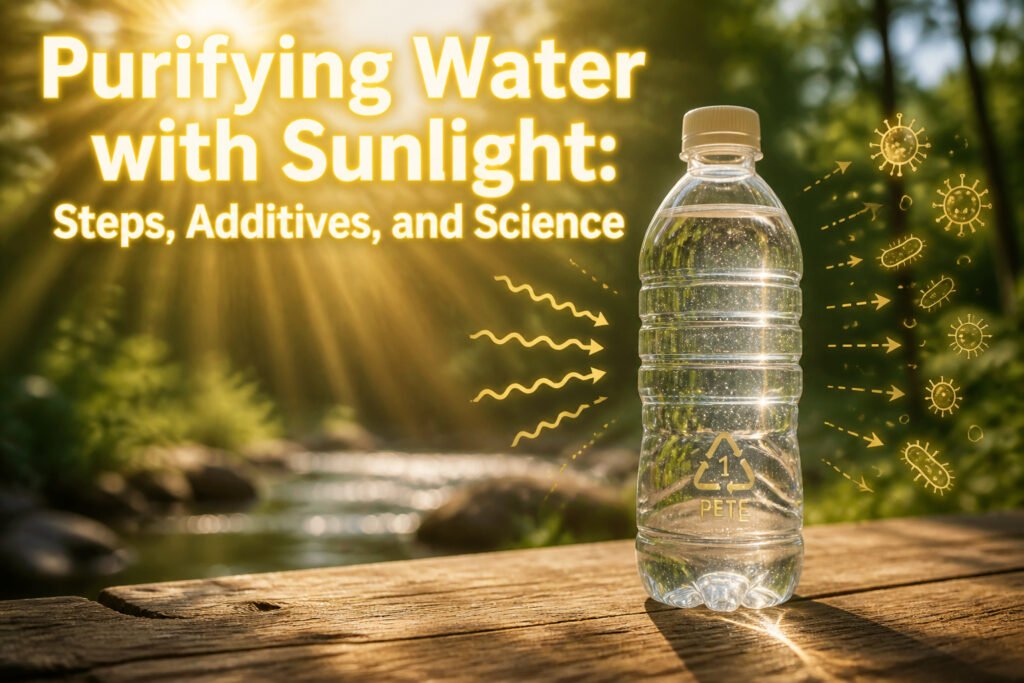
Solar disinfection, or SODIS, is a method for using sunlight to kill pathogens in drinking water. It works only against biological contaminants; UV light and heat destroy bacteria and viruses, but cannot touch heavy metals, pesticides, or chemical pollutants already dissolved in the water. Six hours of strong sun through a clear PET bottle marked with recycle code #1 will inactivate 99.9% of bacteria, provided the water is clear enough to pass the newspaper test first.
Select Clean Water

Running water from a lake or stream beats standing water every time. The cleaner your starting point, the more reliable SODIS becomes, because sunlight kills microbes but cannot remove chemical pollutants or heavy metals. A stream below a mine tailing or a pond near agricultural runoff might look clear and still fail you.
I learned this distinction the hard way reading up on backcountry trips where people treated biological contamination only to spend the night with stomach cramps from something the sun never touches. If the water smells off, carries an oily sheen, or pools near latrines or sewers, find a different source. The method simply passes those problems through.
The cheapest and easiest way to disinfect water? Sunlight. Just leave a clear glass or plastic bottle out in the sun for six hours.
Six hours of UV exposure tears apart bacteria and viruses, yet it leaves solvents, pesticides, and heavy metals untouched. That limitation is not a footnote; it is the boundary that decides whether SODIS fits your situation.
Filter Cloudy Water

Cloudy water blocks the UV rays that make SODIS work, so filtering comes first. Pour the water through several layers of cloth to catch sediment and debris, then let any remaining particles settle before filtering again. The goal is below 30 NTU turbidity, the threshold where solar disinfection becomes reliable again.
A quick field check is the newspaper test: set the filled bottle upright on a newspaper headline and look down through the opening. If the letters are readable, the water is clear enough. If not, the turbidity likely exceeds that 30 NTU limit and needs more filtering or settling time. I have skipped this step in a hurry and paid for it with bottles that sat in the sun all day and still came out questionable. The cloth does not need to be special; a clean T-shirt or sheeting folded into layers works fine. What matters is getting the water transparent enough that light can pass through the full depth of the bottle.
Fill Clear Bottles

Clear PET bottles marked with recycle code #1 are the ones that work for SODIS. Polyethylene terephthalate lets UV-A and UV-B light pass through to the water, which is exactly what you need for the disinfection process. Polycarbonate, the #7 resin, blocks those same rays entirely and belongs in the recycling bin, not your kit.
Size matters because water depth kills UV intensity fast. At 10 cm of depth and moderate turbidity of 26 NTU, UV-A already drops to half strength. Two liters is the practical ceiling; anything larger and the center of the container stays too dark for too long. Standard soft-drink bottles are common, free, and shaped about right.
Colored bottles, even the light green ones from lemon-lime soda, filter out part of the spectrum you’re counting on. Scratches are worse than color. They scatter light and create shadows where microbes hide. A bottle that looks frosted or feels rough to the fingernail has earned retirement. I keep a few replacements in my truck bag so I’m not tempted to reuse a bottle past its useful life.
The heat question comes up every time I mention this method to someone new. PET under SODIS conditions has been tested at 140°F for 17 hours straight. The adipates and phthalates that made it into the water sat far below WHO drinking-water guidelines, and antimony levels stayed orders of magnitude under the limits. The bottles aren’t storage containers anyway; you drink the water and move on.
Oxygenate the Water

The oxygenation step is what separates SODIS from simply leaving bottles in the sun. UV light alone kills organisms, but dissolved oxygen reacts with that same UV to produce ozone, hydrogen peroxide, and free radicals that tear through whatever the UV missed. Water straight from a stream or lake already carries some dissolved oxygen, yet not enough for the full reaction.
Fill each bottle only two-thirds full, then shake it hard for 20 to 30 seconds. The turbulence forces air into the water and the partial vacuum in the bottle headspace helps hold it there. After shaking, top the bottle off completely so no air gap remains. A full bottle prevents the water from sloshing later, which would let oxygen escape before the UV can work on it.
PET bottles handle this well; the plastic flexes under pressure and seals tight. Glass bottles, even clear ones, block the UV wavelengths that drive the reaction, so the oxygen you just dissolved sits mostly unused. That is one reason the method specifies PET, not just any clear container.
Expose to Sunlight
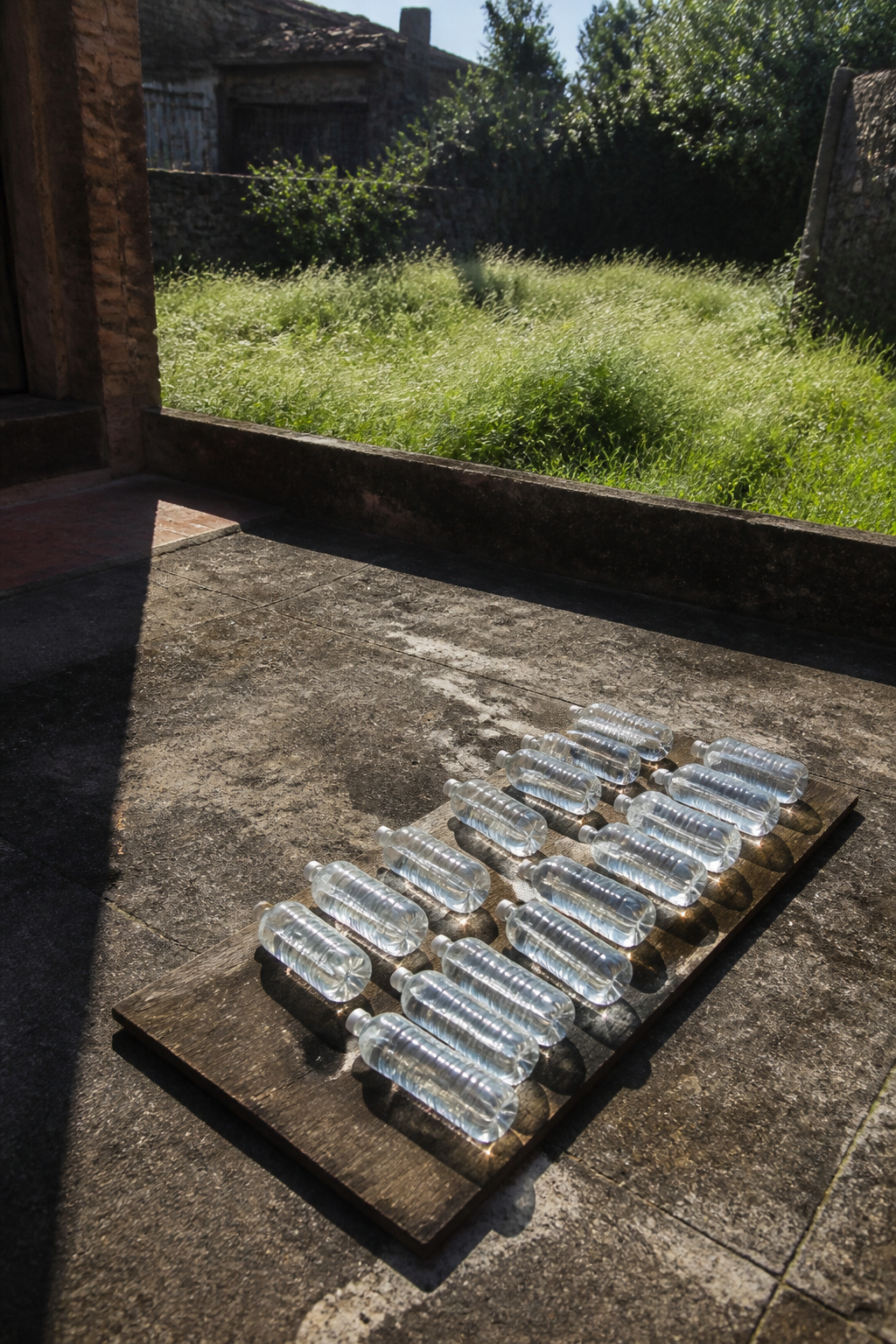
Lay the bottles flat on a dark surface in direct sunlight, not upright. The flat position doubles the surface area catching UV radiation compared to standing them on end, and the dark backing absorbs heat that helps warm the water. Six hours of strong sun is the minimum for the SODIS method to work. If the sky is more than half clouded over, stretch that to two full days. Ambient air temperature does not matter; what counts is the strength of the UV light actually reaching the bottle. When you are unsure about conditions, err toward the longer exposure. The heat and ultraviolet radiation together damage microbial DNA and eventually kill bacteria, viruses, and protozoa. If the water is very turbid, particles shield microorganisms from the rays and the method fails; filter first, or use the salt trick described elsewhere, before laying the bottles out to sun.
Check and Store

The newspaper test is the quickest way to know whether your treated water is actually safe to drink. Set the filled bottle upright on a newspaper headline and look down through the opening. If the letters are readable, the turbidity sits below 30 NTU and the SODIS method can do its job. If the print blurs, the water needs pretreatment before you bother with six hours in the sun.
Once the bottle passes that check and completes its exposure, treat it like the clean water it is. A loose cap or a bottle left open on a dusty surface undoes the work. Seal it, keep it sealed, and handle it with the same care you’d give boiled water.
Getting this right matters more than the method itself. Studies tracking SODIS users across multiple countries show diarrheal disease dropping 30–80% when the steps are followed properly. That range is wide because real-world practice varies, and the lower end catches people who skipped the newspaper test or let their bottles sit open afterward. The upper end belongs to the ones who treated the process seriously.
Add Salt or Lime
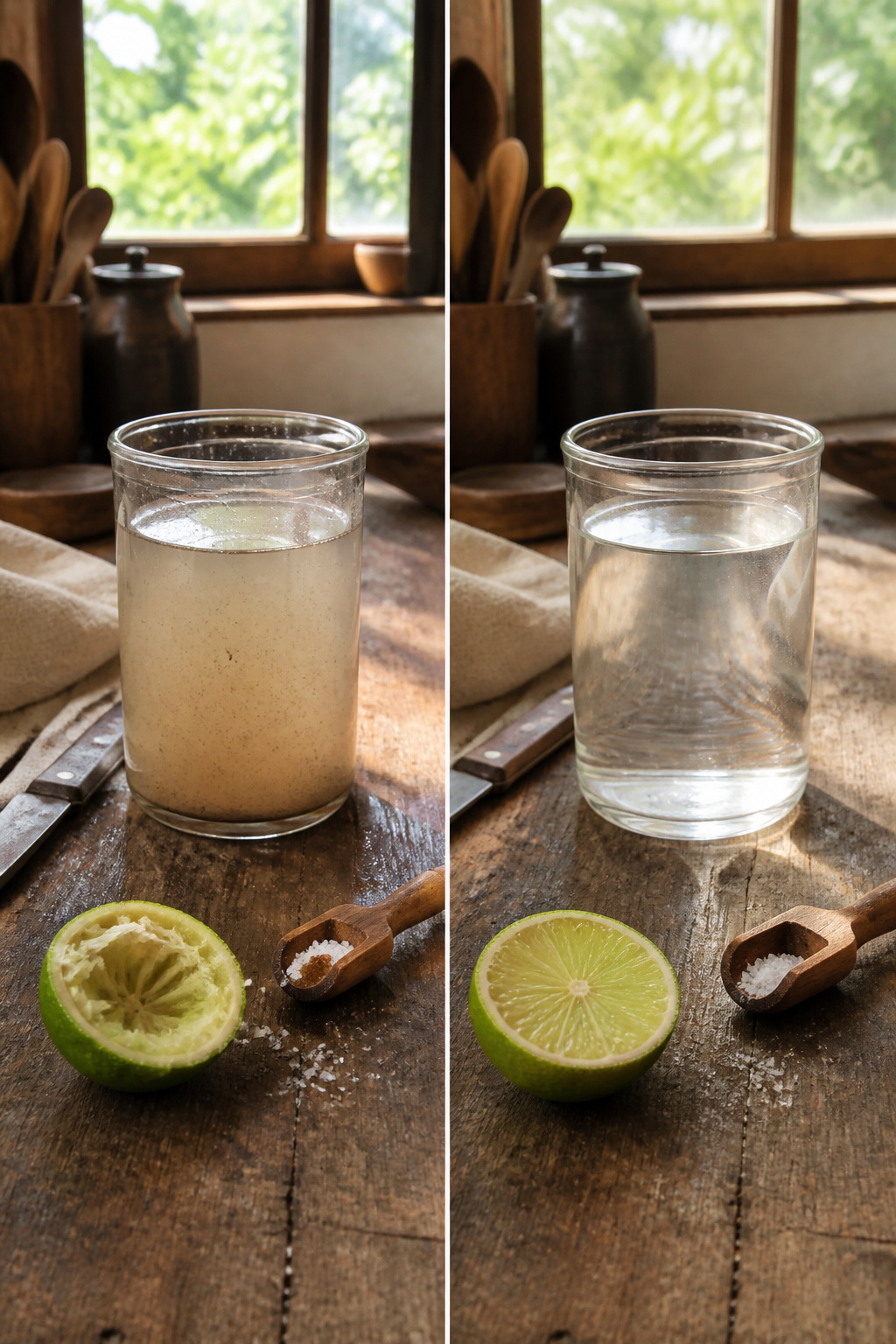
A pinch of salt does what waiting alone cannot. 1,250 mg, about a quarter teaspoon, makes suspended clay clump and sink within an hour, dropping turbidity below the 30-NTU threshold where SODIS works. Bentonite settles fastest; other clays need a bentonite jumpstarter to pull them along. The residual salt stays below what you’d taste in a sports drink.
Lime juice attacks from a different angle. Thirty mL, roughly half a lime, contains psoralens that crosslink pathogen DNA when sunlight hits. Against E. coli, that cuts disinfection from six hours to thirty minutes. The slurry, whole fruit blended and strained, works even faster on viruses, though norovirus shrugs at both. Not all citrus packs the same psoralen punch; limes are the ones to reach for.
Photosensitizers and Titanium Dioxide

Photosensitizers like erythrosine and titanium dioxide coatings can push sunlight purification past what standard SODIS achieves on its own. The idea is straightforward: these materials generate free radicals when UV light hits them, and those radicals tear apart viral structures that would otherwise survive a full day in the sun. Titanium dioxide in particular has drawn interest because it keeps working without being consumed, just sitting there on a surface reacting again each morning.
What caught my attention reading through the research was how far this sits from anything you can buy off a shelf right now. Labs have demonstrated the effect. Field trials are scattered. No kit exists yet that packages this for a backpack or a village water project. The chemistry is real, but the engineering to make it repeatable, affordable, and forgiving of real-world water quality is not.
For now, this belongs in the same mental folder as promising techniques to watch, not to plan around. Standard SODIS with clear bottles and six hours of sun remains the practical path. If you are experimenting at home, ordinary table salt or a squeeze of lime in the bottle still offers more documented benefit than hunting down photocatalyst coatings that may not survive shipping.
How SODIS Works

Sunlight purifies water through two simultaneous mechanisms. UV-A radiation damages pathogen DNA directly, disrupting the genetic instructions bacteria, viruses, and protozoa need to reproduce or function. The same exposure also heats the water toward pasteurization temperatures, and the combined stress proves lethal over time.
The process is not instant. On a clear day, six hours of direct sun kills 99.9% of bacteria, though viruses can demand closer to 30 hours for full inactivation. Cloudy weather stretches the required window to 48 hours. This two-pronged attack, UV plus thermal, explains why the method works against such a broad range of threats without chemicals or fuel.
Turbidity undermines both mechanisms. Suspended clay and soil particles shield microorganisms from UV rays and slow heat penetration, which is why clearing the water first matters so much. The World Health Organization recognizes SODIS precisely because this simple combination, properly applied, delivers reliable disinfection at the household level.
What SODIS Cannot Do

SODIS only disinfects. It does not remove chemical contaminants, heavy metals, or dissolved toxins from water, so calling it purification is a stretch. The method kills pathogens with UV-A radiation and heat, but anything already dissolved stays dissolved.
Highly turbid water blocks that radiation and drops effectiveness sharply. Suspended particles shield bacteria and viruses from the light they need to die. The standard field check is the newspaper test: set the filled bottle on a headline and look down through the opening. Readable letters mean go ahead; unreadable means turbidity likely exceeds 30 NTU and pretreatment is mandatory.
Pre-filtering or flocculation comes first. Common table salt works as a flocculant for some soil types, a cheap fix that extends where SODIS can work. Without that step, you are just warming dirty water.
Effectiveness by Pathogen and Weather

Bright sun and heavy cloud change the timeline more than most people expect. Six hours of strong UV will handle most bacteria, but viruses can need closer to 30 hours even in ideal conditions, and fully overcast skies push the full treatment to up to 48 hours. The 30–80% disease reduction figure you see cited comes with that same spread: results depend on whether you’re fighting bacteria, viruses, or protozoa, and on whether the sky cooperates.
| Condition | Bacteria | Viruses | Protozoa |
|---|---|---|---|
| Bright sun, 6 hours | 99.9% inactivated | Partial; 30 hrs preferred | Effective |
| Overcast, up to 48 hours | Effective | Slower inactivation | Effective |
| Turbid water (>30 NTU) | Shielded; ineffective | Shielded; ineffective | Shielded; ineffective |
Bacteria fall fastest to the combined heat and UVA/UVB exposure. Protozoa follow a similar pattern. Viruses are the holdout, their small size making them harder to damage; this is where the method shows its clearest limitation. Turbidity above 30 NTU blocks the rays entirely, so the pathogen type stops mattering until the water clears.
Why This Method Matters

Sunlight costs nothing, and a used PET bottle costs almost as little. That pairing is what makes SODIS work in places where chlorine tablets or fuel for boiling drain limited money and time. The World Health Organization counts it as a viable household method, and more than 5 million people across 24 countries now rely on it, mostly in Africa, Asia, and Latin America.
The environmental math is straightforward. Boiling demands wood, charcoal, or gas; chlorine production needs chemical plants and supply chains. SODIS asks only for six hours of clear or partly cloudy sky and a bottle that might otherwise be trash. Studies tied to its rollout have tracked sharp drops in illness: diarrheal disease down roughly 70% in some areas, cholera by about 86% where the method took hold.
Where fuel is scarce or expensive, the choice is often between this and nothing. Even where other options exist, the lower running cost and lighter footprint tend to win out. The catch is what SODIS cannot fix on its own: water cloudier than 30 NTU blocks UV before it reaches the pathogens, which is why pretreatment matters and why the method still needs thought, not just sun.
Frequently Asked Questions
How long does it take to purify water using sunlight?
Six hours of strong sun is the minimum for SODIS to work. If the sky is more than half clouded over, stretch that to two full days. What matters is UV strength reaching the bottle, not the air temperature.
What types of bottles can be used for SODIS?
Clear PET plastic bottles marked with recycle code #1 are the ones that work. Polycarbonate (#7) blocks UV-A and UV-B entirely, and colored bottles filter out part of the spectrum you need. Scratches scatter light and create shadows where microbes hide, so replace worn bottles.
Can SODIS remove chemical contaminants?
No. Sunlight kills microbes but cannot remove chemical pollutants, heavy metals, or dissolved toxins. A stream below a mine tailing or near agricultural runoff might look clear and still make you sick from something the sun never touches.
What should I do if the water is turbid?
Filter it first. Pour the water through several layers of cloth to catch sediment, then let particles settle and filter again. The goal is below 30 NTU turbidity, the threshold where solar disinfection becomes reliable. A quick field check is the newspaper test: set the filled bottle on a headline and look down through the opening; readable letters mean you are clear enough to proceed.