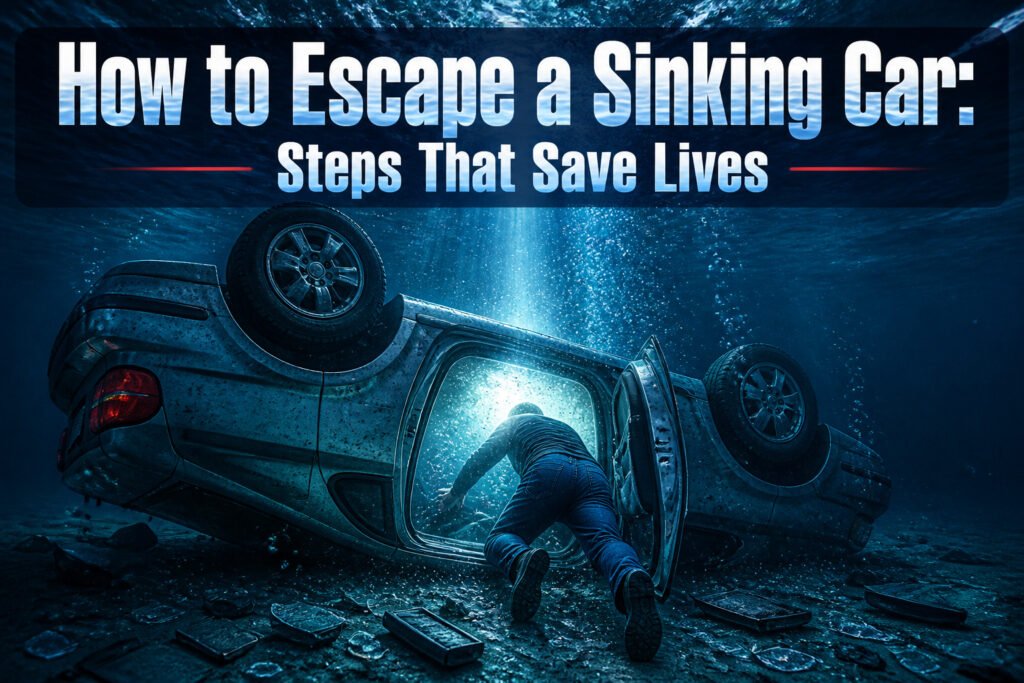
Escaping a sinking car alive takes one to two minutes, zero special training, and a $10 tool kept within arm’s reach. Most people die because they reach for the door handle first, when water pressure has already welded it shut.
The stage everyone botches is the first ten seconds. SWOC starts with S for a reason: panic burns the oxygen and the narrow window your car’s buoyancy gives you. Gordon Giesbrecht’s research at the University of Manitoba found that waiting for the cabin to fill, the old equal-pressure myth, drops survival odds to virtually zero.
1. Stay Calm
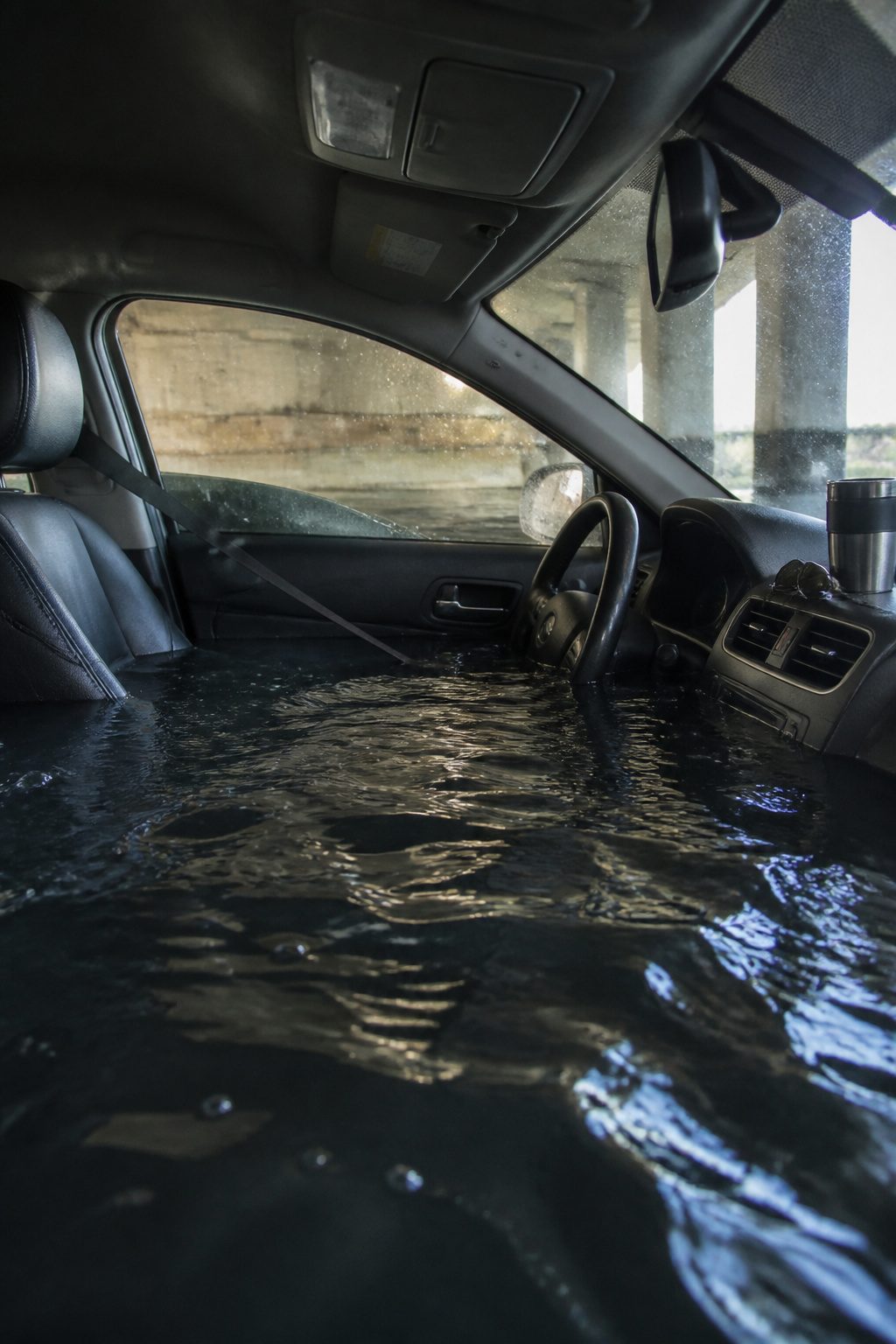
The back end of a sedan had already disappeared when I slowed past that flooded underpass two winters ago. Water was still rising around the trunk. Thirty to sixty seconds is how long most vehicles stay afloat before the heavy front end pulls them under. Some sources say you might get two minutes, but that 30 seconds to 2 minutes range depends on whether the car lands nose-down, how much cargo is up front, and whether windows are already open. By the time the water reaches chest level, your odds without an oxygen supply drop to nearly nothing.
Panic shrinks that window fast. It burns oxygen, blanks out motor memory, and sends hands fumbling for the door handle, which is exactly the wrong move. The SWOC protocol starts with S for a reason. Calm in that moment looks like this: a deep breath while water is still below the belt line, then another, then a deliberate reach for your own seatbelt before anyone else’s. Mouth stays closed to preserve air and keep water out. A calm voice to passengers, if there are any, beats the shriek that floods the cabin with noise and wastes the seconds you do not have. The water rushing in is information, not a signal to freeze. It tells you the front is sinking first, that the windshield is already under pressure, that the side window is still your path out. Focus on the next move, not the temperature of the water or how dark it looks. One step, then the next. That is what sixty usable seconds actually sounds like in your head.
2. Unbuckle Seatbelts
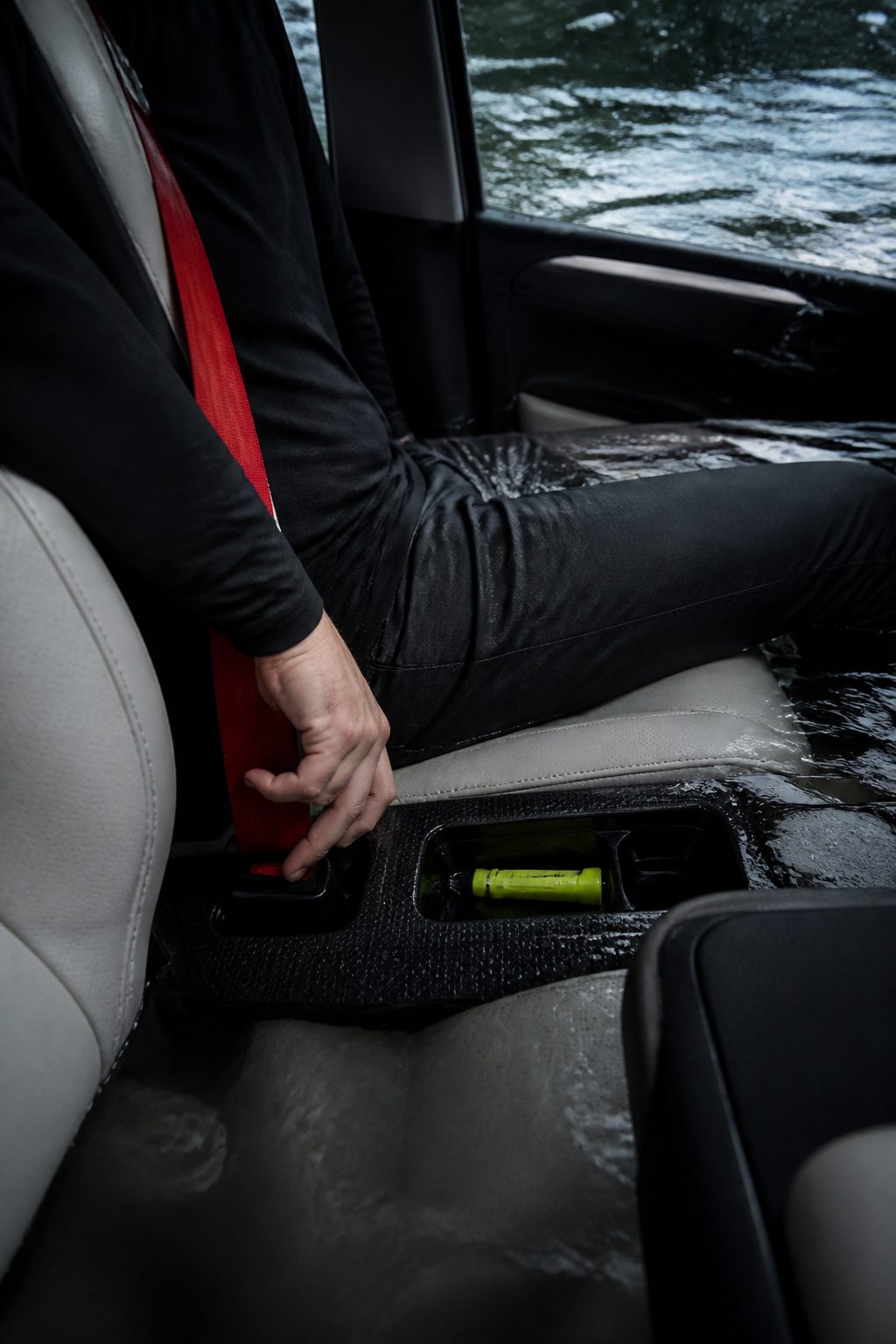
The moment water hits the floorboards, the seatbelt release button is your first bet, but it is only a bet. Electrical shorts kill power to the buckle solenoid in plenty of modern cars, and that button goes dead just when you need it most. Your own belt comes off first, not out of self-interest but because you cannot help a child while you are still pinned.
Kids need hands-on help, and the order matters: oldest to youngest, so the first one out can steady the next. A ten-year-old can hold a window frame; a two-year-old cannot.
Keep the cutter where your right hand already goes. The center console, the driver door pocket, or a visor clip beats the glovebox or the trunk every time. I have mine on a zip tie from the rearview mirror; some people clip it to the key ring if they still carry one. The ResQme tool sits in that spot, small enough to forget until the one second you cannot forget it. Spring-loaded for glass, but the seatbelt blade is the half you will reach for first.
If you must choose, cut the shoulder strap, not the lap belt. The lap belt holds you in the seat; the shoulder strap is what traps your upper body and keeps you from twisting free. Cut high, at a 45-degree angle, and the webbing parts in one pull.
3. Open or Break a Window
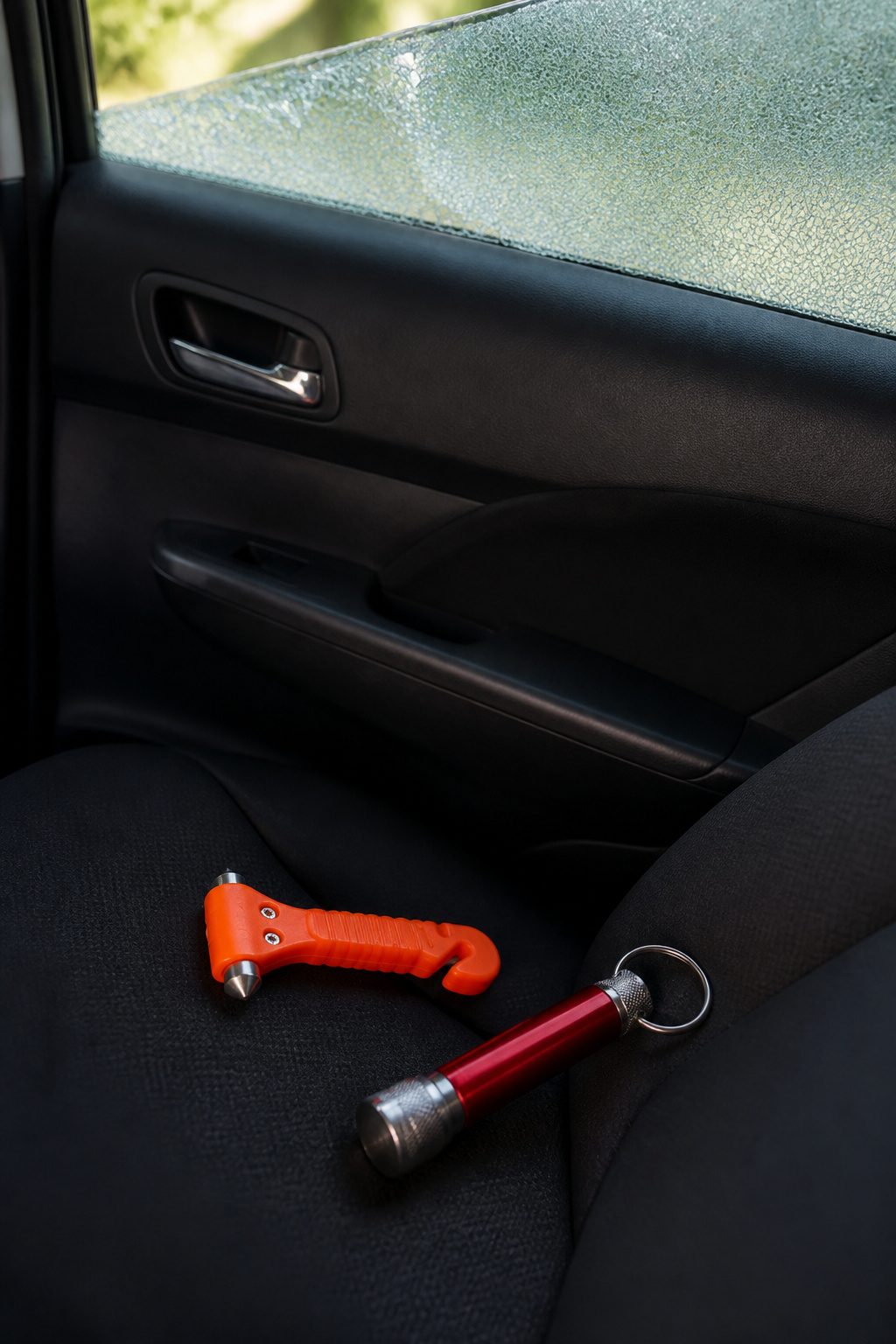
Side windows are tempered glass, which means they shatter into small pieces when struck. Windshields are laminated glass with a plastic layer baked between two sheets, so they crack but stay in one piece. A spring-loaded breaker works on tempered glass only, and even then you need to hit the lower corner or edge, not the center. The center absorbs the blow; the corners fracture clean through.
Try the window switch first while the electrics still have power. Once water shorts the system, that option is gone. If the switch fails, the breaker is your next move, and you want it on a rear side window if possible. Those stay above the water line longer than the front.
The door is the wrong choice entirely. Water pressure against the outside panel makes it impossible to push open until the car fills completely. By then you are trapped, and the inrush pins you inside. Some sources suggest waiting for equalization, but the escape needs to happen immediately, before the gap between inside and outside pressure disappears and takes your exit with it.
4. Exit the Vehicle
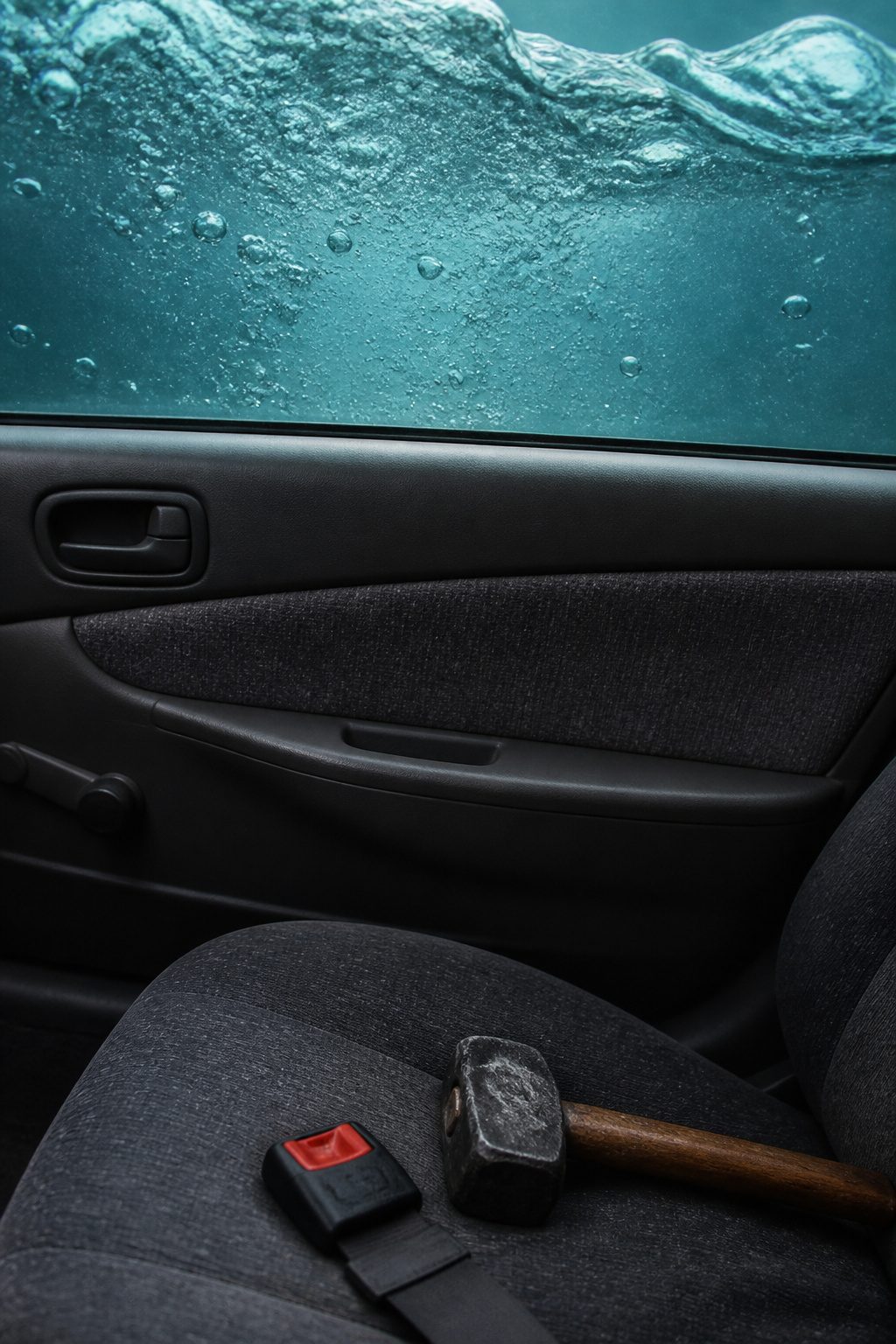
The oldest child goes through the window first, then turns back to pull the younger ones through. Rear windows stay above water longer than front ones, and most cars sink nose-first, so that back exit can be the easier path. Push the kids ahead of you and do not look back for bags, phones, or anything else that costs seconds.
The water pressing against the open window will feel like a solid wall. The pressure at the threshold is highest when the car is half-submerged, and pulling yourself through means timing your exhale, tucking your chin, and driving forward with your legs against the seat frame. Grab nothing on the way out. The phone in the cup holder, the purse on the floor, the laptop bag; they all stay. Thirty seconds to two minutes is the window most cars give you, and every item you reach for is time you do not have.
5. Swim to Safety

Bubbles from the escaping air show which way is up when the car has rolled or pitched and your inner ear cannot tell. Follow them. Do not pause to look back at the vehicle. A sinking car draws water down with it, and that current can pull a swimmer under if you stay too close. Distance matters more than speed in those first seconds.
The surface is not the end of the danger. Cold water shock hits in the first minute: the gasp reflex, then uncontrollable hyperventilation that can make you inhale water if your face is in a wave. Keep your mouth clamped and your head turned to the side until the worst of it passes. The hyperventilation eases after sixty to ninety seconds for most people. Until then, float, do not thrash. Let your clothing trap what air it can. Signal for help once you have enough breath to make the sound carry, and head for shore only if it is close enough that you are certain of the swim.
Why the Equal-Pressure Myth Kills
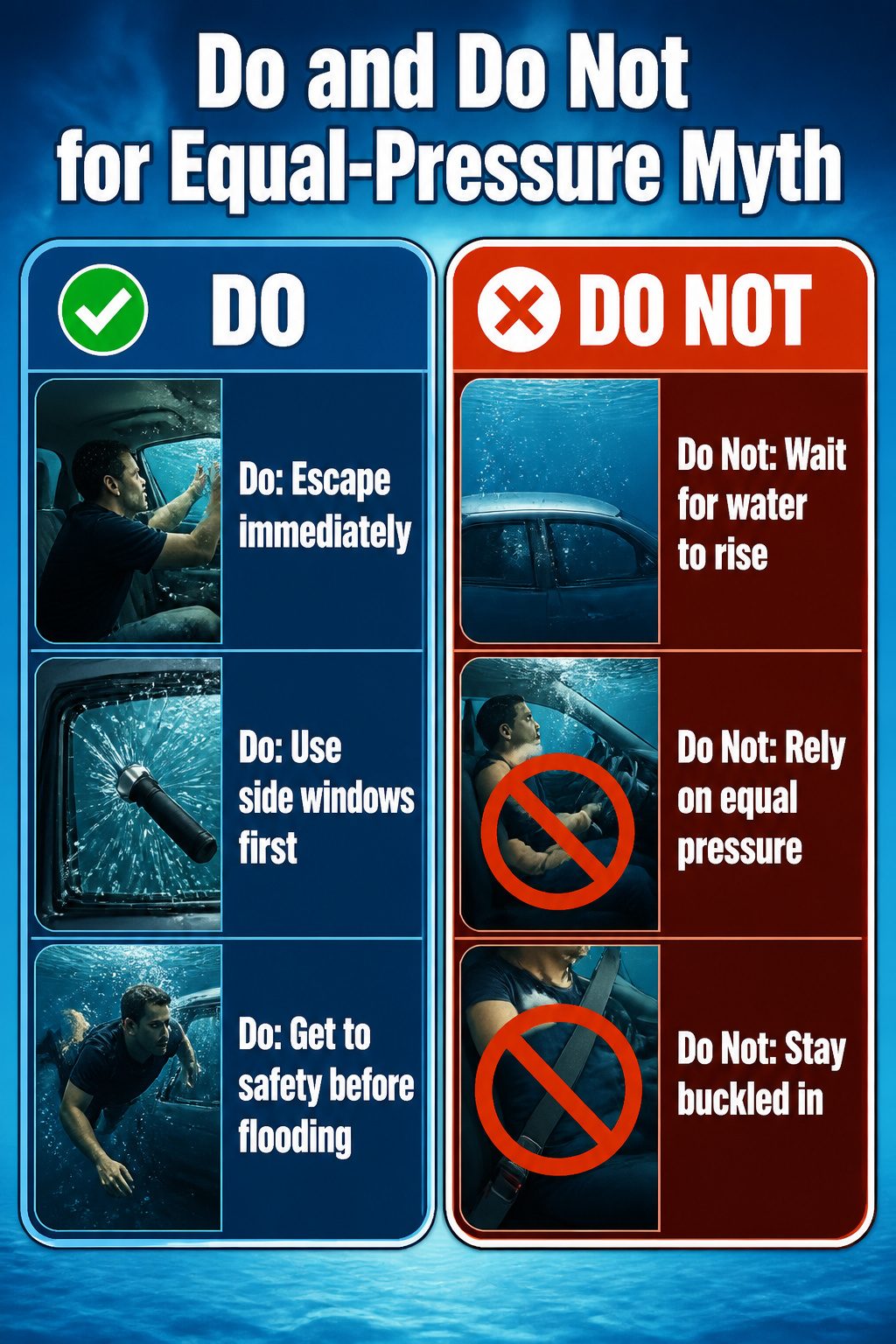
The equal-pressure myth still shows up in forums and even in a few old survival manuals, but waiting for the cabin to fill with water costs you the only advantages you have. A car floats for seconds to several minutes, not the two minutes the myth promises, and only in ideal conditions. During that brief window you still have air, you still have buoyancy helping you move, and you still have enough light to see what you’re doing. Let the water rise past the windows and all three disappear.
Gordon Giesbrecht, who studied vehicle submersion at the University of Manitoba, put it plainly for NPR:
"There are no good scenarios where waiting increases your chance of survival. It only decreases it to virtually zero."
— NPR
Once the cabin floods completely, you’re working in darkness against pressure that does not equalize instantaneously even after full submersion. The myth persists because it makes for dramatic movie scenes and because one military manual was widely misread. The actual physics work against anyone who delays.
What 400 Deaths a Year Looks Like
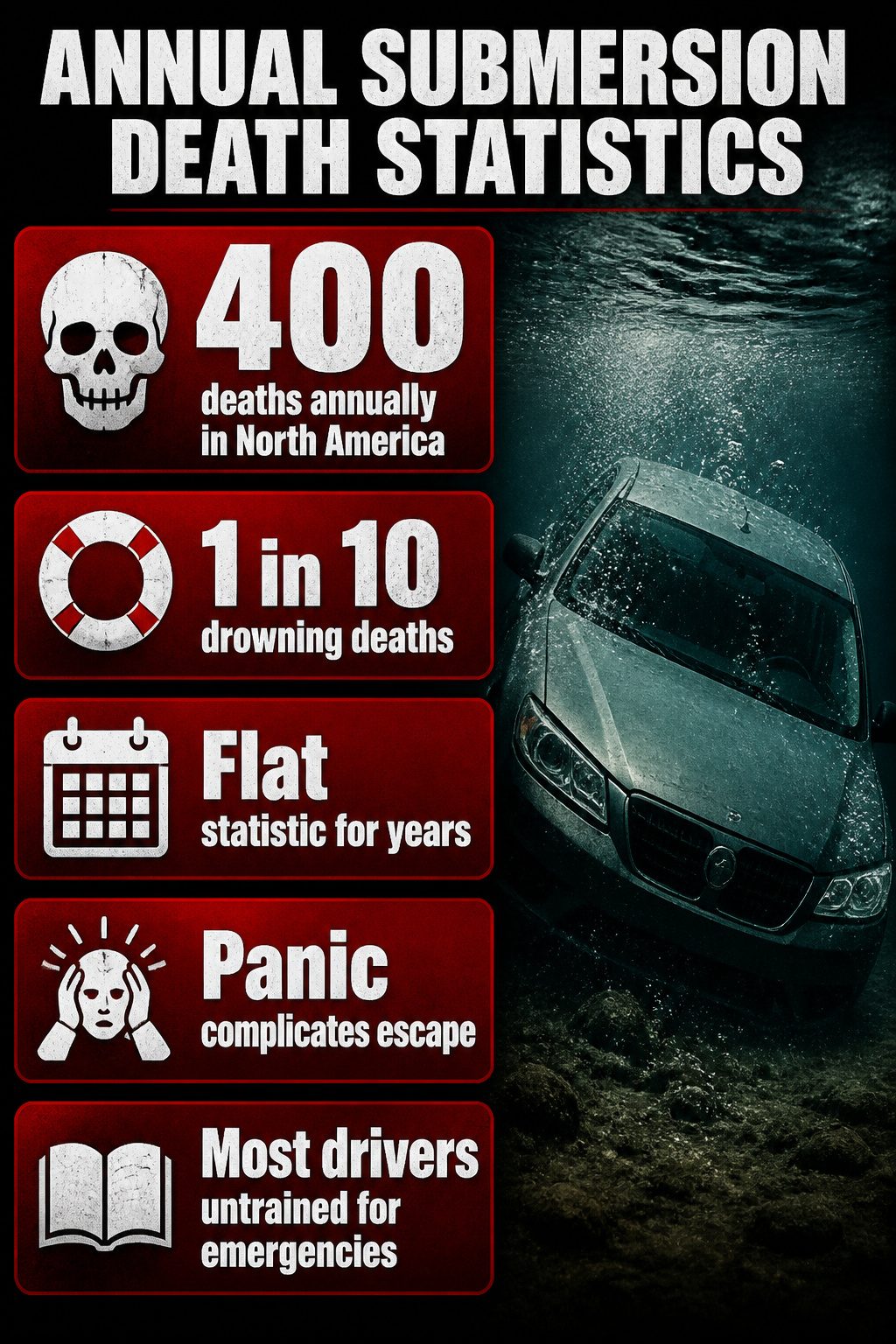
Four hundred people die in submerged vehicles across North America every year. That is roughly one in every ten drowning deaths, and the figure has stayed flat for decades despite safer cars in every other respect.
The worst scenes repeat in a handful of places. Bridges without guardrails send cars into rivers below. Flooded roads at night hide the drop until the front wheels are already over. Parking lots slope toward retention ponds. Ice gives out under the weight of a truck that drove where it should not have.
Seatbelts and airbags do nothing here. A car is not sealed like a boat; it sinks, and it sinks fast. You have about one minute before the cabin fills. Most drivers have never trained for that minute, and panic does the rest. The water pressure holds doors shut, the electrical system dies, and people stay belted in, waiting for the car to behave the way it does on asphalt.
Emergency Tools That Work
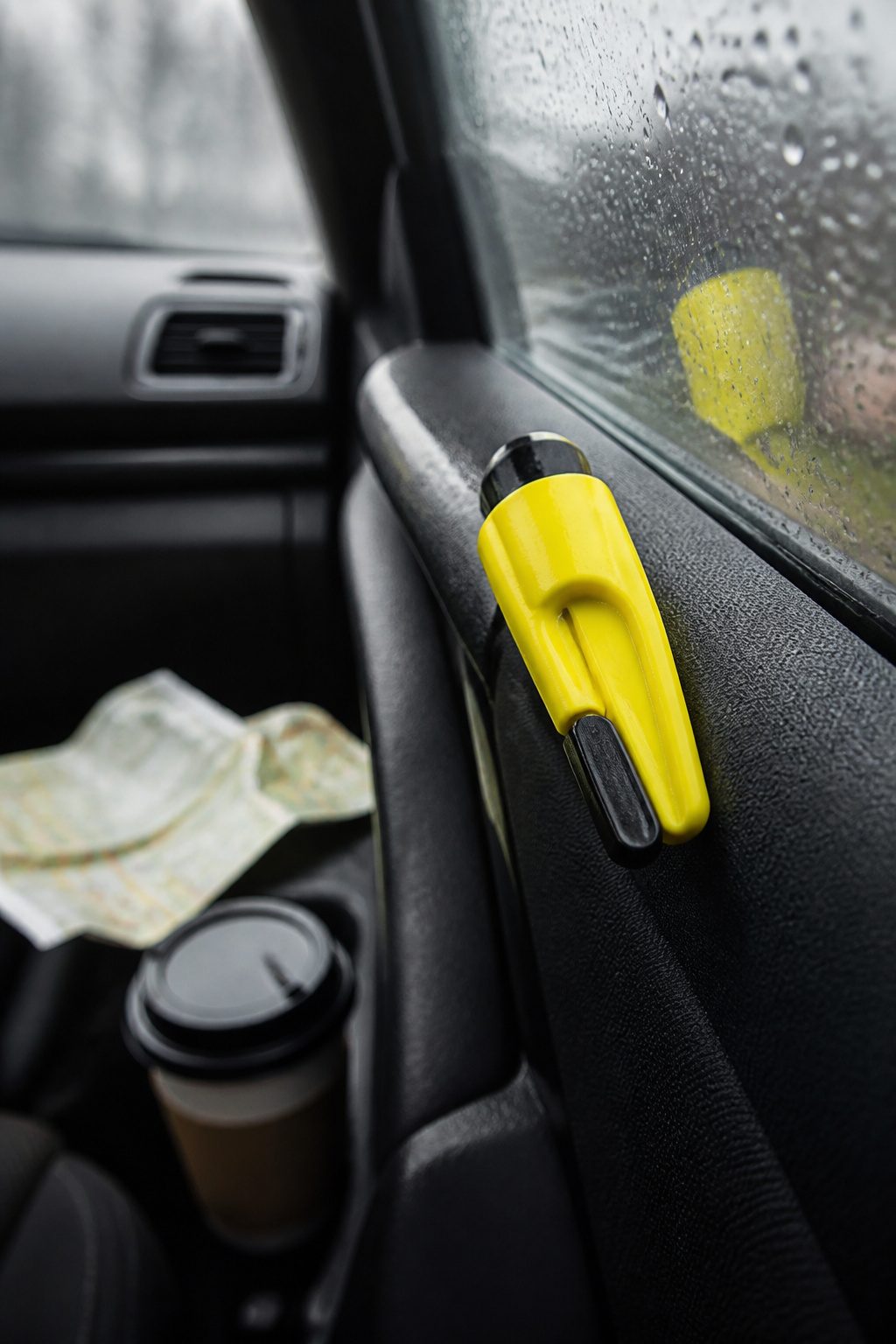
A dedicated escape tool belongs within arm’s reach on every drive, not buried in a glove box you will never find in black water. The ResQme tool, recommended by safety instructors, combines a spring-loaded window punch with a recessed seatbelt cutter in a unit smaller than a key fob and costing less than $10. Mount it in the driver-side door pocket, the center console, or on your keychain if that chain stays with you. Some drivers zip-tie one to each rearview mirror so passengers can reach their own.
The spring-loaded design matters more than most buyers realize. A hammer-style tool demands a swing you cannot manage once water fills the cabin and resistance builds against your arm; the ResQme fires its punch from a compressed spring with a simple press against the glass corner, working underwater with no swinging room needed. It functions only on tempered glass, found on side and some rear windows, not the laminated windshield. A small decal in the lower corner marks which is which.
Test your tool on a junkyard window before you count on it. The spring wears, the cutter dulls, and replacement is cheap insurance after any use or once the manufacturer date passes.
Know Your Glass Before You Need To
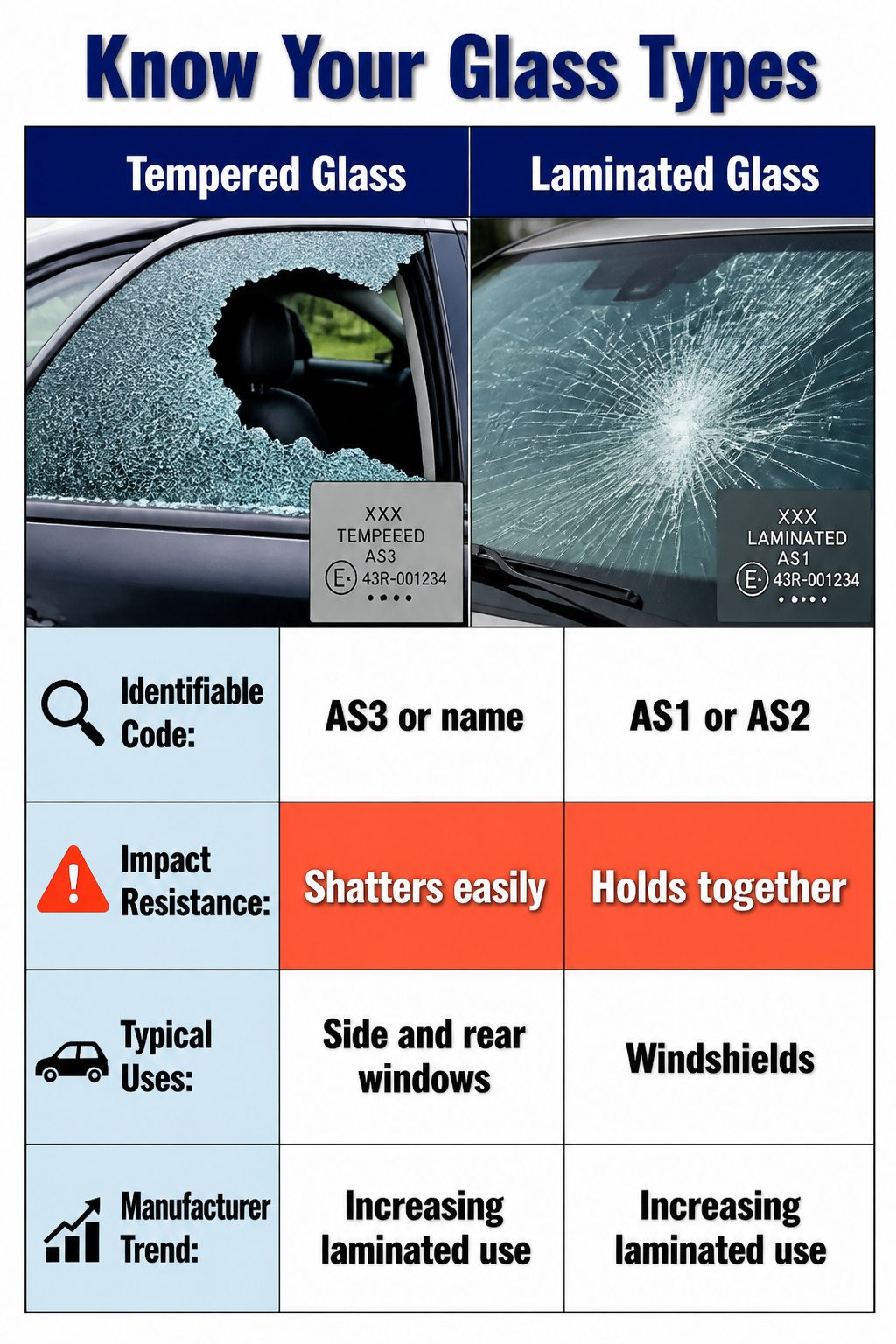
Tempered glass side and rear windows shatter into small granular pieces when you strike the lower corner with focused force. The windshield is a different animal entirely: laminated glass sandwiches a plastic interlayer between two layers, so it cracks but holds together, and a handheld tool will not punch through it. That distinction changes everything about which window you aim for.
The bug in the corner of each window tells you which you have. AS1 or AS2 means laminated; tempered glass usually carries its own name or the AS3 marking. Side windows have traditionally been tempered, especially in the rear doors, but more manufacturers are switching to laminated side glass for noise reduction and security. That trend means the rear window you assumed was your escape route might not be. Mark the tempered ones with a Sharpie in the corner after you check, because reading a tiny etched code while water is rising is not a realistic plan.
Drills Your Family Can Actually Do
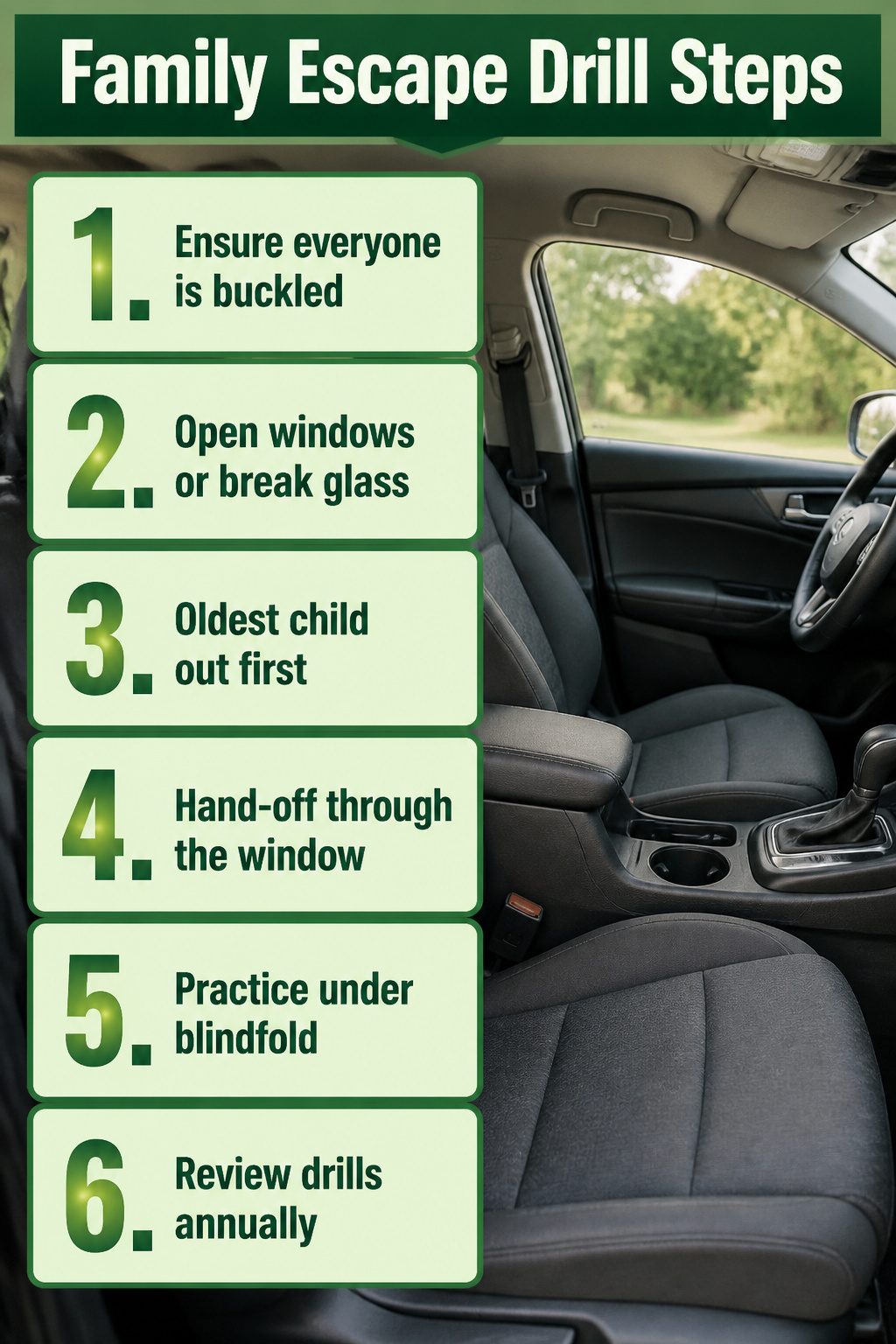
The only drill that has ever stuck in our house happens in the driveway with the engine off and the car parked. We run the full sequence while I time it on my phone: seatbelts, windows, oldest child out first, then the next. The first time we tried it, my daughter froze at the window ledge and would not drop the six inches to the grass. That told me everything. We now practice the hand-off through the window with me on the outside, which is closer to what panic actually looks like.
Blindfolding yourself to find the escape tool sounds silly until you try it. I keep mine zip-tied to the center console, and even knowing that, my hands go to the glove box first when I cannot see. Muscle memory is not memory at all; it is repetition, and repetition in the dark is different.
Once a year is enough. More than that and the kids treat it like a chore and stop listening. The drill changes when your oldest can unbuckle themselves, which for us happened at seven and caught me off guard. I had been rehearsing a rescue that was no longer necessary, and losing those seconds to check a belt that was already free would cost me elsewhere.
When a child clings and will not let go, you cannot negotiate. The motion that works is a forearm across the chest, pinning them to you, and swimming out through your own window with them attached like a koala. It is uncomfortable and they will cry. They can cry on land.
Frequently Asked Questions
How long does it take for a car to sink?
Most vehicles stay afloat for roughly 30 seconds to 2 minutes before the heavy front end pulls them under. The exact time depends on whether the car lands nose-down, how much cargo is up front, and whether windows are already open. Once water reaches chest level, survival odds without an oxygen supply drop to nearly nothing.
Should I try to open the door of a sinking car?
No. Water pressure against the outside panel makes a car door nearly impossible to push open until the cabin fills completely, and by then you are trapped. Some sources suggest waiting for pressure to equalize, but that wastes the brief window when you still have air, buoyancy, and light to work with. Use the side window instead.
What is the best tool for escaping a sinking car?
A dedicated escape tool that combines a spring-loaded window punch with a recessed seatbelt cutter, such as the ResQme tool, is the most effective option. The spring-loaded design works underwater with no swinging room needed, unlike hammer-style tools that become useless once water fills the cabin. Keep it within arm’s reach, not buried in a glove box.