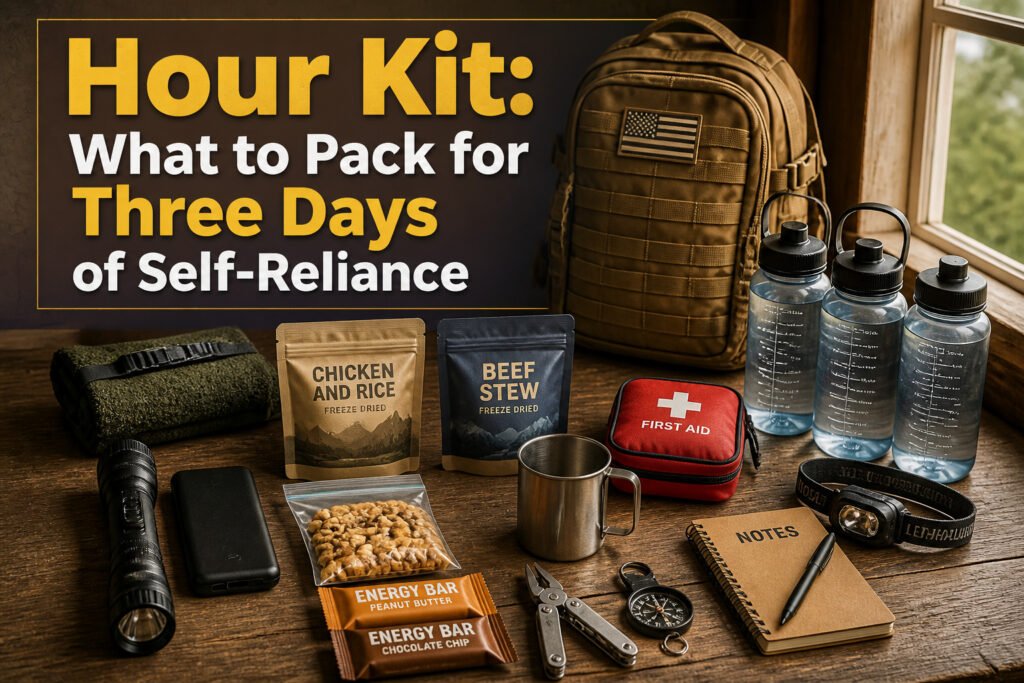
A 72 hour kit is a portable supply of water, food, and gear designed to keep a person self-sufficient for three days after a disaster. The catch is that most people pack it once and forget it, until a flooded garage or a dead flashlight proves the kit was only a box of good intentions. One gallon of water per person per day means nine gallons for a family of three, and plastic milk jugs leak; I learned that twice, once in carpet that smelled for weeks.
1. Water
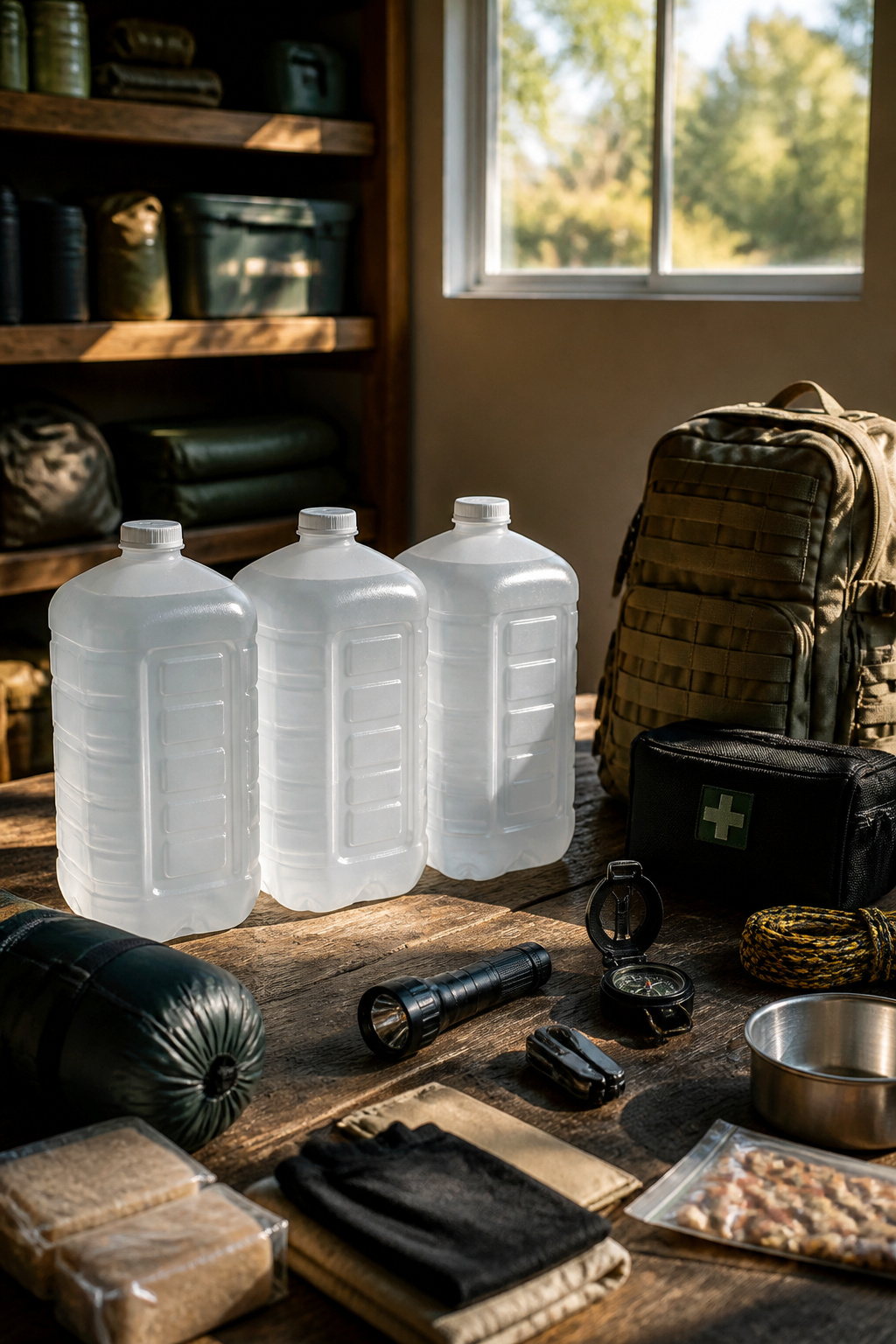
The standard figure is one gallon per person per day, split between drinking and basic sanitation. For a 72 hour kit, that means three gallons per person, which is heavier than most people want to carry and more awkward to store than it sounds.
Plastic milk jugs leak. I have found this out twice, once in a garage and once in a closet, and the smell of stagnant water in carpet does not leave quickly. Rigid containers with proper seals hold up, though the water inside them takes on a flat, plastic taste after a few months. It is still drinkable. It is just unpleasant enough that you will want to rotate it out rather than forget it.
Nursing mothers, anyone ill, and pets need more than the baseline. If your plan includes purification tablets or a filter, that covers refilling from questionable sources, but it does not reduce what you should have on hand at the start. The American Red Cross recommends a three-day supply for evacuation and a two-week supply for home.
Water: one gallon per person, per day (3-day supply for evacuation, 2-week supply for home)
That two-week figure is worth building toward once the three-day kit is solid. Running short on water shuts everything down faster than running short on food ever will.
2. Food
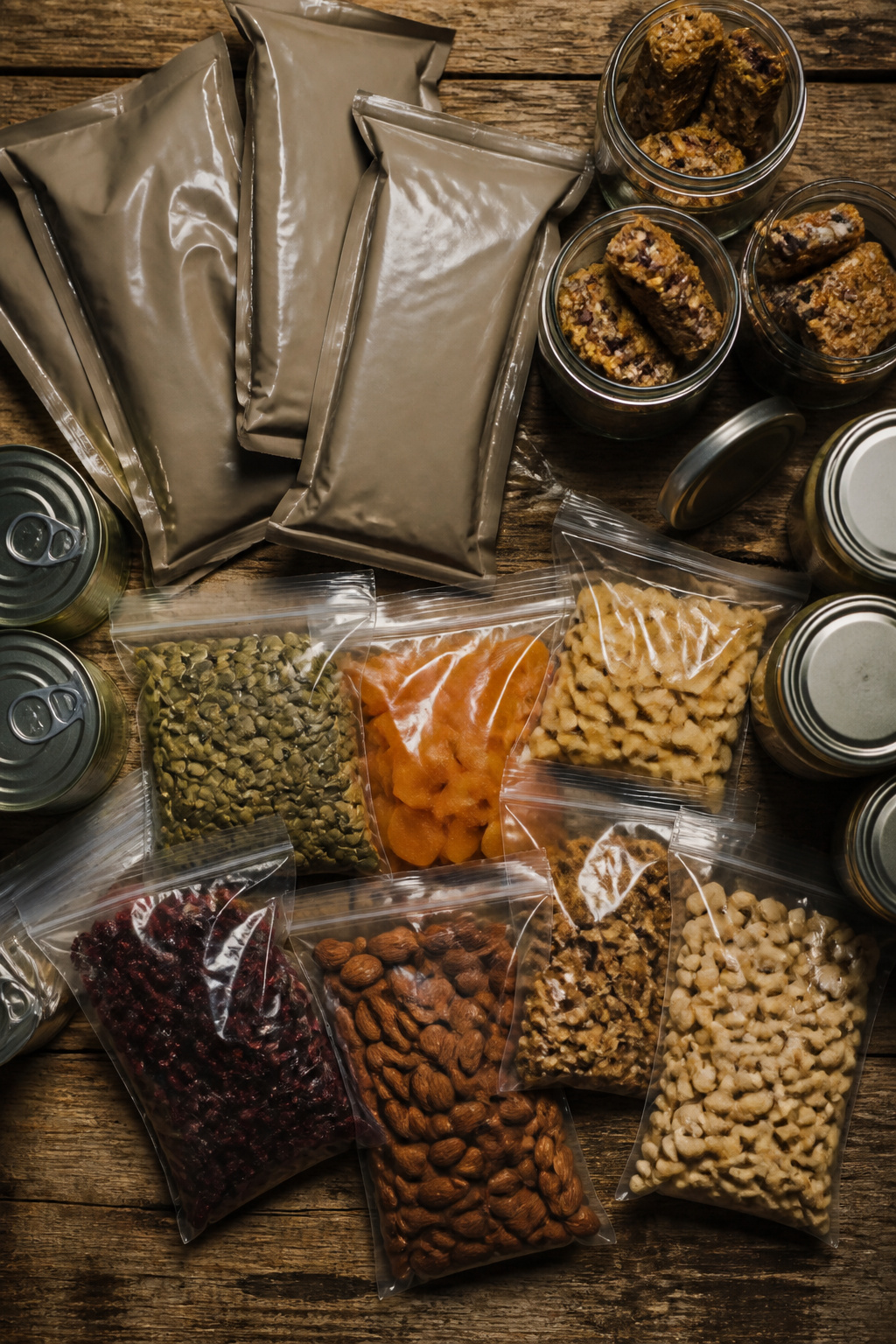
Food in a 72 hour kit has to survive the conditions where you store it, not just look good on a pantry shelf. Heat wrecked more of my early supplies than I care to admit; granola bars turned to paste, chocolate coatings melted through wrappers and glued everything together. Dried fruits and nuts hold up better, though even those harden in a hot vehicle over a summer. MREs tolerate heat better than most options, which is why they stay standard in military packs, but the sodium load sits heavy if you are not sweating it out.
Crushing is the other enemy. Energy bars and freeze-dried pouches I packed loose at the bottom of a bag arrived as dust and sharp corners. Rigid containers or at least the top pocket of a pack solve this cheaply.
Stress changes how food feels, not just how it tastes. Calorie counts that look generous on paper feel smaller when you are cold, scared, or working hard. I have eaten a 2,400-calorie MRE and wanted more two hours later. Pack more than the label says you need, and favor what you will actually eat. A church group I knew once packed kits for about $10 per person in half-gallon milk cartons, rotated every April and October. Cheap, but the food inside would have turned my stomach before it turned a screw; under stress, unfamiliar food becomes inedible food.
3. First Aid Kit
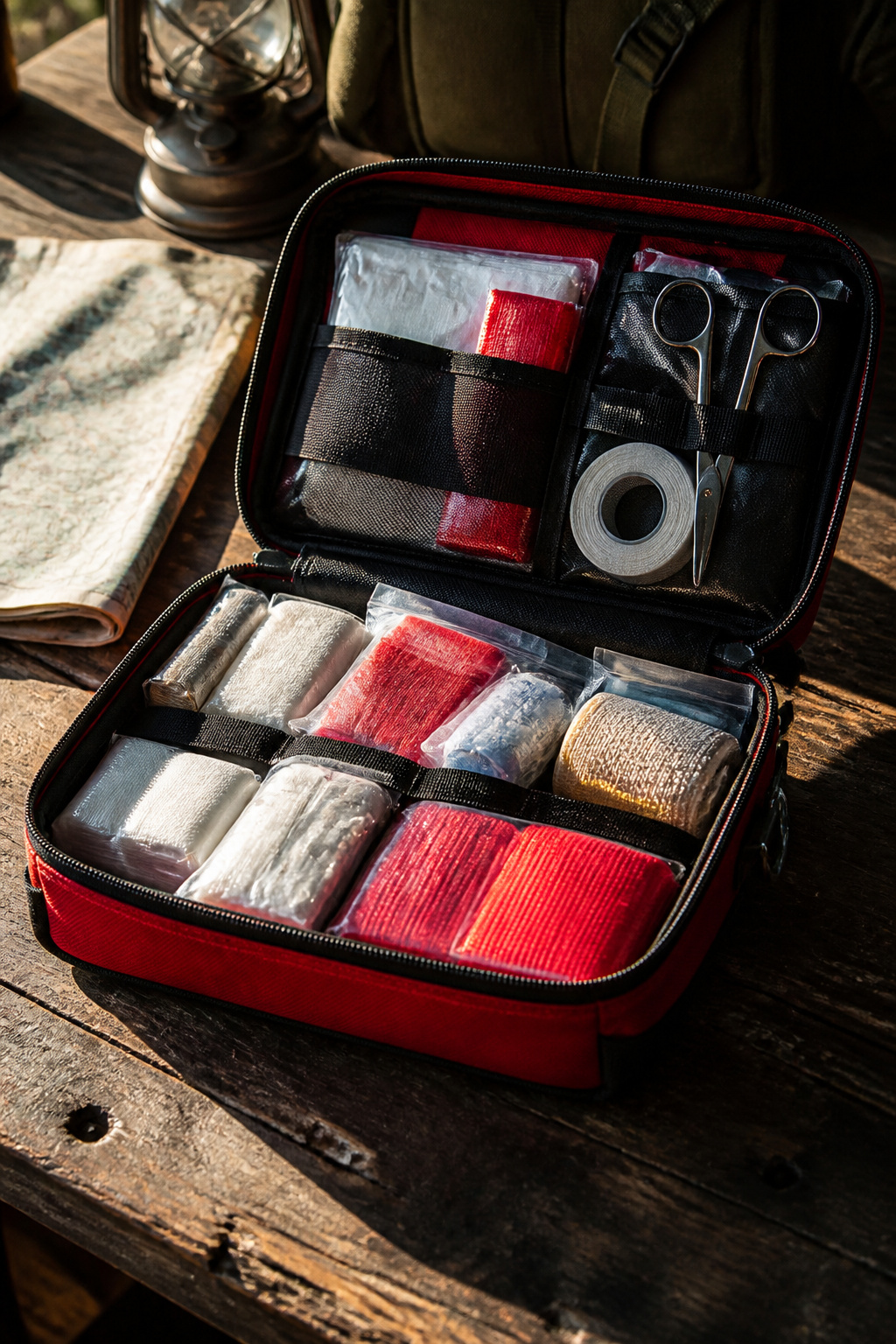
The first-aid pouch in my 72 hour kit started as a zip-lock stuffed with whatever looked useful. Bandages, gauze pads in two sizes, antiseptic wipes, a roll of tape, and a handful of ibuprofen. That was the core, and it has stayed the core through two rotations.
What actually gets used is almost never the dramatic stuff. The antiseptic wipes go first, pulled for kitchen cuts and trail blisters that have nothing to do with emergencies. Pain relievers disappear the same way, one or two at a time, until the bottle is empty and I have forgotten to log it. The 2-inch by 2-inch gauze pads are what taught me the hard lesson. A real gash on a forearm needs something that covers more ground, and folding two small pads together leaves a seam right where pressure matters. Now I carry 3-inch by 3-inch as the standard, with one larger trauma pad behind it.
Blister care and a small pair of scissors have both seen use. The scissors cut tape, moleskin, even fishing line once. What sits untouched is the elastic wrap; good in theory, but in practice tape and pressure handle what I have faced. The Red Cross recommends a 7-day supply of prescription medications, which I interpret as keeping a labeled bottle separate from the bathroom cabinet so it does not get borrowed.
Check it twice a year. Wipes dry out, pills expire, and the thing you need is always the thing you last replaced.
4. Flashlight
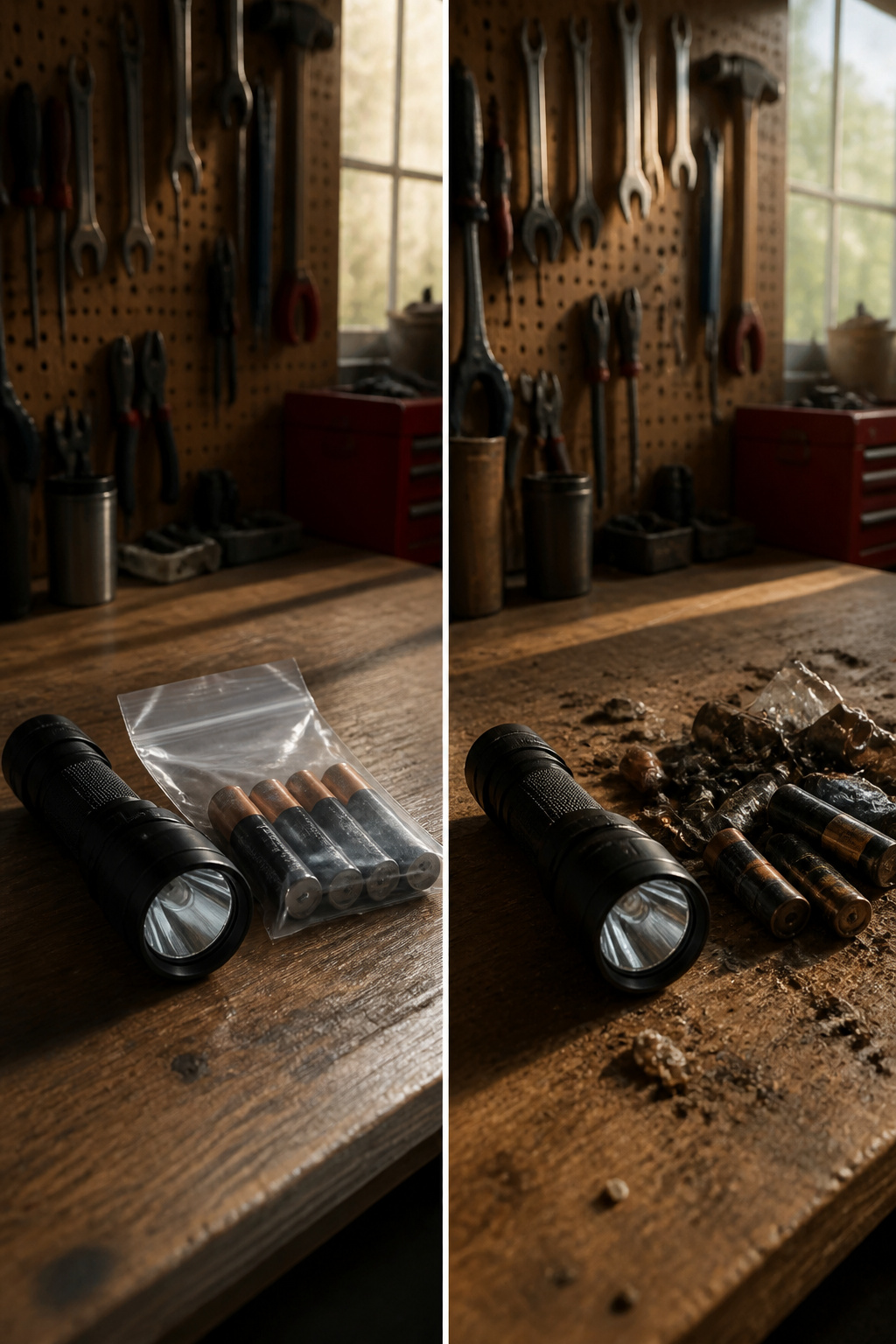
A flashlight in a 72 hour kit is non-negotiable, but the power source matters more than most people think. Battery-powered models are the standard, and I keep mine with a full set of alkalines sealed in a plastic bag beside it. Moisture kills batteries faster than time itself.
The hand-crank option sounds clever until you need it. Two minutes of cranking buys about thirty minutes of dim, flickering light on the ones I’ve handled, and your wrist pays for every rotation. That said, a crank model with no batteries at all beats a dead flashlight you forgot to check. Extra batteries stored separately from the device is the habit that saves you here; corrosion inside the housing has ruined more than one of my stored lights.
For lumen count, anything under 100 leaves you squinting at map details in true darkness. I aim for 200–300 for general use, which lights up a room or a trail without draining cells too fast. Higher numbers exist, but the run time shrinks, and in a 72 hour scenario you need the light to last, not to impress.
5. Radio
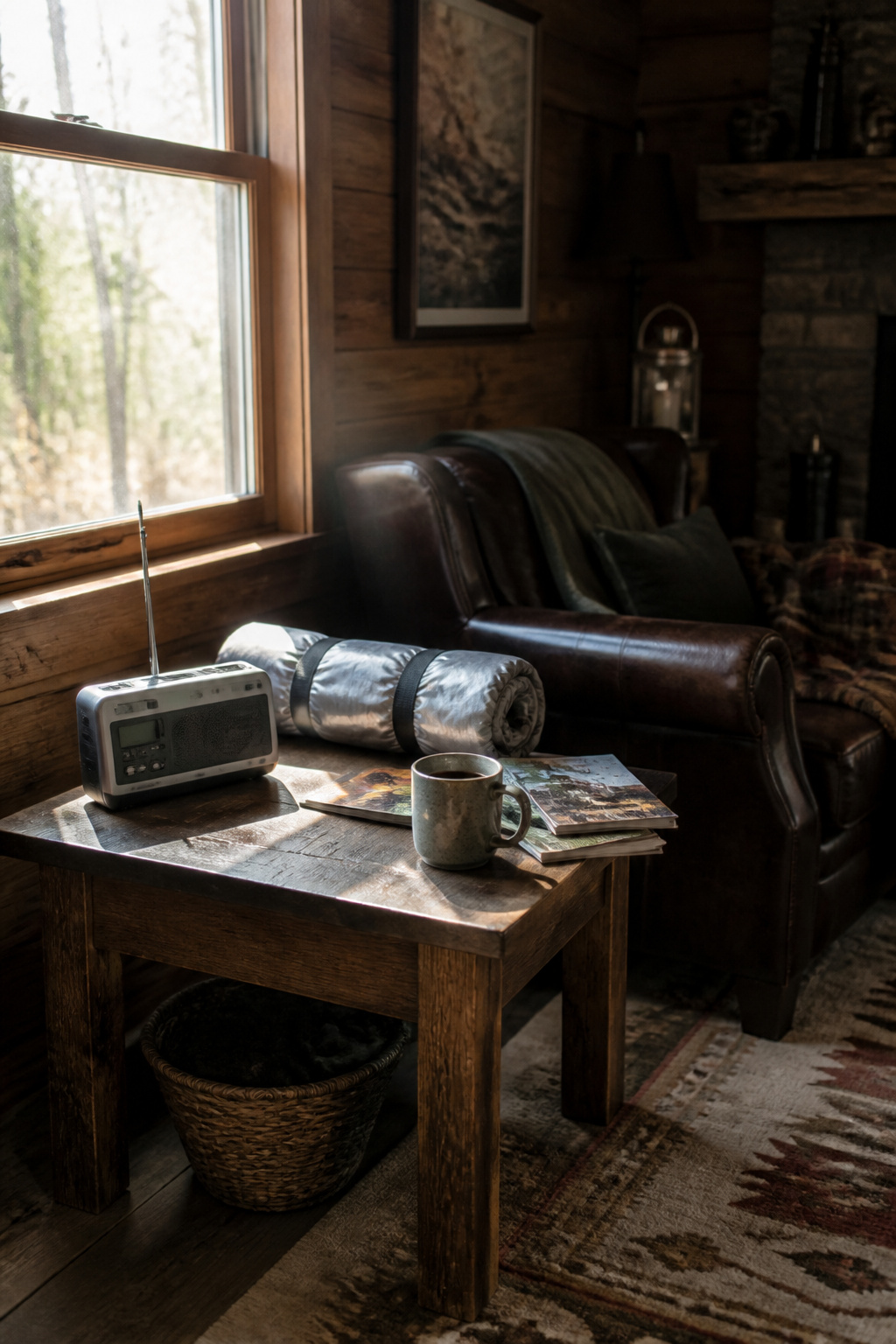
A NOAA Weather Radio sits in the same category as water and a flashlight: you pack it hoping the night stays quiet. The stations broadcast from a network of towers run by the National Oceanic and Atmospheric Administration, and the units worth buying run on batteries, a hand crank, or both. Hand-crank models appeal because they sidestep the dead-battery problem entirely, though the ones with a battery backup tend to pull in a clearer signal.
During the last regional ice storm that knocked out power here, the local NOAA transmitter on 162.550 MHz stayed on air when cell towers and FM stations dropped. That frequency is not universal; you want to pre-set your unit to whatever tower covers your county, not assume the first channel you find will be the right one. The hand-crank radio I had on hand needed about two minutes of cranking for every fifteen of listening, which sounds tedious until you have been without outlets for thirty-six hours and the forecast is the only news that matters. Battery-powered units are simpler day-to-day, but the crank proved the reliable power source when the outage stretched past a day and a half.
6. Personal Hygiene Items
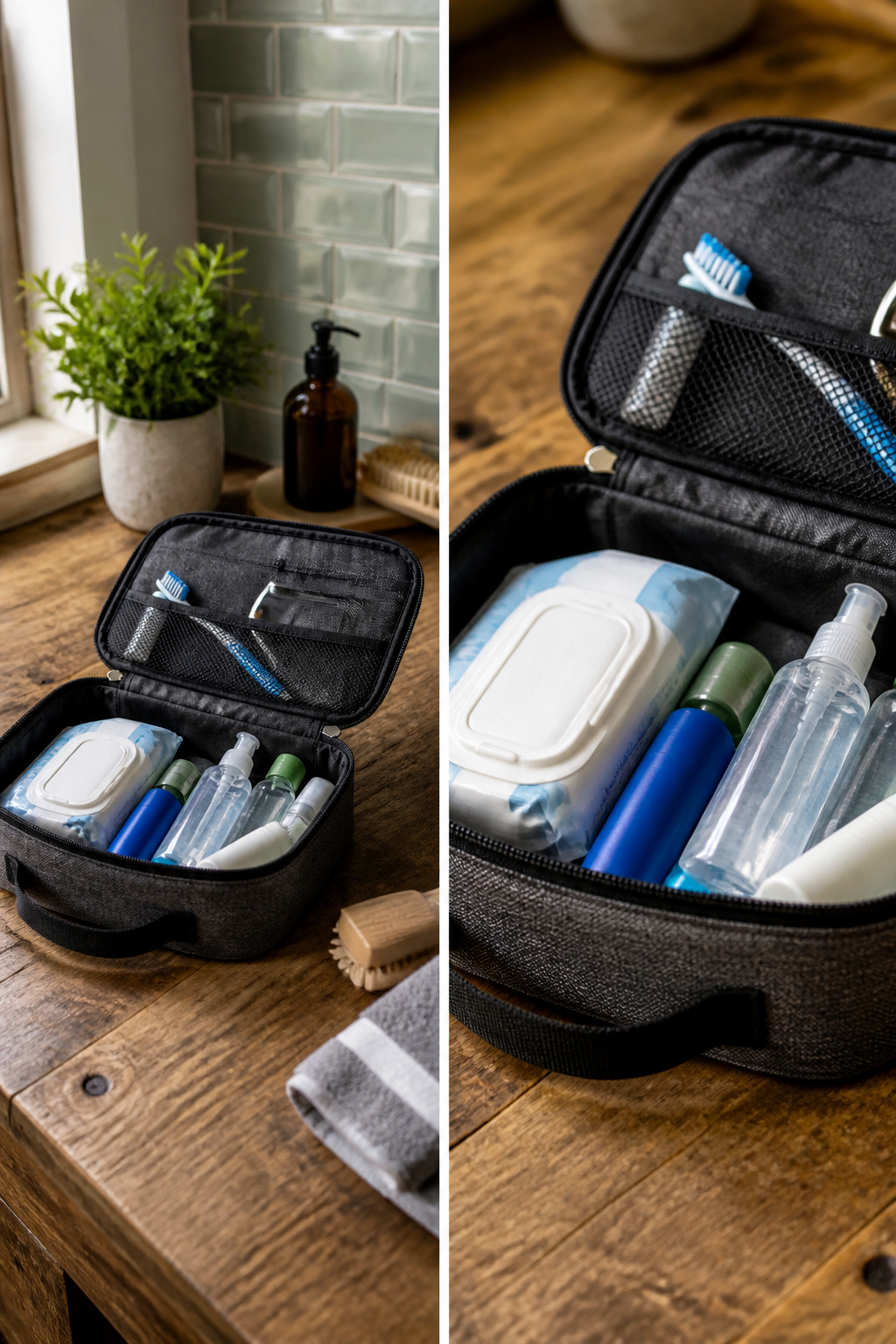
Two days into a blackout, the toiletries I thought I would want and the ones I actually reached for had almost nothing in common. The packed bar of soap stayed dry in its ziplock; without running water, rinsing felt like a waste of stored drinking water. Hand sanitizer got used ten times a day, and the small bottle I had tossed in as an afterthought ran dry by noon of day two.
A toothbrush still mattered, but the trick was brushing with a sip from a water bottle and spitting into a trash bag, not the sink. Feminine products turned out to be the item I had underestimated; the sources list them as a basic, yet the comfort and actual necessity of having a full cycle’s worth packed, not a spare or two, became obvious fast. Disinfectant wipes worked as a full-body substitute when a shower was out of the question. What seemed like overpacking on day one, the second pack of wipes and the full box of menstrual supplies, was what kept the situation tolerable on day three.
7. Clothing
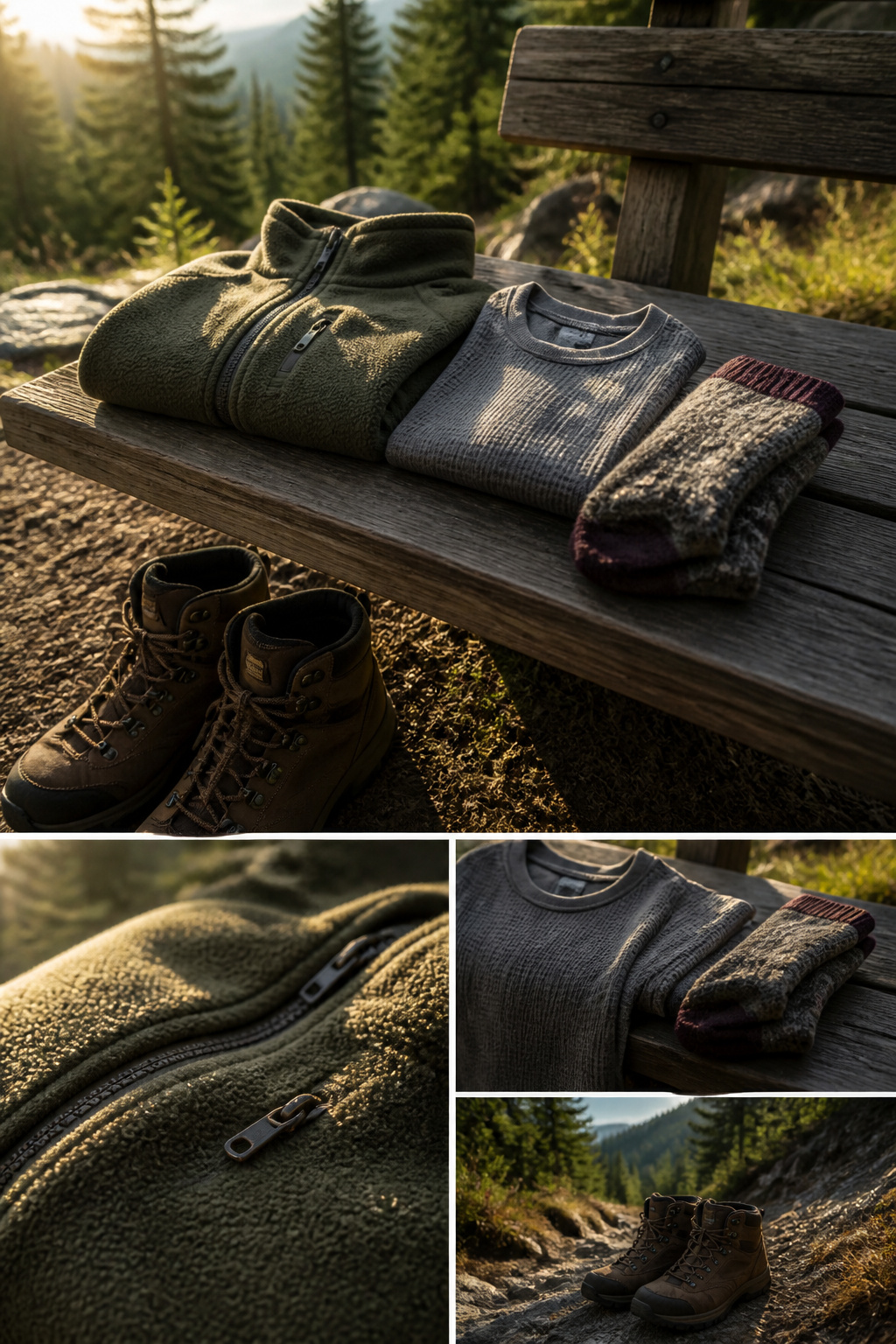
Extra layers in a 72 hour kit are not about comfort. They are about keeping you alive when the heat shuts off or the rain starts. The sources agree on wool or synthetic fleece for cold conditions, and on avoiding cotton. Cotton does not breathe; once it is damp from sweat, it pulls heat away from the body fast. I pack a thermal shirt, a fleece jacket, wool socks, and a beanie that covers the ears. A neck gaiter gets more use than a scarf because it stays put and seals the gap at the collar.
The wrong shoes will end your walk faster than the wrong jacket. I learned this on a five-mile test hike with a pair of casual sneakers I had thrown in as an afterthought. The soles flexed wrong, the heel slipped, and a hot spot on my left arch became a full blister before mile three. Sturdy closed-toe shoes or boots you have actually walked in are the only footwear that belongs in the kit. I now break in every pair on concrete and trail both before they go near my bag.
Rain protection means a poncho or a jacket, not one or the other. Wet fabric loses insulation whether it is wool or synthetic. I keep a lightweight shell that layers over everything else without binding at the shoulders. Work gloves round out the clothing section for debris, broken glass, and the repairs you do not plan on making.
8. Important Documents
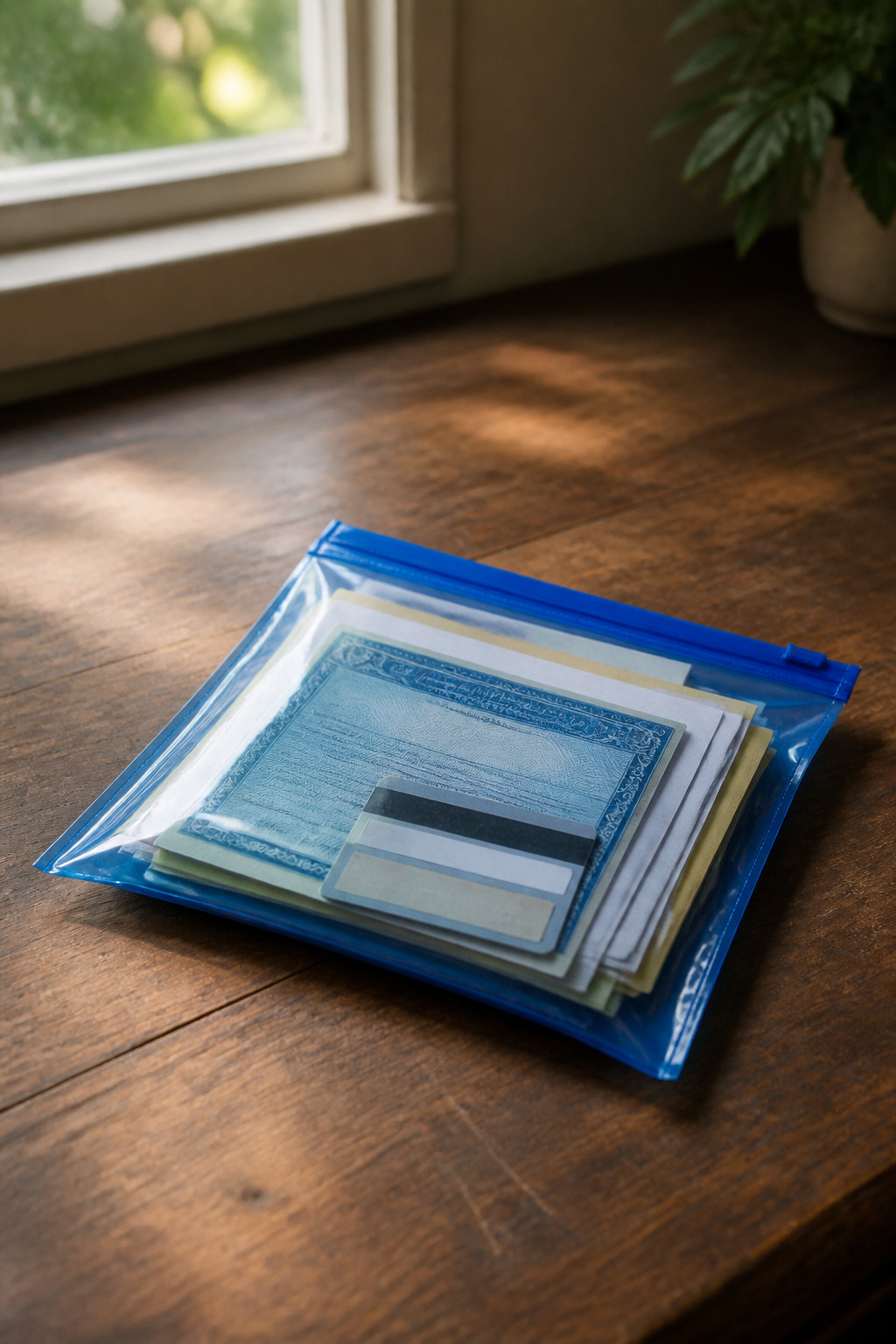
Copies of your driver’s license, passport, and birth certificates need to go in the bag, especially if children are traveling with you. A Red Cross volunteer at a shelter entrance once asked to see my ID and my child’s birth certificate before she would assign us cots; the originals were at home, two counties away. A waterproof pouch is not enough. The zip-seal bag I trusted in 2019 let water wick in at the corners during a flash-flood evacuation, and the ink on my insurance cards ran. Now I use a true dry bag, and I keep a second set of copies at a relative’s house.
Paper beats phone when the network dies or the battery goes. I keep a printed list of emergency contacts, medication names with dosages, and my policy numbers for health and homeowner’s insurance. A FEMA inspector after a windstorm wanted the declaration page of my policy, not a screenshot; the phone in my pocket was at 4 percent and searching for a tower that was not there. The paper came out of the bag, the claim moved forward, and I went back to waiting in line for ice.
9. Tools
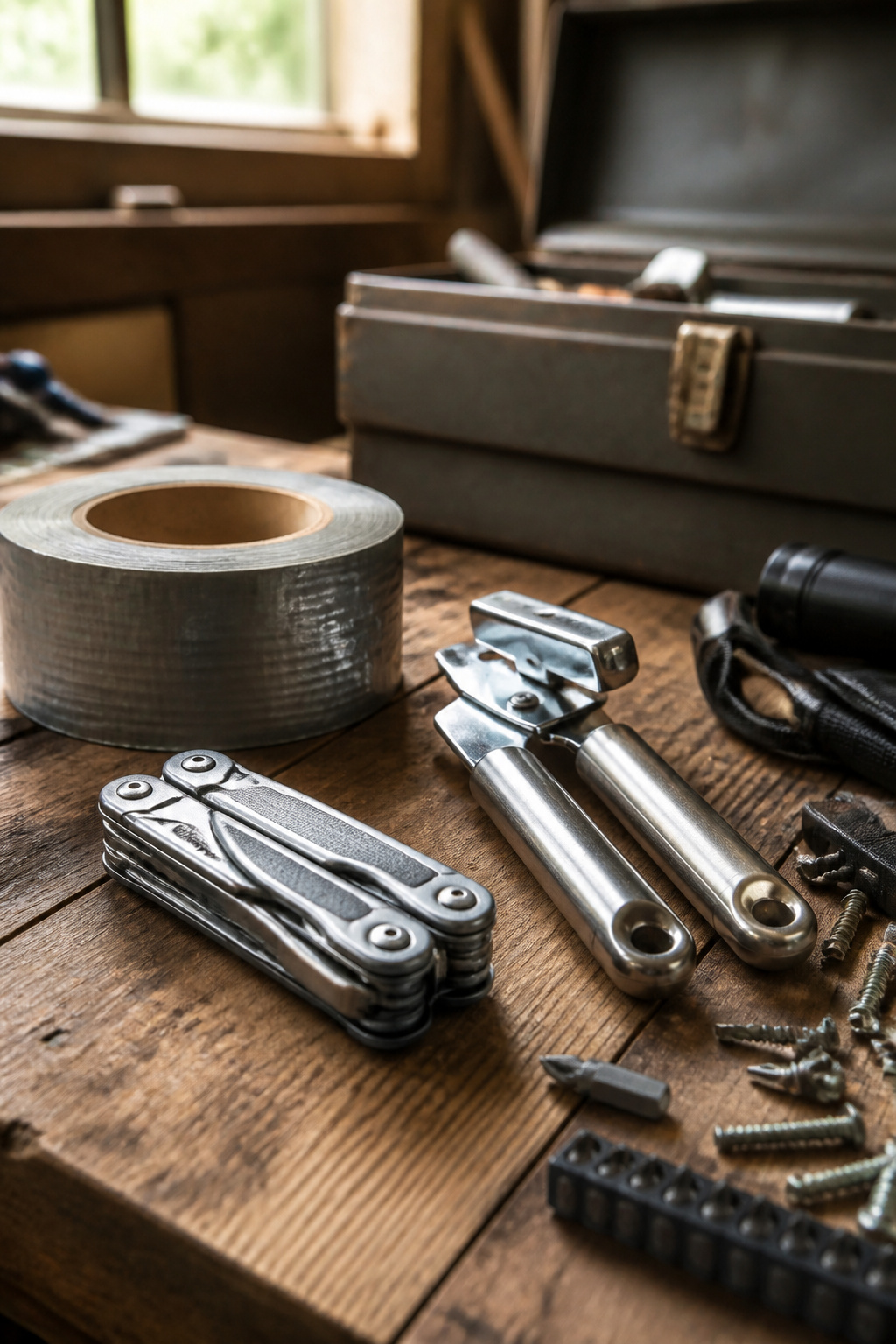
A pocket knife or multi-tool handles the jobs you do not plan for. The blade on mine once opened a swollen door frame after humidity warped the wood shut during a summer storm. Pliers, screwdrivers, and a saw edge earn the space in ways a single blade cannot.
Duct tape belongs in every 72 hour kit. A six-inch strip patched a cracked water container that would have drained half my supply onto the truck floor. The roll also seals sheeting for shelter-in-place, though plastic sheeting itself sits in another section.
The manual can opener is non-negotiable if your kit holds canned food. Weather.gov lists it twice, and for cause: my first one rusted solid after one season in a damp basement, the wheel frozen, the handle useless. A stainless P-38 style, flat and simple, now lives in a ziploc with a silica pack. No moving parts means nothing to jam or corrode shut when you need calories at hour sixty.
10. Cash
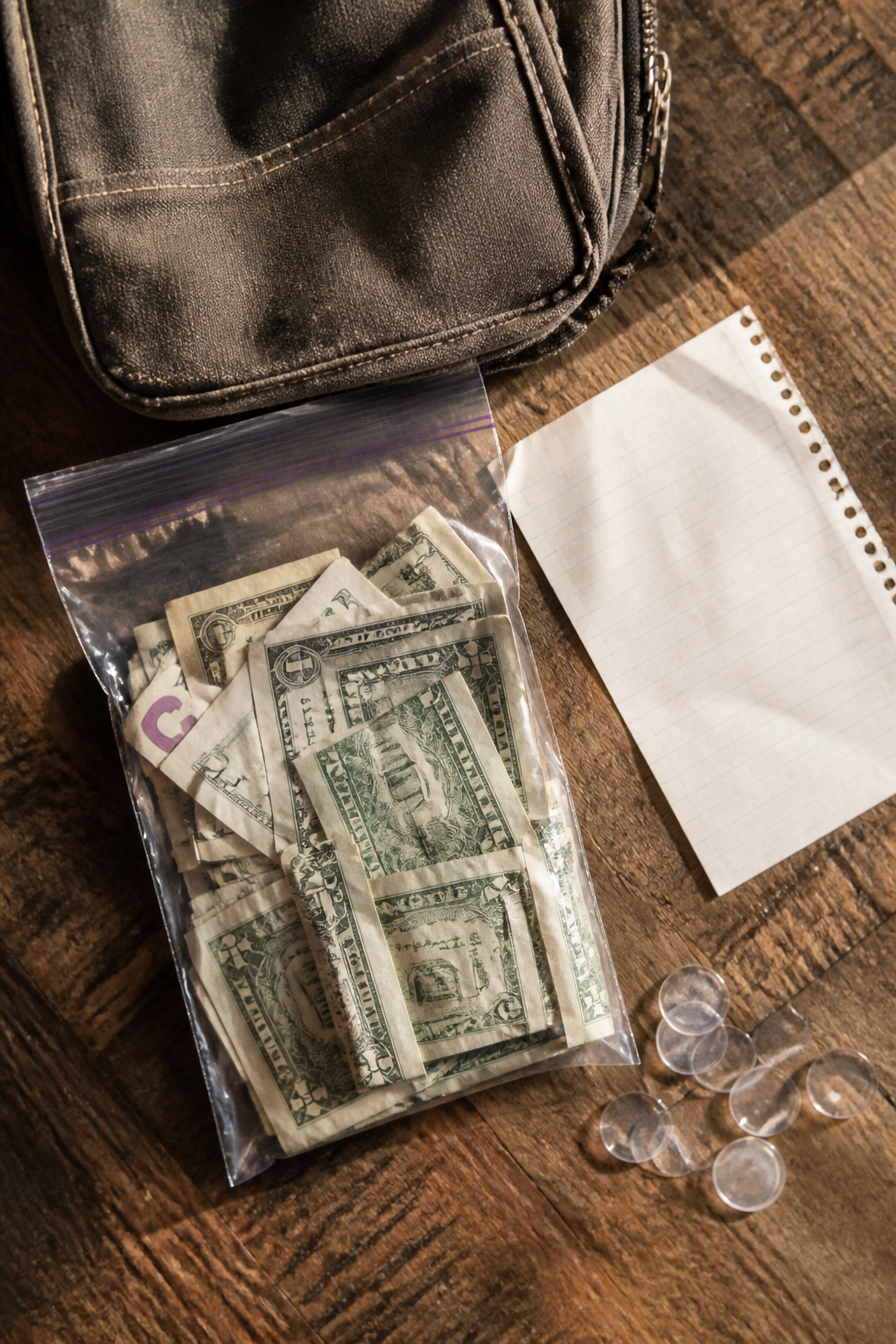
Card readers die quietly. During the last regional blackout, three gas stations near me had power but none could process plastic. The pumps sat there, screens lit, useless. That is when small bills stop being an abstraction and start being the only way home.
The sources mention $20 as a baseline. In practice, that figure feels thin. A tank of gas, a bag of ice, a hot meal from the one diner running a generator: twenty disappears fast, and nobody wants to break a fifty when their till is already low on change. Fives and ones matter more than the total. A twenty gets you a flat refusal; a five gets you the transaction.
I keep my cash in a zip-lock inside the kit, not my wallet. The reasoning is simple. If I am grabbing the bag, I may not be grabbing my everyday carry. The bills go in, wrinkled but dry, rotated every year when the paper starts feeling too old. No coins. Coins weigh nothing useful and jingle like a giveaway.
The documents say money; they do not say how much. My own ceiling is higher than the $20 figure, but the principle holds. What broke for me was not having ones. A vendor with a cooler of water wanted exact change or nothing. I had nothing. Now the denominations split toward the small end: ones, fives, a ten or two. The twenties stay home.
Why 72 Hours Matters
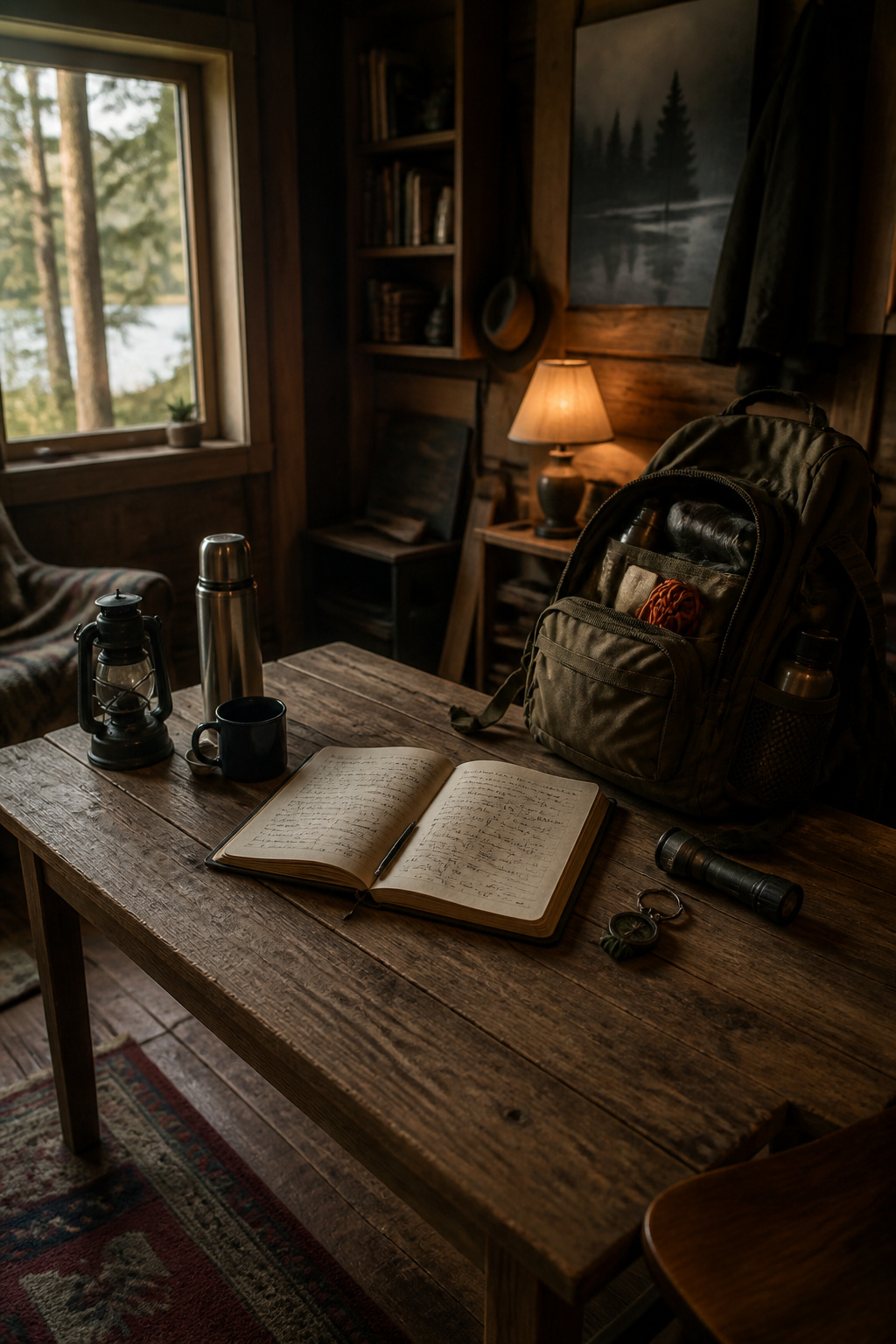
Three days is the window emergency planners use because help may not reach you in the first 72 hours. Rescue workers can be cut off by the same floodwaters, downed lines, or road damage that stranded you. Ready.gov builds its guidance around this span, and for good reason: the infrastructure you count on daily can fail faster than assistance can adapt.
That first morning after a disaster, the instinct is to wait for the system to catch up. Phones still work sometimes, or half-work, which feeds the illusion that someone knows where you are and that a truck is already rolling. By the second day without power or running water, the psychology shifts. The person still waiting has made a choice without realizing it. The person who opens their kit and starts rationing, starts problem-solving, has crossed over from victim to actor. That shift matters as much as the supplies themselves.
A 72 hour kit is not about apocalypse fantasy. It is the bridge between normal life and whatever normal becomes after the roads open again.
Where to Keep It

A 72 hour kit does you no good if you cannot reach it, and two places in my house taught me that the hard way.
The garage flooded three springs ago after a week of heavy rain. I had my kit on a low shelf because the garage felt convenient. The water came to about four inches, and everything in that bin was ruined: the food, the first aid supplies, the spare clothes. The container itself was not watertight, just a standard plastic tote with a lid that snapped on. Now I keep the main kit in a closet near the front door, inside a rolling bin that is actually watertight, the kind with a gasket seal and latches on both sides.
That closet almost failed me too. It had become storage for everything else: old coats, a vacuum cleaner, boxes of holiday decorations. One evening the power went out during a storm, and I could not reach the bin without moving three things in total darkness. The flashlight was in the kit I could not reach. I cleared that closet the next weekend. The bin sits on the floor now, nothing in front of it, and everyone in the house knows exactly where to find it.
A duffel bag or backpack works for a smaller kit in a vehicle, something you can lift and carry. Ready.gov suggests keeping supplies where you spend time, so I keep a compact version in the truck, another at work. The home kit stays in that dry closet, refreshed once a year, where a hand can find it without thinking.
Checking What You Packed

The protein bar in my first kit went two years past its date before I found it, and I ate it anyway. The texture was off, but it held together, and that afternoon taught me that checking your 72 hour kit every six months is not a suggestion. April and October work well; they bracket the seasons when you are most likely to need the thing.
Expired medication is harder to judge. A pain reliever in my kit changed color, turning from white to faint yellow, and the bottle had swollen slightly. That was enough. I replaced it, and now I check seals, not just dates, because humidity gets in even through factory packaging.
Batteries are the real hazard. A AA leaked onto the headlamp and the spare flashlight in the same pocket, crystalline residue spreading across both. The light still worked after cleaning, but barely. I switched to lithium primaries for storage; they cost more, but the chemistry is stable enough to leave alone.
Water gets rotated, food gets eaten into the regular pantry and replaced, documents get updated when the household changes. The kit is a living system, not a box to seal and forget.
Frequently Asked Questions
What should I include in a 72-hour kit?
A 72-hour kit should include one gallon of water per person per day, non-perishable food, a first aid kit, flashlight with extra batteries, NOAA weather radio, personal hygiene items, extra clothing and sturdy shoes, copies of important documents in a waterproof container, basic tools like a multi-tool and duct tape, and small-denomination cash. Pack items your household will actually use under stress, and add any special supplies for infants, pets, or medical needs.
How often should I check my 72-hour kit?
Check your kit every six months. April and October work well because they bracket the seasons when emergencies are most likely. Replace expired food and medication, rotate water so it does not go flat, check that batteries have not leaked, and make sure documents still match current household information.
Why is a 72-hour kit important?
A 72-hour kit matters because rescue workers may be cut off by the same disaster that stranded you, and help often cannot reach everyone inside that first three-day window. The kit bridges normal life and whatever normal becomes after roads reopen. Having it ready also shifts your mindset from waiting to problem-solving, which matters as much as the supplies themselves.