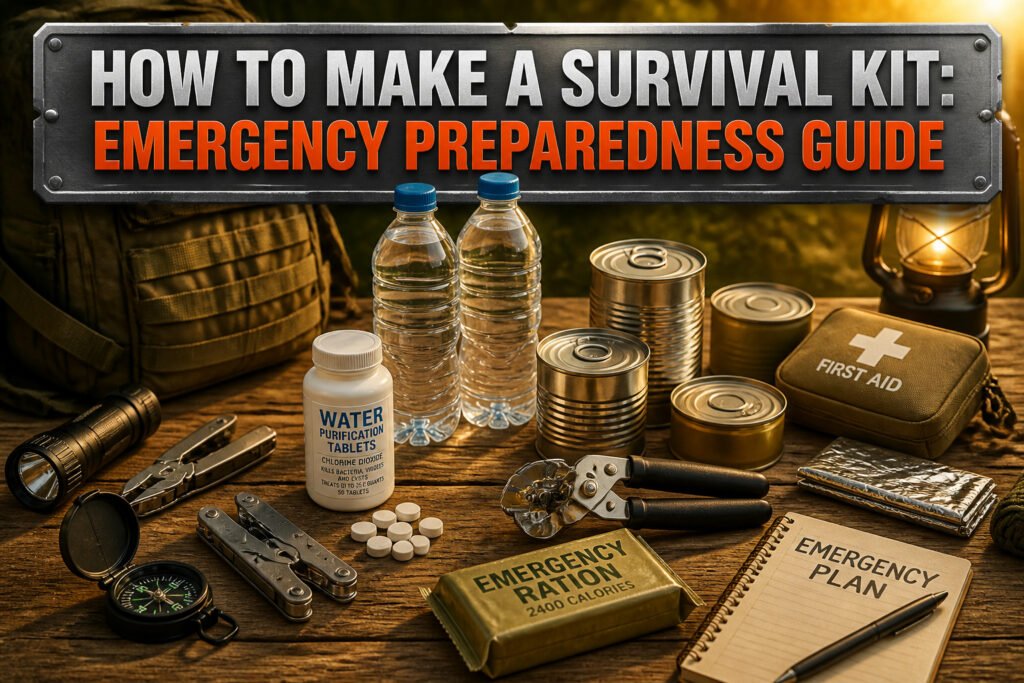
A survival kit is a purpose-built collection of supplies designed to keep you alive and functional for at least seventy-two hours when normal systems fail. The one-gallon-per-day water rule is where most people stop, but stored water degrades and caps leak; that is why purification tablets belong in every kit even when the jugs look sufficient. I learned the hard way that empty two-liter soda bottles are not a substitute for purpose-built containers, and a manual can opener is non-negotiable when the grid takes your electric one offline.
Water

Three gallons per person sits at the minimum for a basic kit, and that figure comes from the one-gallon-per-day rule stretched across seventy-two hours. Storage turns out to be where most people stumble. Those stackable water bricks made for emergencies cost more than repurposed containers, but the first time I tried saving money with empty two-liter soda bottles, I learned the hard way that the plastic degrades faster than purpose-built jugs and the caps never seal quite right after the first opening. Rotation matters just as much as the initial stockpile. A printed expiration date on a factory-sealed jug beats guessing whether that kitchen-sink refill is still good six months later.
The gallon-a-day estimate covers drinking and basic sanitation, not showers or cooking elaborate meals. In a real pinch, the math gets tight fast. That is why purification tablets belong in the kit even when you think the water supply is handled. A small bottle weighs nothing, costs little, and turns questionable sources into something drinkable when the stored gallons run low or the emergency stretches past day three. The tablets are backup, not primary plan, but backup has saved more than one household that assumed the faucet would come back on before the jugs emptied.
Non-Perishable Food

A three-day supply of non-perishable food means planning around what you will actually eat, not what looks rugged in the packaging. Canned goods are the backbone: soups, beans, vegetables, and meats that need nothing but heat and a spoon. The manual can opener is non-negotiable; a dozen cans of chili are useless if the only opener in the house is electric and the grid is down. I keep a small P-38 on a cord in my kit, the same kind that used to come in military rations. It weighs nothing and never needs batteries.
Rotation is where most kits fail in practice. I run my canned goods through the kitchen pantry on a first-in, first-out basis: the oldest can of black beans goes into Tuesday’s dinner, the replacement goes to the back of the kit shelf. This keeps expiration dates honest and prevents the discovery, three years later, of a swollen can of something you would not have eaten fresh.
Energy bars are the item I stopped trusting. They go stale faster than the packaging suggests, turning into dense, flavor-resistant bricks that sit in the stomach without satisfying it. The oils in the nut butters and chocolate coatings oxidize; the texture changes from chewy to waxy. I rotate them every six months now, or skip them entirely for plain nuts and shelf-stable peanut butter packets that hold their character longer.
First Aid Kit

Cuts happen when you least expect them. During a blackout two winters ago, I sliced my palm open on a metal shelf while fumbling for candles. The store-bought first aid kit on the counter had plenty of adhesive bandages and a few antiseptic wipes, but nothing that could handle a wound that actually bled. What most pre-packaged kits miss is the step between minor scrape and hospital trip: gauze pads, sterile dressings, and something to secure them. I added those, plus nitrile gloves and a small scissors, after that night. Pain relievers stayed, ibuprofen and acetaminophen both, because a headache from no coffee is different pain than a throbbing hand. Burn ointment and anti-itch cream went in too, the kind of thing you do not think about until a pot of soup boils over or the mosquito eggs hatch in standing storm water. The kit now lives where I can find it in the dark.
Flashlight

A flashlight without spare batteries is just a paperweight that hasn’t admitted it yet. The lumens printed on the package, those big numbers manufacturers love, mostly measure the LED’s output in a lab before the reflector, the lens, and real-world grime steal their share. What reaches the wall in a flooded basement, with humidity fogging the glass and your hands shaking, is a different number entirely. I stopped chasing max lumens years ago and started looking at runtime charts instead.
Battery chemistry matters more than people admit. Alkalines left in a drawer for two years can leak and ruin the tube, something I learned the hard way with a perfectly good Maglite. Lithium primaries cost more upfront but sit for a decade without swelling, and they don’t lose half their punch in cold weather. For a survival kit, store lithiums in the flashlight and keep the alkalines separate if you use them at all. Rechargeables are fine for daily carry, not for something you might not touch for eighteen months. Check the expiration dates when you rotate your kit. Replace before they expire, not after.
Battery-Powered or Hand-Crank Radio
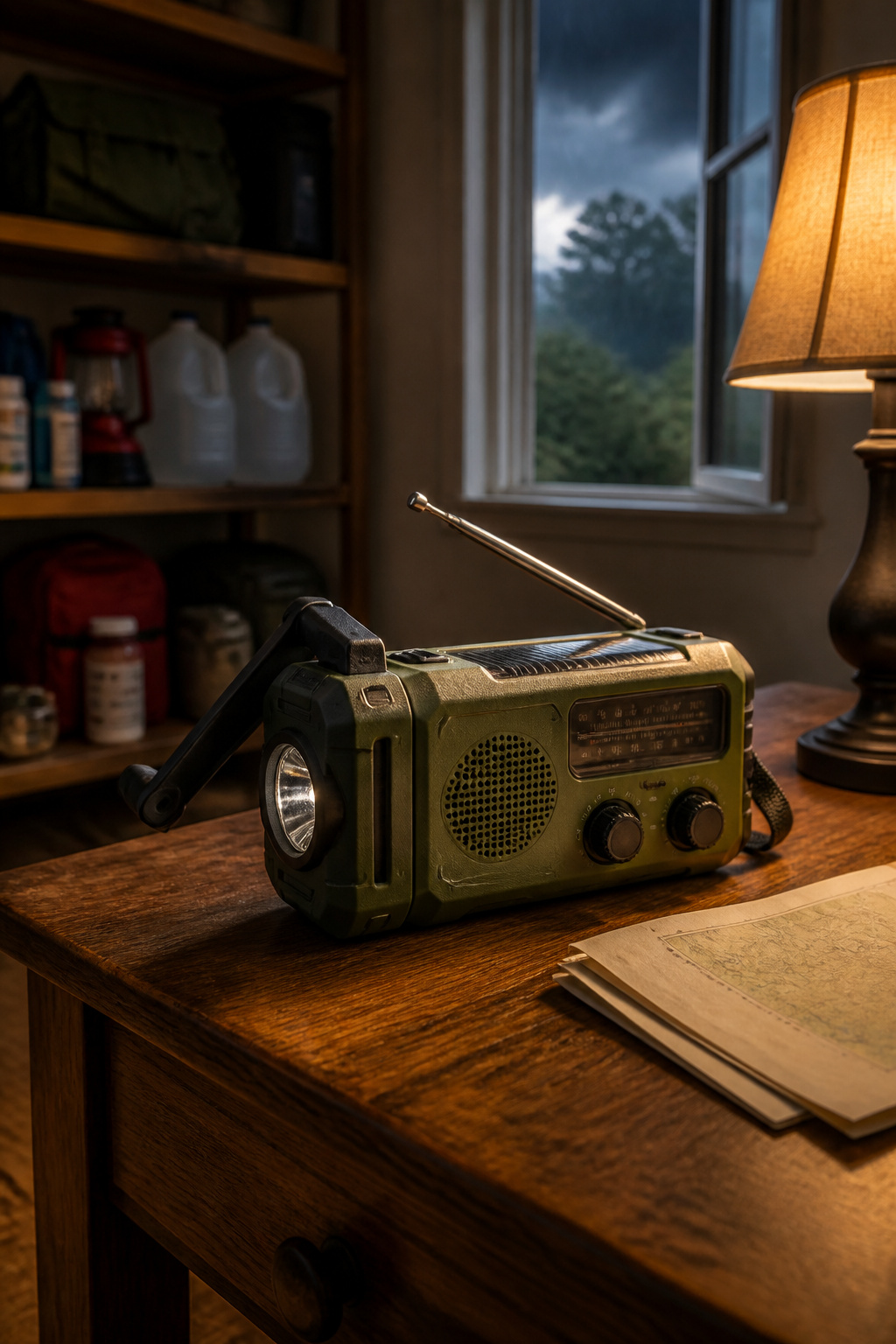
A hand-crank radio seems like the obvious choice for a survival kit. No batteries to die, no solar panel to wait on. The one I bought first had a crank that felt solid in the store but turned stiff after a few weeks of sitting in the truck. After about ten minutes of cranking during an actual power outage, the charge lasted maybe fifteen minutes. That ratio of effort to reward wore thin fast.
NOAA Weather Radio is the frequency to program, not just any AM/FM set. The Midland ER210 replaced my first radio and runs on a rechargeable battery with hand-crank backup, not the other way around. Five minutes of cranking gives roughly an hour of listening, and the battery holds a charge for months between uses.
Finding your local NOAA frequency takes two minutes online. The National Weather Service lists transmitters by state and city; punch in your zip on their site and it returns the exact frequency, power in watts, and whether the signal reaches your elevation. Mine broadcasts on 162.400 MHz, but the next county over uses 162.425. Worth checking before you need it.
Personal Hygiene Items
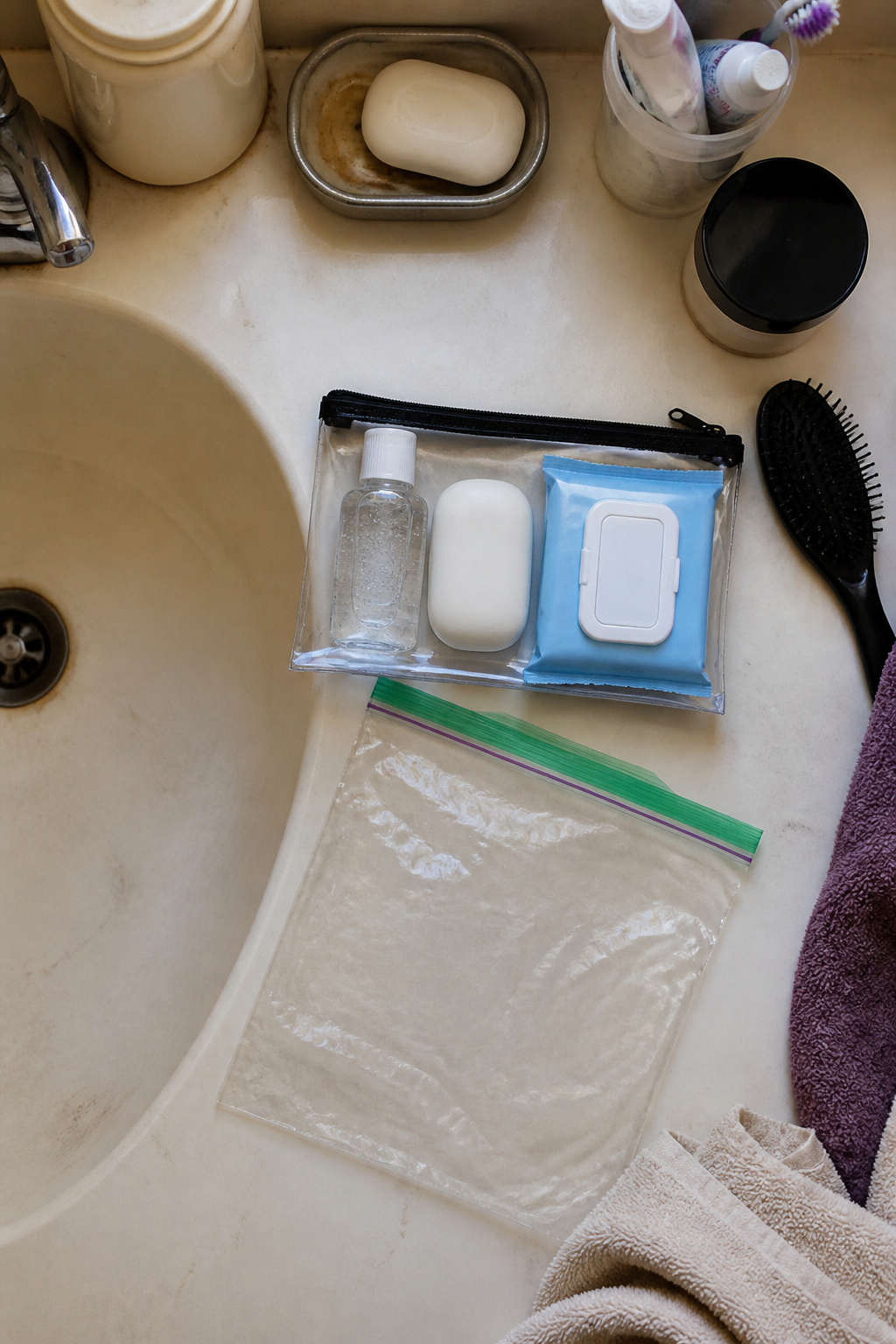
Soap, hand sanitizer, and moist towelettes all show up on the standard lists, but the quantities that look neat in a kit rarely last three days. A travel-sized bottle of sanitizer and a foil packet of wipes might cover one afternoon, not seventy-two hours. For a three-day supply, figure a two-ounce bottle of sanitizer per person and a full pack of towelettes, plus a small bar of soap in a hard case.
The real hazard is the sanitizer bottle. Alcohol-based gel will find any weakness in a cap seal and leak through a ziplock if given time. In a vehicle kit, summer heat makes the pressure worse. The fix costs nothing: remove the original cap, seal the bottle in a second layer, and store it upright in its own compartment. A leaked bottle does not just waste itself; it ruins paper maps, swells cardboard medication boxes, and leaves everything else smelling like a hospital corridor for months.
Moist towelettes solve the waterless problem, but they dry out if the packet seal fails. Carry a backup, or accept that soap and a little of your water supply are the reliable fallback.
Important Documents

Paper copies of insurance policies, identification, and medical records belong in every survival kit, full stop. I keep mine in a quart-sized zip-top bag with the air pressed out, then slide that bag into a second one. Two layers of polyethylene beats one when you’re wading through floodwater that reaches your knees. The bag goes in the kit’s center pocket, not the outer mesh where a tear would find it first.
Cell towers fail. The battery dies. The phone that holds your digital life becomes a glass brick. A printed home inventory list and policy declarations page work when nothing else does. I learned this the hard way after a wildfire evacuation warning reached my county two summers ago. The document I had forgotten, sitting in a filing cabinet three miles from the packed truck, was my original birth certificate. Now a certified copy travels with the kit, and the original stays in a fire safe.
Whistle

A whistle needs to hit around 120 decibels to cut through wind and actually reach someone a ridge away. Anything less and you’re burning calories for nothing.
The cheap plastic one on my keychain looked fine in the store, bright orange and everything. Out on a hiking trip in the Columbia River Gorge, the wind picked up and that thing barely carried past my own outstretched arm. The pea inside jammed with moisture, too. Now I carry a flat metal whistle, no moving parts, and it lives on a lanyard under my shirt where it won’t snag on brush or bounce off a cliff when I’m scrambling.
Attach it to your person, not your pack. Packs get dropped, swept downstream, or left behind when you go for help. A neck lanyard or a clip on a belt loop keeps it where your mouth is. Test the sound before you trust it. Your ears will tell you if it projects or just wheezes.
Extra Clothing and Blankets

The temperature rating that matters on a sleeping bag is the lower limit, not the comfort rating printed in big type on the hang tag. I learned that the hard way on a March night in the Adirondacks when a 20-degree bag left me shivering at 25 degrees. The bag was technically performing to spec; I had just read the wrong number.
For a Northeast winter kit, I pack a bag rated at least 10 degrees below the coldest temperature I expect, plus a reflective emergency blanket as backup. The SOL Heat Reflective Emergency Rain Poncho from REI runs $11.50, weighs 2.7 ounces, and serves as both rain gear and that backup layer. Summer road trips get a lighter synthetic quilt and a fleece blanket instead, enough for an unexpected night in the car.
Down weighs less and packs smaller, but synthetic fill is what stays in my truck year-round. Once wet, down clumps and loses loft for hours. Polyester or Climashield synthetic still insulates when soaked, and dries fast enough that a few hours of sun or body heat brings it back. The extra bulk in the pack beats a useless bag on a rainy ridge.
Pet Supplies
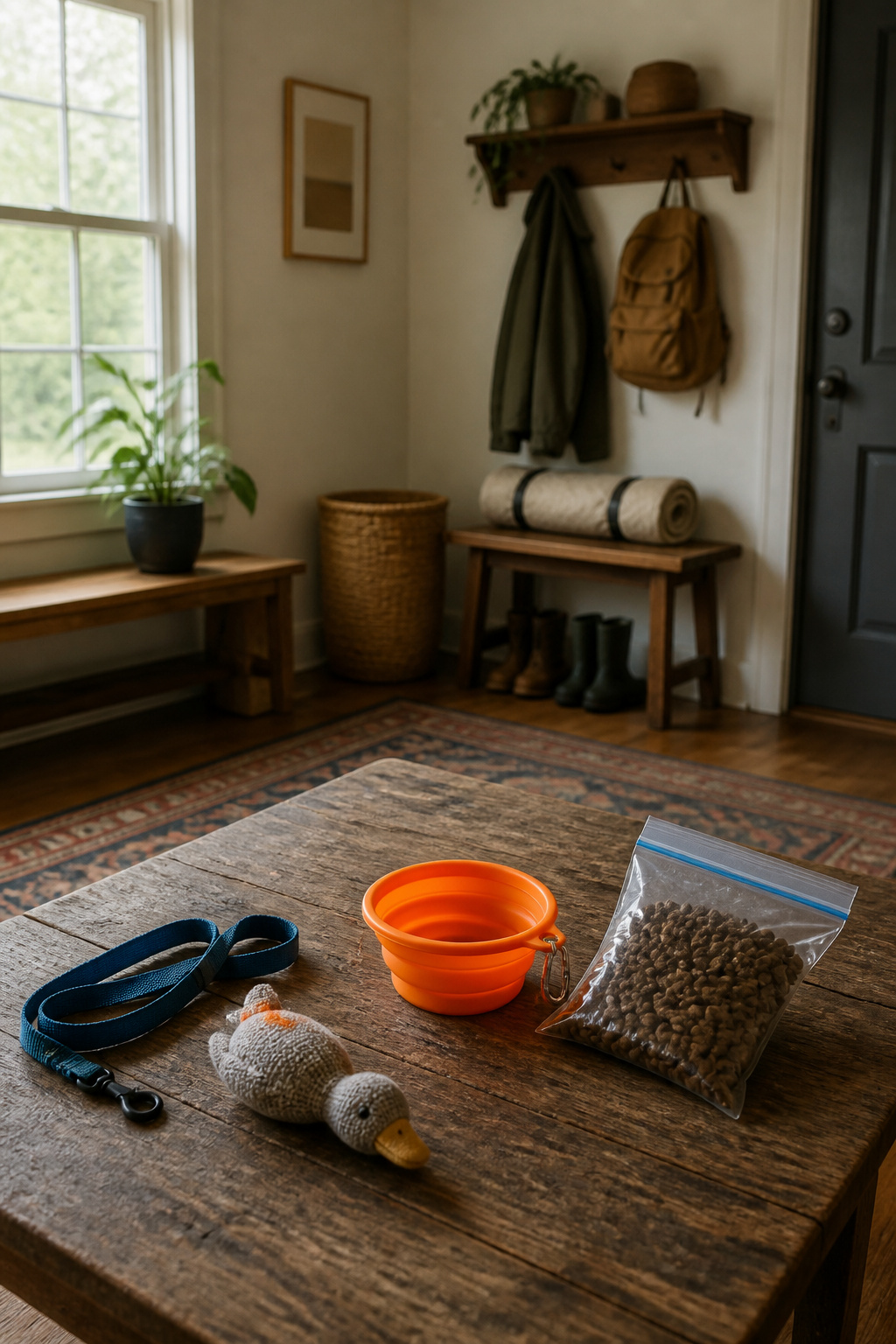
Pet supplies sit in a tricky middle ground, easy to overlook until the moment you need them. The same three-day rule that governs human kits applies here: one gallon of water per pet per day, which means three gallons for a 60-pound dog alongside whatever food keeps her stomach settled. Kibble is simple math. Water becomes weight fast.
A collapsible silicone bowl earned its spot in my kit after a few failed attempts at rigid ones that never packed right. The right model folds flat enough to slide into a side pocket and still holds a full meal without tipping. That detail matters when you are working from a car trunk or a hotel floor.
The spare leash is harder to justify on paper. She wears one every walk, two already hang by the door. Still, the kit keeps its own, a six-foot nylon with a clip that has not seen wear. Evacuation is not the time to discover the daily leash got left on the kitchen counter or the hook by the door.
Multi-Tool and Knife
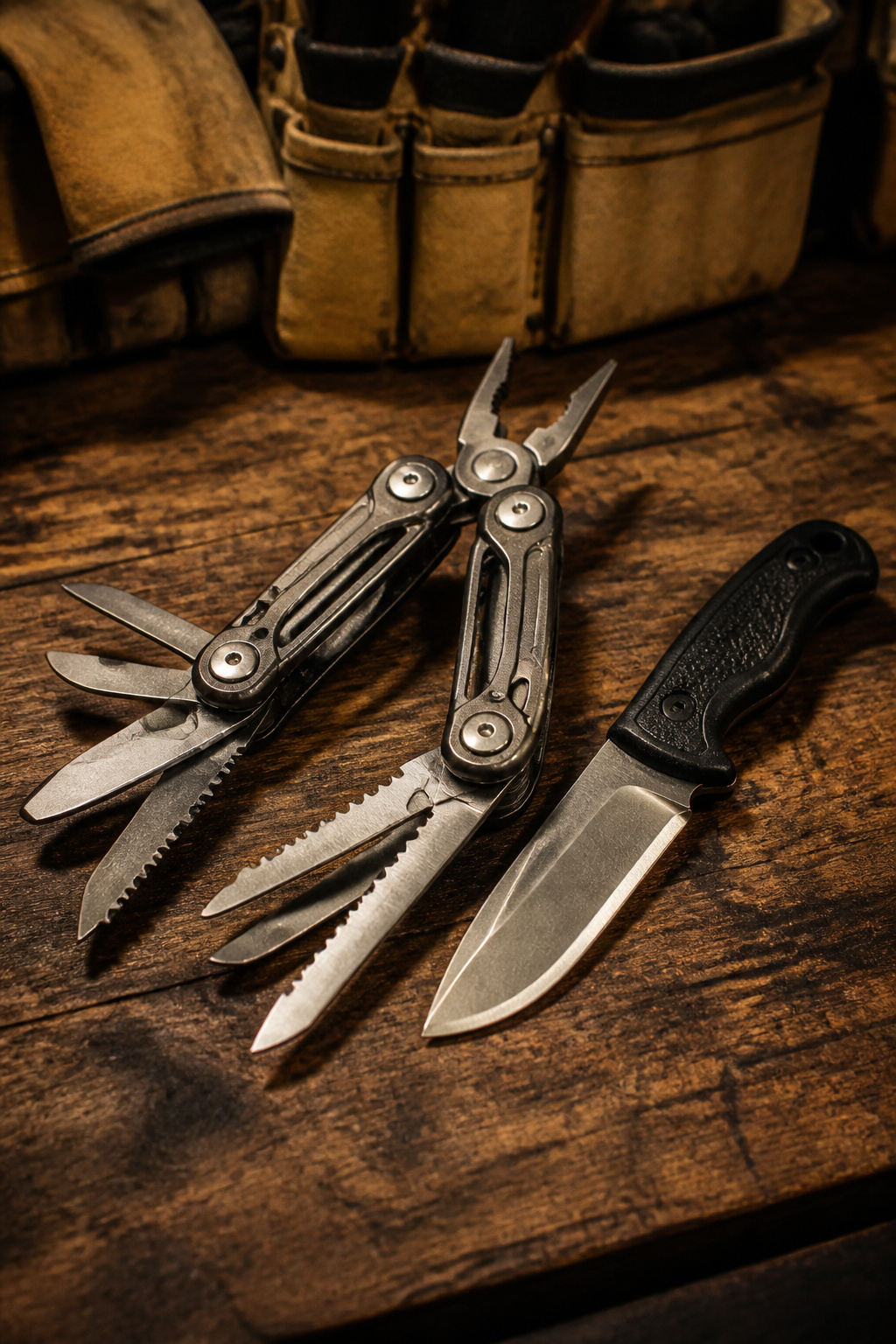
A multi-tool lives in every kit I own, but the knife blade on it is rarely the one that does the actual cutting. The pliers get the most use, then the screwdriver bits. The can opener and the tiny saw attachment have never left their slots in the ten years I’ve carried this particular tool. For cord, cardboard, or food prep, a dedicated knife with a three- to four-inch fixed blade moves through material in half the strokes and doesn’t fold at the hinge under pressure. The multi-tool stays on the belt for quick fixes. The knife stays on the hip when the work matters.
Duct Tape and Emergency Cash

Duct tape earns its place in every kit by solving problems that no other single item handles as fast. The trick is carrying it so it stays usable. Wrapping several yards around an old gift card keeps it flat and prevents the roll from turning into a sticky wad at the bottom of a bag. For securing a cracked window or patching a hose, wider tape transfers load across more surface, which matters when the fix has to hold through wind or vibration.
Cash belongs in the same category: a backup for when the primary system quits. ATMs and card readers go dark in outages, so keeping actual bills on hand closes the gap. Traveler’s checks work too, though they are harder to spend at a neighborhood grocery. Small bills matter more than the total amount; nobody can break a hundred when registers are running manually. The sources suggest thinking in terms of a three- to seven-day window, same as medication supply, which frames the number without prescribing one.
Map and Area Navigation

A 1:24,000 scale USGS topo map covers enough ground to navigate by road or trail without spreading across a car seat. The detail matters more than the coverage: at that scale, a single inch is roughly two thousand feet, so a drawn route stays readable and a wrong turn shows up before it costs you an hour.
GPS apps like Gaia GPS will store satellite layers and track your position offline, but phones die in cold weather and batteries drain faster than expected. A paper map is the backup that does not need charging. I pair mine with a half-ounce Brunton Tag-Along Glow compass; at confusing intersections, the needle settles the question without a boot sequence.
The route I mark in pen is not decorative. Last spring, a storm dropped visibility to half a block in suburbs I did not know. The GPS had already quit. Tracing the line I had drawn earlier, I found the cross street that led out. Since then, I draw the intended path before I leave, even for drives that look simple in daylight.
Games and Activities for Children

Small hands get heavy fast in a shelter, and a bored kid is a kid who wanders. The three items that fit in a quart bag and actually held a six-year-old’s attention for six hours were a deck of cards, a small notepad with a golf pencil, and a few sheets of stickers that peel off clean so they can decorate their own arms, the table, the wall. The cards taught War and a sloppy version of Solitaire. The notepad became drawings, tic-tac-toe grids, and a running list of every animal she could name. The stickers filled gaps when patience ran thin.
A mini electronic game came out of the bag first, the one I thought was a sure bet. It needed batteries we did not have. That was the mistake I owned. Physical, no-battery items won because they do not quit when the charge does.
Go-Bag, Shelter-in-Place, and Vehicle Kits

Three kits sit ready in my house, each built for a different way a day can fall apart.
The go-bag lives by the back door, lean enough to grab with one hand: three days of water at one gallon per person per day, non-perishable food, a hand-crank radio, a seven-day supply of medications, and copies of personal documents sealed in a waterproof bag. I built it around the Red Cross evacuation standard, then added a whistle and a local map because cell networks do not survive every emergency.
My shelter-in-place kit stocks the basement for two weeks instead of three days. Same core items, scaled up, with extra blankets, a battery-powered radio, and mess kits because the kitchen might not be usable. The vehicle kit lives in the trunk year-round and looks different: jumper cables, a basic tool set, flares or reflectors, a tarp, a rain poncho, and a cell phone car charger. I added a blanket and rags after reading too many accounts of people stranded in gridlock.
Heat-stable snacks matter in a car kit; the glove box is no place for chocolate. I keep cash in a waterproof container there too, because power outages kill ATMs faster than they kill engines.
Checking and Updating Your Kit

The kit in my closet sat untouched for three years because I set a phone reminder for daylight saving time, then swiped it away every March and November without looking inside. That twice-a-year check is still the right interval, but the alert only works if you actually open the bag.
Food and medicine expire on quiet schedules. Batteries leak. A water pouch I forgot about bloated and split against the frame, soaking everything else before I noticed. Now I replace anything with a date before I need it, not after.
Seasonal shifts matter too. Last October I added a wool blanket, gloves, and a neck gaiter to the truck kit after the first freeze caught me with summer gear still packed. The snowmobile bag gets the same treatment; the daypack stays lighter, but even that swaps in hand warmers when the forecast turns.
Family changes are the harder update. A toddler meant adding a small fleece blanket and rethinking how fast we could move. A medication change meant new prescriptions to rotate. The kit has to match who you are now, not who you were when you first built it.
What finally worked was pairing the check with a real task: changing the smoke detector batteries. Same weekend, same ladder, same storage closet. One trip, two jobs done. The calendar reminder you ignore is worse than no reminder at all.
Customizing for Your Household

The inhaler sits in my bathroom drawer, used twice a day, which made it invisible when I packed my first kit. Duplicate your daily meds or they stay home in the emergency. My wife’s thyroid prescription, my daughter’s EpiPen, the dog’s seizure pills: each needed a second bottle, not a note-to-self, because the pharmacy may not open for days.
Pet water runs a gallon per animal per day, on top of human stores, and the carrier from the closet shelf needs to fit in the car with everything else. My dog’s vet records and the photo of me holding him went into a zip-top bag after I watched a neighbor try to prove ownership at a shelter gate.
Gluten-free bars cost more and expire faster, so the rotation hit twice a year, same as the clocks change. A winter blanket went in the truck kit come October, out by April, because needs shift with the household and the season. The kit is finished when you have checked it, not when you have bought the bag.
Frequently Asked Questions
What should I include in my survival kit?
A survival kit should include three gallons of water per person, non-perishable food for three days, a first aid kit with gauze and sterile dressings, a flashlight with spare lithium batteries, a hand-crank or battery-powered NOAA weather radio, personal hygiene items, copies of important documents in waterproof bags, a 120-decibel whistle, extra clothing and blankets, a multi-tool and fixed-blade knife, duct tape, emergency cash in small bills, local maps, and items for any pets or children in your household.
How often should I check my survival kit?
Check your survival kit at least twice a year, pairing the task with something you already do, like changing smoke detector batteries when daylight saving time begins and ends. Replace food, medicine, and batteries before they expire, not after, and adjust for seasonal changes like adding cold-weather gear before the first freeze.
What type of food should I pack in my survival kit?
Pack canned goods like soups, beans, vegetables, and meats that need only heat and a spoon to eat, plus a manual can opener. Rotate everything on a first-in, first-out basis so the oldest items get used first, and skip energy bars, which go stale faster than their packaging suggests, in favor of plain nuts or shelf-stable peanut butter packets.