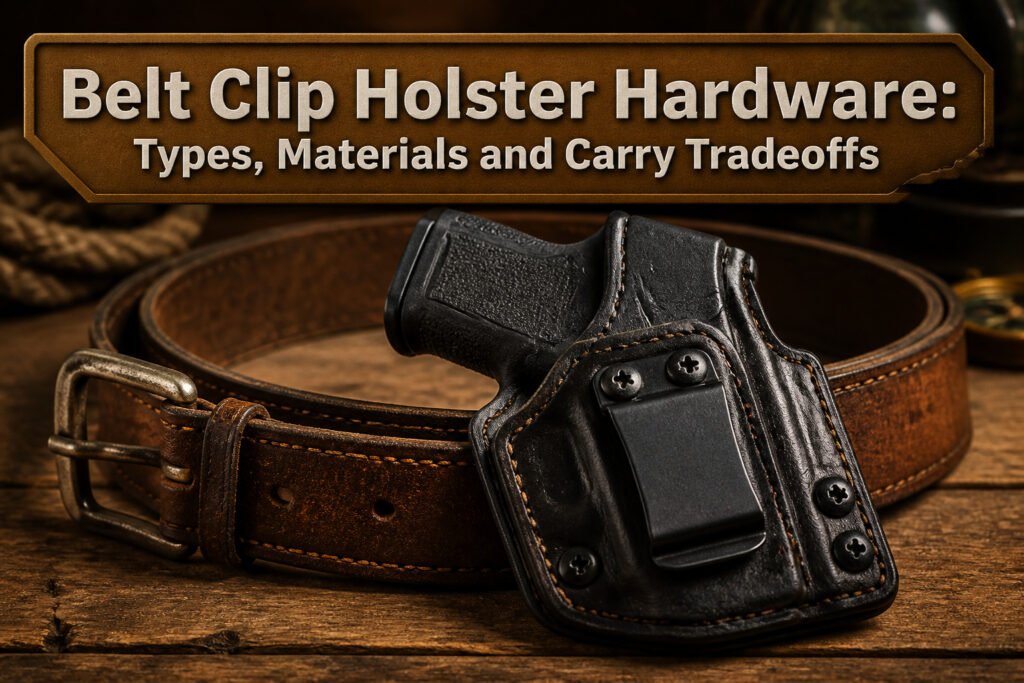
A belt clip holster keeps your holster fixed to your belt so the rig stays put when you draw, sit, or move. The catch is that the wrong clip width slips off on the draw or lets the holster tilt by noon, and not every clip works with every belt. I learned this after a clip that looked sturdy on the table let my holster cant forward every time I bent to tie a boot.
What a Belt Clip Holster Is

A belt clip holster does one job: it keeps your holster fixed to your belt or waistband so the whole rig stays put when you draw, sit, or move. The clip itself is the contact point most people overlook at first. Too narrow for your belt and it slips off on the draw; too wide and the holster tilts or slides around through the day. The clip, the holster body, and the attachment points between them make up the basic anatomy, but the clip carries the load.
I learned this the hard way after a clip that looked sturdy on the table let my holster cant forward every time I bent to tie a boot. The material matters, and so does how the clip mates with your belt width. Get it wrong and you are adjusting, re-tucking, or printing through your cover garment by noon. The right clip disappears; the wrong one becomes the part of your day you cannot stop noticing.
Traditional Clips
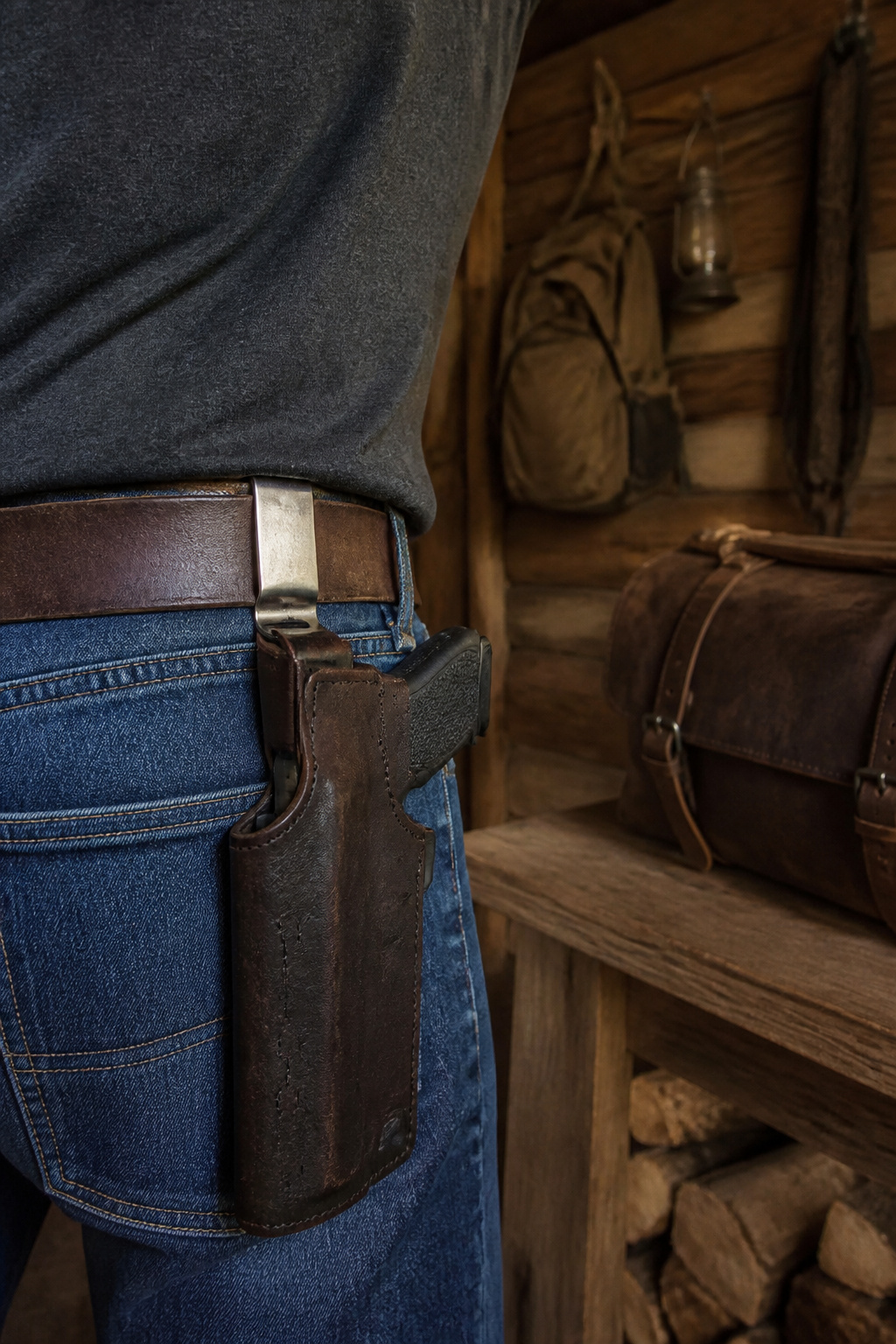
Most holsters ship with a single wide clip in metal or polymer, and there is a reason this design became the default. The clip rides over the belt itself, so the holster body hangs from a stable shelf rather than digging into soft waistband material. Weight spreads across the full width of the clip, which matters more than people expect when they first start carrying; a narrow hook concentrates pounds per square inch in one spot, but a 1.5-inch or 1.75-inch clip lets the belt do the work.
Metal clips hold their shape indefinitely. Polymer clips flex slightly and can be quieter against furniture or vehicle seats, though they eventually fatigue if you swap holsters daily. Either material fits standard belt widths: 1.5-inch and 1.75-inch are the common sizes, with some makers offering 1.25-inch for dress belts. The clip height determines ride depth, and most traditional designs sit at a fixed position; you get what you get, which is fine for strong-side or small-of-back carry where the gun angle stays predictable.
Where these clips fall short is movement. The belt must thread through, so on-and-off requires partial undressing. Appendix carriers sometimes find the clip’s bulk prints at the front of the body, and the single point of attachment lets the grip rotate if the clip loosens over years of use. Still, for a first holster or a gun you wear at 3 o’clock or 4 o’clock, this is where nearly everyone begins, and most never need to leave.
Overhooks

Slimmer hardware than a standard FOMI clip changes where you can place a holster on your waistline. Overhooks fit around belt loops and buckles that would block a wider clip entirely, which means precise positioning becomes possible rather than a compromise.
The tradeoff shows up in profile and adjustability. Traditional clips spread load across more belt width and usually offer fixed cant angles. Overhooks run narrower, so they slip past obstructions, but that same slimness limits how they handle thick material. A 1.75-inch competition belt or a stiff reinforced work belt can leave the hook riding high or refusing to seat fully, and loop spacing that does not match the hook width means the clip sits on nylon instead of threading through.
Where they excel is in the small adjustments. Cant angle set exactly for your draw stroke, holster body tucked into the gap between a front loop and a buckle, no overlap where belt layers stack thick. Where they frustrate is exactly those stacked layers and the loop geometry you cannot change on the belt you already own.
Metal versions from Discreet Carry Concepts and polymer struts like the LAS IWB Overhook or their newer Stiff Hooks give two different approaches to the same problem: metal for memory and return to shape, polymer for flex and forgiveness against the body. The Kaizen holster line runs five overhook configurations now, which suggests enough people wanted this specific hardware to justify the SKU expansion.
Soft Loops

Soft loops thread behind the belt and close with a metal snap at the top, which keeps the holster from riding up or tilting while still letting it pivot against your waistline. That pivot is the whole point: the gun moves with your body when you sit or bend, though some carriers find that motion digs in after a few hours.
The tradeoff is speed. Snapping closed behind the belt takes longer than clipping a rigid hook over the top, and the loop has to be threaded through before the snap can engage. After a few hundred cycles, the snap itself loosens; checking it monthly for wear beats discovering the failure when the holster shifts on draw.
Material runs from leather to nylon webbing, and some makers now use Biothane, a polymer-coated webbing that breaks in like stiff leather but can be heated and flattened back to shape if it curves wrong. The coating also resists sweat better than untreated leather loops, which matters for daily carry in humid months.
Specialty Clips

Some carry situations make a traditional belt clip holster impossible. Gym shorts, scrubs, or sweatpants have no structure for a standard clip to bite, and the gun flops or drags the waistband down.
The Ulticlip solves this by clamping directly onto fabric edges. A screw-tightened jaw grips clothing material without needing a belt loop at all. It works for lightweight setups where nothing else will hold, though thicker fabric stacks can defeat the clamp, and heavier guns test the limits of what fabric tension can support.
Clipdraw takes a different path with a universal clip that mounts to the firearm itself, not a holster. The same hardware fits across brands, from Glock subcompacts to revolvers. What you gain in minimal bulk, you lose in trigger coverage; the clip attaches to the gun’s frame or slide, leaving the trigger exposed unless you pair it with a separate trigger guard.
These niche options trade security for adaptability. Athletic wear, medical scrubs, or deep summer carry where a belt is out of the question are where they earn their place. The judgment call is whether the convenience of beltless carry outweighs the weight limits and the exposed-trigger risk that comes with clipping metal directly to clothing or to an unshielded handgun.
Clip-On Belts

Clip-on belts solve the problem of carrying in gym shorts, joggers, or any bottom without belt loops. The Clip on Belt ‘HD’ runs $69.00 MSRP, currently marked down to $59.00, and uses a stiff Biothane platform, the COB, to stop the rotation and tilt that ruins a clean draw.
Two sizes matter here. The standard 11.5-inch length fits waist sizes 34 inches or under. The 14.5-inch XL handles anything over 34 inches, or anyone running a sidecar rig with spare magazine. Both versions mount with Ulti-Clips gripping the waistband directly; your pants need a drawstring, snugged down, or the system slips.
Weight spreads across the full length instead of concentrating at clip points, which keeps the holster from dragging fabric outward. Free shipping kicks in at orders over $140. Lead time sits at 20–25 days if you are ordering now, so plan accordingly if this is replacing a setup that already failed you.
Installation and Adjustment

- Start with vertical height. The clip’s mounting holes let you raise or lower the holster on your waistline. Higher placement speeds up the draw, but riding too high digs into your ribs when you bend to tie a shoe or load groceries.
- Set horizontal placement next. Belt buckles and pant loops create hard stops, so offset the clip to miss them. Some holsters offer direct mount, offset, or extended offset clip positions for exactly this reason.
- Dial in cant angle last. A slight forward tilt, with the slide top leaning toward your midline, tucks the grip closer to your body and reduces printing by repositioning the butt higher on your waist. Too much cant and your hand hits wrong geometry on the draw; too little and the grip prints through your shirt.
- Lock it down. Walk, sit, bend, reach overhead. If the holster walks even a quarter inch during that test, you will notice by afternoon. Blue Loctite on the screws after final adjustment keeps hardware from loosening under daily movement. I skipped that step once on a new rig, spent three days tweaking the same loose clip before the threadlocker cured it.
Materials and Durability

Metal clips on a belt clip holster grip hard and stay put, but the edge finish matters more than most people check. A raw or poorly radiused lip will chew through leather belts in a few months of daily wear, and once the webbing frays the belt loses structure right where you need it. Polymer clips solve the abrasion issue, yet they bring their own headache: constant pressure against a stiff belt, especially in appendix carry, lets the material cold-flow over weeks until the clip loosens and the holster starts to ride out. I’ve watched that happen on a summer setup that seemed fine in March and was rattling by August.
Biothane splits the difference in a way that only makes sense once you’ve worn both extremes. The coated nylon webbing keeps enough rigidity to spread weight across the 11.5-inch or 14.5-inch length of a clip-on belt like the COB, but it has enough give to conform to body shape without the break-in cruelty of raw leather. It also restores: warm it and lay it flat, and you get the original geometry back. That matters if your body chemistry runs salty or your climate swings between humid summers and dry winters that crack lesser materials. The polymer coating shrugs off sweat and rain where leather would darken and soften, yet it doesn’t bite belts the way metal does.
For me, the choice comes down to how often you plan to move the holster. Daily repositioning favors Biothane or rounded metal; set-it-and-forget-it carry is where polymer clips earn their keep, provided you inspect them every few months for that telltale widening at the bend.
Comfort and Concealment Tradeoffs

A low ride height puts the grip closer to your belt line, which helps a shirt drape over the pistol and hides printing better. The catch is your thumb has to dig deeper to find a clean purchase, and that costs time on the draw. I ran a full day with a dropped-loop setup once, and by hour six the extra inch of reach felt like a lot more than an inch.
Higher ride puts the grip right where your hand falls naturally. Faster to index, easier to clear, but the butt prints against a light cover garment the moment you bend or reach. I spent an afternoon adjusting a clip position in a parking lot, moving it one hole at a time, and the difference between the second and third hole was the difference between disappearing and obvious.
Clip width matters too. A wide paddle spreads pressure across your hip bone and carries easier after eight hours. A narrow hook concentrates the load, holds tighter to the belt, and shifts less when you sit. The secure clip is not always the comfortable one, and the comfortable one is not always the one that lets you forget you are armed. The right setup is the one you can actually wear through a full day without adjusting, because the holster you leave home is worse than any compromise.
Frequently Asked Questions
What types of holster clips are available?
The main types are traditional clips, overhooks, soft loops, specialty clips like the Ulticlip or Clipdraw, and clip-on belts such as the COB. Traditional clips in metal or polymer are the default on most holsters, while overhooks fit around belt loops and buckles for precise positioning. Soft loops thread behind the belt and close with a snap, and specialty options work for beltless carry in gym shorts or scrubs.
How do you install and adjust holster clips?
Start with vertical height using the mounting holes to raise or lower the holster, then set horizontal placement to miss belt buckles and loops. Dial in cant angle last, a slight forward tilt tucks the grip closer and reduces printing. Lock everything down with Blue Loctite after testing with walking, sitting, and bending.
What materials are used in holster clips?
Metal holds its shape indefinitely but can chew leather belts if the edge finish is poor. Polymer flexes quietly against furniture but fatigues over time, especially with daily holster swaps. Biothane, a polymer-coated nylon webbing, splits the difference with rigidity that restores when warmed and flattened, plus it resists sweat better than untreated leather.