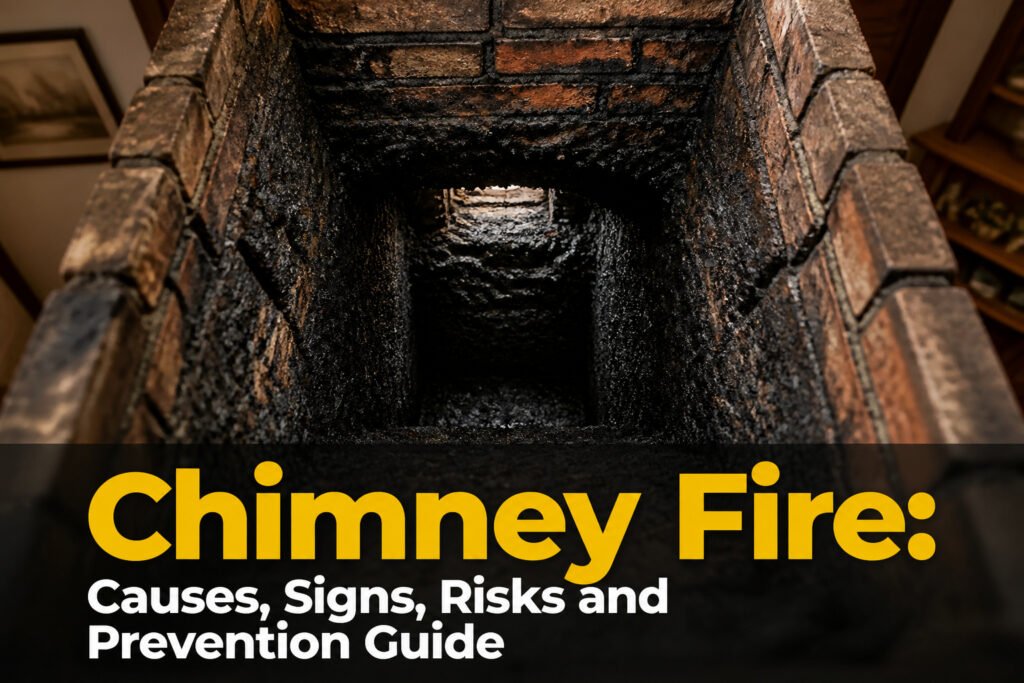
A chimney fire is burning creosote inside the flue, not the fireplace itself catching. Most homeowners never realize one happened; slow-burning, oxygen-starved fires produce no dramatic flames, yet still hit 2,100°F and crack the masonry that keeps flames from your walls. More than 20,000 start across the U.S. each year.
What a Chimney Fire Actually Is

A chimney fire is burning creosote inside the flue, not the fireplace itself catching. Creosote builds up from incomplete wood combustion, coating the chimney walls until enough heat ignites it. Temperatures in these fires can hit 2,100°F, far beyond what the masonry or metal liner was built to take.
That heat stays largely hidden. More than 20,000 chimney fires start across the U.S. each year, and many burn slow and oxygen-starved, producing no dramatic flames for neighbors to spot. The homeowner often never realizes it happened. A house fire in the chimney, by contrast, means the surrounding structure, the roof, or the framing has ignited, usually after the chimney fire has already breached the liner or cracked the masonry. The first is a contained burn you might miss; the second is your home on fire because you missed it.
What Starts Them

Creosote buildup is the main driver of chimney fires, and it forms whenever wood does not fully combust. The smoke carries unburned particles upward, where they cool against the flue walls and condense into that black, tar-like coating. Burn unseasoned or wet wood and the problem accelerates; the fire never gets hot enough to consume the volatile gases, so more creosote deposits with every load.
Insufficient ventilation compounds this. A flue needs enough draw to keep temperatures high and keep smoke moving fast enough that particles do not settle. Blockages strip away that airflow entirely. Bird nests, leaves, or other debris can choke the flue, trapping heat against the creosote layer until ignition follows. The National Fire Protection Association Standard 211 recommends annual inspection partly because these conditions accumulate out of sight; by the time you notice slower drafting or a smoky room, the fuel for a chimney fire is already in place.
The real risk sits in how ordinary each cause feels. Wet wood, a damper left half-closed, a nest built in the off-season: none of these announce themselves as hazards, yet together they account for most chimney fires starting inside the flue where creosote or blockage meets sustained heat.
Fast-Burning and Slow-Burning Fires
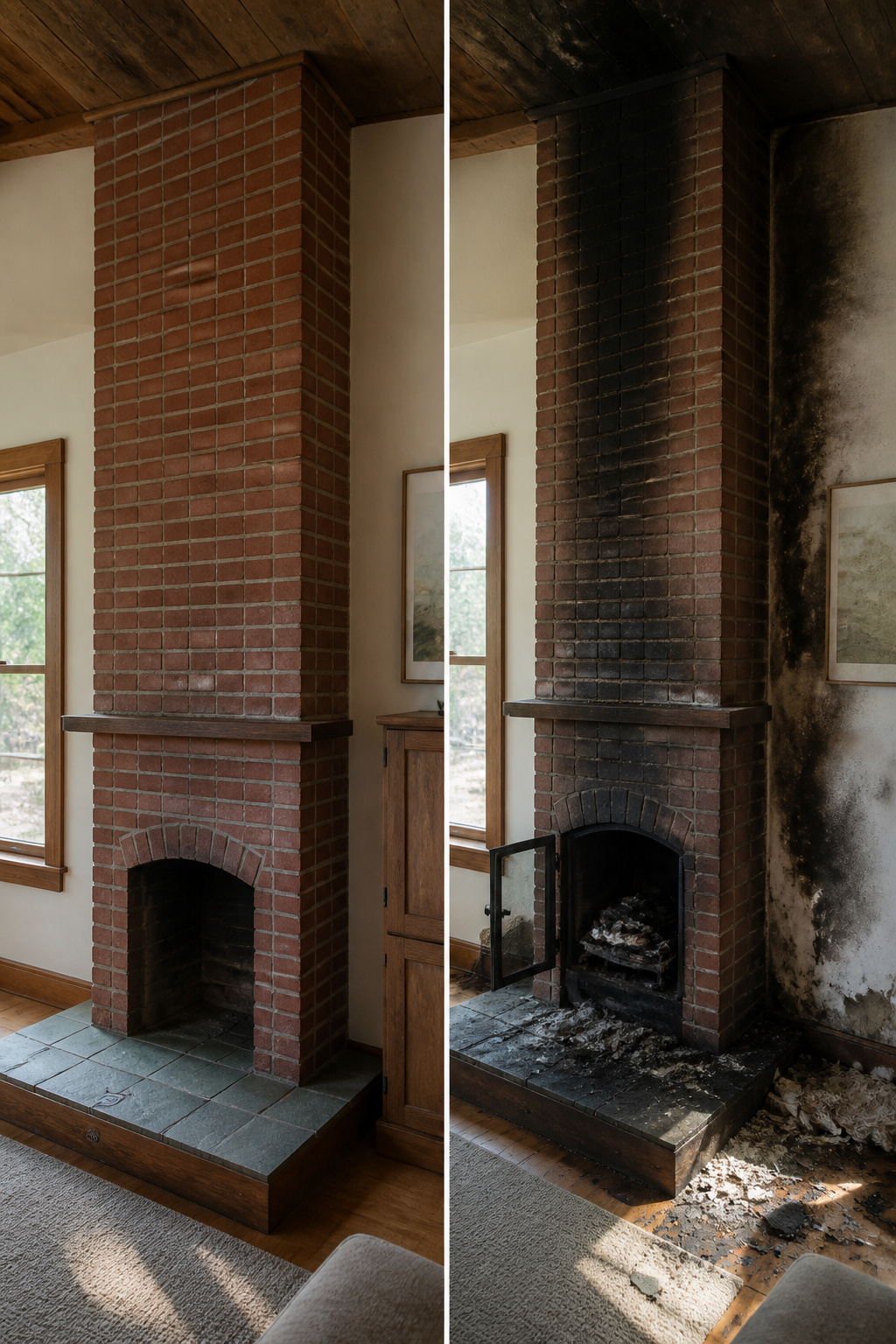
A chimney fire announces itself one of two ways, and only one of those ways you will actually hear.
The fast-burning kind puts on a show. Dense smoke pours from the firebox or the chimney top, flames or burning pieces of creosote shoot into the open air, and the noise is unmistakable: a loud crackling and popping, or a deep roar compared to a freight train or airplane. The smell is intensely hot. These are the fires that send people running for 911.
Slow-burning fires give you none of that drama. They smolder quietly inside the flue, starved of enough air to flare, and can finish their damage before anyone in the house notices a thing. The temperatures still climb toward 2,000°F, enough to melt mortar, crack clay tiles, collapse liners, and displace the masonry that keeps flames away from the wood frame. A slow burn warps metal chimney pipe just as thoroughly. The chimney structure suffers either way, and the path to a house fire opens just the same.
The quiet ones are not safer. They are only harder to catch.
What They Risk
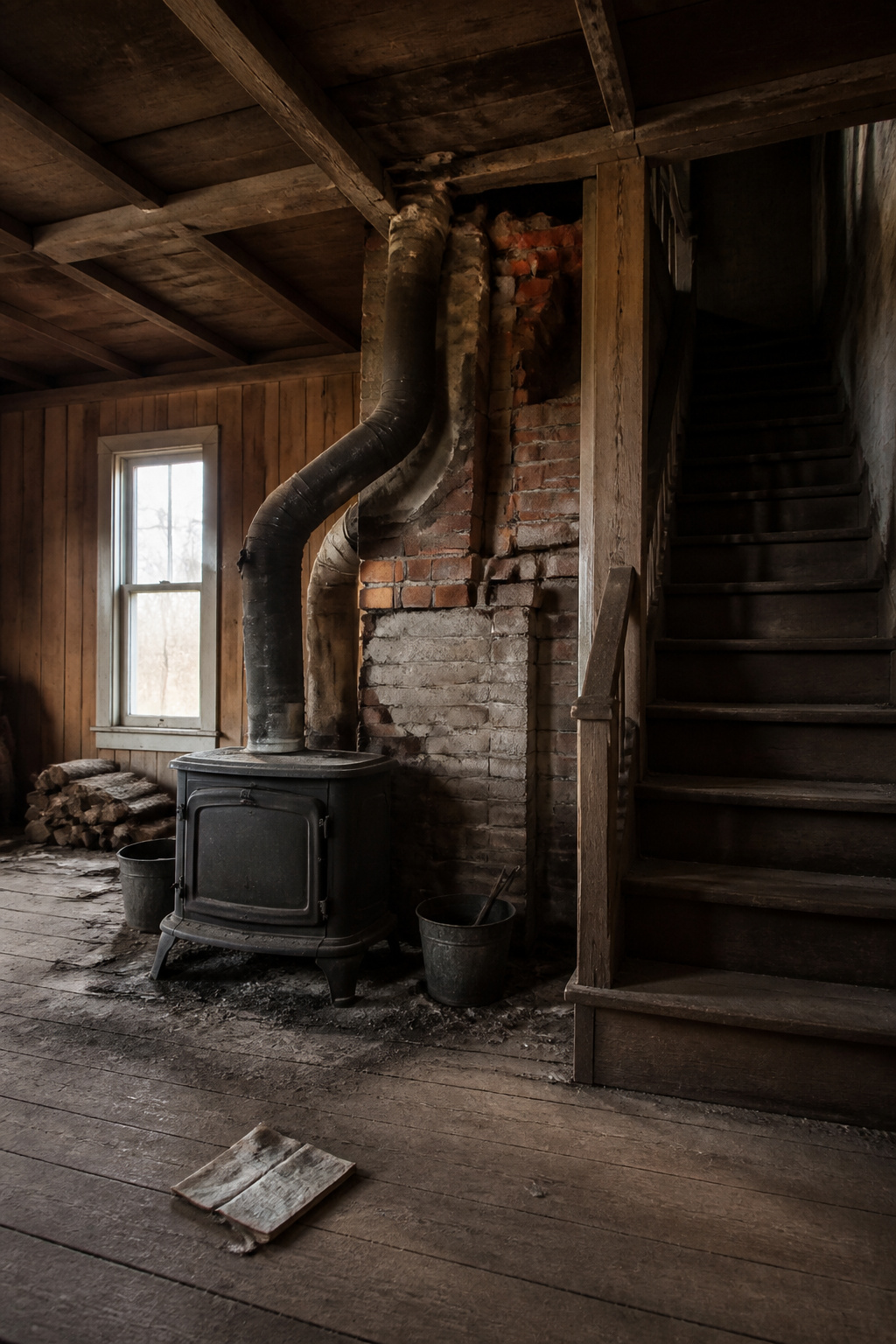
A chimney fire burns at temperatures around 2,000°F, and that heat does not stay politely inside the flue. In a masonry chimney, the mortar between terracotta tiles can melt outright. The tiles themselves crack from thermal shock, and once they crack, the liner can slump or collapse. Each crack and gap becomes a pathway for flames to reach the wood framing that sits just beyond the masonry.
Prefabricated metal chimneys fare differently but no better. The seams warp and buckle under the same heat, and any damage to a factory-built unit means full replacement. Connector pipes on wood stoves twist and separate from the vibrations of air turbulence during the fire, which lets heat and smoke transfer directly into the room.
The slow-burning fires are the ones that worried me most when I read the numbers. They lack the dramatic noise and smoke, yet they reach the same temperatures and cause the same structural damage. Either way, the compromised chimney creates a route for fire to escape its intended channel. Once that happens, walls, ceilings, attics, and framing are all in the path.
The Signs You Notice
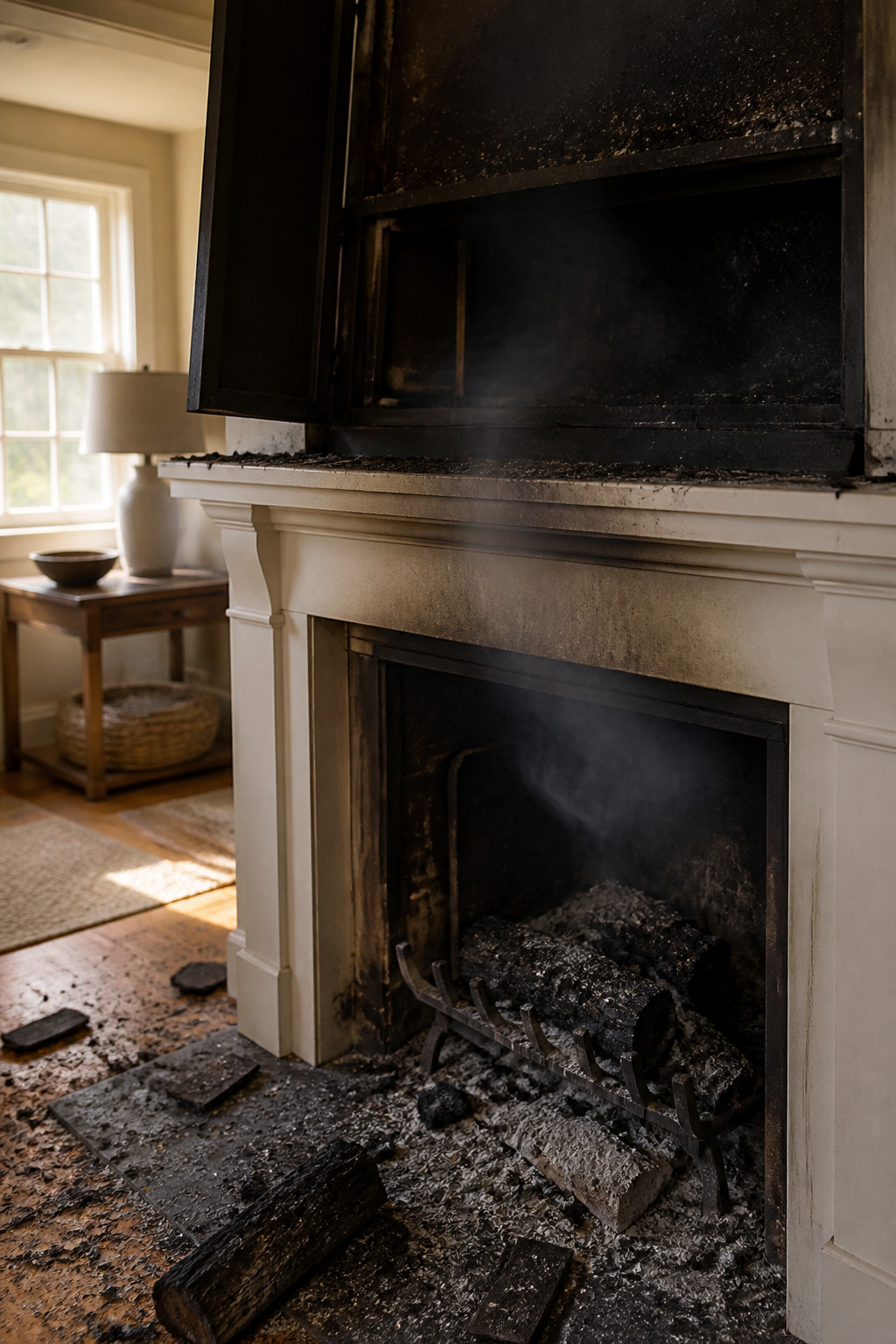
A loud crackling or popping noise from the flue is the signature sound most people remember, sometimes compared to a large bonfire or described as a low rumbling like a freight train. Dense, thick smoke pouring into the room or billowing from the chimney top often comes with it, and in the most dramatic cases flames or pieces of burning creosote shoot from the top. An intense, hot smell fills the house. These are the signs of a fast-burning chimney fire, and they demand getting out immediately and calling 911.
Slow-burning fires behave differently. The cracking and roaring may never arrive. Instead, you might notice soot flakes or creosote chunks falling into the fireplace, or a faint hot smell you cannot place. Temperatures in these fires can still climb past 2,000°F, quietly damaging the flue and nearby combustible parts of the structure while the homeowner remains unaware anything happened. The variation matters because the dramatic version sends everyone running, but the quiet version can leave hidden damage that threatens the next fire you light.
The Damage They Leave

The terracotta flue tiles inside a masonry chimney are built to handle normal exhaust temperatures, not the 2,000°F and above that a chimney fire produces. At that heat, the glaze on the tiles spalls off in flakes, vertical cracks split them open, and the mortar joints between them melt or turn to powder. What was a sealed column becomes a sieve.
That damage creates direct paths for flames and hot gases to reach the wall cavities. Combustible wood framing sits inches from the chimney structure in most houses, separated by nothing more than air gap and lathe. A crack wide enough to slide a credit card through is wide enough for fire to find that framing. Slow-burning fires do this quietly; the homeowner may never see flames or hear more than an occasional pop.
Prefabricated metal chimneys fail differently. Factory-built systems are tested to withstand flue temperatures up to 2,100°F without damage, but a chimney fire can still warp the seams, buckle the panels, or twist connector pipes on wood stoves until they separate from the appliance. Any of those conditions means replacement, not repair. The same goes for metal connector pipes: once distorted, they cannot be straightened back to a safe seal.
After either type of fire, a CSIA-certified sweep inspection is the only way to know whether you are looking at a few replaced flue tiles, a new liner system, or a full rebuild. Skipping that step to "see if it still drafts" risks turning hidden cracks into a house fire the next time the stove gets hot.
What to Do When One Happens
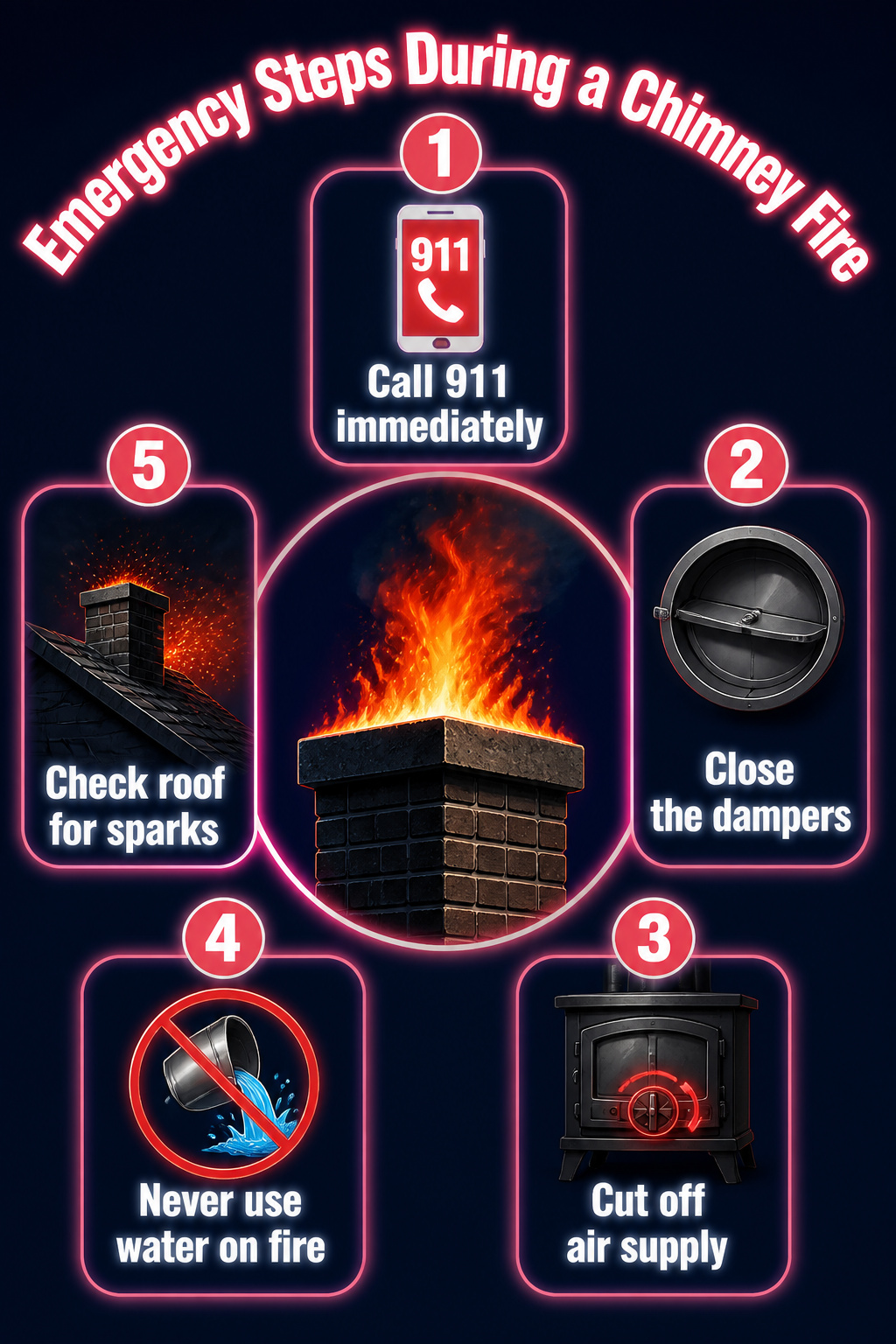
A chimney fire demands immediate action, and the order matters.
- Call 911 first. Even if the flames look contained, fire can extend into walls, attic, or roof where you cannot see it. The fire department needs to be on the way while you handle what you can.
- Close the dampers if your stove is airtight. Cutting off oxygen is the goal.
- Cut off the air supply however the unit allows. Starving the fire beats fighting it directly.
- Never use water on a hot stove. The metal or cast iron can crack from thermal shock. A chemical extinguisher only works if the firebox fire is small and the stove is not airtight; otherwise, skip it.
- Check the roof for sparks or spreading flames while you wait. Creosote chimney fires can reach 2100 degrees F, hot enough to crack mortar and flue tiles, creating paths for fire to travel.
The whole sequence takes under a minute. The water warning exists because the instinct to douse a fire is strong, and the damage from doing it wrong is permanent.
How to Keep Them From Starting
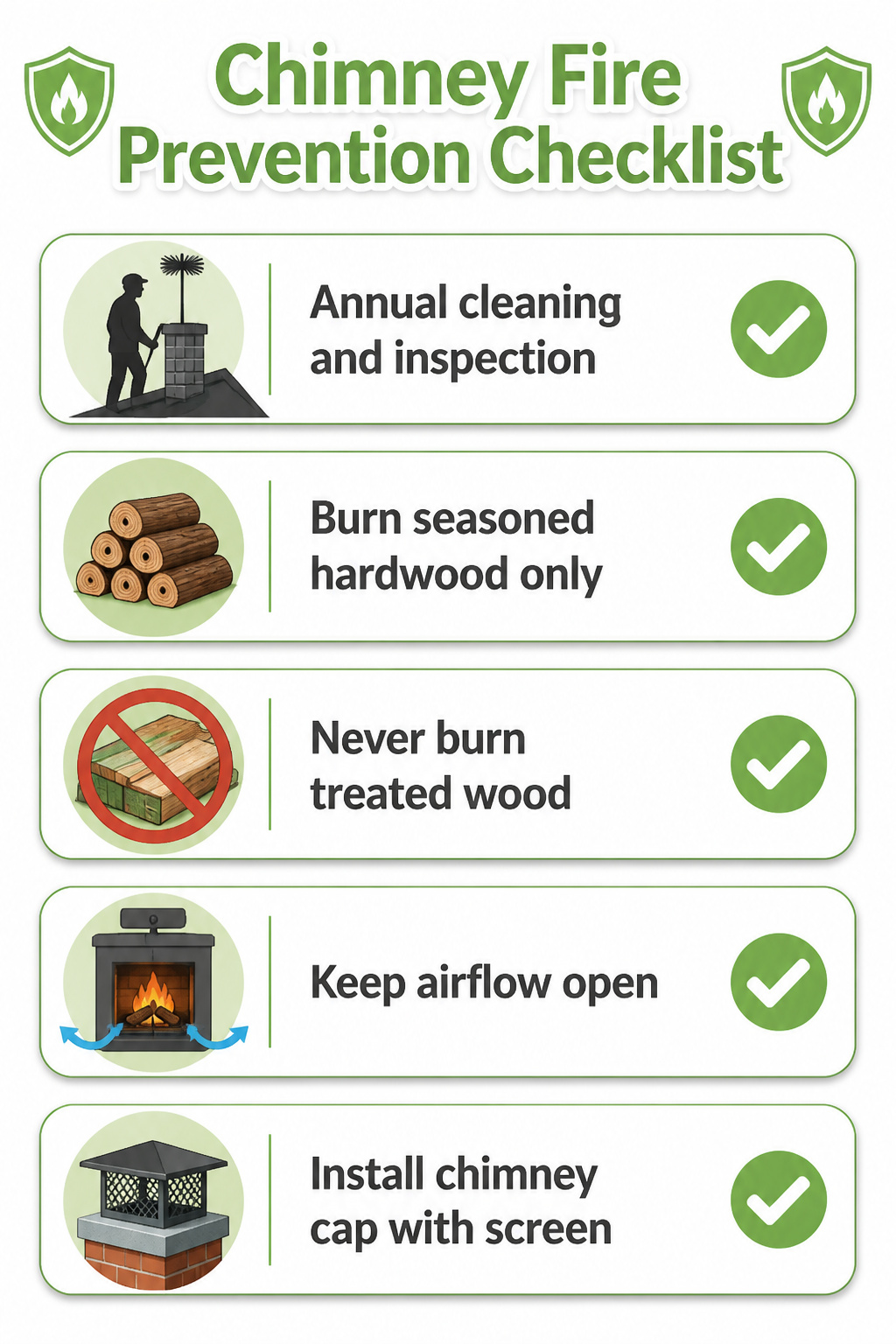
- Annual cleaning and inspection comes first because nothing else matters if creosote is already thick inside the flue. Schedule a certified chimney sweep once a year; they remove the soot that heat refines into creosote, and they spot cracks or separations where a fire could escape into your walls.
- Burn only seasoned hardwood. Wood split and stored covered for six months to a year drops to 15%–25% moisture, which lets the fire burn hot enough for complete combustion. Unseasoned wood smolders, deposits more creosote, and wastes your effort.
- Never burn treated lumber, painted wood, or your old Christmas tree. The chemicals in treated wood release toxins and deposit residues that burn unpredictably; fresh evergreen sap layers creosote faster than seasoned oak.
- Keep the airflow open. A fire starved of oxygen cools, and incomplete combustion at low temperatures produces more creosote. Check that your damper opens fully and that furniture or fireplace screens do not block intake vents.
- Install a chimney cap with a screen. It stops leaves, branches, and animals from building blockages that force smoke backward and cool the flue, both of which raise creosote formation.
Insurance After a Fire
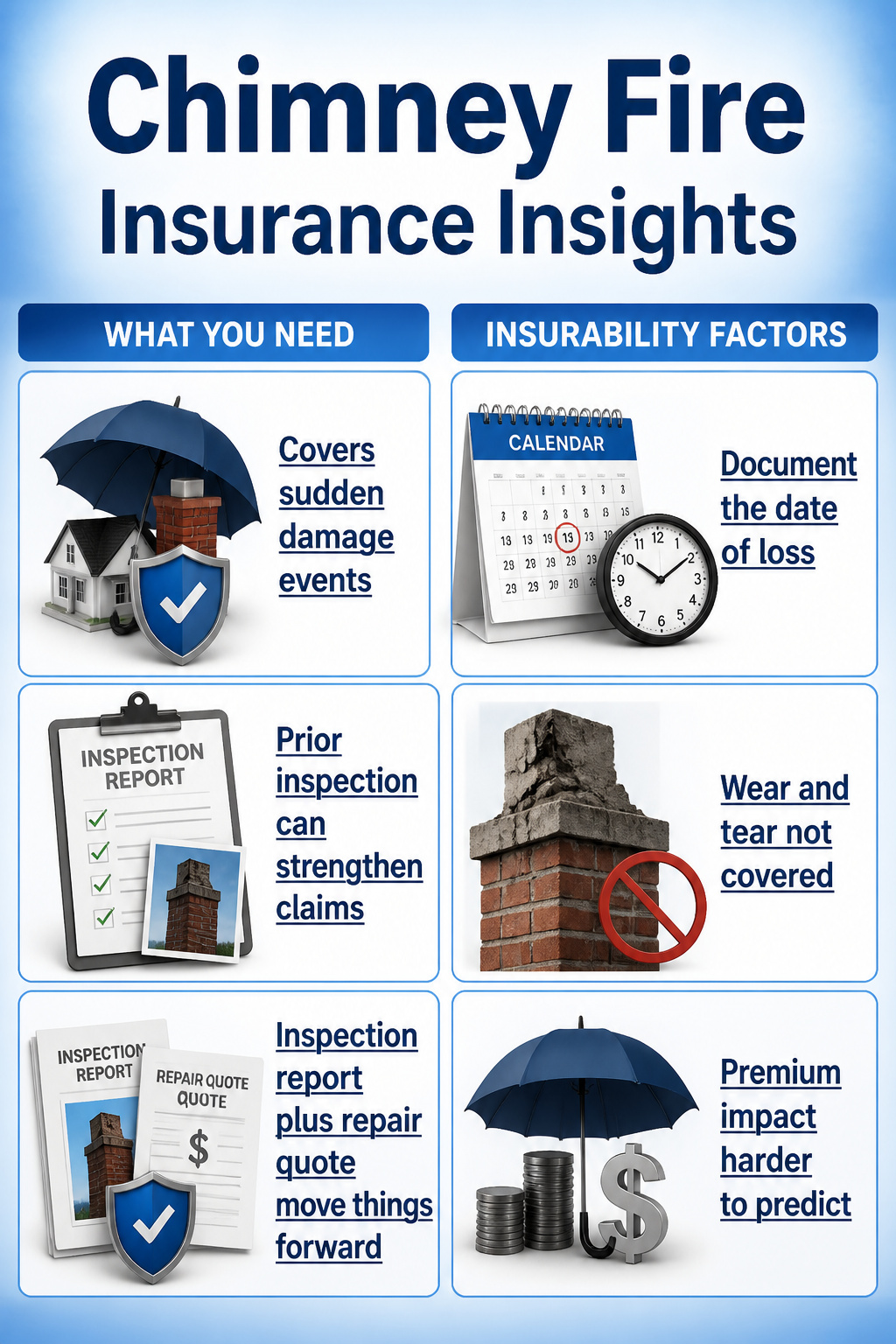
A chimney fire falls under the same sudden-damage coverage as a lightning strike on most standard homeowners policies. The adjuster’s first question will almost always be the date of loss, and if you cannot pin down exactly when the fire occurred, the date of your chimney inspection becomes your date of discovery. Having a prior service report showing no damage narrows that window and strengthens the claim.
The distinction that trips people up is between a single sudden occurrence and gradual deterioration. Insurers cover the former; normal wear and tear, they do not. Your chimney inspector’s job is to make that call, documenting everything in writing and photographs so the adjuster has what they need to process the claim. That inspection report plus the repair quote are the two documents that move things forward.
What happens to premiums after a chimney fire claim is harder to predict. No reliable data tracks whether rates rise, by how much, or for how long. The focus belongs on filing thoroughly and quickly while the evidence is fresh.
Frequently Asked Questions
What causes chimney fires?
Creosote buildup is the main cause, forming when wood doesn’t fully combust and deposits unburned particles on the flue walls. Burning wet or unseasoned wood accelerates this, and insufficient ventilation or blockages like bird nests trap heat until ignition occurs. Most chimney fires start inside the flue where creosote or debris meets sustained heat.
How can I tell if I have a chimney fire?
Fast-burning fires produce loud crackling or popping, dense smoke, flames or burning creosote shooting from the chimney top, and an intense hot smell. Slow-burning fires are far quieter; you might only notice soot flakes or creosote chunks falling into the fireplace, or a faint hot smell you cannot identify. These hidden fires still reach over 2,000°F and cause serious damage.
What should I do if there is a chimney fire?
Call 911 first, even if the flames look contained, since fire can spread into walls or the attic where you cannot see it. Close dampers and cut off air supply to starve the fire, but never use water on a hot stove because thermal shock can crack the metal or cast iron. Check the roof for sparks while you wait for the fire department to arrive.