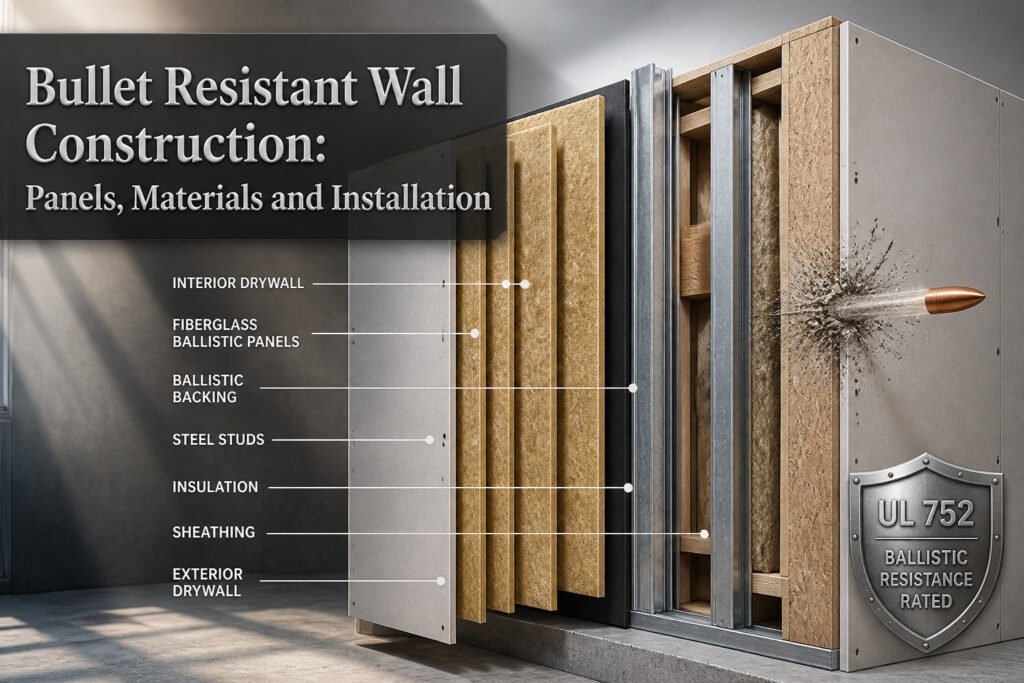
Bullet resistant wall construction is the practice of installing ballistic-rated panels inside a wall assembly to stop or slow gunfire. The catch is that no material is truly bulletproof; UL 752 ratings only certify resistance up to a specific caliber and shot count. Fiberglass panels, the standard choice for most builds, work by delaminating on impact to trap the round within the layers rather than letting it pass through.
What Bullet-Resistant Wall Panels Are
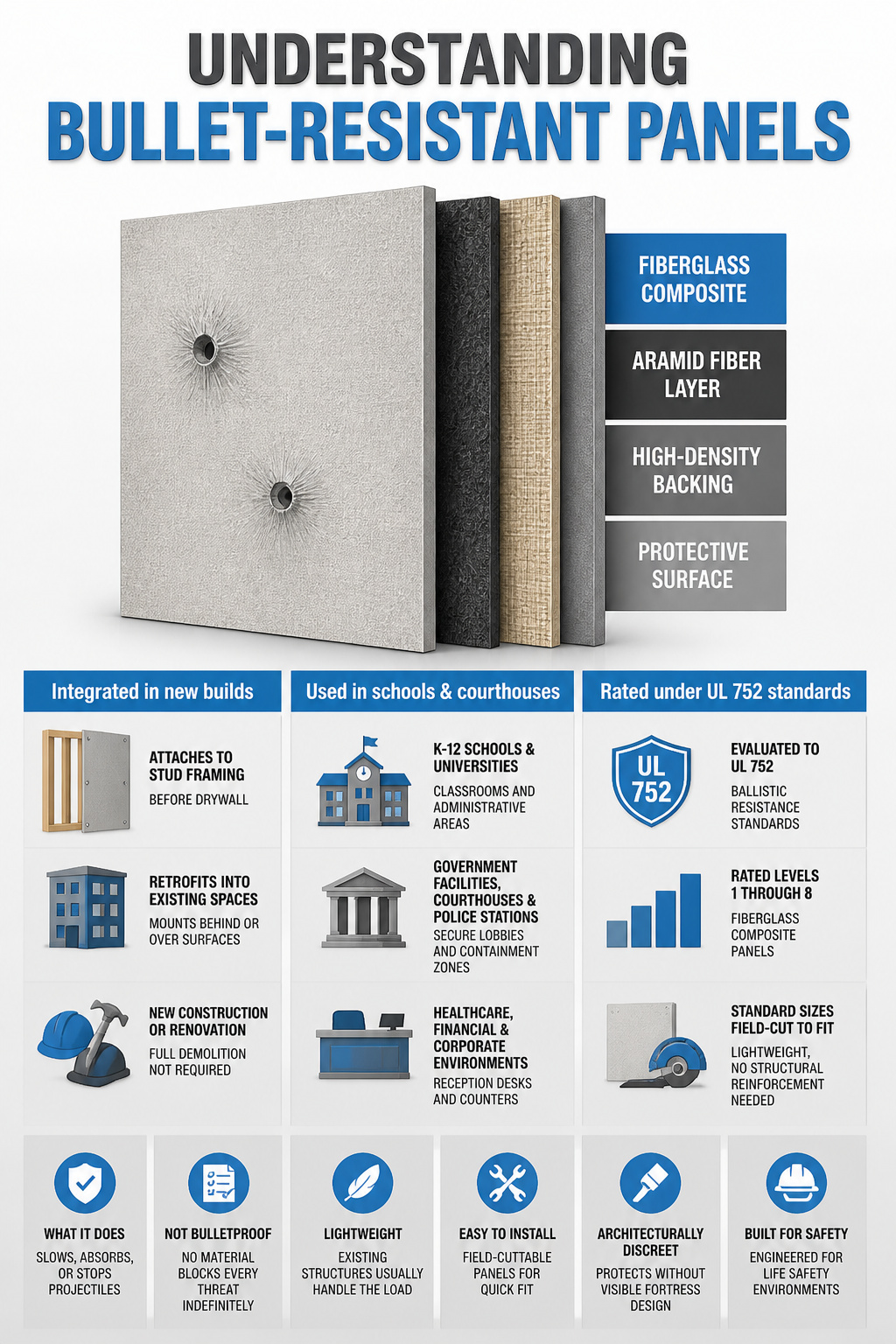
Bullet-resistant wall panels are ballistic-rated building materials engineered to slow, absorb, or stop projectiles under controlled testing standards. The term matters: "bullet-resistant" is the accurate industry wording, not "bulletproof," since no material blocks every threat indefinitely.
These panels integrate into wall assemblies during new construction or retrofit into existing buildings. In new builds, they attach directly to stud framing before drywall goes up. For renovations, they can mount behind existing surfaces or layer over them, which matters in schools, government buildings, courthouses, police stations, healthcare facilities, and commercial spaces where full demolition is not practical.
The common settings repeat across almost every source. K-12 schools and universities specify them for classrooms and administrative areas. Government facilities, courthouses, and police stations use them for secure lobbies and containment zones. Healthcare, financial institutions, and corporate environments install them at reception desks and counters, sometimes lining the front, sides, and countertop to give staff a protected workspace without visible fortress architecture.
Most systems are evaluated to UL 752 ballistic resistance standards, with manufacturers rating fiberglass composite panels across Levels 1 through 8. The panels come in standard sheet sizes, can be field-cut to fit, and are light enough that existing structures usually handle the load without reinforcement.
How the Panels Stop a Round

A bullet resistant wall panel works by trapping the round inside the material itself, not by deflecting it. The woven ballistic-grade fiberglass roving, mechanically injected with thermoset resin and pressed into rigid sheets, is built to delaminate on impact: the layers separate in a controlled way that absorbs and spreads the energy across the panel instead of letting it punch through in one spot.
That delamination is the key difference between stopping a bullet and merely slowing it. When a 9mm round or higher-caliber projectile hits, the tiny pockets between the fibers collapse and the weave catches the bullet within the layers. The panel retains the projectile; it does not shatter outward or allow fragmentation that could injure someone on the protected side.
This is fixed protection, installed within or behind the wall during construction. You do not slide it into place when trouble starts. The fiberglass panels are rated to UL standards Levels 1 through 8, and the level you choose determines what caliber and shot pattern the wall can stop.
Why Demand Is Rising

School vestibules, reception desks, and administrative offices that used to rely on nothing more than locked doors are now being retrofitted with ballistic fiberglass behind conventional finishes. The panels are cut with standard carpentry tools and integrated without tearing the building apart, which matters when classes cannot stop for construction.
Hospitals, courthouses, and financial institutions have used this protection for years. What changed is the spread into everyday spaces where the threat once felt remote. Government offices, houses of worship, and healthcare intake areas have joined the list. Organizations now want ballistic protection that does not announce itself, so dual-use products like dry-erase boards with built-in panels are gaining ground. The same surface hosts a morning meeting and, if needed, absorbs a round.
The shift is toward layered strategies rather than single hard points. A safe room still needs ballistic glass, access control, and communication links, but the walls between ordinary spaces are the first line most people will actually encounter.
UL 752 Protection Levels
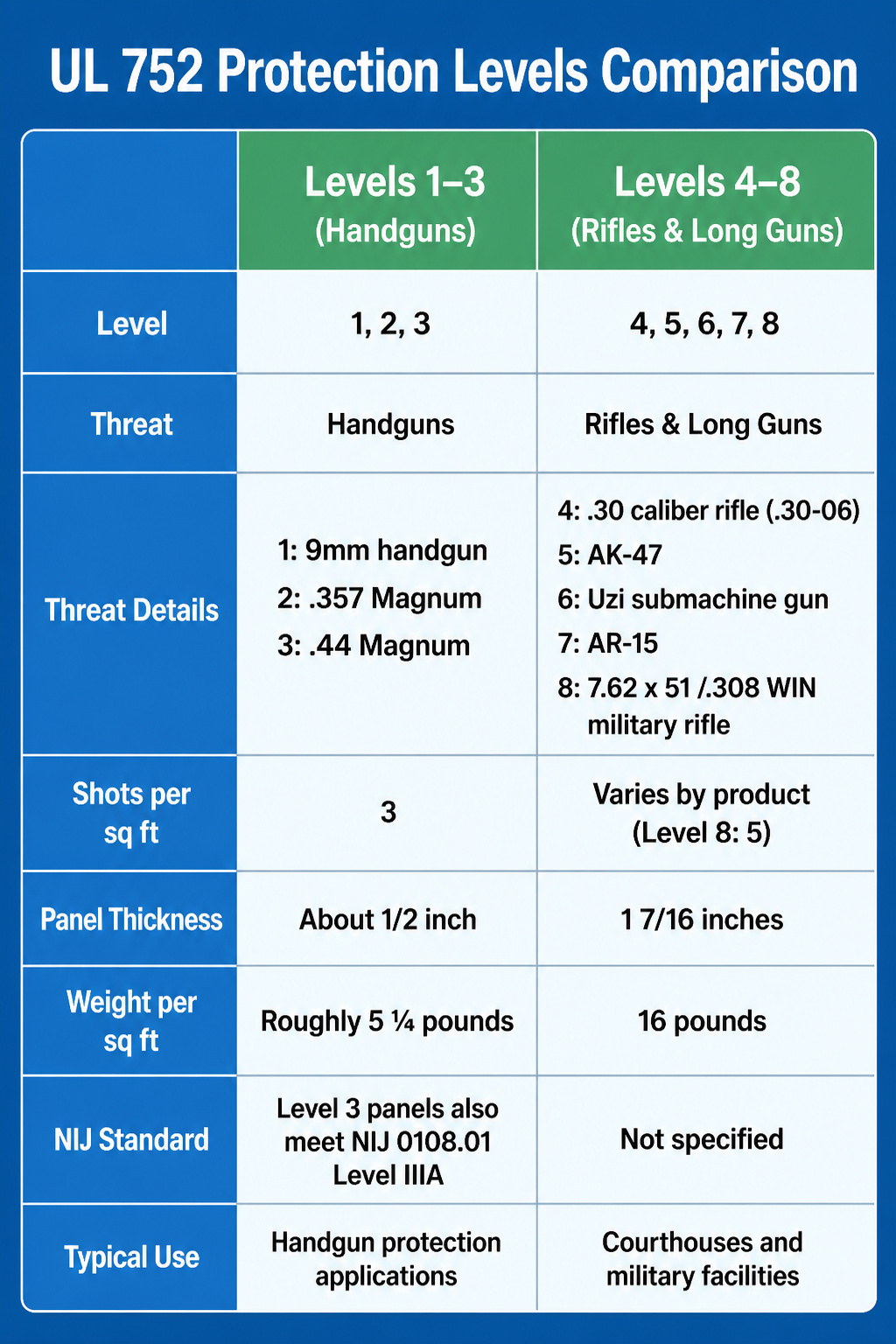
UL 752 breaks bullet resistant wall construction into eight numbered tiers, each tied to a specific round it must stop. Levels 1 through 3 cover handguns, 4 through 8 move into rifles and long guns. The jump from 3 to 4 is the big one: handgun protection versus rifle fire.
| Level | Threat | Shots per sq ft |
|---|---|---|
| 1 | 9mm handgun | 3 |
| 2 | .357 Magnum | 3 |
| 3 | .44 Magnum | 3 |
| 4 | .30 caliber rifle (.30-06) | 1 |
| 5 | AK-47 | varies by product |
| 6 | Uzi submachine gun | varies by product |
| 7 | AR-15 | varies by product |
| 8 | 7.62 x 51 / .308 WIN military rifle | 5 |
A Level 3 panel runs about 1/2 inch thick and weighs roughly 5 ¼ pounds per square foot. Level 8 panels thicken to 1 7/16 inches and hit 16 pounds per square foot, suited for courthouses and military facilities. Level 3 panels also meet NIJ 0108.01 Level IIIA, a detail worth matching to your project’s spec sheet. Levels 4 and above get product-specific on shot counts and spacing, so the rating alone will not tell you everything.
Fiberglass, Steel, Kevlar and Ballisticrete
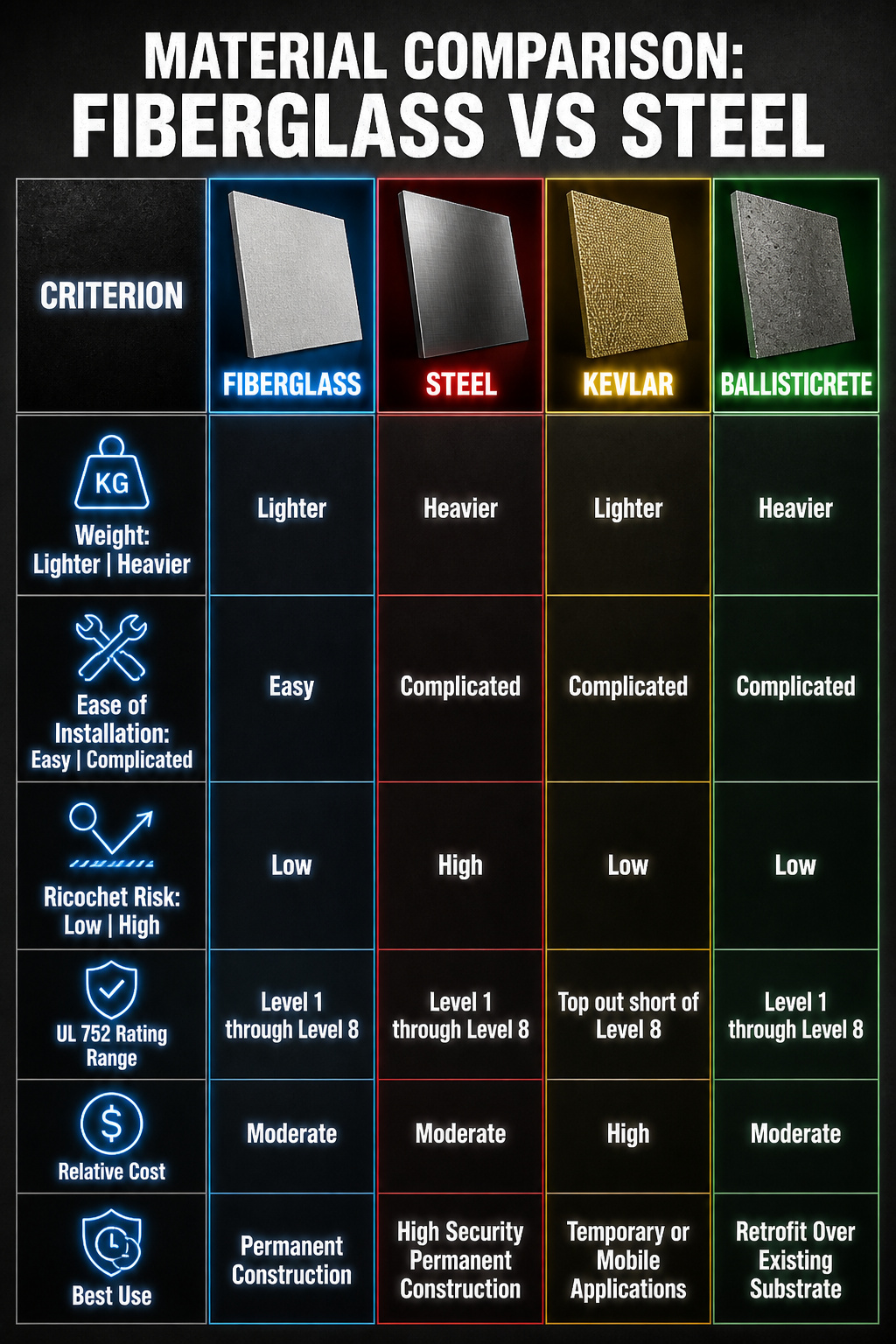
Fiberglass panels dominate most bullet resistant wall construction for a reason. The material catches and dissipates a round’s energy rather than sending it bouncing, which matters when you’re building in occupied spaces. UL 752 ratings run from Level 1 through Level 8, so a school reception desk and a courthouse holding cell can both spec the same product family at different thicknesses. The panels slide in behind standard drywall or millwork, and the weight stays manageable enough that two installers can handle a sheet without a lift.
Steel belongs in a different conversation entirely. The mass is real, and the ricochet hazard is real too; a round that doesn’t penetrate can still skate off at an angle you didn’t plan for. But for a vault, a data center, or any space where the threat model includes sustained assault, steel’s durability keeps it in the conversation despite the logistics headache.
Kevlar’s strange position in wall work comes down to economics. The aramid fiber stops rounds beautifully at low weight, but the cost scales fast and the UL levels top out short of where fiberglass or steel can go. Most builders who spec Kevlar for walls are chasing a specific temporary or mobile application, not permanent construction.
Ballisticrete applies as a composite layer over existing substrate, which saves demolition but demands a crew that knows the cure times and the thickness math. The protection is solid, though the installation is specialized enough that your usual drywall contractor is not the right call.
Where the Panels Go
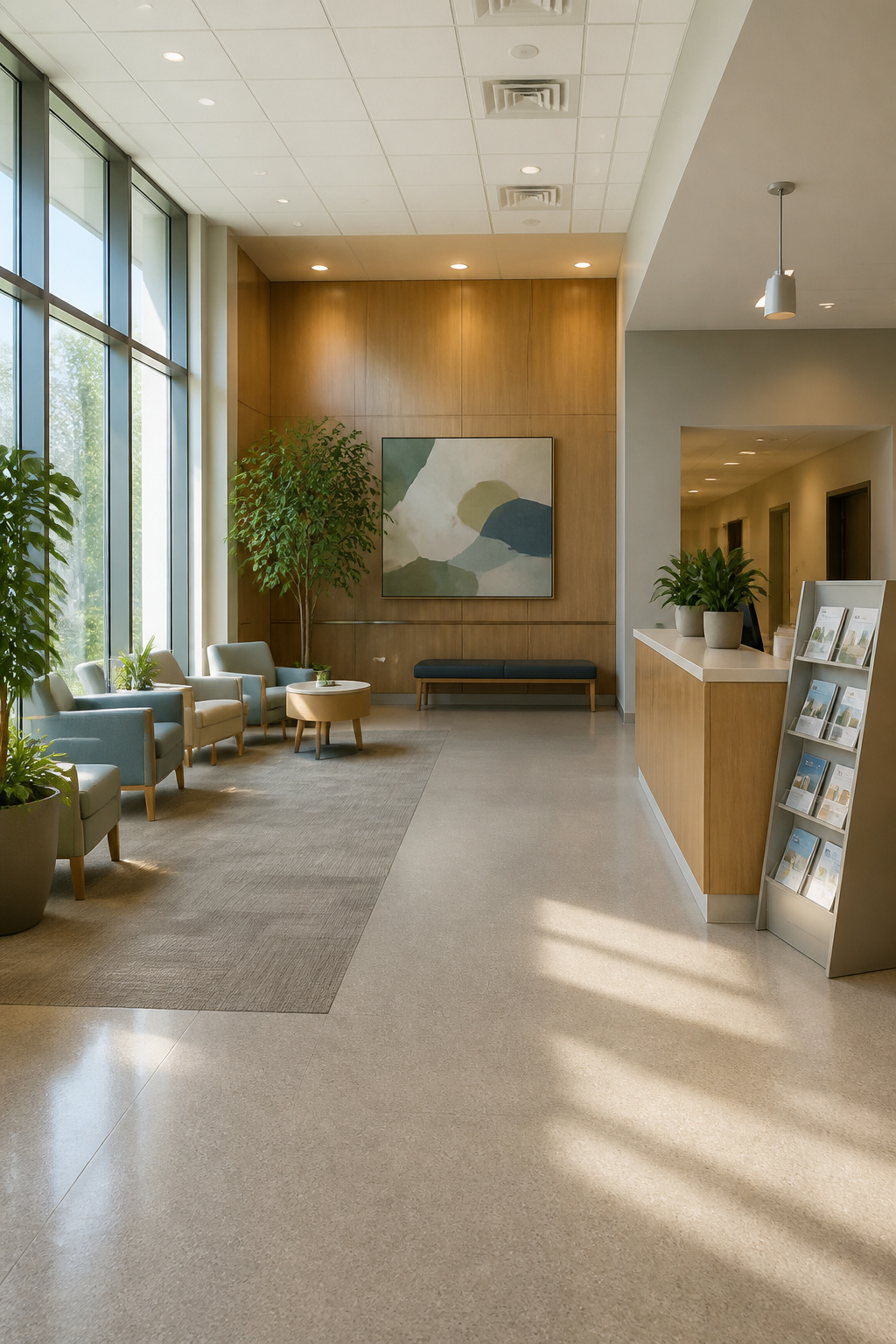
Schools and government facilities dominate the conversation around bullet resistant wall construction, but the panels show up in quieter places too. Healthcare lobbies, courthouses, police stations, and even some commercial buildings now spec ballistic protection behind standard drywall. Most of these installations follow UL 752 standards, the same testing protocol used whether the job is a K-12 classroom wing or a hospital reception desk.
Safe rooms and secure environments get the most reader questions, and the sources back that up. Residential safe rooms, corporate secure areas, and protected administrative offices all use the same fiberglass or steel panels, just sized to the threat level. The panels attach to stud walls during new construction or layer over existing surfaces in renovations, which means a building’s original aesthetic does not have to disappear behind fortress-grade materials.
What struck me reading through the specifications was how little the application changes the core decision. A bank, a school, a courthouse: all face the same choice between retrofit and new build, between visible security and hidden reinforcement.
Installing the Panels
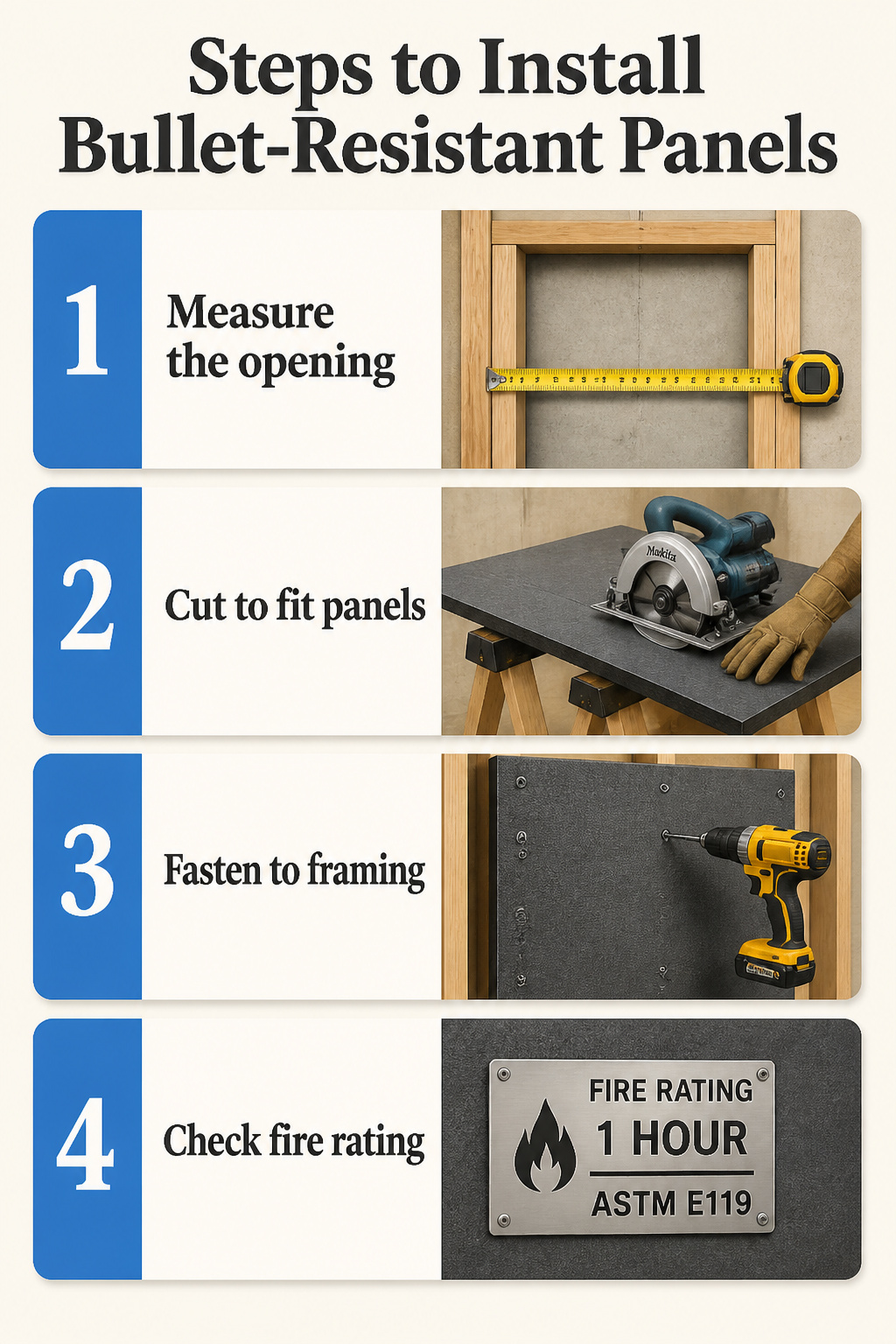
- Measure the rough opening first. Standard panels come in 3′ x 8′, 4′ x 8′, and longer 9′ or 10′ lengths, so the math usually works out clean; custom sizing is available when it doesn’t.
- Cut to fit with standard carpentry tools if you’re working fiberglass. Steel panels demand different gear and different patience. The edge stays square either way, which matters when you’re butting pieces together in the same wall assembly.
- Fasten securely through the framing. Fiberglass runs 2.5 to 16 pounds per square foot depending on UL level, so a Level 8 sheet at the heavy end needs more blocking and more fasteners than a Level 3 at five and a quarter.
- Check the fire rating if code asks for it. Some fiberglass assemblies carry one hour per ASTM E119, but only in specific configurations. Verify the assembly details, not just the panel spec, before the inspector shows up.
Panel Weight and Size
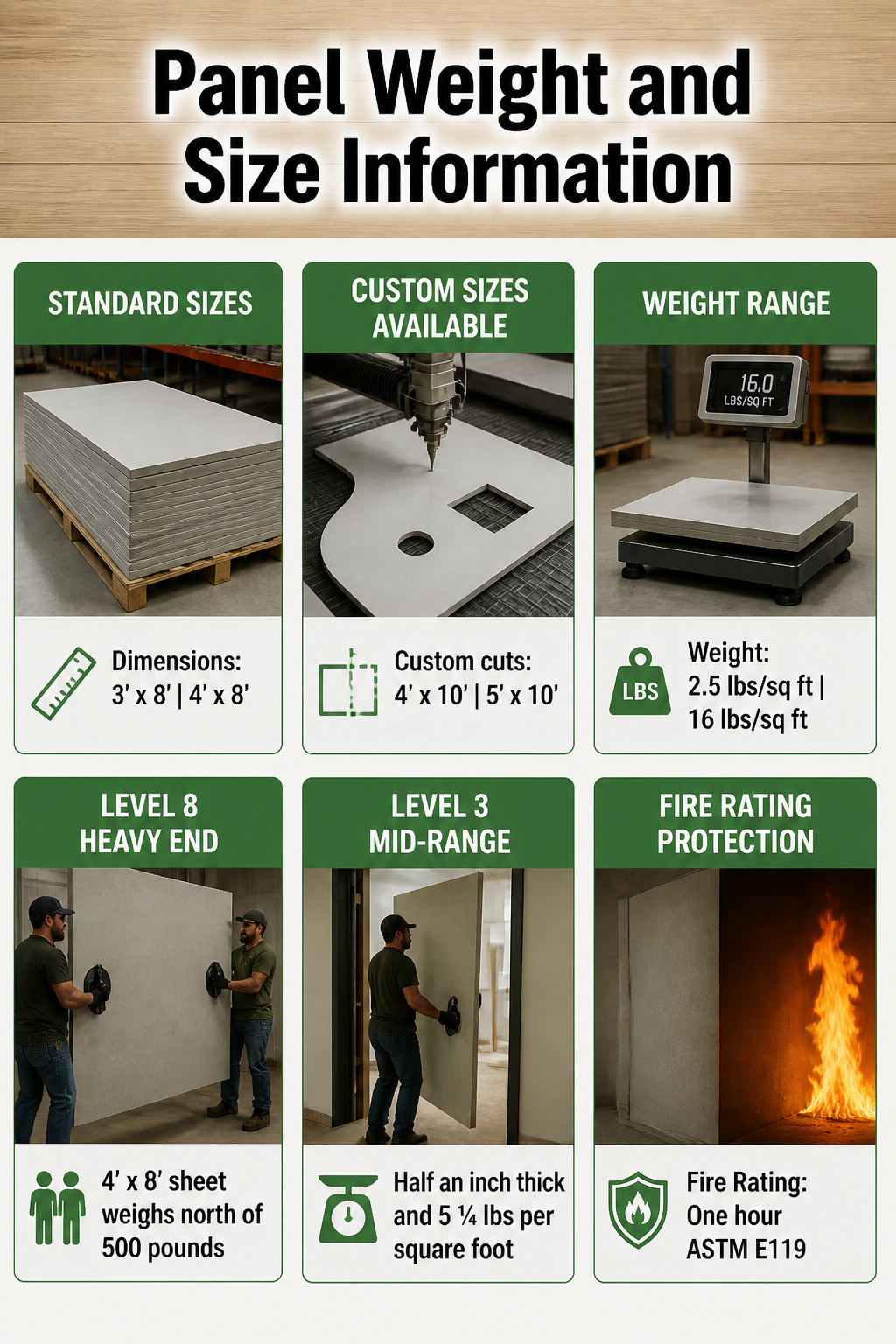
A 3′ x 8′ or 4′ x 8′ sheet of ballistic fiberglass lands on the truck like a sheet of plywood, which is exactly the point. Those dimensions match standard wall framing, so one person can muscle a panel through a doorway without the crew standing around figuring out how to rotate it upstairs. Custom cuts to 4′ x 10′ or even 5′ x 10′ are available when the opening demands it, and some suppliers will waterjet odd shapes for retrofits where the existing walls refuse to cooperate.
The weight spread runs from 2.5 lbs per square foot at the lowest UL level up to 16 lbs at Level 8. That heavier end, rated for rifle rounds, means a 4′ x 8′ sheet weighs north of 500 pounds. Two strong backs and a set of suction cups beat trying to solo it and learning the hard way why drywall crews work in pairs. At mid-range Level 3, half an inch thick and 5 ¼ lbs per square foot, the same sheet is closer to 170 pounds, awkward but manageable.
Many panels carry an ASTM E119 one-hour fire rating, which matters more than buyers first think. In a school corridor or courthouse lobby, the ballistic protection buys time; the fire rating keeps that protection from becoming a liability if sprinklers fail or a fire starts on the protected side.
Fiberglass vs. Steel for Most Builds
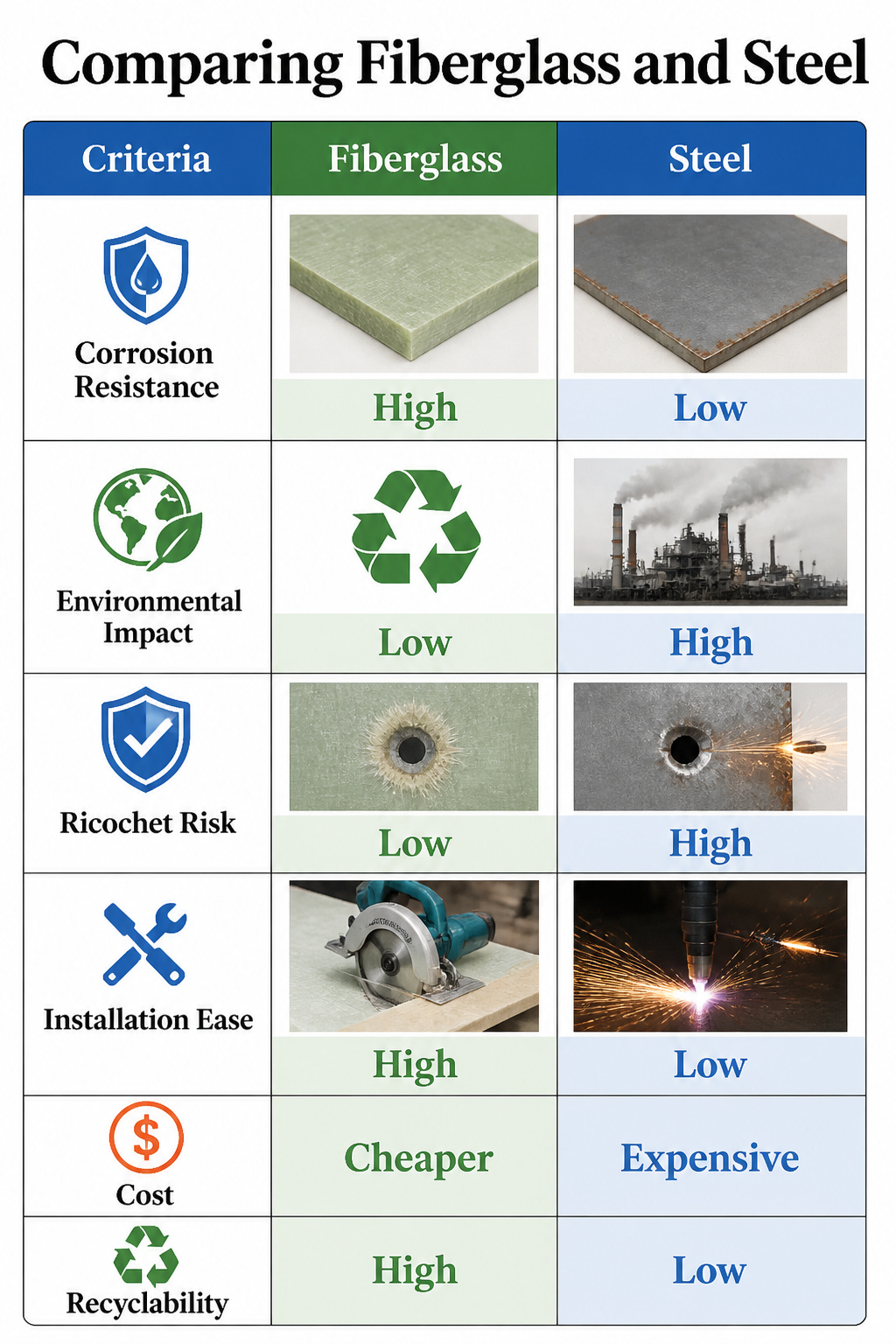
Steel plate was the default for years, and it still shows up in specs where someone wants the psychological weight of metal. But after comparing the two materials across a dozen builds, fiberglass wins on enough fronts that the choice has become routine.
Weight is the first difference you feel. Fiberglass panels run lighter than steel, though the gap narrows at higher UL levels. On a wall project, that matters less than on a vehicle retrofit, but it still changes how many people you need on the lift and whether your existing framing can take the load without sistering every stud.
Installation ease follows from that. Fiberglass cuts with standard carbide blades and can be field-fitted around outlets or HVAC penetrations. Steel needs plasma or abrasive cutting, sends sparks, and usually ships pre-cut to avoid the mess. For retrofits in occupied buildings, fiberglass means less dust, less noise, and no hot-work permits.
The ricochet risk is what sold me. Steel sends rounds and fragments bouncing; fiberglass captures and delaminates around the bullet, bleeding energy into the laminate layers. In a school hallway or a retail counter, that non-ricochet property is not a nice-to-have. It is the reason fiberglass gets specified in the first place.
Steel does have a place: vaults, doors, areas where you need the mass for forced-entry delay beyond what fiberglass provides. For flat wall builds, though, the downsides stack up. Steel panels corrode if the paint fails, interfere with Wi-Fi and cellular signals, and their environmental profile includes mining, smelting, and toxic coatings. Fiberglass is non-toxic through its life, and several manufacturers now take it back for recycling at end of life.
Cost tracks with all of this. Fiberglass runs cheaper than steel at equivalent protection levels, and the labor savings widen the gap further. Unless the spec calls for steel by name, or the wall needs to stop both bullets and a ram for more than a few minutes, fiberglass is the material to price first.
Safe Rooms and Protected Areas
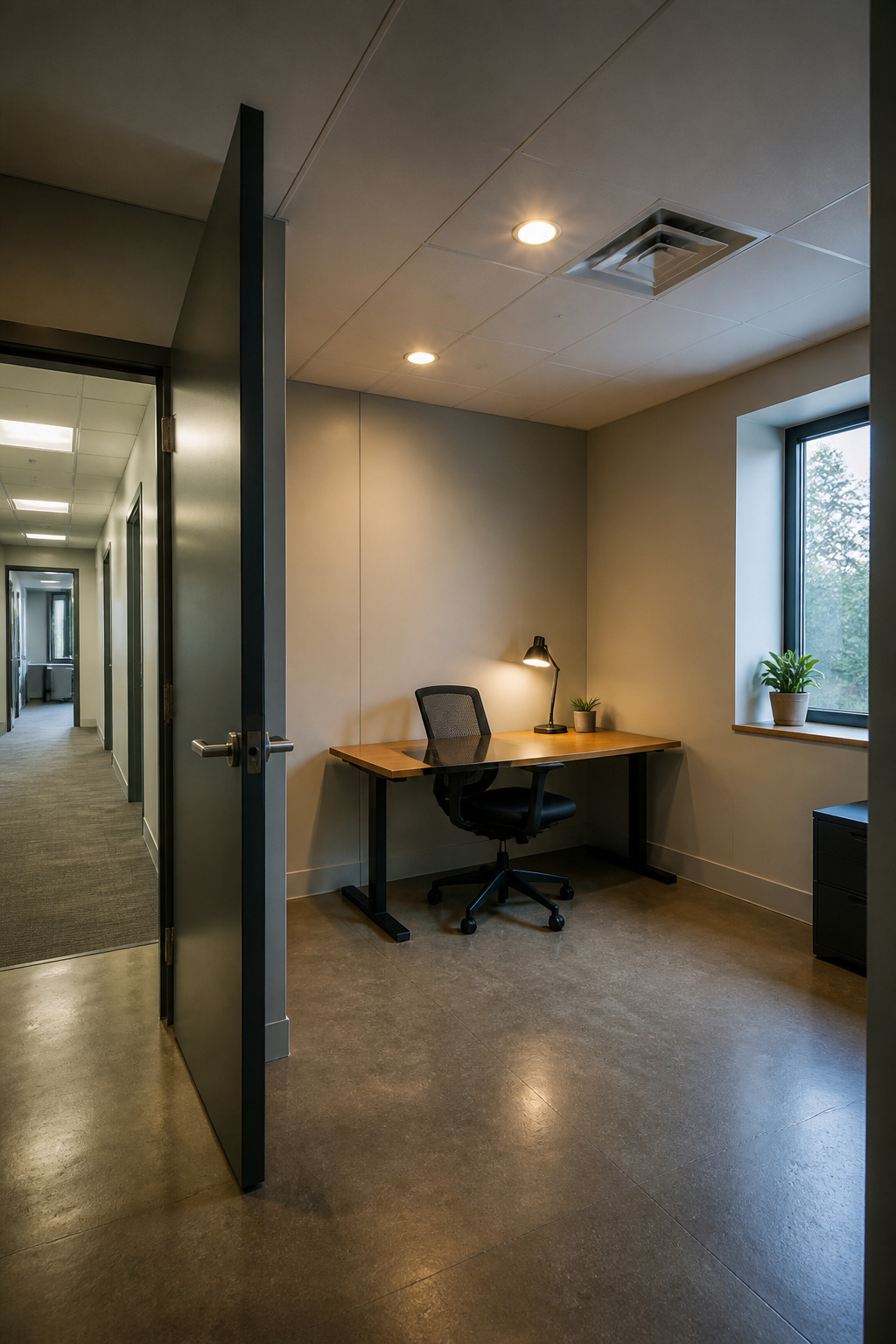
Safe rooms sit at the point where bullet resistant wall construction meets everyday architecture, and panels are what make that overlap possible. Most builds I have looked at layer ballistic fiberglass behind standard drywall or millwork, which keeps the room looking like any other office or classroom until the moment protection matters. WallShield, one system designed for this, gets used in administrative offices, healthcare facilities, and houses of worship where the goal is fixed protection without turning the space into a bunker.
The panel approach works because it plays well with the other pieces: ballistic glass in the windows, access control on the doors, communication lines so occupants can reach the outside. One limitation worth weighing is that opaque fiberglass panels have not been tested for tornado or hurricane resistance, so a safe room meant for weather and intruders needs separate verification for each threat. For retrofit jobs, panels mount over existing walls rather than tearing back to studs, which matters when the budget or the lease rules out full reconstruction.
School Applications
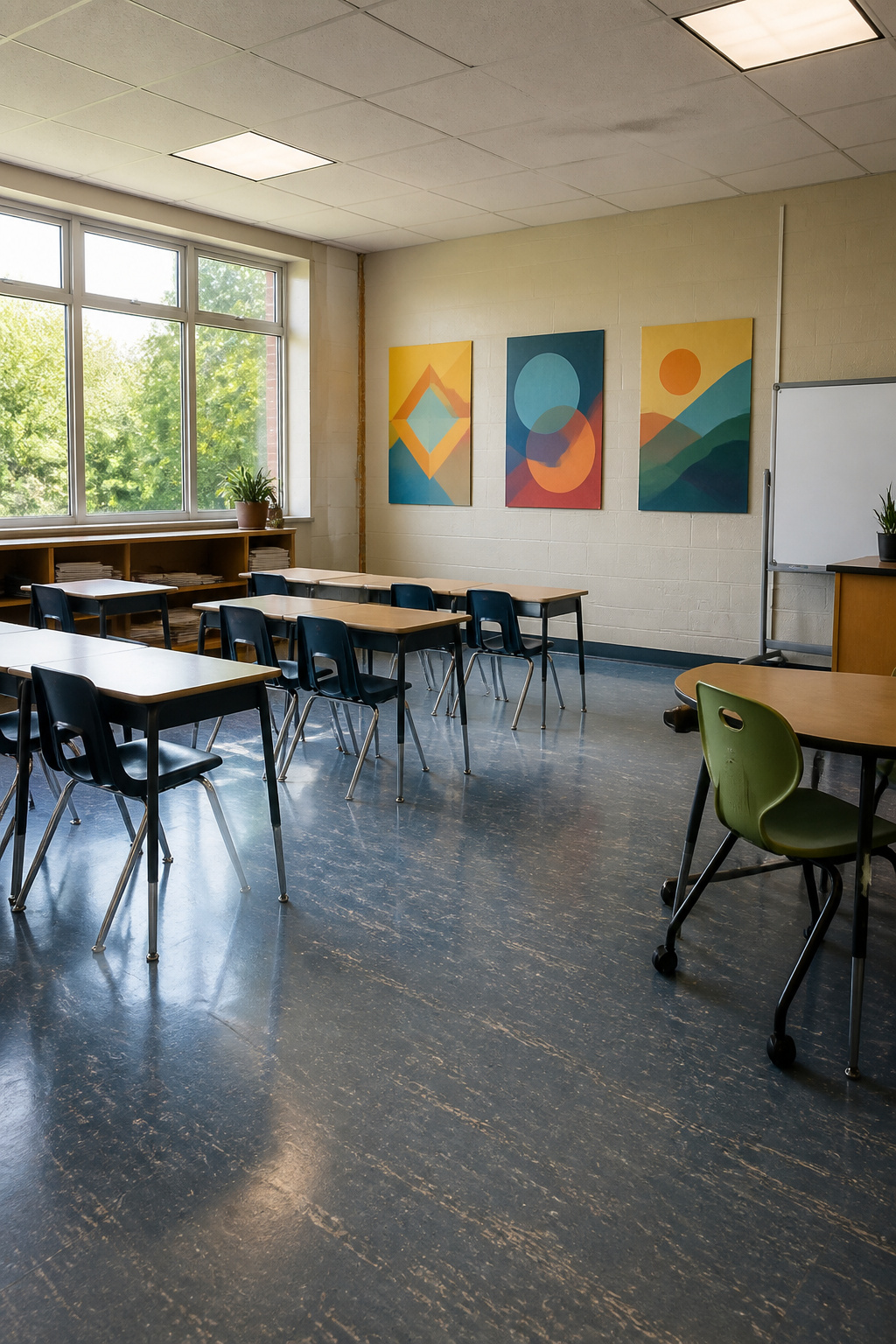
School vestibules and reception desks are where the conversation about bullet resistant wall construction usually starts for districts, but the protection has to reach deeper than the front door. Classrooms and administrative offices need the same fixed ballistic layer, and fiberglass panels can be cut with standard carpentry tools to fit behind the drywall already there. That matters in older buildings where tearing out a wall runs into asbestos rules and budget votes.
What convinced me, reading through how these retrofits actually play out, is that the panel thickness stays hidden; you keep the existing finish and the room still looks like a place for learning. One supplier lists conference rooms and executive offices alongside classrooms, which tells me the same thinking applies: ordinary function, fixed protection, no institutional look. Pair that with ballistic glass in the door vision panel and the room becomes a hard corner in an emergency without becoming a bunker every other day.
The layered approach is where this works or fails. A panel in the wall buys time; adding access control and a communication system turns that time into a managed response. Some districts also keep mobile options like a ballistic whiteboard for flexibility, but the wall itself is the anchor. Retrofit or new build, the material is the same. The difference is whether you planned for it before the studs went up.
Frequently Asked Questions
What is a bullet resistant wall panel?
A bullet resistant wall panel is a ballistic-rated building material engineered to slow, absorb, or stop projectiles under controlled testing standards, most commonly UL 752. The correct industry term is "bullet-resistant," not "bulletproof," since no material blocks every threat indefinitely. These panels integrate into wall assemblies during new construction or retrofit into existing buildings behind standard finishes.
Are bullet resistant wall panels used in schools?
Yes, schools are one of the most common settings for bullet resistant wall construction. K-12 schools and universities specify them for classrooms, administrative offices, and vestibules. The panels can be retrofitted behind existing drywall using standard carpentry tools, which matters when classes cannot stop for construction.
Can bullet resistant wall panels help create safe rooms?
Yes, ballistic fiberglass panels are frequently layered behind standard drywall or millwork to create safe rooms and protected areas in offices, healthcare facilities, and houses of worship. One limitation is that opaque fiberglass panels have not been tested for tornado or hurricane resistance, so a safe room meant for weather and intruders needs separate verification for each threat.
What is the difference between bulletproof and bullet-resistant?
"Bullet-resistant" is the accurate industry wording, not "bulletproof." No material blocks every threat indefinitely, which is why manufacturers and standards bodies avoid the "bulletproof" label. The distinction matters for specification, liability, and setting realistic expectations about protection levels.