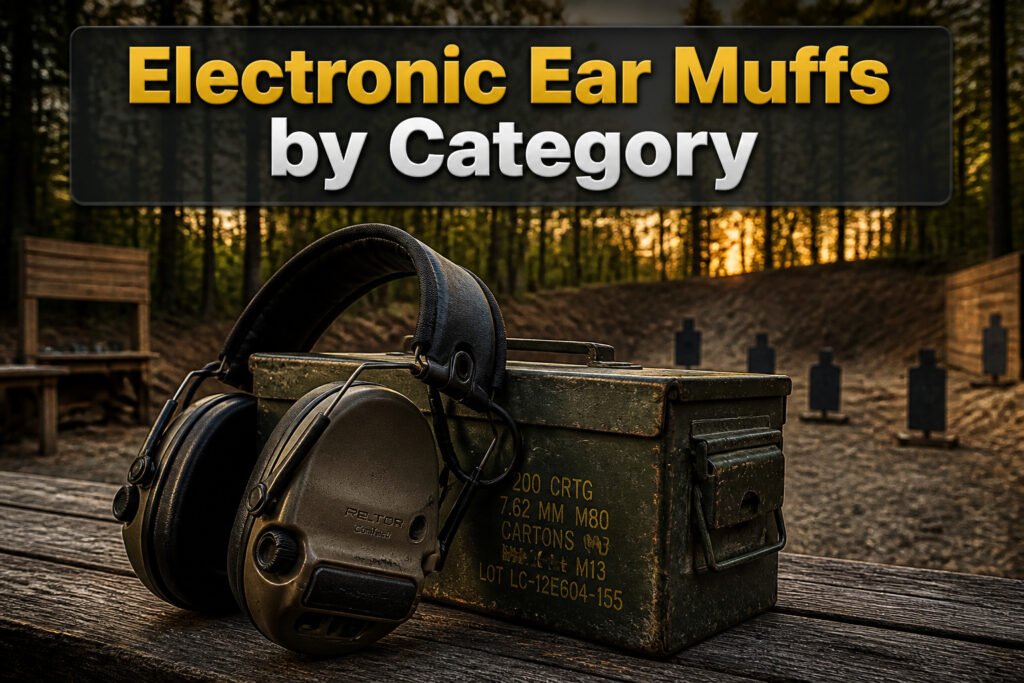
The Peltor ComTac V wins on sound quality alone: clean audio processing, omnidirectional microphones, and an earplug mode that boosts ambient sound 6 dB when you double up. At $519, it only makes sense if you are actually running night vision or team comms. A shooter who just needs range hearing protection is paying for military integration that sits unused.
1. Best Sound Quality Under $550
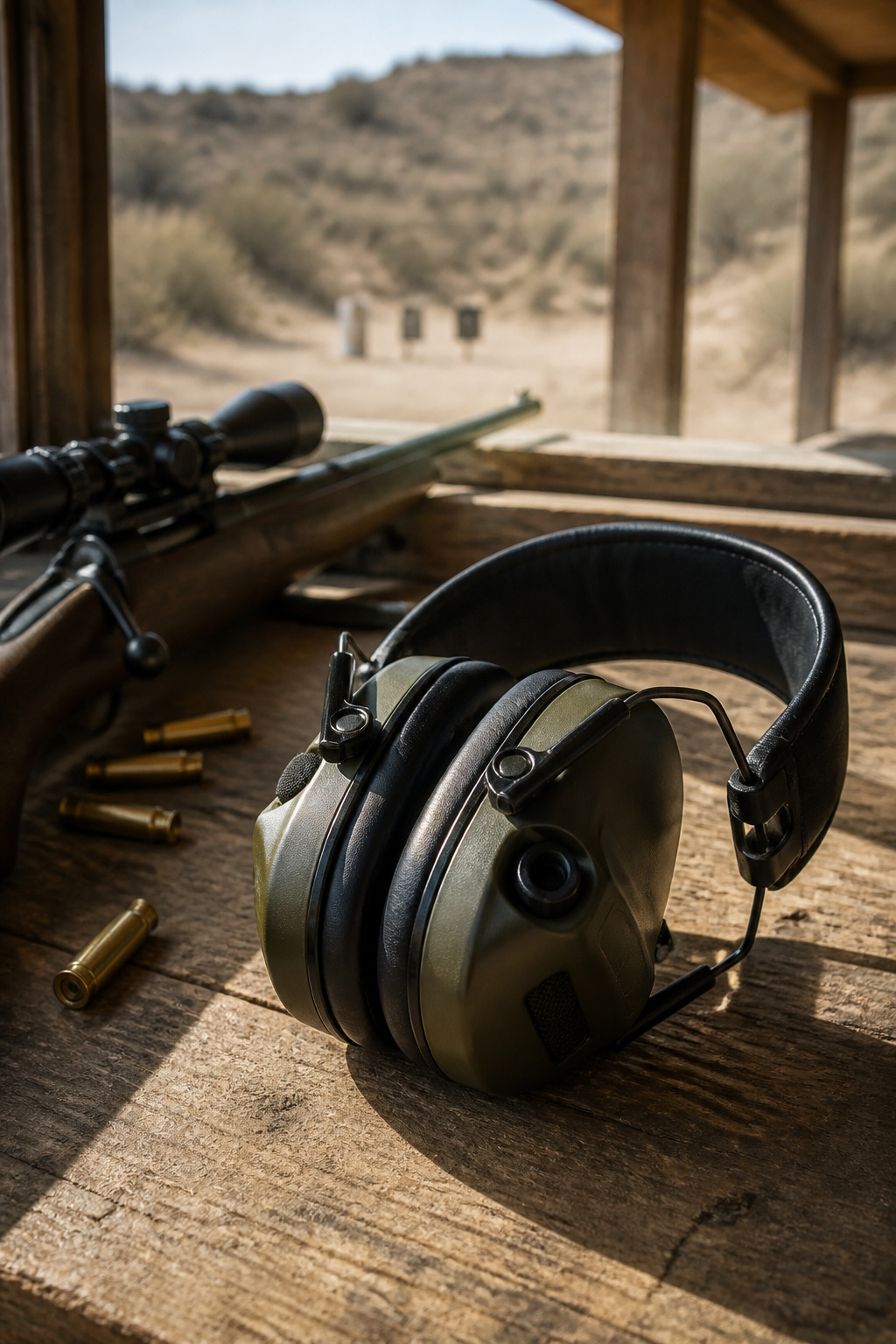
The Peltor ComTac V runs $519 for a 23 dB NRR rating, and that price only makes sense if you will actually use what you are paying for. The audio processing is the cleanest I have found in electronic ear muffs; voices do not sound compressed, and the omnidirectional microphones let you place where a sound came from without lifting the cups. There is an equalizer, balance controls, and an earplug mode that boosts ambient sound 6 dB when you double up with plugs under the muffs, which I value when shooting .30 caliber rifles with aggressive muzzle brakes.
Helmet mounting is where this design earned its keep. The ComTac V pops onto rail adapters without the lift-and-twist routine, and the boom mic and comms inputs are built in, not bolted on. The stock ear pads work fine until summer heat builds up sweat on them; gel cups fix that for about $20 more, which at this price should have been included.
Skip this one if you are not running night vision or team comms. The sound quality is the best available, but a shooter who only needs range hearing protection is paying for a military integration that sits unused. The ComTac VI adds chat-between-units without radios, yet unless your whole group already owns VIs, the V does everything that matters for less.
2. Best Budget Pick Under $50
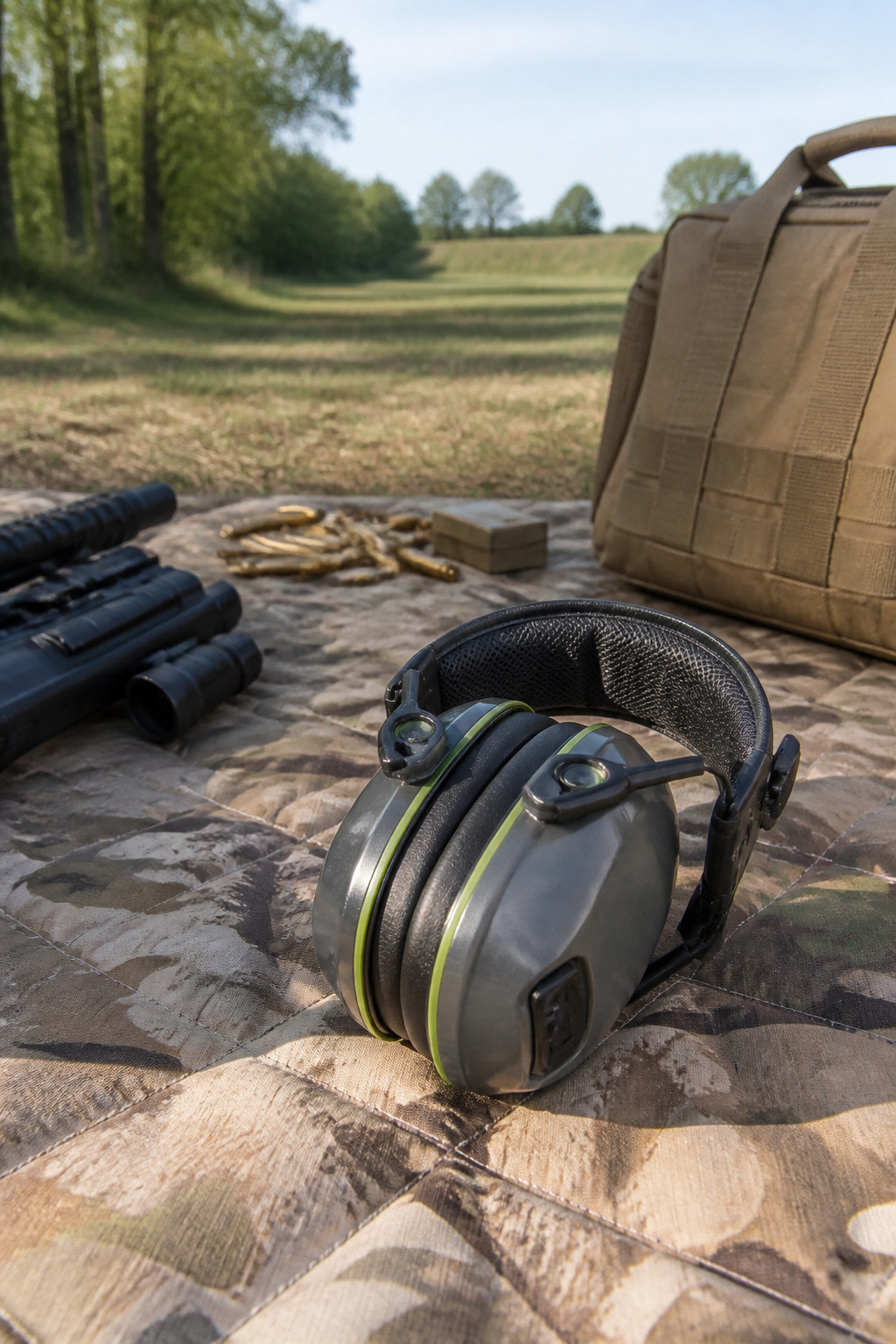
The Howard Leight Impact Sport at 22 dB NRR and $46.44 sits at the intersection of price and performance that most shooters actually need. I keep seeing these at every range I visit, and the 8% of pros still running them in precision rifle matches tells the story: they work.
The slim cups stay out of the way on a rifle or shotgun stock, which matters more than the spec sheet admits. Tradeoff is the seal. That same slim profile costs you contact surface, and 22 dB runs thin on an indoor range where concrete walls bounce everything back at you. If your regular spot has a roof and four walls, you are already at the margin here.
350 hours on two AAA batteries, auto-shutoff at four hours, AUX jack for a radio or phone. No Bluetooth, which keeps the price honest. The sound quality for voice and ambient noise punches above the price bracket; conversations stay clear without pulling the muffs.
Skip these if indoor shooting is your main use. For outdoor ranges, hunting, or anyone building a first kit without overspending, the Impact Sport has earned its spot as the default recommendation through actual use, not marketing.
3. Best All-Day Comfort
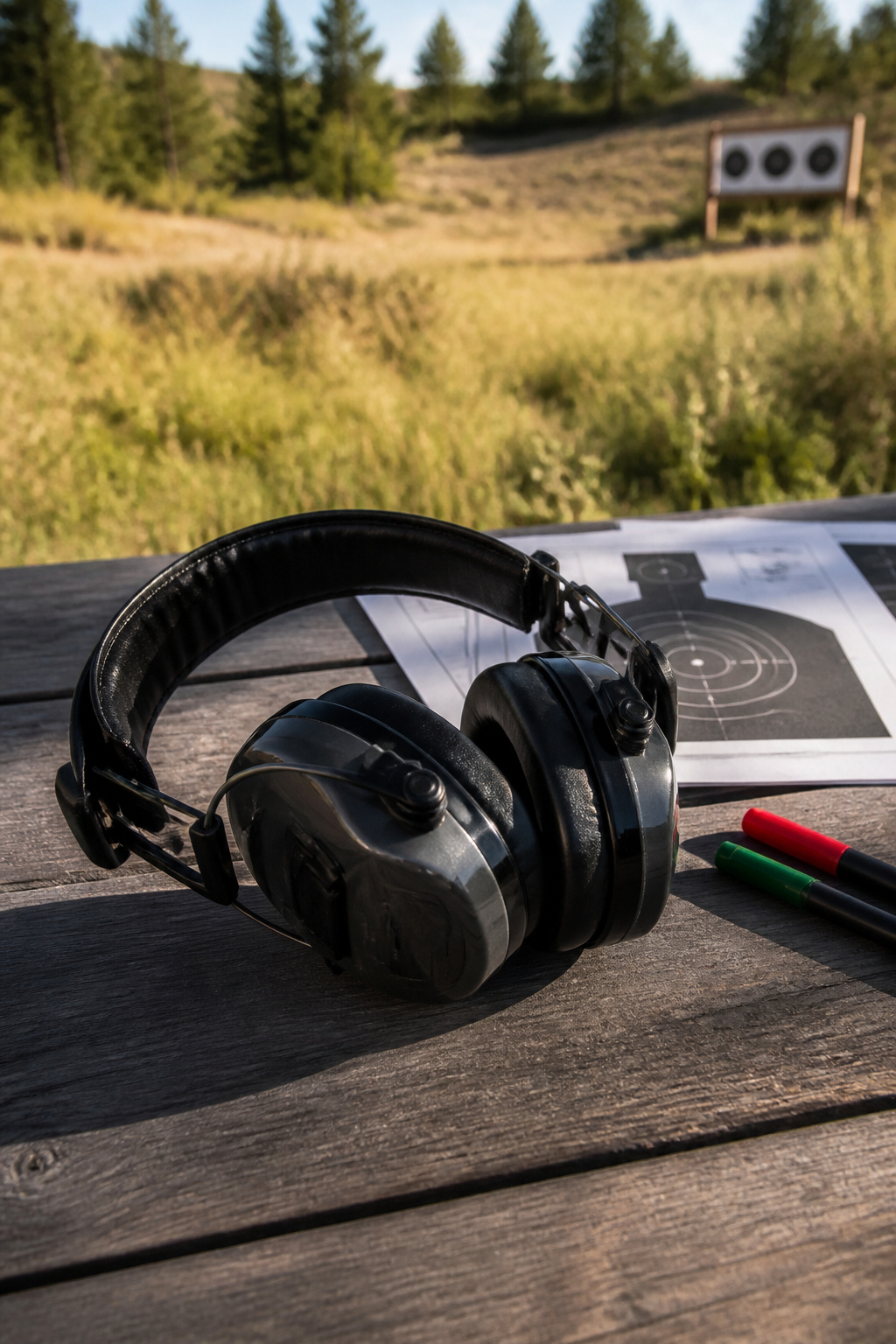
The Sordin Supreme Pro-X carries a 21 dB NRR, the lowest figure in this lineup, yet the gel cups and headband wear lighter than that number suggests. Most of the day gets spent forgetting they are on, which matters more than the raw rating when the shooting is intermittent and the conversation constant.
At $309, the trade is deliberate. Precision Rifle Series competitors log thousands of rounds in these, and seventeen percent of the top 200 shooters run this exact model. The wind-resistant microphones cut out impulse noise without the buzzing some cheaper sets let through during quiet moments, though the cups tend to squeak when powered up and pulled on or off.
Battery life runs to 400 hours on two AAAs. One of those batteries can jam in the compartment, requiring a knock to dislodge it, but in several months of winter use the included cells have yet to die.
Shooters who need maximum isolation should look elsewhere. Indoor ranges with sustained rifle fire, or anyone sensitive to the 21 dB ceiling, will want to double up with plugs or pick a higher-NRR set. For the rest, the comfort wins.
4. Best Value at $49
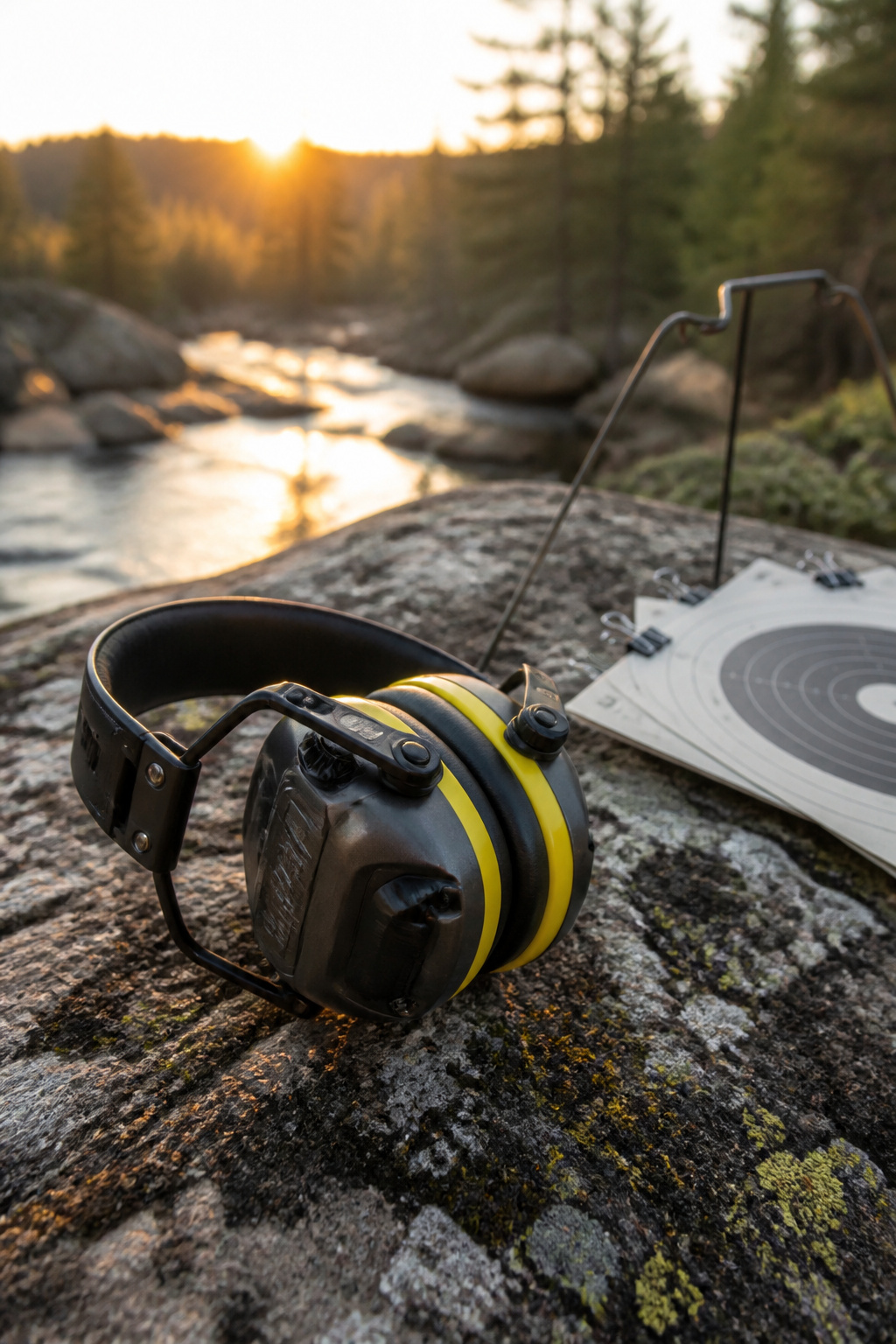
AXIL built the TRACKR around hearing-aid electronics, and the result punches above its price. 25 dB NRR is the highest noise reduction rating you’ll find in the budget tier for electronic ear muffs, enough for a standard range day unless you’re stepping up to heavy magnum or indoor rifle work. The amplification is noticeably crisp; conversations carry, birds outside the lane carry, your own breathing carries. The cups are thin enough that cheek weld on a rifle stock stays natural, which matters more than the spec sheet suggests until you try a bulky set and fight for anchor.
The catch is the brand itself. AXIL is newer to the market than Howard Leight or Walker’s, and that track record matters if you want to know how the headband holds up at year three or whether the circuit stays reliable past a few thousand actuations. The strap runs tight out of the box, though it does stretch. At $49 for a single unit, or two for $99, the price lands right where the heading promises. Skip these if proven longevity is non-negotiable; grab them if maximum protection per dollar is the priority and you’re willing to be the long-term test case.
5. Best Slim Profile
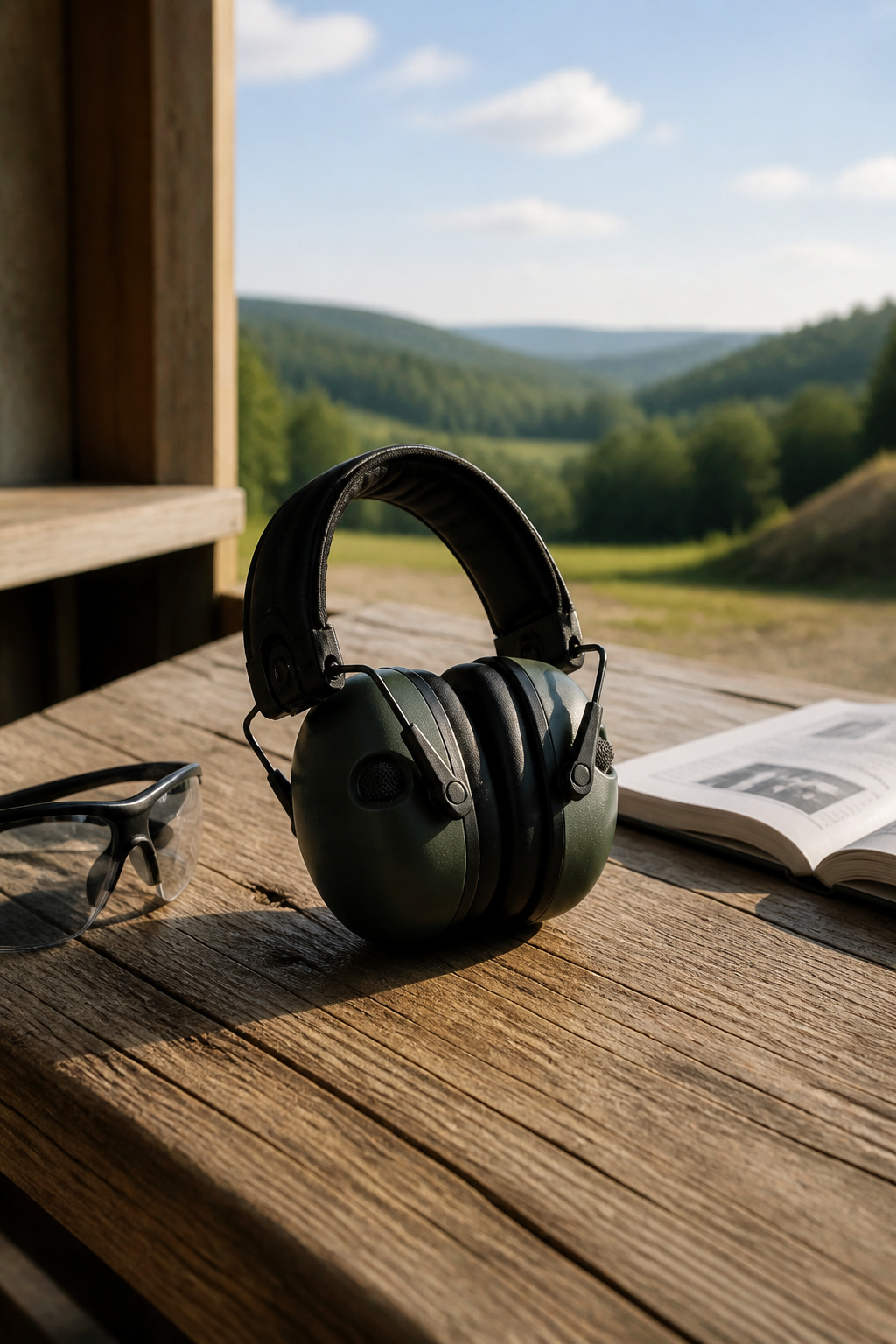
The Walker’s Razor Slim at 23 dB NRR and $34 is where most shooters land when cheek weld clearance matters more than anything else. The compact cups sit flat enough that a rifle stock doesn’t shove the muff up and break your seal, which is exactly the failure that sends people back to shopping.
Two microphones in the cups pick up range commands or game movement, and the volume dials are independent, not linked. That means adjusting one side with gloved hands is easy, but getting both matched takes an extra second. An aux jack lets you pipe in audio or clip on Walker’s own walkie-talkie unit for another $30, though there is no Bluetooth.
The slim profile comes with tradeoffs. The headband runs tight on larger heads, and the battery door is small enough to fight with cold fingers. I would skip these entirely if I wore a hat size past about 7⅜ or planned to swap batteries at the range without a flat surface. For everyone else, the low bulk and the price drop from the $80–$100 these used to command make them the practical choice for rifles and shotguns.
6. Highest Noise Reduction Under $100
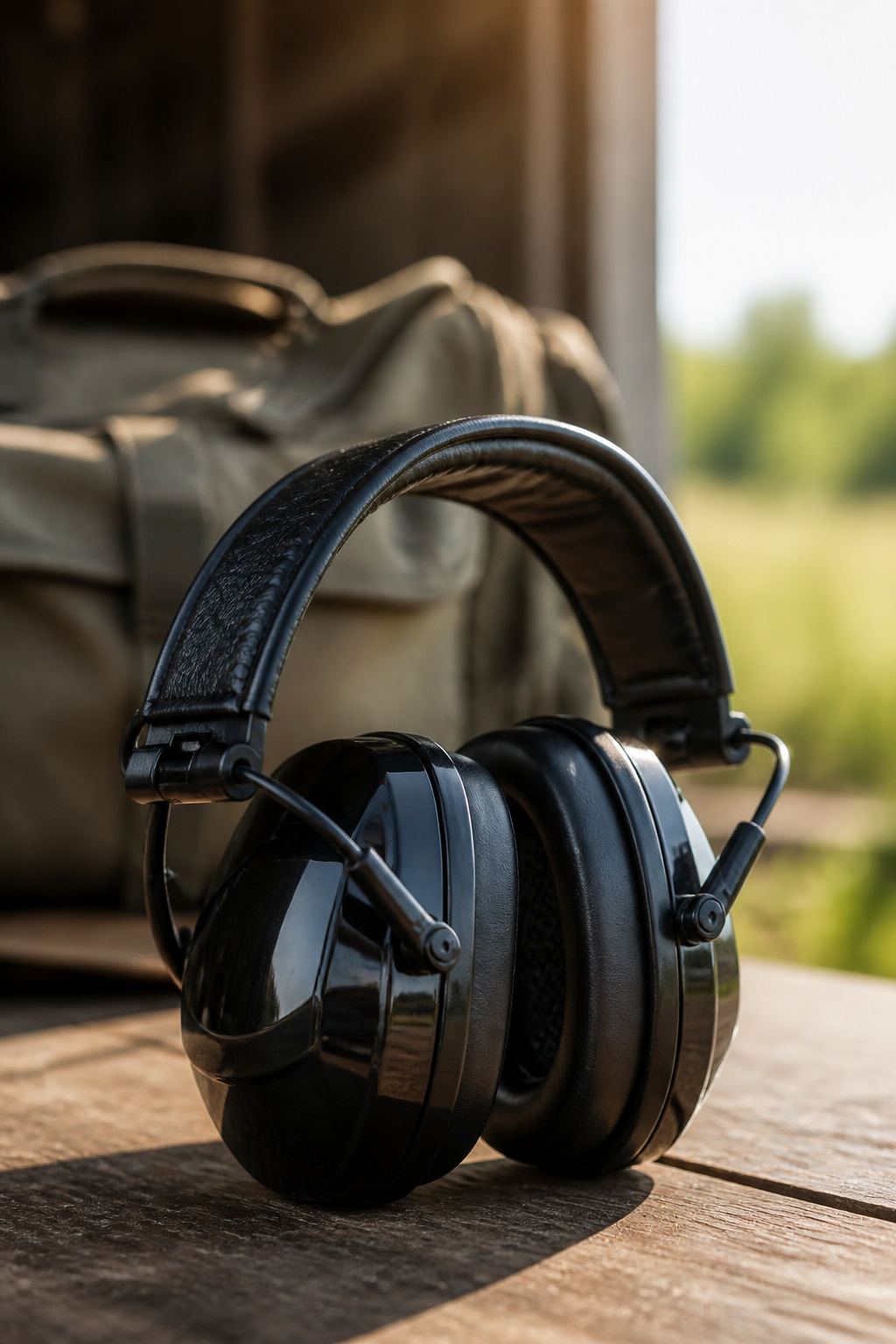
The ShellShock Protection EXO PRO lands at $99 with a 28 dB SNR rating, which is the highest noise reduction figure you’ll find under three digits. That SNR number is European, not the NRR scale used in the US. Same general idea, higher number means more protection, but the two systems don’t line up one-to-one. SNR tends to read a little higher than NRR for equivalent muffs, so expect real-world performance closer to mid-20s NRR.
Gel ear pads come standard. Most brands charge $200 or more for that. The muffs also ship with a hard case and an on/off indicator light so you don’t drain batteries guessing.
Who should skip this one: anyone who wants deep service history or a brand that’s been around long enough to have a track record. ShellShock is newer, built by the Pew Pew Tactical team from their own range time, but that means less infrastructure if you need warranty work down the road. The EXO PRO also arrives stiff and needs some stretching before the headband settles in.
7. Best for Competition Timers
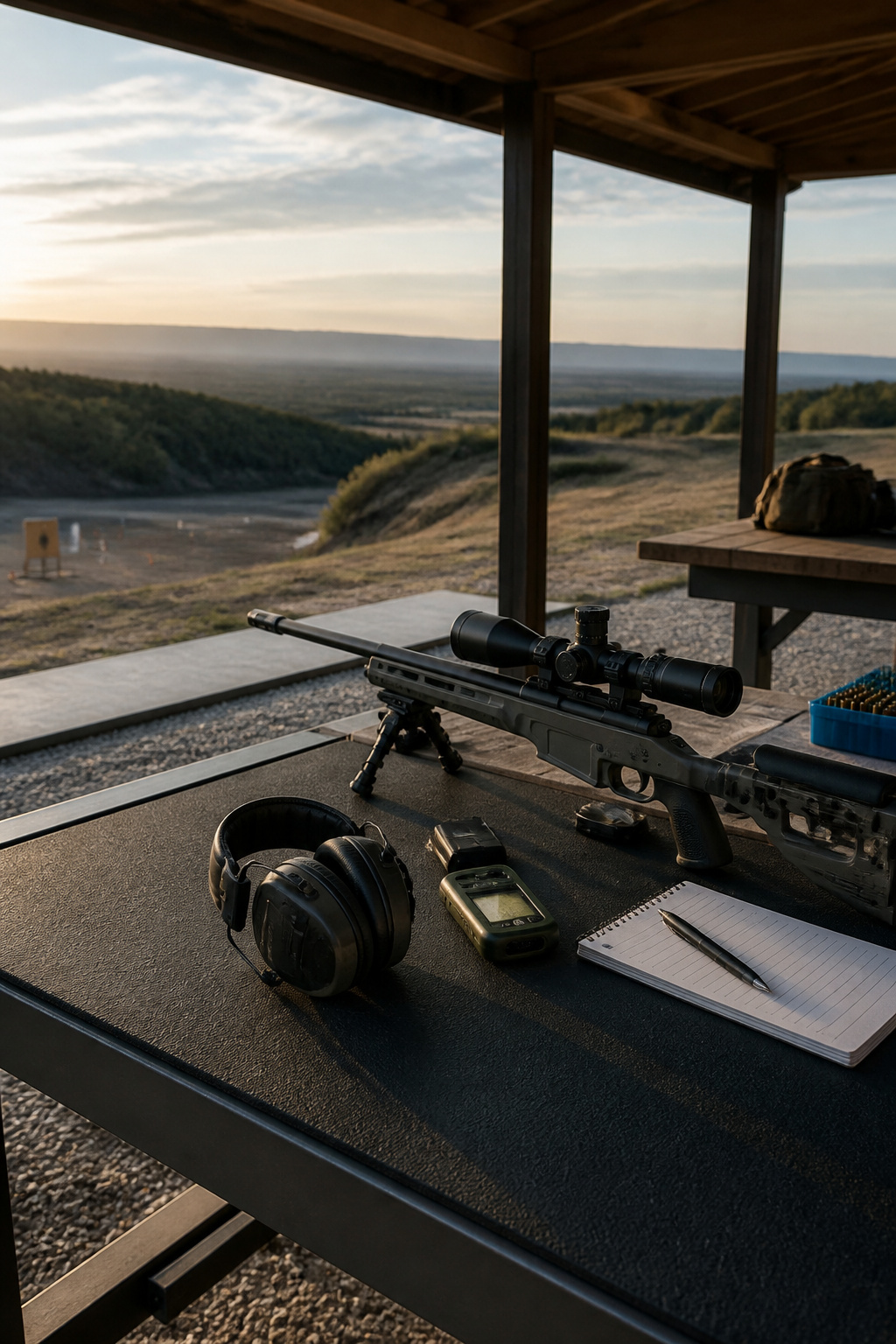
The MSA Sordin Supreme Pro X sits at 22 dB NRR, which is on the lower end for serious rifle work but makes sense once you understand what these are built for. The microphones are tuned for range commands and rapid target transitions, not for sitting in a blind listening for wind in the trees. Gel cups come standard, and after a few hours under a match timer, that comfort matters more than raw attenuation. Battery life runs about 400 hours on two AAAs, though changing them out can be fussy; one cell tends to jam and needs a careful knock to free it.
Hunters and casual plinkers should look elsewhere. The wind noise suppression is weaker than what field models offer, and the price lands around $309–340 depending on seller. For competitors, though, these ranked as the single most popular choice among top Precision Rifle Series shooters, with 17% of the top 200 running them. That share held even higher among the top 10.
8. Best In-Ear Option
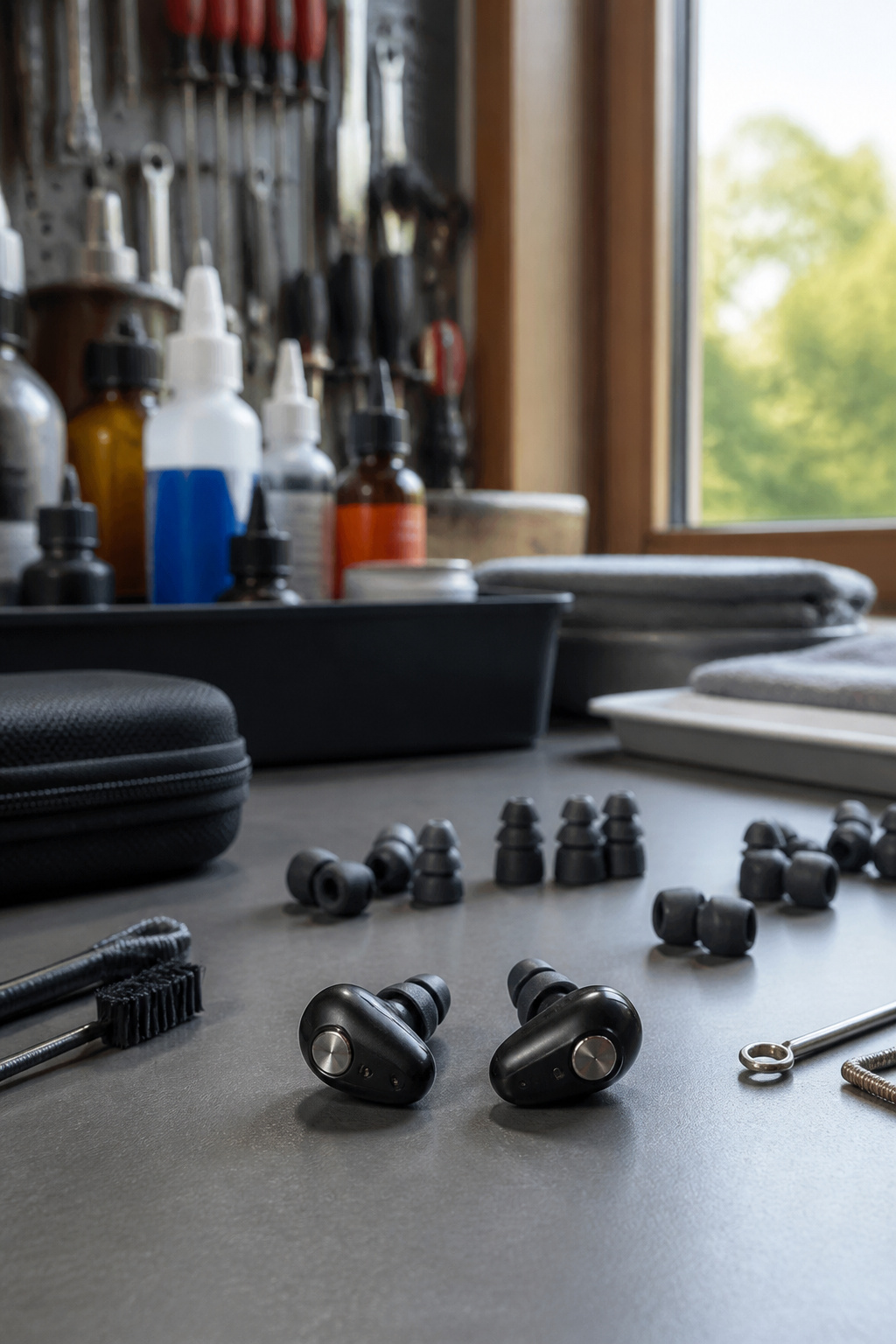
Some shooters cannot get a good seal with over-ear cups. Glasses stems, cheek welds, and certain helmets break the seal and let noise leak in. For them, the Etymotic Gun Sport Elite at 28 dB NRR is the in-ear option that actually works.
These are electronic earplugs, not muffs. Each bud sits in the ear canal with rubber and foam tips, and a control button toggles between sound enhancement modes. The active suppression knocks harmful noise down without the total cutoff that makes conversation impossible on the firing line. The charging case displays battery levels for the case and each bud individually, and the kit includes a cleaning set plus spare percussive filters.
The catch is the price. At $500, the Gun Sport Elite costs more than most over-ear electronic sets. The value only holds for shooters who genuinely cannot wear cups, or who need something that fits under secondary muffs when shooting around muzzle brakes. Everyone else should skip this and put the money toward a premium over-ear set with more features for less.
9. Best Bluetooth Integration
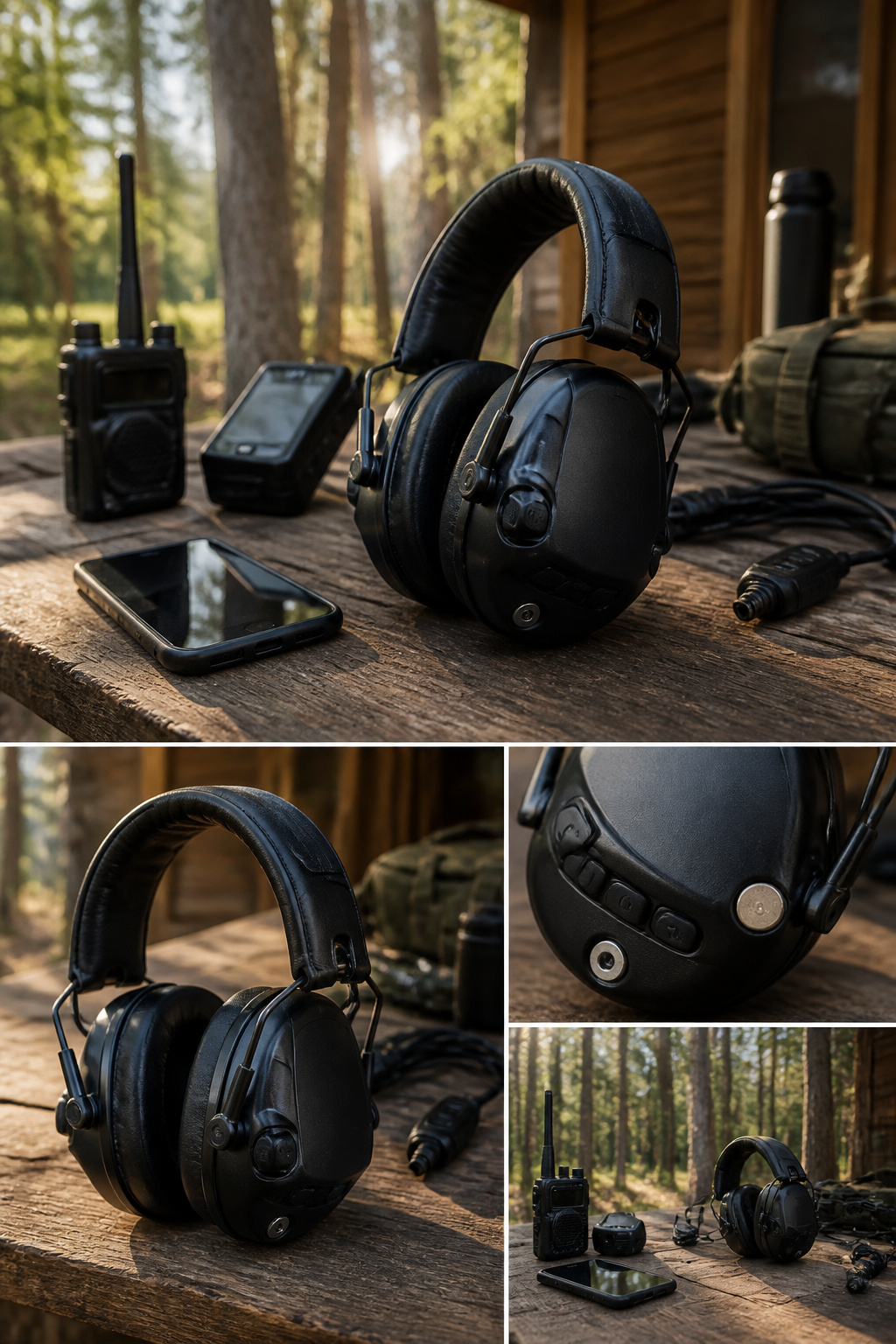
The Peltor Tactical 500 sits at 26 dB NRR and runs about $139, which puts it in a bracket where you are paying for the radio link, not for more protection. Built-in Bluetooth means calls and music stream straight from the muffs without a second device dangling from your neck. The control buttons are oversized and textured, and the headband carries a cutout so a ball cap button does not dig in.
Rechargeable via USB mini, with the port and audio jack tucked under the right ear cup. The microphones sit recessed with foam covers, which helps cut wind static when you are moving between firing points.
Who should skip this one: shooters who keep phones off the range anyway. The premium over the Tactical 300 buys convenience, not better suppression. If you do not need the Bluetooth, you do not need the 500.
10. Best Helmet-Mounted Setup
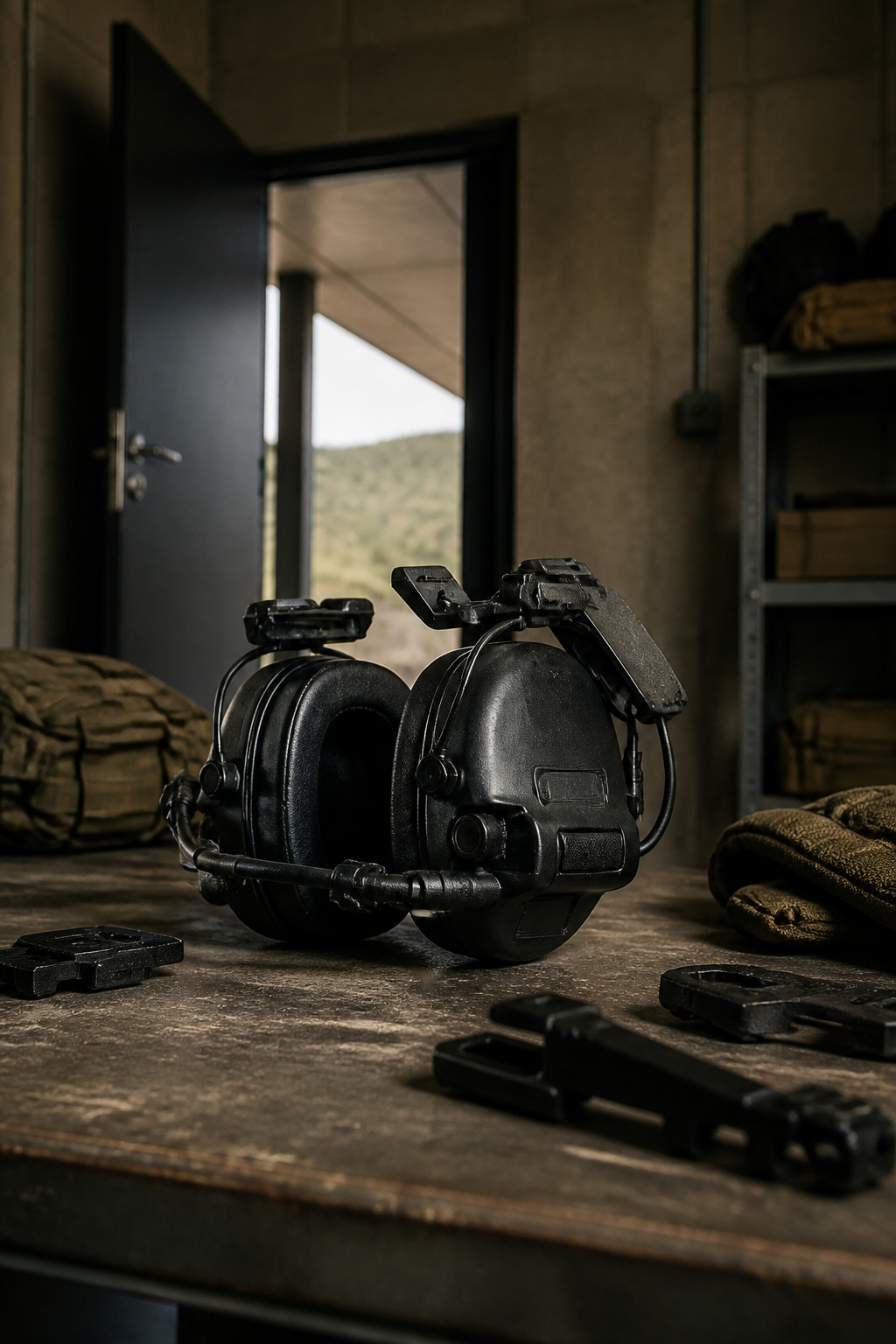
The Safariland Liberator HP 2.0 sits at 26 dB NRR and exists for one reason: you already run a tactical helmet with a rail system. The cups mount via Unity SARA clips and the Unity Mark 2 Rail Kit, which lets them fold back when you are not shooting. No rail means no mount; the hardware is useless on a standard headband, so anyone without that infrastructure should skip this entirely.
Three protection modes run through large buttons you can feel with gloved hands, and the gel cups are thin enough at the top that they do not fight your night vision mount. Sound directionality from the foam-covered mics is acceptable for range commands, though nothing electronic gets that perfectly right.
A year of outdoor handgun and suppressed rifle use has held up fine. The catch is the 26 dB rating itself: around unsuppressed rifles or indoors, the dampening runs thin. Doubling up with plugs is the only safe move there. At roughly $359–$370 depending on seller, this is specialized gear for a specific setup, not a general upgrade path.
11. Best Slim Design Under $55
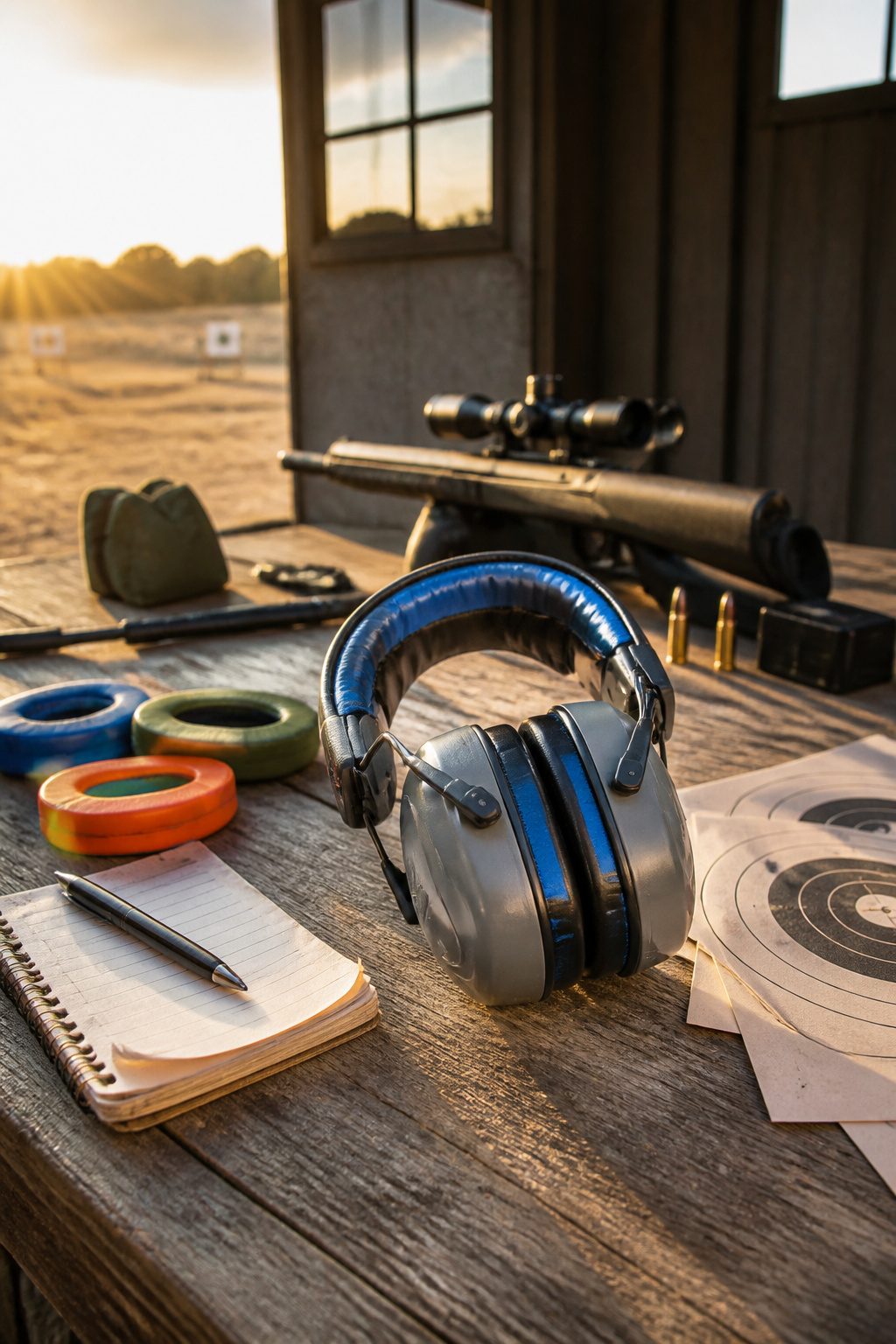
The Caldwell E-Max Pro sits right at $50 and earns its place here mostly on profile. The cups are slim enough that a rifle stock sits where it should, and the padding keeps them comfortable through an afternoon. Two AAA batteries power the electronics, or you can add the rechargeable lithium-ion pack later.
The catch is the NRR. Caldwell lists anything from 21 to 25 dB depending on which variant ships, and the SKU roulette means you might open the box to find less protection than you expected. For indoor range work or anything with magnum loads, that gap matters. Buttons control volume instead of dials, which feels cheaper and wears faster with heavy use. If consistent specs matter to you, skip this one. The Walker models in the same bracket dial the protection down with more certainty.
12. Best Reusable Plug Backup

The SureFire EP3 Sonic Defenders sit in every range bag I own, and at $17 they cost less than a box of practice ammo. A 24 dB NRR with the filter caps inserted gives solid protection for short sessions or as backup when the earmuff batteries die mid-string. Pop the caps out and the passive-mechanical filter still knocks down gunshot noise while letting range commands and conversation through. No batteries, no circuits, nothing to fail.
These are not electronic ear muffs, and that distinction matters. They do not amplify ambient sound, so anyone counting on enhanced hearing for steel challenges or instructor calls should skip them entirely. The Sonic Defenders block or filter, period. For shooters who want amplification, this is the wrong tool. For everyone else, they are the cheap insurance policy that lives in the bottom of the bag until the day the primary rig goes down.
NRR and What the Numbers Mean

Lab testing gives electronic ear muffs an NRR between 21 and 32 dB, but that number comes from perfect conditions with a trained fitter pressing the cups into place. OSHA knows this, which is why their field formula cuts the labeled rating in half and subtracts 3 dB more. A 30 NRR muff becomes 12 dB of real protection the moment sweat, glasses arms, or a loose strap break the seal.
For firearms, 25–30 dB is the target range before derating, and most shooters land closer to the low end once OSHA’s formula applies. Two muffs with identical NRR numbers can perform very differently here. The clamping force, the cushion shape against your jawline, whether the headband slips when you cheek a rifle: these decide how much of that lab number survives.
The European SNR runs a few points higher than NRR for equivalent protection, so comparing a 32 SNR plug to a 30 NRR muff is comparing two scales, not two products. I keep foam backups in my range bag at NRR 32 for exactly that gap. When the electronic circuit clips a gunshot but the passive seal underneath is weak, the math does not lie, and your hearing pays the difference.
How Electronic Earmuffs Work
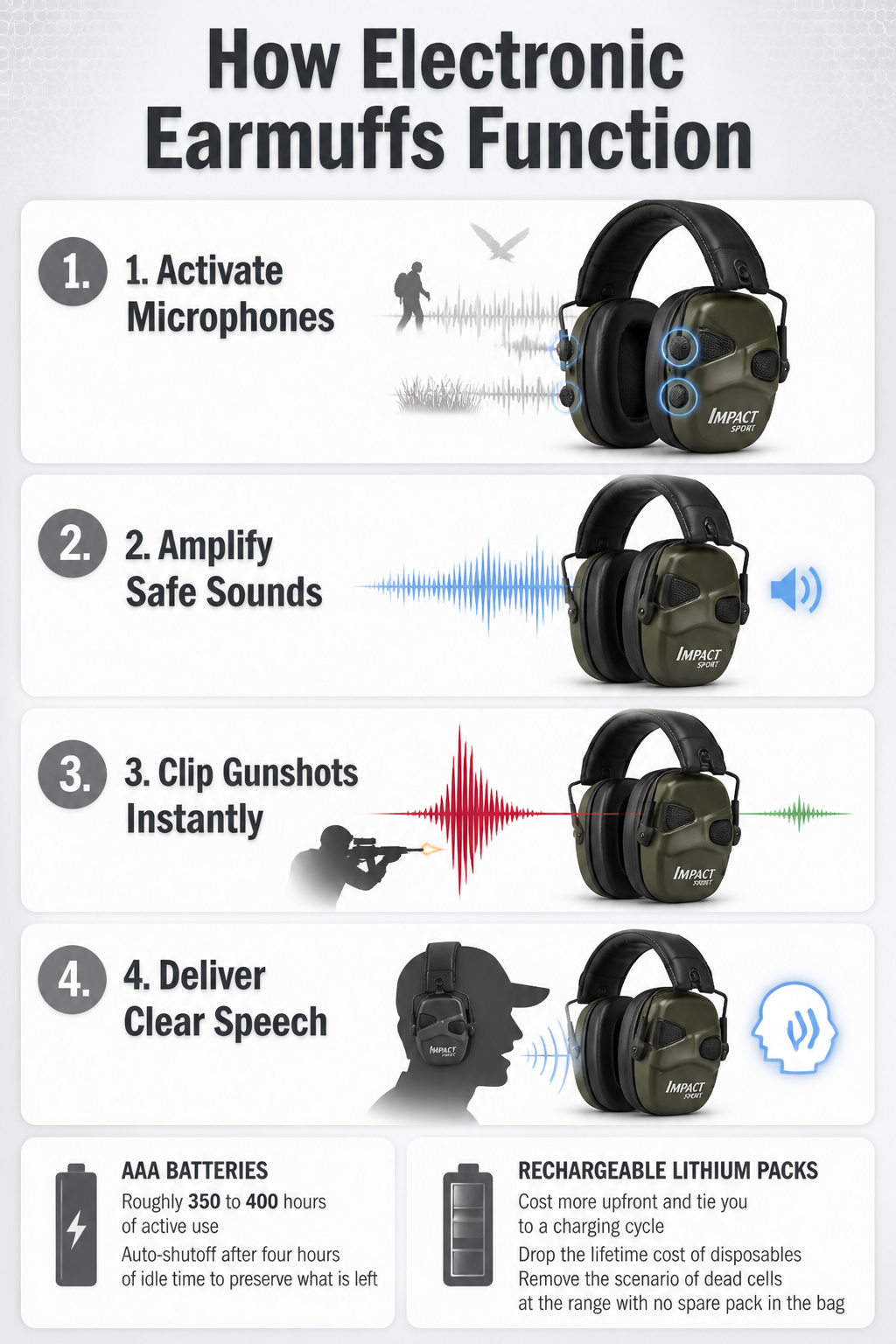
The microphone-speaker circuit inside electronic ear muffs is doing two jobs at once. Small external microphones pick up ambient sound, voice it through speakers at safe volume, and clip any gunshot to safe levels in milliseconds. That last part matters more than most buyers notice. Passive earmuffs, the foam-and-plastic kind, block everything equally. Range commands, footfalls behind you, the beep of a competition timer, all of it gets the same muffling as the report of a rifle. An 81 percent majority of pro shooters have moved to electronic models for exactly this reason.
Battery choice splits the market into two camps. AAA cells, the kind the Howard Leight Impact Sport runs on, deliver roughly 350 to 400 hours of active use and auto-shutoff after four hours of idle time to preserve what is left. Rechargeable lithium packs cost more upfront and tie you to a charging cycle, but they drop the lifetime cost of disposables and remove the scenario of dead cells at the range with no spare pack in the bag.
Comfort and Fit for Long Sessions

Gel ear pads make the difference once you cross into the four-hour mark. Foam cups heat up, sweat builds, and the seal starts to slip. The ShellShock EXO PRO ships with gel as standard, which on most electronic ear muffs only shows up past the $200 line. That seal matters more than people think: break it with glasses stems or a winter hat brim, and you lose 5–10 dB of protection without feeling any change. The noise is still loud; your ears just stop blocking it.
It’s a good practice to double up your over-ear electronic hearing protection with passive ear plugs.
That layered approach fixes what a broken seal cannot. In competition, where you wear them from 8 AM through lunch and past, clamping pressure becomes its own problem. Too tight, and the headache arrives before the second stage. Too loose, and every cheek weld shifts the cup. Winter hunting reverses the whole equation. A beanie or gaiter under the band changes where the cups sit, and bulky hat material competes with the seal you need. I have watched people at indoor ranges crank the headband to compensate, which only trades one failure for another: now the pressure point sits wrong, and the seal still gaps at the glasses arms. The right move is checking the seal every time your headgear changes, not assuming what worked in October still works in January.
When to Double Up

Doubling up earplugs under electronic earmuffs adds roughly 5 dB of protection beyond what either layer gives alone. That margin matters most at indoor ranges, where rifle fire reverberates off concrete and the pressure wave hits harder than the same round outdoors. The 3M Peltor Optime 105, rated at 30 dB NRR, is bulky enough to interfere with a proper cheek weld on rifles, but it pairs well with plugs underneath for handgun work inside.
Electronic earmuffs still function over plugs because their external microphones pick up ambient sound and amplify it into the ear cups. Speech comes through, though parsing words grows harder with both barriers in place. The tradeoff is real: you gain protection at the cost of clarity, especially when range commands get clipped or a shooting partner mumbles. For short sessions with high-caliber rifles indoors, I accept the muffled conversation. For all-day classes where instructors move between lanes, the plugs sometimes come out and the electronic muffs stay on alone.
Hunting, Competition, and Indoor Range Use
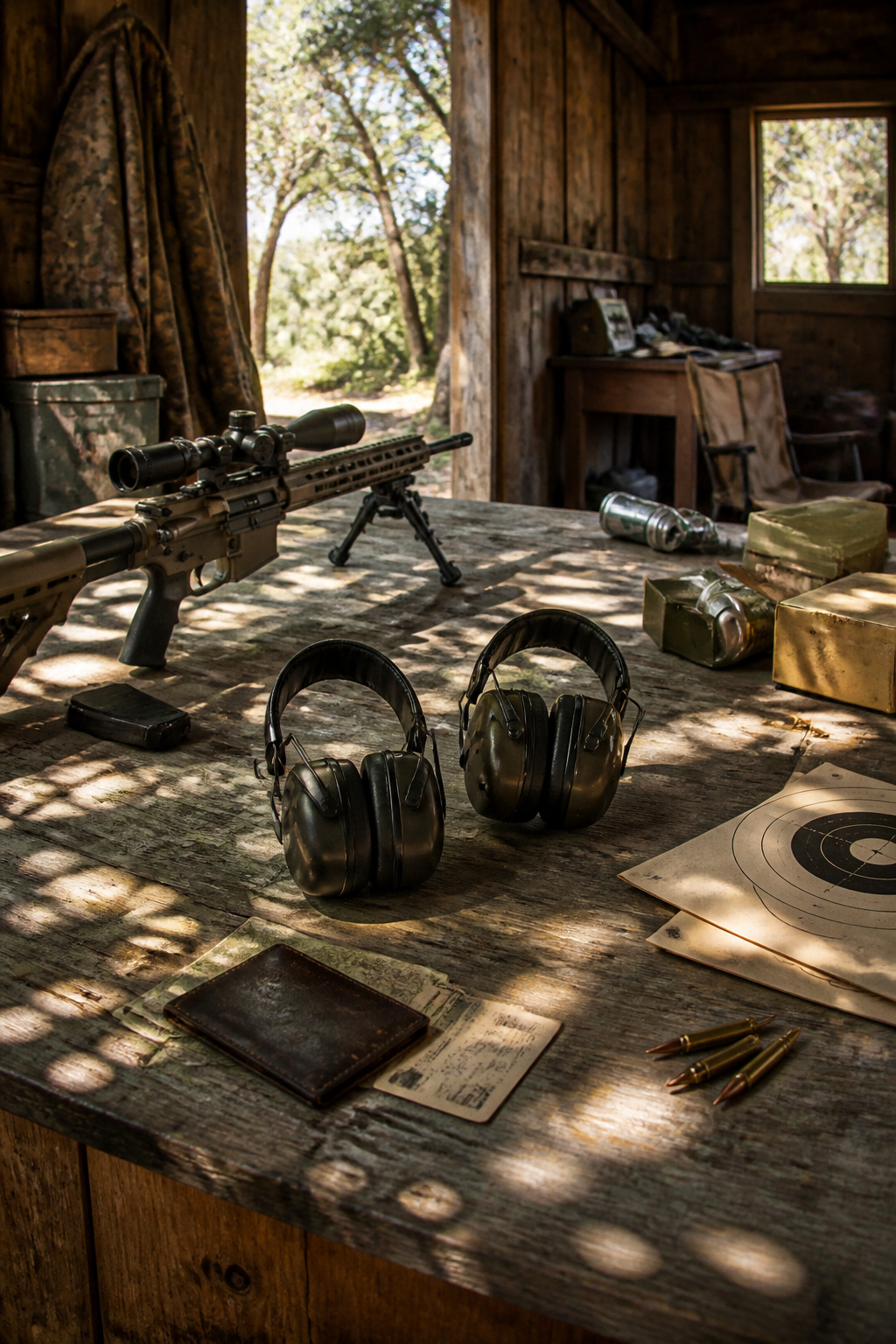
Electronic ear muffs for hunting need directional microphones that pick up footsteps and rustling leaves without giving away your position. The Walker’s Razor Slim sits tight enough under a hood if weather turns, and at 23 dB NRR it handles most field calibers without bulk.
Competition changes the priority to fast cutoff speed. Range commands and timer beeps come fast; the MSA Sordin Supreme Pro X won that vote among the shooters I asked, partly for gel-pad comfort through long days and partly because voices come through cleaner with less background hiss. Its 22 dB NRR runs thin for indoor rifles, so most of us double up with foam plugs underneath.
Indoor ranges flip the balance entirely toward isolation. Muzzle blast bounces off walls and ceilings, and sustained exposure at those levels is where hearing damage actually accumulates. Maximum NRR matters more than conversation clarity; if the muffs alone do not get you there, dual protection is the standard move, not the backup plan.
Frequently Asked Questions
What is the best electronic ear protection for shooting?
The Howard Leight Impact Sport at $46.44 and 22 dB NRR sits at the intersection of price and performance that most shooters actually need. Eight percent of pros still run them in precision rifle matches, and they stay out of the way on rifle or shotgun stocks thanks to slim cups. Skip them if indoor shooting is your main use, since 22 dB runs thin when concrete walls bounce sound back at you.
How do electronic earmuffs work?
Small external microphones pick up ambient sound, voice it through speakers at safe volume, and clip any gunshot to safe levels in milliseconds. Passive earmuffs block everything equally, but electronic models let you hear range commands, footfalls, and timer beeps while still protecting against gunfire. An 81 percent majority of pro shooters have moved to electronic models for exactly this reason.
What is the difference between electronic and passive ear protection?
Electronic models amplify quiet sounds like voices or range commands but instantly suppress loud gunfire, while passive models block all sound equally without batteries or circuits. The article notes that 81% of pro shooters use electronic hearing protection, with only 18% relying on passive ear pro such as generic foam plugs or custom-molded in-ear protection.
Can I use earmuffs and earplugs together?
Yes, doubling up adds roughly 5 dB of protection beyond what either layer gives alone. That margin matters most at indoor ranges, where rifle fire reverberates off concrete and the pressure wave hits harder than outdoors. Electronic earmuffs still function over plugs because their external microphones pick up ambient sound and amplify it into the ear cups, though parsing words grows harder with both barriers in place.
What is the best NRR for shooting ear protection?
Look for 25–30 dB as the target range before derating, since OSHA’s field formula cuts the labeled rating in half and subtracts 3 dB more once sweat, glasses arms, or a loose strap break the seal. Most shooters land closer to the low end after that formula applies. The ShellShock EXO PRO offers a 28 dB SNR rating at $99, the highest noise reduction figure under three digits, though SNR tends to read a little higher than NRR for equivalent muffs.