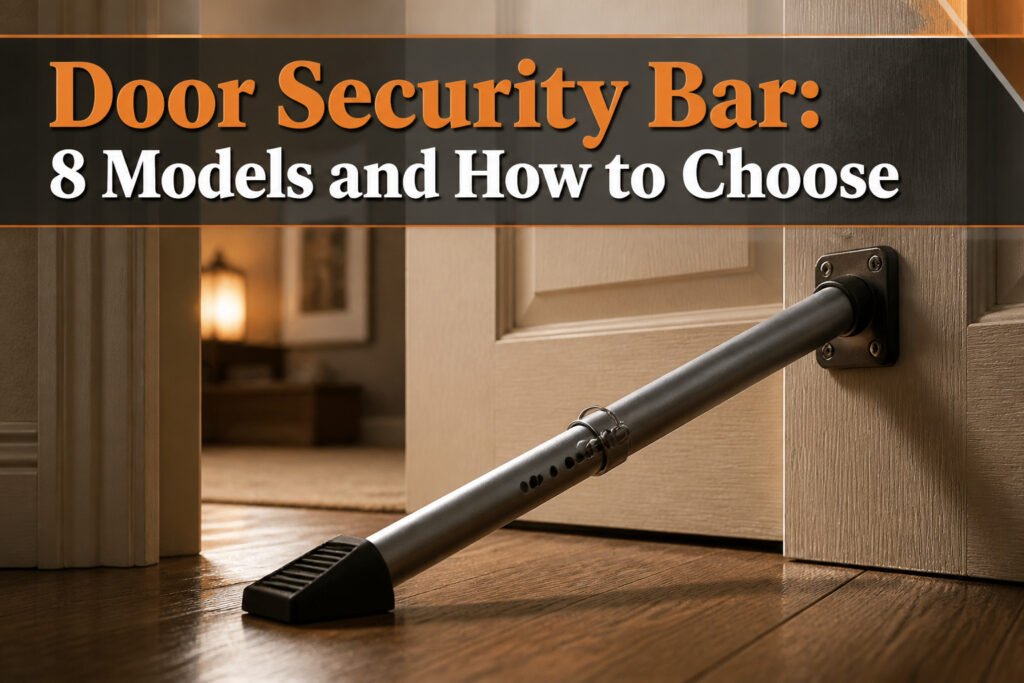
A door security bar is a physical brace that wedges between a door and the floor or frame to resist forced entry. The catch is that the right bar depends entirely on whether you need portability for hotel stays or permanent mounting against a determined kick. The MSIC Global SecuraDoor holds back over 3,000 pounds of force with a two-piece aluminum shaft that locks tight with a single pin, while the 8-ounce DoorJammer fits in a jacket pocket but needs only a quarter inch of door clearance to work.
What a Door Security Bar Actually Does

A door security bar is a physical brace that wedges between a door and the floor or frame to resist forced entry. The device works by transferring kick or pry force into the structure of the building rather than letting it concentrate on the lock or door edge. Most models are steel tubes or bars, either fixed-length or telescoping, with a padded foot that grips the floor and a cup or hook that catches the doorknob or slides into the door track.
Doors are the weak point. The FBI’s Uniform Crime Reporting has long shown that roughly 60 percent of burglaries involve forced entry, and the door is where that force usually goes. A deadbolt helps, but the strike plate is small, the jamb is often thin pine, and the gap around the door gives a pry bar room to work. A security bar adds a second line that does not depend on the lock hardware at all.
Some bars are permanent floor mounts bolted into the framing. Others collapse to 25 inches or so and fit in a suitcase for hotel rooms. The SABRE Adjustable Door Security Bar, for example, spans 28.5 to 45 inches under a doorknob or 25 to 41.5 inches with the top cup removed for sliding doors, and it packs down for travel.
A door security bar can be an excellent investment. This device, placed behind a door, adds extra reinforcement to any locks and deadbolt by strengthening the complete door frame.
— Bob Vila
What that means in practice: the bar does not care if your lock is picked, your key is lost, or your strike plate screws are half an inch long. It is a separate mechanical fact that has to be overcome on its own.
MSIC Global SecuraDoor

The MSIC Global SecuraDoor Heavy-Duty Security Door Bar sits at the top of the force-resistance range for anyone who wants over 3,000 pounds of stopping power without turning installation into a project. The two-piece rectangular aluminum shaft locks together with a pin that leaves almost no wobble, and the oversize footplate tilts to grip carpet, tile, hardwood, concrete, or vinyl through a thermoplastic elastomer layer. At 3.2 pounds, the bar carries enough heft to feel stout without being awkward to position.
Adjustment runs from 34 to 48 inches to fit door knobs across that span. Slide the yoke under the knob, angle the bar about 25 degrees, and rotate the handle to wedge it tight. One-handed setup is the claim, and the locking pin and collar system make height changes quick once you find your door’s sweet spot. The tester who pushed this hardest noted it was the easiest bar to install in the lineup and the strongest hold once set, though the price lands above the field. For maximum force resistance with minimal fuss, this is the heavy-duty door security bar that trades a few extra dollars for peace of mind you can feel when the bar pins into place.
Master Lock 20 Gauge Dual Function
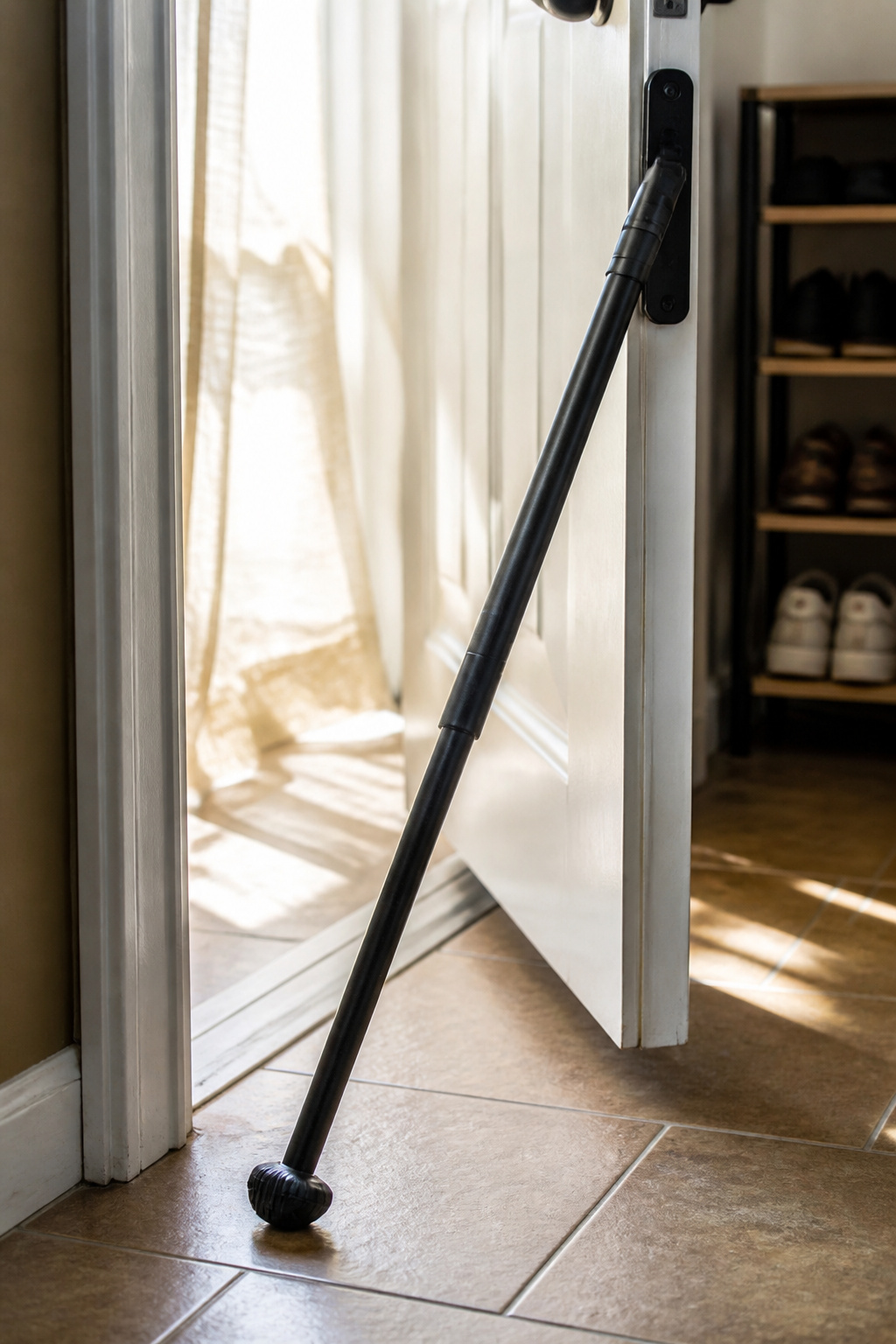
The Master Lock 20 Gauge Dual Function works on hinged doors and sliding doors both, which already puts it ahead of bars that only do one job. For hinged doors it runs 30.5 to 45 inches; flip the configuration and it drops to 27.5 to 42 inches for sliding doors. The 20-gauge steel tube is the same either way.
Setup takes maybe thirty seconds once you know the moves. On a hinged door, the padded foot sits 15 to 18 inches out, the yoke hooks under the handle, and you telescope until snug. The ball joint on the foot keeps full floor contact. For sliding doors, pull the pin, lose the yoke, and lay the bar in the track; a spring button clicks into 1-centimeter holes for length.
At anything past three-quarters of its max extension, the two shaft segments develop wobble. It still held in testing, but the flex is noticeable. The rubber foot grip stayed put under force, no scratching. No angle adjustment on the yoke, though the swivel foot compensates well enough for most floors.
DoorJammer Portable Door Lock Brace
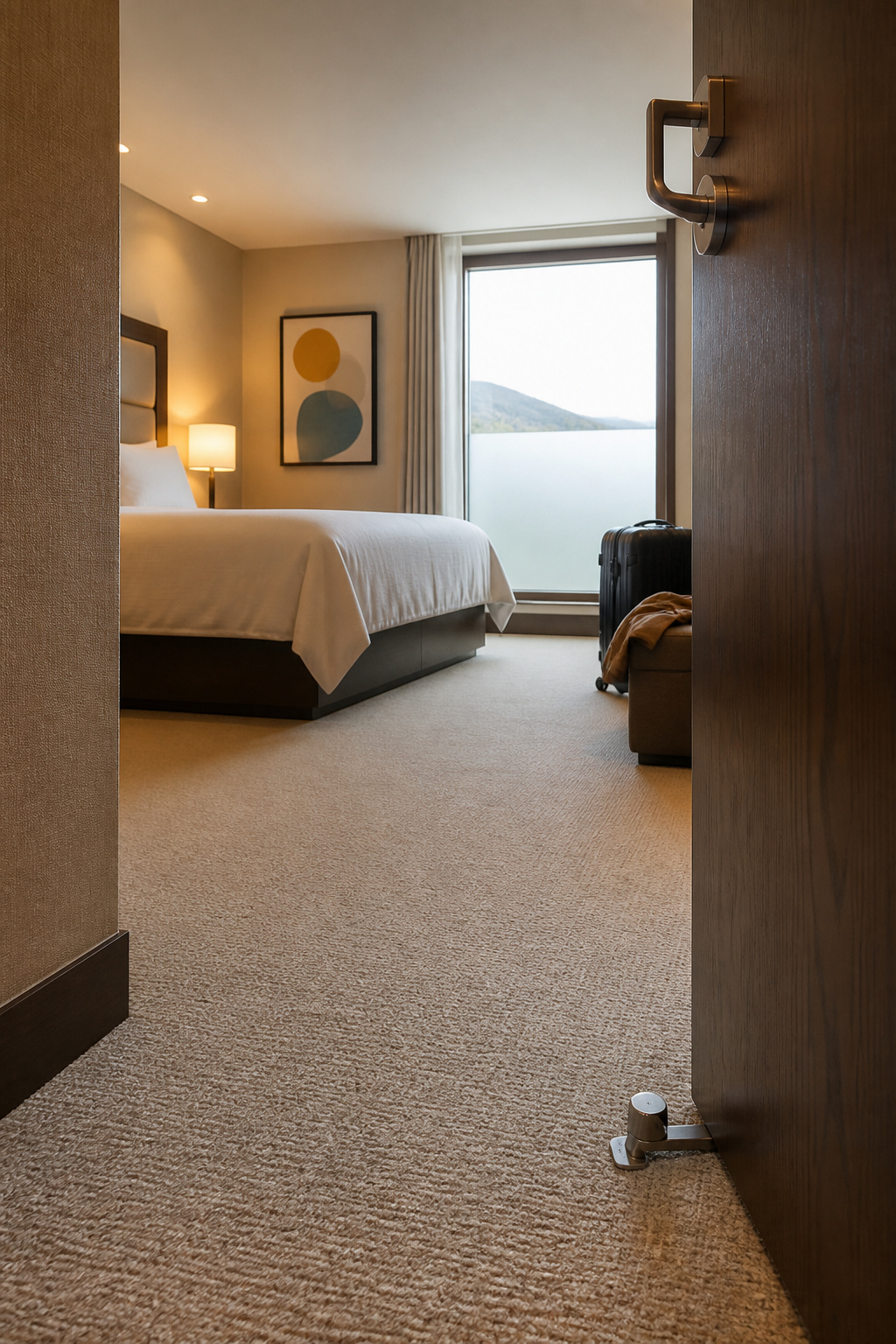
The DoorJammer Portable Door Lock Brace earns its spot as the best door security bar for travel by doing one thing better than anything else: disappearing into your bag. At 4.25 inches tall by 1.57 inches wide by 2.76 inches deep and just 8 ounces, it fits inside a laptop sleeve or jacket pocket without a second thought.
Setup needs only 0.25 inches of door clearance. Twist the screw to wedge the alloy steel base into the gap between door and floor, and the leverage does the rest. The door will flex under pressure, but the brace held without slipping in testing. An extension foot handles high thresholds, and four optional spacers fill larger gaps at the top of the frame if needed. The quick-release function removes it fast in an emergency without backing out the screw first.
Carpet, tile, laminate: it works on all three. The catch is tight weather stripping or a low door sweep, which can block installation entirely. For hotel rooms, dorms, or any temporary stay where you want a lock that travels lighter than a paperback, this is the one to beat.
Doorricade Standard 38-Inch Door Bar
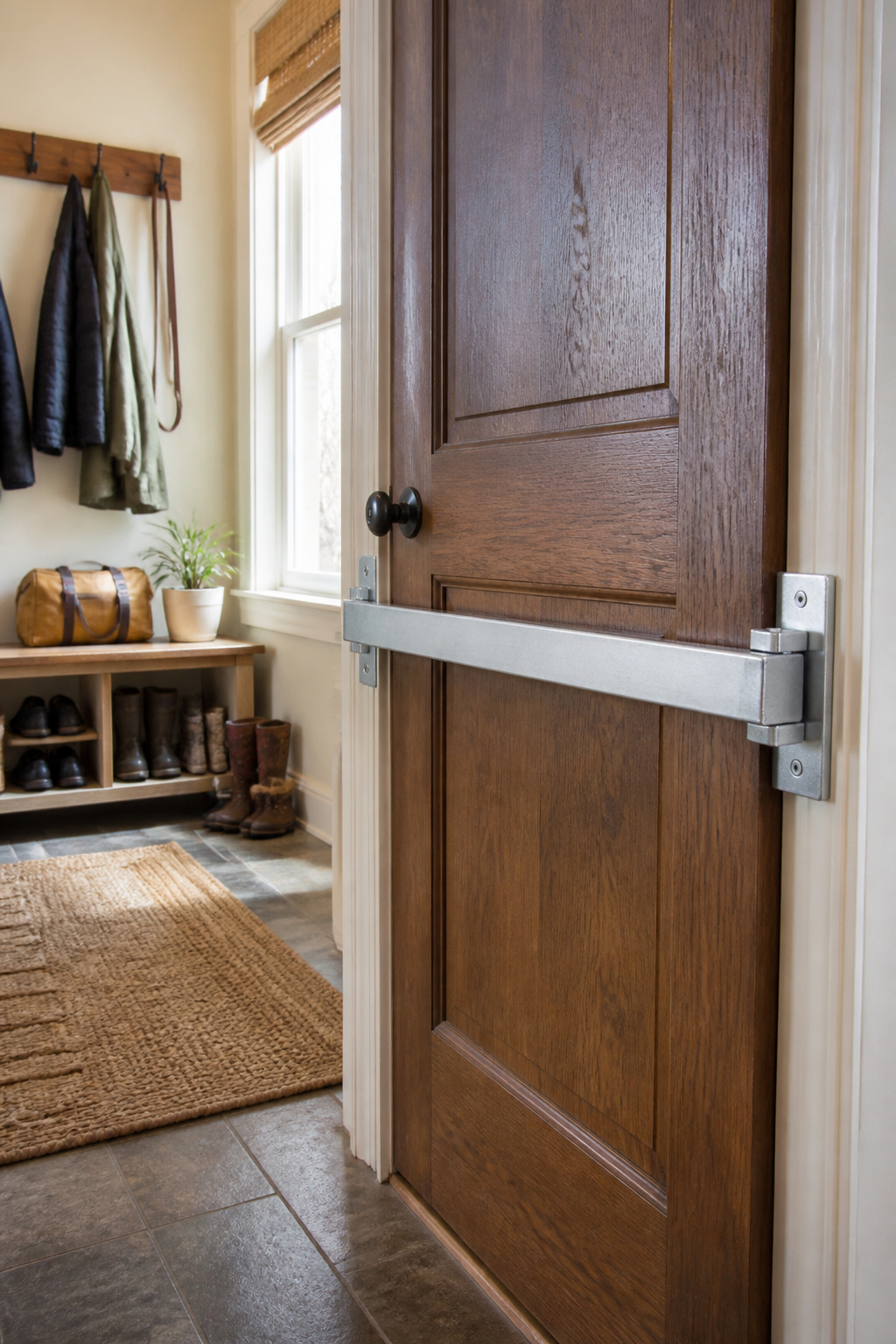
The Doorricade Standard 38-Inch Door Bar takes a different approach than the portable braces most people picture. This one mounts directly to the door frame with heavy-duty hinge brackets and a solid aluminum bar that spans the full width of the door. At 38 inches long, it is built for standard 36-inch-wide residential doors, with that extra two inches letting the bar overlap an inch on each side.
Installation means drilling into the frame and driving the included 3-inch screws deep enough to hit wall studs on both sides. That makes this a more permanent solution, not something you grab on the way out of a rental. The brackets fold flat against the molding when not in use, so the bar stores out of the way rather than living on the floor as a trip hazard. Once locked in place, the setup is tamperproof from the exterior, and cable locks are included for doors with windows alongside them. The aluminum construction and stainless steel hinge brackets earned top marks for strength in testing, though ease of use scored lower given the screw-mount commitment.
Ideal Security Patio Door Bar
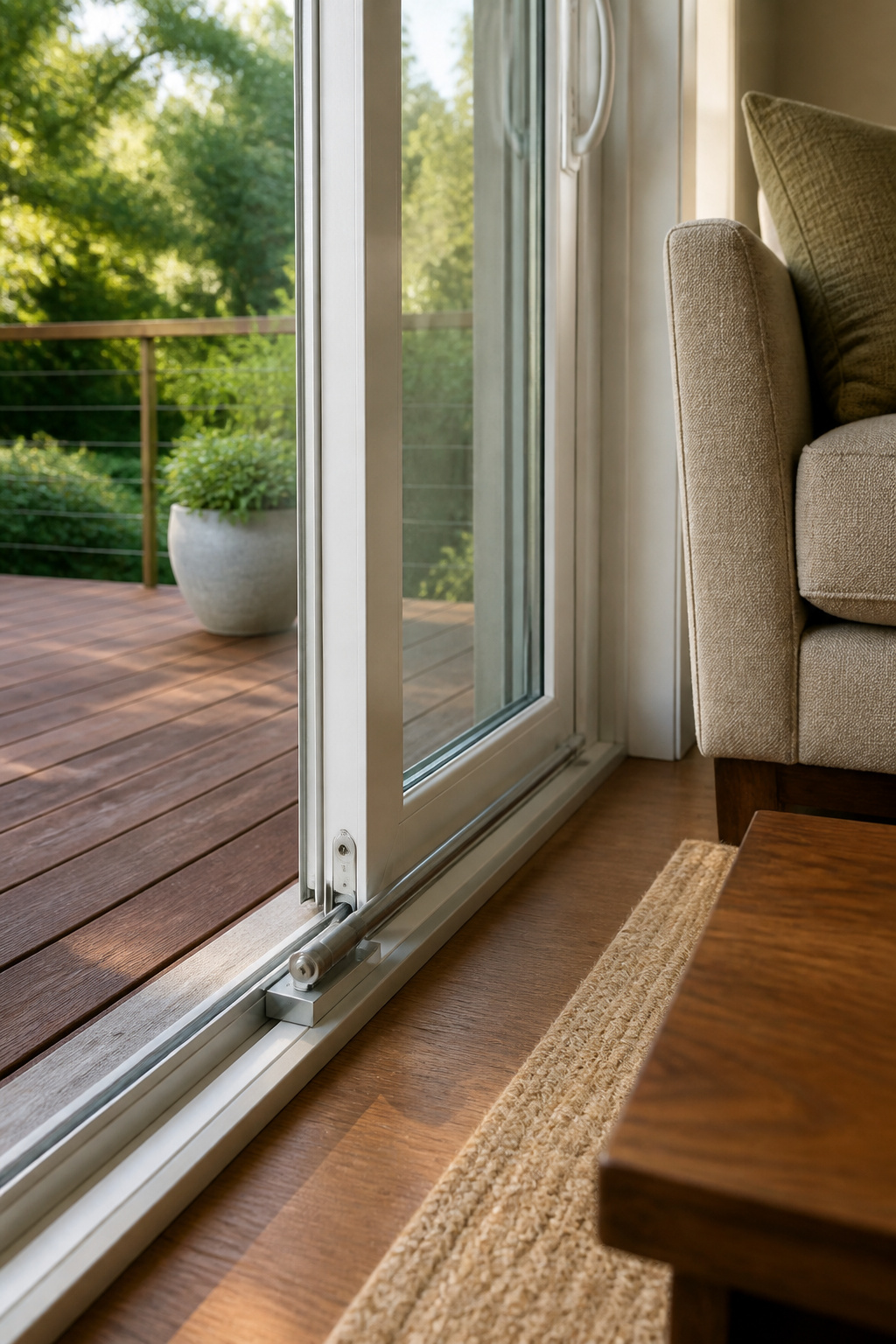
The Ideal Security Patio Door Bar with Anti-Lift Lock fills a gap most floor-standing bars cannot touch. Sliding glass doors need something that blocks the track and resists being lifted out of its frame, which is exactly where the anti-lift feature earns its keep.
Adjustment runs 25.75 to 47.5 inches through a friction telescoping mechanism, no spring pins to line up. Two screws anchor it to the door frame at midpoint height, so removal does not mean bending to the floor each time you want outside air. The childproof lock releases one-handed but blocks small fingers from disengaging the bar.
Lightweight aluminum keeps the strength-to-weight ratio reasonable, though sideways force will bend it. The instructions warn against leaning on the bar in its stored horizontal position, and that warning exists because someone tested the failure mode. When unlocked, the bar swings parallel to the frame and stays visually quiet.
Installation took two screws in the sliding door frame during testing. For renters, those two holes are the commitment, smaller than most permanent hardware but still present. The unlimited positioning between minimum and maximum length means it fits odd track widths without the click-stop compromise of pin-style adjusters.
Sabre Door Stop Alarm
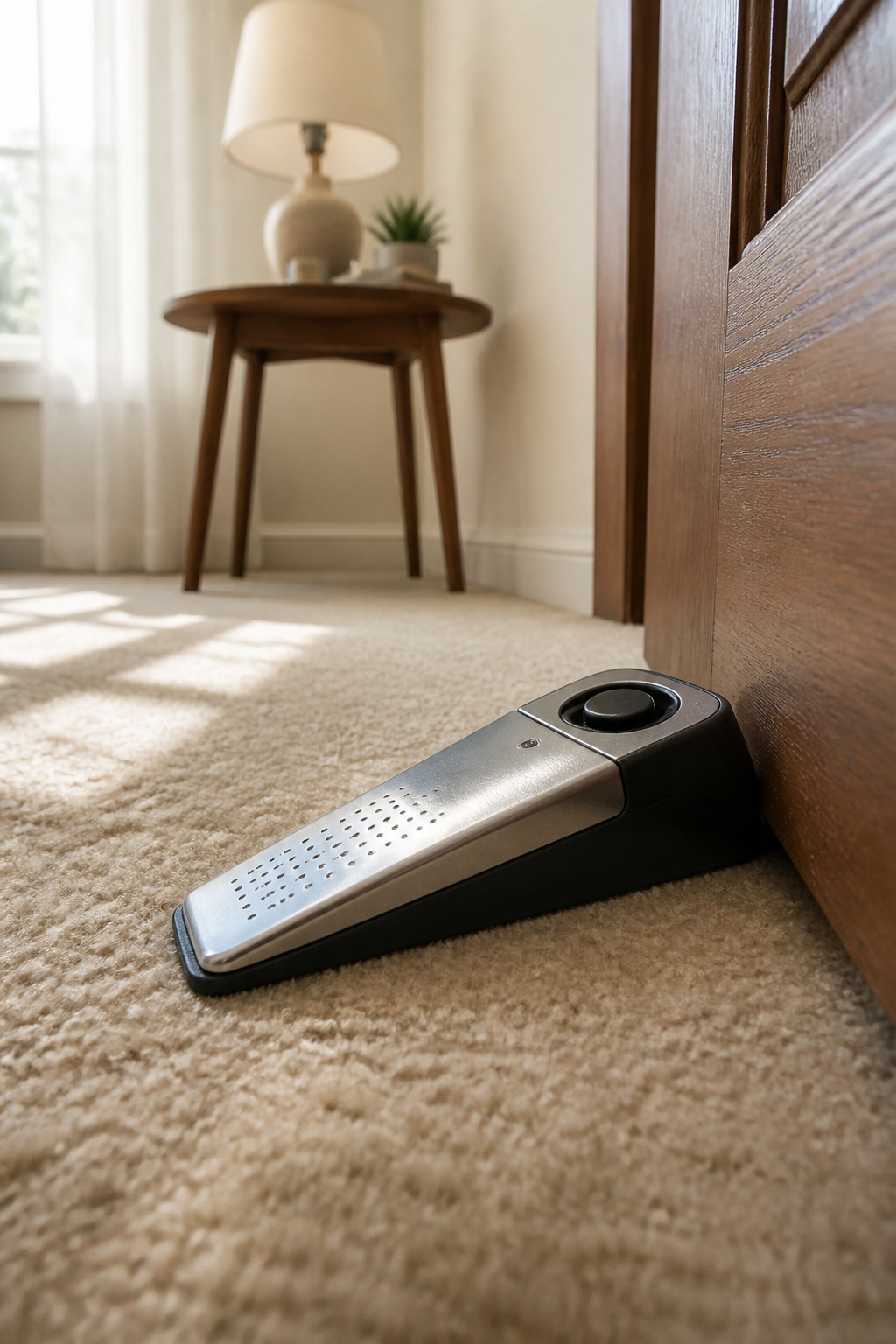
The Sabre Door Stop Alarm takes a different approach than the bars and braces in this list. A 120-decibel siren sounds the moment pressure hits the wedge, meant to startle an intruder and alert anyone nearby rather than physically block the door. In testing, the alarm triggered before the door finished moving and proved loud enough to carry 1,500 feet. The wedge still adds some resistance; it stopped the door within two inches of opening.
This model runs on a single 9-volt battery with a low-battery indicator, and the nonskid base works on carpet or hard flooring. At 1.5 inches tall, it needs less than one inch of door clearance to engage properly. Higher gaps leave the pressure plate too far from the door to trigger, so measure your gap before buying.
The lightweight wedge travels easily, which makes it useful for hotel stays or temporary situations where a full bar is impractical. It is a deterrence tool first. If you need the door held shut against sustained force, a physical bar still wins.
Nightlock Original Door Brace Lock

The Nightlock Original takes a different approach than most door security bar options on the market. Instead of bracing against the door itself, this one mounts directly to the floor, which changes both the install and the protection it offers.
That floor mount means you are looking at a permanent installation. Drill the base plate in, and it stays. The tradeoff is stability; the brace drops into that plate and locks the door from the bottom rather than wedging against the handle or frame. For renters, this is probably a non-starter. For homeowners who want something fixed in place, it is worth weighing against removable bars.
Clearance matters here. The door needs 0.5 to 2 inches of under-door gap for the brace to seat properly. Too little and the mechanism will not engage; too much and you are outside the spec. The company lists compatibility with hardwood, tile, concrete, and carpet, though the install depth and anchor type shift with each surface. Carpet in particular can compress over time, so the plate needs to sit flush or the brace wobbles.
What convinced me, reading through the options, is that this design removes the leverage problem entirely. A bar braced against the door transmits force back into the door and frame. The Nightlock pushes that force straight down into the floor structure, which is generally the stronger path.
SecurityMan SecurityBar2
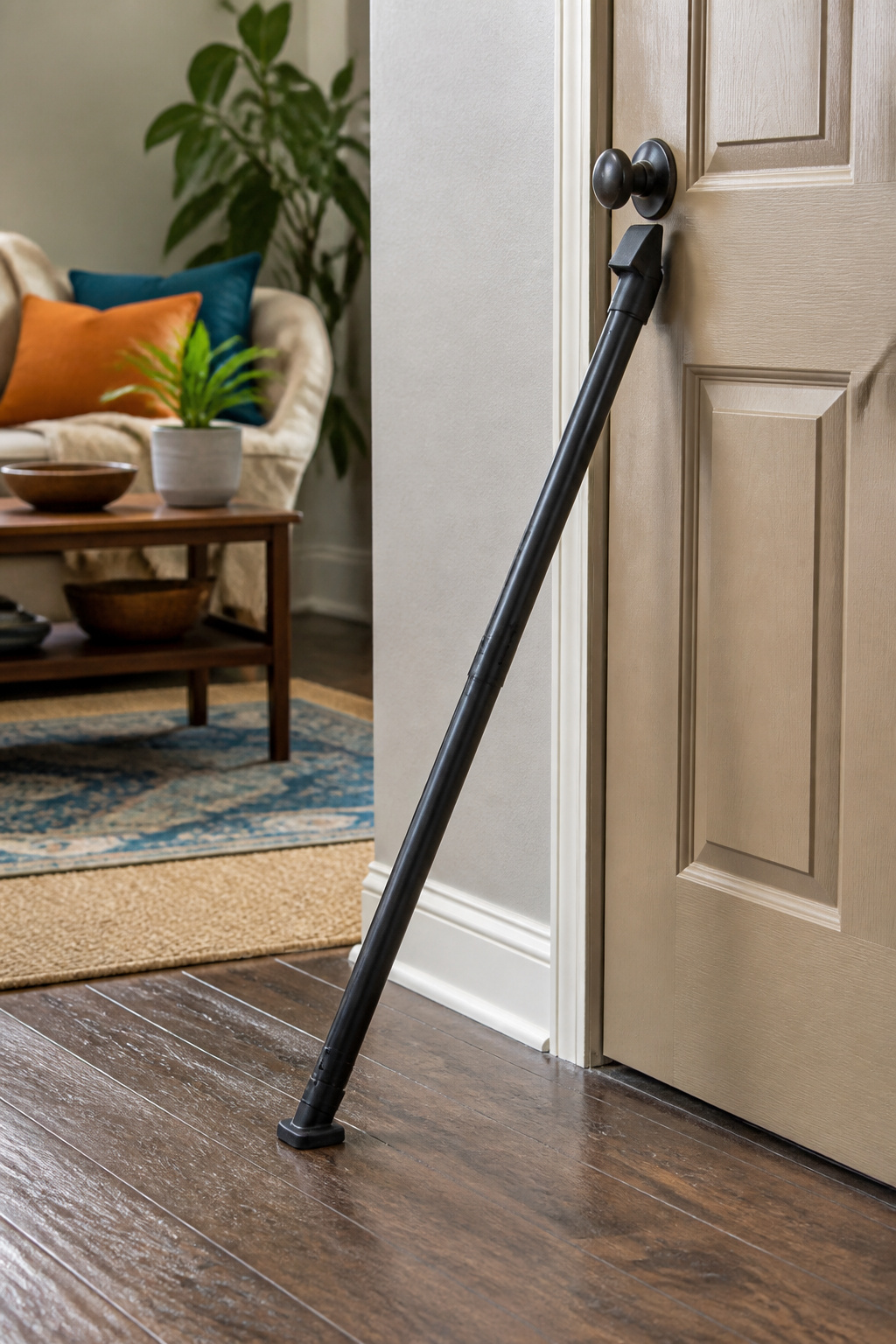
The SecurityMan SecurityBar2 stretches from 22.25 to 43.7 inches, which is enough range to handle hinged doors, sliding doors, and even windows without keeping three separate bars in the closet. Fifteen notched holes lock the length in place, and the interchangeable caps swap out depending on what you’re blocking: the hinged-door set wedges under the handle with an angled rubber foot that grips without chewing up the floor, while the sliding-door caps slip over both ends of the bar. That flexibility is what separates it from the single-purpose options. The iron tube works on tile, wood, concrete, marble, linoleum, and laminate, so you are not stuck shopping for a specific floor type. Where it loses ground is in the ratings: ease of use scores high, but strength and durability sit at 3.3 out of 5, same as the value mark. For a renter who needs one bar that covers multiple doors and moves with them, the range matters more than the top-end strength. For someone looking to stop a determined kick, the tradeoff is real.
Steel, Aluminum and What Strength Means
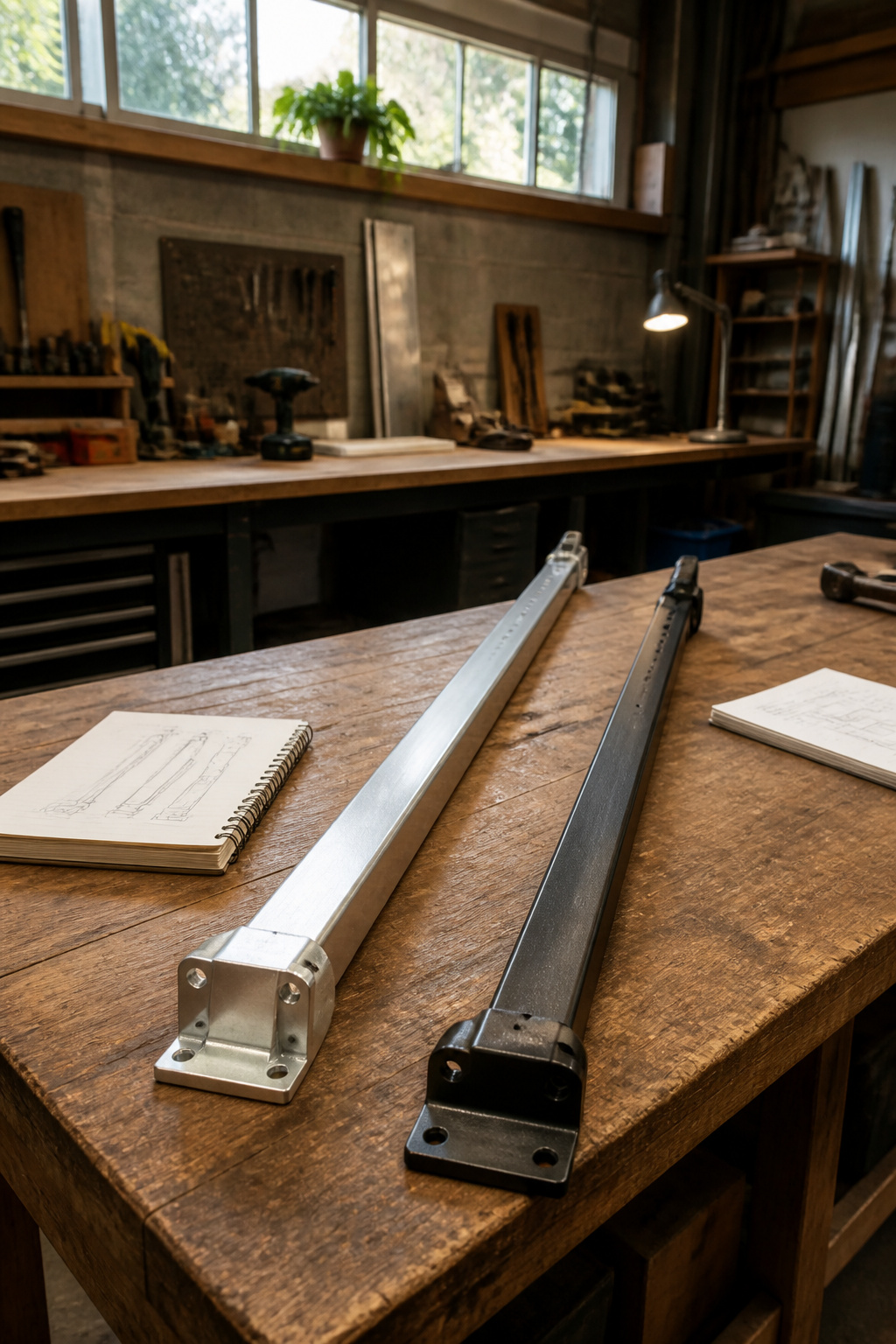
Most door security bars come down to one of two metals: heavy-duty aluminum alloy or 20-gauge steel. The SABRE Adjustable Door Security Bar uses 1mm, 20-gauge steel, while the SecuraDoor and Doorricade both go with aluminum builds. The difference matters less than the marketing suggests.
What actually tells you how a bar performs is its pressure resistance, not some weight limit. The SecuraDoor is rated to hold back over 3,000 pounds of force. That number describes how much outward pressure the bar can take before the shaft buckles or the foot slips, which is the real failure mode in a kick-in attempt. No manufacturer lists a "maximum intruder weight" because that is not how forced entry works; a 180-pound attacker throwing shoulder-first into a door generates far more than 180 pounds of instantaneous force.
Steel carries more mass per inch, which can help with stability, but aluminum keeps the weight down for travel. The SecuraDoor weighs 3.2 pounds. The SABRE bar collapses for hotel use. The Doorricade, at the other extreme, mounts with eight three-inch screws into wall studs and never moves. Your choice of material should follow from where you plan to keep the bar and whether you need it portable, not from an assumption that heavier metal always wins.
Fixed Length, Adjustable and How to Fit Your Door
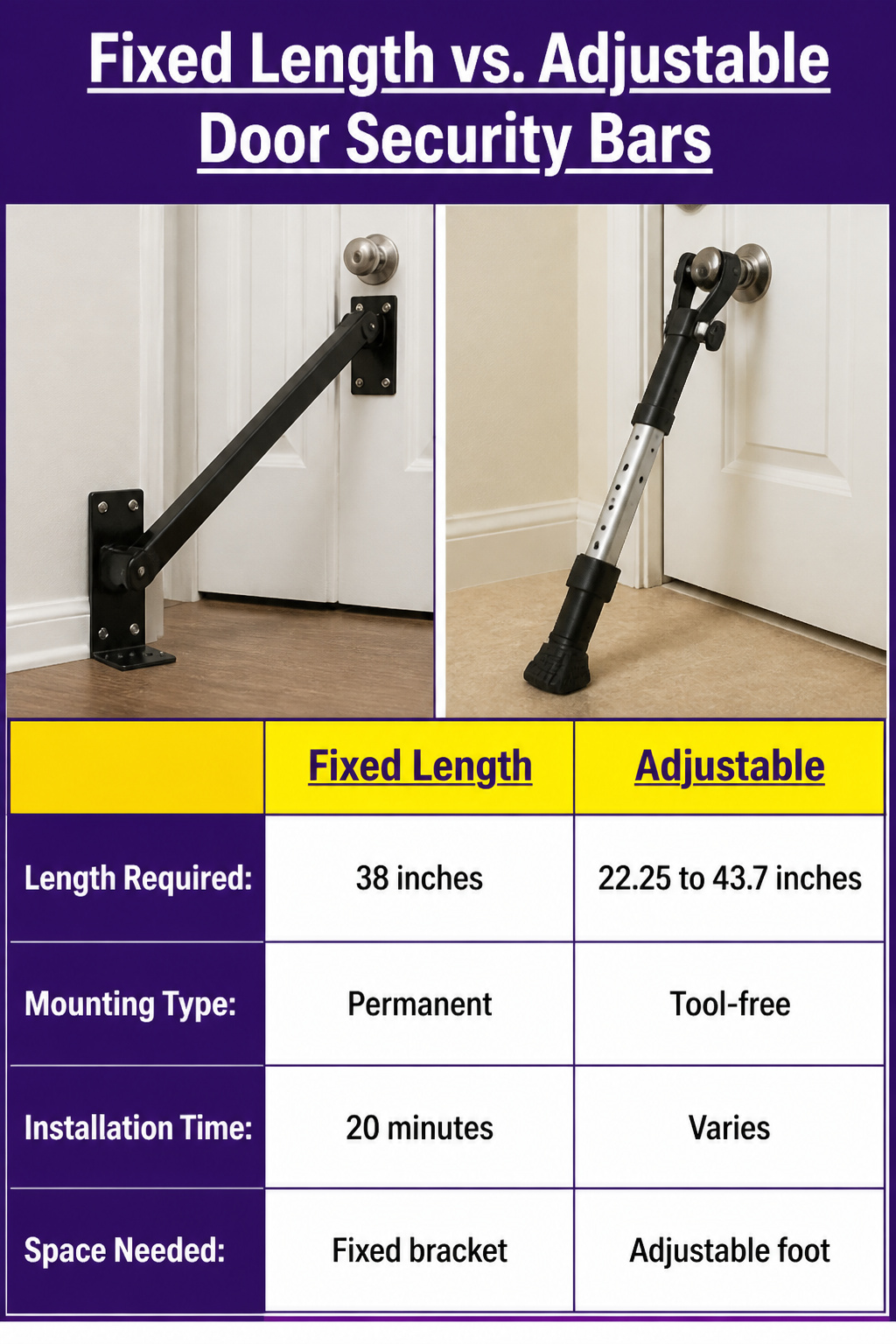
A 36-inch door needs a 38-inch bar, which is how the Doorricade fixed-length model sizes things: add two inches to your door width so the bar overlaps an inch on each side. That math only works if your door is standard. Mine was not, which is why I ended up with an adjustable bar instead.
Adjustable models cover wider ground. The SecurityMan stretches from 22.25 to 43.7 inches for hinged doors, or 22.25 to 39.25 inches for sliding doors and windows. Master Lock runs 30.5 to 45 inches on hinges, 27.5 to 42 inches on sliders. SABRE hits 28.5 to 45 inches hinged, 25 to 41.5 inches sliding. Those sliding ranges are shorter because the setup changes: remove the doorknob yoke, and the bar sits along the track instead of angling under a handle.
Measuring is straightforward. Width for a hinged door, track length for a slider. Check your flooring too. The angled rubber foot on most adjustable bars grips tile, wood, concrete, laminate, and the rest, but a fixed bracket like the Doorricade needs stud access and a half-inch of molding clearance. I nearly ordered the wrong length because I measured the door slab and forgot the frame. Add the overlap, check the swing direction, and match the range before you buy.
Screws, Clearance and Setup Time

Permanent mounting with screws changes where a door security bar lives. The Doorricade bolts hinge brackets into the door jamb with eight three-inch screws meant to hit wall studs on both sides, so the bar stays ready but the brackets fold flat when it is not in use. That kind of install takes a drill, a stud finder, and about twenty minutes of careful measuring, which makes it a poor fit for a hotel room or a rental where the lease forbids holes in the frame.
Tool-free options trade some of that rigidity for mobility. The DoorJammer needs 0.25 inches of clearance beneath the door to slide its plate in, while the Nightlock floor mount needs 0.5 to 2 inches of under-door gap to hook its base. Too little gap and the brace will not seat; too much and the angle goes wrong and the bar skids instead of biting. Adjustable bars like the SABRE model skip clearance math entirely, propping under the knob with a padded foot that pivots to grip whatever floor you have, though they take up closet space and rattle in a suitcase.
Where you live and how long you stay there decides which setup wins.
Frequently Asked Questions
What is a door security bar?
A door security bar is a physical brace that wedges between a door and the floor or frame to resist forced entry. It transfers kick or pry force into the building’s structure rather than letting it concentrate on the lock or door edge. Most are steel tubes or bars, either fixed-length or telescoping, with a padded foot that grips the floor and a cup or hook that catches the doorknob or slides into the door track.
How do you install a door security bar?
Installation varies by model. Tool-free options like the SABRE Adjustable Door Security Bar simply prop under the doorknob with a pivoting foot that grips the floor. Permanent mounts like the Doorricade require drilling hinge brackets into the door jamb with eight three-inch screws meant to hit wall studs on both sides. The Nightlock Original bolts a base plate directly into the floor. Travel models such as the DoorJammer slide into the gap between door and floor with a screw-tightened wedge.
What types of doors can a security bar be used on?
Security bars work on hinged doors, sliding doors, and some windows. The Master Lock 20 Gauge Dual Function and SecurityMan SecurityBar2 both convert between hinged and sliding configurations by swapping or removing the doorknob yoke. The SABRE bar spans 28.5 to 45 inches for hinged doors and 25 to 41.5 inches for sliding doors with the top cup removed. The SecurityMan model also adjusts down to 22.25 inches for windows.
Are door security bars effective?
Yes, they add a mechanical line of defense that does not depend on lock hardware. Roughly 60 percent of burglaries involve forced entry, and doors are the typical target. A bar transfers force into the floor or frame rather than the strike plate or thin pine jamb. The MSIC Global SecuraDoor is rated to resist over 3,000 pounds of force. Even alarm-style wedges like the Sabre Door Stop Alarm trigger a 120-decibel siren before the door opens two inches.