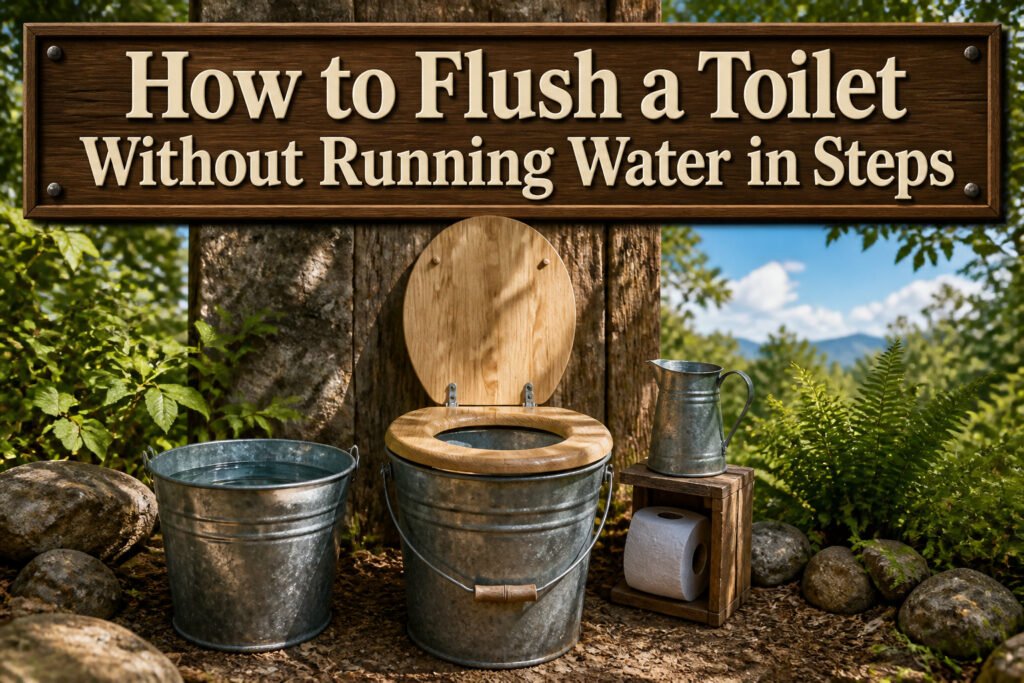
You need one to two gallons and about thirty seconds to manually clear a toilet when the pipes run dry. Most people waste their single free flush by checking the tank last, not first. The water sitting there at 1.6 gallons will empty normally even after pressure drops to zero, but only if no one else in the house beat you to the handle.
1. Check the Tank for One Last Flush

The toilet tank is easy to overlook until the supply line goes dry. Most modern toilets store roughly 1.6 gallons per flush, and that water sits there waiting, even after the house pressure drops to zero. Lift the lid carefully and look at the water level inside. If it reaches the fill line or sits about an inch below the tank’s edge, you have one normal flush left. Pull the handle the usual way and the tank empties into the bowl, gravity doing the work it always does. That single flush buys time before you need buckets or alternate sources. Someone else in the house may have already used it, though, and the tank will be bone dry when you check. In that case, the bowl itself might still hold a small amount of water, but it will not clear waste without fresh water added from somewhere else. The tank is the first place to check, and the only place that gives you a free pass.
2. Gather Water to Pour

A bathtub filled before the outage is the most convenient reserve, but most people do not think that far ahead. One to two gallons is the amount that actually does the work. Bottled water will do in a pinch, though it feels wasteful to pour drinking water into a toilet. Rainwater caught in buckets or barrels, pool water, and melted snow are all usable. The sources disagree on whether melted snow needs boiling first; one says boil if possible, another treats it as ready to use. My own reading is that boiling is overcautious for toilet flushing, but the option is there if you are already heating water for other reasons.
Graywater from dishes or laundry is a different case. It works for pouring straight into the bowl, where the grime does not matter much, but it should never go into the tank. Sediment and soap residue can foul the fill valve and the flapper seal, turning a temporary fix into a repair bill. Stick to the bowl only, or skip graywater entirely if you have cleaner sources on hand.
3. Pour Into the Bowl

The pour-over method works because the bowl itself is a siphon trap designed to move waste with volume, not machinery. Start by pouring slowly at first, just enough to fill the bowl to its normal waterline without splashing. Once the bowl is primed, dump the rest quickly and steadily from about waist height, aiming for the center. That sudden rush of one to two gallons triggers the siphon action the toilet was built around, and gravity does the rest.
You are not using the handle or the tank at all. The handle only opens a valve in the tank; the flush itself happens in the bowl. Some sources say to get it all down in under five seconds, while others emphasize a steady pour rather than a race. Either way, the physics are the same: enough water fast enough breaks the siphon seal and pulls everything through. If the bowl still has contents after the first try, wait a few minutes for the trap to settle, then hit it again with another gallon. A smaller container works too, but you will need to pour multiple times in rapid succession to mimic the same single surge.
4. Fill the Tank to the Line

The tank method feels more familiar because it keeps the toilet working the way it was designed. Pop the lid off and pour water straight in until it reaches the overflow line, or about 1 inch below the tank edge if you cannot find the mark. Most newer tanks hold around 1.28 gallons, though older models often need more. Once the water sits at the right level, the handle works normally: the flapper lifts, gravity does the rest, and the bowl clears just like any other flush.
This approach uses more water per flush than pouring directly into the bowl, so it is not the best choice when your supply is tight. Still, it is worth knowing when you want the least amount of fuss or when someone else in the house needs to use the toilet without coaching them through a bucket pour.
Most newer toilet tanks can hold around 1.28 gallons of water, but older toilets might require you to add more.
— WikiHow
That gallon-and-change figure matters for planning: a single 2-gallon bucket fills most modern tanks with enough left over, while an older toilet may empty the same bucket in one go.
5. Repeat or Troubleshoot

Waste sometimes sits stubborn even after the first bucket goes in. Gravity needs enough mass to trigger the siphon, and one gallon can fall just short on a heavier load or a partial clog. The sources split on volume: some call a gallon enough, others say one to two gallons. My own read is that the second gallon is insurance worth keeping on hand.
If the bowl still holds debris, wait a few minutes. The water already in there softens whatever remains. Then pour again, same motion, same waist-height drop into the center. Two attempts with a full two gallons total usually finish the job when one did not. A second person holding the bucket steady helps, or a larger container so you do not stop mid-pour.
Speed matters more than volume on a single pour. The sources agree on under five seconds for the full bucket. Splitting it into slow trickles just fills the bowl without the rush that forces the trap seal open. If all you have is a smaller pot, pour rapidly in succession, not once and wait.
Still stuck after round two? The blockage may be physical, not a water-shortage problem. A plunger or augur comes next, but that is a different repair entirely.
Best Water Sources Ranked

Not all water is worth the same trouble when the pipes go dry. Clean bathtub water you filled ahead of time sits at the top: it is already inside, already room temperature, and carries nothing that will stain the bowl or linger in the air. Bottled drinking water works the same way, though cracking open a gallon you might need later always feels like a small defeat.
Rainwater and pool water drop down the list. Pool water carries chlorine and other chemicals that make it fine for flushing but nothing else; rainwater depends entirely on what roof or barrel it ran through. Melted snow does the job if it is clean, though collecting enough to matter takes longer than most people expect.
| Source | Safe for flushing | Safe for contact | Notes |
|---|---|---|---|
| Bathtub water (stored) | Yes | Yes | Best first choice |
| Bottled drinking water | Yes | Yes | Use only if bathtub supply runs low |
| Melted snow | Yes | Yes | Must be clean; labor-intensive to collect |
| Rainwater | Yes | No | Quality varies by collection surface |
| Pool water | Yes | No | Chemicals make it flush-only |
The line is simple: if you would not wash your hands in it, keep it away from skin entirely. A contaminated source still moves waste down the pipe, but that is the only job it gets.
Avoid Damaging the Toilet

Three rules keep the fixture safe while you work around the outage:
- Hot water cracks cold porcelain. Thermal shock is real. The bowl sits at room temperature, and boiling liquid poured straight in can fracture it. Warm water from a bathtub is fine; just let anything hotter cool first.
- Dirty water or debris clog passages. Mop buckets, pond scoops, or anything with grit in it risks blocking the jet holes or the trap. If the source looks questionable, strain it through cloth or pick a cleaner one.
- Overfilling the tank strains parts. The fill line inside the tank is there for a reason. Water above it adds pressure on the flapper seal and the overflow tube, and you will notice the leak when service returns.
How Gravity Flushing Works

A toilet flushes by gravity, not pressure. Water from the tank rushes into the bowl, and that volume gradually pushes the existing water down through the trapway. The shape of the bowl and the pipe beneath it create a siphon action that carries waste into the sewer line or septic tank.
Volume matters more than speed. Dump a gallon into the bowl fast enough and the siphon starts; pour too slowly and the water simply refills the bowl without clearing it. The pour method works because you are manually supplying what the tank normally releases, about a gallon in most gravity-fed toilets.
The water does not need to come from the tank at all. Pouring straight into the bowl from waist height gives the water enough momentum to trigger the siphon. Some people fill the tank instead, but the bowl is the direct route. Either way, the physics stay the same: enough water, added quickly enough, and gravity handles the rest.
Frequently Asked Questions
Can I use graywater from dishwashing or laundry?
Yes, but only by pouring it directly into the bowl. Never put graywater in the tank; sediment and soap residue can damage the fill valve and flapper seal, turning a temporary fix into a repair bill. The grime in graywater does not matter for bowl flushing, since the water goes straight down the drain.
How many times can I manually flush before needing to refill the stored water?
Each full flush needs about one to two gallons, depending on your toilet model. A standard bathtub holds roughly forty to fifty gallons, so if you filled the tub before the outage, you have enough for several dozen flushes. Plan accordingly if your supply is limited; filling the tank uses more water per flush than pouring straight into the bowl.
Will this damage my toilet?
No, not if you avoid two mistakes: do not overfill the tank past its fill line, and never pour scalding liquid into cold porcelain. Hot water can crack the bowl from thermal shock, so let anything hotter than room temperature cool first. Stick with warm or cool sources and the fixture stays safe.