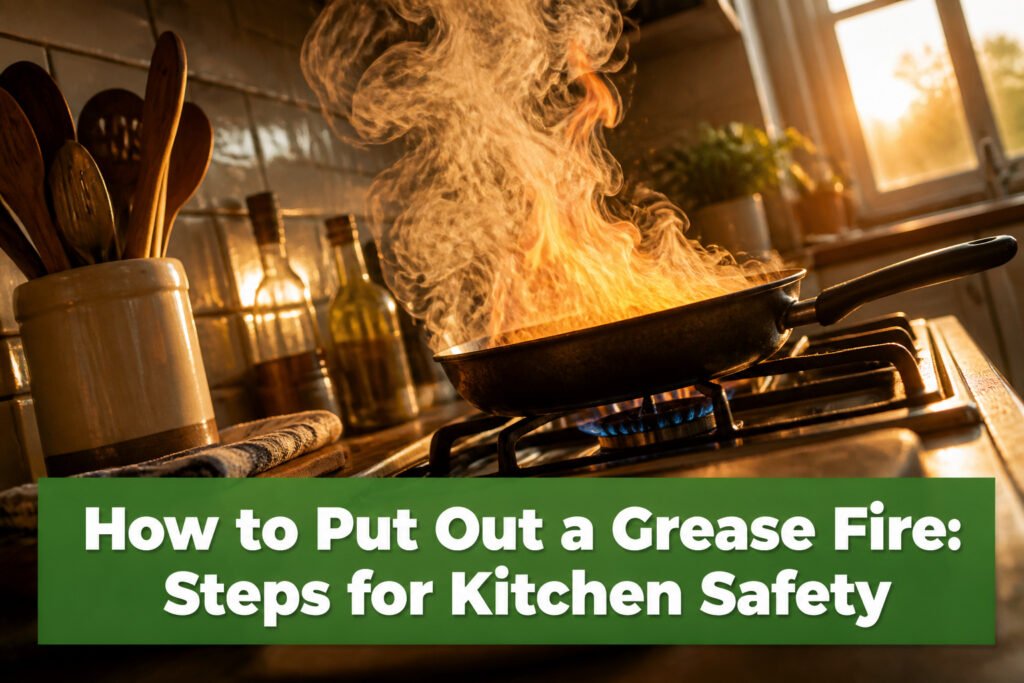
Putting out a grease fire takes under a minute if you move in the right order, and costs nothing beyond what is already in your kitchen. The stage most people get wrong is not the smothering; it is the moment before, when they reach for the pan handle instead of the burner knob. A pan in motion splashes burning grease across skin and floor, and 158,400 home cooking fires per year shows how fast ordinary heat becomes something else.
1. Turn Off the Heat Source

The first move in any grease fire is cutting the fuel. Turn the burner knob to off, or shut the gas at the valve if that is what you are cooking with. Only do this if the control sits within easy reach. Reaching across flames to get to the knob risks a burned hand and a dropped pan, which turns a stovetop fire into a floor fire.
A pan left where it sits is safer than a pan in motion. The urge to grab the handle and move it to the sink is natural, but hot grease splashes farther than you think and sticks to skin. Let the pan stay put while you kill the heat.
The numbers from the National Fire Protection Association put the scale in view: 158,400 home cooking fires happened each year in the United States from 2017 to 2021, with cooking materials like food, fat, and grease starting two-thirds of them.
There were an estimated 158,400 home cooking fires in the United States each year from 2017 to 2021.
That figure is not from grilling accidents alone. It is the background rate of ordinary Americans cooking ordinary meals and losing control of the heat. Turning the burner off first does not solve the whole problem, but it stops making the problem bigger.
2. Smother the Fire

A metal lid cuts off the oxygen a grease fire needs to keep burning. Glass lids are a mistake here; the thermal shock will shatter them before the flames are out, sending hot shards and burning grease across your stove. The same goes for a domed lid that sits inside the pan rim. Grease can still reach air around the edges, and the gap lets the fire breathe.
A flat baking sheet works better than a domed lid because it seals across the entire top of the pot or pan. Slide it on from the front, keep it level, and do not lift it to check until the metal has cooled. Every peek feeds the fire fresh oxygen and can restart what you just smothered. If the fire is already too large for the sheet to cover completely, this method will not work; that is the moment to get out and call 911.
3. Use Baking Soda or Salt
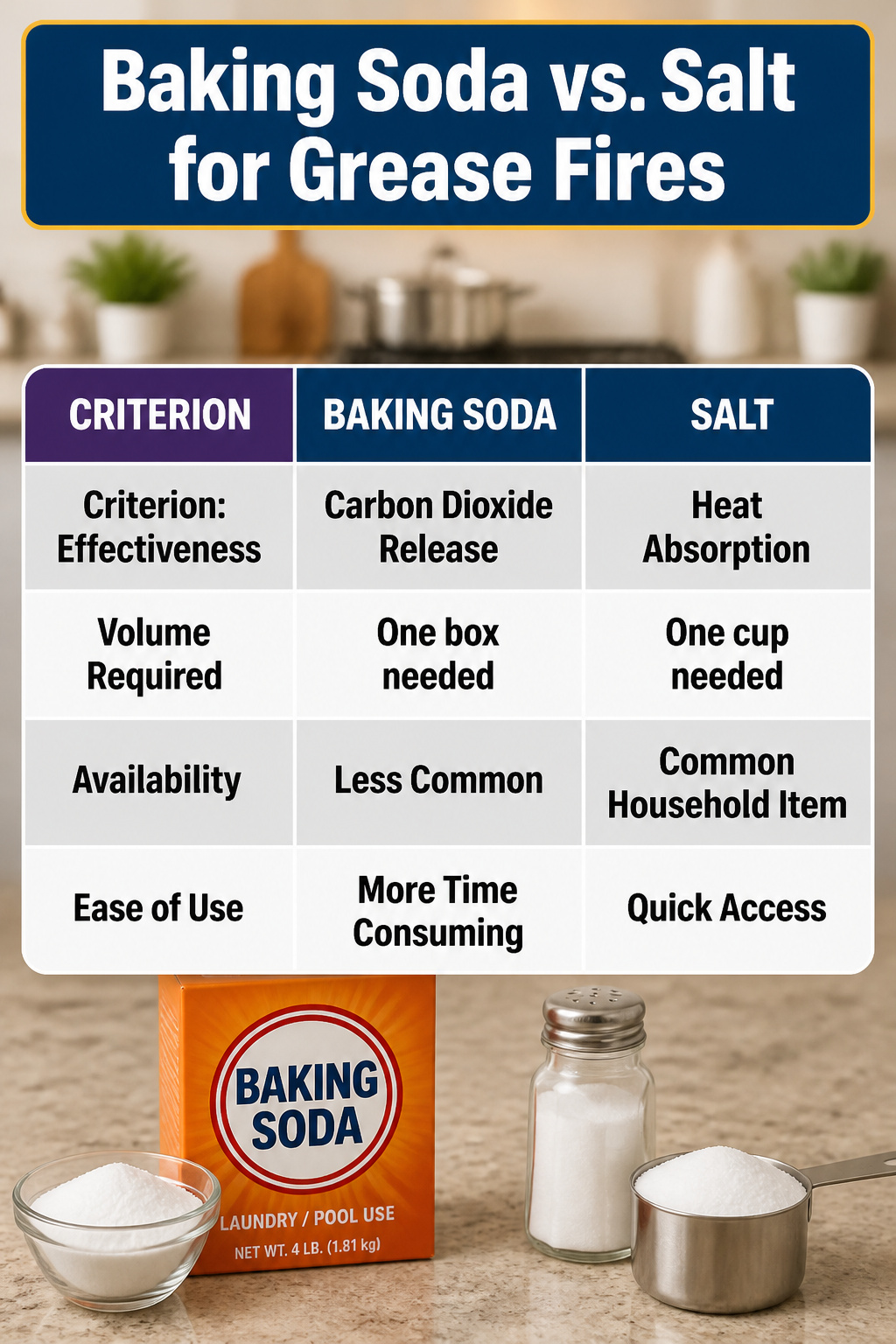
Baking soda works because heat forces it to release carbon dioxide, and that gas smothers the flame the same way a lid does. The catch is volume. A standard one-pound box from the fridge might handle a small flare-up, but a decent grease fire needs the larger sizes sold for laundry or pool use. Salt is the more practical backup for most kitchens. About one cup of salt can extinguish a decent-sized grease fire, and most households have enough on hand. Salt absorbs heat for its volume and piles on top of the oil to block oxygen. Between the two, salt wins for availability and sheer mass. Baking soda can work, but it takes substantially more to match the result, and running to the pantry for multiple boxes wastes seconds you do not have.
4. Use a Fire Extinguisher
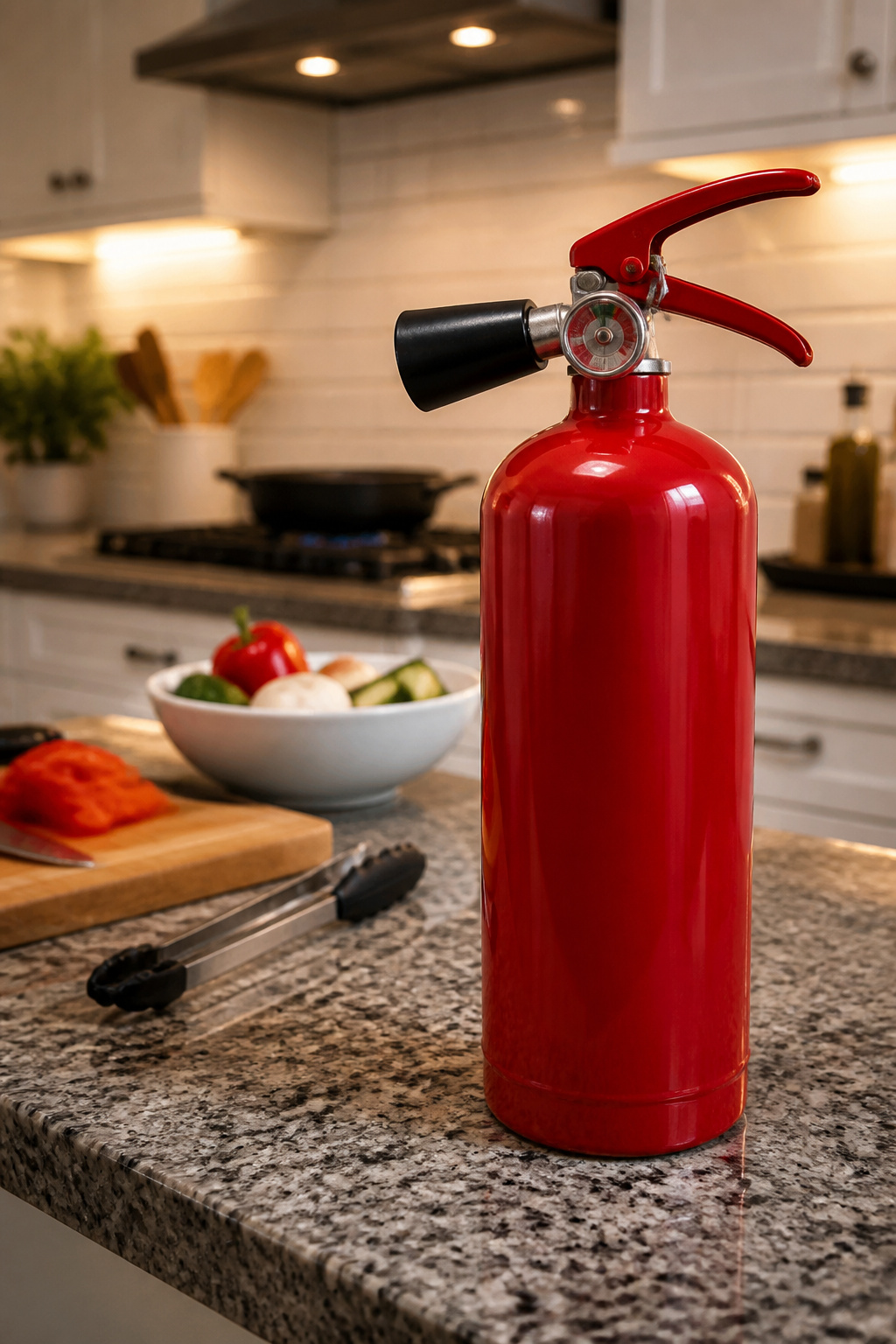
A Class K fire extinguisher is built for exactly this: cooking fires fed by grease, oils, and fats. The wet chemical agent cools the flames and leaves a soapy film that smothers the fire and keeps it from reigniting. For most home kitchens, though, a multi-purpose Class ABC extinguisher rated for Class B flammable liquids handles the job well enough. Fire-safety experts agree on that point; the Class K units are really meant for commercial deep fryers, not a residential stovetop flare-up.
The First Alert PRO5 runs about $60 and covers the ABC range, so it works for grease as well as paper, wood, and electrical fires. Keep it somewhere you can reach without thinking, not buried behind the mixing bowls. And know how the pin and sweep work before you need them; fumbling with instructions while oil burns is a bad position to be in. If the fire is already past what a single extinguisher can handle, get out and call 911.
5. Call the Fire Department

Grease fires double fast. The moment a lid won’t drop cleanly or the flames lick past the pan’s edge, that growth rate has already beaten you. Evacuate and call 911. This is not a failure of technique; it is the correct move when the physics turned against you.
Standing in a doorway, phone already out, the dispatcher will ask questions you can answer from the lawn. Let them. Your life is worth more than the kitchen, more than the house, more than whatever story you tell yourself about handling it alone. The fire department trains for exactly this. Arriving to a contained exterior with everyone accounted for is their preference every time.
If anyone inside depends on you to get out, that decision point moves earlier. Hesitation costs more than pride.
Never Use Water

Water on a grease fire is the mistake every safety guide leads with, and for good reason. Oil and water do not mix. When liquid water hits burning oil, it sinks beneath the surface, instantly flashes to steam, and expands roughly 1,600 times its original volume. That explosive expansion sprays burning grease in every direction, turning a contained pan fire into a kitchen-wide hazard.
Flour and baking powder get mixed in here too, often by people grabbing for whatever white powder sits closest. Both are combustible. Flour ignites easily at high temperatures, and baking powder behaves much the same way. Neither smothers flames the way baking soda can; they feed them instead. The confusion between baking soda and baking powder costs people in emergencies, so the distinction matters: one belongs on the counter for this situation, the other absolutely does not.
Prevent Grease Fires

Grease buildup on a stovetop or inside a grill is fuel waiting for a spark. A Weber gas grill can hit 550°F, and at those temperatures, a thin layer of old fat turns from residue to ignition source fast. The NFPA estimates one-fifth of grill fires start simply because nobody cleaned the grease trap.
Inside the kitchen, the same rule holds. Oils heated past their smoke point give you warning, but only if you’re there to see it. Smoking oil means turn the heat down or move the pan off the burner entirely, not in five minutes, now. Flammable items belong nowhere near that zone: a dish towel left on a neighboring burner, a paper bag too close to the range, an oven mitt draped over the handle. These catch in seconds, not minutes.
The most reliable prevention is staying present. Unattended cooking is the most common cause of grease fires, and a timer only helps if you’re in earshot to hear it. Heat oil slowly, watch it the whole time, and keep a lid within arm’s reach, not across the kitchen, for the moment something goes wrong.
Choose the Right Extinguisher

A Class K fire extinguisher is built for exactly what happens when cooking oil ignites. The wet chemical agent cools the flames and leaves a soapy film that smothers the fire and blocks re-ignition, which matters because grease can hold heat long after it looks dead. An ABC extinguisher handles ordinary combustibles, flammable liquids, and electrical gear, but on a grease fire it can splash burning oil and spread the problem. Some sources point to the First Alert PRO5 for home kitchens, though any Class K rated unit covers the specific hazard better than a general-purpose model.
| Class K | ABC | |
|---|---|---|
| Agent type | Wet chemical | Dry chemical |
| Grease fire design | Purpose-built | Not ideal; can spread fire |
| Re-ignition prevention | Soapy film barrier | No |
| Best for | Kitchens with oil/grease cooking | General home hazards |
If you keep only one extinguisher in the kitchen, make it Class K. An ABC unit sitting nearby is backup for the rest of the house, not the stove.
Frequently Asked Questions
What should I do if I have a grease fire?
Turn off the heat source immediately, then smother the flames with a metal lid or flat baking sheet to cut off oxygen. If the fire is small, pour about one cup of salt or a large amount of baking soda over the flames. Keep a Class K fire extinguisher within easy reach for larger flare-ups, and evacuate to call 911 the moment flames spread past the pan’s edge.
Can I use water on a grease fire?
Never. Water sinks beneath burning oil, flashes instantly to steam, and expands roughly 1,600 times its volume, spraying burning grease across the kitchen. The same danger applies to flour and baking powder, which are combustible and will feed the flames rather than smother them.
What type of fire extinguisher is best for grease fires?
A Class K fire extinguisher is purpose-built for grease fires; its wet chemical agent cools flames and leaves a soapy film that prevents re-ignition. A multi-purpose Class ABC extinguisher rated for flammable liquids can handle a residential stovetop flare-up in a pinch, though it lacks the same barrier against reignition and can splash burning oil if used improperly.
How can I prevent a grease fire?
Stay present at the stove, since unattended cooking is the most common cause. Heat oil slowly, watch for smoking as a warning to reduce heat immediately, and keep the stovetop and grill grease traps clean. Store a metal lid within arm’s reach, not across the kitchen, and keep flammable items like dish towels and oven mitts away from burners.