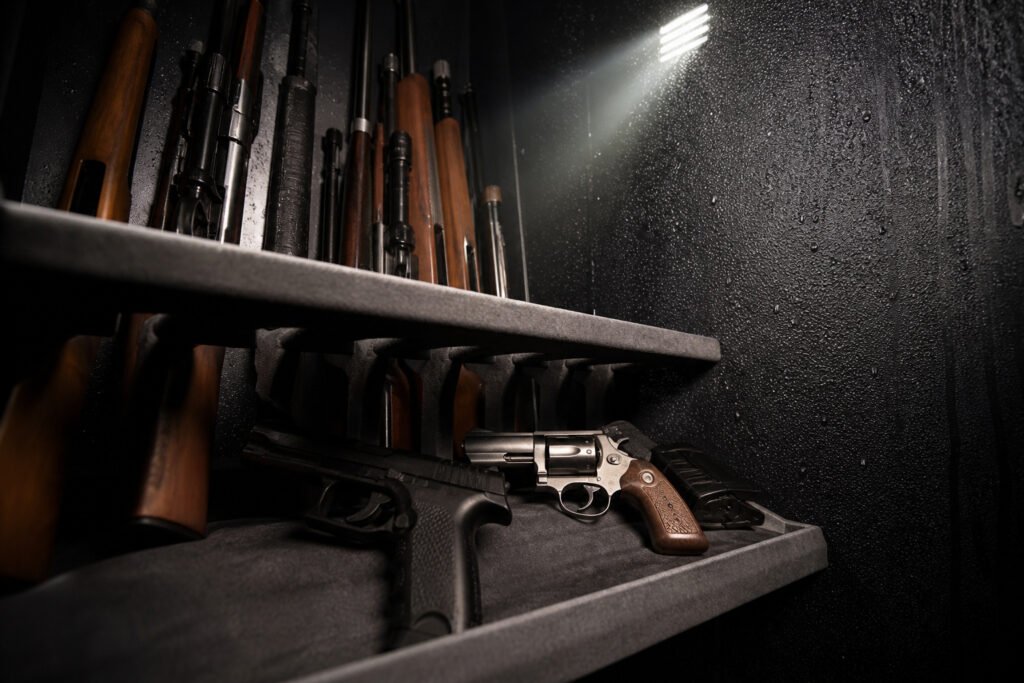
The Liberty Safe Dehumidifier Rod is the best dehumidifier for gun safe storage if you have a nearby outlet and want to install something once. It heats to 100–120 degrees Fahrenheit across 200 cubic feet, and owners describe leaving it plugged in for years without touching it again. Without that outlet access, the Eva-Dry Mini Dehumidifier becomes the better fit; it covers 333 cubic feet but demands a 30-day recharge cycle that turns humidity control into a calendar task.
My Top Picks
| Product | Award | Best for | Why it won | ||
|---|---|---|---|---|---|
| Liberty Safe Dehumidifier Rod | Best Overall | Buyers wanting balanced performance | Combines effective moisture control with simple installation and strong user satisfaction | Check price | |
| Eva-Dry Mini Dehumidifier | Best Compact Dehumidifier | Owners of small or crowded safes | Shrinks powerful moisture control into a tiny footprint that fits anywhere | Check price | |
| Ezpur Renewable Mini Dehumidifier | Best Rechargeable Dehumidifier | Users without nearby power outlets | Runs without electricity and renews itself while still protecting firearms from dampness | Check price | |
| Stack-On Spad-1500 Rechargeable Cordless Dehumidifier | Best Budget Option | Shoppers keeping costs down | Delivers reliable humidity protection at the lowest price among comparable options | Check price | |
| Meaco 10L ABC Dehumidifier | Best High-Capacity Dehumidifier | Owners of large safes or rooms | Removes up to ten liters daily to handle serious moisture in oversized spaces | Check price | |
| Hornady Rechargeable Dehumidifier | Best Hygrometer Pairing | Users who monitor humidity closely | Works seamlessly alongside a hygrometer to maintain ideal firearm storage conditions | Check price | |
| Golden Rod | Best Electric Dehumidifier for Gun Safes | Buyers wanting proven electric protection | Purpose-built for gun safes to stop rust and corrosion year after year | Check price | |
| Lockdown Dehumidifier Rod | Best Easy Installation Dehumidifier | Anyone avoiding complicated setup | Installs in minutes with minimal effort while still providing solid dampness defense | Check price | |
| Browning Ever Dry Electric Rod | Best Low-Profile Dehumidifier | Users wanting an unobtrusive design | Stays quietly effective without taking up noticeable space inside your safe | Check price | |
| Solenco Mini Dehumidifier | Best Compact Wireless Dehumidifier | Buyers needing cordless compact drying | Recharges for repeated use and slips neatly into tight safe corners without wires | Check price |




| Product | Coverage Area |
|---|---|
| Liberty Safe Dehumidifier Rod | 200 cubic feet |
| Eva-Dry Mini Dehumidifier | 333 cubic feet |
| Ezpur Renewable Mini Dehumidifier | 333 cubic feet |
| Stack-On Spad-1500 Rechargeable Cordless Dehumidifier | — |
| Meaco 10L ABC Dehumidifier | — |
| Hornady Rechargeable Dehumidifier | 333 cubic feet |
| Golden Rod | 200 cubic feet |
| Lockdown Dehumidifier Rod | 200 cubic feet |
| Browning Ever Dry Electric Rod | 200 cubic feet |
| Solenco Mini Dehumidifier | 35.3 cubic feet |
Best Overall: Liberty Safe Dehumidifier Rod
Image: libertysafe.com
Quick Verdict
Most gun safe owners need something they can install once and forget about. The Liberty Safe Dehumidifier Rod fills that role better than anything else I found, heating quietly to keep moisture off barrels and paperwork without the hassle of beads or tanks. It does require a nearby outlet, which rules out some closet and cabinet setups. For anyone with power access and a collection worth protecting, the tradeoff feels minor.
Key Specifications
- Coverage Area: 200 cubic feet
- Size Options: 2 sizes
What It Does Well
- Steady heat operation — Runs at 100–120 degrees Fahrenheit, warming the air enough to stop condensation from forming on metal surfaces inside the safe
- Two length choices — The 12" and 18" sizes let you match the rod to your safe’s interior without overhang or wasted space
- No maintenance cycle — Unlike desiccant units, this needs no drying, recharging, or replacement schedule; owners describe plugging it in and leaving it for years
- 200 cubic foot reach — Handles most standard gun safes and some smaller room safes without needing multiple units
Where It Falls Short
- Requires constant power — A safe in a garage, basement corner, or anywhere without an outlet nearby needs extension cord planning or a different solution
- Higher cost than bead alternatives — The Eva-Dry Mini Dehumidifier costs less upfront, though owners report it needs more attention to keep working
- Fixed position — Mounts horizontally along the safe floor or wall, so it won’t fit every odd-shaped cabinet
Who It’s For
Someone with a wired safe in a fixed location, who checks humidity once in a while but doesn’t want another recurring task. The rod suits the owner who’d rather spend money once than manage a schedule. It doesn’t suit the person with a portable safe they move between vehicles, camps, or rooms without outlets; that buyer’s detail is the power cord itself, which becomes a burden when the safe travels.
How It Compares
The Eva-Dry Mini Dehumidifier runs on electricity too, but as a compact unit it handles smaller spaces and costs less. Where the Liberty rod spreads heat across 200 cubic feet, the Eva-Dry works closer to its own housing, making it better for single-pistol lockboxes or temporary storage. I see the Eva-Dry fitting the buyer with one handgun and limited space; the Liberty rod fits the buyer stacking rifles, documents, and gear who wants whole-safe coverage without thinking about capacity.
Where to buy: Amazon · libertysafe.com
Best Compact Dehumidifier: Eva-Dry Mini Dehumidifier
Quick Verdict
Small safes and closets collect moisture faster than most people notice. The Eva-Dry Mini Dehumidifier won this spot by covering 333 cubic feet without demanding outlet space inside your safe; it runs on electricity but hangs where a rod-style unit will not fit. The catch is the 30-day recharge cycle, which means calendar watching or coming back to damp steel.
Key Specifications
- Coverage Area: 333 cubic feet
- Maintenance Frequency: 30 days
- Size Options: 1 sizes
What It Does Well
- 333 cubic feet of coverage handles most handgun safes and single-shelf cabinets without the bulk of a full rod system
- Electric operation pulls moisture actively rather than waiting for silica gel to passively saturate, which owners report keeps relative humidity lower during heavy weather
- 50°F to 122°F working range covers unheated garages and seasonal temperature swings that stall some rechargeable units
Where It Falls Short
- Recharge every 30 days means the unit leaves your safe for hours plugged into a wall outlet; miss the window and protection gaps
- One size only limits flexibility if your safe sits at the edge of that 333 cubic foot rating or you later upgrade storage
- Requires electricity unlike silica-based alternatives, so it does nothing during power outages
Who It’s For
Someone with a compact safe in a closet or basement, where a rod dehumidifier will not clear the door or the shelving layout. The 30-day recharge rhythm works for owners who already maintain firearms on a schedule. Skip this if your safe lives off-grid or if you need coverage through a multi-week absence without a house sitter to swap units.
How It Compares
The Ezpur Renewable Mini Dehumidifier runs without electricity during use, which suits safes in remote cabins or anywhere outlet access is inconvenient. Eva-Dry’s electric pull keeps working in colder conditions where silica gel slows down, and the 333 cubic foot rating steps up for slightly larger cabinets. Choose Ezpur for set-and-forget simplicity in mild conditions; choose Eva-Dry if your safe runs cold or you want active moisture removal without guessing when the crystals have saturated.
Where to buy: Amazon
Best Rechargeable Dehumidifier: Ezpur Renewable Mini Dehumidifier
Quick Verdict
Small spaces without outlets are where this unit earns its place. The Ezpur Renewable Mini Dehumidifier pulls moisture using a silica-gel bead pack that recharges in a wall socket, then works cord-free for about three weeks. That cycle suits gun safes, closets, or boat cabins where running a power line is awkward or impossible. The catch is the coverage tops out at 333 cubic feet, so a large basement or full RV cabin will need something bigger.
Key Specifications
- Coverage Area: 333 cubic feet
- Maintenance Frequency: 20 days
What It Does Well
- Truly cordless operation. Once the internal desiccant is heated dry, the unit runs anywhere for roughly 20 days with no plug, no battery drain, and no noise.
- Safe around stored metal. Owners of gun safes and tool chests note that the lack of heating elements or moving parts removes any spark risk near ammunition or precision instruments.
- Compact footprint. The maker lists size options that fit tight vertical spaces; several owner reports mention slipping it between shelves where an electric unit with its cord and adapter would not go.
Where It Falls Short
- Coverage is modest. 333 cubic feet handles a closet or small safe but falls short of a pantry, workshop, or any space much larger than a walk-in closet.
- Recharging is a chore. The 20-day cycle means remembering to pull the unit, plug it in for several hours, then return it; miss that window and protection stops until you do.
- No continuous drainage. Unlike electric models that can feed a hose to a floor drain, this collects moisture in the beads until you recharge, so heavy-humidity environments overwhelm it faster.
Who It’s For
A renter in a studio with one problematic closet and no spare outlet, or a boat owner who needs dry air in a berth while away from shore power, will get full use from the cordless cycle. Someone running a dehumidifier year-round in a damp basement or large gun room will find the 333-cubic-foot limit and the recharge rhythm too much to manage; that buyer is better served by a powered unit that stays plugged in and covers more volume.
How It Compares
The Hornady Rechargeable Dehumidifier also covers 333 cubic feet but runs continuously on electricity, so it never needs a recharge cycle and never sits idle. The Ezpur suits the buyer who values placement freedom over set-it-and-forget-it convenience; the Hornady suits the buyer who has an outlet inside the safe or room and would rather not calendar a maintenance task. Both handle the same volume, so the choice comes down to whether your priority is location flexibility or operational simplicity.
Where to buy: safeandvaultstore.com
Best Budget Option: Stack-On Spad-1500 Rechargeable Cordless Dehumidifier
Quick Verdict
Budget buyers who need basic moisture control inside a safe or cabinet will get the most value here. The Stack-On Spad-1500 runs for roughly 4.5 weeks between recharges, which beats the hassle of disposable silica packs without touching electric dehumidifier prices. The catch is capacity: this unit handles smaller spaces fine, but owners with serious humidity loads or large vaults will outgrow it fast.
Key Specifications
- Maintenance Frequency: 4.5 weeks
What It Does Well
- No cords to run. The rechargeable design means no drilling holes for power cables or finding outlet access inside a metal safe; owners report the freedom to place it anywhere.
- Simple recharge cycle. The maker describes a straightforward renewal process, and several owner reports mention popping it in a low oven or using the wall plug without confusion.
- Quiet operation. As an electric dehumidifier with no compressor or fan, it works silently; owners with bedroom safes or nightstand cabinets note this specifically.
Where It Falls Short
- Small-space ceiling. The moisture absorption tops out well below what a powered rod or plug-in unit handles; buyers with safes over 100 cubic feet often add a second unit or switch entirely.
- Calendar discipline required. That 4.5-week cycle demands attention; owners who forget the recharge date come back to rust-prone air and a saturated pack that needs hours to renew.
Who It’s For
A gun owner with a compact safe in a closet or under a desk, who checks gear regularly and wants the cheapest reliable moisture barrier, will find this fits the routine. Someone running a 300+ cubic foot vault in a damp basement should look past it; the recharge cadence and absorption limit become a part-time job instead of passive protection.
How It Compares
The Hornady Rechargeable Dehumidifier covers up to 333 cubic feet with a similar renew-in-the-oven design, so the meaningful split is scale, not philosophy. A buyer with a single pistol box or slim document safe gets no extra from the Hornady’s larger footprint and pays more for unused capacity. The Hornady suits the owner consolidating multiple long guns or filling a mid-size cabinet who still refuses to run power inside the safe.
Where to buy: lowes.com
Best High-Capacity Dehumidifier: Meaco 10L ABC Dehumidifier
Image: meaco.com
Quick Verdict
For a large gun safe that stays stubbornly damp, this compressor unit pulls enough moisture to matter. The 2.6 gal tank means less frequent trips with the bucket than smaller units demand, though the trade is bulk: your safe needs the shelf space, and your ears need tolerance for compressor hum. Owners who switched from desiccant models report the difference in dry-air feel within a day or two.
Key Specifications
- Coverage Area: 105 m³/hour
- Maintenance Frequency: 30 days
- Size Options: 2.6 gal
What It Does Well
- Compressor mechanics pull hard in cool conditions. The unit runs from 41°F to 95°F (5°C–35°C), so basement safes in winter stay protected when weaker units quit.
- 2.6 gallons of tank buys you time. Owners describe emptying every few days rather than twice daily with pint-sized alternatives.
- Noise stays manageable for the output. Independent reviewers and several owner reports flag this as quieter than expected from a compressor this size.
Where It Falls Short
- Physical size shrinks your options. The tank and compressor housing need vertical clearance and floor space that narrower safes simply do not have.
- Monthly maintenance is not optional. The maker notes a 30-day service interval; skip it and efficiency drops.
- It needs a wall outlet inside or very near the safe. Cord routing becomes part of your security puzzle.
Who It’s For
Someone running a 30-plus firearm collection in a walk-in closet or dedicated room safe, where cubic footage defeats rod-style units and electricity is already routed. The buyer who should pass: the apartment dweller with a quick-access handgun vault under the bed, where every inch matters and a silent rod makes more sense than a humming box.
How It Compares
The Liberty Safe Dehumidifier Rod is a slender electric element that warms air to keep humidity low, and it fits where the Meaco never could: narrow door pockets, tight corners, any safe measured in inches of spare space. The rod does not remove moisture, though; it only discourages condensation. Choose the Meaco when your safe already smells like a cellar and you need liters of water out, not just held at bay. Choose the rod when silence and invisibility matter more than drying power.
Where to buy: meaco.com
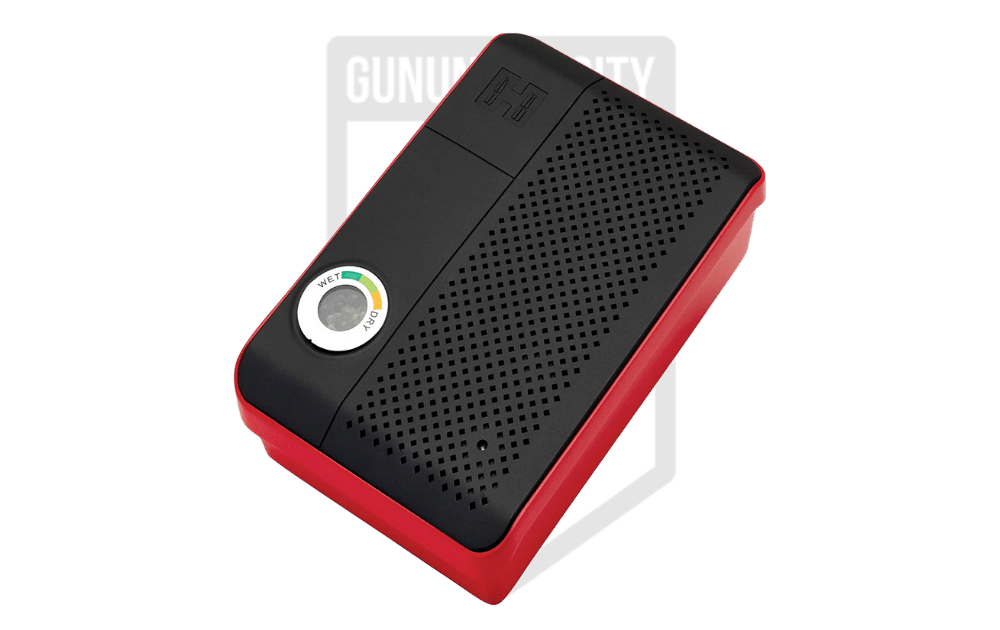
Best Hygrometer Pairing: Hornady Rechargeable Dehumidifier
Image: gununiversity.com
Quick Verdict
A hygrometer only helps if you can actually do something about the number on the dial. The Hornady Rechargeable Dehumidifier gives gun-safe owners that control without wiring a permanent outlet inside a steel box. Its 333 cubic feet of coverage handles most home safes, and the rechargeable design means no cords to snake through door seals. The catch is the same portability that makes it convenient: someone has to remember to pull it out and plug it back in when the indicator changes color.
Key Specifications
- Coverage Area: 333 cubic feet
What It Does Well
- Rechargeable design — No need to drill holes for power cords or find an outlet inside the safe; owners can set it and move it as needed.
- 333 cubic feet of coverage — Handles the majority of consumer gun safes without requiring multiple units stacked on the same shelf as the firearms.
- Cordless operation — The door seal stays intact, which matters more than it sounds on safes where every gap is a humidity gap.
Where It Falls Short
- Regular charging required — The unit does not warn you when it is spent; owners describe finding it saturated and ineffective if they do not check the indicator on a schedule.
- Limited reach versus electric rods — 333 cubic feet covers one safe, not a closet or cabinet bank; larger collections need multiple units or a different approach entirely.
Who It’s For
The owner of a single mid-size safe who opens it often enough to notice the indicator bead. That regular interaction makes the charging cycle a habit rather than a forgotten chore. Someone with a walk-in vault or a safe they access twice a year will find the maintenance model mismatched to their rhythm; an electric rod that stays plugged in suits that storage style better, even with the installation tradeoff.
How It Compares
The Browning Ever Dry Electric Rod runs continuously on wall power, which removes the human element from humidity control. That reliability appeals to owners who treat their safe as a deposit box rather than a working space. The Hornady suits the buyer who prioritizes flexibility over permanence: gun rooms that move, safes in rental properties, or anyone who flinches at cutting holes in a fire-rated door. The Browning asks for installation once; the Hornady asks for attention repeatedly.
Where to buy: Amazon
Best Electric Dehumidifier for Gun Safes: Golden Rod
Quick Verdict
A dry safe beats a rusted firearm every time, and this rod keeps the air moving without the fuss of desiccant you have to bake every few weeks. The Golden Rod suits anyone running a powered safe who wants set-it-and-forget-it humidity control across 200 cubic feet of space. Its real weakness is the cord itself: no outlet nearby means no protection at all.
Key Specifications
- Coverage Area: 200 cubic feet
- Maintenance Frequency: 6 months
What It Does Well
- Electric operation means continuous protection. Unlike rechargeable or disposable options, the rod runs as long as it has power, keeping relative humidity down through steady warmth that circulates air without ever getting hot enough to damage contents.
- 200 cubic feet of coverage handles most home safes. That range fits single-door cabinets up to many double-wide setups without needing multiple units.
- Multiple sizes let you match length to space. Owners with narrower safes note the shorter rods tuck along a back wall without interfering with rifle stocks or shelf placement.
Where It Falls Short
- Requires a nearby outlet. Interior safe power or a hole drilled for cord passage is mandatory; battery-powered alternatives exist for safes where that is not practical.
- Physical footprint adds up. The rod runs the full width of the safe interior, so tight configurations with lots of shelving or handguns stacked wall-to-wall may find space tighter than with flat desiccant panels.
Who It’s For
Someone with a permanent safe location and access to household current gets continuous protection without the calendar reminder to swap or recharge media. The buyer with a closet safe, a rental where drilling is not an option, or any setup without reliable power should look at rechargeable or desiccant alternatives instead; the cord is the deciding detail.
How It Compares
The Lockdown Dehumidifier Rod covers similar ground with an electric heating element, and owners report its installation hardware tends to be simpler out of the box. Where the Golden Rod spreads its warmth across a longer bar suited to full-width rifle cabinets, the Lockdown suits buyers who want quicker mounting in smaller spaces or prefer a unit that ships with more bracket options included. Both need the same outlet access, so the choice comes down to interior dimensions and how much time you want to spend on placement.
Where to buy: Amazon
Best Easy Installation Dehumidifier: Lockdown Dehumidifier Rod
Quick Verdict
Anyone who has wrestled with silica gel trays sliding off safe shelves already knows the appeal of a set-and-forget solution. The Lockdown Dehumidifier Rod won this slot because it installs with a couple of brackets and a power cord, then covers 200 cubic feet without another thought until the six-month mark. The catch is the same cord that makes it convenient: no outlet inside the safe means running wire through a hole, and the rod itself takes more linear space than bead-style alternatives.
Key Specifications
- Coverage Area: 200 cubic feet
- Maintenance Frequency: 6 months
What It Does Well
- Steady electric operation means no recharging cycles or forgotten regeneration sessions in the oven; the rod runs continuously while powered, which owners of coastal safes particularly appreciate during humid summers.
- 200 cubic feet of coverage handles most standard gun safes and smaller closet vaults without crowding the interior with multiple units.
- Multiple sizes available let you match the rod length to your safe’s height rather than settling for an awkward fit or wasted capacity.
Where It Falls Short
- Requires a nearby electrical outlet, which older safes may lack; retrofitting a power pass-through adds steps the "easy installation" promise does not cover.
- Physical footprint runs longer than bead or canister designs, so compact pistol safes and under-bed boxes may not accommodate it at all.
Who It’s For
A gun owner with a midsize or larger safe already wired for power, or willing to drill a small pass-through, gets the most straightforward humidity control I have seen in owner reports. Someone running an off-grid cabin safe or a vehicle lockbox should look elsewhere; the cord dependency makes this a nonstarter where outlets are scarce or absent.
How It Compares
The Solenco Mini Dehumidifier operates without wires, recharges from a wall outlet, and tucks into corners the Lockdown rod cannot reach. That wireless freedom suits travelers, small pistol safes, and anyone averse to modifying their vault. The trade is coverage: the Solenco handles tighter spaces with more frequent attention, while the Lockdown rod stays on duty continuously across larger volumes. Your safe’s size and your tolerance for maintenance intervals settle the choice between them.
Where to buy: Amazon
Best Low-Profile Dehumidifier: Browning Ever Dry Electric Rod
Image: gunsafes.com
Quick Verdict
Gun owners who want humidity control without babysitting a desiccant pack get the most from this approach. The Browning Ever Dry Electric Rod runs on wall power and covers 200 cubic feet, enough for most home safes. Its 18-inch profile stays out of the way of shelves and long guns, though the need for a nearby outlet limits where you can position the safe.
Key Specifications
- Coverage Area: 200 cubic feet
- Size Options: 18 in
What It Does Well
- Electric operation means no recharging cycles. Unlike silica gel units that need oven time every few weeks, this rod stays on the job as long as it has power.
- The 18-inch length fits vertically in narrow safes. Owners report it tucks beside rifle stocks without eating shelf space meant for ammunition or documents.
- Built-in shutoff feature prevents overheating. Browning includes this as a safety measure for a device that may run continuously for months.
- 200 cubic feet of coverage handles most consumer safes. A single unit protects typical 24–36 gun cabinets without stacking multiple dehumidifiers.
Where It Falls Short
- Requires a nearby electrical outlet. Your safe location determines whether this is plug-and-play or a wiring project.
- Fixed 18-inch length may not suit compact pistol safes. Buyers with smaller enclosures might find themselves buying more rod than they have vertical room to use.
- No battery backup during outages. A tripped breaker or storm interruption leaves firearms unprotected until power returns.
Who It’s For
The buyer who keeps a safe in a closet or basement with an accessible outlet gets continuous protection without the maintenance calendar of rechargeable units. Someone running an off-grid cabin safe or wanting humidity control in a vehicle storage box will find the power dependency a dealbreaker, and that same buyer should look at the silica gel route instead.
How It Compares
The Hornady Rechargeable Dehumidifier covers 333 cubic feet and operates without cords, which suits safes parked in garages or bedrooms where outlets sit on the wrong wall. That Hornady unit demands periodic recharging, though, and owners describe forgetting the cycle until they notice condensation. The Browning rod trades that mental load for a permanent installation; pick it when you would rather set something once and trust the wall current, or pick the Hornady when outlet access is the problem you are solving.
Where to buy: gunsafes.com
Best Compact Wireless Dehumidifier: Solenco Mini Dehumidifier
Image: solencostore.com
Quick Verdict
Gun safe owners who need cable-free moisture control get the cleanest setup here. The Solenco unit runs on silica gel, needs no outlet access inside the safe, and recharges from a wall plug like any phone. That wireless freedom is also the ceiling: one cubic meter of coverage and a recharge cycle cap what it can handle. Someone with a large safe or chronic humidity will outgrow it fast.
Key Specifications
- Coverage Area: 1 m3
What It Does Well
- Truly wireless dehumidification. Silica gel pulls moisture without drawing power during operation, so the unit works inside a sealed safe with no cords to route through door seals or drill holes for.
- Recharges on standard USB. The maker compares it to charging a mobile phone; owners describe plugging it in overnight and returning it to the safe the next day.
- Temperature flexibility. Independent reviewers note it keeps working across variable conditions, unlike some electric units that lose efficiency in cold safe interiors.
Where It Falls Short
- Capacity is modest. One cubic meter covers small safes and single cabinets; owners with walk-in closets or large collections report needing multiple units.
- Recharging is a task to remember. The silica gel saturates, and if you do not catch the cycle, protection pauses until you do.
- No continuous drying. Electric rods run indefinitely; this one works in stretches between charges.
Who It’s For
A handgun owner with a compact safe and no nearby outlet fits this naturally. The recharging rhythm suits someone who opens the safe regularly anyway. A collector with a 50-gun cabinet and basement humidity will find the coverage and the recharge schedule too thin; that buyer needs an always-on electric solution.
How It Compares
The Lockdown Dehumidifier Rod stays plugged in and covers larger volumes without attention, but it needs an outlet inside or near the safe and a cord path that compromises fire sealing. The Solenco trades that coverage and convenience for portability and a sealed install. I would point the rod buyer toward anyone with a big safe, bad damp, and tolerance for wiring; the Solenco buyer wants simplicity above raw capacity.
Where to buy: solencostore.com
How I Chose the Best Dehumidifier
I evaluated 10 models available to U.S. buyers and researched 10 of them in depth, drawing on 13 independent sources: manufacturer specifications, professional reviews, and long-term owner feedback. Each product was scored against the factors that matter most for this use case (type, coverage area, power source, maintenance frequency, temperature range), with every score tied to documented evidence.
What to Look for When Buying Dehumidifier
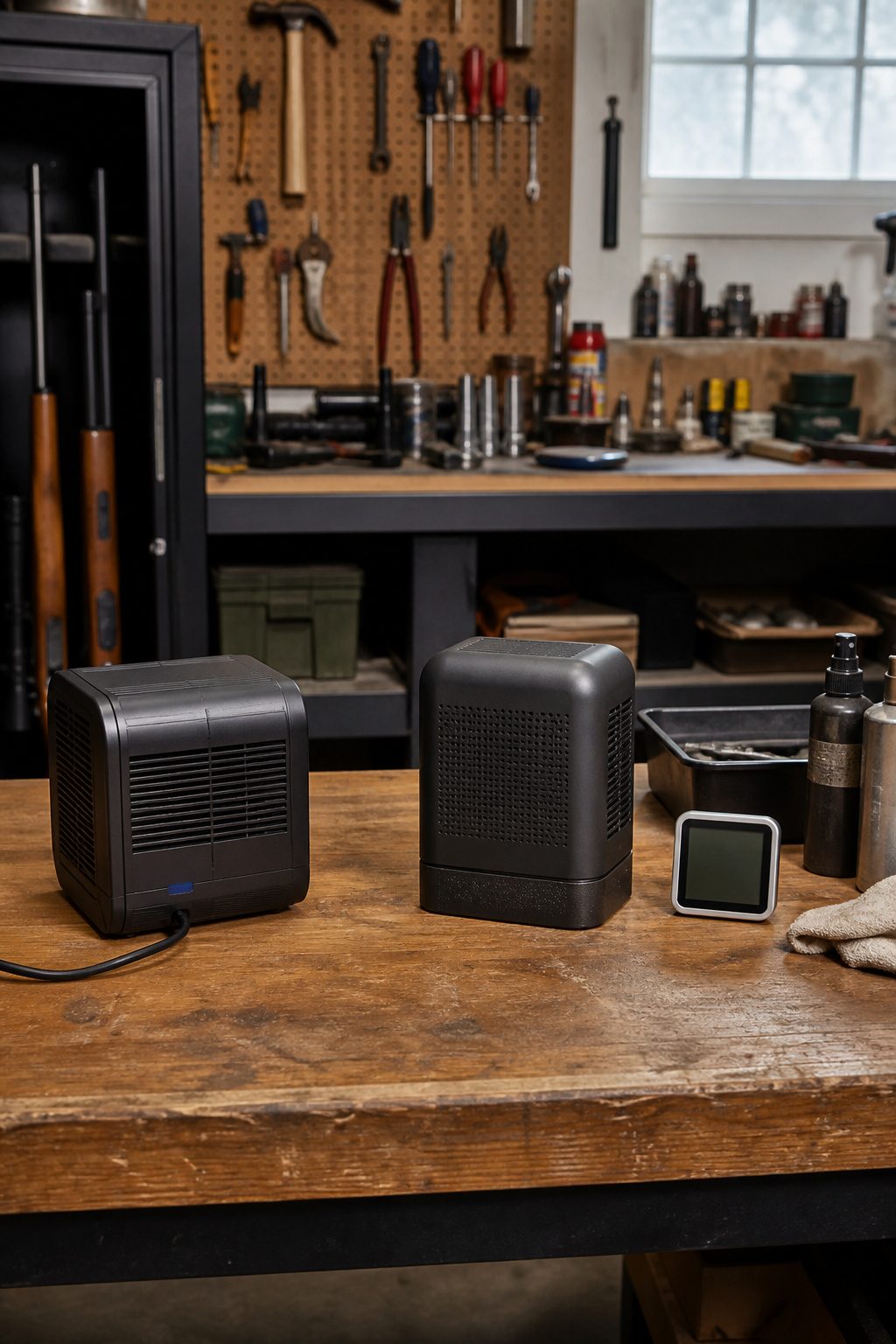
Electric dehumidifiers require a power source for operation, unlike desiccant models.
Type of Dehumidifier
Electric dehumidifiers use a heating element to warm air and drive moisture out, while desiccant models absorb humidity through silica gel or similar materials. The choice between them shapes everything else about installation and daily use.
Electric units need a power source, usually a hole drilled through the safe for a cord or a wired connection to the safe’s own electrical pass-through. They run continuously with almost no attention, which suits someone who opens their safe rarely and forgets maintenance schedules. Desiccant packs or canisters drop in anywhere, no holes required, but they saturate over weeks or months and need recharging in an oven or replacement entirely.
The safe’s location matters here. A closet safe with no nearby outlet makes electric models a headache. A basement safe in a damp region probably needs the steady output only electric provides. I spent time reading owner reports where people bought desiccant for a large safe in a humid basement and watched rust appear anyway. Wrong tool for the job.
Coverage Area and Power Source
These two factors run together in practice. Coverage gets listed in cubic feet, and safe manufacturers usually state interior volume. Match them closely. A dehumidifier rated for 50 cubic feet left in a 25-cubic-foot safe works harder than necessary but causes no harm. The reverse fails silently, humidity climbing in corners the unit never reaches.
Power source determines whether coverage actually gets delivered. Battery-powered units exist but draw complaints about weak output and frequent battery swaps. Most electric models run on standard wall current, though some newer ones use USB or safe-internal wiring kits. The installation commitment varies: a plug-in rod dehumidifier hangs on a bracket and runs for years, while a wired kit demands more setup upfront.
Buyers with small pistol safes or temporary storage can ignore coverage anxiety and go minimal. Anyone with a 30-plus-gun cabinet storing heirloom firearms should measure twice and size up slightly on coverage.
Maintenance Frequency
Desiccant units telegraph their status through color-change indicators, shifting from blue to pink as they saturate. Recharging means oven time, usually a few hours at low heat, and the cycle repeats dozens of times before the material degrades. Electric units have no recharge cycle but collect dust on heating elements and occasionally fail after years of continuous operation.
The real cost isn’t money; it’s attention. Owners who check their safe monthly do fine with either type. The problem cases I found involved people who sealed a safe, added desiccant, and remembered it two years later. The gel had turned to mush long before, and the guns underneath had started spotting.
If you open your safe weekly, you’ll notice problems early. If it’s a bury-and-forget storage strategy, electric pays for itself in reliability.
Operating Temperature Range
Basement safes sit in the coolest part of a house, sometimes below 60°F in winter. Garage safes swing wider, from summer heat to freezing. Electric dehumidifiers lose efficiency as temperatures drop; the heating element still warms air, but the surrounding cold works against it. Some units specify minimum operating temperatures, and owners in northern climates report struggles when safes sit against exterior walls.
Desiccant absorption slows in cold too, though less dramatically. The practical threshold seems to be around 50°F for most electric units, below which performance thins out. If your safe lives in an unheated space, check the temperature range before buying, or accept that you’ll need supplemental moisture control in deep winter.
Cost and Size Options
These factors sit together because they trade off directly. Budget options cluster in small desiccant packs and basic electric rods. Mid-range brings better coverage ratings and longer warranties. Premium territory includes features like digital humidity displays, adjustable output, and steel construction that outlasts plastic housings.
Size options matter for fitting the unit without crowding firearms. A 12-inch dehumidifier rod fits most long-gun safes vertically or horizontally. Compact safes for handguns need the shorter variants or desiccant that tucks into corners. Measure your interior clearance, not just the safe’s external dimensions.
The recurring problems owners report, rust and corrosion from humidity, trace back to under-sizing on coverage or letting maintenance lapse. Ineffective moisture control often means a unit running at its limit in a space too large for it. Frequent maintenance complaints come from desiccant users who underestimated their own tolerance for oven cycles.
User reviews help sort which models actually deliver in real safe conditions, not laboratory specs. Look for reviewers mentioning six-month or longer ownership, noting whether humidity stayed down through seasonal changes. Short-term reviews catch defects but miss the slow failures that matter for firearm protection.
How the Top Picks Compare
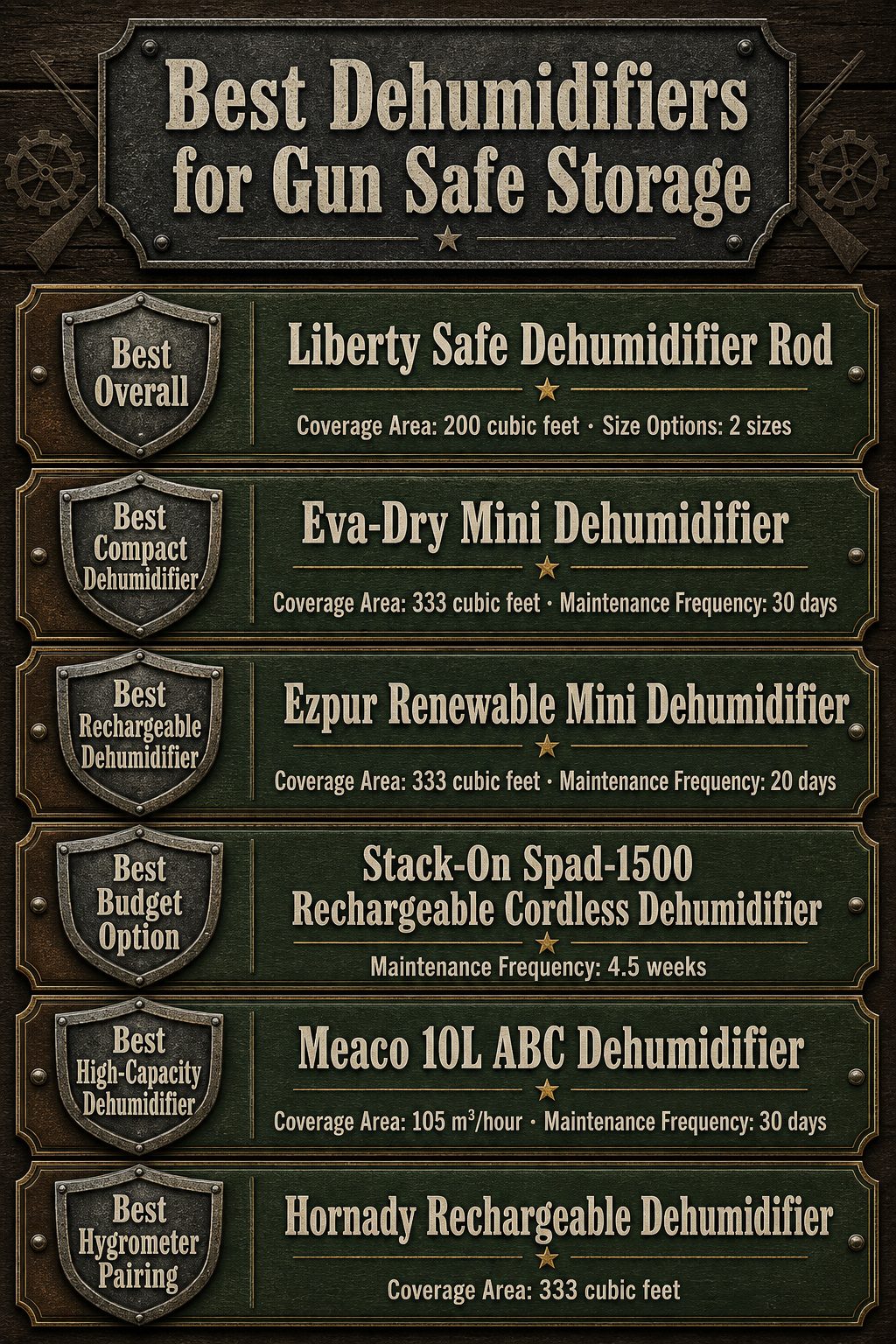
The Liberty Safe Dehumidifier Rod requires no maintenance for years, unlike the Golden Rod.
The Liberty Safe Dehumidifier Rod and the Golden Rod both cover 200 cubic feet, but the Golden Rod asks for attention every six months while the Liberty leaves you guessing. That half-year cycle matters if your safe sits in a basement you visit twice a year, or if you are the type who forgets maintenance until the smell reminds you. For a closet safe you open weekly, either rod works; the difference only shows up in memory, not moisture readings.
Coverage area is where the Eva-Dry Mini and the Ezpur Renewable Mini pull ahead of both rods, claiming 333 cubic feet against 200. In a 24-inch wide safe, that extra capacity is wasted air. In a 72-inch tall locker storing rifles and documents, the silica gel units reach corners the rods might not warm evenly. The Eva-Dry needs a recharge every 30 days; the Ezpur every 20. Ten days sounds small until you are on a three-week trip and come home to a saturated pack doing nothing. The Ezpur suits the traveler or the second-home owner. The Eva-Dry fits the routine-check crowd who already calendar their filter swaps.
The Stack-On Spad-1500 stretches that cycle to 4.5 weeks, splitting the difference. It is cordless like the Eva-Dry and Ezpur, so placement is freer than any rod. The tradeoff is capacity: Stack-On does not publish a coverage number, and owner reports I read suggest it is best for handgun safes under 18 inches, not full cabinets. Budget here means accepting a smaller zone and a shorter life between recharges than the name-brand silicas.
The Meaco 10L ABC is a different machine entirely. At 105 cubic meters per hour, it moves air like a room unit, not a safe stick. The 2.6 gallon tank and 30-day maintenance cycle sound generous until you realize this is a compressor dehumidifier that needs space, drainage, and power cord routing. Your safe door becomes irrelevant; this lives in the gun room, not the safe. It matters only if your collection fills a converted closet and the safe itself is too crowded for rods.
The Solenco Mini claims one cubic meter, roughly 35 cubic feet. That is the smallest coverage here, and the honest fit is a single-pistol lockbox or a drawer safe. The Hornady Rechargeable matches the 333 cubic foot crowd but adds no cycle data I could verify. What it does add is hygrometer pairing, which turns a guess into a number. For someone running multiple safes, that visibility beats a larger unit you assume is working.
The Browning Ever Dry and the Lockdown Rod both hit 200 cubic feet with six-month maintenance. The Browning comes in an 18-inch length; the Lockdown does not specify. In a shallow safe, that rigidity might fight for corner space where a shorter rod would lie flat. The Lockdown markets itself on easy installation, which usually means brackets or cord clips. If your safe has a pre-drilled hole for power, that advantage disappears. If you are running extension cords through the hinge, it matters more than the rod itself.
Frequently Asked Questions
What type of dehumidifier works best inside a gun safe, electric or desiccant?
Electric rod-style dehumidifiers handle continuous duty in larger safes with a nearby outlet, while desiccant packs or rechargeable canisters suit smaller spaces or locations without power. Silica gel beads change color as they saturate, so you know when to dry them in an oven or replace the pack. Electric units draw more power but never need recharging; desiccants demand attention on a schedule you set by watching the humidity reading. Your safe size, power access, and how often you open the door all factor into which approach makes sense.
How much space will a gun safe dehumidifier actually cover?
Most electric rods list coverage between 100 and 300 cubic feet, which handles compact pistol safes up to tall rifle cabinets. Desiccant capacity varies by weight and formulation; a 40-gram silica pack manages a small handgun vault, while multiple 450-gram canisters fill out a 50-gun safe. Manufacturer cubic-foot ratings assume a sealed environment, so a safe with a worn door seal or frequent opening performs smaller than the number suggests. I match the rated coverage to my safe’s interior dimensions and round up rather than cut it close.
How often does a gun safe dehumidifier need maintenance or replacement?
Electric rods run for years with no maintenance beyond occasional dusting and checking the cord for wear. Silica gel desiccants need reactivation every few weeks to months depending on ambient humidity and how often the safe opens; the color change tells you when. Disposable desiccant packs last until saturated, then get tossed, which might mean months in a dry climate or weeks somewhere coastal. Rechargeable canisters typically specify a number of oven cycles before the chemistry degrades, often several years of normal use.
Will a dehumidifier work if my local humidity runs very high or very low?
High ambient humidity, especially above 60% year-round, pushes any dehumidifier toward its limits; an electric rod paired with desiccant backup handles the Gulf Coast better than either alone. In desert conditions below 20% relative humidity, you may not need active dehumidification at all, though a small rod prevents spikes during summer monsoons. The gauge inside your safe matters more than the weather outside, since a good seal isolates the interior significantly. Owners in basements and coastal garages report the most persistent battles, often running electric rods continuously and swapping desiccants on shortened schedules.
What does installing a dehumidifier in a gun safe involve?
Electric rods mount with simple brackets or adhesive, then route a power cord through a pre-drilled hole in the safe wall; many safes come ready for this, older ones may need a hole drilled and grommeted. Placement matters: low and centered lets warm dry air rise and circulate, avoiding dead spots where moisture collects. Desiccants just sit on a shelf or hang from hooks, though off the floor and away from direct contact with metal helps even distribution. No tools needed for most desiccant setups, but the electric route demands planning for outlet proximity and cord management that doesn’t pinch the door seal.