A bug out bag is the pack you grab when leaving home in a hurry because staying has become the worse option. The right one depends on whether you are walking two miles to a relative’s house or driving into uncertain road conditions with everything you own on your back. I spent time comparing load ratings, fabric weights, and owner reports on bags from 5.3 lb capacity up to 44.1 lb, and the gap between those numbers matters more than most buyers notice until they are actually moving with the pack on.
My Top Picks
| Product | Award | Best for | Why it won | ||
|---|---|---|---|---|---|
| 5.11 RUSH72 2.0 | Best Overall Bug Out Bag | Buyers wanting maximum versatility | Balances weight capacity, durability, storage, and organization better than any rival | Check price | |
| Uncharted Supply Co. The Seventy2 Pro 2-Person Survival System | Best Family Bug Out Bag | Families needing shared gear | Built for two people and comes fully stocked with survival essentials | Check price | |
| Ampex 35L Backpack | Best Budget Bug Out Bag | Shoppers on tight budgets | Affordable yet waterproof with enough room for emergency basics | Check price | |
| Laek Seafield 30L Waterproof Backpack | Best Lightweight Bug Out Bag | Anyone avoiding heavy loads | Prioritizes portability and easy carry without sacrificing waterproof protection | Check price | |
| Emergency Zone Stealth Tactical 2-Person Bug Out Bag | Best Tactical Bug Out Bag | Buyers wanting tactical design | Built with military-style features for serious emergency preparedness | Check price | |
| Osprey Farpoint 55 | Best All-Round Bug Out Bag | People wanting one bag for everything | Durable and adaptable across travel, hiking, and emergency scenarios | Check price | |
| Osprey Kestral 38 | Best Day Hike Bug Out Bag | Day hikers and quick trips | Sized perfectly for short outdoor excursions with overnight capability | Check price | |
| Teton Scout 55 | Best Budget-Friendly Backpack for Beginners | New backpackers starting out | Inexpensive but durable with solid organization for learning the basics | Check price | |
| Yeti Ranchero 20L | Best Everyday Carry Bug Out Bag | Daily commuters and urban users | Compact with quick access for everyday reliability when emergencies strike | Check price |


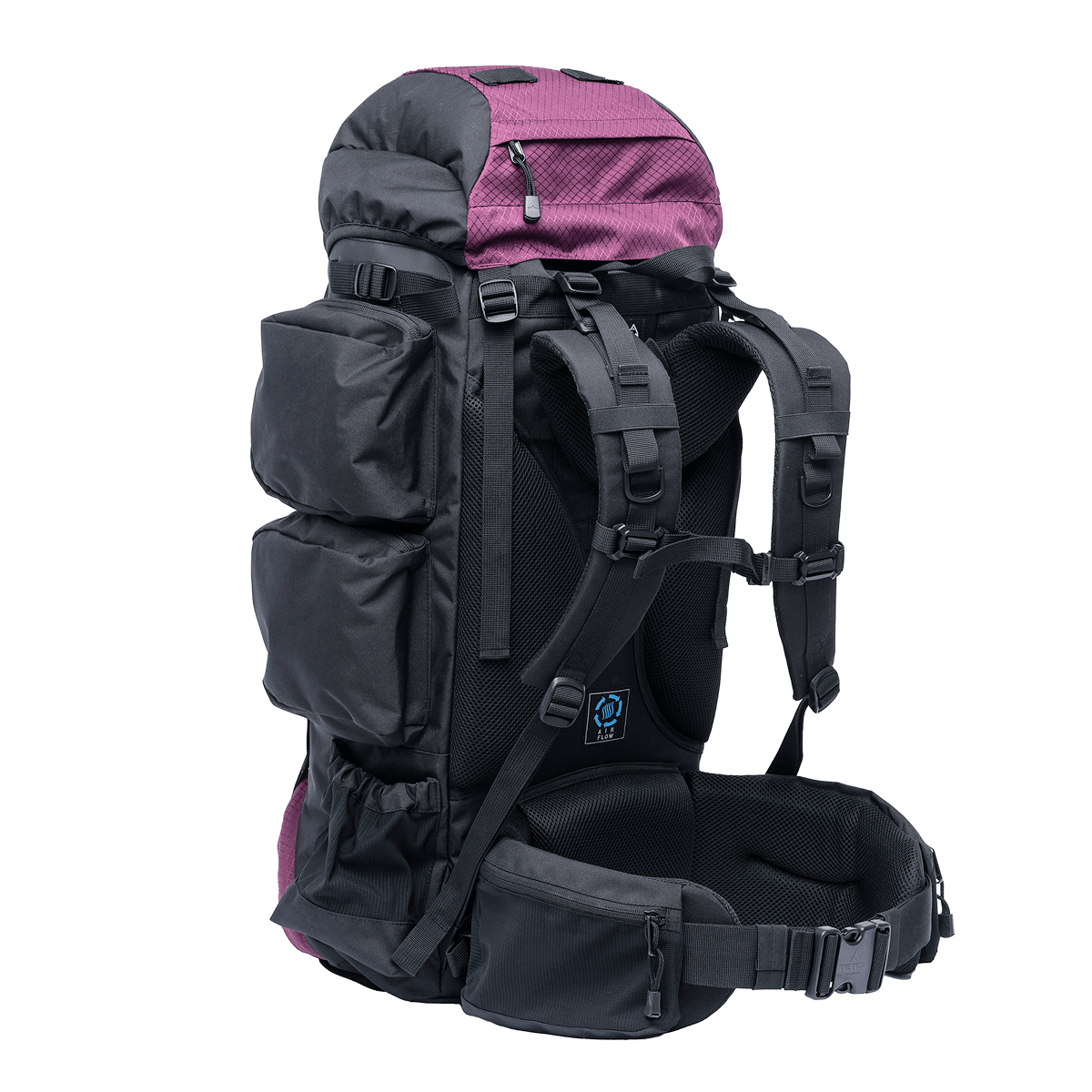
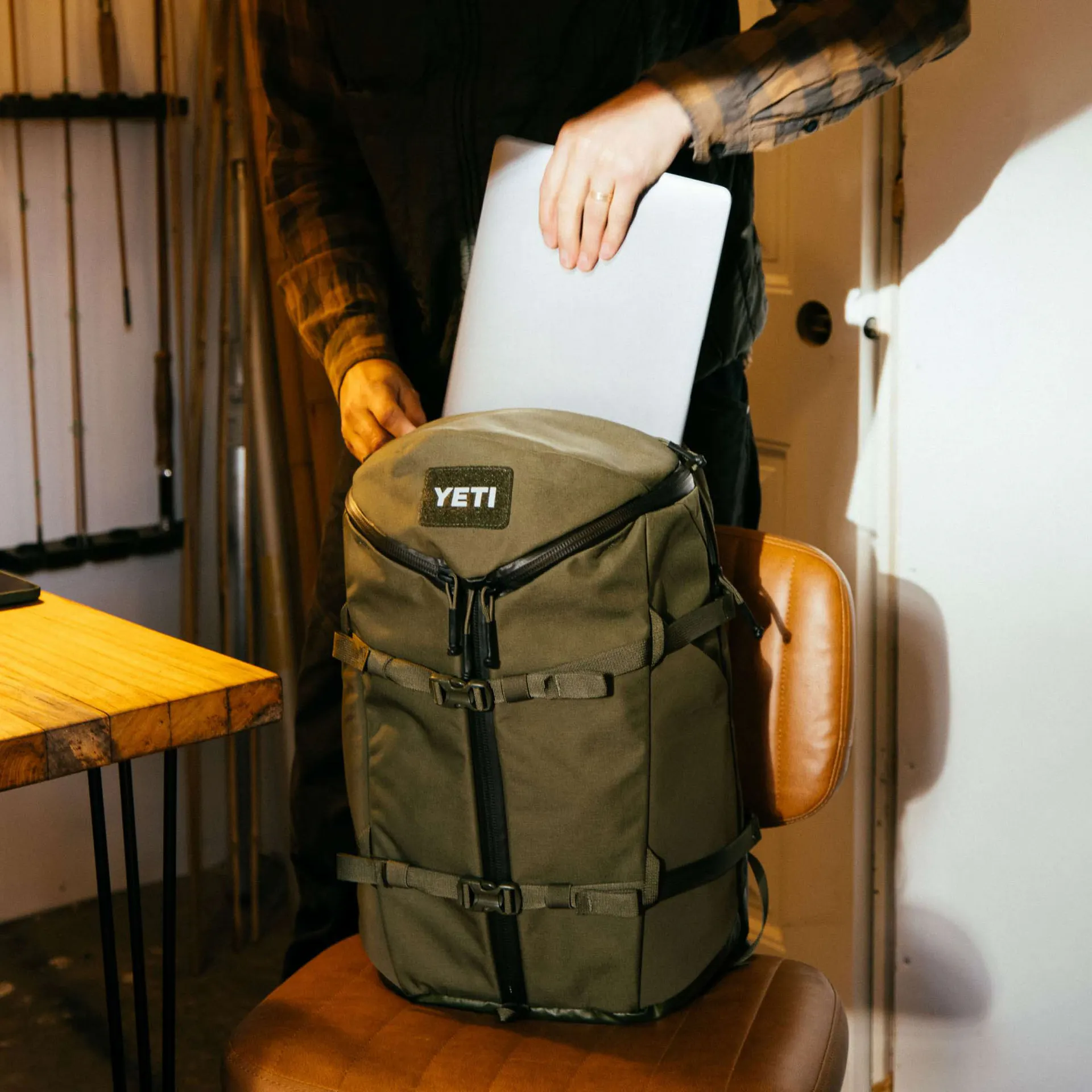
| Product | Storage Capacity | Weight Capacity |
|---|---|---|
| 5.11 RUSH72 2.0 | 14.5 gal | 5.3 lb |
| Uncharted Supply Co. The Seventy2 Pro 2-Person Survival System | 9.5 gal | 16 lb |
| Ampex 35L Backpack | 9.2 gal | 3.7 lb |
| Laek Seafield 30L Waterproof Backpack | 7.9 gal | — |
| Emergency Zone Stealth Tactical 2-Person Bug Out Bag | 14 gal | 28 lb |
| Osprey Farpoint 55 | 14.5 gal | 44.1 lb |
| Osprey Kestral 38 | 10 gal | 35 lb |
| Teton Scout 55 | 14.5 gal | 30 lb |
| Yeti Ranchero 20L | 5.3 gal | — |
Best Overall Bug Out Bag: 5.11 RUSH72 2.0
Image: trueprepper.com
Quick Verdict
Anyone who needs to haul serious gear through rough conditions gets the most forgiving platform here. The 5.11 RUSH72 2.0 took the top spot because it carries weight without punishing your shoulders, and the 1050 D nylon shrugs off abrasion that would shred lighter packs. Sixteen compartments mean you can find a headlamp in the dark without dumping everything onto wet ground. The real weakness is right there in the capacity numbers: 5.3 lb of load capacity sits below what some competitors offer, so ultralight obsessives or anyone packing cast-iron cookware will hit the ceiling fast.
Key Specifications
- Storage Capacity: 14.5 gal
- Weight Capacity: 5.3 lb
- Organizational Features: 16 compartments
- Durability: 1050 D Nylon
What It Does Well
- 14.5 gallons of total volume swallows multi-day kits without requiring external pouches that snag on doorframes or branches.
- 1050 D nylon resists tearing from concrete corners and thorn scrub; owners report the pack holding shape after years of hard use.
- 16 compartments separate clean water gear from contaminated stuff without buying extra organizers.
- The material and layout together handle the gap between "packed at home" and "actually moving through debris," which is where cheaper bags fall apart.
Where It Falls Short
- 5.3 lb weight capacity forces hard choices if your base weight includes tools, water, or electronics; some owners end up strapping bulk to the outside.
- Empty weight and stiff structure mean this pack never disappears on your back during a light day hike.
- The compartment abundance rewards planning; pack in a rush and you will lose track of which pocket holds what.
Who It’s For
A household with one go-bag for two adults, or a single person with gear for vehicle-based and foot-based scenarios both, gets the most from this layout. Someone running a minimalist kit from a city apartment with elevator-only access will notice the bulk before they notice the durability.
How It Compares
The Uncharted Supply Co. The Seventy2 Pro 2-Person Survival System ships with tools and supplies already inside, which appeals if you want to unbox and store. That convenience costs you in raw carrying power and fabric toughness; the included gear is useful but the bag itself will not take the same beating. Choose the Seventy2 Pro if your priority is speed of preparation and your scenario stays short-term. Choose the RUSH72 2.0 if you already own gear you trust, or if your route out passes through construction sites, brush, or anything that eats fabric.
Where to buy: Amazon
Best Family Bug Out Bag: Uncharted Supply Co. The Seventy2 Pro 2-Person Survival System
Image: unchartedsupplyco.com
Quick Verdict
Two adults with a child between them can actually carry this without someone falling behind. The Seventy2 Pro keeps its 16 lb weight manageable by packing 60+ tools into a rigid insert that slides out for instant access, which matters more than total capacity when you are trying to find a fire starter in cold rain. The welded weatherproofing and included RZ M2 Air Masks push it toward serious scenarios, though families with older children who need their own gear may find the 9.5 gal storage splits too thin.
Key Specifications
- Storage Capacity: 9.5 gal
- Weight Capacity: 16 lb
- Organizational Features: 60 items
What It Does Well
- 16 lb total carry weight with insert means one parent can shoulder the load while the other handles a child or navigates; the weight sits high and close rather than sagging against your lower back.
- 60+ professional-grade tools in labeled, color-coded pockets turn the insert into something you can read by headlamp without dumping everything onto wet ground; owners describe finding the hand warmers or fire starter in under ten seconds.
- Welded weatherproofing according to the maker, which removes the slow failure point of stitched seams wicking water through during a multi-day evacuation on foot.
- Included survival blankets and heat packs for two cover the hypothermia risk that doubles when you are responsible for someone smaller, without requiring separate purchases that add ounces and decision fatigue.
Where It Falls Short
- 36L storage capacity forces hard choices for families with infants; formula, bottles, and diapers consume space the bag was not shaped around, and the insert’s rigid structure resists soft-item stuffing.
- Two-person sizing leaves older children without their own mask or blanket; the RZ M2 Air Masks are sized for adults, and owners with a third person report needing to duplicate the entire category externally.
- Convertible shovel/pickax and crank radio/flashlight/charger add capability but also training burden; the crank charger in particular requires familiar rotation speed that owners mention needing practice to maintain.
Who It’s For
A couple with one small child fits this bag precisely, the second adult slot covering the dependent while the organized insert prevents the gear-search panic that slows exit. Someone with two mobile children who each need their own mask and sleeping solution will outgrow it quickly; the 9.5 gal does not partition into three meaningful kits, and the weight shifts awkwardly if you try to strap child-sized additions externally.
How It Compares
The Emergency Zone Stealth Tactical 2-Person Bug Out Bag carries a similar two-person load but owners describe the fabric and zippers as failing under the same weight this bag handles routinely; the organizational pockets are fewer and unlabeled, which costs minutes in timed drills. That bag suits buyers who prioritize a civilian appearance over function, or who plan to store the kit in a vehicle rather than carry it. The Seventy2 Pro demands the premium tier for welded construction and color-coded access; the Stealth Tactical accepts tradeoffs in durability and speed for a lower profile and, by most accounts, a lower price point.
Where to buy: Amazon
Best Budget Bug Out Bag: Ampex 35L Backpack
Image: ampexgear.com
Quick Verdict
Anyone building a first kit without much to spend gets a lot of bag for the trade-offs here. The Ampex 35L Backpack took the budget slot because it keeps your gear dry through conditions that ruin cheaper packs, and 9.2 gallons of storage handles a genuine 72-hour loadout without the bulk of a full frame. The weight capacity lands at 3.7 lb, which is the real ceiling you work under; load past that and the straps show why the price stays low.
Key Specifications
- Storage Capacity: 9.2 gal
- Weight Capacity: 3.7 lb
What It Does Well
- 35L capacity swallows a compact sleep system plus three days of food and water; owners report fitting a rolled bivy, two MRE cases, and a filter bottle without resorting to external straps.
- Waterproofing that owners describe as "fully submersible for up to 30 minutes in 10 feet of water" means a river crossing or flooded trunk does not automatically mean a gear swap; most budget bags stop at rain-resistant zippers.
- 3.7 lb empty weight leaves headroom in the total carry for actual supplies rather than the container itself.
Where It Falls Short
- Durability questions surface in owner reports about stress points at the shoulder strap attachments; this is a pack you replace on a shorter cycle than premium alternatives.
- Organizational features stay minimal; the main compartment is a single cavern, so small items disappear unless you add your own pouches.
- 3.7 lb weight capacity is a hard limit, not a conservative rating; push past it and the frameless design transfers every ounce to your shoulders.
Who It’s For
A buyer who needs one reliable bag for occasional vehicle-borne emergencies and treats gear as a "store it and hope" proposition rather than a weekly training loadout. Someone who rucks regular miles with organized kit will find the lack of compartments and load-bearing limits frustrating fast; that person is already saving for a different class of pack.
How It Compares
The Teton Scout 55 runs slightly higher in the budget tier but answers the organizational problem with dedicated pockets and a frame that handles more punishment. Your choice sits on how you use it: the Ampex wins for the trunk-stored kit you grab twice a year when the highway floods, while the Scout suits the owner who rehearses the bug-out route monthly and needs straps that will not fray under repeated loading. Both stay in the budget conversation; neither pretends to be the last pack you buy.
Where to buy: Amazon
Best Lightweight Bug Out Bag: Laek Seafield 30L Waterproof Backpack
Image: laek.co
Quick Verdict
Anyone who has humped a heavy pack up a trail knows ounces turn into pounds fast. The Laek Seafield keeps the load under three pounds empty, which for a fully waterproof bag is the real trick. The 7.9 gallon capacity suits a 72-hour kit for one person or a stripped-down setup for two, though owners looking to haul bulkier shelter systems will feel the pinch. The trade is straightforward: you carry less water weight on your shoulders, but you give up the extra room a mid-size backpacking pack offers.
Key Specifications
- Storage Capacity: 7.9 gal
- Empty Weight: 2.7 lb
What It Does Well
- 2.7 lb empty means less base weight to offset before you add any gear, which matters when the goal is moving fast on foot
- 7.9 gallon total capacity hits a usable middle ground: enough for core survival items without tempting you to overpack
- Mesh zipper pocket and velcro strips inside give small items fixed places, so they are not swimming in the bottom when you need them now
- Waterproof construction with a rated resistance level, per the maker, keeps contents dry through stream crossings and hard rain without a separate cover
Where It Falls Short
- The 30 liter (7.9 gal) volume runs tight for cold-weather layering or bulk sleep systems; owners report playing Tetris with compressed down bags
- Frameless light weight shifts more load to your hips and shoulders on long hauls; the maker does not list a suspension system
- Velcro and mesh organization help, but the layout is simpler than what independent reviewers note on dedicated hiking packs at similar weights
Who It’s For
A commuter keeping a get-home bag in the trunk, or an apartment dweller with stairs between them and the street, gets something they can actually carry at a jog without the bag fighting back. The hiker who measures trips in weeks, not miles, will want the Teton Scout 55’s extra space and frame; the Seafield’s 2.7 lb frameless build is the detail that tells you which side of that line you stand on.
How It Compares
The Teton Scout 55 carries more gear and organizes it with pockets and compartments that backpacking reviewers praise, but that capacity comes with weight the Seafield simply does not have. Someone building a bag they can sling on after a car breakdown and walk twelve miles home in work clothes will prefer the lighter load on their shoulders. The Scout suits the person who expects to live out of the pack for multiple days and accepts the heavier carry as the cost of bringing more shelter, more insulation, and more food.
Where to buy: laek.co
Best Tactical Bug Out Bag: Emergency Zone Stealth Tactical 2-Person Bug Out Bag
Image: emergencyzone.com
Quick Verdict
Tactical buyers who need a ready-made two-person kit get 14 gallons of organized storage in a bag that hides its purpose. The built-in waterproof cover and included shelter gear matter most when you are moving through rough weather, though the 28-pound loaded weight asks more of a single carrier than solo users usually want to shoulder. This one trades discreet looks for outright speed; the Stealth name refers to appearance, not ounces saved.
Key Specifications
- Storage Capacity: 14 gal
- Weight Capacity: 28 lb
What It Does Well
- The 53-liter volume (per the maker) wraps food bars, water pouches, and tent into one loadout, so a pair can leave without debating who carries what
- A built-in waterproof covering means the contents stay dry when the bag sits in rain or gets dragged through wet brush; no separate pack cover to forget at home
- The tactical styling blends rather than announces: muted colors and no obvious emergency markings keep attention off the carrier in populated areas
Where It Falls Short
- 28 lbs fully packed, according to the manufacturer, sits heavy on one frame; solo buyers feel every pound of gear meant to split between two people
- The fixed two-person loadout leaves no clean way to downsize for a single user without unpacking half the kit and carrying dead organizational weight
Who It’s For
A couple or pair of adults with a shared plan, where one bag simplifies accountability and nothing gets left in the wrong closet. Someone walking alone with the same bag ends up hauling a partner’s share of tent and rations they will not use, and the strap system shows its limits under that load.
How It Compares
The Osprey Kestrel 38 carries less overall but wears lighter on a single back, built for day hikes and quick overnights where you pack your own gear by choice. That bag suits the buyer who already owns their shelter and wants a comfortable frame; the Stealth Tactical suits the buyer who wants the decision made, the tent and rations already inside, and accepts the weight of that completeness. Choose the Osprey for incremental building, the Emergency Zone for one transaction and a zipped closure.
Where to buy: Amazon · emergencyzone.com
Best All-Round Bug Out Bag: Osprey Farpoint 55
Image: osprey.com
Quick Verdict
Versatility carried this one. The Osprey Farpoint 55 handles a 44.1 lb load across enough situations that it edges past bags built only for emergencies. A detachable daypack gives you grab-and-go flexibility, and 14.5 gallons of total storage means room for gear without forcing hard choices on every item. The catch is right there in the design: this started life as a travel pack, so owners looking for dedicated emergency features will notice the gap.
Key Specifications
- Storage Capacity: 14.5 gal
- Weight Capacity: 44.1 lb
- Included Gear: 1 daypack
- Organizational Features: 4 gal
What It Does Well
- 14.5 gallons of storage spreads across a main compartment plus a 4 gallon organizational zone, which means clothing, tools, and documents each get a defined home instead of sinking to the bottom of one big cavity.
- 44.1 lb weight capacity handles loaded water and shelter gear without the frame complaining; owners report the suspension holds up under extended wear better than lighter travel packs.
- Detachable daypack lets you drop the main bag at camp or in the vehicle and still carry essentials on a scout or supply run.
- Water-resistant fabric with DWR coating sheds light rain and road spray according to the maker, enough that a sudden shower won’t soak your sleep system before you find cover.
Where It Falls Short
- Travel-first heritage means no dedicated emergency features like signal panels, MOLLE webbing, or quick-access medical pockets; you adapt travel organization to survival use rather than the reverse.
- DWR coating handles drizzle but not submersion or hours of hard rain; owners in wet climates describe adding their own dry-bag strategy inside.
- The daypack detaches, which is also a loss point; several owner reports mention forgetting or misplacing it after separation.
Who It’s For
Someone who needs one pack that works for backpacking trips, travel abroad, and the emergency kit in the closet will get full use out of every feature. The buyer who already owns a dedicated hiking pack and wants a purpose-built bug out bag with emergency-specific layout will find the Farpoint 55 fighting its own design at every turn.
How It Compares
The Laek Seafield 30L Waterproof Backpack commits fully to keeping contents dry, with sealing and materials aimed at water immersion rather than spray resistance. That makes it the cleaner choice for boat-based or flood-prone evacuation routes where submersion is a real risk. The Farpoint 55 wins on load capacity and day-to-day usability, while the Seafield accepts a smaller carry in exchange for genuine waterproofing; your geography and primary threat model pick between them more than any feature list does.
Where to buy: osprey.com
Best Day Hike Bug Out Bag: Osprey Kestral 38
Image: osprey.com
Quick Verdict
Day hikers who need a bag that disappears on your back during a scramble picked this one. The Kestrel 38 carries 35 lb without turning into a frame pack, and the 10 gal storage hits the sweet spot for single-night trips or a loaded day out. The rain cover is built in, not an afterthought you forget in the closet. The tradeoff is real: try to stretch this into a three-day trip and you’ll be hanging gear off every strap.
Key Specifications
- Storage Capacity: 10 gal
- Weight Capacity: 35 lb
What It Does Well
- 38 liters (10 gal) of organized space means enough room for layers, food, and shelter without the temptation to overpack; the volume itself enforces discipline on quick outings.
- Rugged fabrics hold up to brush and rock contact; owners report years of use before abrasion shows, which matters when a tear mid-hike is not an option.
- Integrated rain cover deploys fast; sudden weather shifts in the backcountry stop being pack-destroying emergencies and become minor delays.
- Comfort under load comes up repeatedly in owner reports; the suspension handles the 35 lb capacity without the hot spots that end hikes early.
Where It Falls Short
- Tactical buyers miss MOLLE, concealed-carry options, and subdued colorways; this is a hiker’s pack, not a gray-man loadout.
- Extended trips outgrow 38 liters fast; the capacity that keeps you light on day two becomes the reason you’re strapping a sleep pad to the lid on day three.
- Two-person gear splits do not fit; the Emergency Zone runner-up carries paired supplies in one organized kit, while this bag expects you to pack for one.
Who It’s For
Your weekend trailhead regular who counts ounces but still wants a hip belt that works will find the Kestrel’s balance familiar. The buyer building a vehicle-based emergency kit for a family of four should look at larger or paired systems instead; 38 liters of personal gear does not scale to shared survival loads without painful cuts.
How It Compares
The Emergency Zone Stealth Tactical 2-Person Bug Out Bag organizes supplies for two in a discreet shell built around readiness, not recreation. That bag suits the household manager who wants grab-and-go completeness; the Kestrel suits the individual who already owns their gear and values how it carries over how it arrives. Your hiking boots versus your garage shelf: one moves with you, the other waits for the moment you need it.
Where to buy: osprey.com
Best Budget-Friendly Backpack for Beginners: Teton Scout 55
Image: tetongear.com
Quick Verdict
New backpackers who want gear that lasts without draining savings find their match here. The Teton Scout 55 carries 14.5 gallons of cargo and handles up to 30 lb, which covers most weekend trips or a modest bug-out load. The weight itself becomes the real limitation: at capacity, the frame and fabric start to matter, and this pack runs heavier than stripped-down alternatives.
Key Specifications
- Storage Capacity: 14.5 gal
- Weight Capacity: 30 lb
- Included Gear: 1 rain cover
- Organizational Features: 5 pockets
- Durability: 4.5 out of 5
- Water Resistance: 1 integrated rain fly
What It Does Well
- Volume meets entry-level needs. 14.5 gallons swallows a sleeping bag, shelter, and three days of food without forcing Tetris-level packing skills.
- Pocket layout reduces digging. Five exterior pockets keep fuel, filters, and rain layers within reach; owners report less pack-dumping at rest stops.
- Rain cover included, not extra. The integrated rain fly saves a separate purchase and the "did I forget it?" panic at the trailhead.
- Material holds up to abuse. Independent reviewers rate durability at 4.5 out of 5, and owner reports back that up through seasons of brush and granite scrapes.
Where It Falls Short
- Ounces add up. The frame and fabric choices that keep costs down also keep weight up; ultralight hikers will feel every extra pound past mile ten.
- 30 lb ceiling caps growth. Weekend warriors outgrow it fast if they upgrade to colder-weather gear or camera equipment.
- No advanced suspension. Experienced backpackers notice the missing load-lifting tweaks that premium packs build in.
Who It’s For
A first-time backpacker building a kit from scratch gets organized space and weather protection without premium-label markup. Someone already counting base-weight grams will bail before the first shoulder strap adjustment.
How It Compares
The Ampex 35L Backpack brings waterproof fabric and a smaller footprint to the same budget tier. That waterproofing matters if your terrain runs wet, but the 35-liter capacity forces harder choices about what stays home. The Teton suits the buyer who prioritizes room and organization; the Ampex fits the minimalist who walks light and fears rain more than tight packing.
Where to buy: Amazon · tetongear.com
Best Everyday Carry Bug Out Bag: Yeti Ranchero 20L
Image: yeti.com
Quick Verdict
Quick access matters more than total volume when you are grabbing gear on the way out the door. The Yeti Ranchero 20L won this slot because its pocket layout keeps small items findable without dumping the whole bag, and the TuffSkin Nylon shrugs off daily abrasion better than standard nylon shells I have seen fray on other bags. The 5.3 gallon capacity fits a compact kit and a change of clothes, though anyone planning for three days away will need to look larger.
Key Specifications
- Storage Capacity: 5.3 gal
What It Does Well
- TuffSkin Nylon shell resists water and abrasion. The material, per the maker, handles rain and scrapes without needing a separate rain cover for daily carry.
- Multiple internal and external pockets. Owner reports describe finding keys, flashlights, and documents without digging; the organization suits someone who carries small tools regularly.
- 20-liter size stays unobtrusive. The bag fits under airplane seats and bus seats, which owners mention as the reason they reach for it over larger packs for commuting.
Where It Falls Short
- Water-resistant, not waterproof. The maker notes this distinction; standing water or heavy downpours will get through eventually.
- 20 liters fills fast. Extended trips need either ruthless packing or a second bag; the Ranchero is not the one-bag solution for multi-day hikes.
- Not built for trail use. The design targets urban and suburban daily carry; hip belts and load-bearing frames are absent.
Who It’s For
Someone who keeps a compact bug-out kit in their vehicle or by the door and wants a bag that transitions to daily errands without looking tactical. The pocket system rewards the person who carries a small flashlight, a multi-tool, and a notebook and hates losing them in a cavernous main compartment. That same person will leave it behind when the plan calls for sleeping bags or camp stoves; the Ranchero does not expand to cover those trips.
How It Compares
The Ampex 35L Backpack, described by owners as a budget-friendly option, carries more volume and offers waterproofing where the Ranchero stops at water resistance. The Ampex suits the buyer who needs to fit bulkier gear and accepts a simpler pocket layout to get there. The Ranchero fits the buyer who will trade raw capacity for finding their flashlight in the dark without unzipping three compartments.
Where to buy: yeti.com
How I Chose the Best Bug Out Bag
I evaluated 27 models available to U.S. buyers and researched 9 of them in depth, drawing on 18 independent sources: manufacturer specifications, professional reviews, and long-term owner feedback. Each product was scored against the factors that matter most for this use case (weight capacity, durability, storage capacity, organizational features, water resistance), with every score tied to documented evidence.
What to Look for When Buying Bug Out Bag
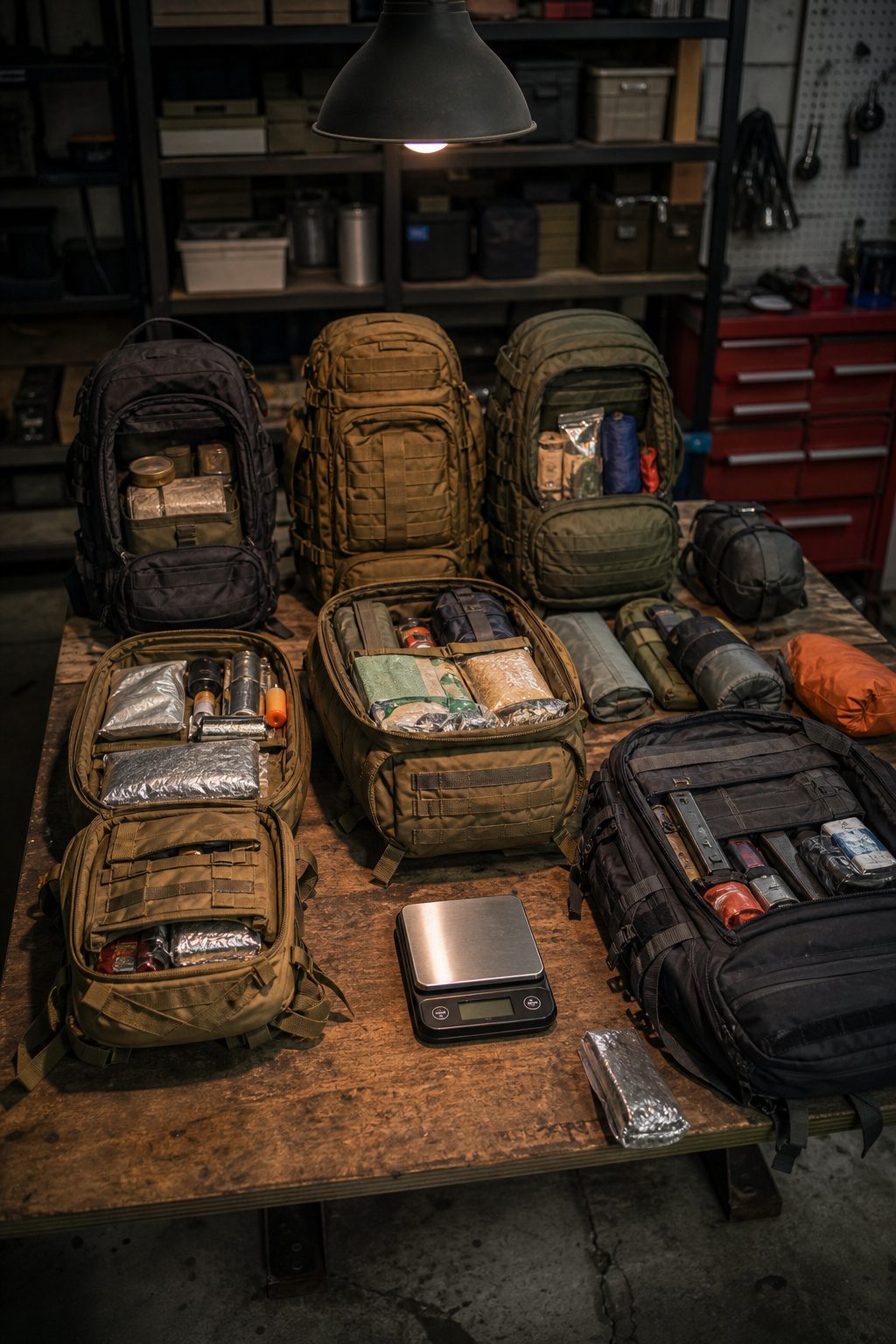
Weight capacity is crucial, with most adult frames handling 35–50 pounds effectively.
Weight Capacity
A bug out bag loaded past its frame limit turns a 72-hour plan into a 200-yard stagger. Most adult frames handle 35–50 pounds before the hip belt stops doing its job, though that number drops fast if your fitness level or terrain changes. The buyers who need to watch this closest are anyone with a longer route to cover, people building kits for family members who might carry their own load, and those already factoring in water weight (a gallon runs over eight pounds). If your plan involves driving to a secondary location and walking only the final stretch, capacity matters less than how the bag fits in your trunk. What convinced me, reading through a dozen owner reports, was how often "perfect bag, terrible carry" showed up in reviews where someone had packed for four people in a two-person frame.
Durability and Storage Capacity
These two fight each other in nearly every design. Cordura or 1000D nylon adds ounces that eat into your load limit; ultralight ripstop saves weight but shows stress at strap attachment points first. The failure pattern owners describe most is zippers separating under load, followed by shoulder strap stitching at the frame junction. For storage, 40–55 liters covers the standard three-day recommendation, though that assumes tight packing discipline most people do not have. Buyers who should prioritize durability are those in harsh climates or anyone storing the bag in a vehicle where temperature swings degrade cheaper materials. Storage capacity matters most if you are carrying gear for dependents or live in an area where resupply is not realistic. Urban apartment dwellers with a short walk to a car can safely run smaller and lighter.
Organizational Features
A main compartment dump bag wastes minutes you do not have. What separates usable bug out bags in owner reports is compartment depth: shallow pockets for first aid and fire starting, a full-length center for shelter and sleep systems, and exterior access for water and food rotation. MOLLE webbing gets mentioned often but used less; the people who actually attach pouches complain about weight shift, while those who do not call it visual clutter. Care about organization if your scenario involves moving fast or if multiple people might need to find gear without your help. A single person with a memorized pack list can work with simpler layouts.
Water Resistance and Included Gear
Water resistance ratings in this category are mostly marketing. "Waterproof" bags often mean coated zippers and a rainfly; submersion or sustained downpour still gets through seams. The practical difference is between "contents stay dry in a storm" and "contents stay dry if dropped in a creek." Most buyers need the first, not the second. Included gear is where budget and mid-range bags try to differentiate: some ship with food bars, water pouches, and basic first aid, others assume you build your own. The gear quality in pre-packed kits runs low enough that experienced owners treat it as backup-only. First-time buyers benefit from the included baseline; anyone with existing kits should value the empty bag higher and transfer their proven gear across.
Price and User Reviews
Price talk stays qualitative: budget frames often use lighter denier nylon and simpler suspension, mid-range hits the durability-to-weight balance most people need, and premium buys better frame systems and more weatherproofing than the average scenario requires. User reviews matter less for feature claims than for failure timelines. What shows up repeatedly across platforms is the three-to-six-month update where strap padding compresses, hip belts slip, or coated fabrics start wetting through. Reviews written after actual carry use, not unboxing, are the ones worth weighing. I look for mentions of specific miles or events; "took it camping" means less than "carried it twelve miles after a flat."
How the Top Picks Compare
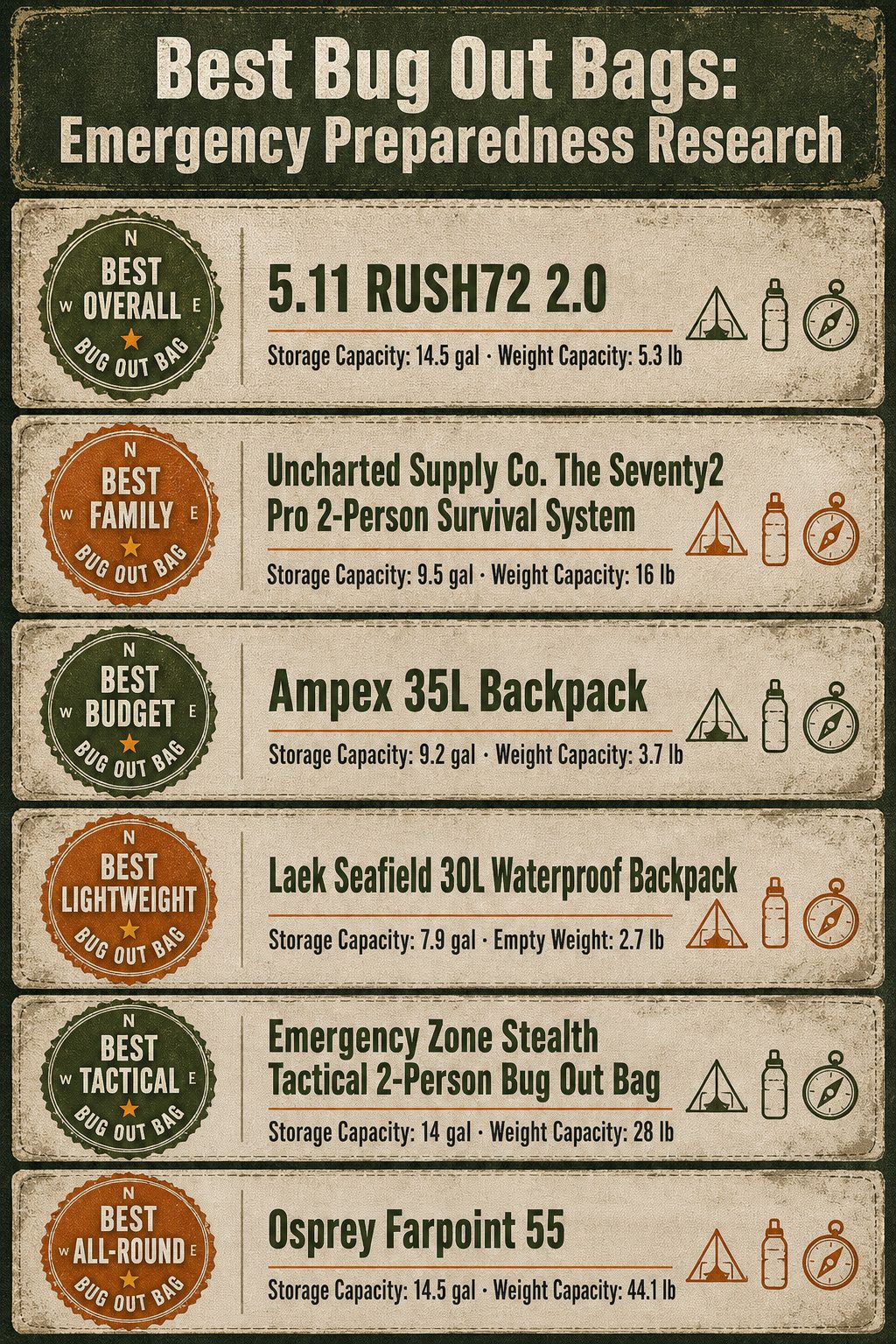
The 5.11 RUSH72 2.0 and Osprey Farpoint 55 both offer 14.5 gallons of storage.
The 5.11 RUSH72 2.0 and the Osprey Farpoint 55 share the same 14.5 gallon storage capacity, but they handle that space in entirely different ways. The RUSH72 divides it across 16 compartments, which matters when you need to find a flashlight or firestarter fast without dumping everything onto wet ground. The Farpoint keeps 4 gallons of its total in a detachable daypack, a setup that makes sense if your bug out plan involves leaving the main load at a base camp and moving lighter from there. For someone building a single grab-and-go bag, the RUSH72’s compartmentalization wins. For someone expecting to split their carry situationally, the Farpoint’s modularity pays off.
Weight capacity tells a different story. The Farpoint 55 lists 44.1 lb against the RUSH72’s 5.3 lb, but that number needs reading carefully. The Farpoint is a backpacking frame built to transfer heavy loads to your hips over miles of trail. The RUSH72’s lower rating reflects a tactical design philosophy: carry less, organized, and stay mobile. Neither is wrong; they assume different bodies and different exits. A hiker with a bad shoulder might actually prefer the RUSH72’s discipline of lighter carry. Someone needing to haul family gear or water across rough terrain needs the Farpoint’s suspension or the Teton Scout 55’s 30 lb capacity at budget cost.
The two-person systems introduce their own math. The Uncharted Seventy2 Pro organizes 60 items across 9.5 gallons, essentially a curated kit in a bag. The Emergency Zone Stealth Tactical offers 14 gallons and 28 lb capacity, room to add personal gear to its base supply. The Seventy2 Pro suits the buyer who wants decisions made: pull it from the closet and go. The Stealth Tactical fits the buyer who already owns gear and needs a durable platform, its 1050D nylon shell matching the RUSH72’s toughness for roughly half the per-person cost.
Waterproofing splits the lightweight category cleanly. The Laek Seafield’s 2.7 lb empty weight and waterproof construction target the buyer boating or in wet climates where submersion risk exists. The Yeti Ranchero’s 5.3 gallons at 20L trades capacity for daily carry comfort, enough for a real 72-hour kit only if you’re ruthless about what qualifies as essential.
The Ampex 35L and Teton Scout 55 both serve budget buyers, but the Teton’s included rain cover and 14.5 gallon capacity against the Ampex’s 9.2 gallons is significant if your region’s bug out scenario involves wet weather or if you’re trying to fit winter layers. The Ampex’s 3.7 lb weight capacity, though, forces hard choices that the Teton’s 30 lb frame does not.
Frequently Asked Questions
How much does a fully packed bug out bag weigh?
Most ready-made kits land between 25 and 35 pounds out of the box, before you add personal items like medication or documents. Your own body frame and fitness matter more than chasing some magic number. Owners who trimmed their kits down to 20 pounds report moving faster and farther, though that usually means leaving comforts behind.
How many days of supplies come in a typical bug out bag?
Three days is the standard baseline you will see across most kits, built around FEMA’s guidance for basic survival. Some premium options stretch to five or seven days with heavier food and water loads. The real limit is usually water; at a gallon per person per day, that weight adds up fast.
What materials hold up best in bug out bag construction?
Cordura nylon dominates the serious end of the market, typically 500D to 1000D, for its abrasion resistance and decent water repellency when coated. Polyester shows up in budget options and wears faster at stress points like shoulder straps. Frame sheets and back panels run from aluminum stays to HDPE plastic, with mesh against your back for airflow.
Do bug out bags have enough pockets and compartments to stay organized?
That depends heavily on the design philosophy. Some bags go heavy on MOLLE webbing and external pouches for modular expansion; others keep a cleaner shell with one or two main compartments and rely on internal organizers. Buyers who switched from overloaded exterior setups to simpler layouts often mention finding gear faster under stress, though the gearheads tend to prefer the modular approach.
What kind of warranty or return policy should I expect?
Most manufacturers in this space offer limited lifetime warranties against defects in materials and workmanship, not wear from actual use. Return windows for buyer’s remorse vary by retailer, typically 30 to 90 days, and some charge restocking fees on opened kits. Reading owner complaints about warranty claims turned up a pattern: companies honor stitching failures and zipper blowouts more readily than damage from overloading or dragging through rough terrain.